ZeroFS: A log-structured filesystem for S3. ZeroFS serves S3-compatible buckets as POSIX filesystems over NFS and 9P, or as raw block devices over NBD.
2.8k
Stars
100
Forks
8
Open issues
9
Contributors


AI Analysis
ZeroFS is a log-structured filesystem that exposes S3-compatible object storage as POSIX filesystems via NFS and 9P protocols, or as raw block devices over NBD. It is purpose-built for workloads requiring scalable, S3-backed storage with encryption and compression—serving users who need durable, serverless filesystem abstractions without managing traditional infrastructure. It is not a general-purpose local filesystem or a replacement for direct S3 access patterns.
Inferred from signals mentioned in the README (tests, CI, type safety) — not a review of the actual code.
AI's overall editorial judgment — not an average of the bars above, can weigh other factors too.
S3-as-filesystem via NFS/9P/NBD, with encryption and HA—targets hybrid cloud storage at scale
ZeroFS is a userspace layer that presents S3-compatible object storage (AWS, GCS, Azure, MinIO) as POSIX filesystems over NFS, 9P, or NBD block devices, all in a single process. Built in Rust with mandatory encryption, local caching, and optional leader/standby replication. Target audience: organizations using S3 for primary storage who need POSIX semantics, multiprotocol access, and high availability without forklift migration to traditional network filesystems.
Repository created July 2025 (approximately 11 months old as of June 2026). Appears to be a greenfield project from Barre, suggesting intent to address an explicit gap: S3 is widely adopted, but existing POSIX-over-S3 tools (s3fs-fuse, JuiceFS) either lack full protocol diversity (NFS + 9P + NBD) or operate under different architectural constraints.
Gained 269 stars in the past 7 days (as of 2026-06-28), suggesting recent visibility spike or public release announcement. Baseline of 2,512 stars in ~11 months of existence indicates initial traction. Sustained weekly push activity through June 2026 shows active development. No evidence provided of which events drove the growth curve—could reflect a recent major release, media coverage, or discovery by a niche community.
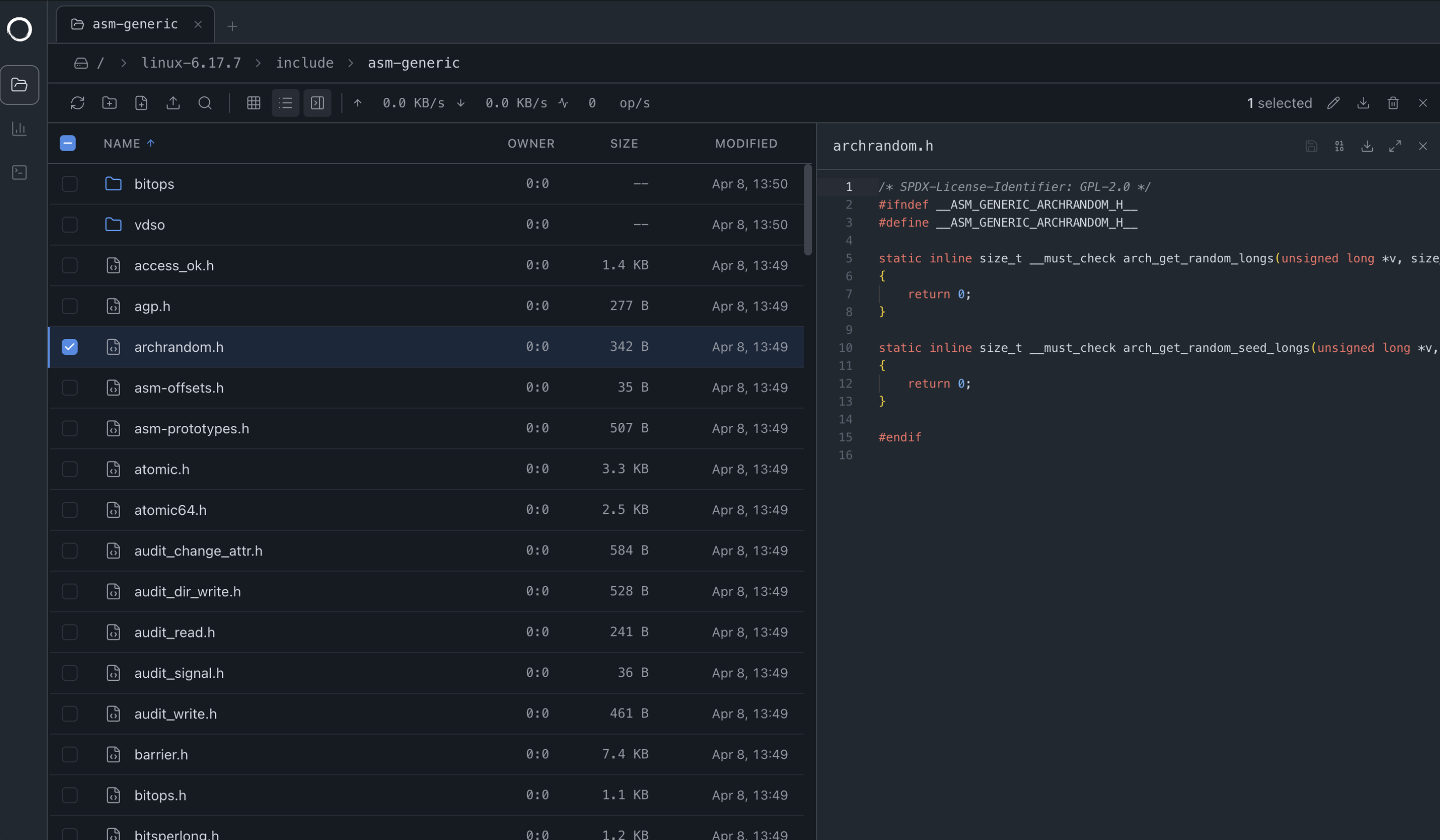
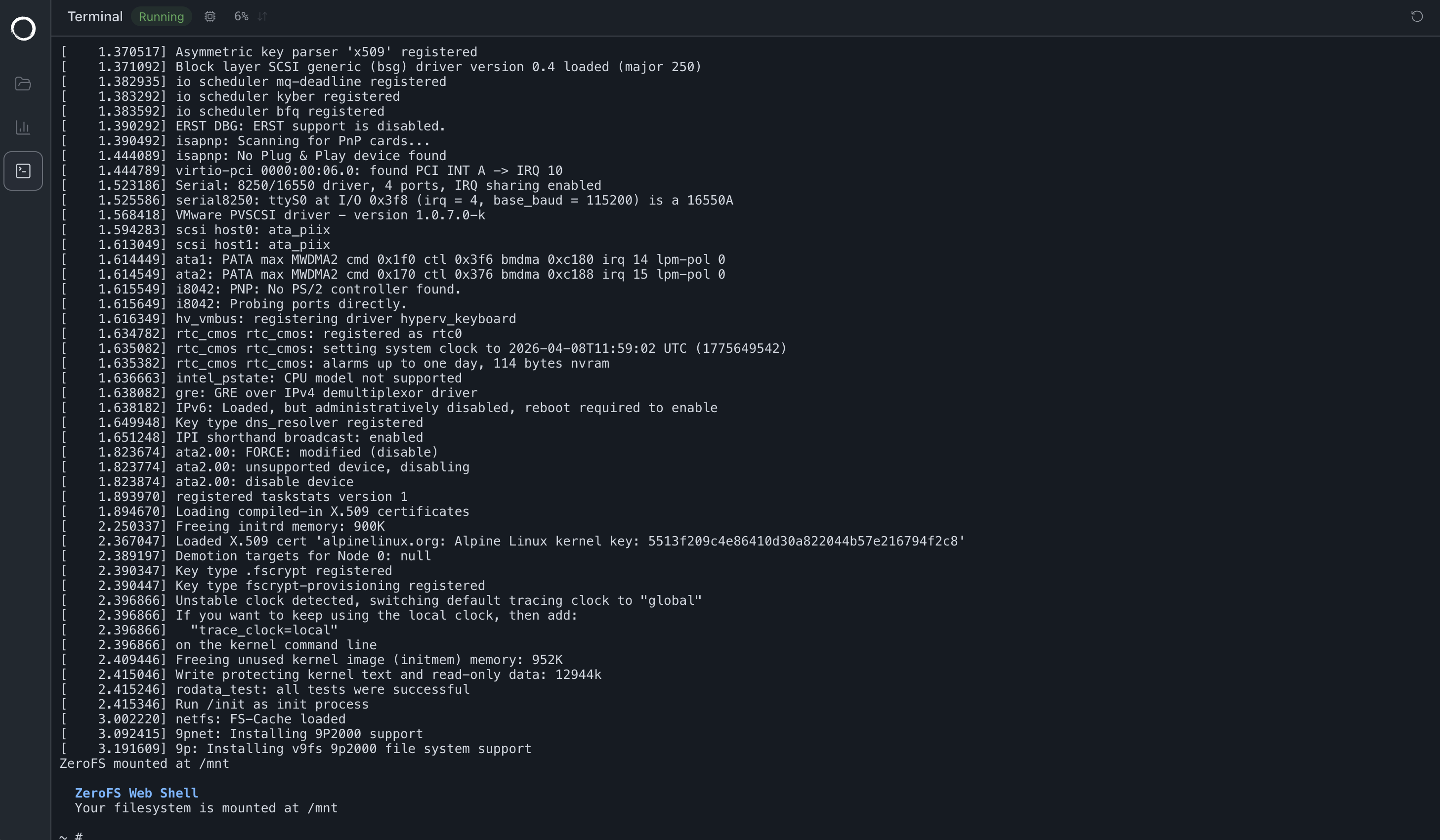
Adoption not verified. README contains no case studies, customer names, or production deployment counts. Demos show kernel compilation and Ubuntu boot on ZeroFS, but these are internal testing artifacts, not evidence of external adoption. Discord server exists but membership size unknown. The project may be in early adoption phase or retain a small but committed user base—insufficient data to determine which.
Likely a single userspace daemon written in Rust that multiplexes S3 bucket contents across three protocol servers (NFS, 9P, NBD). Based on README: uses zstd/LZ4 compression and XChaCha20-Poly1305 encryption before S3 upload; implements local SQLite-backed caching (1.6 µs cached-read latency cited); optional leader/standby replication with write acknowledgment before flush. No access to actual source code, so implementation details of consistency guarantees, crash recovery, and cache coherence cannot be verified.
Documented test strategy appears comprehensive: runs pjdfstest_nfs (8,662 POSIX tests) across NFS, 9P, and FUSE protocols in CI; runs Jepsen local-fs suite with crash injection on 9P; runs classic-Jepsen suite on HA failover scenarios; end-to-end ZFS pool creation, Linux kernel compilation, xfstests, and stress-ng. README lists specific excluded test cases. This level of rigor is unusual and suggests serious investment in correctness verification. However, cannot verify actual test pass rates or coverage depth without source inspection.
Last push 2026-06-27 (yesterday relative to analysis date 2026-06-28), indicating continuous active development. Repository is 11 months old and still in active phase. Presence of Discord server and documentation site (zerofs.net) suggests organized community infrastructure. No evidence of abandoned issues or delayed PR merges in README, but cannot assess backlog health without repository inspection.
ADOPT IF: you operate S3-compatible storage at scale, need POSIX semantics with multiprotocol access (NFS for compatibility, 9P for strict semantics, NBD for block-level), can tolerate being an early adopter, and value mandatory encryption. AVOID IF: you require mature, battle-tested production track record with visible case studies, need extensive commercial support, or operate in highly regulated environments requiring long audit history. MONITOR IF: you are evaluating S3 filesystems and want to track this project's adoption and stability over the next 12–18 months; technical design appears sound but real-world reliability evidence is still accumulating.
Independent dimensions
Mainstream potential
4/10
Technical importance
7/10
Adoption evidence
2/10
- Adoption not verified: no public case studies or production deployment metrics; early-stage project may have undiscovered edge cases or failure modes.
- Single-process architecture: all protocol servers in one process may create availability risk if that process crashes, despite HA standby support—single point of failure during normal operation.
- Young codebase (11 months old): even rigorous testing cannot rule out emergent bugs under production workloads at scale or under protocols not heavily exercised in CI.
- AGPL licensing: copyleft terms may restrict adoption in commercial environments; organizations that embed or modify ZeroFS must open-source changes or operate externally.
- Encryption mandatory: 'no unencrypted mode' by design improves security but adds CPU overhead and may not suit all workloads; cannot opt out for performance-critical read-heavy operations.
ZeroFS likely gains traction in niche segments (Kubernetes storage, hybrid cloud labs, organizations already on S3) over next 12 months. Mainstream adoption in traditional NFS environments remains unlikely due to lack of production proof and maturity gap versus s3fs-fuse/JuiceFS. Project probably remains in specialized category unless significant enterprise adoption materializes.
Explore similar
Newsletter
Get analyses like this every Monday
Free weekly digest of the most interesting open-source discoveries.
Languages
Information
- Website
- https://www.zerofs.net
- Language
- Rust
- License
- AGPL-3.0
- Last updated
- 12h ago
- Created
- 12mo ago
- Analyzed with
- anthropic/claude-haiku-4-5
Stars over time
Contributors over time
Top 100 contributors only — repos with more will plateau at 100.
Open issues
Top contributors
Recent releases
Similar repos

s3fs-fuse/s3fs-fuse
s3fs is a FUSE-based file system that allows Linux, macOS, and FreeBSD to mount...
| Repository | Stars | Week Δ | Language | Score | Updated |
|---|---|---|---|---|---|
|
Barre/ZeroFS
this
|
2.8k | +116 | Rust | 8/10 | 12h ago |
 rustfs/rustfs rustfs/rustfs
|
29.7k | — | Rust | 8/10 | 6h ago |
|
s3fs-fuse/s3fs-fuse
|
9.9k | — | C++ | 7/10 | 5d ago |
 juicedata/juicefs juicedata/juicefs
|
14.2k | — | Go | 8/10 | 6h ago |
 openzfs/zfs openzfs/zfs
|
12.3k | — | C | 8/10 | 1w ago |
 yandex-cloud/geesefs yandex-cloud/geesefs
|
1.1k | — | Go | 8/10 | 1w ago |
FUSE-only, simpler architecture, much older (wider OS coverage via FUSE). ZeroFS adds NFS and 9P multi-protocol support, native encryption, HA, and stronger POSIX compliance (9P mode). s3fs-fuse lacks local caching sophistication and HA.
JuiceFS targets similar use case but runs as a client-side mount tool on Linux/macOS/Windows. ZeroFS runs as a single server exposing multiple protocols; JuiceFS requires separate deployment on each client. JuiceFS maturity is higher (production use documented).
Distributed filesystem designed for cloud storage, more complex deployment model. ZeroFS is single-process, simpler operational footprint. CubeFS targets large-scale distributed storage; ZeroFS appears focused on S3 translation layer.
Not a competitor but complementary. ZeroFS can present NBD volumes on which ZFS runs. README includes ZFS-on-ZeroFS demos, positioning ZeroFS as a storage backend, not a replacement for filesystem semantics.
Different design philosophy (distributed, fault-tolerant by default). ZeroFS is a protocol translator, not a distributed system.