Dockhand - Docker management you will like.
5.1k
Stars
199
Forks
340
Open issues
21
Contributors


AI Analysis
Dockhand is a modern web-based Docker management UI built with SvelteKit and Bun, offering container orchestration, Docker Compose stack management, Git integration, and multi-environment support. It serves DevOps engineers and system administrators who need centralized Docker host management with real-time monitoring and a visual interface, rather than CLI-only workflows. It is not a general-purpose tool for casual Docker users or single-container deployments.
Inferred from signals mentioned in the README (tests, CI, type safety) — not a review of the actual code.
AI's overall editorial judgment — not an average of the bars above, can weigh other factors too.
Dockhand: A fast-growing Docker management UI with Compose, Git integration, and multi-host support
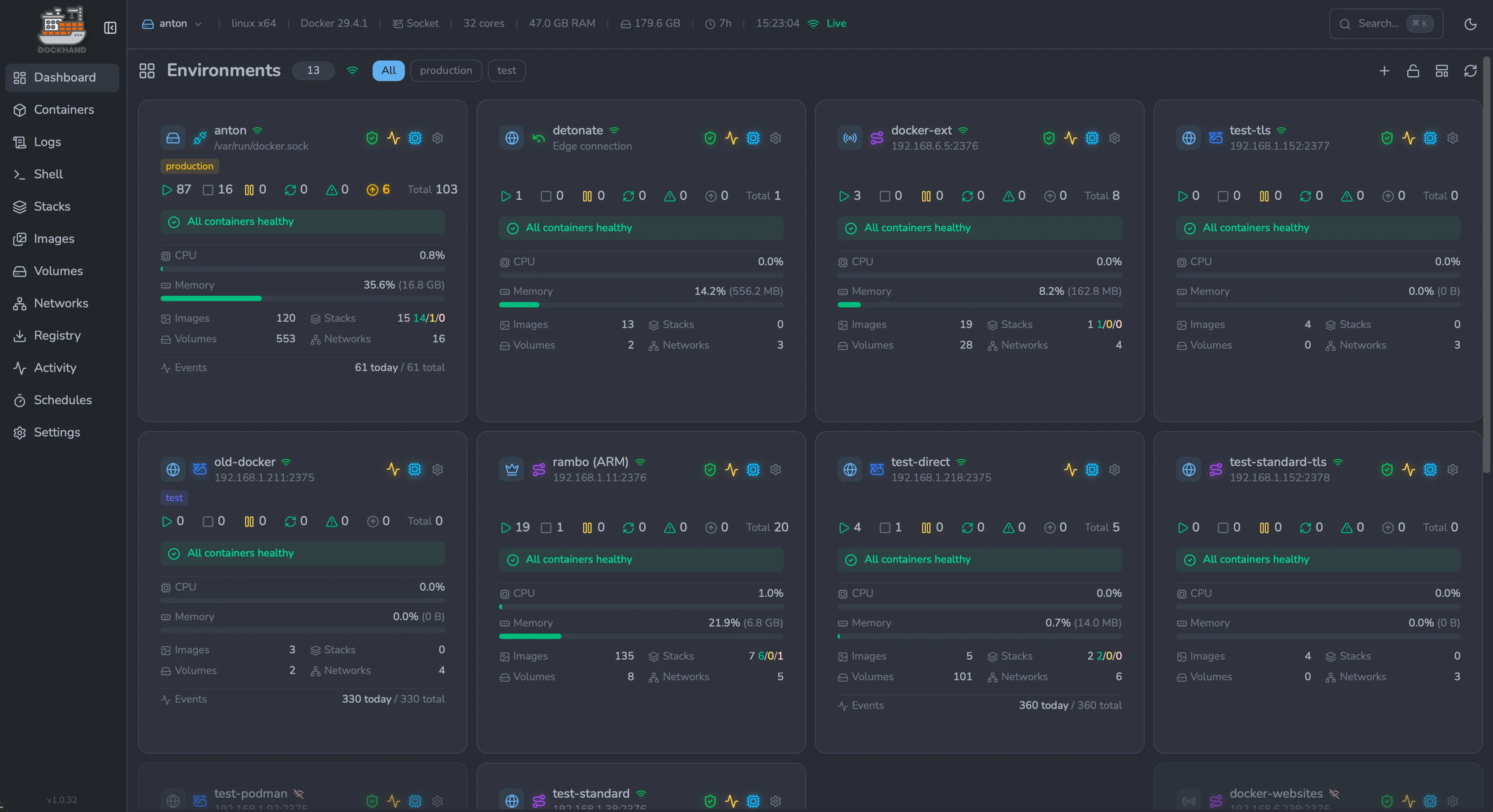
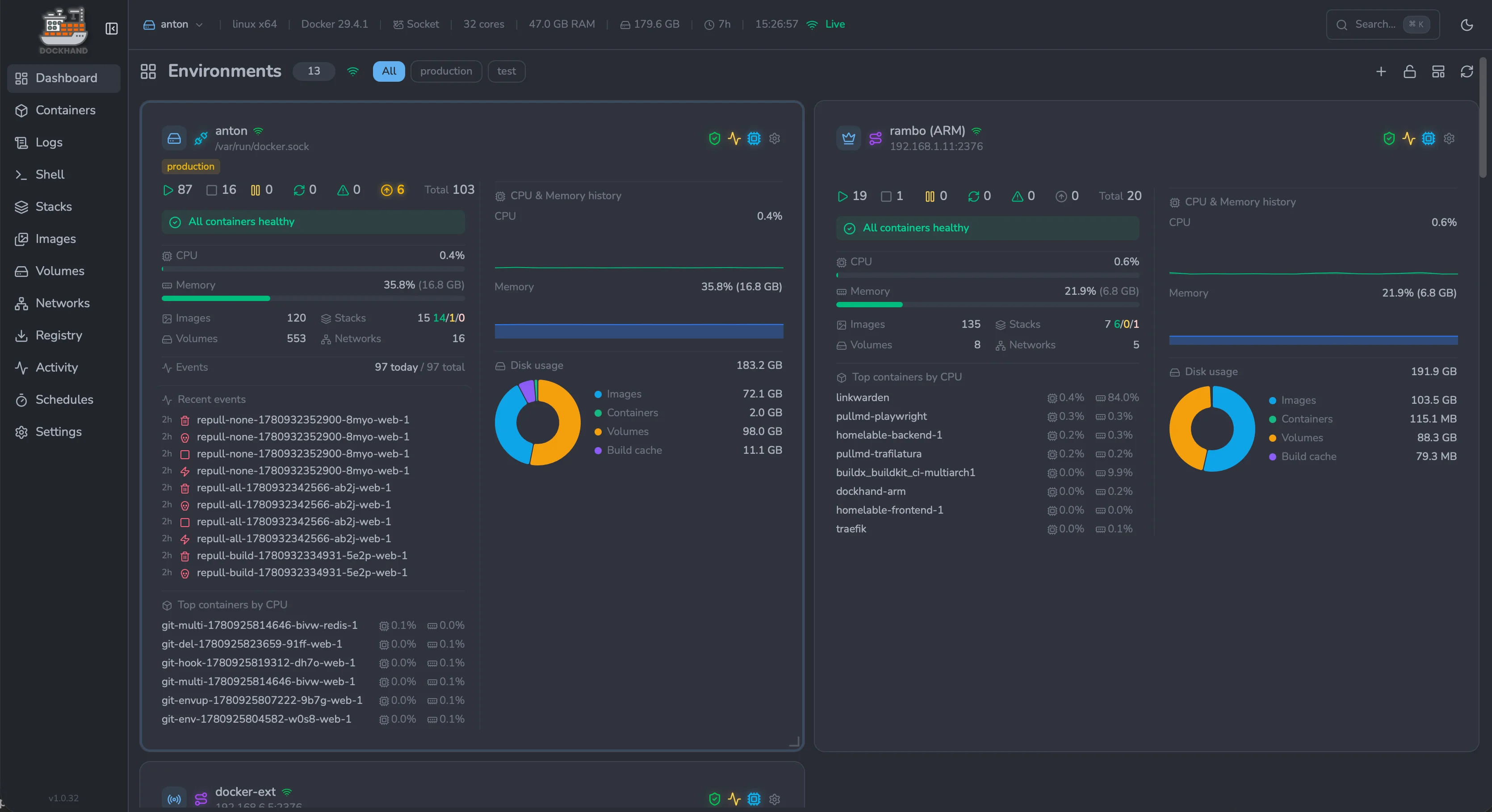
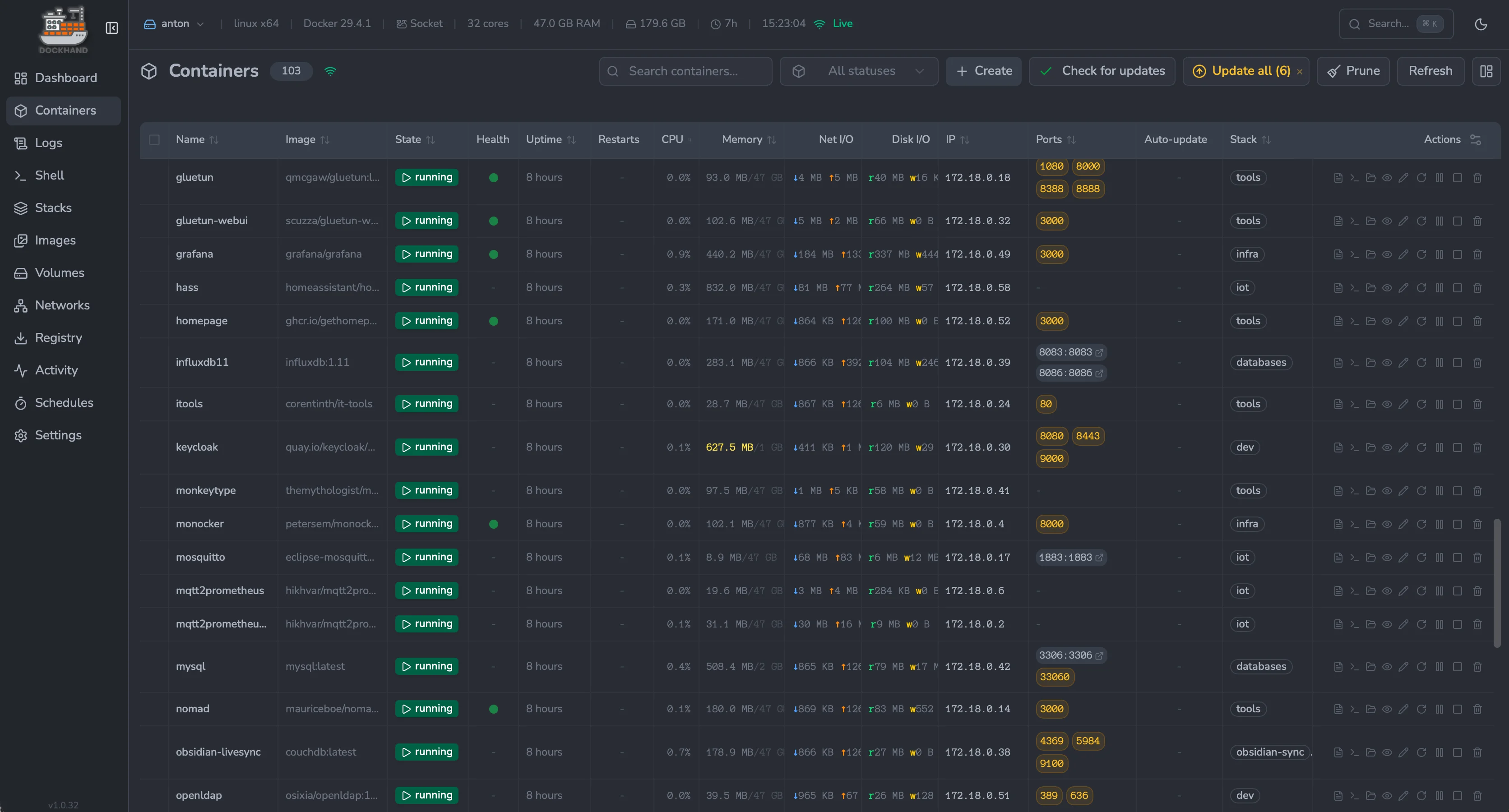
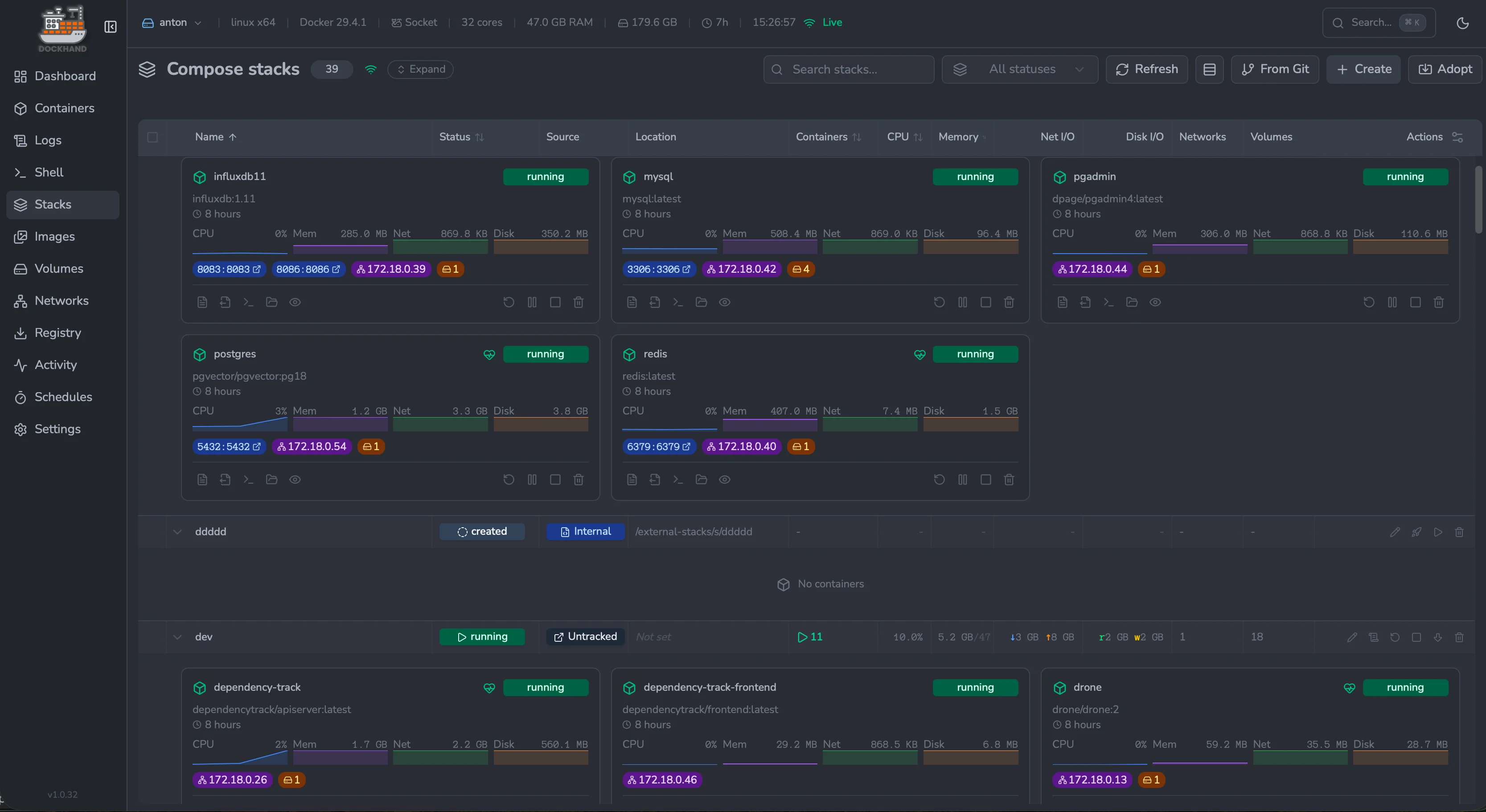
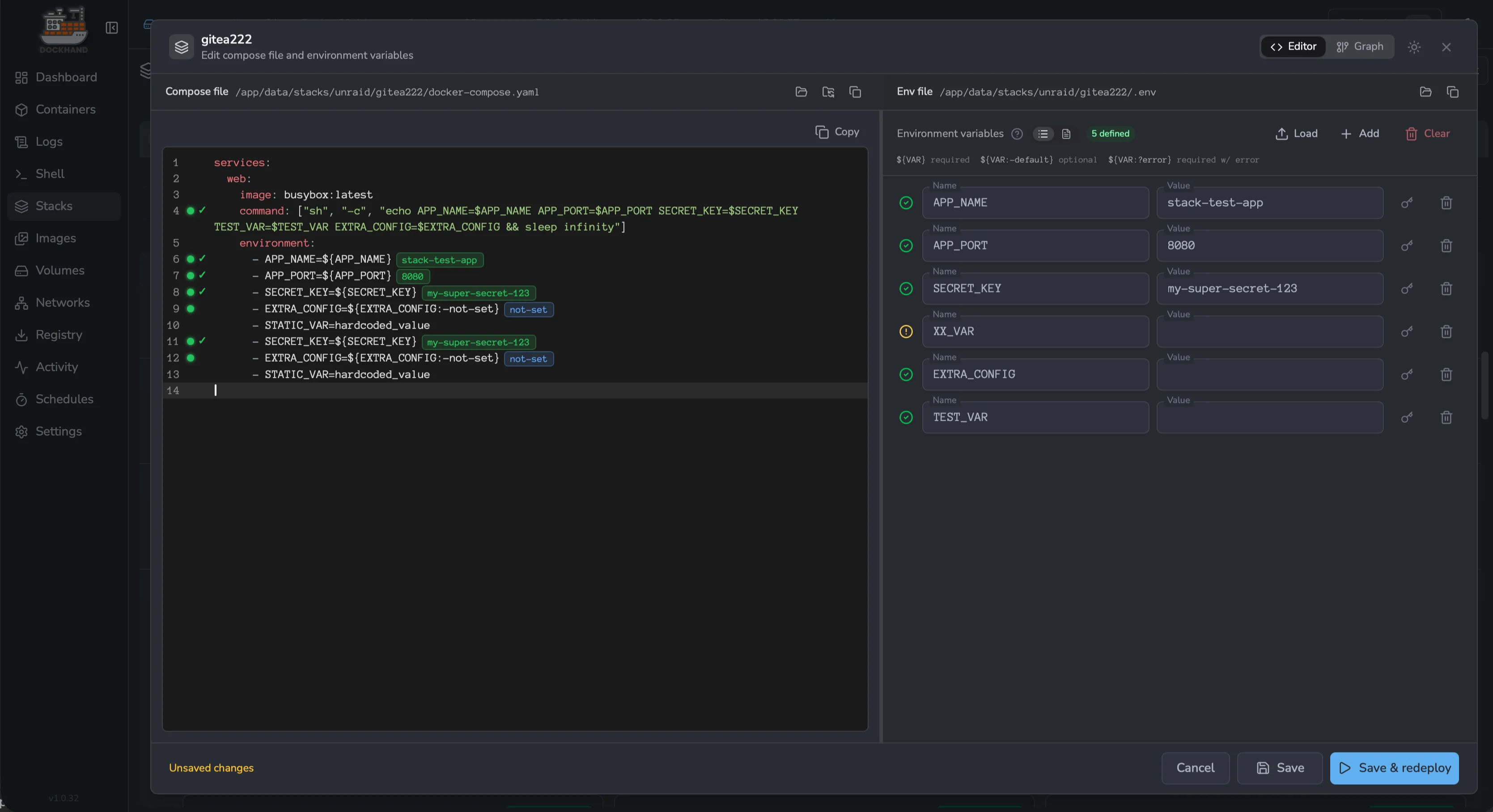
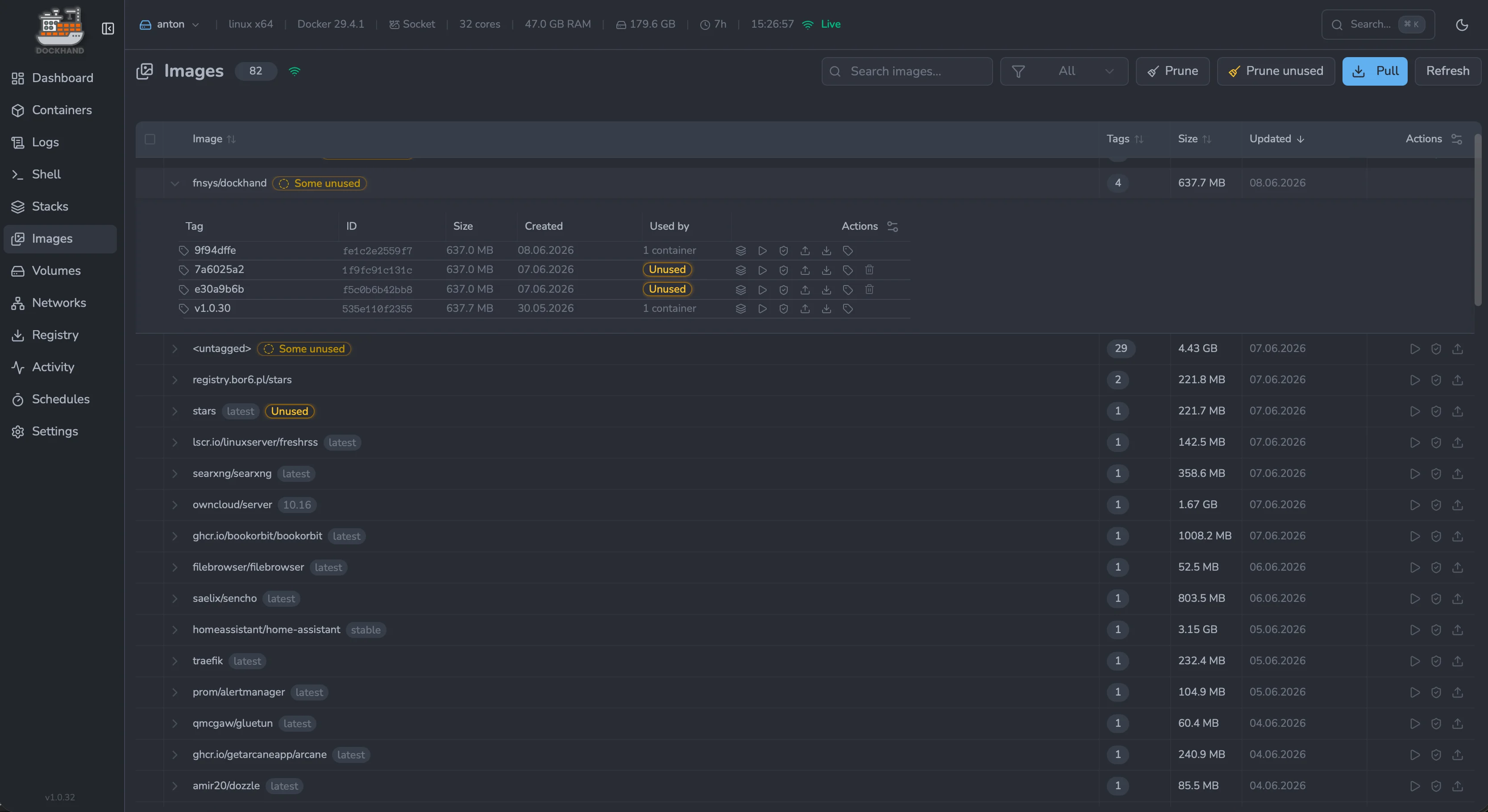
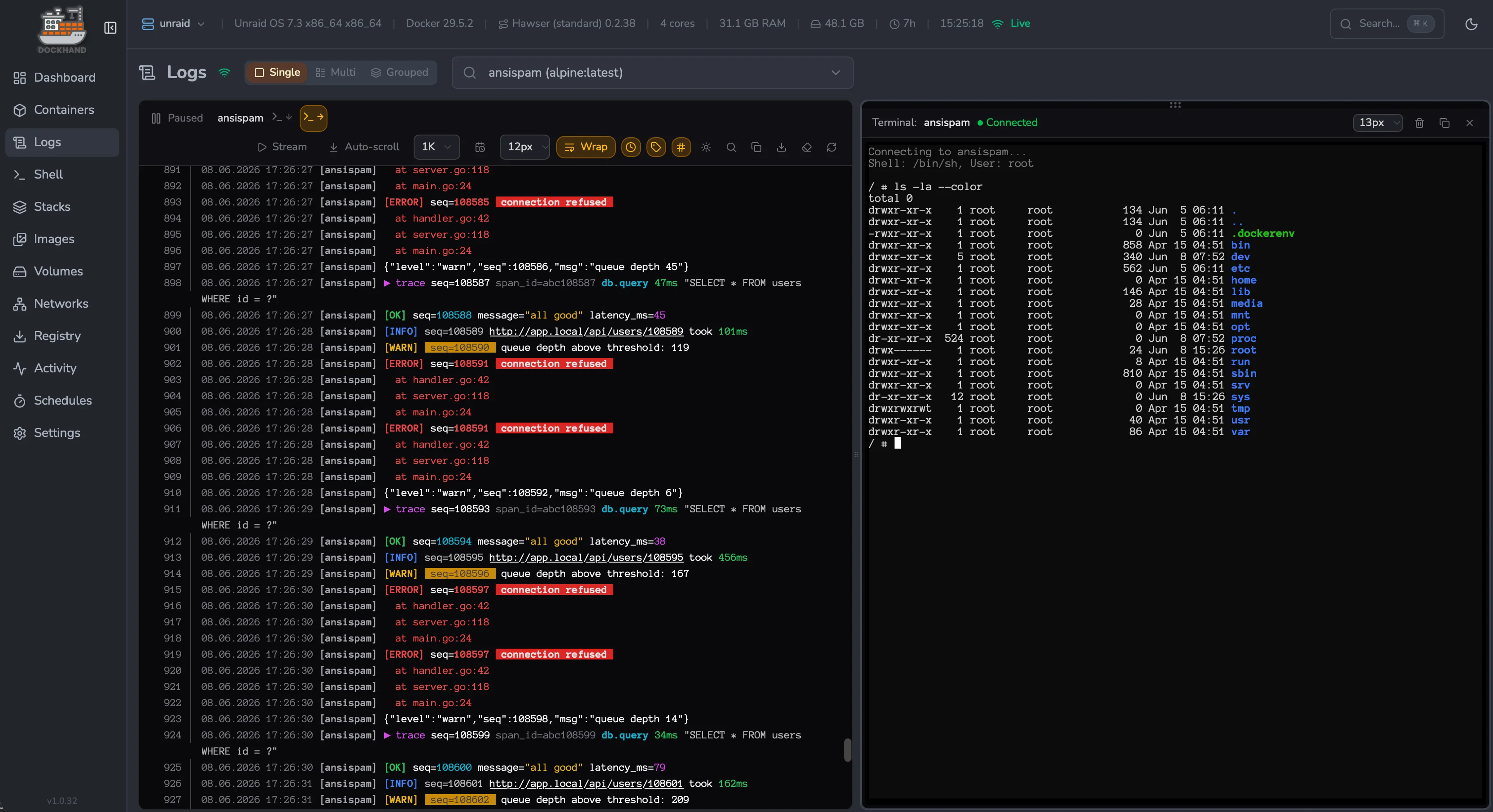
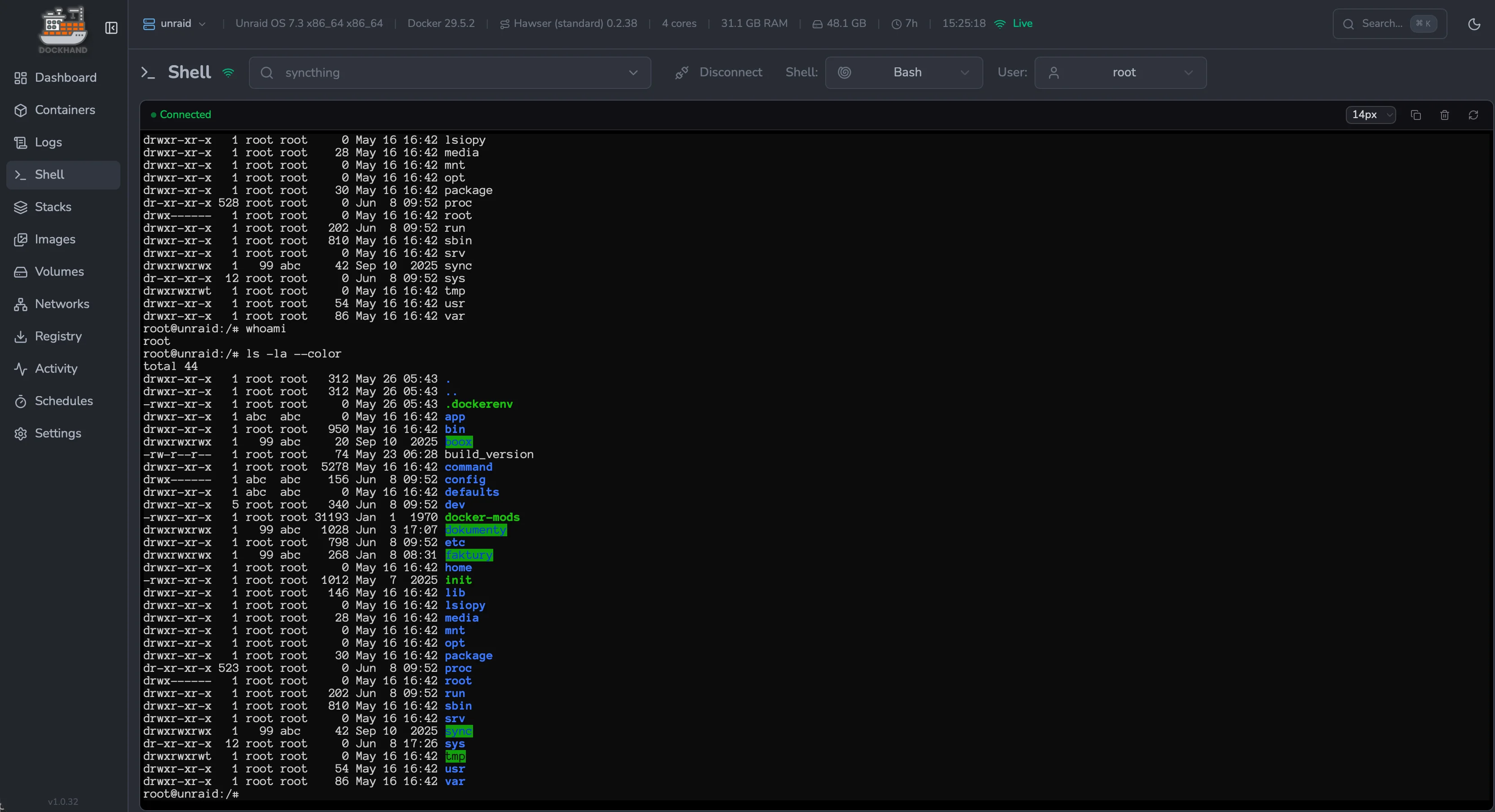
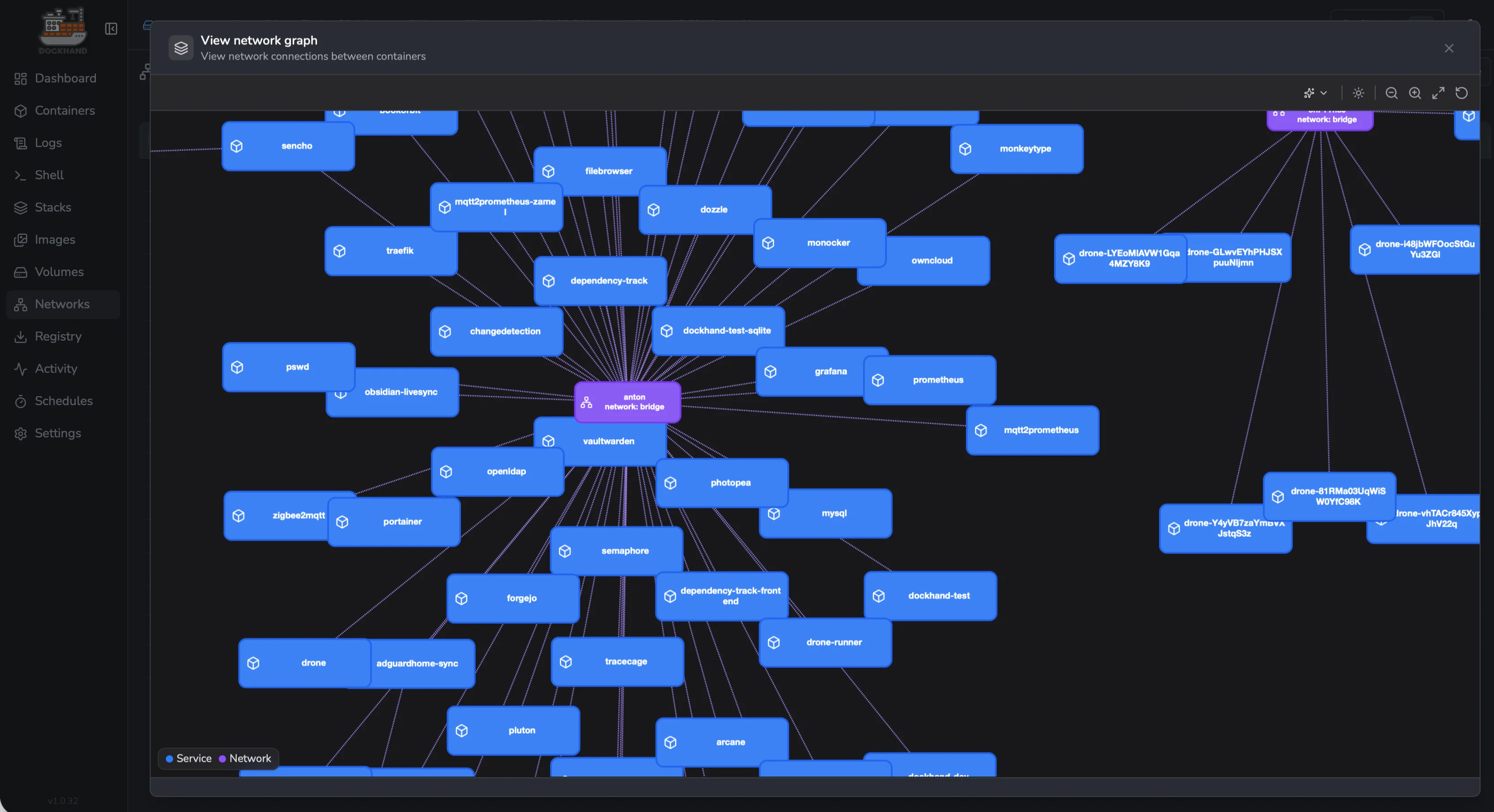
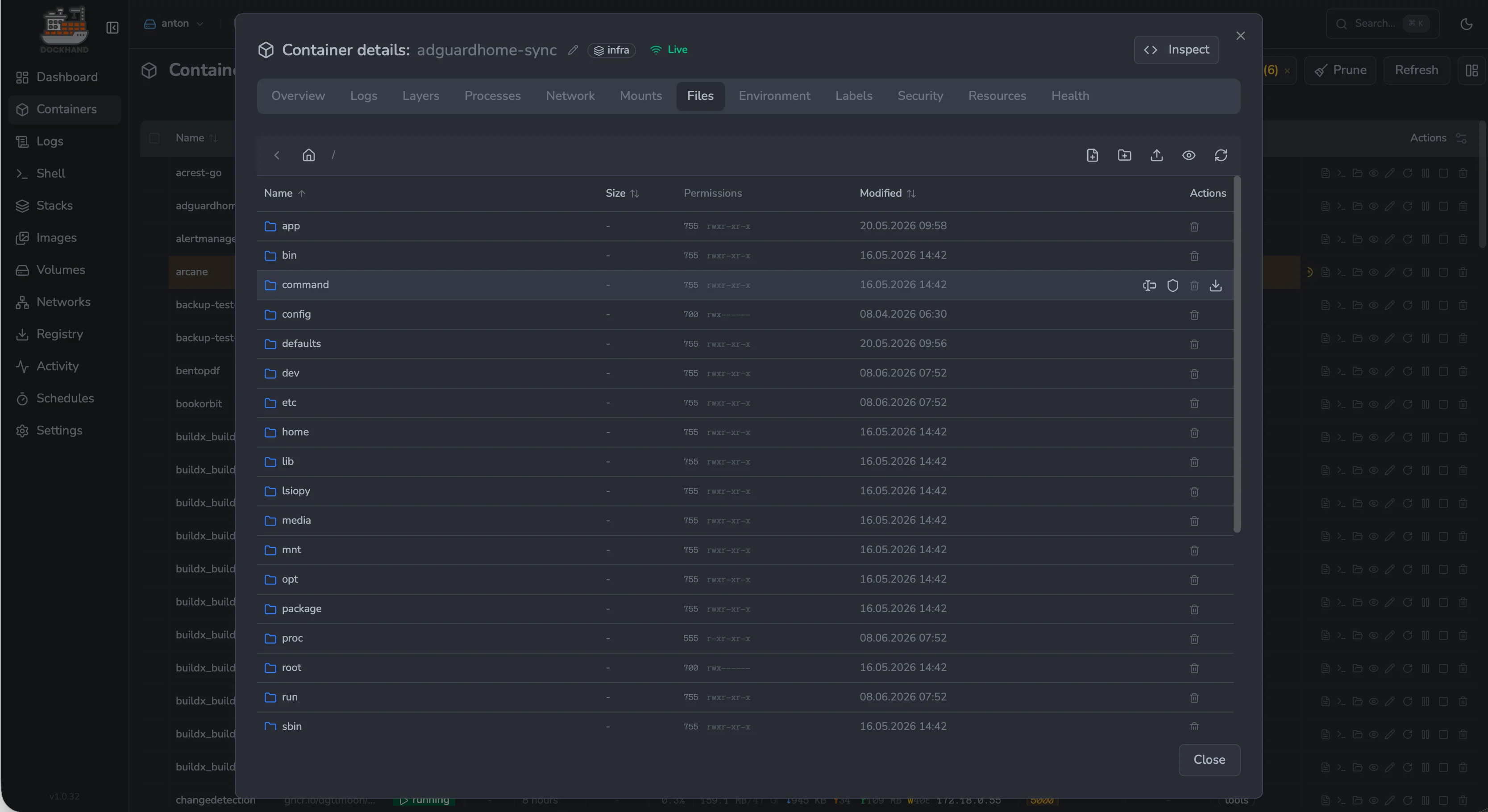
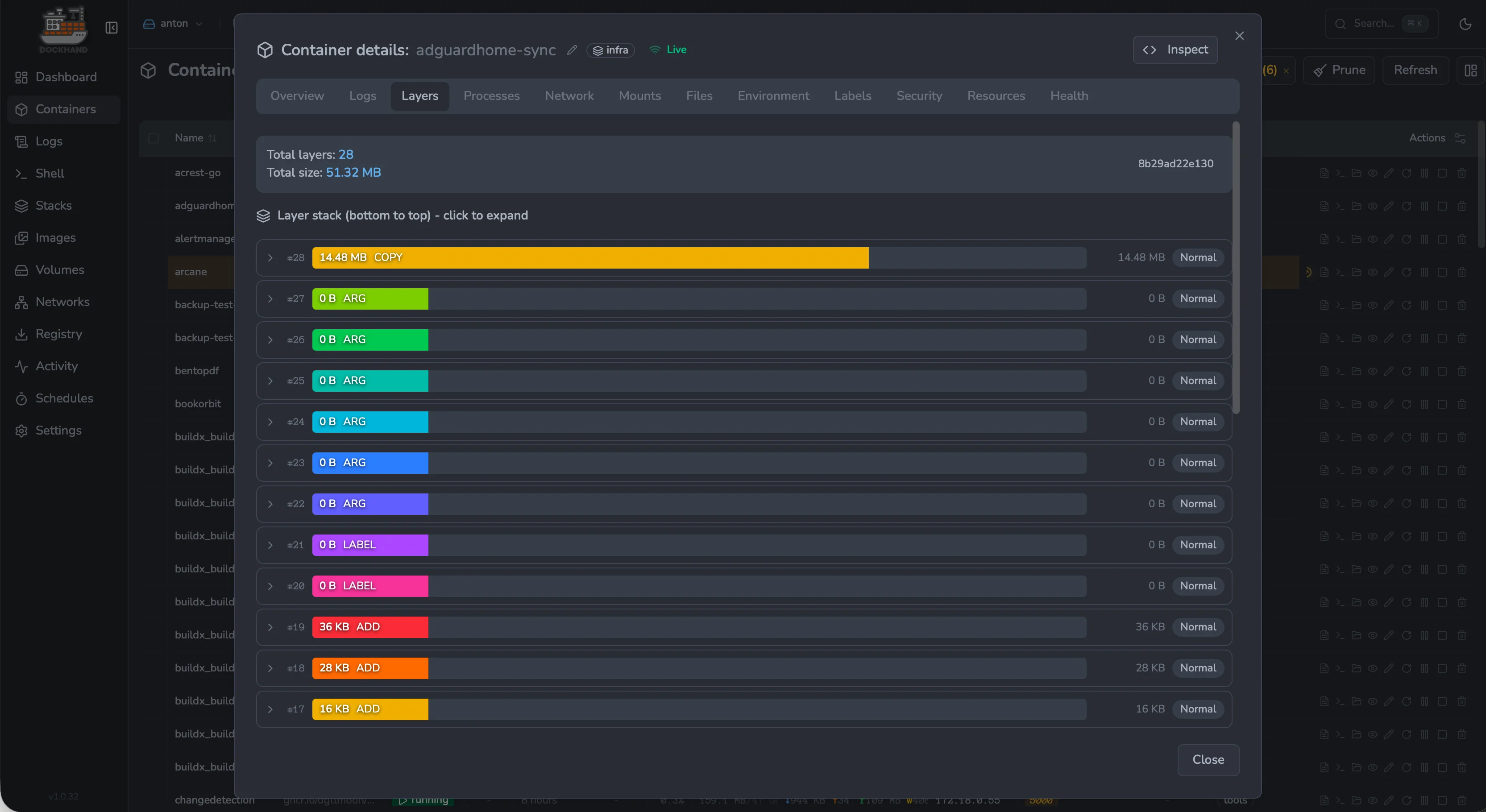
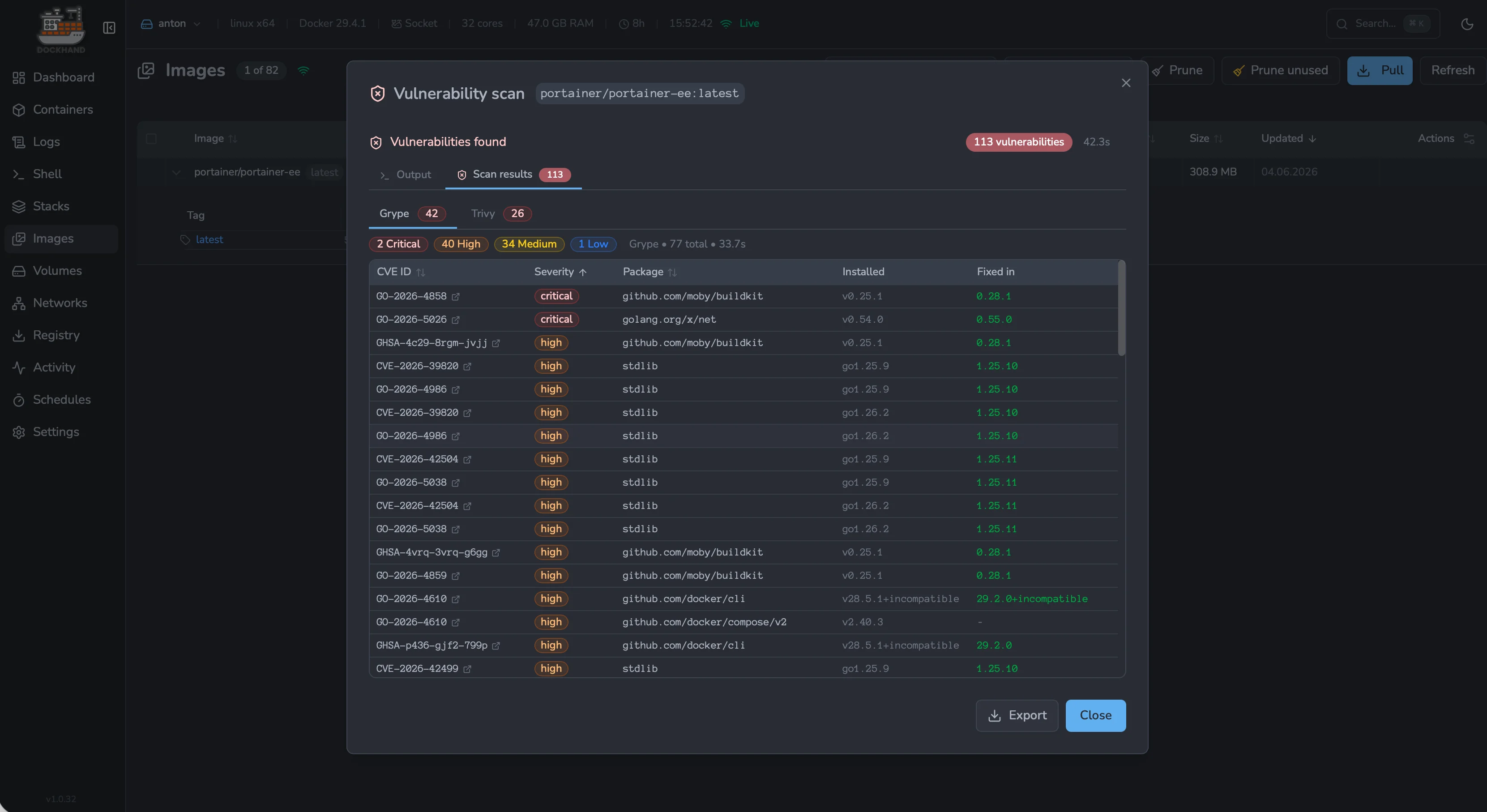
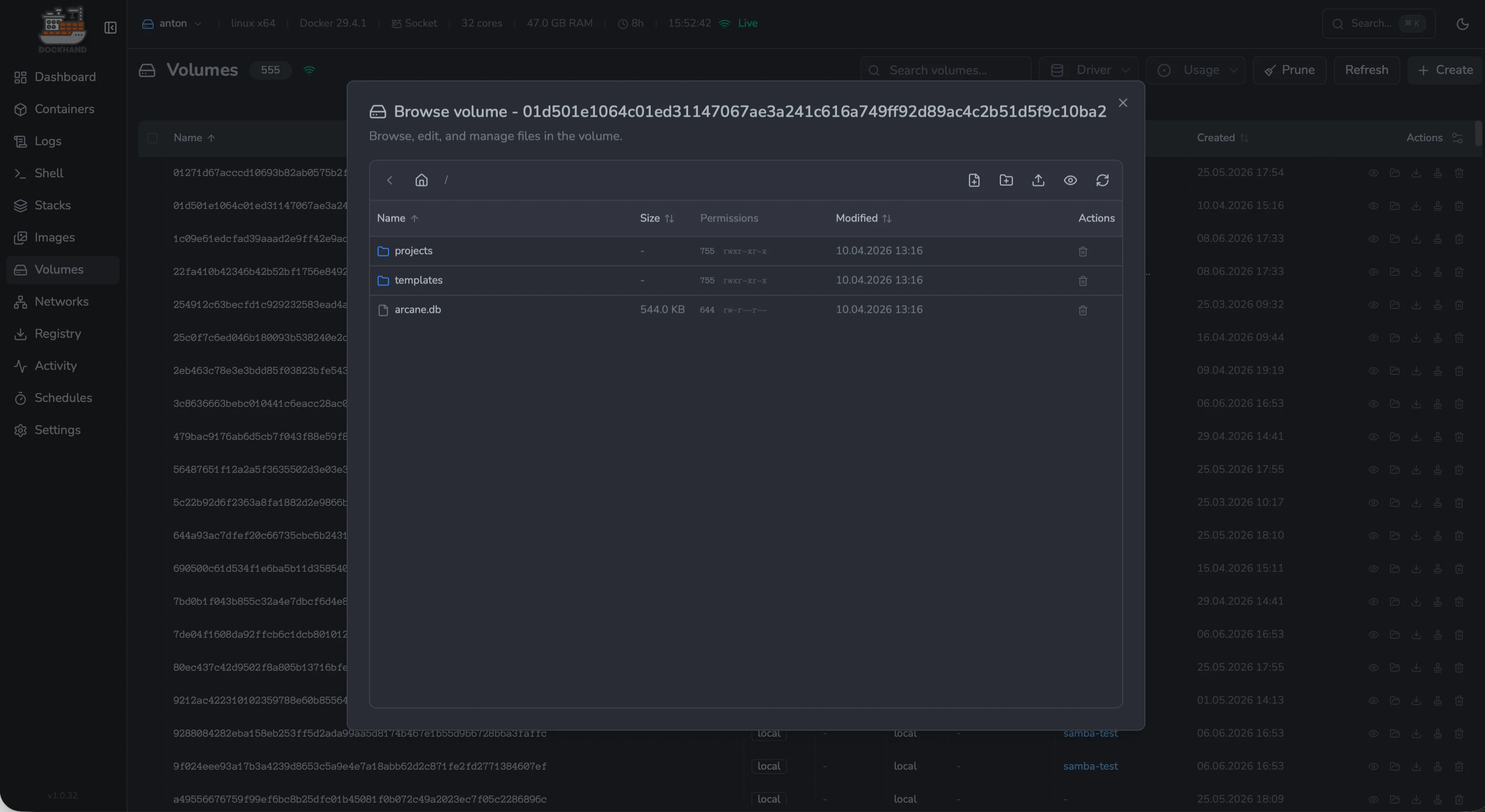
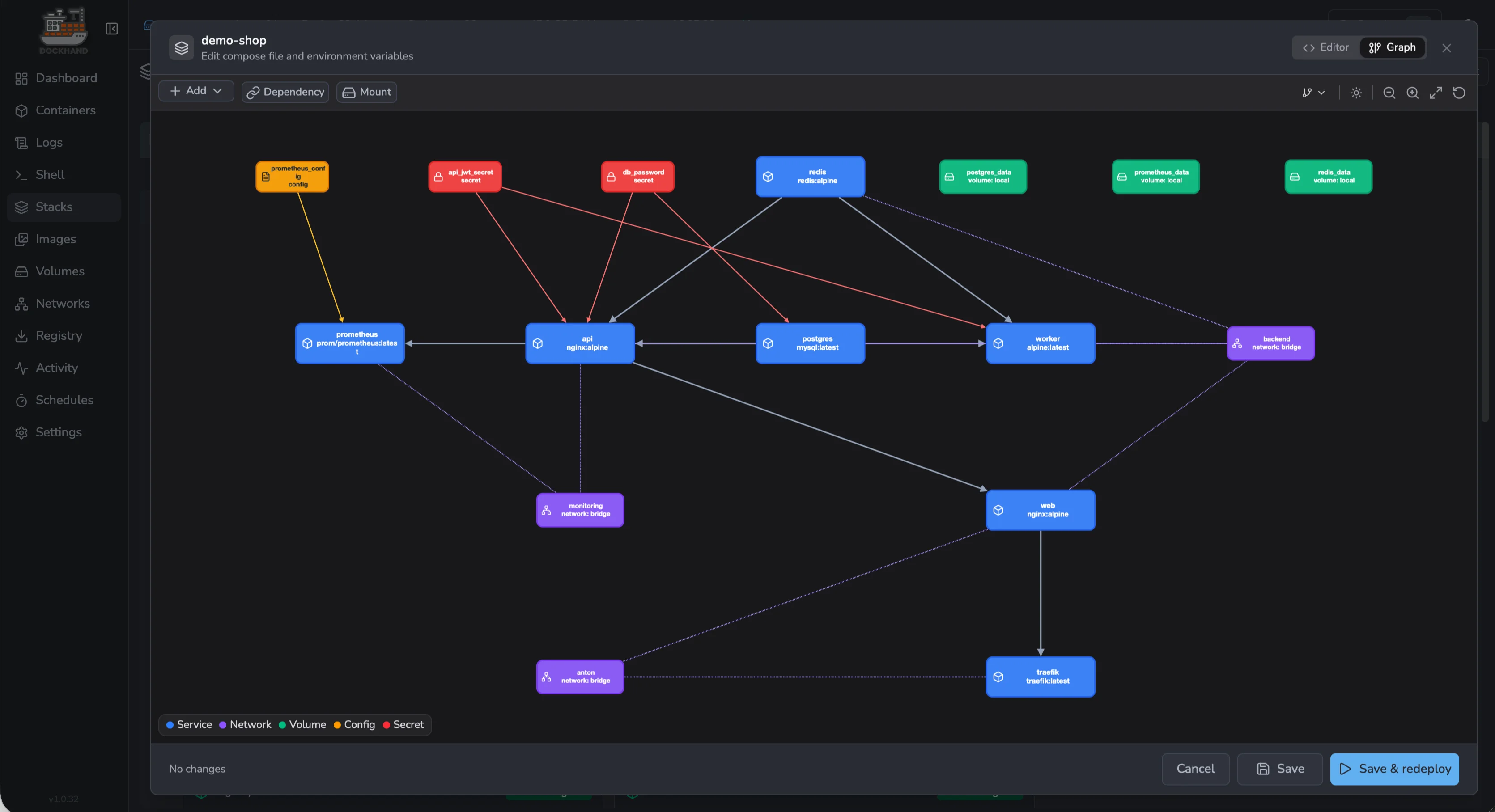
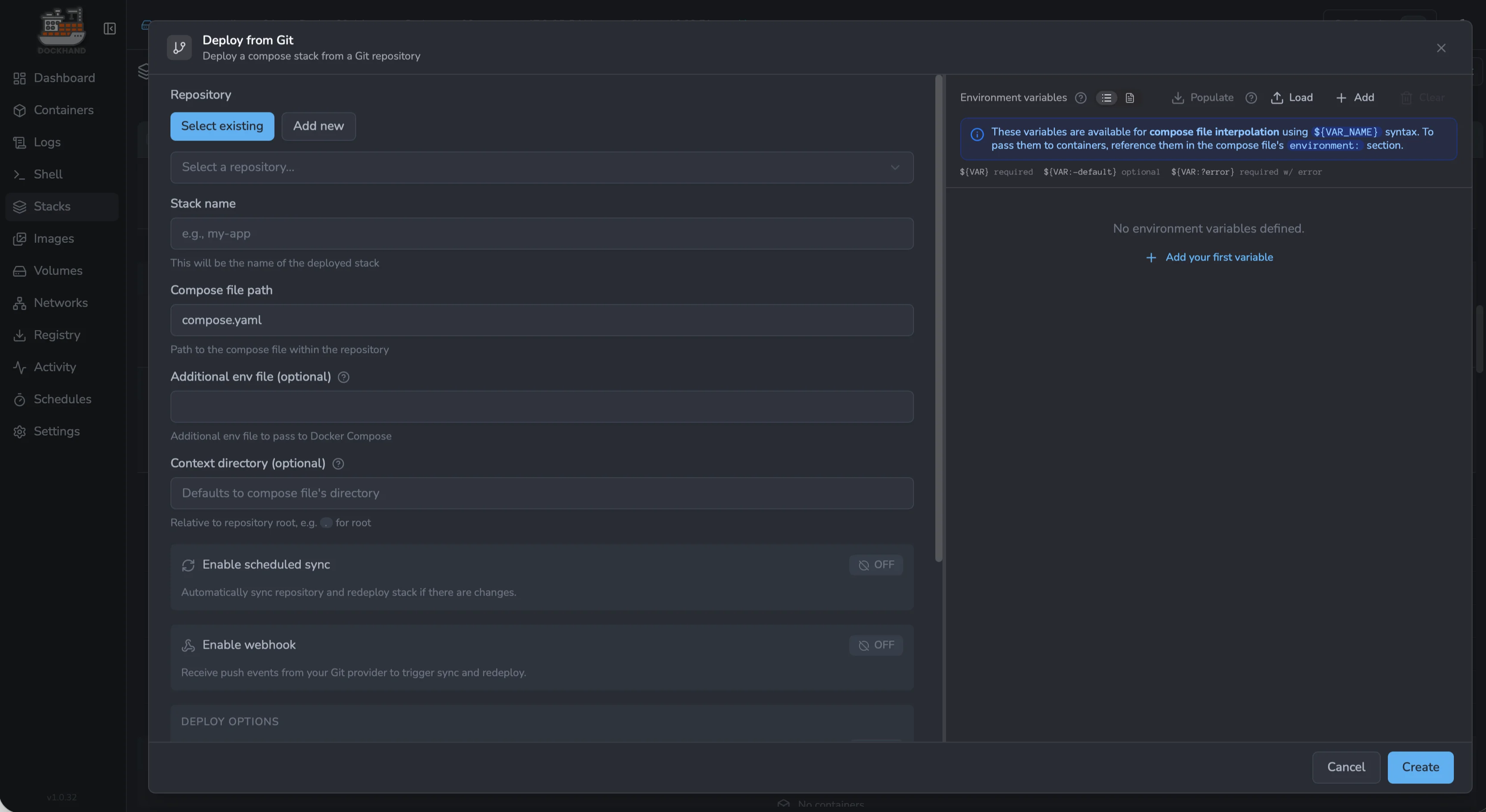
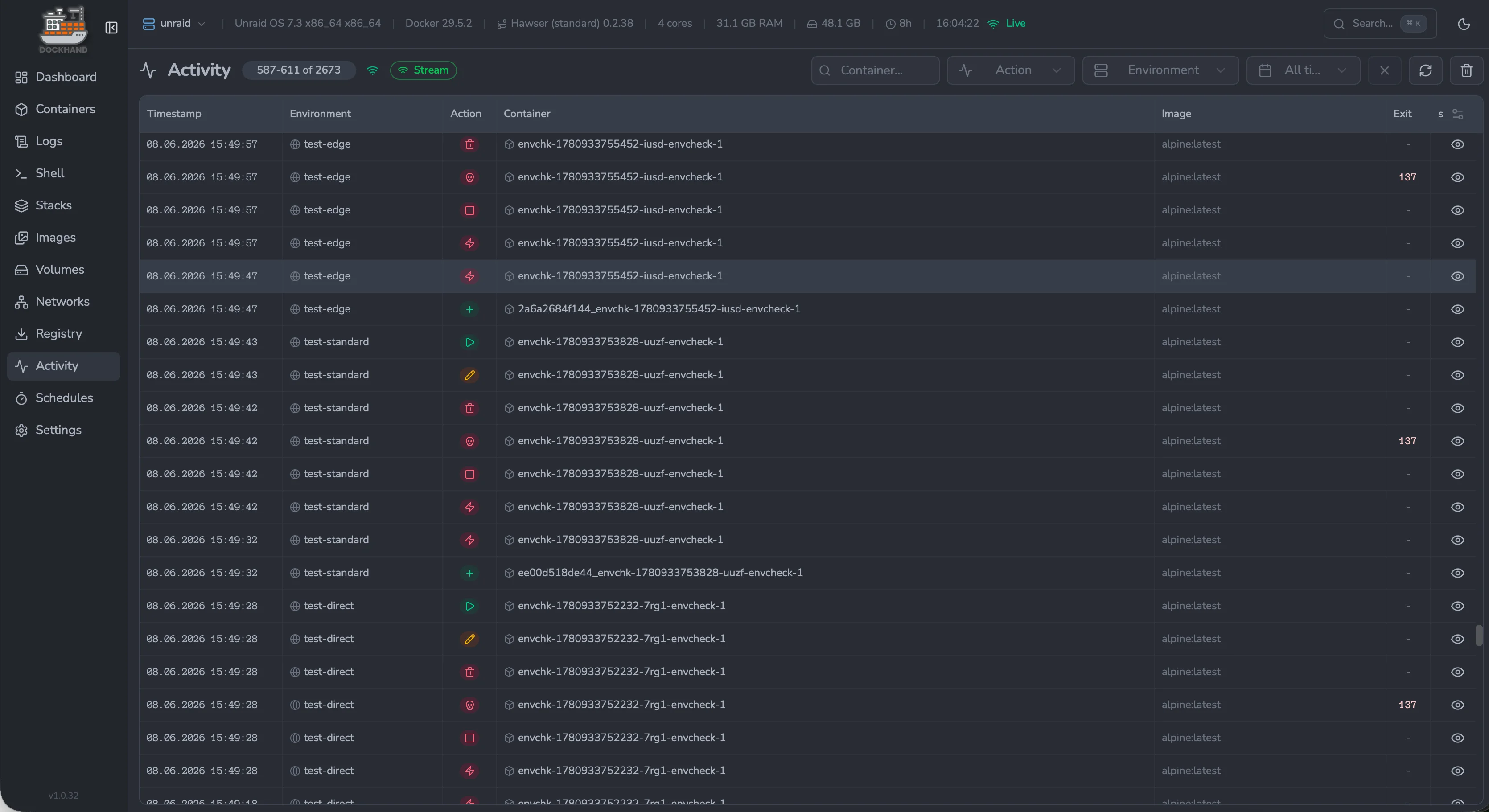
Dockhand is a self-hosted Docker management web UI targeting developers and homelab operators who want a single pane of glass for container lifecycle management, Compose stack orchestration, Git-based deployments, and multi-environment support. Built with SvelteKit 5 and Bun, it differentiates itself with features like vulnerability scanning (Grype/Trivy integration), a visual network graph, container file browsing, volume browsing, and an activity audit log. It positions itself as a privacy-focused, lightweight alternative to heavier solutions, with optional RBAC and SSO for small teams.
Created in late December 2025, Dockhand is a young project — roughly six months old as of evaluation date. It appears to have been built from scratch rather than forked from an existing tool, targeting a market that already has several established players.
Gaining ~5,000 stars in roughly six months is notable traction for a new Docker UI. The ~103 stars in the last 7 days suggests sustained, organic interest rather than a single viral spike. The Docker management UI space periodically sees new entrants go viral on communities like Hacker News, Reddit r/selfhosted, and X/Twitter, and Dockhand's feature breadth likely generated discovery across these channels.
Adoption not verified from README or metadata alone. The 5,011 stars and 193 forks suggest meaningful interest and likely self-hosted deployments, but no case studies, download counts, Docker Hub pull metrics, or testimonials are referenced in the available README excerpt.
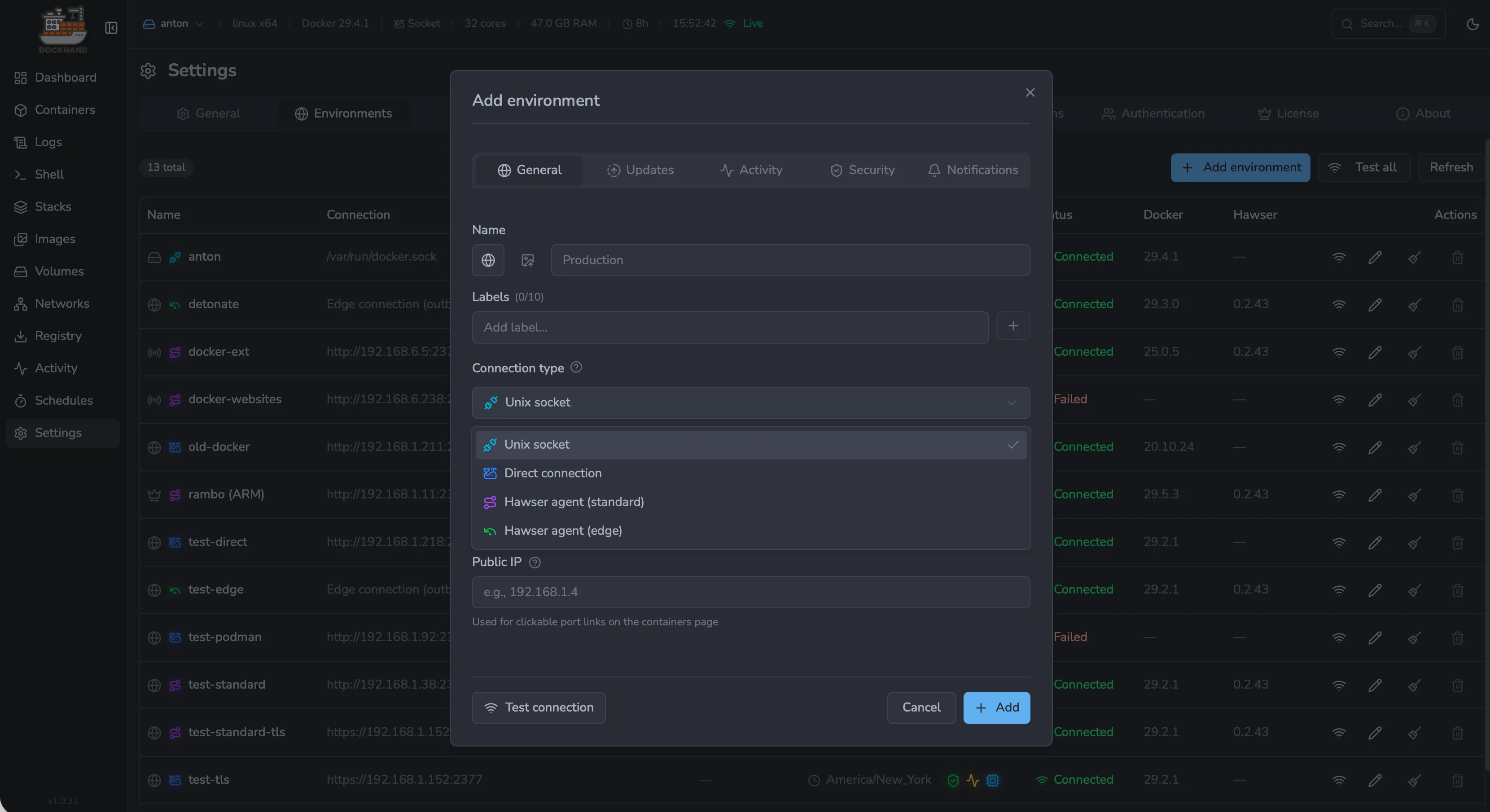
Appears to use a monorepo SvelteKit 2/5 app serving both frontend and backend API routes, with Bun as the runtime. Database layer appears to support SQLite (for single-node deployments) and PostgreSQL (for teams/enterprise) via Drizzle ORM. Docker communication appears to use direct Docker API calls rather than CLI subprocess wrapping, which likely improves reliability. The base OS layer uses Wolfi/apko for a minimal, explicitly declared package surface, suggesting a security-conscious build approach. Connection to remote Docker hosts appears to support socket, agent, and direct TCP.
Not documented in README.
Last push was 2026-06-27, one day before evaluation date — the project is actively maintained. With 193 forks and regular commits, development velocity appears high for a ~6-month-old project. The feature set documented in the README is extensive and suggests sustained development effort.
ADOPT IF: you run multiple Docker hosts in a homelab or small-team environment and want a single web UI with Compose management, Git deployment, file browsing, and vulnerability scanning — and you are comfortable adopting a project under six months old. AVOID IF: you need proven production stability, enterprise support contracts, Kubernetes or Docker Swarm management, or a tool with a multi-year track record in regulated environments. MONITOR IF: you are currently using Portainer CE or Dockge and are evaluating whether to migrate — wait 6–12 more months to assess long-term maintenance commitment and stability.
Independent dimensions
Mainstream potential
5/10
Technical importance
6/10
Adoption evidence
3/10
- Project is approximately six months old; long-term maintenance commitment from the author(s) is unproven — early-stage burnout or abandonment is a real possibility.
- License is listed as NOASSERTION in metadata, which may indicate an ambiguous or non-standard license. Users should verify the actual license terms before deploying in commercial or organizational contexts.
- Enterprise features (RBAC, SSO) are described as 'Enterprise' tier; pricing and sustainability model are not described in the available README, creating uncertainty about future feature gating.
- The feature set is broad for a young project, which may mean some features are less mature or tested than the screenshots suggest — no test coverage documentation exists.
- Competing against well-established tools with large communities means that support resources (forums, Stack Overflow answers, community plugins) will be sparse compared to Portainer or similar tools.
Dockhand will likely consolidate into a well-regarded homelab and small-team tool over the next 12–18 months if maintenance continues at the current pace. It is unlikely to displace Portainer in enterprise contexts but may become a preferred choice in the self-hosted community.
Newsletter
Get analyses like this every Monday
Free weekly digest of the most interesting open-source discoveries.
Languages
Information
- Website
- https://dockhand.pro
- Language
- Svelte
- License
- NOASSERTION
- Last updated
- 2w ago
- Created
- 6mo ago
- Analyzed with
- anthropic/claude-haiku-4-5
Stars over time
Contributors over time
Top 100 contributors only — repos with more will plateau at 100.
Open issues
[BUG] Activity log time filters are applied to UTC instead of configured timezone
[BUG] TooManyRequests on Auto-Update of Multiple Containers
[BUG] /api/containers/check-updates is a POST not a GET
[BUG] Daemon hostname and IP display incorrect container ID and Docker bridge IP instead of actual daemon info
[Feature Request] Confirmation on edited file close.
Top contributors
Similar repos

jesseduffield/lazydocker
lazydocker is a terminal UI (TUI) application written in Go that provides a...

GhostWriters/DockSTARTer
DockSTARTer is a shell-based helper tool that simplifies initial Docker and...
| Repository | Stars | Week Δ | Language | Score | Updated |
|---|---|---|---|---|---|
|
Finsys/dockhand
this
|
5.1k | +51 | Svelte | 7/10 | 2w ago |
 louislam/dockge louislam/dockge
|
23.7k | — | TypeScript | 8/10 | 3mo ago |
 lirantal/dockly lirantal/dockly
|
4k | — | JavaScript | 7/10 | 3w ago |
|
jesseduffield/lazydocker
|
52k | — | Go | 8/10 | 3mo ago |
|
GhostWriters/DockSTARTer
|
2.6k | — | Shell | 7/10 | 1d ago |
 portainer/portainer portainer/portainer
|
37.9k | — | TypeScript | 8/10 | 24h ago |
Portainer is the dominant enterprise-grade Docker/Kubernetes UI with Swarm and K8s support, a large community, and a commercial tier. Dockhand appears to cover a similar feature surface for Docker-only environments but positions itself as lighter and more privacy-focused. Portainer's free tier has feature restrictions that Dockhand may not impose, which could attract users frustrated by those limits.
Dockge (23k stars) is narrowly focused on Compose stack management with a clean UI. Dockhand covers Compose stacks but also adds container management, image inspection, vulnerability scanning, Git integration, and more — making it broader in scope. Users wanting only Compose management may prefer Dockge's simplicity.
Lazydocker is a terminal UI (TUI), not a web UI, targeting power users comfortable in the terminal. The two tools serve different interaction models and are not direct substitutes. Lazydocker has far higher adoption but occupies a different UX niche.
Dockit (1,115 stars) is also a newer Docker desktop-style management UI. Both are younger entrants to the space; Dockhand has significantly more traction and a broader server-oriented feature set.
Not a direct competitor — it is a reference repository of Compose templates. Indirectly relevant because Dockhand's Git integration could be used to deploy stacks from such template repos, making them complementary rather than competing.