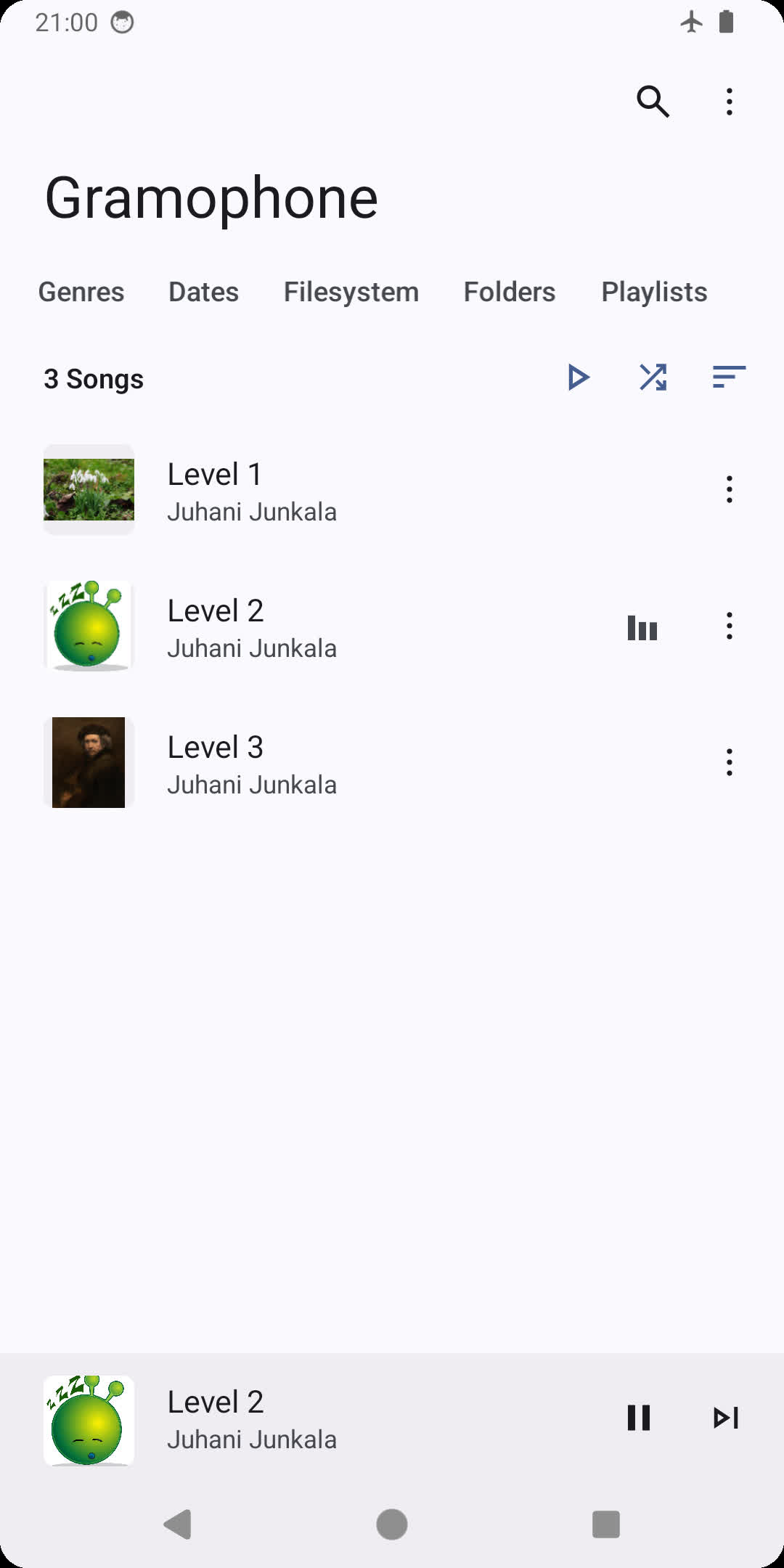
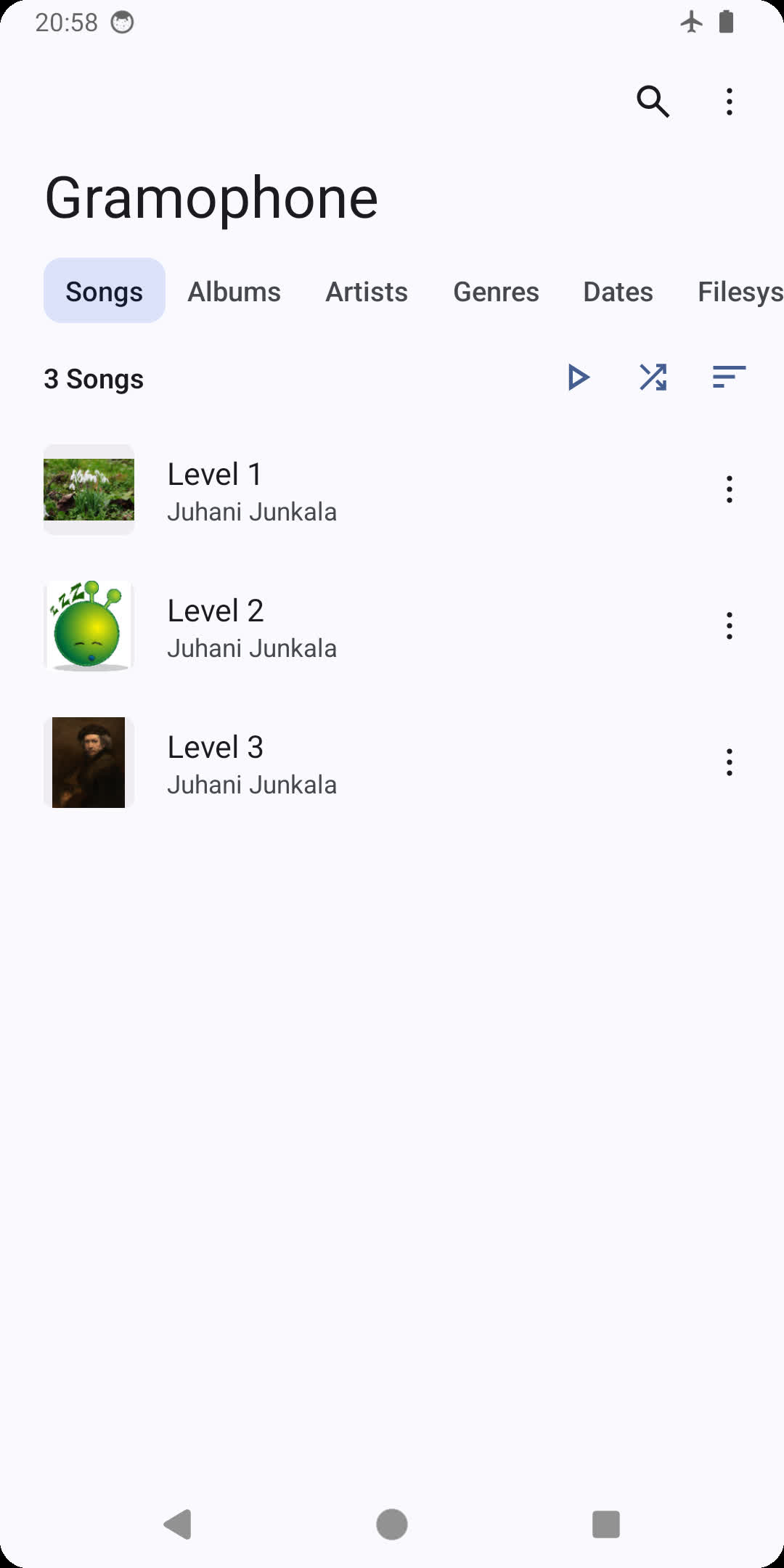
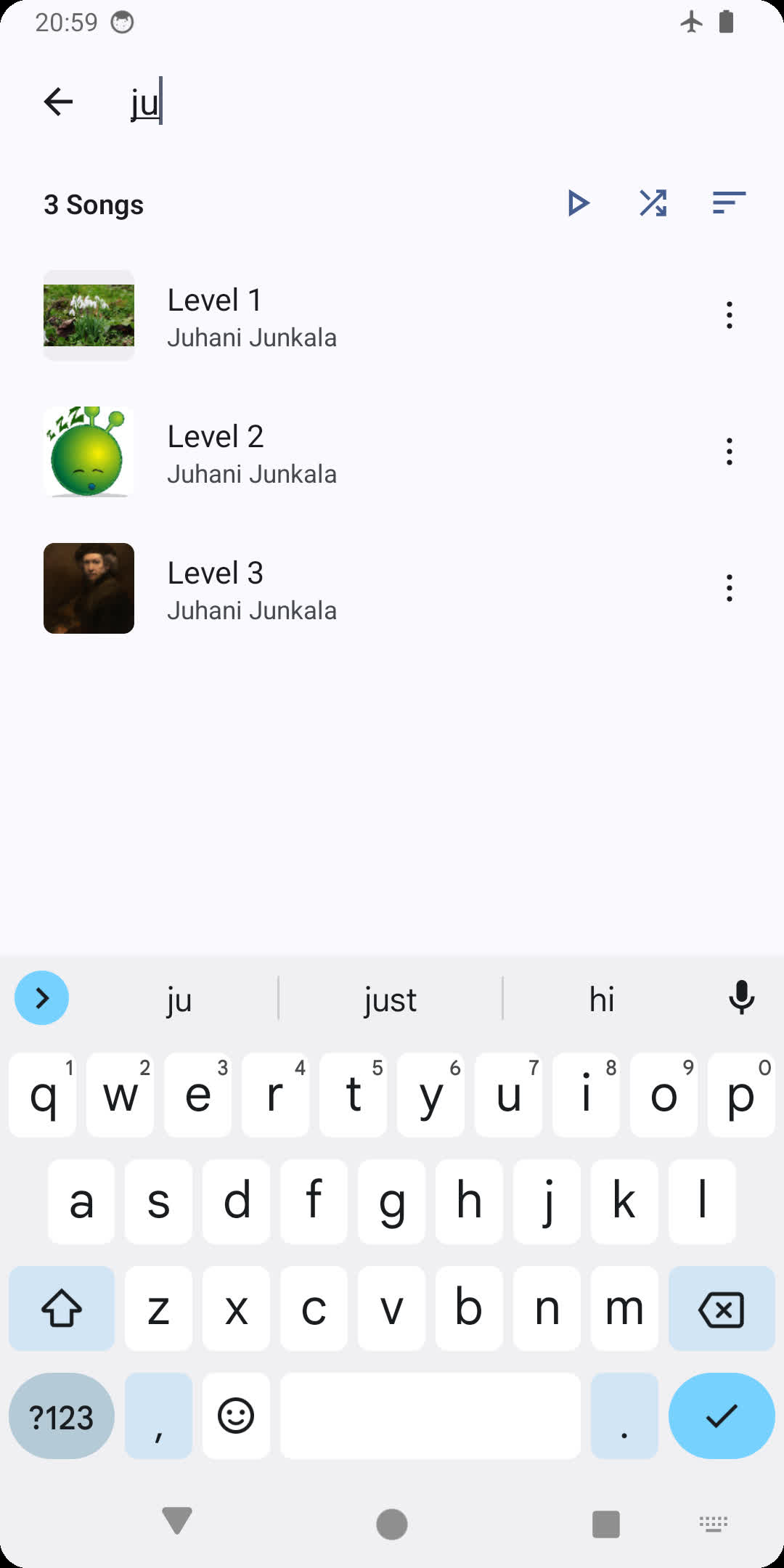
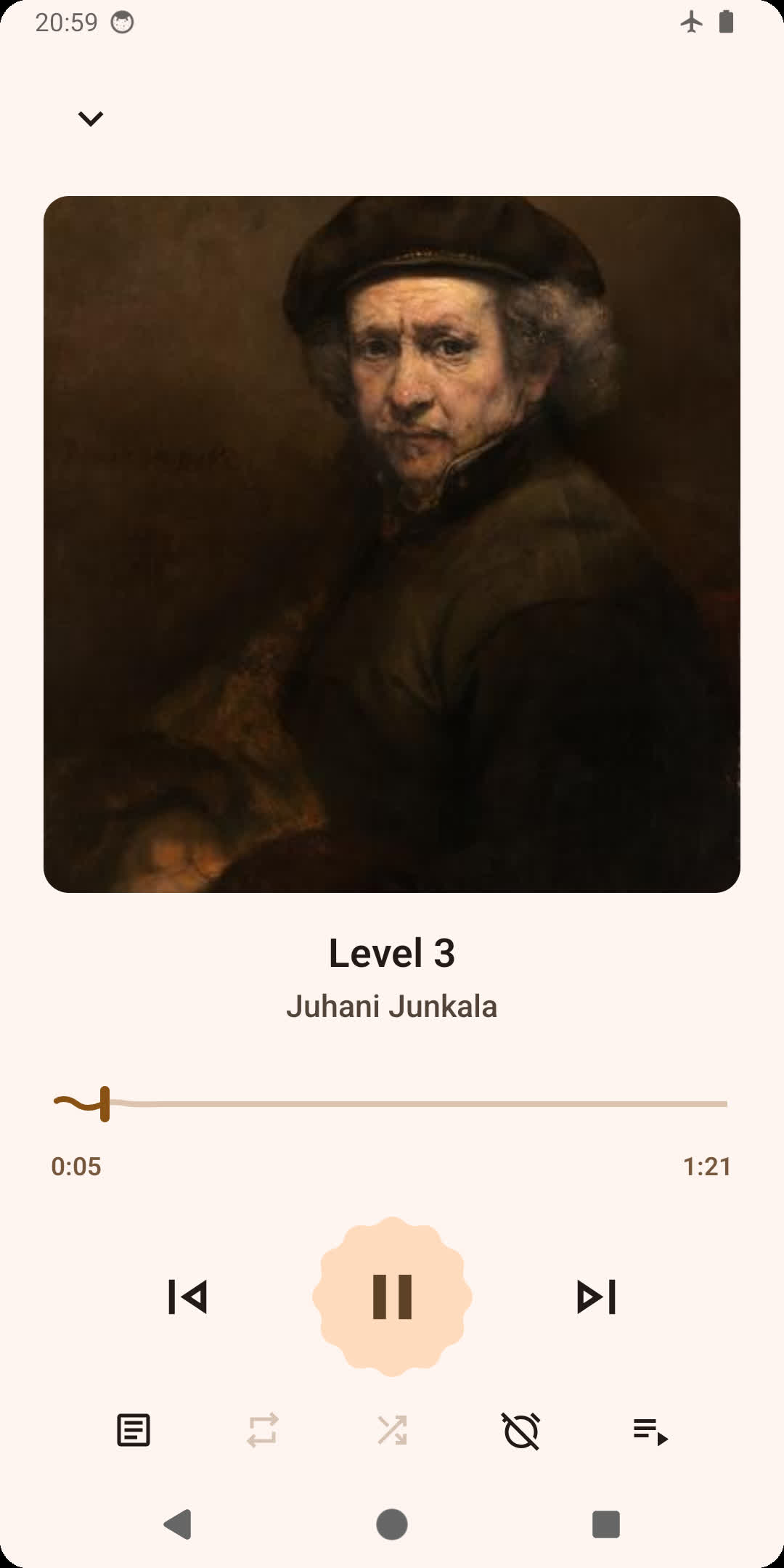
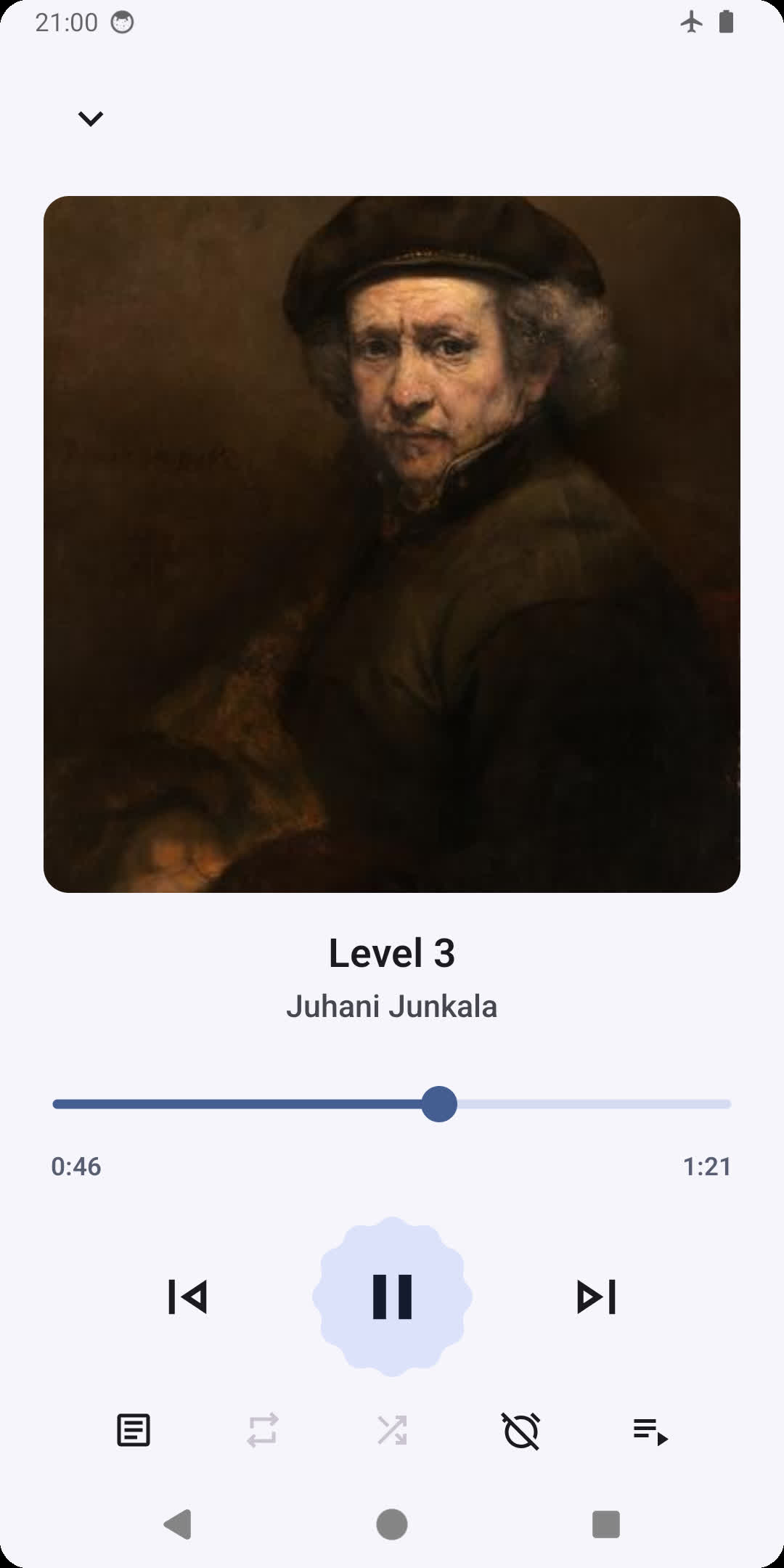
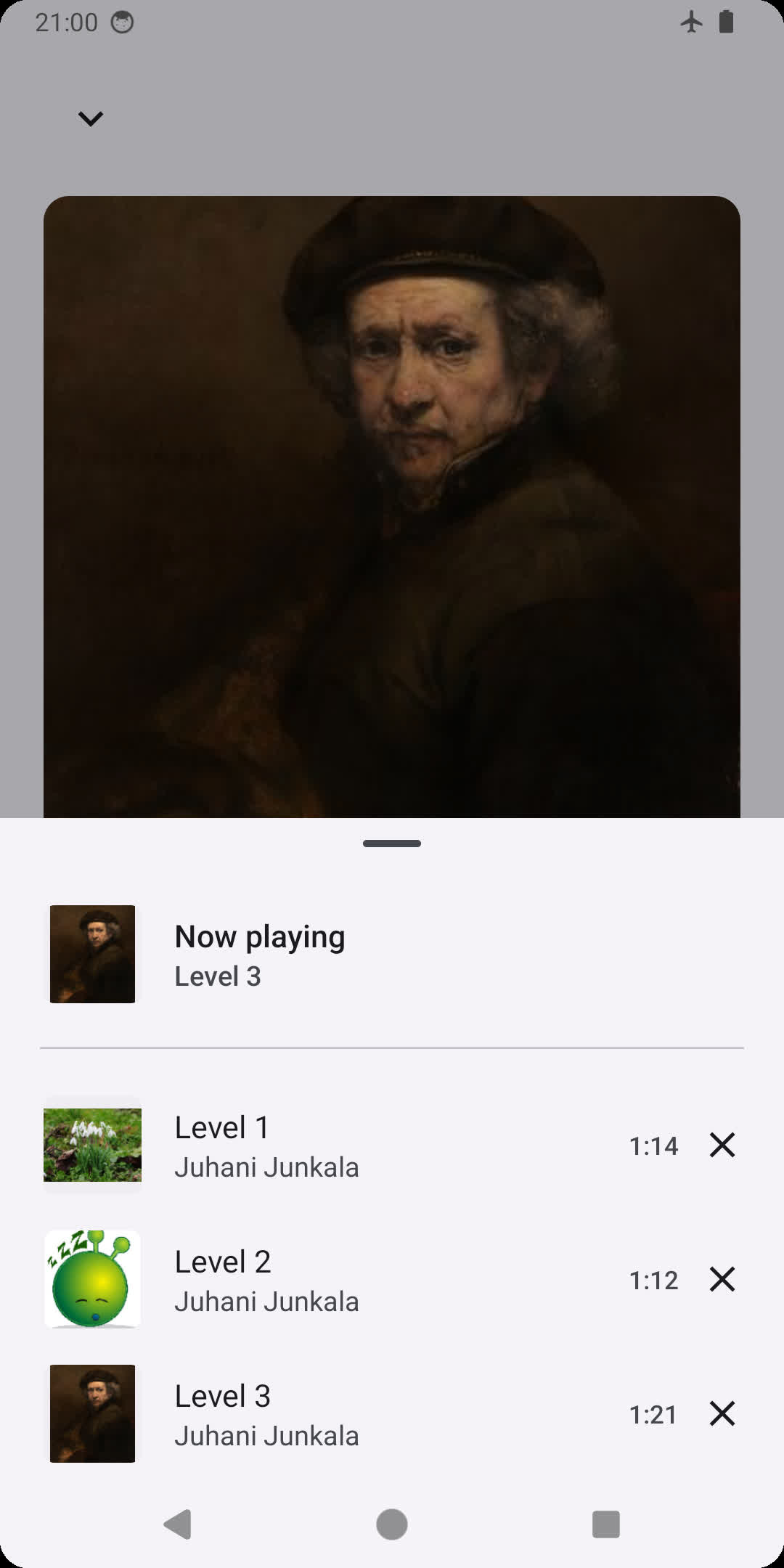
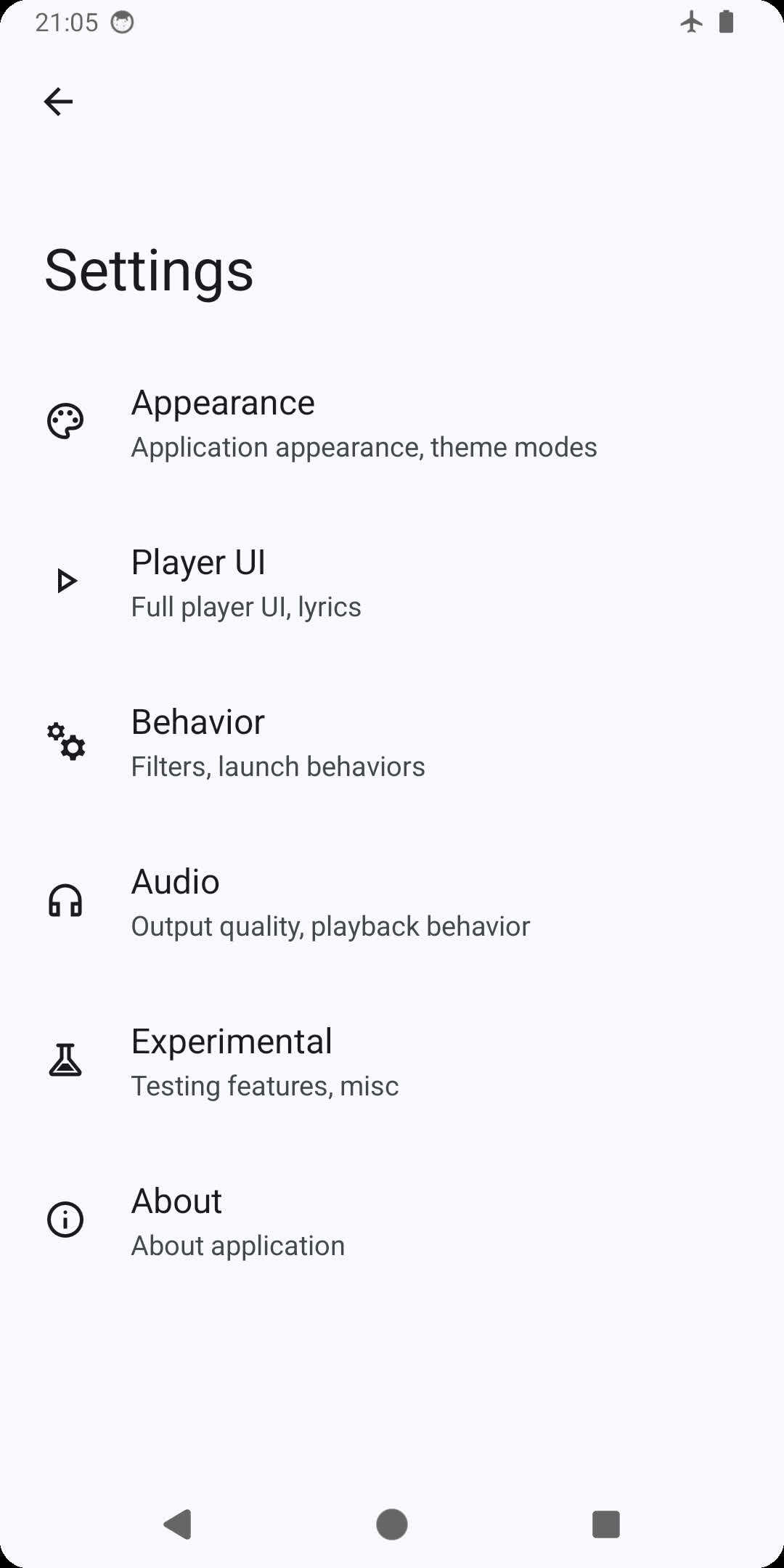
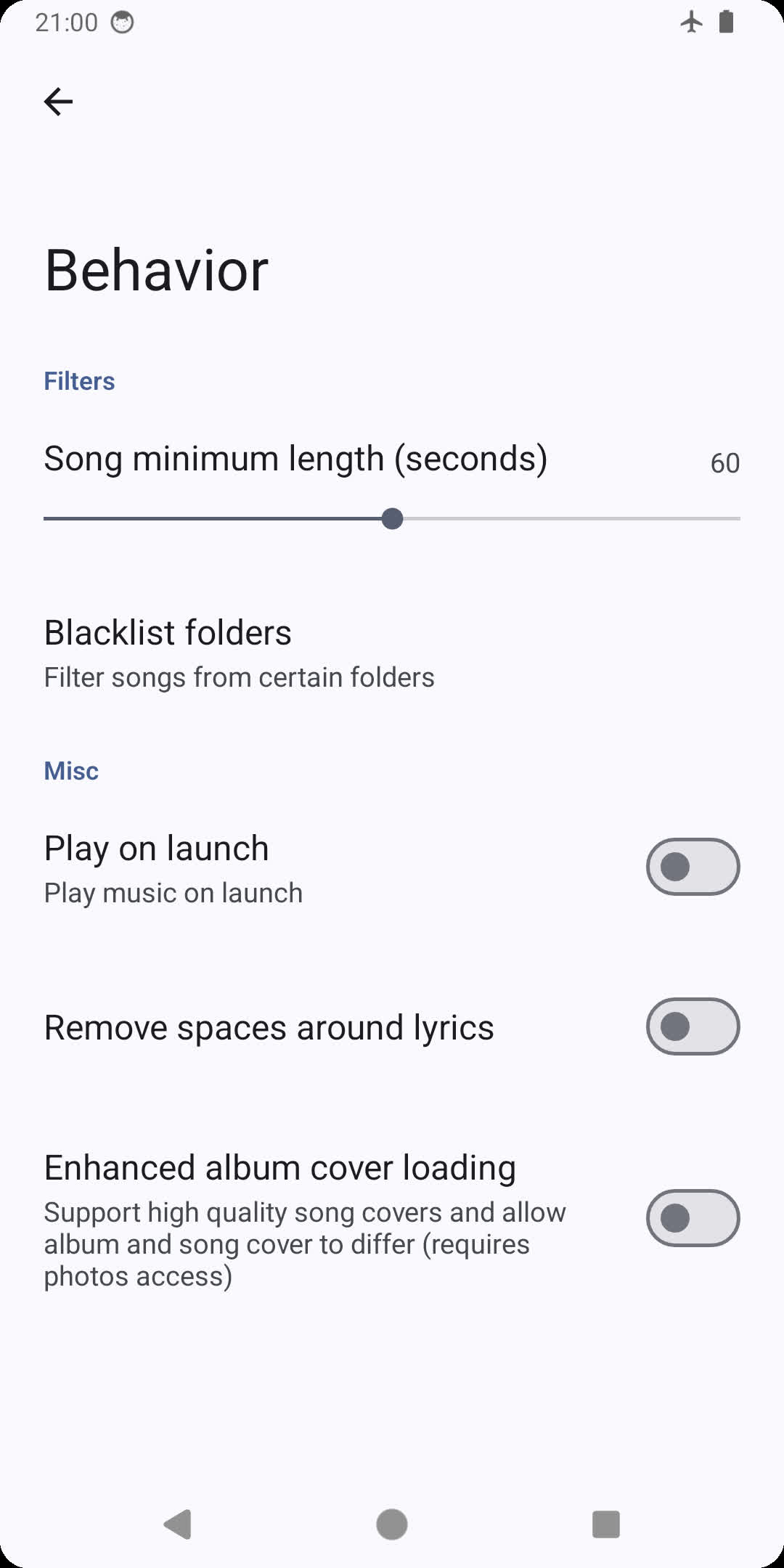
A sane music player built with media3 and material design library that is following android's standard strictly.
2.2k
Stars
119
Forks
272
Open issues
30
Contributors


AI Analysis
Gramophone is a native Android music player built with Media3 and Material Design 3, emphasizing adherence to Android standards and a minimalist interface. It serves end users seeking a lightweight, privacy-focused local music player with features like synced lyrics, ReplayGain support, and Material You theming. Best suited for Android users who value clean design and offline music playback; not intended for streaming-first or cross-platform use cases.
Inferred from signals mentioned in the README (tests, CI, type safety) — not a review of the actual code.
AI's overall editorial judgment — not an average of the bars above, can weigh other factors too.
Minimalist Android music player emphasizing Material Design compliance and local library management
Gramophone is a lightweight local music player for Android built with media3 and Material Design 3. It targets users seeking a standards-compliant, feature-focused alternative to heavier players, with particular attention to synced lyrics, ReplayGain support, and filesystem browsing. Adoption appears limited to open-source enthusiast communities (F-Droid, IzzyOnDroid, Play Store) rather than mainstream consumers. The project shows consistent maintenance and modest growth since launch in August 2023.
Gramophone emerged in August 2023 as a fresh entry in the crowded Android music player space. The project was explicitly designed to prioritize Material Design 3 compliance and Android standards adherence—a deliberate positioning away from feature-bloat toward minimalism and design consistency.
The project gained 2,135 stars over ~3 years with stable 7-star weekly growth as of June 2026, indicating modest but steady interest. Distribution across F-Droid, IzzyOnDroid, and Play Store suggests adoption within open-source and privacy-conscious user segments. Last commit on 2026-06-29 shows active maintenance. Growth has not accelerated materially, suggesting a stable niche rather than expanding market capture.
Adoption not verified at production scale. Evidence limited to open-source distribution channels: F-Droid listing, IzzyOnDroid availability, and Google Play Store presence. GitHub star count (2,135) and fork count (117) are modest relative to similar projects (PixelPlayer: 5,248 stars; Musify: 4,031 stars). User base appears concentrated in open-source and privacy-focused communities rather than mainstream consumers. No enterprise or institutional adoption signals detected.
Based on README, the project uses media3 (AndroidX media library) and Material Design library, built in Kotlin. Appears to follow MediaStore-based music discovery for on-device library access. Likely implements Monet dynamic theming (Android 12+) and supports third-party equalizer integration. README indicates modular features (lyrics sync, ReplayGain, system integration) but actual implementation detail is not visible.
Not documented in README. No mention of testing infrastructure, CI/CD, or test strategies.
Last push 2026-06-29 (one day before current date), indicating very recent activity. Active translation support via Weblate. Presence of beta channel and Telegram community suggests ongoing development and user engagement. No red flags of abandonment; project appears actively maintained with responsive author presence.
ADOPT IF: You are an Android user prioritizing Material Design 3 compliance, local-only music playback, synced lyrics (LRC/TTML/SRT), and ReplayGain support, AND you are comfortable with open-source software and F-Droid distribution. AVOID IF: You require cloud sync, streaming integration, cross-platform support, or expect large-scale commercial support and stability guarantees. MONITOR IF: You are evaluating Gramophone for inclusion in a custom ROM or open-source distribution; the project's focus on Android standards and active maintenance make it a reasonable foundation, but adoption remains narrow and feature maturity should be verified against your use case.
Independent dimensions
Mainstream potential
3/10
Technical importance
6/10
Adoption evidence
4/10
- Adoption limited to open-source communities; may lack the resources and user feedback volume of mainstream players for rapid bug discovery and feature prioritization.
- No documented test coverage or CI/CD strategy visible in README; code quality cannot be independently verified beyond architecture review.
- Single-developer or small-team project (inferred from lack of team documentation); maintainer availability risk if development pauses.
- Niche positioning (standards compliance, minimalism) may limit appeal to mainstream users who expect feature parity with Spotify, YouTube Music, or VLC.
- Potential incompatibility risk if MediaStore behavior or Android Material Design guidelines change in future Android versions; no proactive migration strategy documented.
Gramophone will likely remain a stable, well-maintained niche player within open-source Android ecosystems. Mainstream adoption is improbable given crowded market and lack of cloud/streaming features. Project is best positioned as a reference implementation for Material Design 3 audio apps and a solid local-player choice for privacy-conscious users. Growth may plateau unless significant features (e.g., streaming API support, cross-device sync) are added.
Newsletter
Get analyses like this every Monday
Free weekly digest of the most interesting open-source discoveries.
Languages
Information
- Language
- Kotlin
- License
- GPL-3.0
- Last updated
- 2d ago
- Created
- 36mo ago
- Analyzed with
- anthropic/claude-haiku-4-5
Stars over time
Contributors over time
Top 100 contributors only — repos with more will plateau at 100.
Open issues
[FR] ignore whitelist in filesystem mode
[FR] Rename "Natural order" to something else
Need more cookies!
[BUG] Outdated Play Store localized descriptions
[BUG] vivo, boost effect +2db will make it very loud and cause noise issues
Top contributors
Similar repos

PixelPlayerHQ/PixelPlayer
PixelPlayer is a privacy-first Android music player built with Jetpack Compose...

ArchiveTuneApp/ArchiveTune
ArchiveTune is a Material Design 3 music player for Android that supports local...

EchoMusicApp/Echo-Music
Echo Music is a Kotlin-based Android music streaming application that provides...

Moriafly/SaltPlayerSource
Salt Player is a local music playback application for Android that serves...
| Repository | Stars | Week Δ | Language | Score | Updated |
|---|---|---|---|---|---|
|
FoedusProgramme/Gramophone
this
|
2.2k | +11 | Kotlin | 7/10 | 2d ago |
|
PixelPlayerHQ/PixelPlayer
|
5.2k | — | Kotlin | 7/10 | 2w ago |
|
ArchiveTuneApp/ArchiveTune
|
3.4k | — | Kotlin | 7/10 | 16h ago |
 gokadzev/Musify gokadzev/Musify
|
4.1k | — | Dart | 7/10 | 9h ago |
|
EchoMusicApp/Echo-Music
|
2.3k | — | Kotlin | 7/10 | 12h ago |
|
Moriafly/SaltPlayerSource
|
7k | — | — | 7/10 | 2w ago |
5,248 stars vs. Gramophone's 2,135. Both Kotlin-based; PixelPlayer has ~2.5× larger star base, likely indicating broader mainstream reach despite similar positioning.
4,031 stars (Dart). Gramophone's Kotlin + Material Design 3 approach differs from Musify; market split suggests both occupy defensible niches rather than direct competition.
2,058 stars, comparable scale to Gramophone. Both are recent Kotlin players; differentiation lies in design philosophy (Gramophone emphasizes standards compliance; Echo may target different feature set).
3,091 stars. Larger peer; suggests Gramophone sits in lower-adoption tier of open-source Android music players despite solid technical positioning.