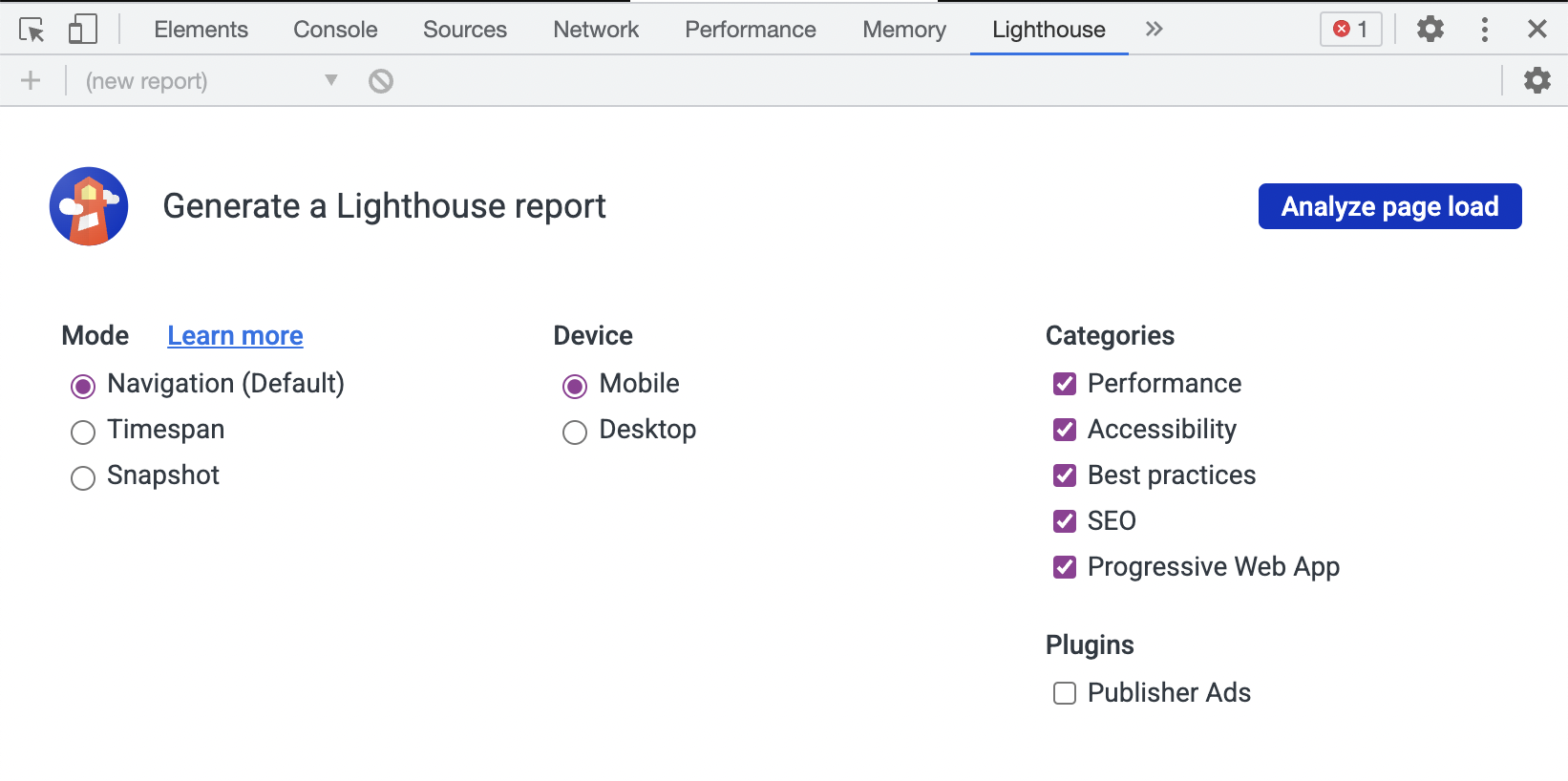
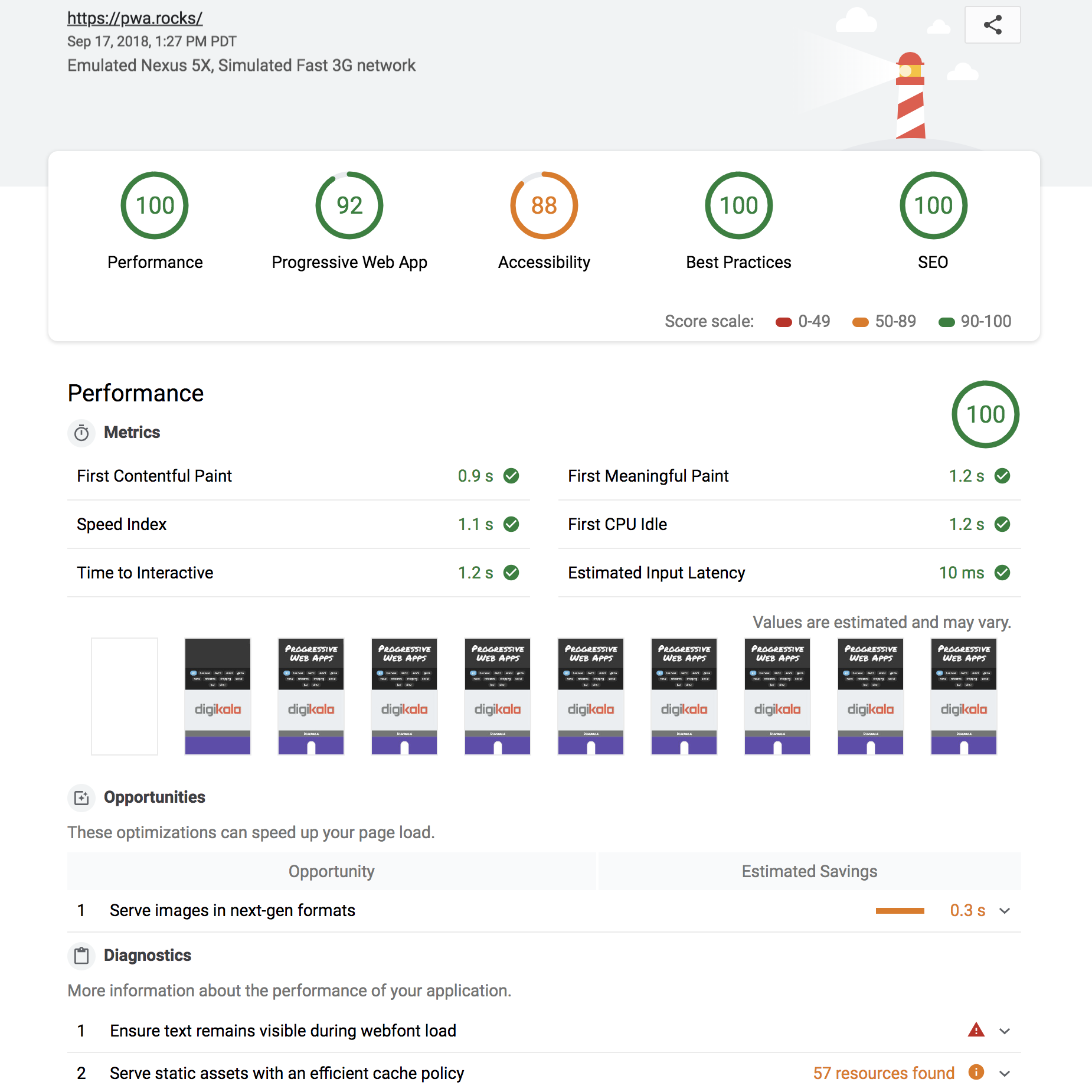
Automated auditing, performance metrics, and best practices for the web.
30.5k
Stars
9.7k
Forks
430
Open issues
30
Contributors


AI Analysis
Lighthouse is Google Chrome's automated auditing tool for analyzing web performance, accessibility, best practices, and SEO. It serves developers and teams building web applications who need programmatic performance measurement and guidance. Integrated into Chrome DevTools and available as a CLI/Node module, it's the de facto standard for web quality audits across the industry.
Inferred from signals mentioned in the README (tests, CI, type safety) — not a review of the actual code.
AI's overall editorial judgment — not an average of the bars above, can weigh other factors too.
Google's Lighthouse: The de-facto standard for web performance auditing, built into Chrome DevTools
Lighthouse is an automated web auditing tool that measures performance, accessibility, SEO, and best practices for any URL. Built by Google's Chrome team, it targets web developers, DevOps engineers, and site reliability teams who need actionable insights on page quality. It runs in Chrome DevTools, as a Node CLI, as a Node module, and via PageSpeed Insights. Its deep integration into Google's own developer tooling and its influence on search ranking signals make it effectively unavoidable for professional web development.
Launched in March 2016 as a Chrome extension focused on Progressive Web App auditing, it expanded rapidly to cover Core Web Vitals, accessibility, and SEO. It became natively embedded in Chrome DevTools around 2018, dramatically widening its reach.
Growth was initially driven by the PWA movement, then massively accelerated when Google tied Core Web Vitals to search ranking signals (2021). This made Lighthouse scores commercially significant, not just developer-facing. Stars growth has slowed (64 in 7 days) because it has already achieved saturation — nearly every web developer knows it exists.
Lighthouse is embedded natively in Chrome DevTools, used by Google PageSpeed Insights, integrated into dozens of commercial performance monitoring services (Calibre, SpeedCurve, Treo, Datadog Synthetics, and others), and referenced in Google Search Console. It is one of the most widely deployed web tooling projects in existence. Adoption at scale is thoroughly documented across the web development industry.
Appears to use a modular audit plugin system where individual audit modules run against a Chrome DevTools Protocol session. Likely collects a trace and HAR-like data from Chrome, then passes artifacts through configurable audit passes. Supports custom config files and presets (perf, desktop, experimental), suggesting a pipeline-based architecture.
Multiple CI workflows are visible (CI, unit, smoke tests) and a Codecov badge is present, indicating meaningful automated test coverage is in place. Specific coverage percentages are not documented in the README excerpt.
Last push was 2026-06-23, one day before the evaluation date — this is actively maintained. 10 years of consistent development, CI badges all passing, and an ecosystem of companion projects (lighthouse-ci, web-vitals) all point to a healthy, well-resourced project backed by a major organization.
ADOPT IF: you are building or maintaining any public-facing website and need actionable, standardized performance and quality feedback in development or CI pipelines. AVOID IF: you need real-user monitoring (RUM) or multi-location synthetic testing — Lighthouse is a lab tool, not a production monitoring solution. MONITOR IF: Google's future integration plans with Chrome and its relationship to search ranking signals change, as this could shift which metrics matter most.
Independent dimensions
Mainstream potential
10/10
Technical importance
9/10
Adoption evidence
10/10
- Lab scores can diverge significantly from real-user experience (field data), leading teams to over-optimize for Lighthouse numbers rather than actual user outcomes.
- Chrome dependency means results may not reflect performance in Firefox, Safari, or constrained Android WebViews accurately.
- Score volatility across runs (due to CPU throttling simulation and timing variance) can make CI budget assertions fragile without careful configuration.
- As Google evolves Core Web Vitals metrics, existing score baselines and tooling integrations may require updates, creating maintenance burden for downstream consumers.
- The Node CLI requires Node 22+, which may be a constraint in older enterprise CI environments.
Lighthouse will remain the reference implementation for web quality auditing for the foreseeable future, with continued evolution tracking new Core Web Vitals and browser capabilities. No credible displacement threat is visible.
Newsletter
Get analyses like this every Monday
Free weekly digest of the most interesting open-source discoveries.
Languages
Information
- Language
- JavaScript
- License
- Apache-2.0
- Last updated
- 18h ago
- Created
- 126mo ago
- Analyzed with
- anthropic/claude-haiku-4-5
Stars over time
Contributors over time
Top 100 contributors only — repos with more will plateau at 100.
Open issues
Data
Incorrect Slovak (sk) translations of accessibility terminology: "Dostupnosť" (availability) instead of "Prístupnosť", "dostupný názov" instead of "prístupný názov" (53 strings)
Feature: LLM/AI-friendly compact JSON output (omit embedded base64 screenshots)
Stylesheets using `rel="preload" as="style"` are now flagged as render‑blocking
Top contributors
Similar repos
GoogleChrome/lighthouse-ci
Lighthouse CI automates continuous performance testing by running Google's...

harlan-zw/unlighthouse
Unlighthouse automates Google Lighthouse audits across an entire website using...
GoogleChrome/web-vitals
web-vitals is a lightweight (~2KB) JavaScript library that measures Core Web...

GoogleChromeLabs/chrome-for-testing
Chrome for Testing is a Google-maintained API and resource hub that provides...
| Repository | Stars | Week Δ | Language | Score | Updated |
|---|---|---|---|---|---|
|
GoogleChrome/lighthouse
this
|
30.5k | +40 | JavaScript | 9/10 | 18h ago |
|
GoogleChrome/lighthouse-ci
|
7k | — | JavaScript | 7/10 | 3mo ago |
|
harlan-zw/unlighthouse
|
4.7k | — | JavaScript | 8/10 | 1w ago |
|
GoogleChrome/web-vitals
|
8.5k | — | JavaScript | 9/10 | 1w ago |
|
GoogleChromeLabs/chrome-for-testing
|
1.2k | — | JavaScript | 8/10 | 10h ago |
 addyosmani/web-quality-skills addyosmani/web-quality-skills
|
2.5k | — | Shell | 7/10 | 4w ago |
WebPageTest offers deeper real-browser testing across global locations and more granular waterfall analysis. Lighthouse is better for local dev iteration and CI integration; WebPageTest is preferred for production monitoring from real network locations. They are complementary rather than mutually exclusive.
A companion project, not a competitor. lighthouse-ci wraps Lighthouse for CI/CD pipelines, adding budget assertions and historical comparison. It extends Lighthouse rather than replacing it.
Unlighthouse crawls entire sites and aggregates Lighthouse results across all pages. It is purpose-built for site-wide auditing where Lighthouse operates page-by-page. Useful complement for large sites.
Axe provides deeper and more compliance-focused accessibility auditing than Lighthouse's accessibility category. Teams with serious a11y requirements often run both; Lighthouse's accessibility audits are useful but not exhaustive.
The web-vitals library measures Core Web Vitals in real user sessions (RUM), whereas Lighthouse measures in a controlled lab environment. Both are Google-maintained and highly complementary for a complete performance picture.