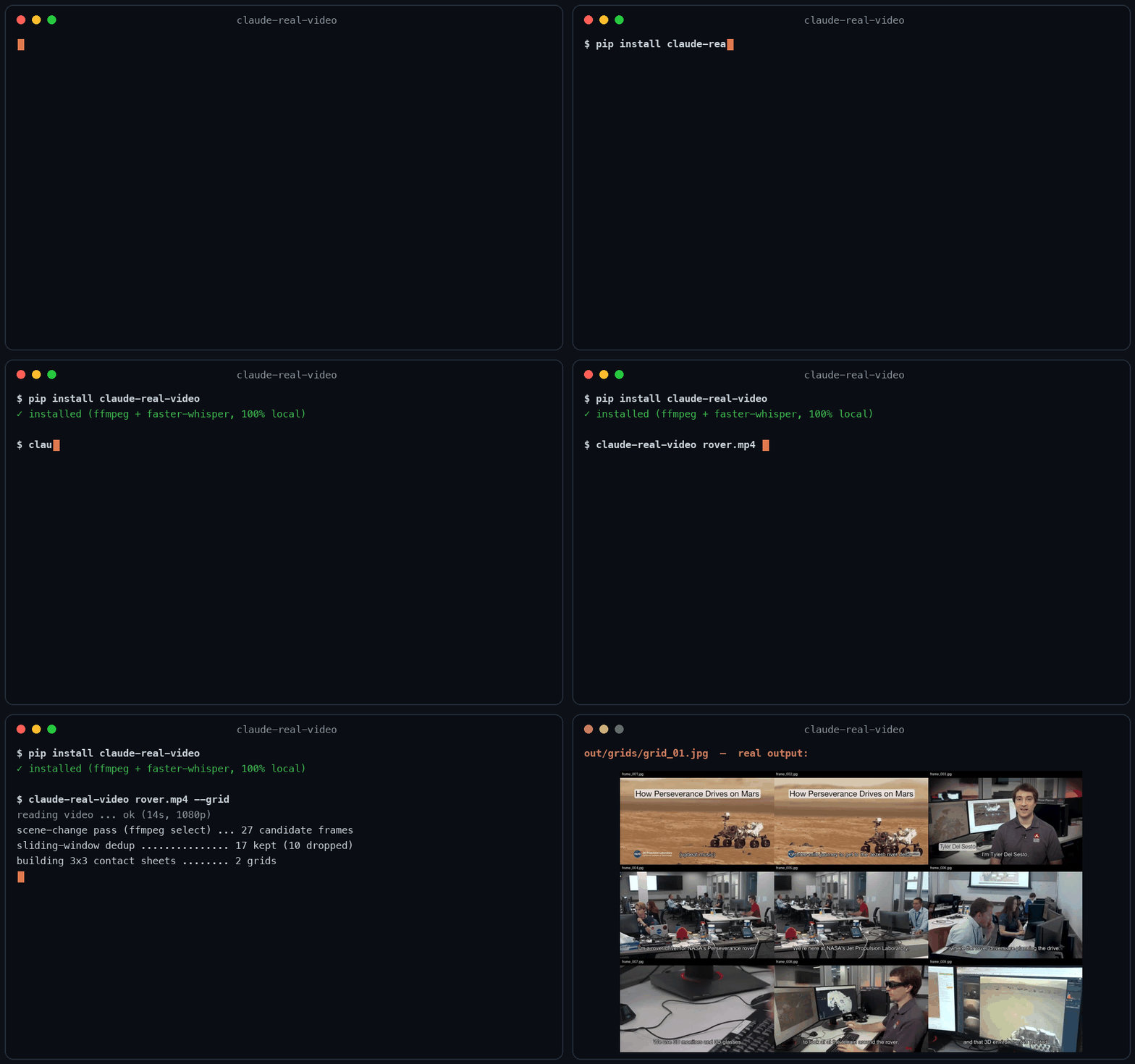
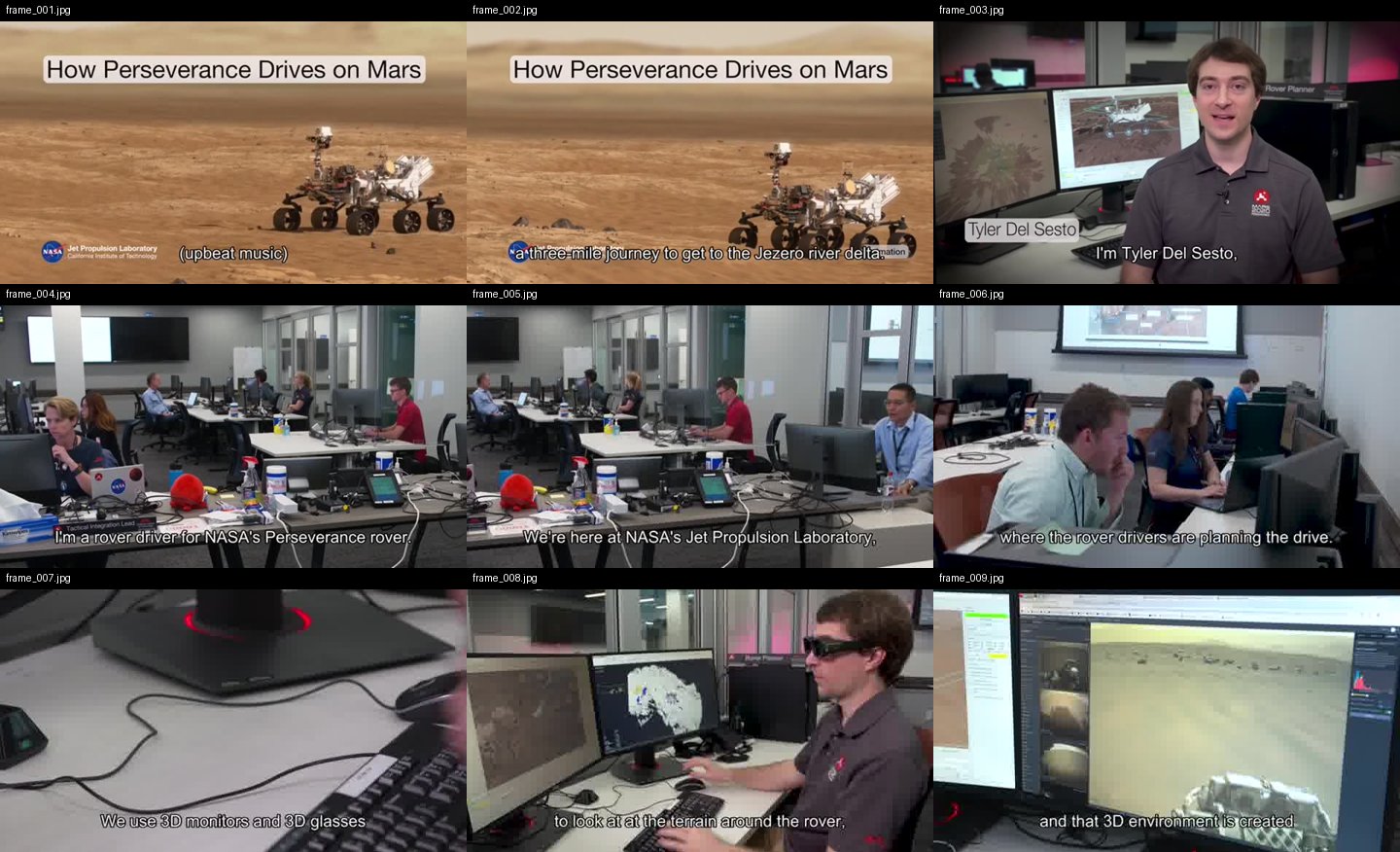
Let Claude (or any LLM) actually watch a video — scene-aware, deduplicated frames + transcript, from a URL or local file. Runs locally, MIT.
1.5k
Stars
106
Forks
0
Open issues
2
Contributors

AI Analysis
claude-real-video extracts intelligently deduplicated keyframes and transcripts from videos (YouTube links or local files), optimized for LLM consumption. It detects scene changes rather than sampling at fixed intervals, runs entirely locally, and serves creators, researchers, and developers who need AI systems to actually analyze video content instead of relying on transcripts alone.
Inferred from signals mentioned in the README (tests, CI, type safety) — not a review of the actual code.
AI's overall editorial judgment — not an average of the bars above, can weigh other factors too.
Local video-to-LLM pipeline with smart frame deduplication, launched 7 days ago and trending rapidly on HN.
claude-real-video extracts semantically meaningful frames from video files or URLs, deduplicates them, transcribes audio, and outputs a locally-processed folder ready for LLM analysis. Solves the problem of fixed-interval frame sampling (1 fps) missing fast cuts and over-sampling static content. Targets developers and researchers who want AI to analyze video without sending raw footage to cloud services. Launched 2026-06-30; gained 183 stars in 7 days and reached HN front page, suggesting strong early interest in the 'local LLM + video' niche.
Project created 2026-06-30 (7 days before evaluation date). No prior versions or maintainer history visible. Appears positioned as a faster, local alternative to existing tools like bradautomates/claude-video and digitalsamba/claude-code-video-toolkit, which have accumulated 4,698 and 1,693 stars respectively over longer timespans.
Gained 183 stars in first 7 days following HN front-page feature. This is strong early traction for a newly launched tool, but the absolute scale (1,295 total stars) remains significantly smaller than its closest competitor (4,698 stars). Growth appears driven by: (1) clear problem statement (LLMs can't watch video natively or sample poorly), (2) local-first privacy positioning, (3) timely release into an emerging 'AI + video' ecosystem, (4) low friction (pip install + ffmpeg). Trajectory shows early adoption but lacks data on whether growth will sustain beyond initial buzz.
Adoption not verified beyond circumstantial signals: (1) HN front-page placement (strong indicator of developer interest, not production use), (2) PyPI package exists (reduces friction), (3) MIT license + GitHub presence (lowers barriers), (4) README mentions 'Claude Code' skill integration, suggesting intended professional workflow. No case studies, testimonials, or documented production deployments found. Early interest ≠ production adoption.
Based on README, likely uses: scene-change detection (OpenCV or similar) for keyframe selection, sliding-window deduplication to avoid re-sending identical shots, ffmpeg/ffprobe for frame extraction and audio, Whisper CLI for transcription. Appears modular (frames-only, transcription optional). Processing is local; output is a folder of JPGs + manifest + optional HTML viewer. Supports Claude Code integration via skill installation. No source code inspection performed; README does not detail ML models used for scene detection.
Not documented in README. No mention of unit tests, integration tests, or CI/CD pipelines. This is a red flag for production stability but not unusual for a 7-day-old open-source project.
Last push 2026-07-06 21:24:56 (1 day before evaluation), indicating active development. No issue count or PR history visible in metadata. README is well-structured and includes recent feature additions (v0.3.0: --why flag, knowledge base saving). Too early to assess long-term maintenance pattern; current signal is healthy but based on minimal history.
ADOPT IF: you need local-first video analysis (privacy/cost), want smarter-than-fixed-interval frame selection, are building LLM + video workflows, and can tolerate a newly-launched tool with limited production track record. AVOID IF: you need battle-tested stability, production SLA guarantees, or extensive community plugins/integrations. MONITOR IF: you're tracking the 'AI + video' space — this is a well-scoped, technically sound entry point, but mainstream adoption depends on sustained maintenance and ecosystem growth over the next 6–12 months.
Independent dimensions
Mainstream potential
4/10
Technical importance
6/10
Adoption evidence
2/10
- Project is 7 days old; no long-term maintenance history, issue triage process, or user support infrastructure evident. May be abandoned after initial release.
- Test coverage not documented; production reliability unknown. Scene-detection and dedup logic are heuristic-based (tunable thresholds: --scene, --dedup-threshold, --dedup-window); correctness varies per video type.
- Dependency on ffmpeg, Whisper, and yt-dlp; requires system-level software installation (not pip-installable). Installation friction may limit adoption in restrictive environments.
- README lists 'crv Pro' (paid tier) for advanced analysis; business model unclear. If free tier is deprecated or feature-gated in future, adoption calculus changes.
- HN front-page visibility may reflect novelty rather than utility; early stars may not correlate with sticky, long-term usage. Growth trajectory over next 30–90 days will be more informative.
If actively maintained: likely grows to 3,000–5,000 stars by end of 2026, becoming a standard preprocessing tool in the 'local LLM + video' ecosystem. If abandoned: plateaus at ~1,500 stars and becomes a reference implementation others fork. Mainstream adoption outside developer/researcher circles appears unlikely — video analysis is still a niche workflow — but project may become the de-facto tool for privacy-conscious or cost-optimized LLM + video pipelines.
Newsletter
Get analyses like this every Monday
Free weekly digest of the most interesting open-source discoveries.
Languages
Information
- Language
- Python
- License
- MIT
- Last updated
- 13h ago
- Created
- 1w ago
- Analyzed with
- anthropic/claude-haiku-4-5
Stars over time
Contributors over time
Top 100 contributors only — repos with more will plateau at 100.
Open issues
No open issues — clean slate.
Top contributors
Similar repos

bradautomates/claude-video
A Claude plugin that enables Claude to analyze video content by downloading,...

op7418/Youtube-clipper-skill
An AI-powered tool for Claude Code that automates YouTube video processing:...
| Repository | Stars | Week Δ | Language | Score | Updated |
|---|---|---|---|---|---|
|
HUANGCHIHHUNGLeo/claude-real-video
this
|
1.5k | +344 | Python | 8/10 | 13h ago |
|
bradautomates/claude-video
|
6.8k | — | Python | 8/10 | 1w ago |
|
op7418/Youtube-clipper-skill
|
2.1k | — | Python | 7/10 | 6mo ago |
 digitalsamba/claude-code-video-toolkit digitalsamba/claude-code-video-toolkit
|
1.7k | — | Python | 8/10 | 4d ago |
4,698 stars (3.6x larger). Exact positioning unclear from metadata alone, but likely a more mature predecessor. claude-real-video emphasizes local processing and scene-aware dedup; unclear if claude-video also offers these or is cloud-dependent.
1,693 stars (1.3x larger). Focus appears to be Claude Code integration; claude-real-video also targets this but adds general-purpose keyframe extraction and --why contextual focus.
Google's native video API (free tier, cloud-based). README explicitly criticizes fixed-interval sampling. claude-real-video trades native convenience for local control + smarter frame selection; appeals to privacy-conscious or cost-sensitive users.
Requires explicit link + manual upload. No native video file support (as of README write date). claude-real-video automates extraction; not a direct replacement but a preprocessing step.
Free, mature, ubiquitous. claude-real-video is a higher-level abstraction combining ffmpeg, scene detection, dedup, and transcription. Not cheaper, but more convenient and tuned for LLM input.