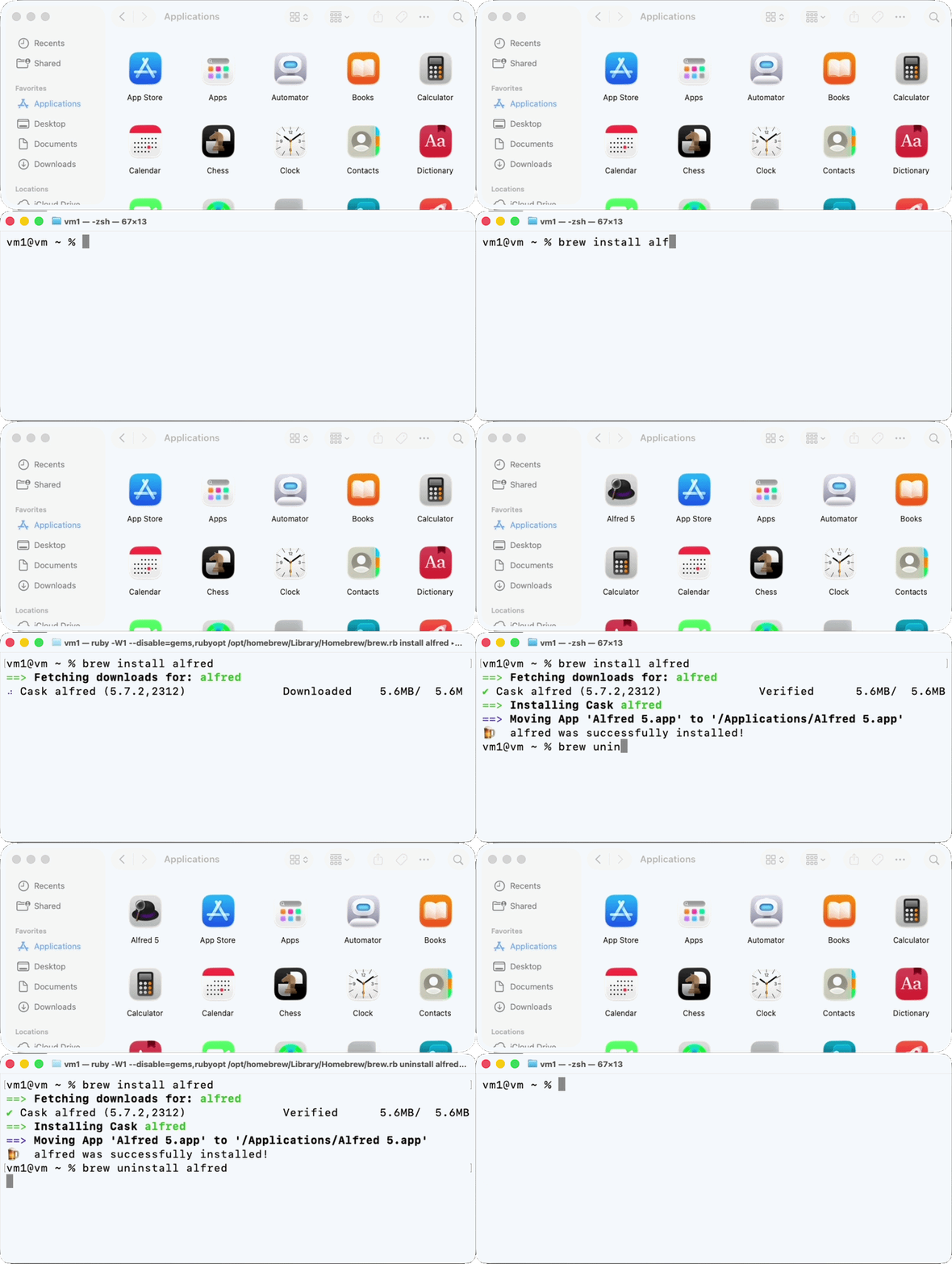
🍻 A CLI workflow for the administration of macOS applications distributed as binaries
22.1k
Stars
11.7k
Forks
27
Open issues
30
Contributors



AI Analysis
Homebrew Cask extends Homebrew to streamline installation and management of prebuilt macOS and Linux software—GUI applications, CLI tools, fonts, and plugins—via a unified command-line interface. It is purpose-built for macOS/Linux users and package maintainers who want to automate software distribution without manual downloads and drag-and-drop installation. It is not a general-purpose package manager for source code or programming languages.
Inferred from signals mentioned in the README (tests, CI, type safety) — not a review of the actual code.
AI's overall editorial judgment — not an average of the bars above, can weigh other factors too.
Homebrew Cask: The de facto macOS GUI app installer used by millions of developers
Homebrew Cask is the standard CLI mechanism for installing, updating, and uninstalling macOS binary applications — GUI apps, fonts, plugins, and tools — without manual drag-and-drop. It extends Homebrew and is primarily used by developers, sysadmins, and power users who want reproducible, scriptable macOS setups. With 22k+ stars, 11k+ forks, and over a decade of continuous operation, it is arguably the most widely used macOS package management tool for binary/GUI applications in developer environments.
Launched in 2012 by phinze as a separate community project, Homebrew Cask was later officially absorbed into the Homebrew organization. It predates Apple Silicon, macOS notarization requirements, and many of the complicating factors it now handles.
Growth was driven by the explosion of developer tooling on macOS throughout the 2010s. Homebrew itself became the standard for CLI tools, and Cask filled the natural gap for GUI apps. Star accumulation has slowed (12 stars in the last 7 days) because the project has matured and is now infrastructure — most users simply use it without starring it. Fork count at 11k+ reflects ongoing community cask contributions.
Adoption is extensively verified. Homebrew is documented to be used by millions of macOS developers, and Cask is bundled into the standard Homebrew experience. It appears in virtually every macOS developer setup guide, dotfiles repository, and CI/CD provisioning script targeting macOS. Third-party tools like buo/homebrew-cask-upgrade and GUI wrappers like Applite (6.8k stars) are built on top of it, confirming ecosystem depth.
Appears to follow a tap-based architecture within Homebrew's Ruby DSL framework. Each cask is likely a Ruby file describing download URL, checksum, app name, and installation method. The cask definitions live in this repository while the core logic resides in Homebrew/brew. This separation of concerns between formula logic and cask definitions is a well-documented design choice.
Not documented in README, but given integration with the Homebrew/brew project (which has CI infrastructure), cask definitions likely undergo automated verification of checksums and formula syntax via CI pipelines. The level of unit test coverage for individual casks is not stated.
Exceptionally active. Last push was 2026-06-24 — the same day as the evaluation date — indicating continuous, daily updates. With 11k+ forks and a large contributor base maintaining individual cask definitions, the project is under active maintenance by the broader community. No signs of stagnation.
ADOPT IF: you are a macOS developer or power user who wants scriptable, CLI-driven installation of GUI applications and prebuilt tools. AVOID IF: you need fully reproducible, hermetic environments where Nix-style locking is mandatory, or you operate outside macOS/Linux Homebrew ecosystems. MONITOR IF: you maintain CI/CD pipelines that depend on specific cask versions, as upstream vendor URL or checksum changes can occasionally break automated installs.
Independent dimensions
Mainstream potential
9/10
Technical importance
7/10
Adoption evidence
10/10
- Upstream vendors changing download URLs, checksum mismatches, or moving to notarization schemes can break cask definitions, requiring rapid community response.
- Apple's evolving security policies (Gatekeeper, notarization, quarantine attributes) periodically introduce friction that requires Homebrew Cask core changes.
- The project depends on a volunteer-heavy contribution model for cask maintenance; low-traffic casks may fall out of date if no one is actively maintaining them.
- Cask has limited ability to handle apps that require post-install configuration, license activation, or complex dependency trees — these fall outside its scope.
- Dependency on Homebrew/brew core means breaking changes in Homebrew itself can temporarily affect Cask functionality, a risk outside the Cask team's direct control.
Homebrew Cask will remain the default macOS GUI app management tool for developer environments for the foreseeable future. Nix may gradually gain share among infra-focused engineers, but Cask's low friction and enormous cask catalog entrench it firmly.
Newsletter
Get analyses like this every Monday
Free weekly digest of the most interesting open-source discoveries.
Languages
Information
- Website
- https://brew.sh
- Language
- Ruby
- License
- BSD-2-Clause
- Last updated
- 8h ago
- Created
- 175mo ago
- Analyzed with
- anthropic/claude-haiku-4-5
Stars over time
Contributors over time
Top 100 contributors only — repos with more will plateau at 100.
Open issues
Similar repos

buo/homebrew-cask-upgrade
brew-cask-upgrade is a command-line tool that provides an interactive, improved...
| Repository | Stars | Week Δ | Language | Score | Updated |
|---|---|---|---|---|---|
|
Homebrew/homebrew-cask
this
|
22.1k | +18 | Ruby | 8/10 | 8h ago |
|
buo/homebrew-cask-upgrade
|
2.7k | — | Ruby | 7/10 | 2w ago |
|
Homebrew/brew
|
48.8k | — | Ruby | 9/10 | 3h ago |
|
Homebrew/install
|
2.6k | — | Shell | 8/10 | 2d ago |
 milanvarady/Applite milanvarady/Applite
|
6.8k | — | Swift | 8/10 | 2w ago |
 buresdv/Cork buresdv/Cork
|
4.5k | — | Swift | 8/10 | 7d ago |
MAS CLI covers App Store apps only, which require Apple developer accounts and sandbox constraints. Cask covers the broader universe of binaries distributed outside the App Store. They serve overlapping but distinct use cases.
MacPorts predates Homebrew and compiles from source by default. It has a smaller user base among developers and is less integrated with the macOS developer mainstream. Cask's focus on prebuilt binaries makes it faster for GUI apps.
Applite is a native SwiftUI GUI wrapper around Homebrew Cask, not a competitor. It extends Cask's reach to users who prefer graphical interfaces over CLI, effectively broadening the ecosystem.
Nix offers reproducible, declarative macOS system management including GUI apps via nix-darwin and home-manager. It is more powerful for strict reproducibility but has a steep learning curve. Gaining traction among infrastructure-focused engineers but unlikely to displace Cask for typical developers.
A community extension that adds upgrade management features not in stock Cask. It complements rather than competes, and its 2.7k stars suggest meaningful demand for features Cask does not natively provide.