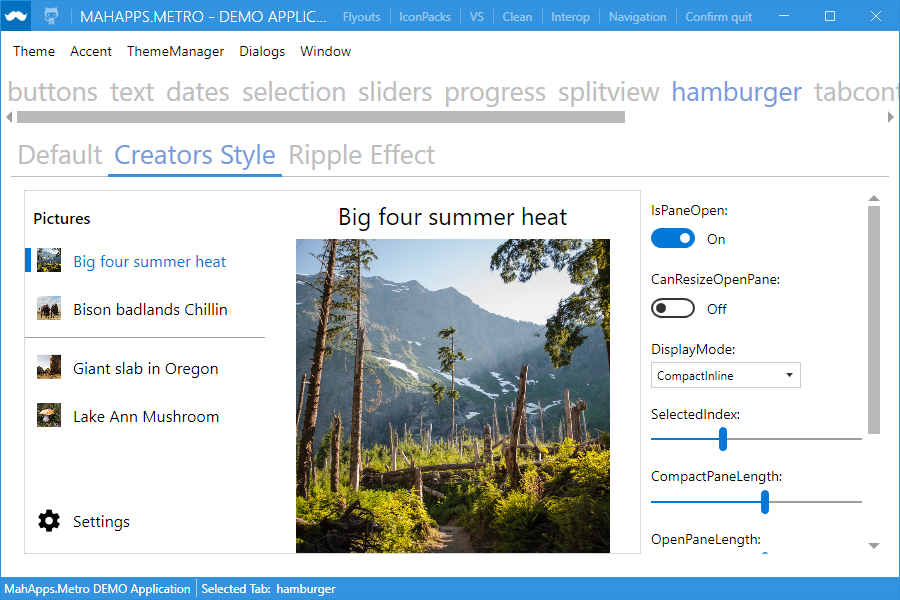
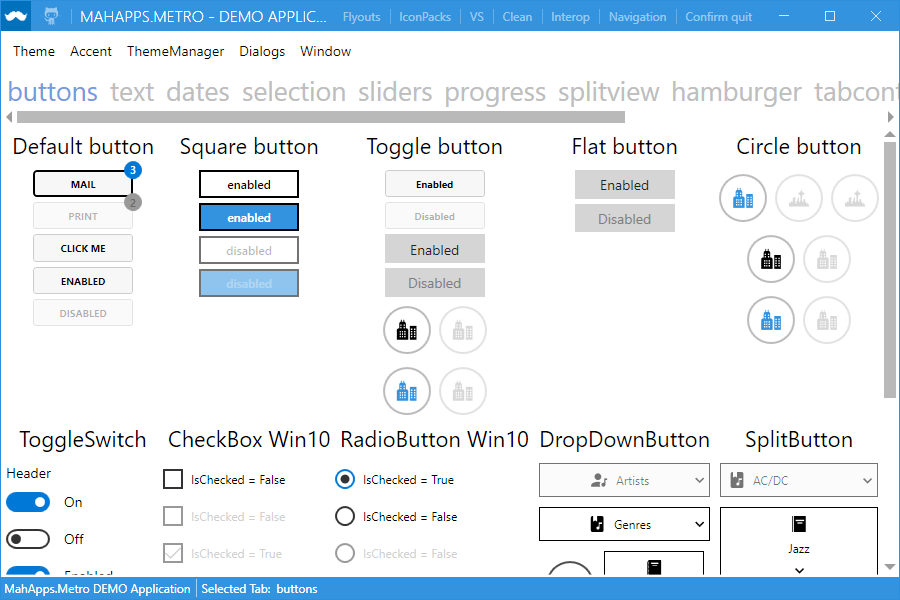
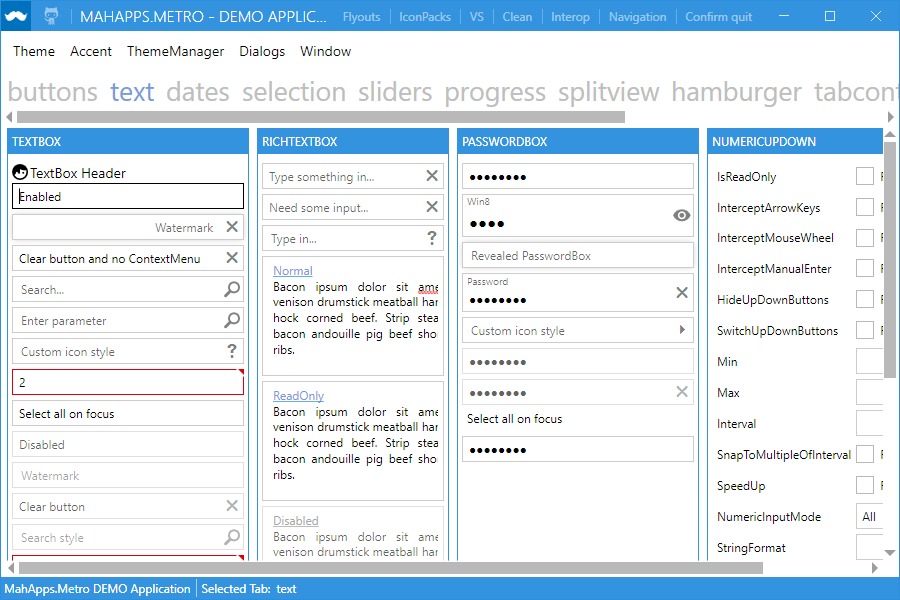
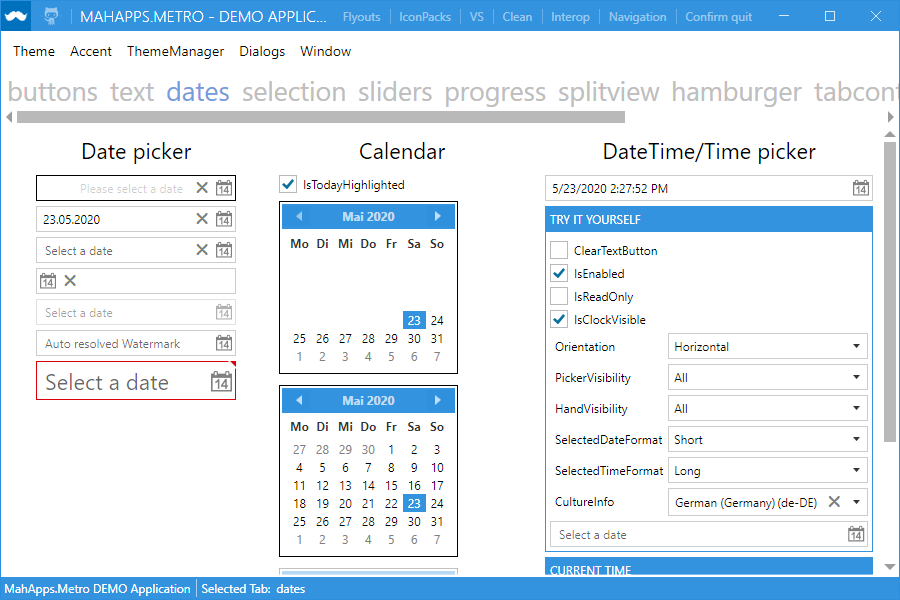
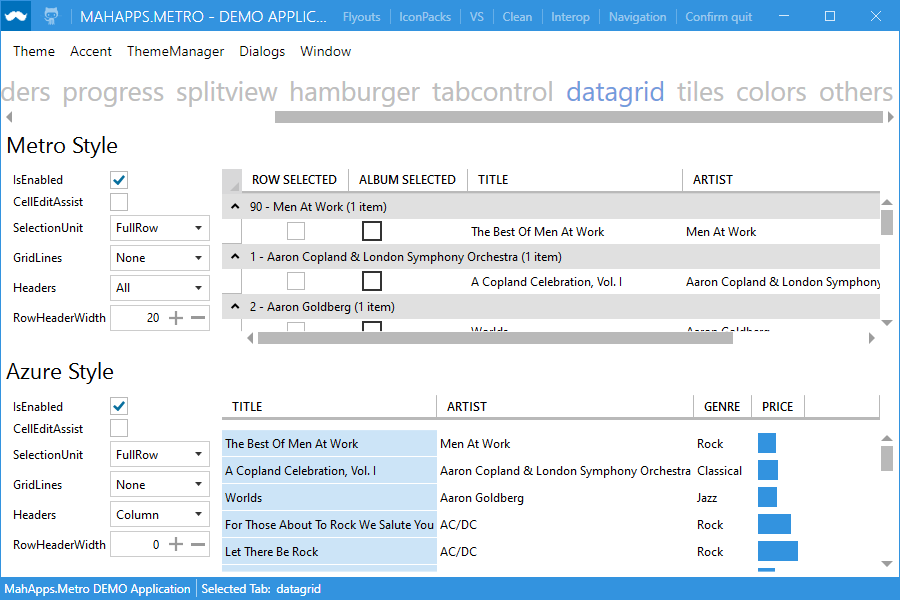
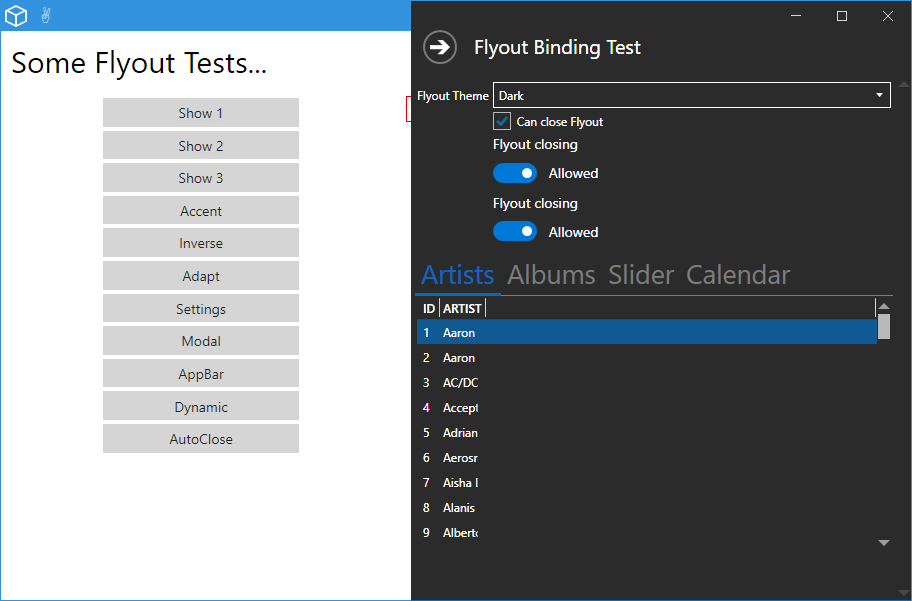
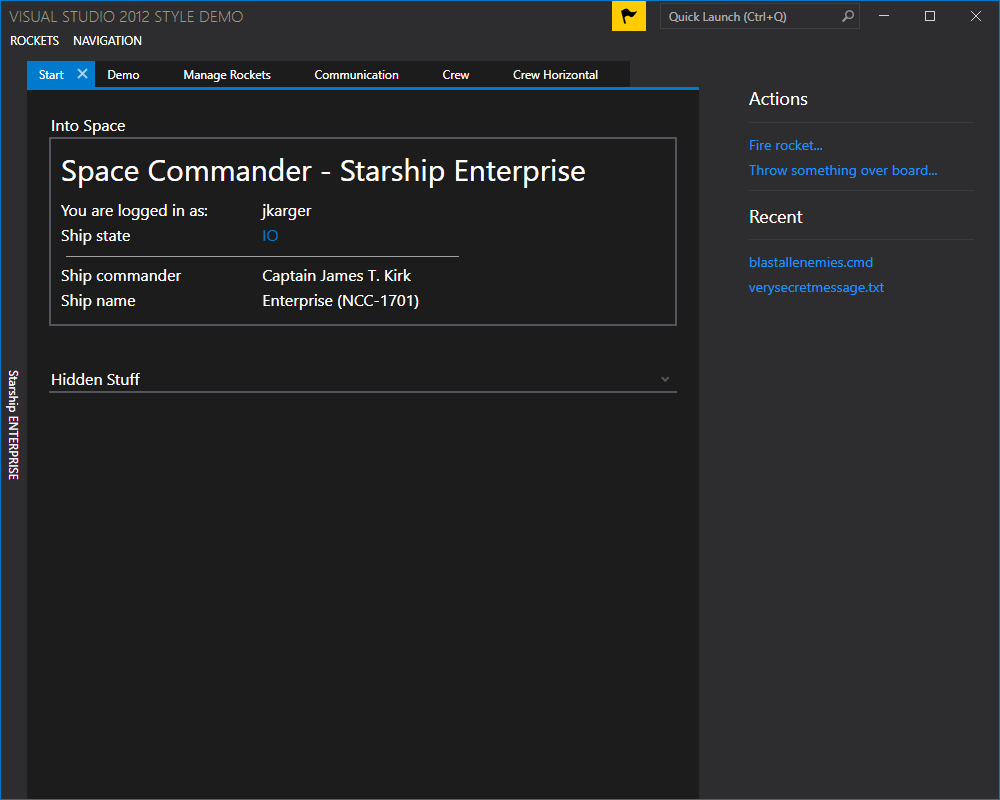
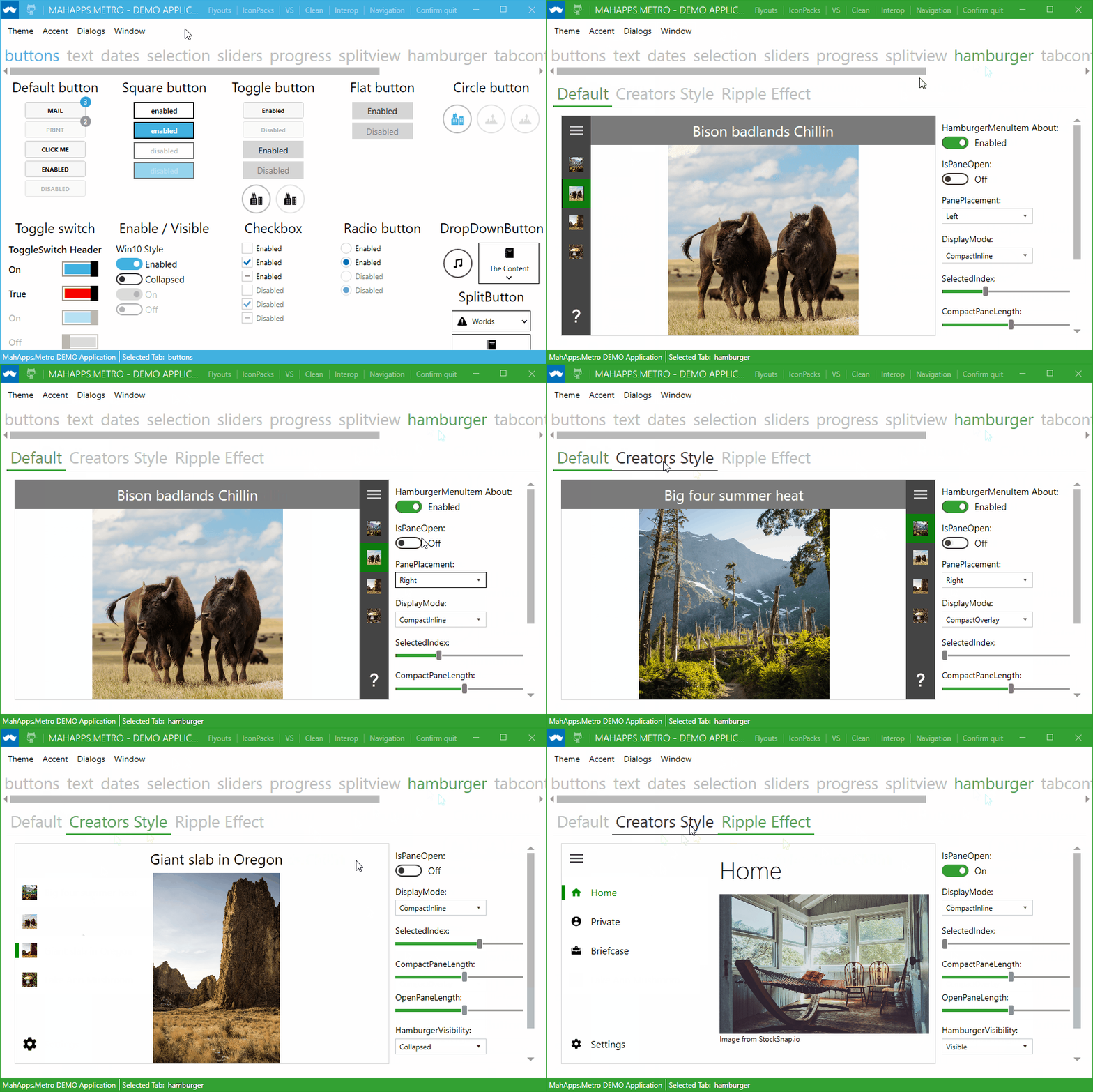
A framework that allows developers to cobble together a better UI for their own WPF applications with minimal effort.
9.8k
Stars
2.4k
Forks
114
Open issues
100+
Contributors


AI Analysis
MahApps.Metro is a WPF UI framework that provides modern theming, controls, and design templates to help developers build polished Windows desktop applications with minimal effort. It is specifically designed for WPF developers targeting Windows platforms (.NET Framework 4.6.2+, .NET Core 3.1, .NET 5, .NET 6) and is not suitable for web, mobile, or cross-platform UI development outside the WPF ecosystem.
Inferred from signals mentioned in the README (tests, CI, type safety) — not a review of the actual code.
AI's overall editorial judgment — not an average of the bars above, can weigh other factors too.
MahApps.Metro: Mature WPF UI toolkit with ~15 years of production-proven adoption
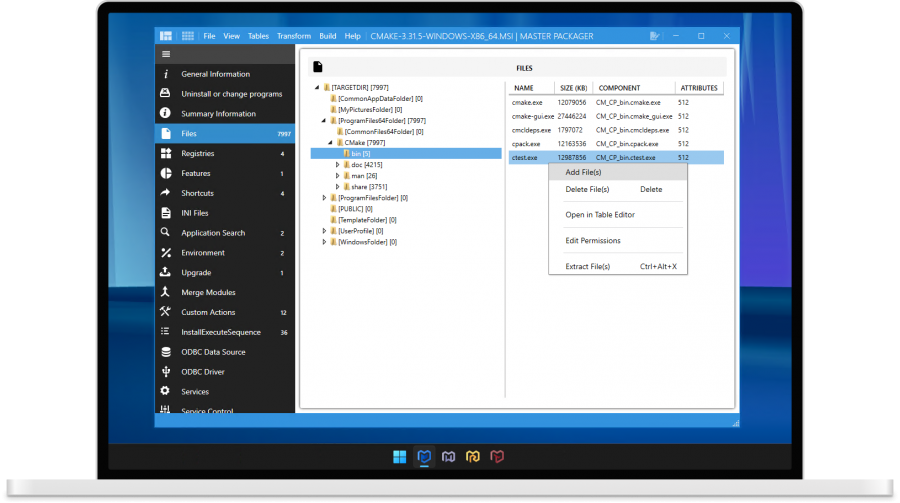
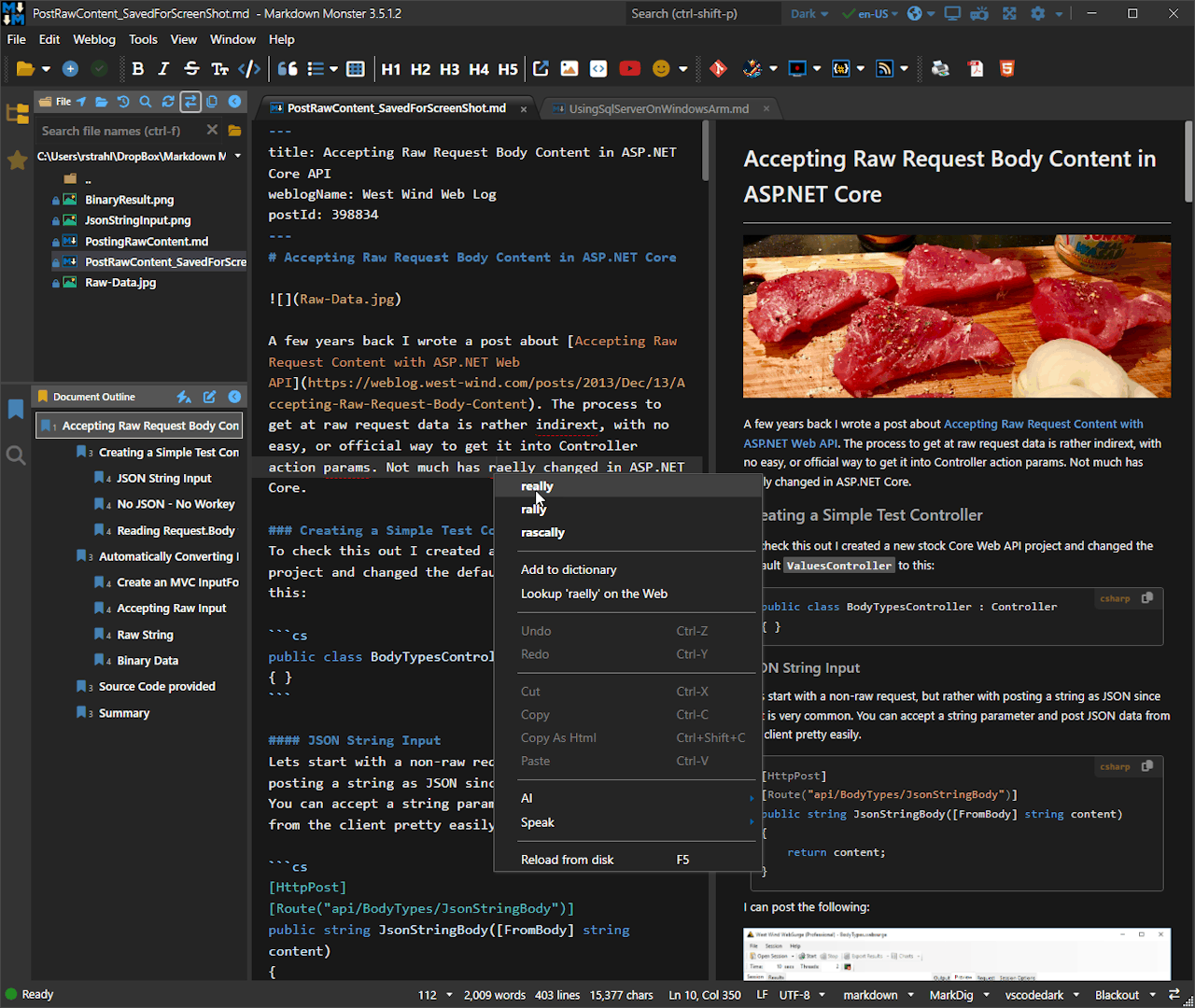
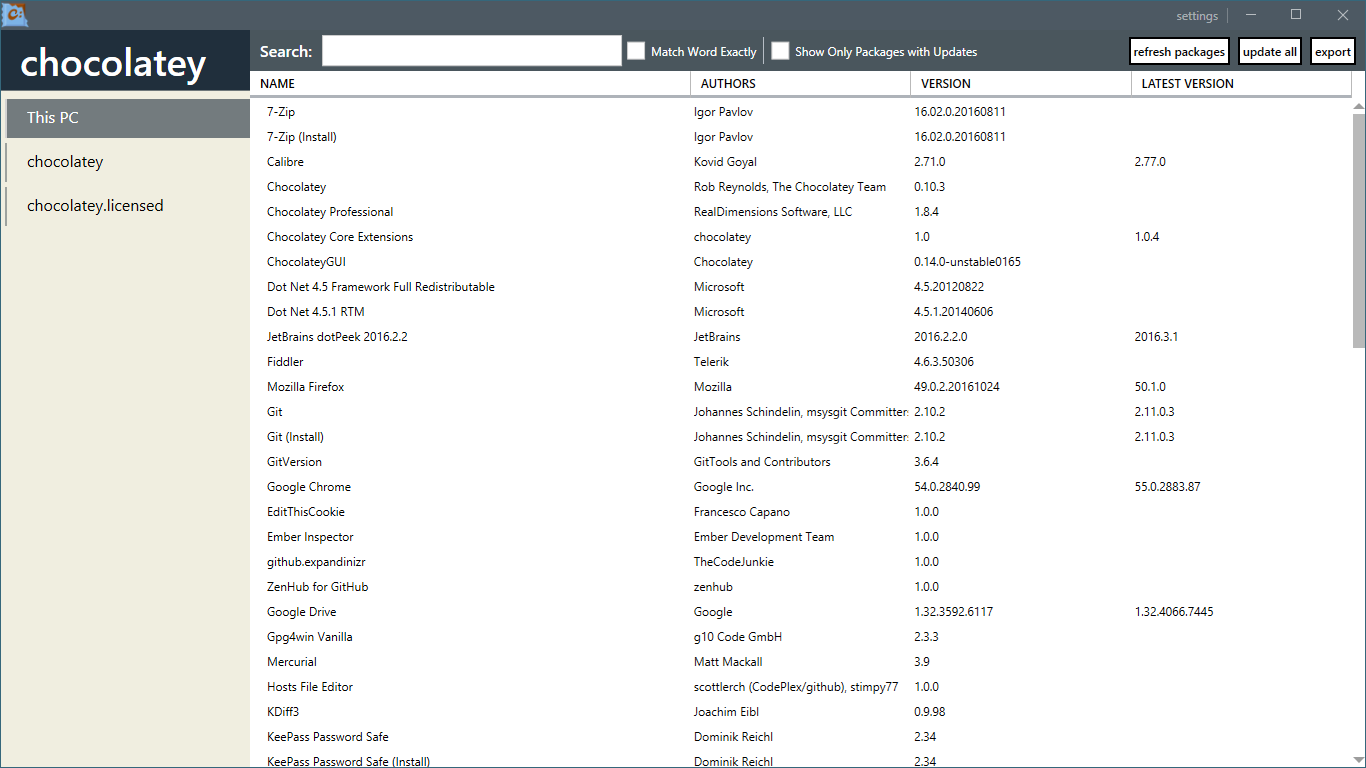
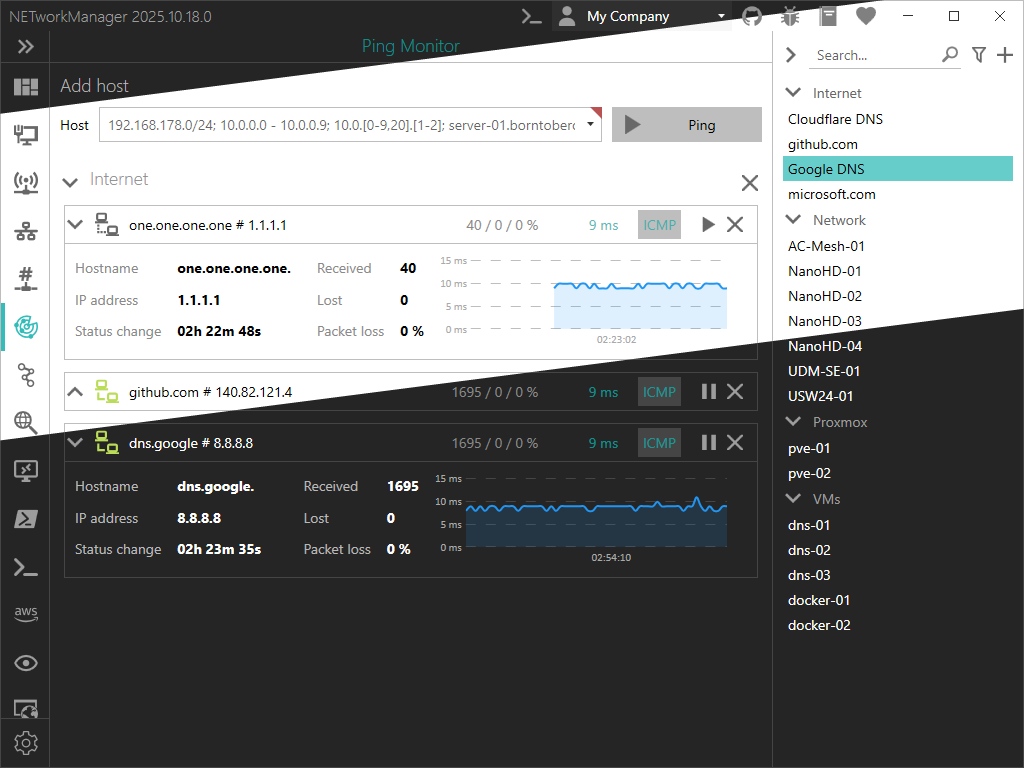
MahApps.Metro provides Windows desktop developers with a ready-made set of Metro/Fluent-style controls, themes, and window chrome replacements for WPF applications. It targets .NET Framework 4.6.2+ through .NET 6 on Windows. The primary audience is enterprise and independent software developers building internal tools, utilities, and professional-grade Windows desktop apps who want polished UI without designing a full custom control library. Real-world users include Chocolatey GUI, Markdown Monster, NETworkManager, and Certify The Web — well-known tools in the Windows ecosystem.
Founded in 2011, MahApps.Metro emerged when Microsoft's Metro design language was introduced with Windows 8. It became the de-facto community WPF theming library over the 2013–2018 period, accumulating nearly 10K stars and tens of millions of NuGet downloads over its lifetime.
Peak star growth occurred during the Windows 8/10 Metro design wave (2012–2018). Growth has plateaued as WPF itself matures and .NET MAUI attracts new cross-platform projects. The project retains a stable, loyal user base of Windows-desktop-first developers for whom WPF remains the best option. Star velocity (6 stars/week as of mid-2026) reflects niche stability rather than decline.
Multiple well-known open-source WPF applications use MahApps.Metro in production: Chocolatey GUI (widely distributed Windows package manager UI), Markdown Monster (commercially sold Markdown editor), NETworkManager (active network admin tool), and Certify The Web (widely used HTTPS cert manager). NuGet download badge is prominently featured, and historical download counts have exceeded tens of millions. Adoption is well-documented.
Likely structured as a WPF ResourceDictionary-based theming system combined with custom control library. Based on README, it provides window chrome overrides, accent color theming, and extended controls (dialogs, flyouts, progress rings). Appears to follow MVVM-compatible patterns. Supports both light and dark themes.
AppVeyor CI badges for both main and develop branches with explicit test status badges are shown in README, indicating automated test suites exist. Actual coverage percentage not documented in README.
Last push was April 15, 2026 — approximately 10 weeks before the evaluation date. This indicates active maintenance. The project has been continuously maintained for ~15 years. Presence of both stable and pre-release NuGet tracks, active CI pipeline, and open/closed issue tracking all suggest a healthy maintenance posture. Slow new feature velocity is expected for a mature library at this stage of the WPF ecosystem.
ADOPT IF: you are building or maintaining a WPF application on Windows and want a battle-tested, well-documented UI control library with long-term community support and no licensing cost. AVOID IF: you are starting a new cross-platform app, targeting non-Windows platforms, or need WinUI 3/Windows 11 native design fidelity — in those cases MAUI or WinUI are more appropriate. MONITOR IF: you are evaluating whether to migrate an existing WPF+MahApps app to WinUI or MAUI, as the WPF ecosystem's long-term investment signals from Microsoft will influence that decision.
Independent dimensions
Mainstream potential
3/10
Technical importance
7/10
Adoption evidence
8/10
- WPF is a mature, Windows-only technology; new Microsoft investment is concentrated in WinUI and MAUI, which may erode the WPF developer pool over time.
- Primary maintainer concentration risk: the project appears to be heavily driven by a single core maintainer (punker76), making long-term bus-factor a concern.
- The Metro/Fluent aesthetic has evolved significantly since the library's origin; keeping visual design current with Windows 11 Fluent guidelines requires ongoing investment.
- Slow star growth and plateau in community activity may reduce the pool of contributors available to address bugs and new .NET runtime versions.
- README still references .NET Core 3.1 and .NET 5 (both end-of-life) without prominently featuring .NET 8/9 support, which may create confusion about current compatibility.
MahApps.Metro will likely remain in active maintenance mode as a stable, niche-essential library for the large installed base of WPF enterprise applications. It is unlikely to recapture rapid growth but equally unlikely to be abandoned given its production footprint.
Explore similar
Newsletter
Get analyses like this every Monday
Free weekly digest of the most interesting open-source discoveries.
Languages
Information
- Website
- https://mahapps.com
- Language
- C#
- License
- MIT
- Last updated
- 3mo ago
- Created
- 179mo ago
- Analyzed with
- anthropic/claude-haiku-4-5
Stars over time
Contributors over time
Top 100 contributors only — repos with more will plateau at 100.
Open issues
GlowBrush invalid in MetroWindow
NumericUpDown don't accept Keyboard input if number is smaller than minimum
NumericUpDown negative value
Button-flavors
Windows 11 SaveWindowState Exception
Top contributors
Similar repos

microsoft/microsoft-ui-xaml
WinUI is Microsoft's modern UI framework for building Windows applications,...
| Repository | Stars | Week Δ | Language | Score | Updated |
|---|---|---|---|---|---|
|
MahApps/MahApps.Metro
this
|
9.8k | +5 | C# | 7/10 | 3mo ago |
 olton/metroui olton/metroui
|
7.1k | — | JavaScript | 7/10 | 5mo ago |
|
microsoft/microsoft-ui-xaml
|
7.7k | — | C++ | 8/10 | 7h ago |
 dotnet/maui dotnet/maui
|
23.3k | — | C# | 8/10 | 12h ago |
|
dotnet/wpf
|
7.7k | — | C# | 8/10 | 6h ago |
 PrismLibrary/Prism PrismLibrary/Prism
|
6.8k | — | C# | 8/10 | 1d ago |
More actively starred (16K vs ~10K) and follows Material Design rather than Metro/Fluent aesthetics. The two are often used together. MDIX may be more visually modern for consumer-facing apps; MahApps.Metro tends to appeal to enterprise/utility tool aesthetics.
MAUI is a cross-platform successor to Xamarin.Forms targeting iOS, Android, macOS, and Windows. It is not a WPF replacement but an alternative for new projects that need multi-platform reach. WPF with MahApps.Metro remains superior for deep Windows-desktop feature sets.
WinUI 3 is Microsoft's official modern Windows UI framework. Better integrated with the Windows 11 design system but requires WinUI/WinAppSDK adoption and has a steeper migration path from legacy WPF. MahApps.Metro is the safer path for existing WPF codebases.
The upstream WPF framework itself. MahApps.Metro builds on top of WPF, adding styling and controls that WPF's default theme lacks. Not a competitor — complementary.
Smaller, less mature community alternatives that attempt to bring Fluent/WinUI aesthetics to WPF. MahApps.Metro has significantly more documentation, ecosystem integrations, and community tooling.