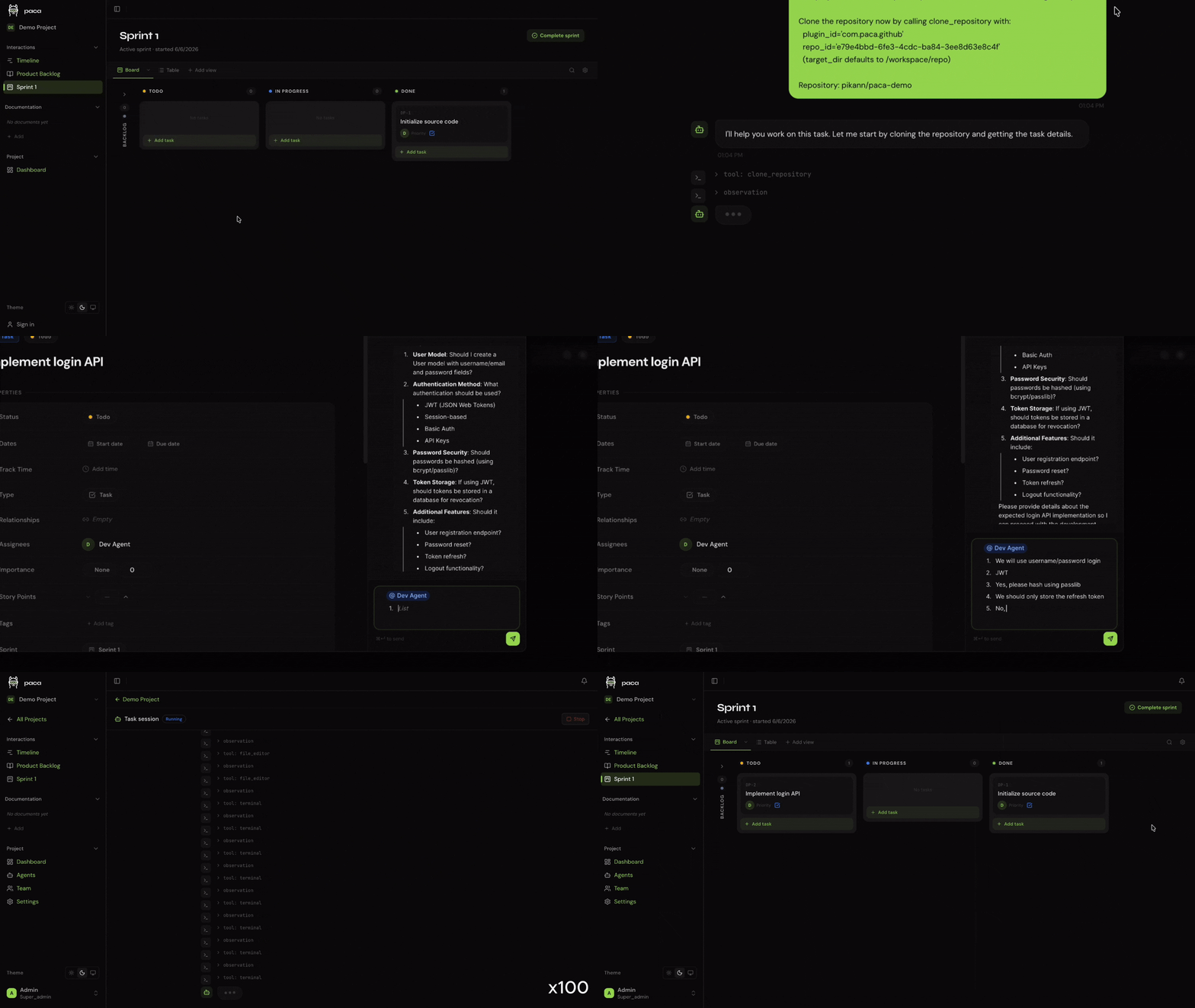
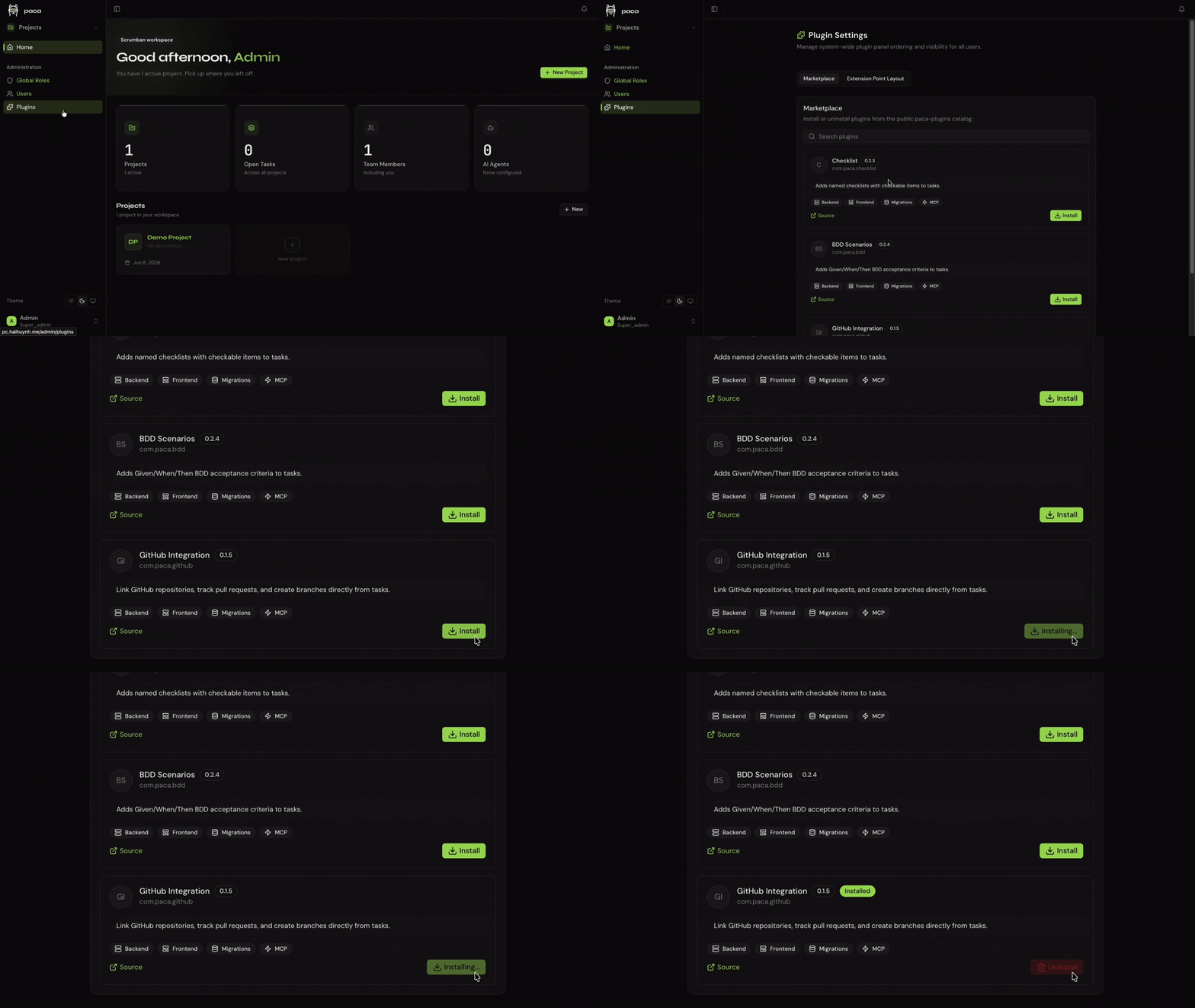
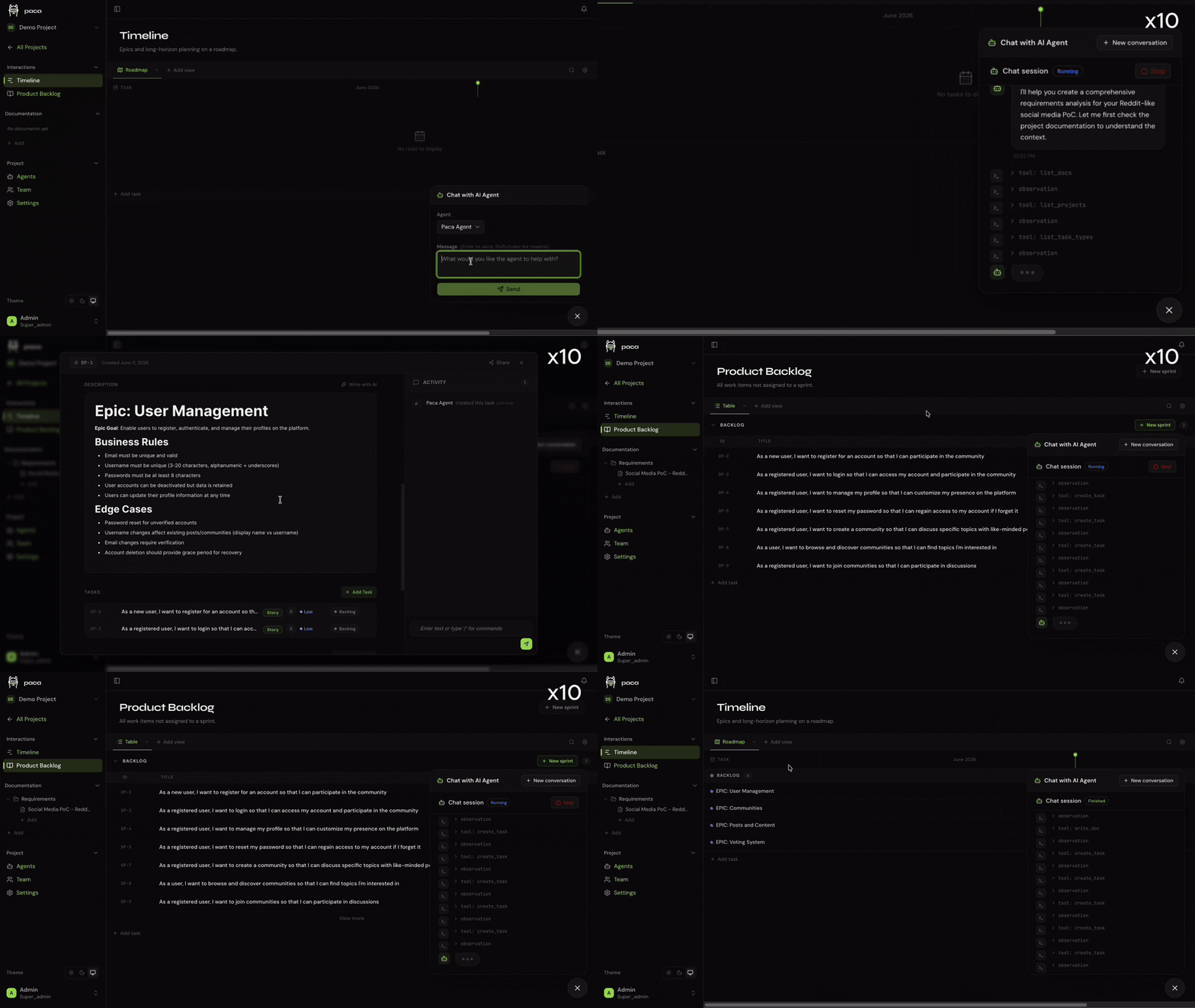
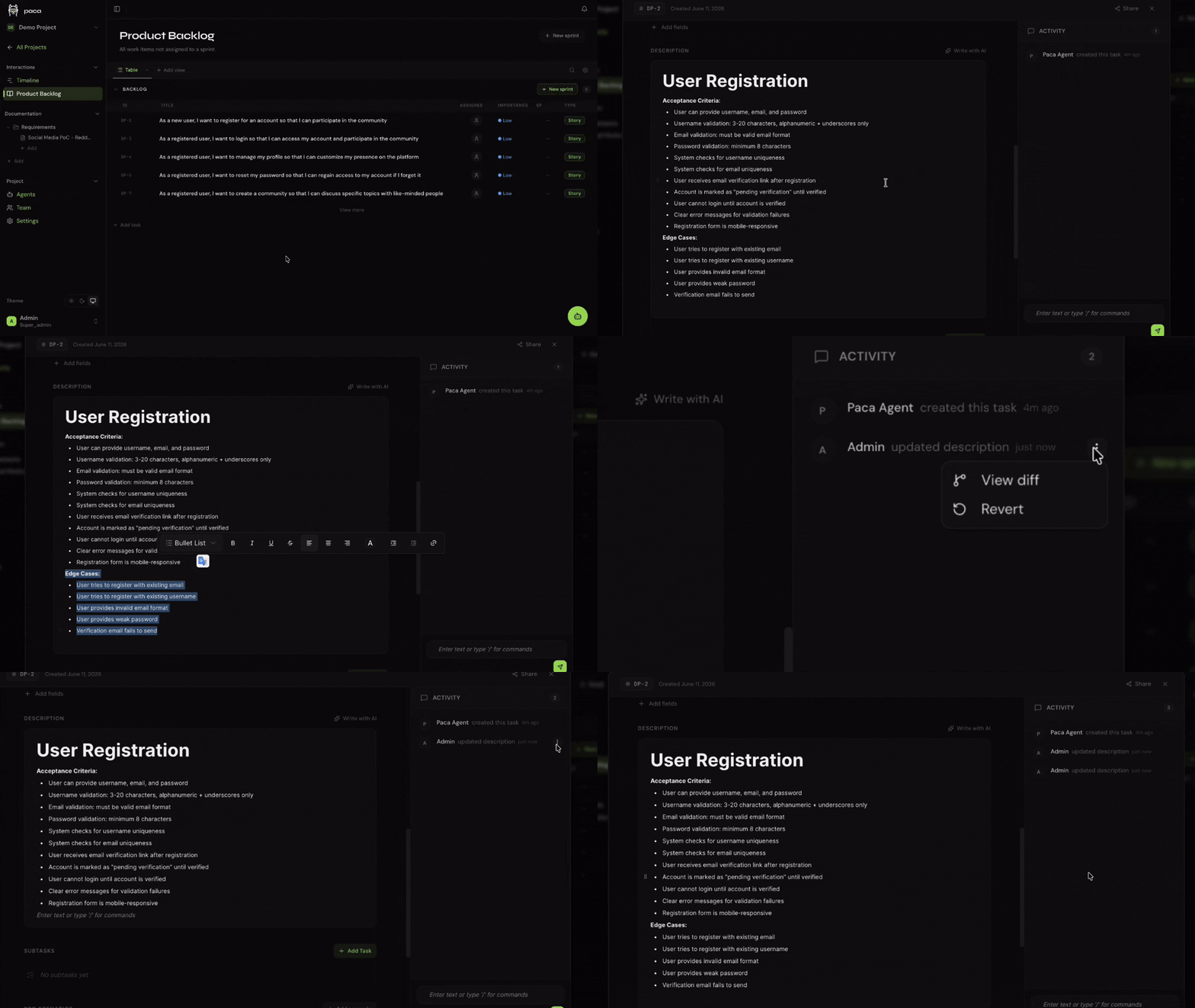
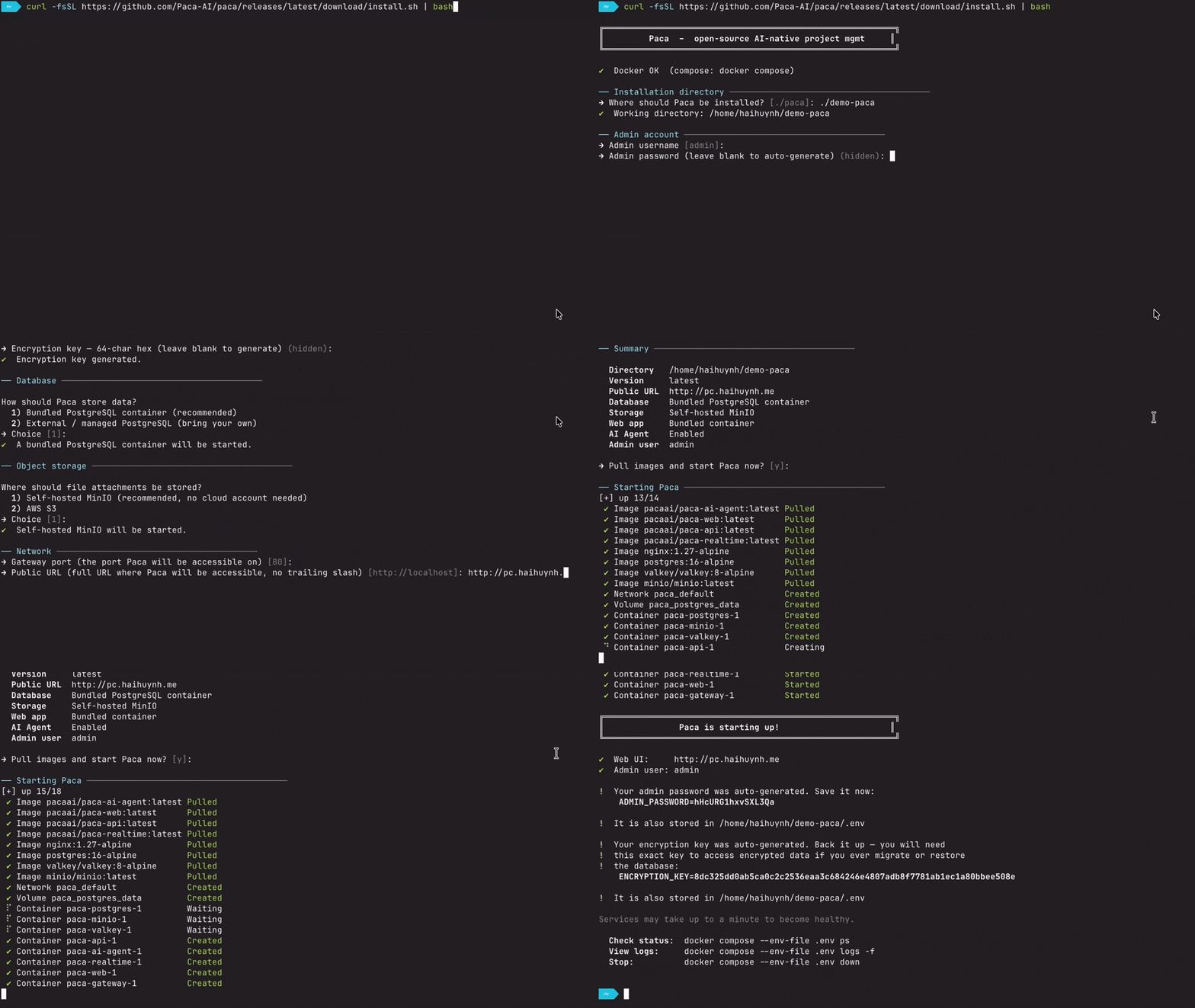
AI-native, free, open-source alternative to Jira, Trello, ClickUp & Monday. Built for Scrum teams where humans and AI agents collaborate as equals — on the same board, the same sprints, the same goals. Self-hosted. Fully customizable via config and plugins.
1.6k
Stars
104
Forks
4
Open issues
5
Contributors


AI Analysis
Paca is a self-hosted, open-source project management platform designed to integrate AI agents as first-class participants in Scrum teams alongside humans. It targets organizations seeking an alternative to Jira, Trello, ClickUp, and Monday that offers AI collaboration, full customization via plugins, and data ownership through self-hosting. Best suited for development teams and organizations that want to experiment with AI as a team member rather than a peripheral tool; not a fit for teams s...
Inferred from signals mentioned in the README (tests, CI, type safety) — not a review of the actual code.
AI's overall editorial judgment — not an average of the bars above, can weigh other factors too.
Self-hosted Scrum board built for AI agents as first-class team members, not add-ons
Paca is an open-source, self-hosted project management platform targeting Scrum teams that want to treat AI agents as genuine sprint participants rather than peripheral automation tools. Built in Go with a WASM plugin system, it competes conceptually with Jira, ClickUp, and Monday but differentiates on AI-native collaboration, zero licensing cost, and full customizability. Its primary audience appears to be engineering teams experimenting with AI-augmented development workflows who also want data sovereignty. At ~1,077 stars three months after creation, early traction is visible but production adoption is unverified.
Created in March 2026, Paca is very early-stage — roughly 3 months old as of evaluation date. It released v0.4.0 with in-app AI chat, suggesting active feature iteration, but has not yet established a track record of production deployments.
The project gained 88 stars in the past 7 days against a 1,077 total, indicating continued but moderate organic interest likely driven by the AI-agent collaboration narrative resonating with developers following agentic workflow trends. Growth appears consistent rather than viral. The framing as a 'free Jira alternative' also draws passive discovery traffic.
Adoption not verified. No case studies, deployment testimonials, or community forum evidence is present in the README. The plugin marketplace is documented but community plugin volume is unknown. The 69 forks may include contributors or evaluators, but real-world production deployments cannot be confirmed from available metadata.
Appears to use a Go backend with a WASM-based plugin sandbox for backend extensions, paired with standard JS module bundles for frontend plugins. Likely a monorepo layout given the documented plugins/ directory structure. The README references a capability-based permission model for WASM plugins, which suggests a security-conscious sandbox design. MCP server integration implies an API layer compatible with the Model Context Protocol. Architecture claims are based entirely on README descriptions — source code not inspected.
Not documented in README.
Last push was 2026-06-19, approximately 2 days before evaluation date. The project has been consistently active since its March 2026 creation, with versioned releases visible (v0.4.0 mentioned). 69 forks for ~1,077 stars is a reasonable engagement ratio suggesting some active contributors. Maintenance appears healthy for a project of this age.
ADOPT IF: your team is actively experimenting with AI agents in development workflows, wants self-hosted infrastructure with no seat fees, and can tolerate early-stage software maturity where rough edges are expected. AVOID IF: you need a proven, production-stable PM tool with enterprise compliance, support SLAs, or a large existing integration ecosystem — Paca is too young for that trust level. MONITOR IF: you find the AI-native Scrum concept compelling but want to wait for a more established community, documented production deployments, and plugin ecosystem maturity before committing.
Independent dimensions
Mainstream potential
3/10
Technical importance
6/10
Adoption evidence
1/10
- Project is only ~3 months old with no documented production deployments — significant risk of feature instability, breaking changes, or abandonment before reaching v1.0 maturity.
- The core value proposition — AI agents as genuine Scrum teammates — depends heavily on external AI model quality and reliability, which introduces runtime dependencies outside Paca's control.
- The WASM plugin architecture is ambitious; sandboxing and plugin API stability at this stage are likely unproven at scale, which may create friction for teams building custom plugins.
- Small contributor base (69 forks) means the project could stall if the founding team loses momentum — bus factor risk is non-trivial for a tool intended for team-critical workflows.
- Competing in a market against entrenched vendors (Atlassian, Monday) and well-funded OSS alternatives (Plane, Linear) makes user acquisition and community building structurally difficult.
Paca will likely grow steadily among AI-enthusiast developer teams over the next 6-12 months if it maintains its current release cadence. Mainstream PM adoption remains unlikely without significantly more community validation and production case studies.
Newsletter
Get analyses like this every Monday
Free weekly digest of the most interesting open-source discoveries.
Languages
Information
- Website
- https://paca-ai.org
- Language
- Go
- License
- Apache-2.0
- Last updated
- 20h ago
- Created
- 4mo ago
- Analyzed with
- anthropic/claude-haiku-4-5
Stars over time
Contributors over time
Top 100 contributors only — repos with more will plateau at 100.
Open issues
Recent releases
Similar repos
| Repository | Stars | Week Δ | Language | Score | Updated |
|---|---|---|---|---|---|
|
Paca-AI/paca
this
|
1.6k | +58 | Go | 7/10 | 20h ago |
 automazeio/ccpm automazeio/ccpm
|
8.3k | — | Shell | 7/10 | 4mo ago |
 OpenBMB/PilotDeck OpenBMB/PilotDeck
|
3.8k | — | TypeScript | 7/10 | 1d ago |
 NitroRCr/AIaW NitroRCr/AIaW
|
1.8k | — | TypeScript | 7/10 | 2mo ago |
 todo-for-ai/todo-for-ai todo-for-ai/todo-for-ai
|
1.2k | — | Shell | 7/10 | 1mo ago |
 agentscope-ai/AgentTeams agentscope-ai/AgentTeams
|
5k | — | Go | 7/10 | 24h ago |
Jira dominates enterprise project management with deep integrations and mature tooling. Paca cannot match Jira's ecosystem or enterprise compliance features but offers self-hosting, zero seat cost, and a fundamentally different AI collaboration model rather than bolt-on automation.
Linear is a strong modern competitor in the developer-focused PM space with a polished UX. Linear lacks meaningful AI-agent participation features and is SaaS-only. Paca's self-hosted, AI-native angle is distinct, though Linear's polish and reliability are well ahead of Paca's current maturity.
A much larger Go-based project in an adjacent space. Without detailed knowledge of multica's feature set, direct comparison is difficult. Its substantially higher star count suggests broader adoption, but the two may target different workflow philosophies.
Appears to address AI-agent task coordination in TypeScript. May overlap with Paca's AI-native collaboration vision but differs in language stack and likely in scope. Evidence insufficient for detailed feature comparison.
Plane is the most established open-source Jira alternative with stronger community adoption and a more mature codebase. Plane lacks Paca's AI-agent-as-teammate model. Teams prioritizing stability over AI collaboration would likely prefer Plane today.