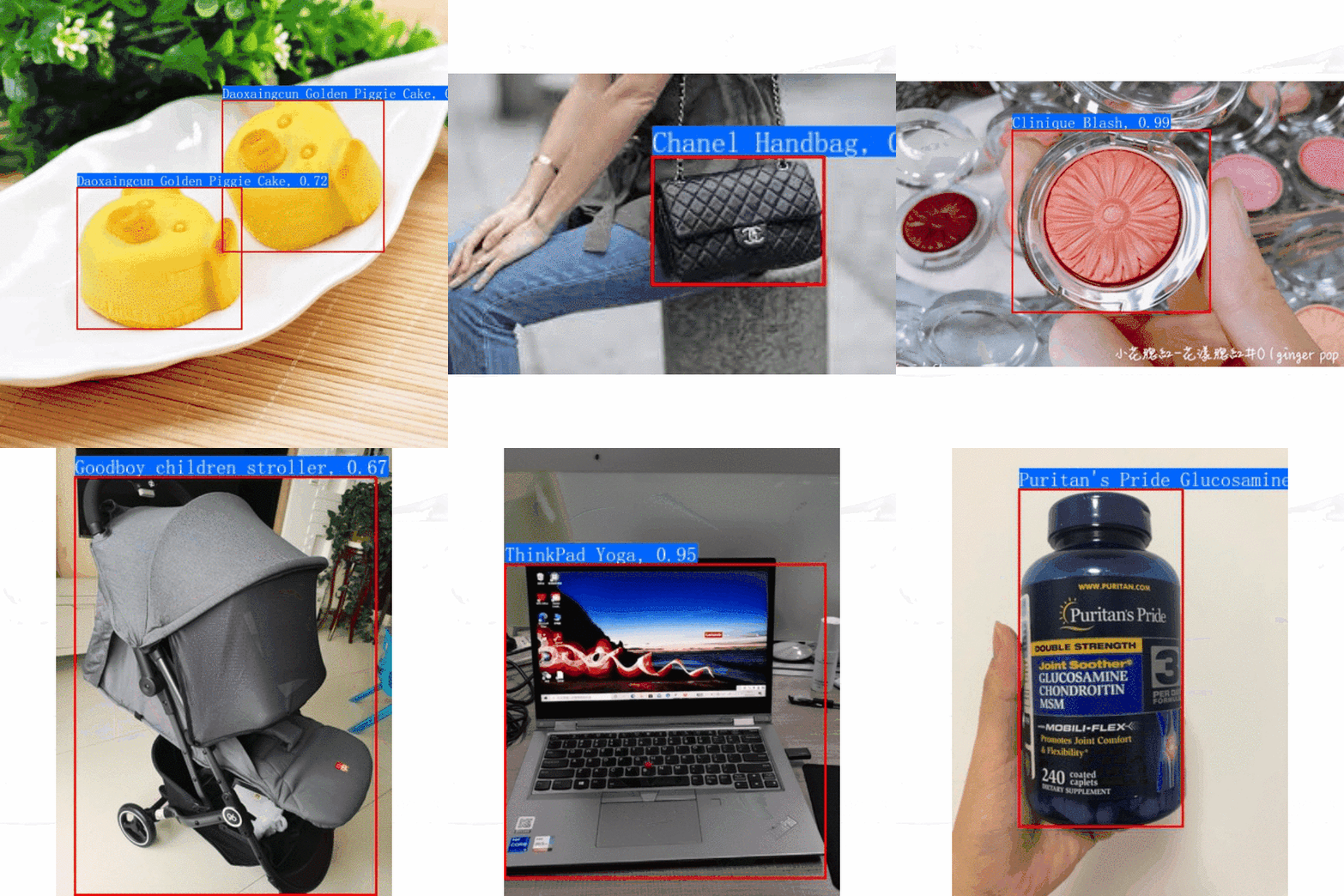
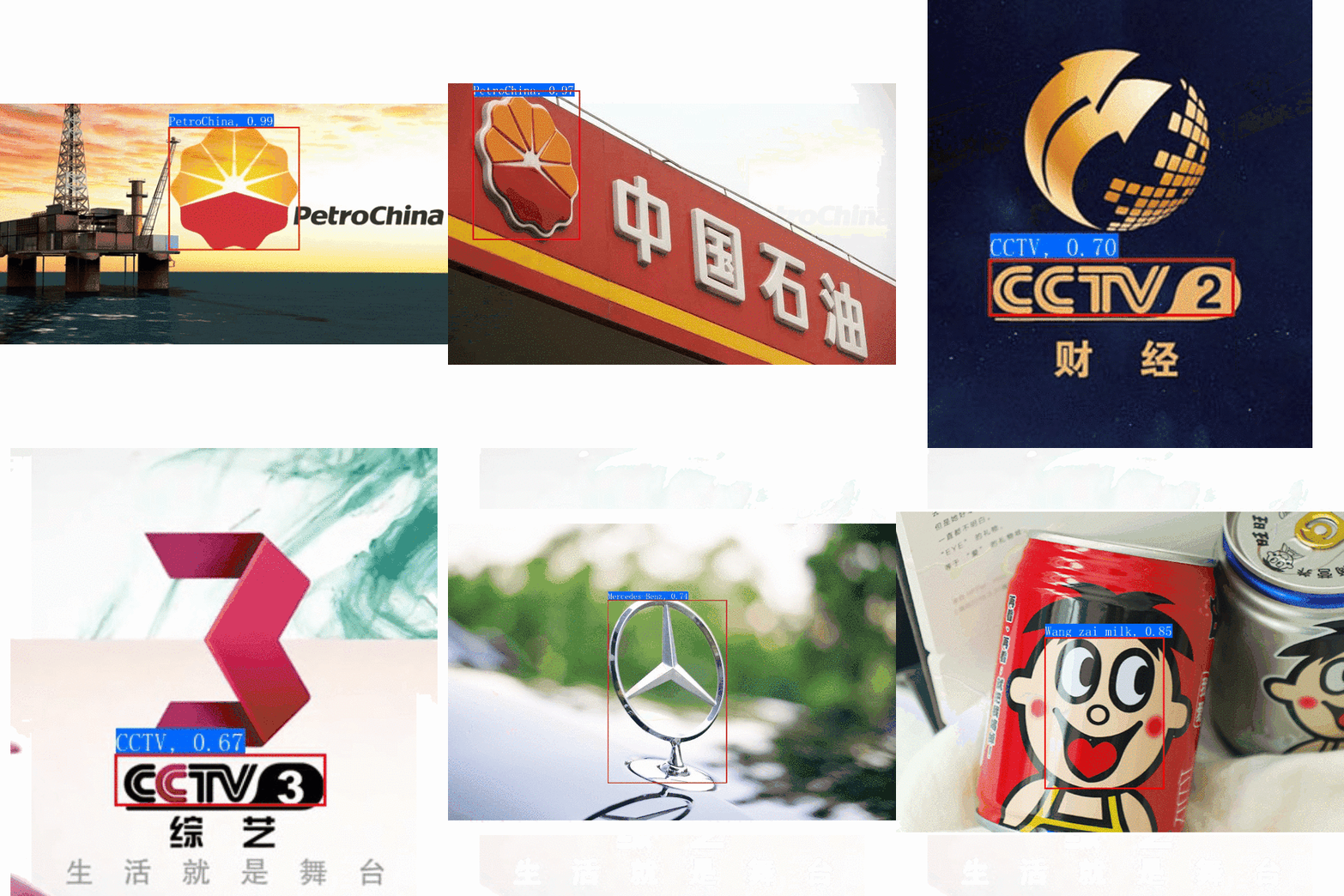
A treasure chest for visual classification and recognition powered by PaddlePaddle
5.8k
Stars
1.2k
Forks
121
Open issues
30
Contributors


AI Analysis
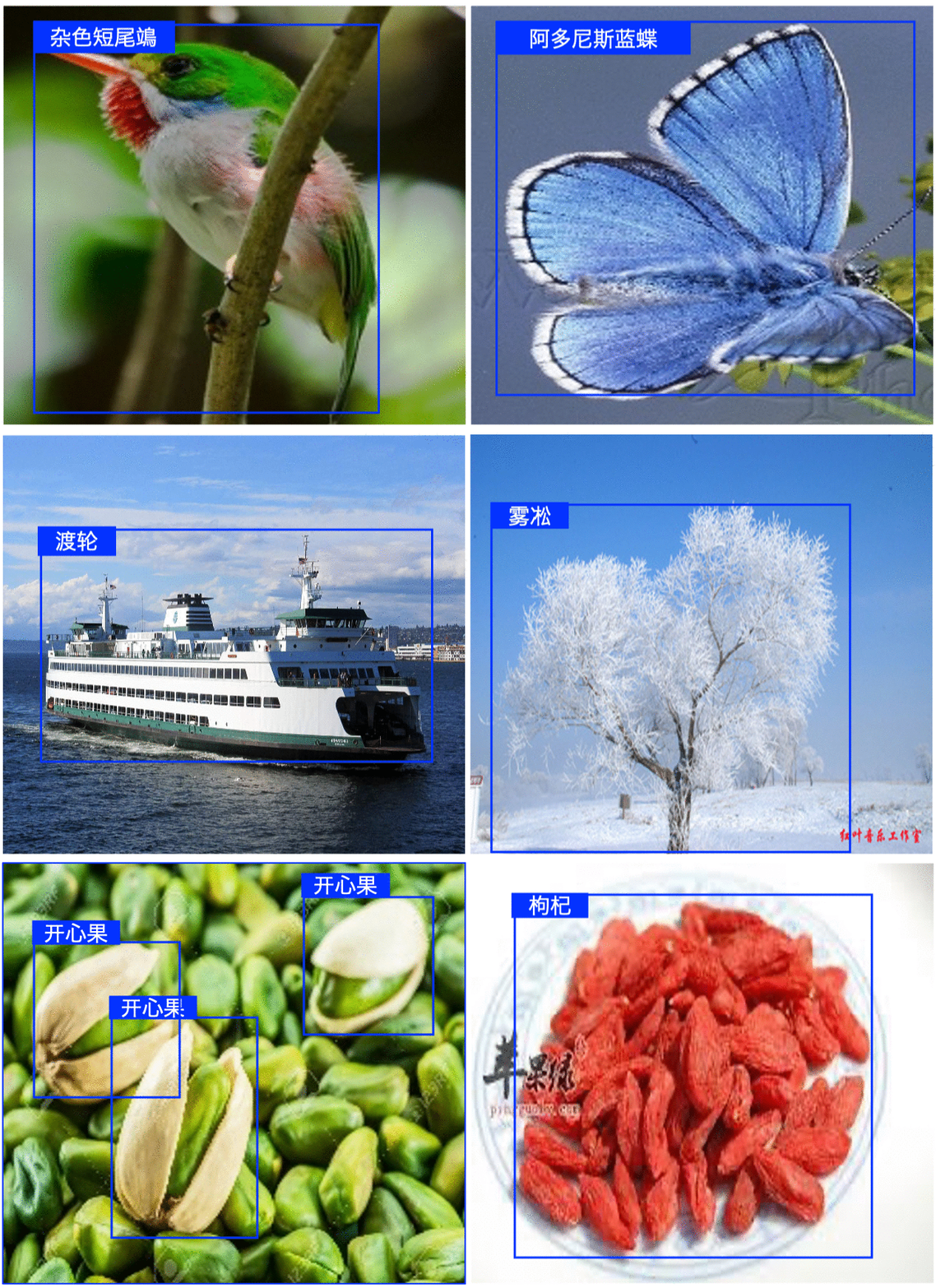
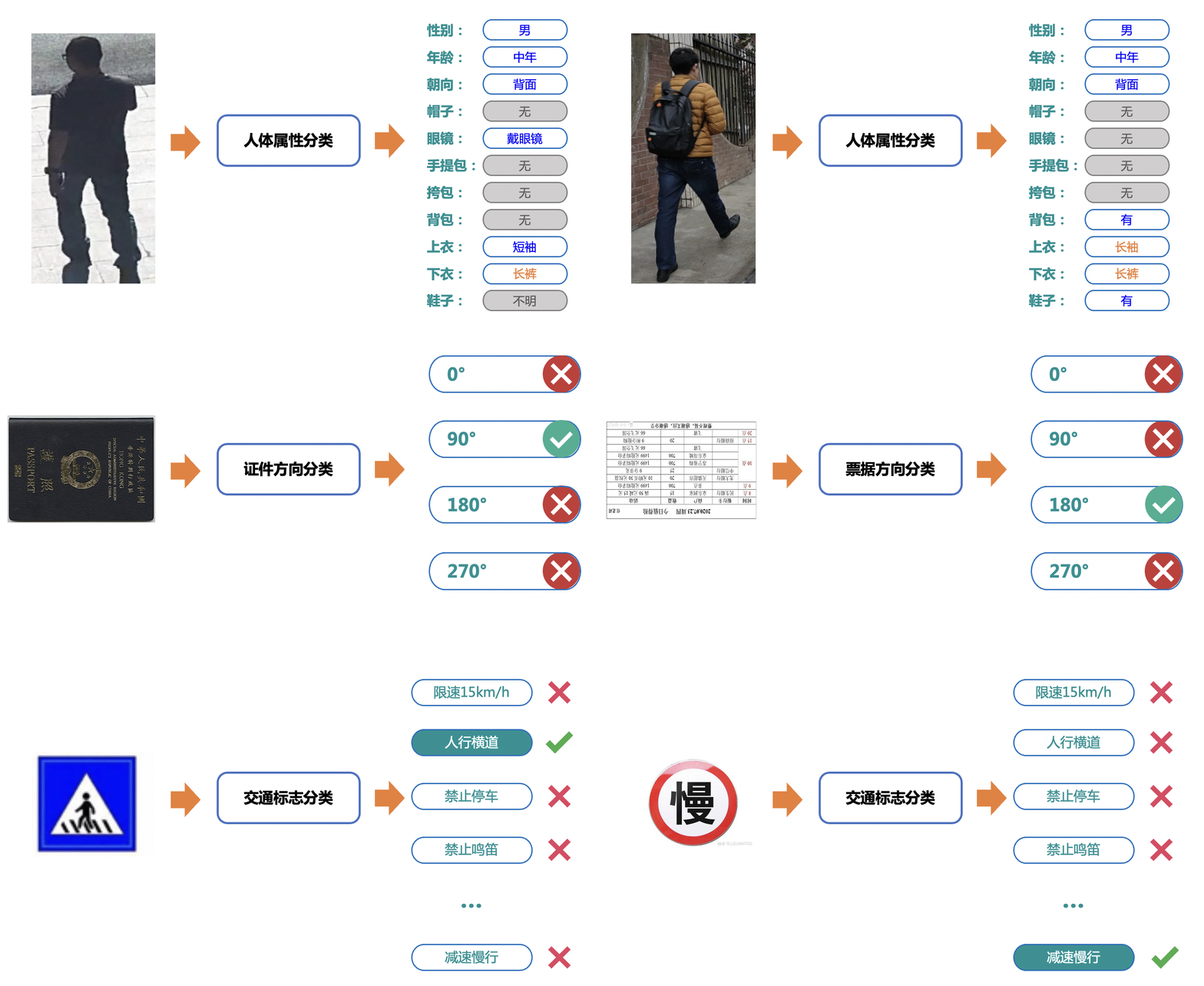
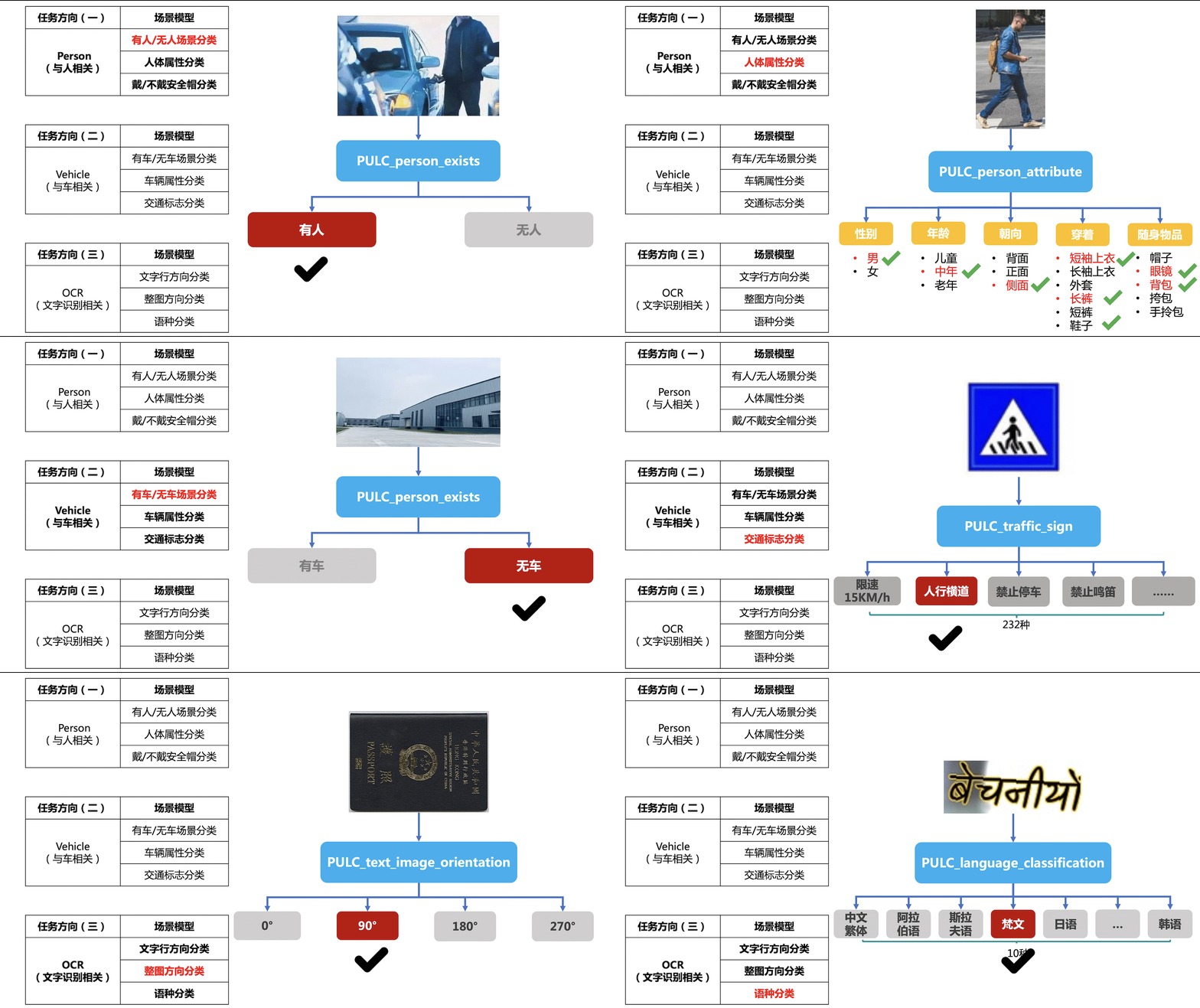
PaddleClas is a comprehensive toolkit for image classification and recognition built on PaddlePaddle, offering pre-trained models, specialized architectures (PP-HGNet, PP-LCNet), and complete systems like PP-ShiTu for product recognition and PULC for lightweight classification. It serves practitioners in computer vision who need production-ready models and end-to-end solutions for visual recognition tasks, particularly those in the PaddlePaddle ecosystem or requiring Chinese-localized develop...
Inferred from signals mentioned in the README (tests, CI, type safety) — not a review of the actual code.
AI's overall editorial judgment — not an average of the bars above, can weigh other factors too.
PaddlePaddle's image classification toolkit targets Chinese industrial deployments with 98+ pretrained models
PaddleClas is Baidu's PaddlePaddle-based toolkit for image classification and recognition tasks, offering pretrained backbone networks (PP-LCNet, PP-HGNet), a lightweight recognition system (PP-ShiTu), and industry-specific pipelines for retail, access control, and logistics. Its primary audience is Chinese enterprises and researchers working within the PaddlePaddle ecosystem who need efficient, deployable vision models — particularly those targeting Huawei Ascend, Kunlun, and other domestically-sourced accelerators alongside NVIDIA GPUs. It is a component of a larger Baidu AI platform strategy.
Launched in March 2020 as Baidu's answer to torchvision-style toolkits, it has evolved from a model zoo into a fuller MLOps-adjacent toolkit, increasingly integrated with PaddleX as a higher-level abstraction layer since late 2024.
Growth was driven mainly by Baidu's enterprise outreach in China and academic adoption tied to PaddlePaddle curriculum. Star accumulation has plateaued relative to PyTorch-ecosystem peers; 1 star gained in the last 7 days signals very slow organic external growth. The pivot toward PaddleX integration in late 2024 suggests Baidu is consolidating traffic upstream rather than growing PaddleClas independently.
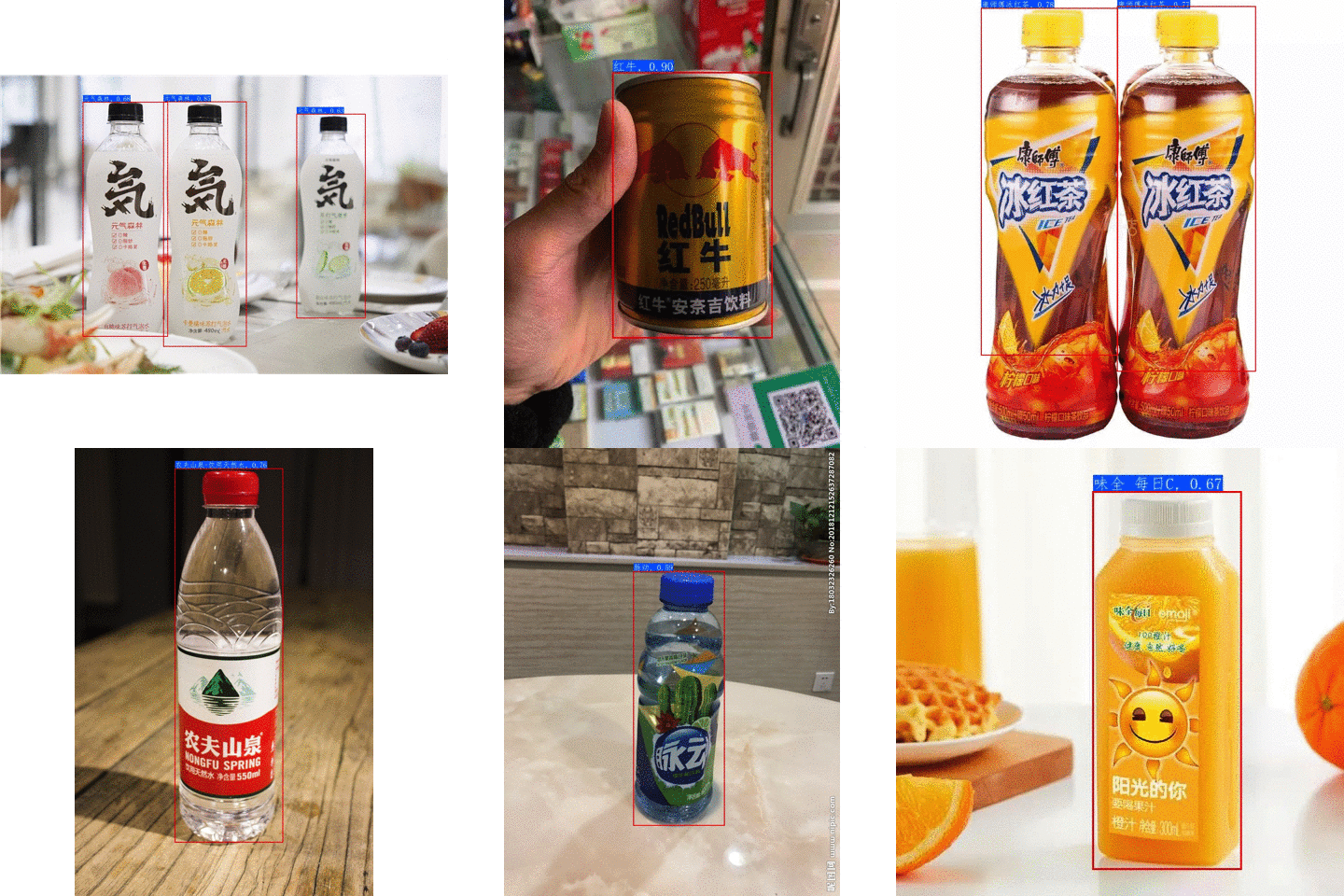
README references several industry case studies (fresh produce checkout, smart retail shelf recognition, e-bike elevator intrusion detection) as sample applications, suggesting real deployment attempts within Chinese enterprise contexts. An Android demo APK with QR code download implies some end-user facing deployment. However, independent third-party production usage reports outside the Baidu ecosystem are not verifiable from available metadata. Adoption appears concentrated in Chinese industrial and academic contexts.
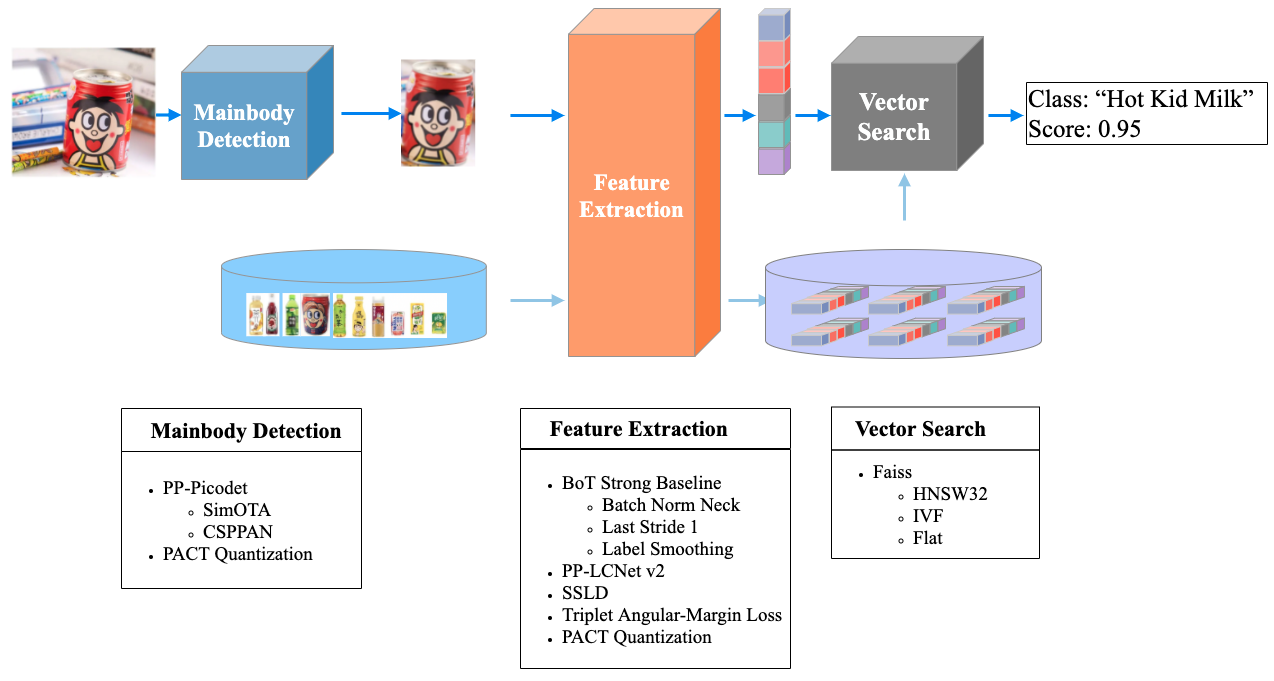
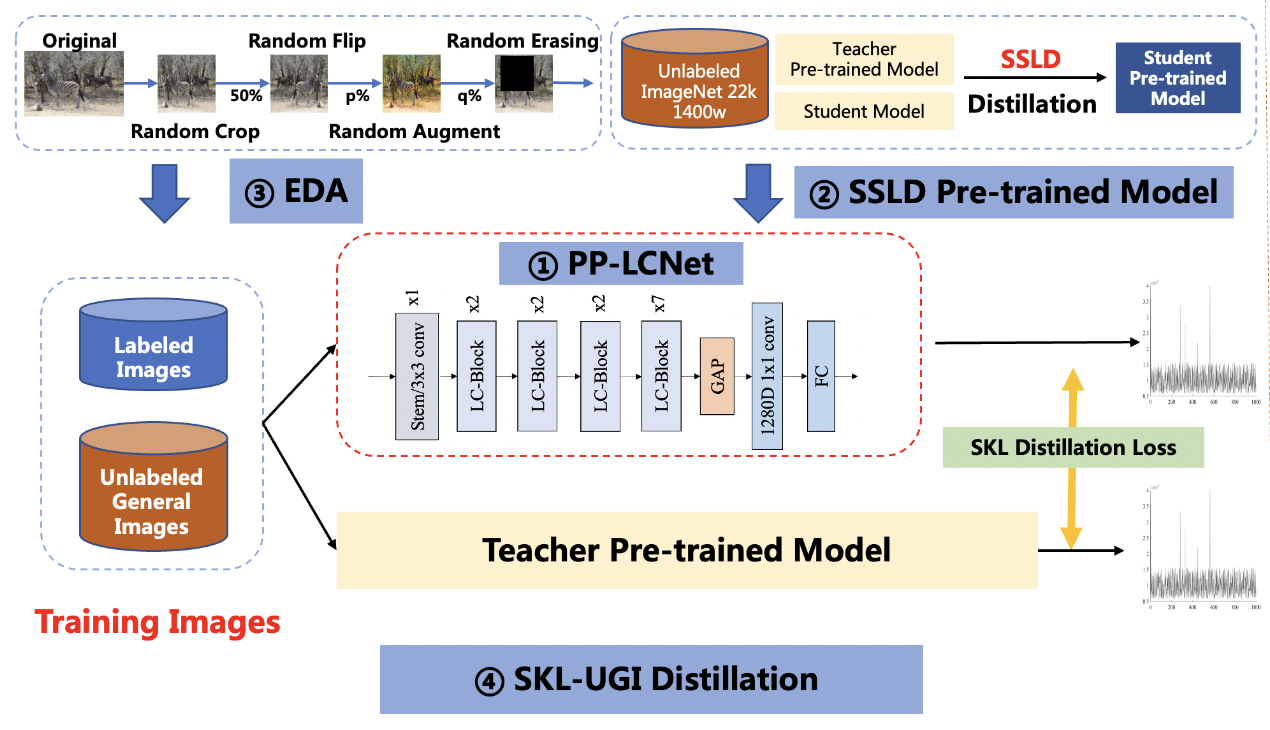
Appears to follow a modular pipeline design: backbone networks, feature extraction heads, and recognition indices are treated as composable components. PP-ShiTu likely uses a detect-then-embed architecture (PicoDet for detection + PPLCNetV2 for feature extraction). PULC likely uses lightweight CNNs with knowledge distillation via SSLD. Based on README, training, inference, and deployment are documented as separate stages.
Not documented in README
Last push was 2026-06-25 — one day before the evaluation date — indicating active maintenance. However, the most recent feature update noted in the README changelog dates to November 2024, suggesting the pace of major feature additions has slowed. The repo appears to be in a maintenance and integration phase rather than active feature expansion.
ADOPT IF: you are already committed to the PaddlePaddle ecosystem, deploying on Chinese-made accelerators (Ascend, Kunlun), or need industrial image recognition pipelines with Chinese-language documentation and Baidu support. AVOID IF: you work in a PyTorch-first environment, need broad international community support, or require models not optimized for Paddle's inference stack. MONITOR IF: you are evaluating PaddleX as a unified Baidu AI platform and want to understand whether PaddleClas will remain a standalone toolkit or get fully absorbed.
Independent dimensions
Mainstream potential
3/10
Technical importance
6/10
Adoption evidence
4/10
- PaddleX integration risk: Baidu appears to be consolidating user-facing APIs into PaddleX, which may reduce PaddleClas's relevance as a standalone product over time.
- Ecosystem lock-in: models and pipelines are tightly coupled to PaddlePaddle's runtime, making migration to PyTorch or ONNX-based stacks non-trivial.
- Slow external growth: 1 star per week as of mid-2026 suggests the project is not gaining new external contributors or users at a meaningful rate outside China.
- Documentation language barrier: primary documentation and changelogs are in Simplified Chinese, which limits accessibility for non-Chinese-speaking developers.
- Hardware dependency assumptions: optimization emphasis on Intel CPU (MKL-DNN) and specific Chinese accelerators may not translate well to general cloud or edge deployments.
PaddleClas will likely persist as a maintained component library feeding into PaddleX rather than growing as an independent toolkit. Its model zoo may expand incrementally, but user-facing development will probably shift upward to PaddleX.
Newsletter
Get analyses like this every Monday
Free weekly digest of the most interesting open-source discoveries.
Languages
Information
- Language
- Python
- License
- Apache-2.0
- Last updated
- 2d ago
- Created
- 76mo ago
- Analyzed with
- anthropic/claude-haiku-4-5
Stars over time
Contributors over time
Top 100 contributors only — repos with more will plateau at 100.
Open issues
No open issues — clean slate.
Top contributors
Similar repos
PaddlePaddle/PaddleX
PaddleX is a low-code AI development tool built on PaddlePaddle that integrates...
PaddlePaddle/PaddleDetection
PaddleDetection is a comprehensive object detection toolkit built on...
PaddlePaddle/PaddleSeg
PaddleSeg is a comprehensive image segmentation library built on PaddlePaddle...
PaddlePaddle/PaddleOCR
PaddleOCR is an OCR toolkit and document AI engine built on PaddlePaddle that...
| Repository | Stars | Week Δ | Language | Score | Updated |
|---|---|---|---|---|---|
|
PaddlePaddle/PaddleClas
this
|
5.8k | +7 | Python | 8/10 | 2d ago |
|
PaddlePaddle/PaddleX
|
6.2k | — | Python | 8/10 | 2w ago |
|
PaddlePaddle/PaddleDetection
|
14.3k | — | Python | 7/10 | 1mo ago |
|
PaddlePaddle/PaddleSeg
|
9.4k | — | Python | 8/10 | 5mo ago |
|
PaddlePaddle/PaddleOCR
|
85.2k | — | Python | 9/10 | 2w ago |
|
PaddlePaddle/PaddleSpeech
|
12.6k | — | Python | 8/10 | 3w ago |
timm alone offers 1000+ pretrained models with broad community adoption. PaddleClas cannot match this model breadth or community size globally, but offers tighter integration with Chinese hardware accelerators and Baidu's deployment infrastructure.
PaddleX is increasingly positioned as the higher-level entry point that wraps PaddleClas functionality. PaddleClas may gradually become an implementation detail rather than a standalone user-facing product.
PaddleDetection has 14,000+ stars vs PaddleClas's ~5,800, suggesting detection tasks attract more community interest even within the same ecosystem. PaddleClas serves classification-specific use cases that detection pipelines don't replace.
OpenMMLab's classification toolkit is PyTorch-native and has broader international adoption. PaddleClas differentiates mainly on CPU-optimized PP-LCNet variants and China-specific hardware support.
Ultralytics focuses on detection/segmentation; overlaps with PaddleClas only marginally in classification. Not a direct competitor but competes for developer mindshare in industrial CV deployment.