Production ready toolkit to run AI locally
10.3k
Stars
364
Forks
23
Open issues
30
Contributors


AI Analysis
RunAnywhere is a production-ready SDK for running AI models (LLMs, vision, speech) entirely on-device across iOS, Android, Flutter, React Native, and Web platforms. It specializes in edge AI inference with platform-specific optimizations including Core ML on Apple, WebGPU in browsers, and Hexagon NPU acceleration on Snapdragon devices. Best suited for mobile and web developers building privacy-first, offline-capable AI features; not intended for cloud-based or server-side inference workloads.
Inferred from signals mentioned in the README (tests, CI, type safety) — not a review of the actual code.
AI's overall editorial judgment — not an average of the bars above, can weigh other factors too.
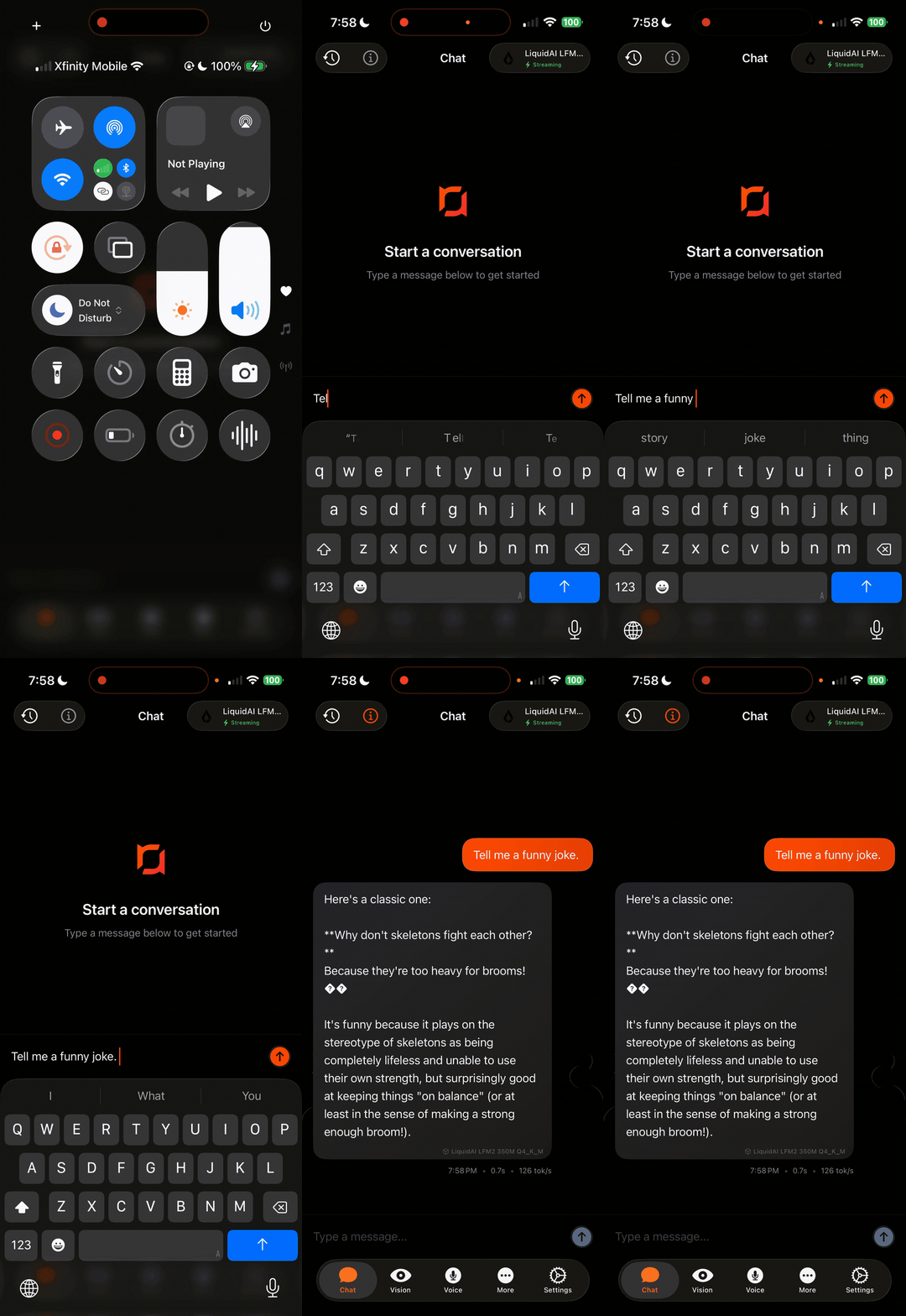
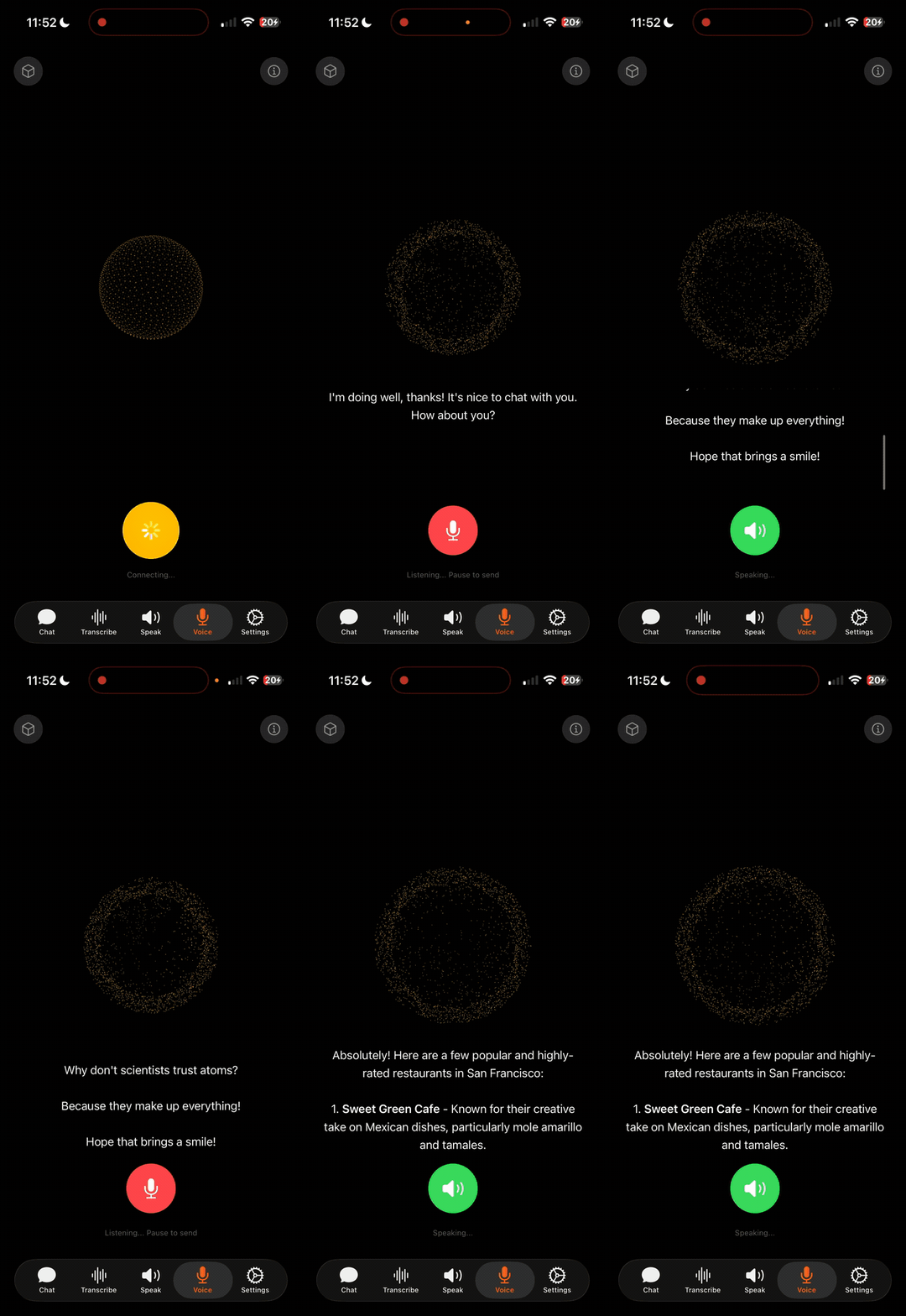
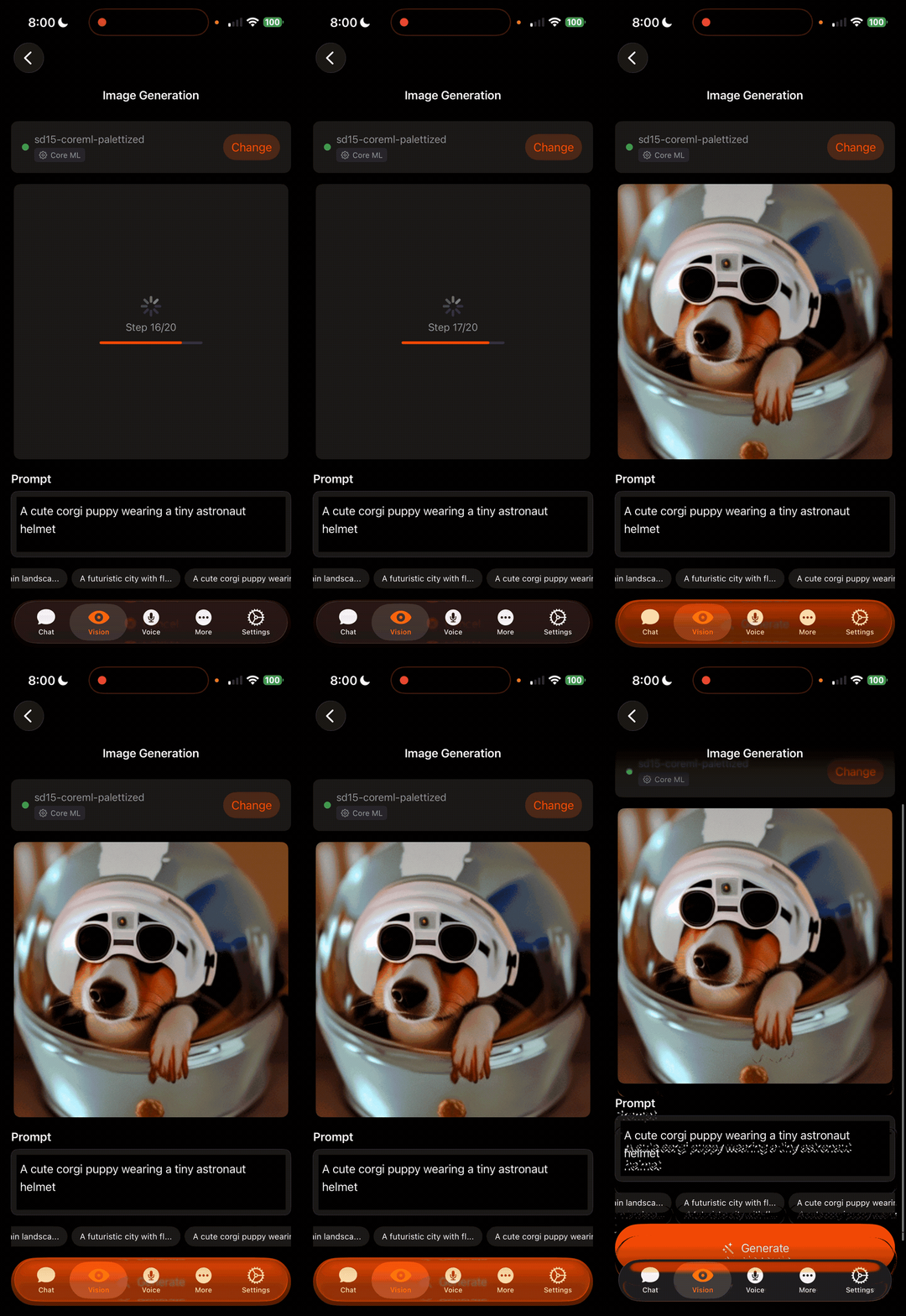
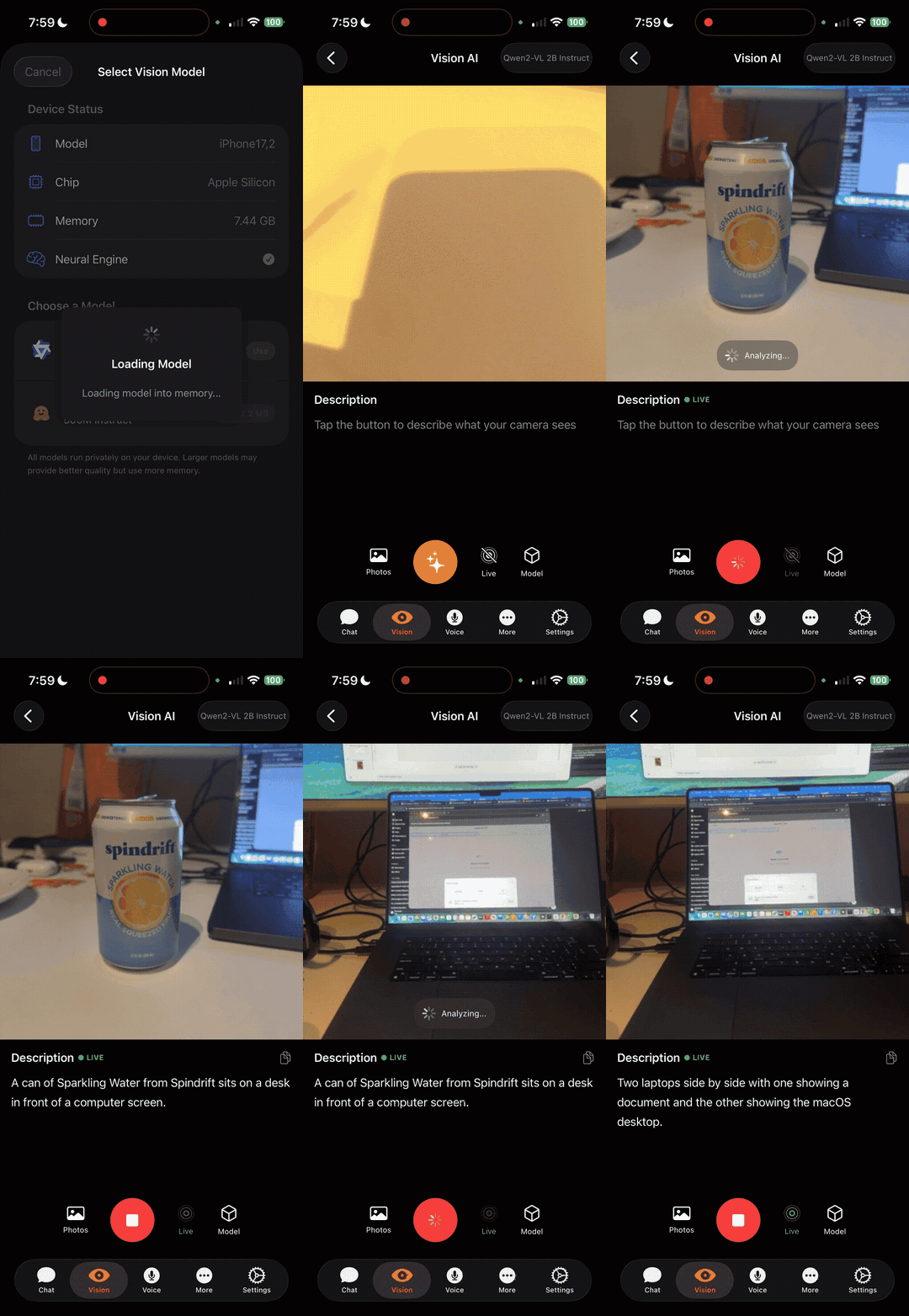
RunAnywhere SDKs bring on-device LLM, STT, TTS, and image generation to iOS, Android, and cross-platform apps
RunAnywhere is a multi-platform SDK toolkit that lets mobile and web developers embed AI inference — LLM chat, speech-to-text, text-to-speech, image generation, and vision-language models — directly on user devices without any cloud dependency. It targets mobile app developers building privacy-sensitive or offline-capable AI features, offering stable Swift and Kotlin SDKs plus beta React Native, Flutter, and Web SDKs. The project also ships companion consumer apps on the App Store and Google Play. With 10,315 stars accumulated in roughly 11 months and active pushes as of June 2026, it has gained meaningful developer attention in a competitive space.
Created in July 2025, RunAnywhere is a young project that entered the on-device AI space as mobile hardware (Apple Silicon, Qualcomm NPUs) made local inference increasingly viable. It appears to have grown alongside rising demand for private, offline AI in mobile apps.
The project accumulated over 10,000 stars in under 12 months, suggesting strong initial launch momentum likely driven by the combination of consumer apps (App Store/Google Play presence provides real-world validation) and developer SDK interest. However, recent growth has slowed significantly — only 6 stars in the past 7 days — indicating the initial wave has passed and steady organic growth has replaced viral momentum.
Consumer apps are live on both Apple App Store (id6756506307) and Google Play (com.runanywhere.runanywhereai), providing concrete evidence of production deployment. A Discord community is linked. Version numbers in Gradle dependencies (0.16.1) suggest multiple release iterations. However, independent reports of third-party apps using the SDK in production are not documented in available materials — adoption by external developers beyond the first-party app is not verified.
Appears to follow a core runtime abstraction layer (RunAnywhere) with pluggable inference backends — likely llama.cpp for LLMs (based on explicit LlamaCPP.register() patterns), Whisper for STT, and a diffusion backend for image generation. The SDK is structured per platform (Swift, Kotlin, React Native, Flutter, Web) with a shared C++ core, given the primary language is C++. Model loading appears to use a proto-based request/response pattern (RAModelLoadRequest), suggesting a structured internal API. Cross-platform parity appears to be a design goal.
Not documented in README
Last push was June 27, 2026 — one day before evaluation date — indicating highly active maintenance. The companion RCLI repo (1,525 stars) and the breadth of platform SDKs suggest ongoing engineering investment. The 359 forks indicate developer engagement beyond passive observation.
ADOPT IF: you are building a mobile or cross-platform app requiring private, offline AI features (LLM, STT, TTS, or image generation) and want a single SDK abstraction across iOS, Android, React Native, and Flutter. AVOID IF: you need a server-side or desktop inference solution, require a large established community with extensive third-party integrations, or are uncomfortable with a project under 12 months old with a NOASSERTION license classification that warrants careful legal review. MONITOR IF: you are evaluating it for enterprise or large-scale consumer app deployment — watch for third-party production case studies and Swift/Kotlin SDK maturity signals over the next 6 months.
Independent dimensions
Mainstream potential
5/10
Technical importance
8/10
Adoption evidence
3/10
- License is listed as NOASSERTION — the actual license terms require independent verification before commercial use; Apache 2.0 is claimed in the README badge but the metadata does not confirm this.
- Project is less than 12 months old; long-term maintenance commitment and API stability (especially for beta SDKs: Web, React Native, Flutter) cannot yet be assessed with confidence.
- Third-party developer adoption beyond the first-party RunAnywhere apps is not verified — the SDK ecosystem may still be primarily self-serving rather than community-validated.
- On-device AI performance is highly dependent on target hardware capabilities; the SDK may deliver poor user experience on low-end Android devices or older iPhones, and this is not addressed in available documentation.
- Star growth has dropped sharply to 6 per week — if this reflects declining developer interest rather than organic plateau, the project may struggle to build the community needed to sustain long-term multi-platform SDK maintenance.
RunAnywhere will likely consolidate around its strongest platforms (Swift/Kotlin) and grow slowly as on-device AI hardware matures. Mainstream adoption by third-party developers depends heavily on whether the team can build a documented ecosystem of real production use cases in the next 12 months.
Newsletter
Get analyses like this every Monday
Free weekly digest of the most interesting open-source discoveries.
Languages
Information
- Website
- https://www.runanywhere.ai
- Language
- C++
- License
- NOASSERTION
- Last updated
- 9h ago
- Created
- 12mo ago
- Analyzed with
- anthropic/claude-haiku-4-5
Stars over time
Contributors over time
Top 100 contributors only — repos with more will plateau at 100.
Open issues
Open pull requests
fix(logging): sanitize message strings and migrate printToConsole to os.Logger
feat: support to build for windows and add proxy when do http request or download modals
feat(llm): expose adaptive-context APIs through component layer wrappers
Top contributors
Similar repos

off-grid-ai/off-grid-ai-mobile
Off Grid AI Mobile is a complete on-device AI suite for Android, iOS, and macOS...

dabit3/react-native-ai
React Native AI is a full-stack framework for building cross-platform mobile...
| Repository | Stars | Week Δ | Language | Score | Updated |
|---|---|---|---|---|---|
|
RunanywhereAI/runanywhere-sdks
this
|
10.3k | +15 | C++ | 8/10 | 9h ago |
|
RunanywhereAI/RCLI
|
1.5k | — | C++ | 8/10 | 4mo ago |
|
off-grid-ai/off-grid-ai-mobile
|
2.7k | — | TypeScript | 8/10 | 10h ago |
|
dabit3/react-native-ai
|
1.3k | — | TypeScript | 7/10 | 20h ago |
 AtomicBot-ai/Atomic-Chat AtomicBot-ai/Atomic-Chat
|
1.1k | — | TypeScript | 7/10 | 1d ago |
 mudler/LocalAI mudler/LocalAI
|
47.5k | — | Go | 8/10 | 5h ago |
LocalAI (47,200 stars) targets server-side local inference via an OpenAI-compatible API, primarily for desktop/server deployments. RunAnywhere specifically targets mobile and embedded runtimes — these are complementary rather than directly competing tools, though both address privacy-first AI.
Foundry Local (2,392 stars, C++) from Microsoft focuses on local AI model serving with enterprise backing. It likely targets Windows/desktop scenarios. RunAnywhere's explicit iOS/Android/Flutter/React Native coverage gives it a distinct mobile-first positioning.
off-grid-ai/mobile (2,602 stars, TypeScript) appears to target similar offline mobile AI use cases but with a TypeScript-first approach. RunAnywhere's C++ core and native Swift/Kotlin SDKs may offer better raw performance, though this cannot be confirmed without source inspection.
RCLI (1,525 stars) is a companion CLI tool from the same organization, suggesting RunAnywhere is building an ecosystem rather than a single tool. The CLI likely serves developers testing model inference outside of mobile contexts.
react-native-ai (1,279 stars) is a React Native-specific AI integration library. RunAnywhere's React Native SDK competes in this space but with the added breadth of native Swift/Kotlin SDKs and a C++ backend, appealing to teams needing cross-platform consistency.