The SmythOS Runtime Environment (SRE) is an open-source, cloud-native runtime for agentic AI. Secure, modular, and production-ready, it lets developers build, run, and manage intelligent agents across local, cloud, and edge environments.
1.3k
Stars
197
Forks
33
Open issues
20
Contributors




AI Analysis
SmythOS is an open-source runtime environment and SDK for building and deploying production AI agents across local, cloud, and edge environments. It abstracts away provider-specific integrations (LLMs, vector databases, storage) behind a unified API, targeting developers who need a portable, secure foundation for agentic systems rather than ad-hoc agent implementations. Best suited for teams building multi-agent systems, not for simple chatbot integrations or single-agent prototypes.
Inferred from signals mentioned in the README (tests, CI, type safety) — not a review of the actual code.
AI's overall editorial judgment — not an average of the bars above, can weigh other factors too.
TypeScript runtime for building and deploying AI agents with unified resource abstractions across cloud/edge environments
SmythOS SRE is an open-source TypeScript runtime environment positioned as an operating system abstraction layer for AI agents. It provides unified APIs for LLMs, vector databases, storage, and caching across multiple providers. Target audience includes developers building production AI agents who want provider-agnostic infrastructure. Adoption appears limited to early adopters; mainstream production usage not verified. The project positions itself as foundational infrastructure for agentic AI workloads.
Created June 2025, SRE is part of a broader SmythOS ecosystem (which includes a visual agent studio). The project emerged during the 2025 surge in AI agent tooling. It represents one of several attempts to provide OS-like abstractions for agent lifecycle management and resource coordination.
Repository gained 1,286 stars over ~13 months (from June 2025 to July 2026), with modest recent velocity (7 stars in last 7 days as of analysis date). Growth pattern suggests early-stage adoption curve rather than rapid scaling. Last significant push was April 2026, approximately 3 months before analysis date—suggests active but not highly frequent maintenance rhythm. No major milestone or breakout adoption event evident from metadata.
Adoption not verified. README describes capabilities and design principles but does not reference production deployments, case studies, or known users. Metadata shows 1,286 stars and 198 forks (modest relative to comparable tools), but GitHub metrics do not confirm real-world production usage. Existence of documentation and examples suggests intent for production readiness but not evidence of it.
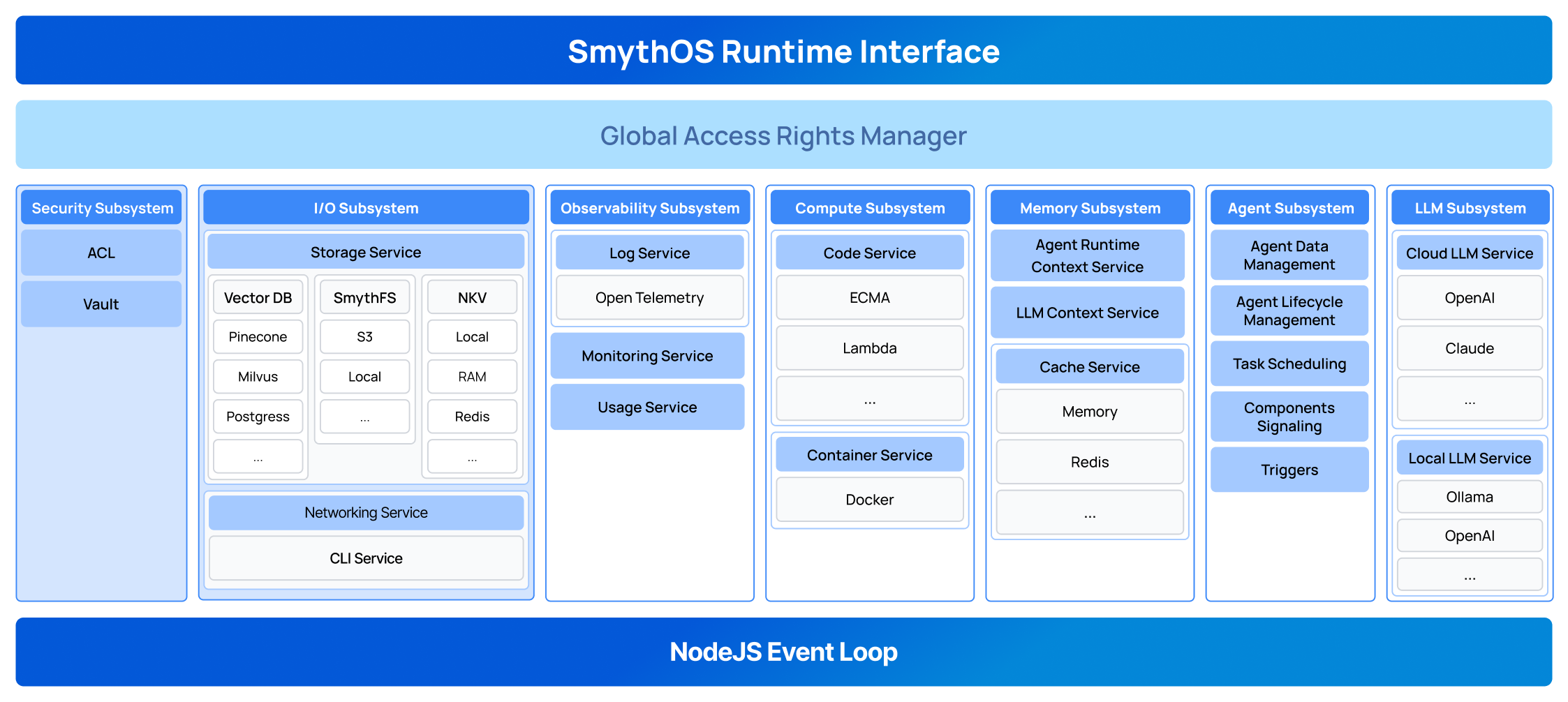
Based on README, SRE appears to use a kernel-inspired architecture with pluggable connectors for resource providers (LLMs, vector DBs, storage, cache). SDK and CLI provided as primary interfaces. Likely organized as a monorepo given mention of separate `packages/cli/` and `packages/sdk/` structure. Appears to prioritize provider abstraction and unified APIs across heterogeneous backends.
Not documented in README. No mention of test suites, CI/CD pipelines, or coverage metrics.
Last push April 3, 2026 indicates active maintenance. However, 3-month gap between last push and analysis date (July 2, 2026) suggests either stable release phase or reduced development velocity. Repository has 198 forks and documented CLI/SDK with examples, indicating baseline infrastructure maintenance. Frequency of updates not clear from metadata alone.
ADOPT IF: you are building production AI agents in TypeScript and need unified provider abstractions across LLMs, vector DBs, and storage, value open-source infrastructure with built-in security, and can tolerate pre-1.0 ecosystem immaturity. AVOID IF: you need battle-tested, widely-deployed production runtime with substantial community support and existing reference implementations, require language flexibility (only TypeScript), or depend on extensive third-party integrations. MONITOR IF: you are evaluating long-term agent infrastructure strategy and want to track whether SRE gains production adoption and community momentum over next 12 months.
Independent dimensions
Mainstream potential
4/10
Technical importance
6/10
Adoption evidence
2/10
- Adoption not verified: no public evidence of production deployments at scale; community size and real-world usage remain unclear.
- Maintenance cadence appears moderate; 3-month gap between last commit and analysis date suggests possible slowdown or stable release phase—sustainability of development unclear.
- TypeScript-only ecosystem may limit adoption in organizations with polyglot infrastructure or performance-critical deployments.
- Competing agent infrastructure projects (opensre with 6x stars, agentos, etc.) suggest fragmented market; SRE's differentiation and staying power uncertain.
- Reliance on documentation and examples for production readiness claims; actual code quality, scalability, and operational maturity unverifiable from metadata.
SRE likely remains a specialized TypeScript agent framework with modest adoption over next 12-18 months. Mainstream adoption hinges on: (1) documented production deployments, (2) sustained community contribution, (3) integration with dominant LLM/agent ecosystems. Risk of being absorbed into larger frameworks (LangChain, etc.) or superseded by more mature competitors. Most probable outcome: narrow but stable niche tool for TypeScript-first agent teams, not a dominant category leader.
Explore similar
Newsletter
Get analyses like this every Monday
Free weekly digest of the most interesting open-source discoveries.
Languages
Information
- Website
- https://smythos.com
- Language
- TypeScript
- License
- MIT
- Last updated
- 3mo ago
- Created
- 13mo ago
- Analyzed with
- anthropic/claude-haiku-4-5
Stars over time
Contributors over time
Top 100 contributors only — repos with more will plateau at 100.
Open issues
Top contributors
Recent releases
No releases published yet.
Similar repos

Tracer-Cloud/opensre
OpenSRE is an open-source framework for building AI-powered Site Reliability...
| Repository | Stars | Week Δ | Language | Score | Updated |
|---|---|---|---|---|---|
|
SmythOS/sre
this
|
1.3k | — | TypeScript | 7/10 | 3mo ago |
|
Tracer-Cloud/opensre
|
8.1k | — | Python | 7/10 | 8h ago |
 SpharxTeam/AgentOS SpharxTeam/AgentOS
|
1.4k | — | CMake | 7/10 | 1d ago |
 rivet-dev/agentos rivet-dev/agentos
|
3.6k | — | Rust | 8/10 | 11h ago |
SRE (TypeScript, 1,286 stars) appears to target similar abstraction layer for agents but in different language ecosystem. opensre has ~6x the GitHub visibility, suggesting stronger community adoption or earlier market entry.
agentos has ~2.7x SRE's stars; both address agent orchestration. Rust vs. TypeScript suggests different performance/ecosystem tradeoffs. Adoption parity unclear.
Similar star count to SRE but implemented in C. Unclear if directly comparable scope; C suggests different performance/integration objectives.
Dominant agent/LLM tooling libraries. SRE targets infrastructure layer; these target application layer. Orthogonal rather than direct competitors, though LangChain ecosystem may absorb similar functionality.