Instant, Concurrent, Secure & Lightweight Sandbox for AI Agents.
9.4k
Stars
820
Forks
130
Open issues
30
Contributors


AI Analysis
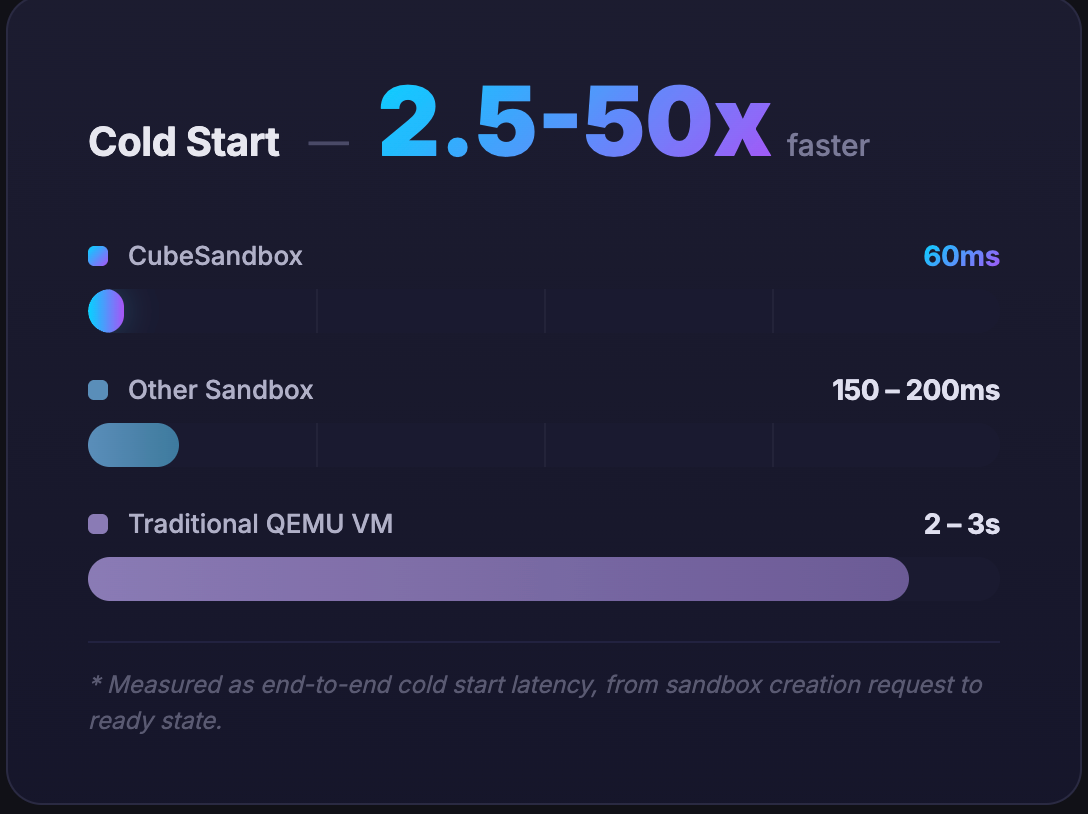
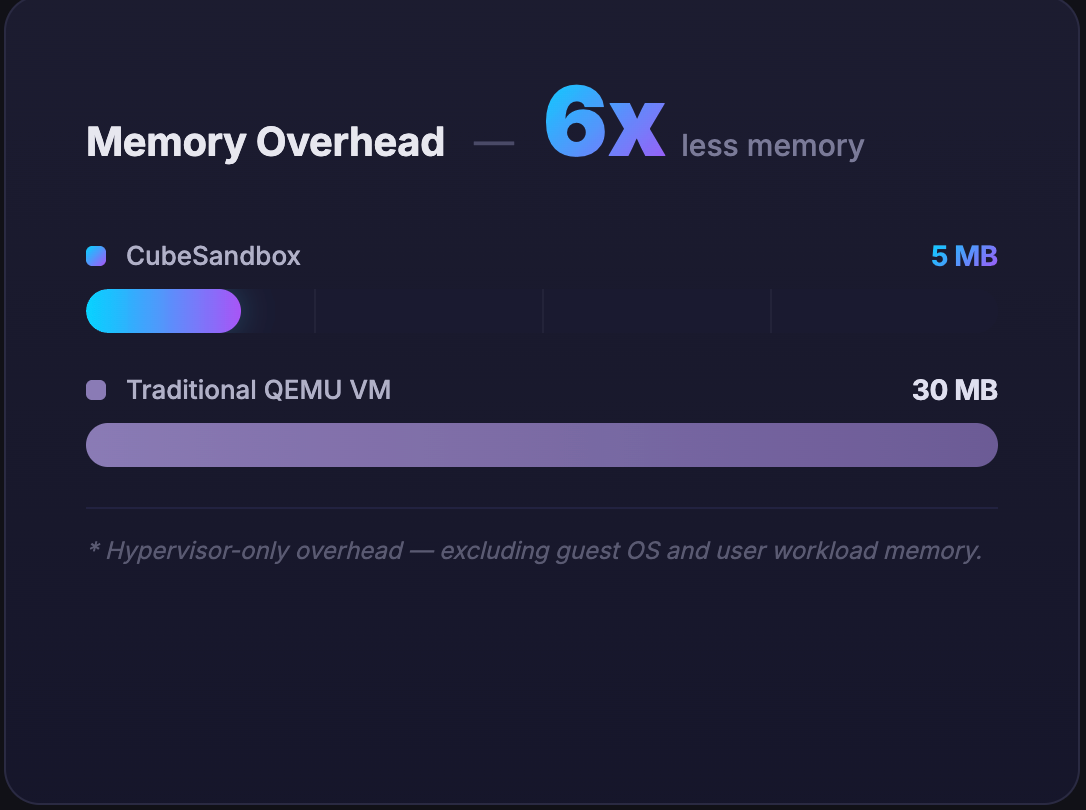
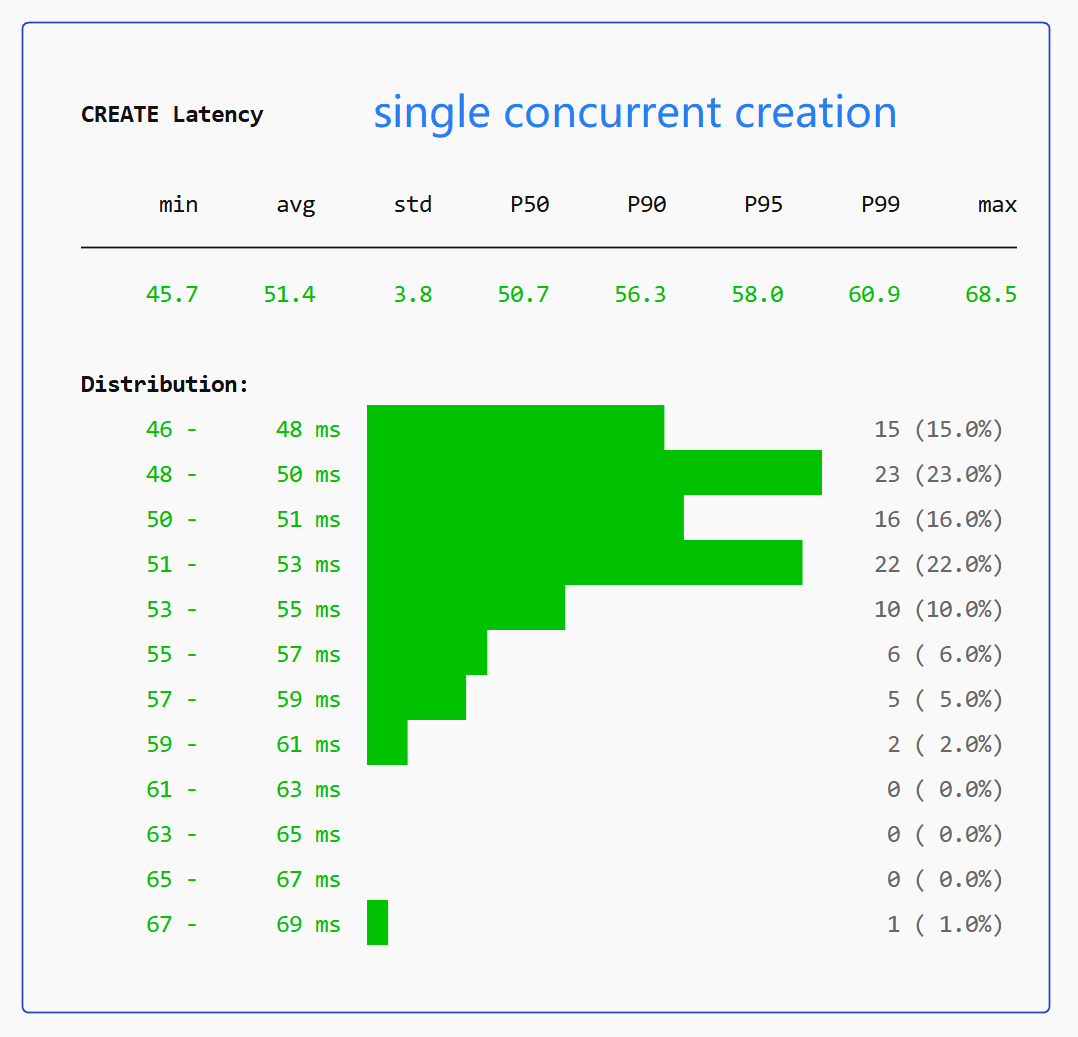
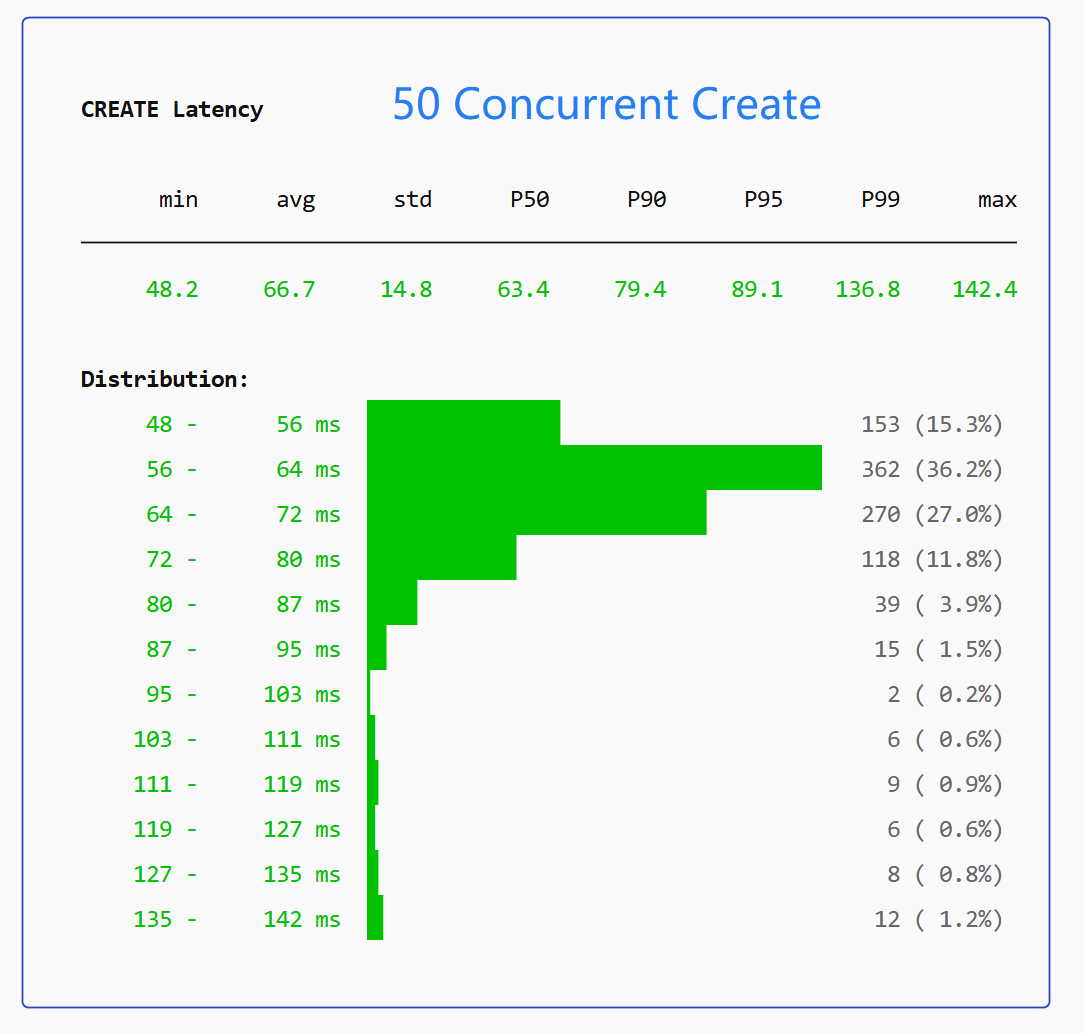
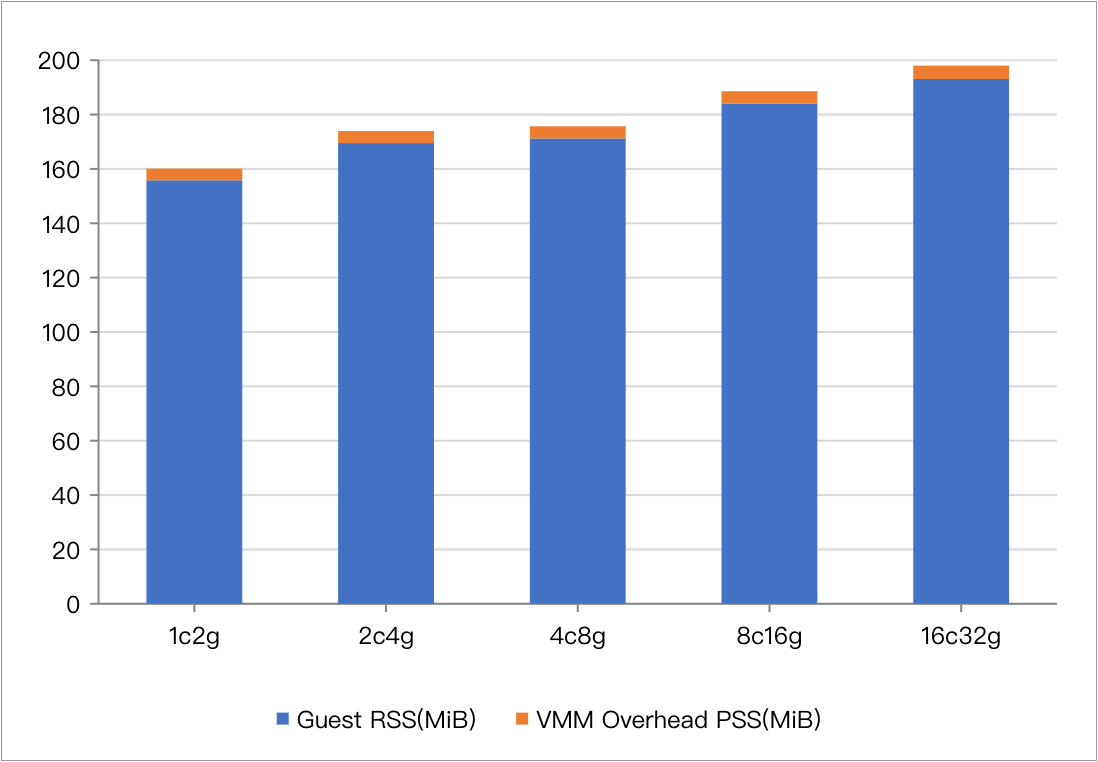
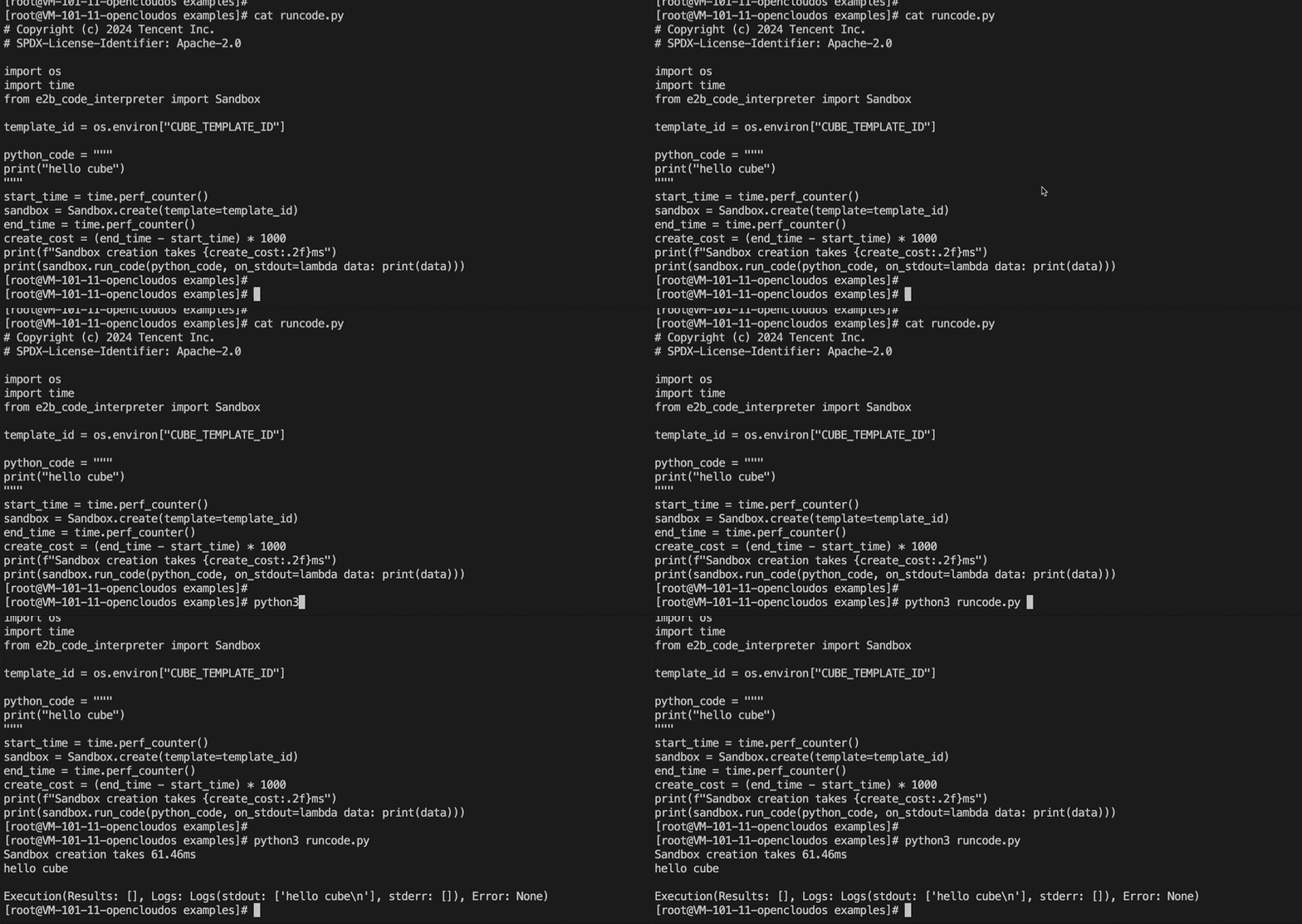
CubeSandbox is a high-performance sandbox runtime built on RustVMM and KVM, designed specifically for executing AI agent code in isolated, hardware-level secure environments. It achieves startup times under 60ms with minimal memory overhead (~5MB) and supports concurrent multi-node deployment. This is a specialized infrastructure tool for AI/LLM platforms and agent frameworks; it is not a general-purpose container runtime, and primary users are DevOps engineers and AI platform teams deploying...
Inferred from signals mentioned in the README (tests, CI, type safety) — not a review of the actual code.
AI's overall editorial judgment — not an average of the bars above, can weigh other factors too.
TencentCloud's KVM-based AI agent sandbox claims sub-60ms boot with hardware isolation and E2B compatibility
CubeSandbox is a self-hostable sandbox service built on RustVMM and KVM, targeting teams running AI agents that execute untrusted LLM-generated code. It claims sub-60ms cold start and under 5MB memory overhead per instance, hardware-level kernel isolation (unlike container-based approaches), and drop-in compatibility with the E2B SDK. Version 0.4 adds credential vaulting and a web dashboard. The primary audience is AI agent platform operators who need high-density, secure code execution infrastructure on their own infrastructure rather than relying on a SaaS provider.
Open-sourced by TencentCloud on April 10, 2026, with v0.1.0 releasing April 20, 2026. Three major versions shipped in roughly 11 weeks, suggesting an active early-development phase with Tencent's cloud infrastructure backing.
The repo gained roughly 7,000 stars in under three months, with 460 in the last 7 days as of the evaluation date. This pace likely reflects strong interest from the AI agent infrastructure community, favorable timing with the E2B compatibility angle (offering a self-hostable alternative), inclusion on the CNCF Landscape, and the TencentCloud brand lending credibility. The Rust+KVM positioning differentiates it from Python-based sandbox alternatives in the ecosystem.
Adoption not verified from external sources. The project originates from TencentCloud, which implies it may be derived from or run alongside internal Tencent infrastructure, but no explicit case studies, production deployments, or third-party testimonials are documented in the README. CNCF Landscape inclusion provides ecosystem recognition but is not evidence of production adoption.
Appears to be built on RustVMM and KVM, using micro-VMs rather than containers for isolation — likely similar in concept to Firecracker-based approaches. Each sandbox instance appears to get its own Guest OS kernel. v0.3 introduced CubeCoW, a Copy-on-Write snapshot engine for cloning and rollback. Supports single-node and multi-node cluster deployments. Likely exposes an HTTP API compatible with E2B's SDK. A web console is served on port 12088.
Not documented in README.
Last push was 2026-07-02, same day as the evaluation date — actively maintained. Four versions released from April to July 2026 shows a rapid release cadence. Issues badge is present. The changelog structure and feature progression (snapshots in v0.3, credential vault in v0.4) suggest organized, intentional development rather than ad-hoc commits.
ADOPT IF: you are building an AI agent platform requiring self-hosted, high-density sandbox execution with stronger isolation than containers, and you want to migrate from E2B's SaaS without rewriting SDK calls. AVOID IF: your team lacks KVM-capable bare metal or nested virtualization infrastructure, you need mature production guarantees with long-term vendor stability assurances, or a Python-native ecosystem is critical for your stack. MONITOR IF: you are currently on E2B SaaS or container-based sandboxing and are watching the self-hosted VM sandbox space mature before committing.
Independent dimensions
Mainstream potential
6/10
Technical importance
8/10
Adoption evidence
2/10
- License is listed as NOASSERTION in metadata despite the README badge indicating Apache 2.0 — this discrepancy warrants legal review before production adoption.
- Very young project (under 3 months old at evaluation date); API stability and long-term backward compatibility are unproven.
- Depends on KVM availability — not usable on most cloud VMs without nested virtualization support, which limits deployment flexibility.
- TencentCloud backing provides resources but also raises questions about long-term open-source commitment and whether internal Tencent priorities will diverge from community needs.
- No documented test coverage, security audit results, or CVE history — for a project whose core value proposition is 'run untrusted code safely', the absence of published security validation is a meaningful gap.
Likely to grow steadily within the AI agent infrastructure space over the next 6-12 months, especially if E2B pricing pressure increases. May consolidate into a de-facto self-hosted E2B alternative, but mainstream dominance is uncertain given operational complexity of KVM-based deployments.
Newsletter
Get analyses like this every Monday
Free weekly digest of the most interesting open-source discoveries.
Languages
Information
- Website
- https://cubesandbox.com
- Language
- Rust
- License
- NOASSERTION
- Last updated
- 9h ago
- Created
- 3mo ago
- Analyzed with
- anthropic/claude-haiku-4-5
Stars over time
Contributors over time
Top 100 contributors only — repos with more will plateau at 100.
Open issues
Open pull requests
Top contributors
Similar repos

opensandbox-group/OpenSandbox
OpenSandbox is a general-purpose sandbox platform designed specifically for AI...

superradcompany/microsandbox
Microsandbox is a lightweight microVM runtime for executing untrusted workloads...
| Repository | Stars | Week Δ | Language | Score | Updated |
|---|---|---|---|---|---|
|
TencentCloud/CubeSandbox
this
|
9.4k | +2.4k | Rust | 7/10 | 9h ago |
 rivet-dev/agentos rivet-dev/agentos
|
3.6k | — | Rust | 8/10 | 11h ago |
|
opensandbox-group/OpenSandbox
|
11.9k | — | Python | 8/10 | 1d ago |
|
superradcompany/microsandbox
|
6.9k | — | Rust | 8/10 | 5h ago |
 boxlite-ai/boxlite boxlite-ai/boxlite
|
2.1k | — | Rust | 8/10 | 12h ago |
 cloudflare/sandbox-sdk cloudflare/sandbox-sdk
|
1.1k | — | TypeScript | 8/10 | 17h ago |
CubeSandbox explicitly targets E2B as an alternative by offering SDK compatibility. The key tradeoff is self-hosted control and potentially lower per-instance cost at scale vs. E2B's managed convenience and polish. CubeSandbox requires operating KVM-capable infrastructure.
OpenSandbox has nearly double the stars and is Python-based, likely easier to extend for Python-heavy ML teams. CubeSandbox's Rust/KVM stack likely offers better isolation and performance at the cost of a steeper operational footprint.
Comparable star count, Python-based. Likely container-oriented rather than VM-based. CubeSandbox's hardware isolation claim is a differentiator for higher-security threat models.
Both are Rust-based agent infrastructure projects. rivet-dev/agentos appears broader in scope (agent OS vs. pure sandbox). Direct feature overlap is unclear from available metadata.
CubeSandbox appears to occupy similar technical territory to Firecracker (RustVMM/KVM micro-VMs) but is purpose-built for AI agent use cases with E2B API compatibility layered on top, rather than being a general-purpose VMM.