Gajae Code MVP
1.7k
Stars
260
Forks
8
Open issues
30
Contributors


AI Analysis
Gajae-Code is an external coding-agent harness and runner that executes AI-driven development tasks with tmux-native session management, plan review, and durable verification. It is purpose-built for autonomous coding agents in controlled environments (interviews, code generation workflows, desktop automation) and includes specialized features like research/REPL mode, Telegram notifications, and desktop control — best suited for developers and teams integrating agentic code generation into sp...
Inferred from signals mentioned in the README (tests, CI, type safety) — not a review of the actual code.
AI's overall editorial judgment — not an average of the bars above, can weigh other factors too.
TypeScript coding-agent harness with structured planning, tmux workers, and mobile notifications—beta-stage tool launched May 2026
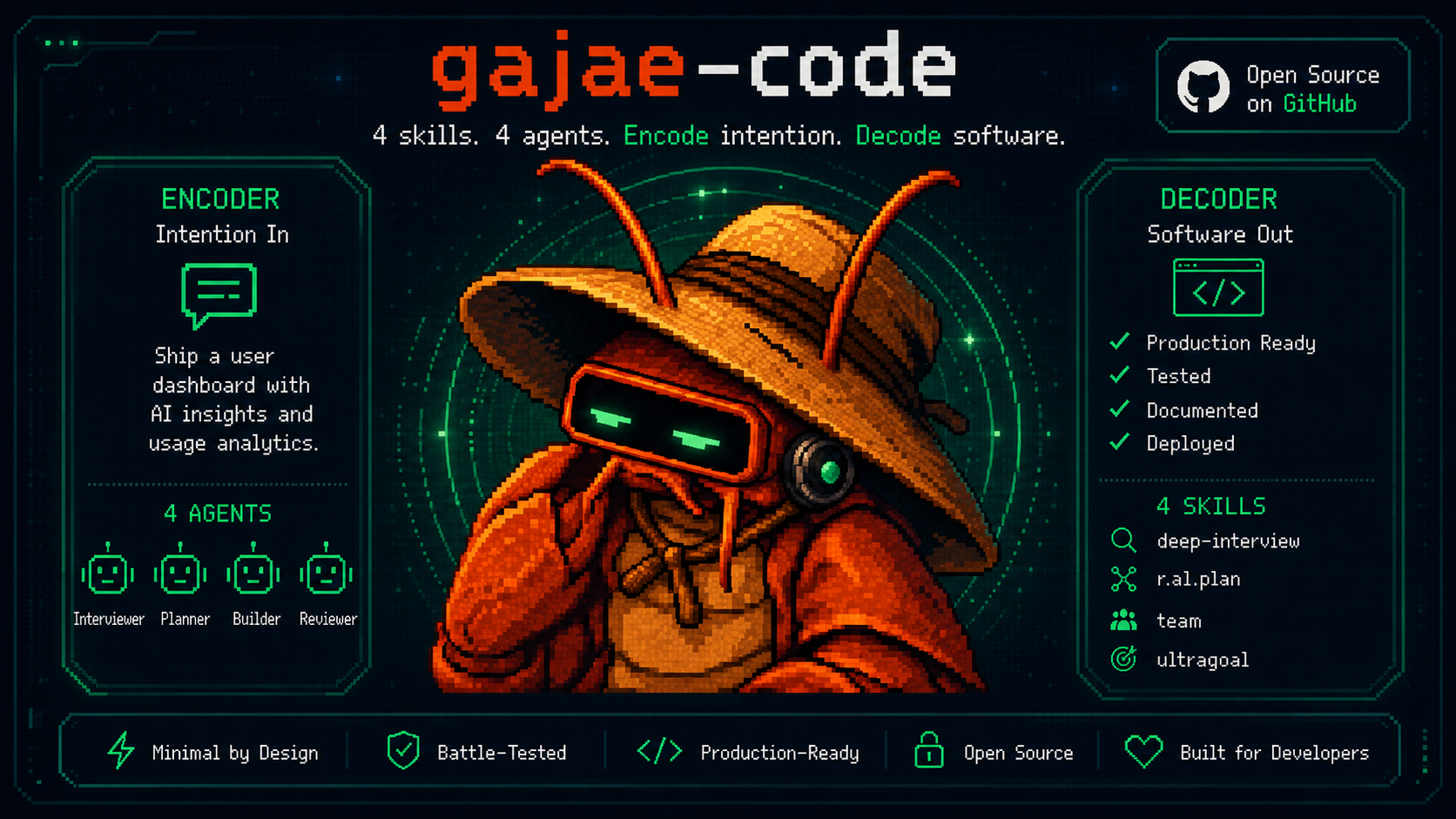
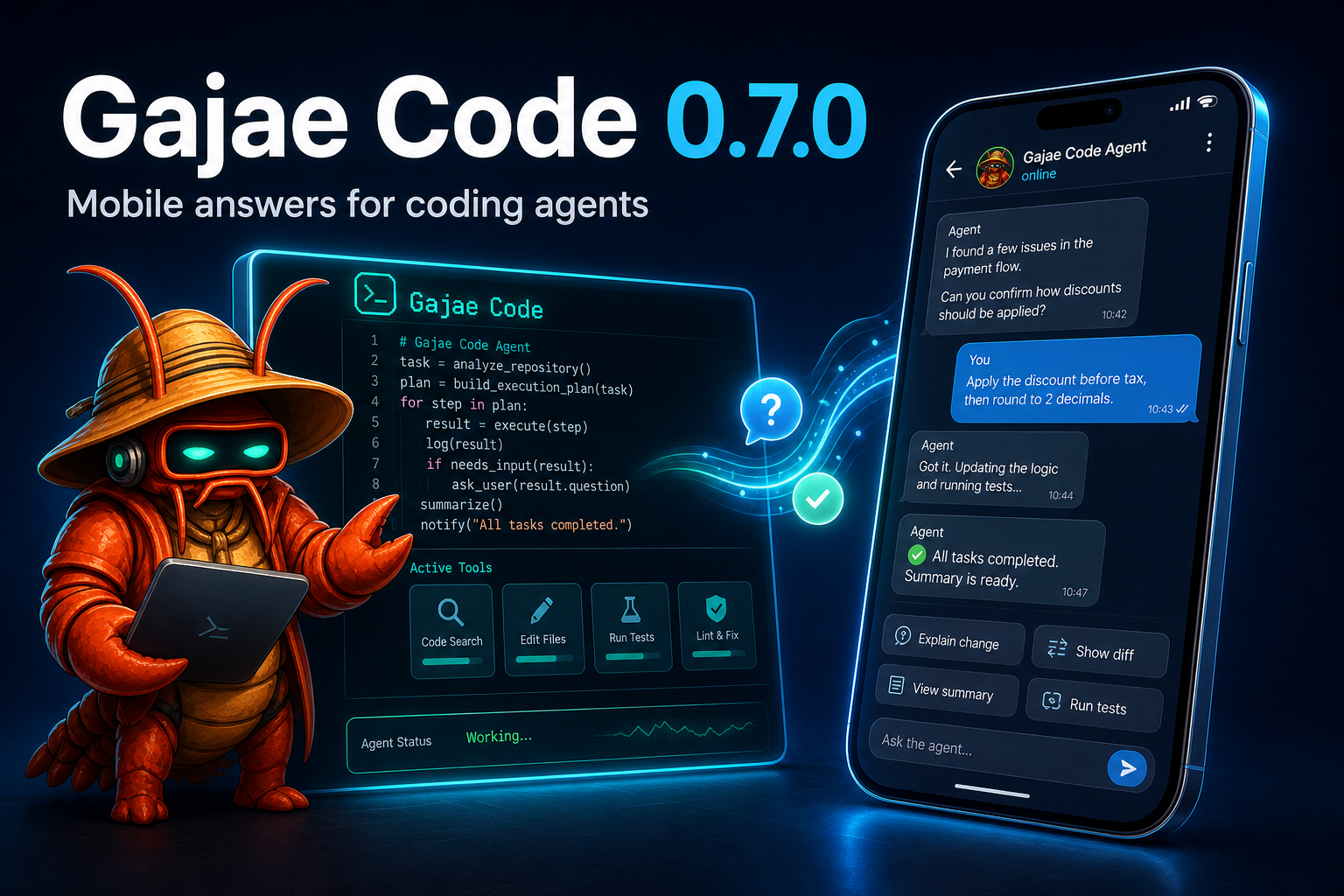
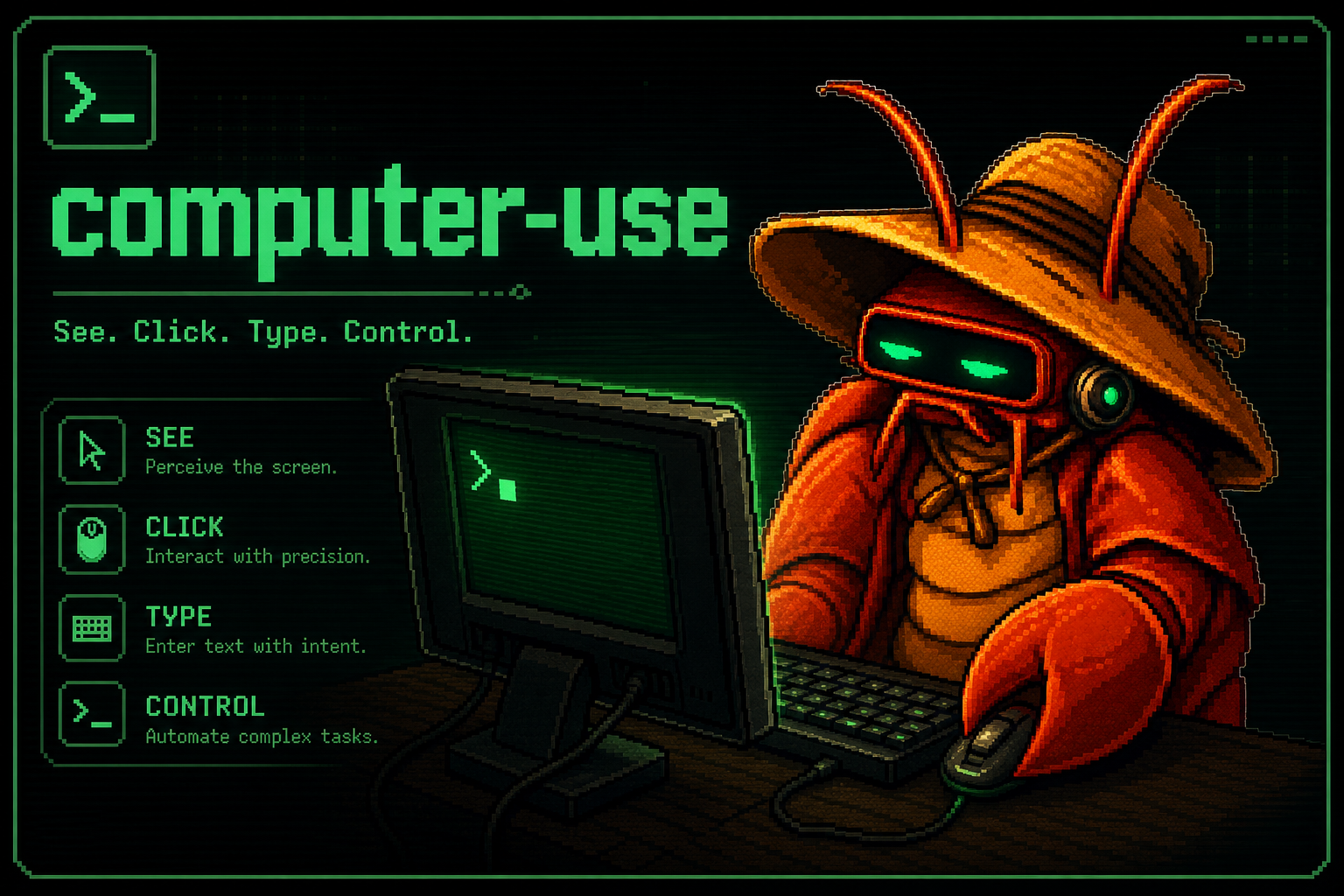
Gajae-Code is a standalone harness for running autonomous coding agents with explicit workflows: interview → plan → execution. It targets developers who want structured agent orchestration, persistent verification trails, and parallel tmux-backed workers—especially for code interviews, reviewable automation, and isolated experimentation. Built by Yeachan-Heo, launched May 2026 with rapid early adoption (1,210 stars, 433 gained in last 7 days). Explicitly beta; includes research/REPL mode, Telegram notifications, and experimental desktop control.
Project originated May 26, 2026. Author has prior success with oh-my-claudecode (37k stars, TypeScript). Gajae-Code repositions from Claude-specific automation to a generic agent harness architecture, aiming to serve structured planning and durable verification use cases that existing IDE plugins and monolithic agents do not directly address.
Rapid early growth: 433 stars in first 7 days post-launch, reaching 1,210 total by June 27, 2026. Growth likely driven by: (1) author credibility from oh-my-claudecode, (2) positioning as alternative to opaque IDE agent integrations, (3) novel Telegram mobile notifications and tmux parallelism features, (4) explicit beta transparency attracting early adopters. Still within launch honeymoon phase; sustained adoption trajectory unclear.
adoption not verified. No case studies, production deployment counts, or enterprise user references documented in README. Discord community link provided (invite code visible), suggesting early community formation but size/engagement unquantified. npm package published and installable globally. Lack of public testimonials or documented production usage is typical for projects <2 months old.
Appears to be a CLI harness written in TypeScript/Bun. Based on README: runs a workflow loop (interview → plan → execution), manages persistent session state in `.gjc/` directory, spawns tmux workers for parallel execution, exposes WebSocket discovery for remote-control integration (Telegram daemon included). Likely uses Claude or compatible LLM backend; backend details not specified in truncated README. Appears to bundle native screenshot/input bindings for desktop control feature.
not documented in README
Last push 2026-06-27 13:09:54 (same day as analysis date), indicating active development. Frequency of pushes and issue resolution not available from metadata alone. README explicitly labels project as 'experimental, beta-stage' with warning to verify outputs. Rapid feature releases (v0.6.0 and v0.7.0 both mentioned as recent) suggest active iteration rather than maintenance mode.
ADOPT IF: you need structured, auditable agent-assisted coding with tmux parallelism, reviewable plans before execution, or mobile approval workflows—and accept beta-stage instability and incomplete documentation. AVOID IF: you require production-grade stability, extensive user base proof points, comprehensive testing/documentation, or vendor commitment—this is still in active experimentation. MONITOR IF: you use Claude Code or other IDE agents and want to explore decoupled orchestration, or if you're researching agent harness architecture; rapid iteration may yield useful patterns regardless of mainstream adoption.
Independent dimensions
Mainstream potential
3/10
Technical importance
6/10
Adoption evidence
2/10
- Beta-stage maturity: author explicitly warns of 'rough edges.' Real-world reliability unproven at scale.
- Adoption unverified: no documented production usage, case studies, or user testimonials yet. Early-stage churn possible if community expectations diverge from roadmap.
- Documentation gaps: README is enthusiastic on features but sparse on configuration, error handling, and troubleshooting beyond the website reference.
- Backend dependency unclear: LLM backend, API key management, cost model, and vendor lock-in not detailed in truncated README. Critical for production evaluation.
- Feature scope creep risk: Telegram daemon, desktop control, research/REPL mode, and tmux workers all active in v0.6–v0.7. Broad surface may delay stabilization.
Likely to stabilize into a specialized tool for structured code-review automation, interview preparation, and multi-worker orchestration use cases. Mainstream IDE integration unlikely; niche adoption in DevOps, testing automation, and AI-assisted code review more probable. Trajectory depends on whether Telegram/mobile workflow resonates with users and whether backend abstraction attracts multi-LLM support.
Newsletter
Get analyses like this every Monday
Free weekly digest of the most interesting open-source discoveries.
Languages
Information
- Language
- TypeScript
- License
- MIT
- Last updated
- 7h ago
- Created
- 1mo ago
- Analyzed with
- anthropic/claude-haiku-4-5
Stars over time
Contributors over time
Top 100 contributors only — repos with more will plateau at 100.
Open issues
feat(telegram): acknowledge committed ask selections immediately
feat(tui): confirm and continue directly from gjc resume
Regression: TUI jumps to top when assistant response completes on Windows-to-Linux SSH
Raw tmux-resident GJC owner can receive silent SIGTERM before terminal state
Telegram topics: configurable topic name template (allow session title first)
Top contributors
Recent releases
Similar repos

CommandCodeAI/command-code
Command Code is an AI-powered coding agent that generates full-stack software...
Yeachan-Heo/oh-my-claudecode
oh-my-claudecode is a multi-agent orchestration framework designed to simplify...
| Repository | Stars | Week Δ | Language | Score | Updated |
|---|---|---|---|---|---|
|
Yeachan-Heo/gajae-code
this
|
1.7k | +309 | TypeScript | 7/10 | 7h ago |
 1jehuang/jcode 1jehuang/jcode
|
8.3k | — | Rust | 8/10 | 8h ago |
 xintaofei/codeg xintaofei/codeg
|
2k | — | TypeScript | 7/10 | 13h ago |
|
CommandCodeAI/command-code
|
3.5k | — | — | 7/10 | 2w ago |
|
Yeachan-Heo/oh-my-claudecode
|
37.6k | — | TypeScript | 8/10 | 1d ago |
 codeaholicguy/ai-devkit codeaholicguy/ai-devkit
|
1.6k | — | TypeScript | 7/10 | 2d ago |
Gajae-Code is intentionally not a plugin for Claude Code; it's a standalone harness. oh-my-claudecode focuses on tight IDE integration; Gajae-Code emphasizes structured workflow, tmux workers, and isolation.
Language differs (Rust vs TypeScript/Bun). Unclear if jcode includes equivalent workflow orchestration or mobile notification features; direct feature parity cannot be inferred.
Positioning and feature set unclear from metadata alone. Both appear to target agent-assisted coding but likely serve different workflows.
TypeScript peer. Feature overlap unknown without inspecting both codebases; cannot confirm differentiation.
Similar star count and language. Likely addresses overlapping problem space; distinct positioning not verifiable from README alone.