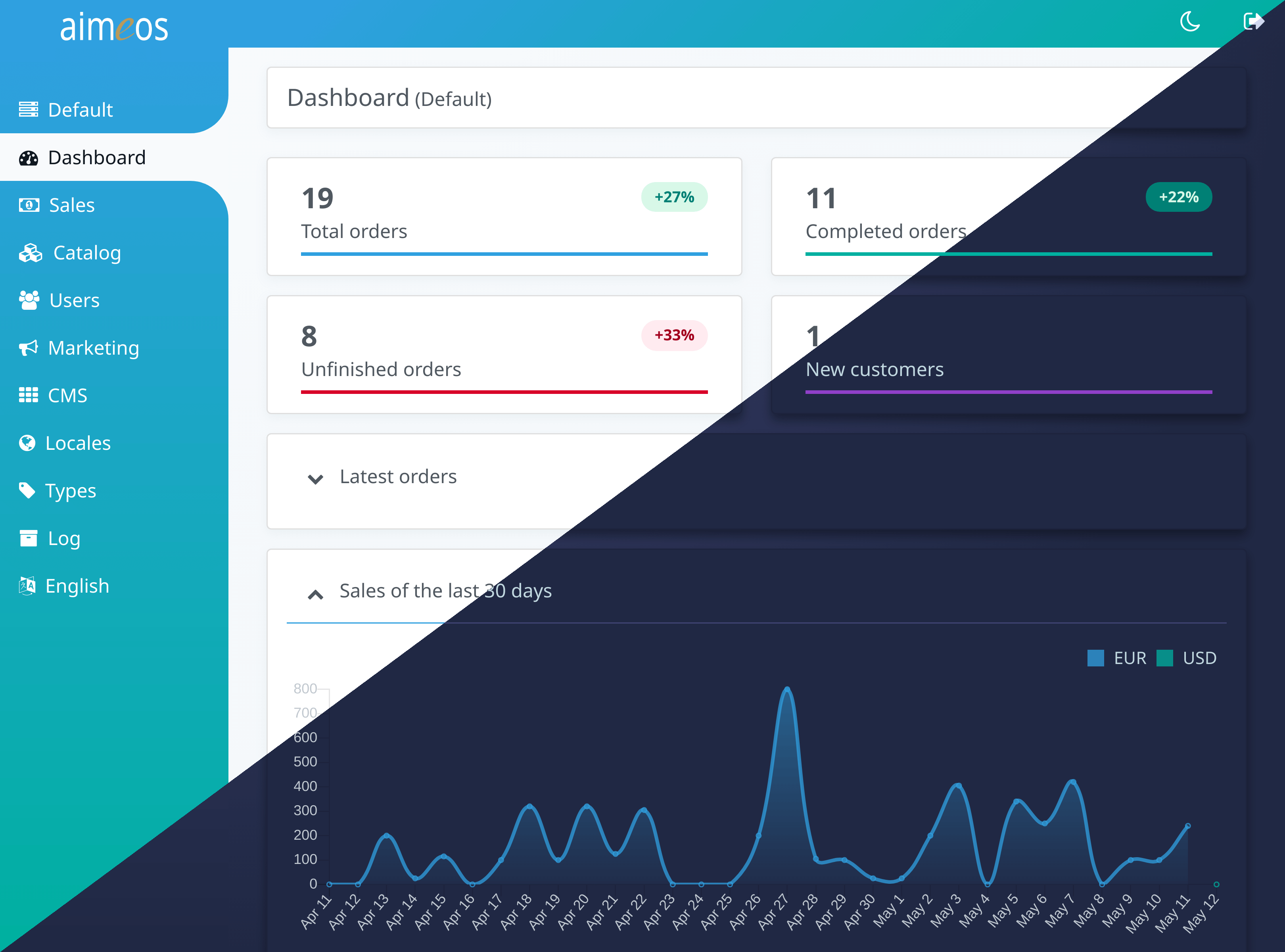
Aimeos cloud-native, API-first ecommerce headless distribution based on Laravel for ultra fast online shops, scalable marketplaces, complex B2B applications and #gigacommerce
2.5k
Stars
27
Forks
0
Open issues
3
Contributors

AI Analysis
Aimeos headless is a cloud-native, API-first ecommerce platform built on Laravel, designed for high-performance online shops, multi-vendor marketplaces, and complex B2B applications. It serves enterprises and SaaS providers needing scalable, multi-tenant ecommerce solutions with extensive customization; it is not suited for simple, off-the-shelf storefronts or teams without significant infrastructure expertise.
Inferred from signals mentioned in the README (tests, CI, type safety) — not a review of the actual code.
AI's overall editorial judgment — not an average of the bars above, can weigh other factors too.
Laravel-based headless ecommerce API with multi-vendor and enterprise focus
Aimeos Headless is a Laravel-native, API-first ecommerce platform emphasizing JSON/REST and GraphQL interfaces, multi-tenant support, and cloud deployment. Built for developers who want a modular, PHP-based alternative to monolithic platforms. Adoption appears concentrated within the Aimeos ecosystem and German/European markets; mainstream penetration remains limited compared to Shopify, WooCommerce, or newer JS-first solutions.
Aimeos Headless emerged in late 2021 as a distilled, API-first variant of the broader Aimeos ecommerce suite (which traces to ~2010). It represents a deliberate pivot toward cloud-native, Laravel-centric architecture rather than a greenfield project, reflecting industry consolidation around headless patterns.
Star velocity is modest (4 stars/week as of June 2026). The project gained initial traction post-2021 but has not experienced explosive adoption. Growth appears stable rather than accelerating. The broader Aimeos family maintains stronger engagement (aimeos-laravel at 8,646 stars), suggesting this headless variant attracts a subset of the core user base rather than expanding total market share.
Adoption not verified. README lists feature parity and enterprise capabilities but provides no case studies, deployment counts, or documented production usage. Presence in Aimeos ecosystem suggests some enterprise/agency adoption, but concrete evidence of real-world scale remains absent from public sources.
Based on README: API-first design using JSON REST (jsonapi.org spec) and GraphQL for administration. Likely built as a thin Laravel distribution layer atop aimeos-core PHP components. Multi-vendor, multi-channel, multi-warehouse support claimed. Architecture appears modular and extensible by design, though actual implementation quality cannot be verified from README alone.
Not documented in README.
Last push 2026-06-22 (15 days before analysis date) indicates active maintenance. Repository is ~4.5 years old with sustained commits. Maintenance appears steady rather than rapid; no evidence of stalled development, but also no indicators of major feature velocity or community-driven expansion.
ADOPT IF: You operate within a Laravel stack, need self-hosted control, require multi-vendor/multi-tenant architecture, and can invest in custom frontend development. Enterprise support and modular extensibility are real. AVOID IF: You need off-the-shelf SaaS with zero infrastructure management, lack PHP/Laravel expertise, require large pre-built storefronts, or need proven multi-million-dollar deployment precedents. MONITOR IF: You are building an ecommerce platform as a product and want to evaluate modular API-first backends; adoption remains too limited for low-risk recommendation, but technical design appears sound.
Independent dimensions
Mainstream potential
3/10
Technical importance
6/10
Adoption evidence
2/10
- Adoption remains concentrated within Aimeos ecosystem and likely German/European regional focus; limited evidence of mainstream North American or Asian deployment at scale.
- API-first design requires significant custom frontend development; not suitable for teams seeking turn-key solutions or merchants used to admin-driven setup.
- PHP/Laravel dependency may deter organizations standardizing on Node.js, Python, or Go stacks; limits cross-pollination with broader headless ecommerce community.
- Smaller community relative to WooCommerce or Shopify; risk of slower third-party integrations, payment gateway support, or plugin ecosystem maturity.
- Long-term viability tied to continued Aimeos company investment; no visible independent governance or alternative stewardship path if upstream shifts focus.
Aimeos Headless likely remains a sustainable but niche choice within PHP/Laravel shops and regional European markets through 2027–2028. Unlikely to capture mainstream market share against Shopify or WooCommerce. May see modest adoption among agencies and B2B/marketplace specialists. Vulnerability to shifts in PHP developer adoption rates.
Newsletter
Get analyses like this every Monday
Free weekly digest of the most interesting open-source discoveries.
Languages
Information
- Language
- JavaScript
- Last updated
- 3w ago
- Created
- 56mo ago
- Analyzed with
- anthropic/claude-haiku-4-5
Stars over time
Contributors over time
Top 100 contributors only — repos with more will plateau at 100.
Open issues
No open issues — clean slate.
Open pull requests
No open pull requests.
Similar repos
aimeos/aimeos-laravel
Aimeos is a professional, full-featured Laravel ecommerce package enabling...
| Repository | Stars | Week Δ | Language | Score | Updated |
|---|---|---|---|---|---|
|
aimeos/aimeos-headless
this
|
2.5k | +4 | JavaScript | 8/10 | 3w ago |
|
aimeos/aimeos
|
5.4k | — | JavaScript | 8/10 | 3w ago |
|
aimeos/aimeos-laravel
|
8.6k | — | PHP | 8/10 | 2mo ago |
|
aimeos/aimeos-core
|
4.5k | — | PHP | 7/10 | 4w ago |
|
aimeos/ai-laravel
|
1k | — | PHP | 7/10 | 2mo ago |
|
aimeos/ai-client-jsonapi
|
1k | — | PHP | 7/10 | 4w ago |
Far larger installed base (millions of stores). WooCommerce is monolithic by default; headless requires additional layers. Aimeos Headless is API-first from foundation but targets developers, not merchants. WooCommerce dominates by sheer simplicity and WordPress gravity, not technical architecture.
Managed SaaS with opaque backend; Aimeos is self-hosted/deployable. Shopify captures large enterprises via ecosystem lock-in. Aimeos targets organizations that want control and customization. Non-overlapping buyer personas in most cases.
Similar headless/API-first positioning. Saleor emphasizes GraphQL as primary interface; Aimeos offers both REST and GraphQL. Both target developers. Saleor is younger (2018) but has gained traction in mid-market; adoption comparison unclear without hard data.
Managed headless platform with strong B2B features. BigCommerce appeals to enterprises wanting SaaS reliability; Aimeos appeals to teams wanting on-premise control. Different risk/flexibility tradeoff.
Modern, API-first, self-hosted. Written in JS/Node instead of PHP/Laravel. Medusa is newer (2021) and has attracted developer mindshare in JS ecosystems. Aimeos targets Laravel/PHP shops; Medusa targets Node developers. Minimal direct overlap.