calcom/sans
Python OFL-1.1The home for our Cal Sans font.
1.6k
Stars
46
Forks
5
Open issues
5
Contributors


AI Analysis
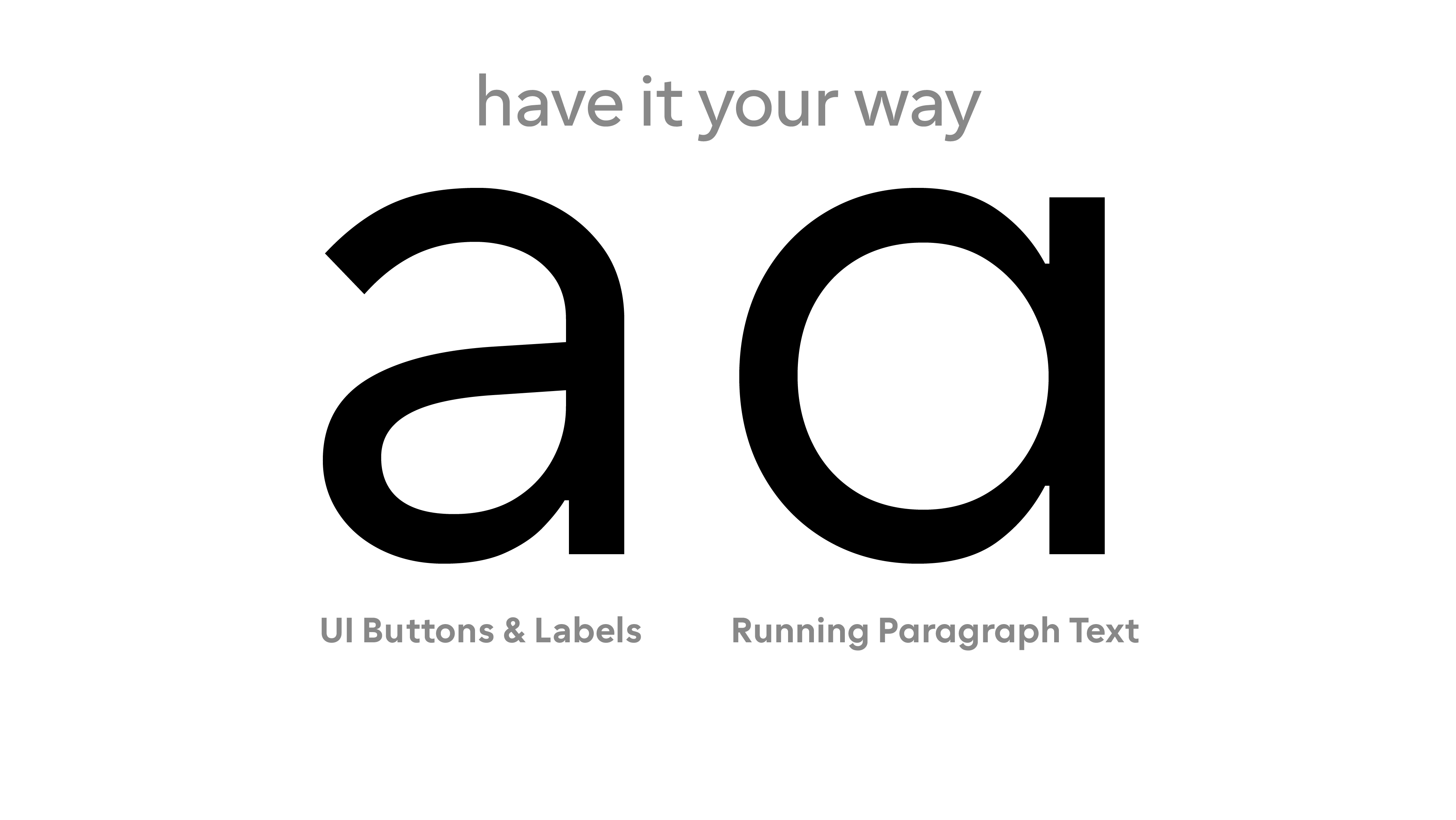
Cal Sans is an open-source variable typeface designed for Cal.com that spans optical sizes from 8–45 pt, enabling a single font file to serve both dense UI and large display headlines through continuous proportional adaptation. It is purpose-built for product design teams and brand systems, particularly those using modern variable font workflows; it is not a general-purpose serif or decorative font, but rather a specialized geometric typeface optimized for specific optical sizing ranges.
Inferred from signals mentioned in the README (tests, CI, type safety) — not a review of the actual code.
AI's overall editorial judgment — not an average of the bars above, can weigh other factors too.
Cal Sans: a variable font for Cal.com with optical sizing from 8–45 pt, maintained by its commissioned designer.
Cal Sans is an open-source variable typeface commissioned by Cal.com and designed by Mark Davis. It spans a wide optical size range (8–45 pt) using a single file with continuous optical scaling, intended for both UI and display use. The project is actively maintained, published on npm, and integrated into Cal.com's design system. Adoption appears limited to Cal.com and projects using the COSS UI type system, but the font is technically well-documented and freely licensed.
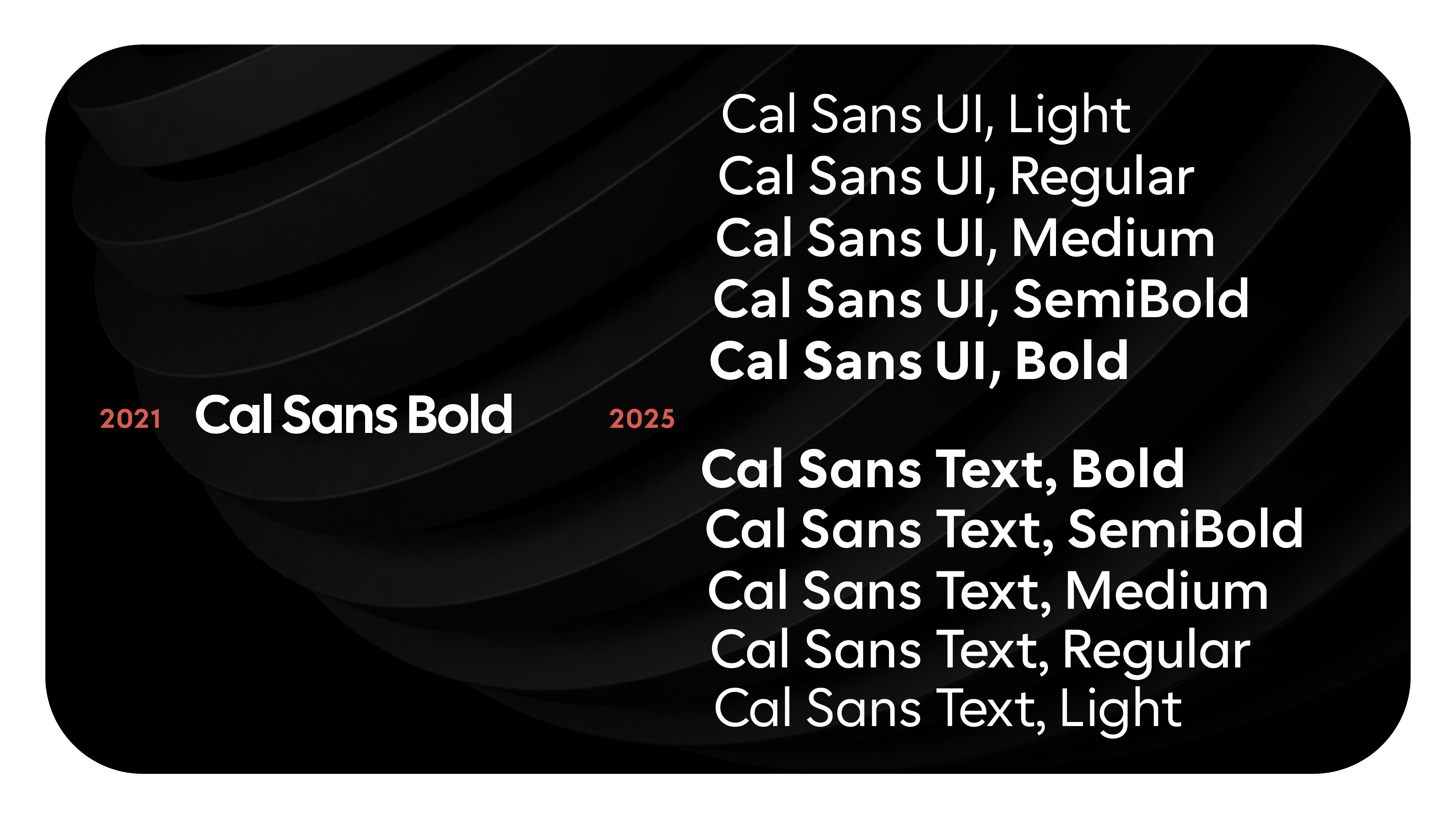
Cal Sans began as a static display font (v1.0, 2021) commissioned for Cal.com. A rebuilt UI variant (v1.5, 2025) optimized for interface reading. Version 2.0 (2026) merges both into a single variable font with optical sizing, positioning it alongside Google Sans Flex, Inter, and Anthropic Sans in the generation of optically-scaling geometric typefaces.
The project gained 1,586 stars over ~5 years with 0 stars in the last 7 days (as of 2026-06-28), suggesting stable but modest visibility. Growth was likely driven by Cal.com's public adoption and positioning as an open-source alternative to proprietary design system fonts. The v2.0 release (2026) represents active evolution rather than maintenance mode, though adoption signals remain concentrated within Cal.com's ecosystem.
Cal Sans is in production use at Cal.com and appears to be the default typeface for their scheduling platform. The font is published on npm with install size metrics documented. Integration into COSS UI (a third-party design system) provides evidence of some broader adoption beyond Cal.com's direct use, but adoption not extensively verified beyond these contexts.
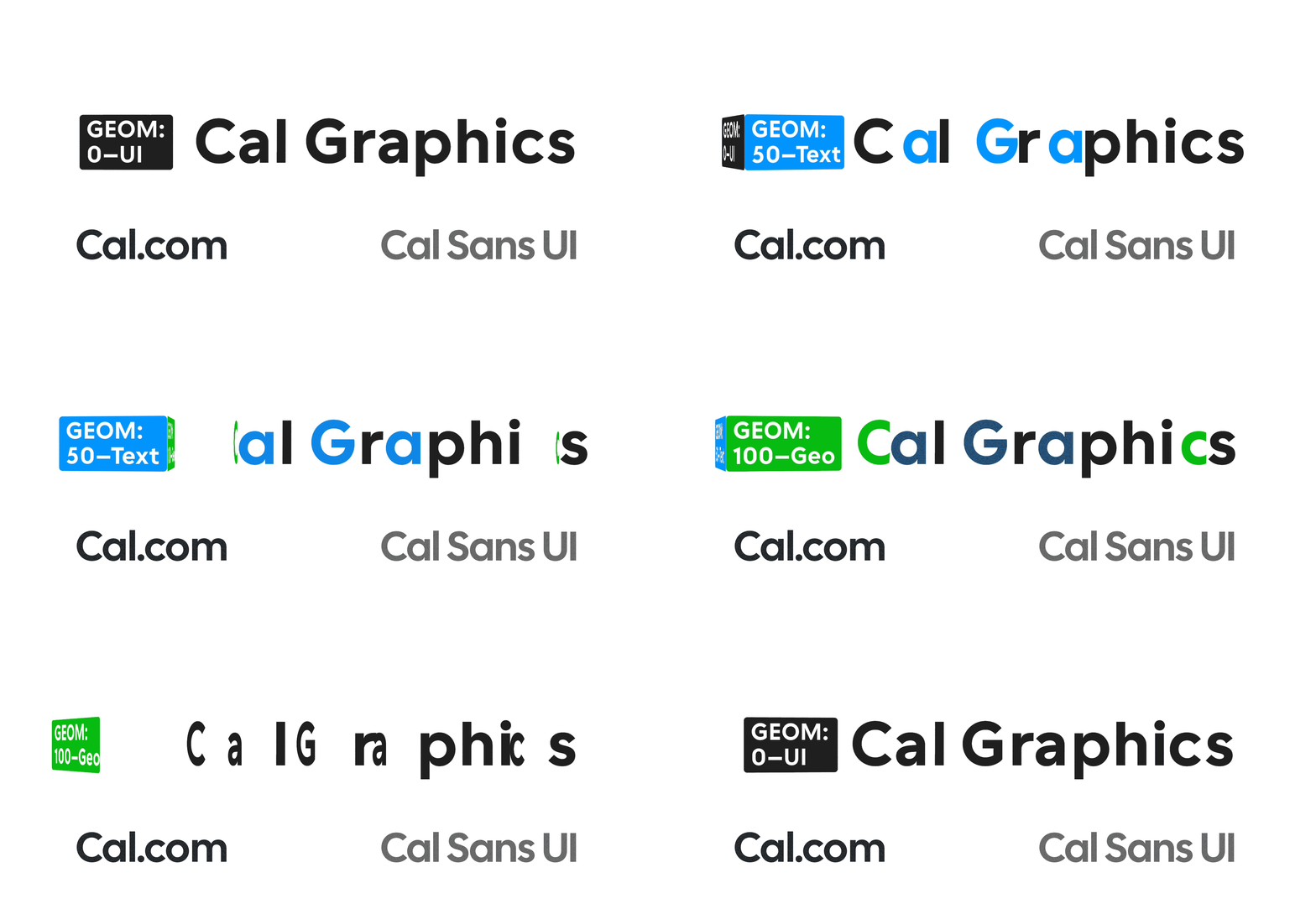
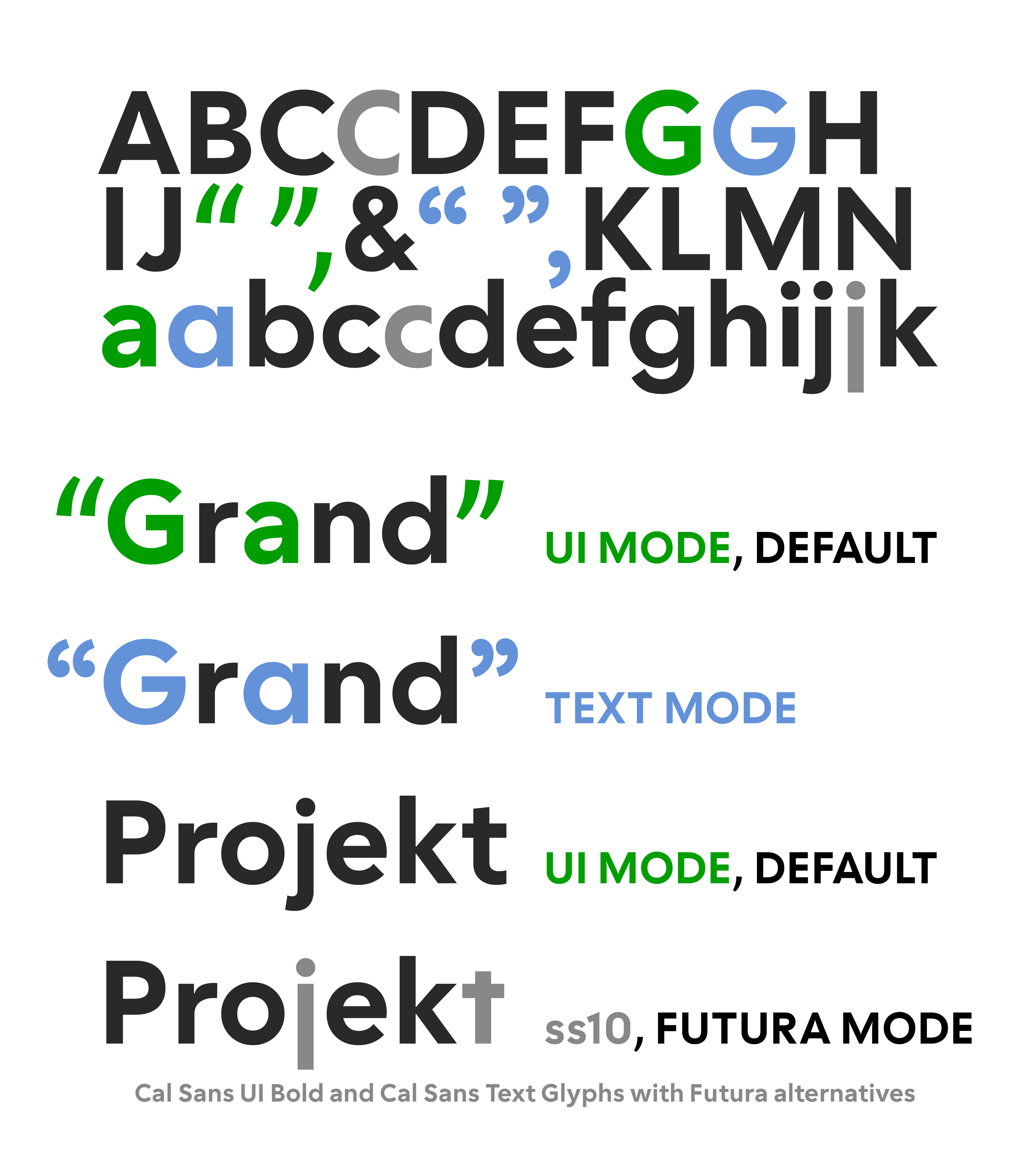
Based on README, Cal Sans is a variable font distributed as a single WOFF2 file with multiple optical axes: optical size (`opsz` 8–45 pt), geometry (`GEOM`), sharpness (`SHRP`), and y-transparency ascender (`YTAS`). The project provides installation for desktop systems and an npm package (`cal-sans`). Integration examples show support for CSS `font-optical-sizing: auto`, manual `font-variation-settings`, Next.js, and Tailwind CSS. Repository layout is not detailed in the README excerpt.
not documented in README
Last push 2026-06-22 (6 days before evaluation date) indicates active maintenance. The project went from v1.99x to v2.000 in 2026, showing recent release activity. No explicit issue backlog or CI/CD pipeline documented in the README. Given the specialized nature (font files), test coverage expectations differ from typical software; font QA likely occurs through visual specimen and deployment validation rather than automated testing.
ADOPT IF: you are building a design system that requires a single variable typeface spanning dense UI (8 pt) to large display (45 pt), prefer open-source licensing (OFL-1.1), and value explicit optical scaling and geometric customization. Cal Sans is well-documented, actively maintained, and npm-ready for web integration. AVOID IF: you need a font with massive industry adoption, extensive community support, or multi-language support beyond Latin. Adoption is concentrated within Cal.com's ecosystem, and alternatives like Inter have deeper penetration. MONITOR IF: you are considering Cal Sans for a critical brand project; verify it meets your language and glyph coverage requirements, and test optical sizing behavior across your specific size range before shipping.
Independent dimensions
Mainstream potential
3/10
Technical importance
6/10
Adoption evidence
4/10
- Adoption concentration: real-world usage appears limited to Cal.com and COSS UI projects; ecosystem maturity is unclear.
- Language support: README indicates Latin language support only; non-Latin scripts are not documented.
- Optical sizing edge cases: while 8–45 pt is documented, browser rendering of `font-optical-sizing: auto` behavior across edge cases (sub-8pt, above-45pt fallback) is not explicitly addressed in README.
- Test coverage opacity: font quality assurance methodology not documented; unclear if visual regressions are systematically validated across weight/axis combinations.
- Dependency on Cal.com: font originated as commissioned work for a single company; long-term maintenance dependent on Cal.com's sustained commitment.
Cal Sans likely remains a specialized design system font favored by Cal.com and projects adopting COSS UI. Without documented adoption beyond these boundaries, mainstream penetration appears unlikely. Active maintenance through v2.0 suggests Cal.com's commitment to the project, but growth will probably remain modest unless broader design system adoption accelerates.
Newsletter
Get analyses like this every Monday
Free weekly digest of the most interesting open-source discoveries.
Languages
Information
- Website
- https://cal.com/font
- Language
- Python
- License
- OFL-1.1
- Last updated
- 5d ago
- Created
- 57mo ago
- Analyzed with
- anthropic/claude-haiku-4-5
Stars over time
Contributors over time
Top 100 contributors only — repos with more will plateau at 100.
Open issues
Open pull requests
Top contributors
Recent releases
Similar repos

googlefonts/googlesans-code
Google Sans Code is a fixed-width variable font family designed specifically...
| Repository | Stars | Week Δ | Language | Score | Updated |
|---|---|---|---|---|---|
|
calcom/sans
this
|
1.6k | +2 | Python | 8/10 | 5d ago |
|
googlefonts/googlesans-code
|
2.4k | — | Python | 8/10 | 3w ago |
 uswds/public-sans uswds/public-sans
|
4.7k | — | Shell | 7/10 | 4d ago |
 github/mona-sans github/mona-sans
|
4.1k | — | Shell | 8/10 | 2mo ago |
 cosscom/coss cosscom/coss
|
10.2k | — | TypeScript | 8/10 | 1d ago |
 belluzj/fantasque-sans belluzj/fantasque-sans
|
7.4k | — | Python | 7/10 | 4mo ago |
Both are variable fonts with optical sizing. Google Sans Flex is wider industry exposure and Google's backing. Cal Sans targets a narrower range (8–45 pt vs. Google's broader coverage) and emphasizes both UI and display in a single file.
Inter is a mature variable typeface (by Rasmus Andersson) with larger adoption across design tools and open-source projects. Cal Sans positions itself similarly but with stronger optical sizing range and explicit GEOM axis for geometric/accessibility trade-offs.
Recent variable fork of Geist (16–48 pt range). Cal Sans extends the range further (8–45 pt) and includes additional axes for UI optimization. Both are relatively new entries in optically-scaling geometric sans.
Github's variable font (4,081 stars). More GitHub ecosystem visibility but serves a narrower brand use case. Cal Sans emphasizes UI-to-display continuity more explicitly.
Popular monospace variable font (7,406 stars). Serves a different use case (monospace coding). Cal Sans is proportional and display/UI-focused, not directly comparable but similar open-source font philosophy.