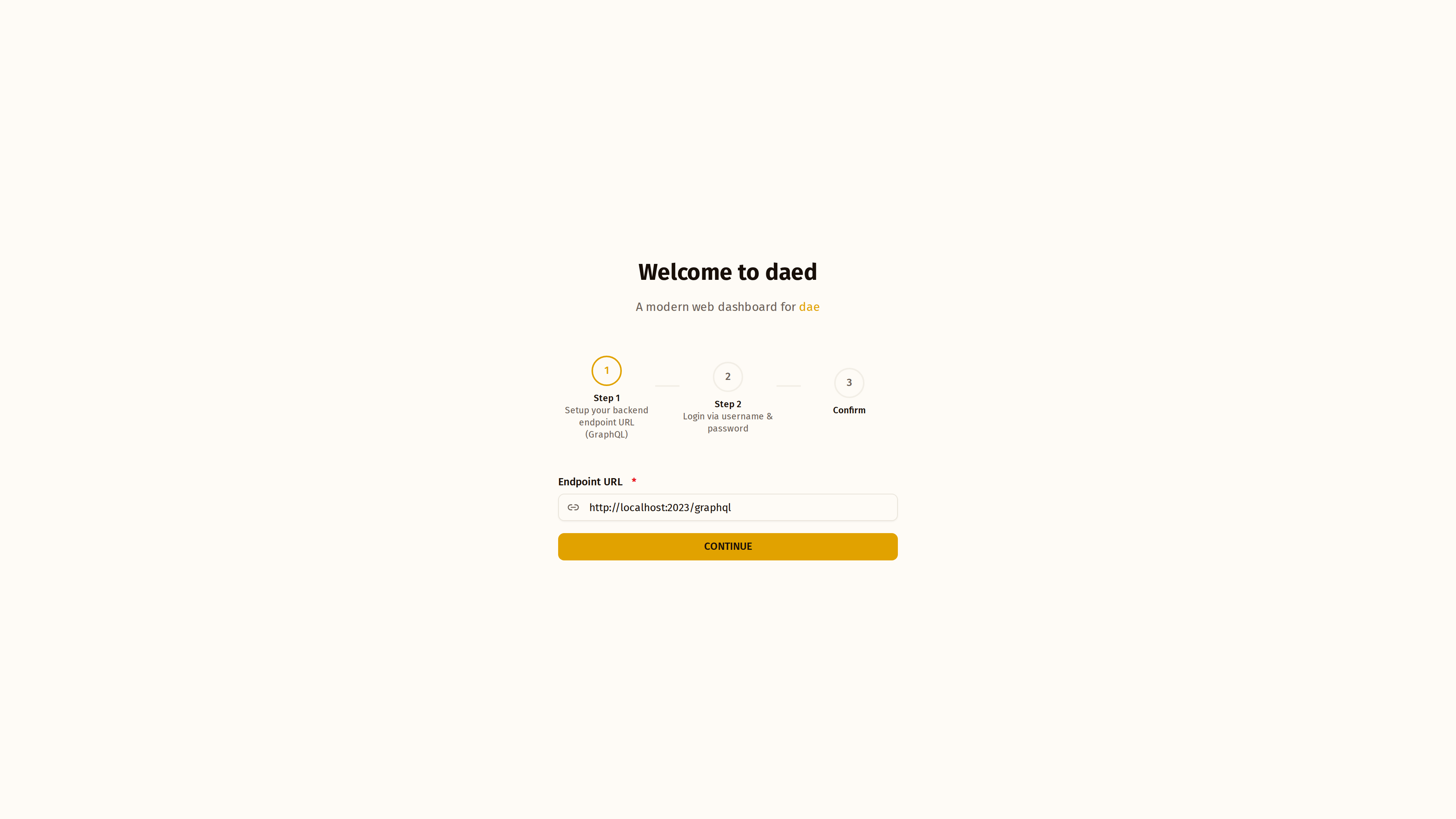
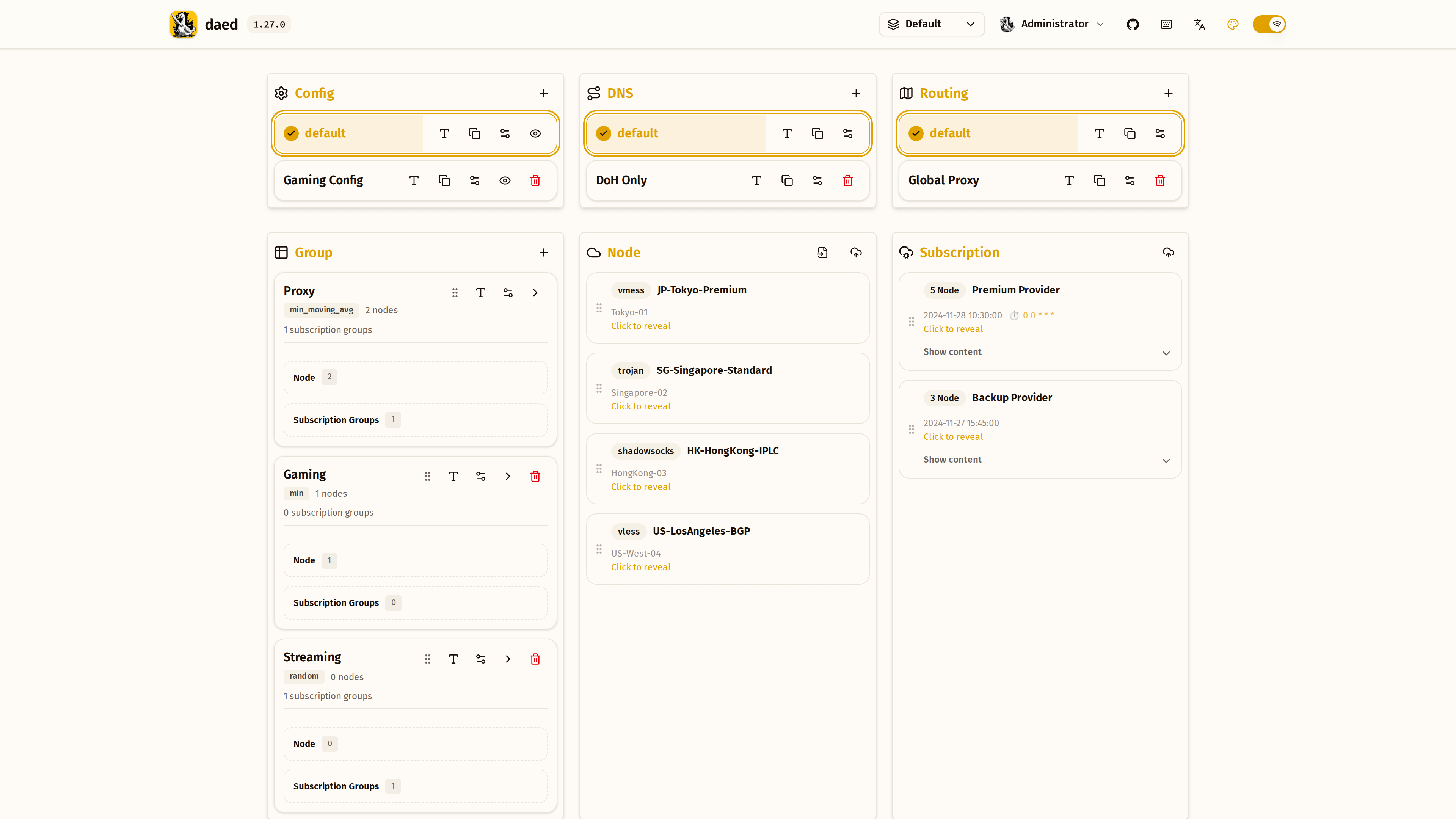
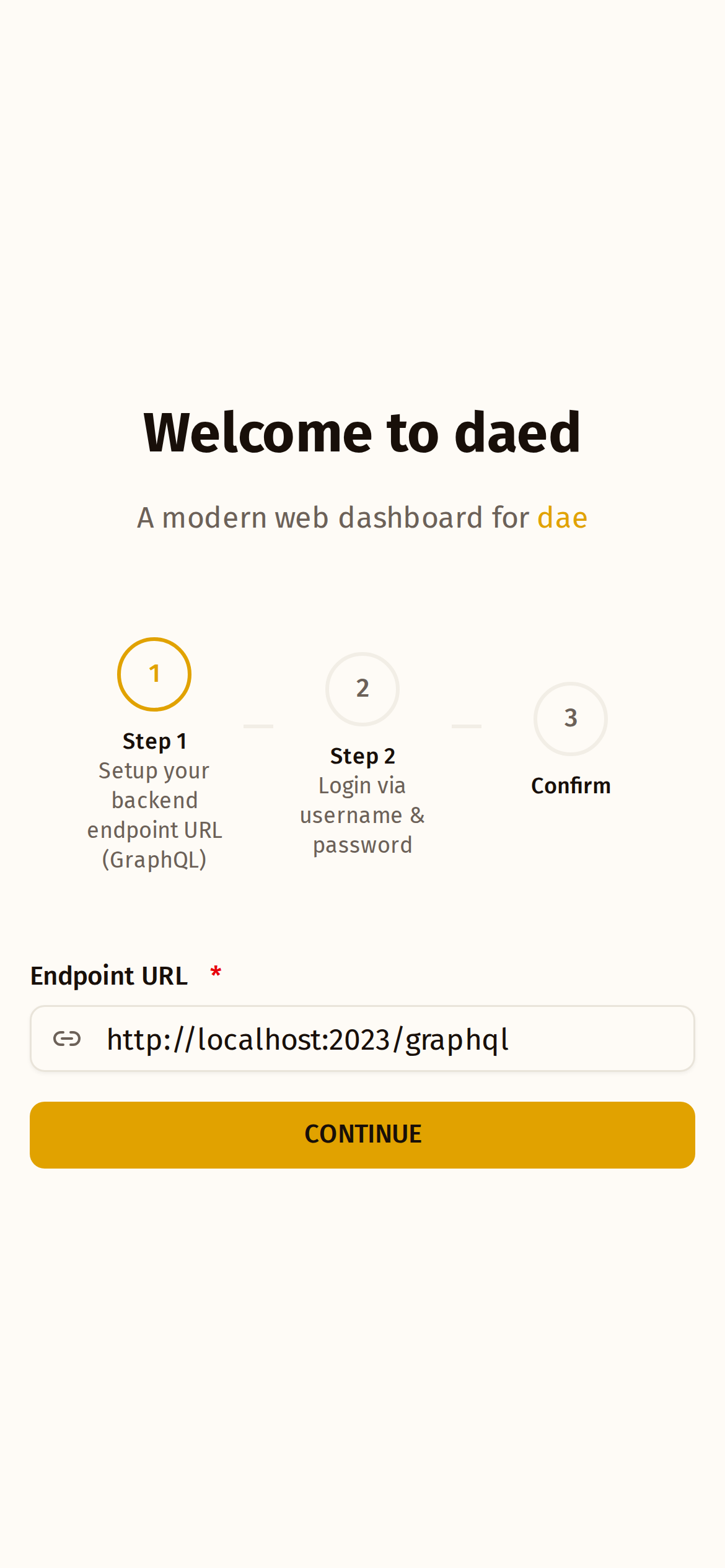
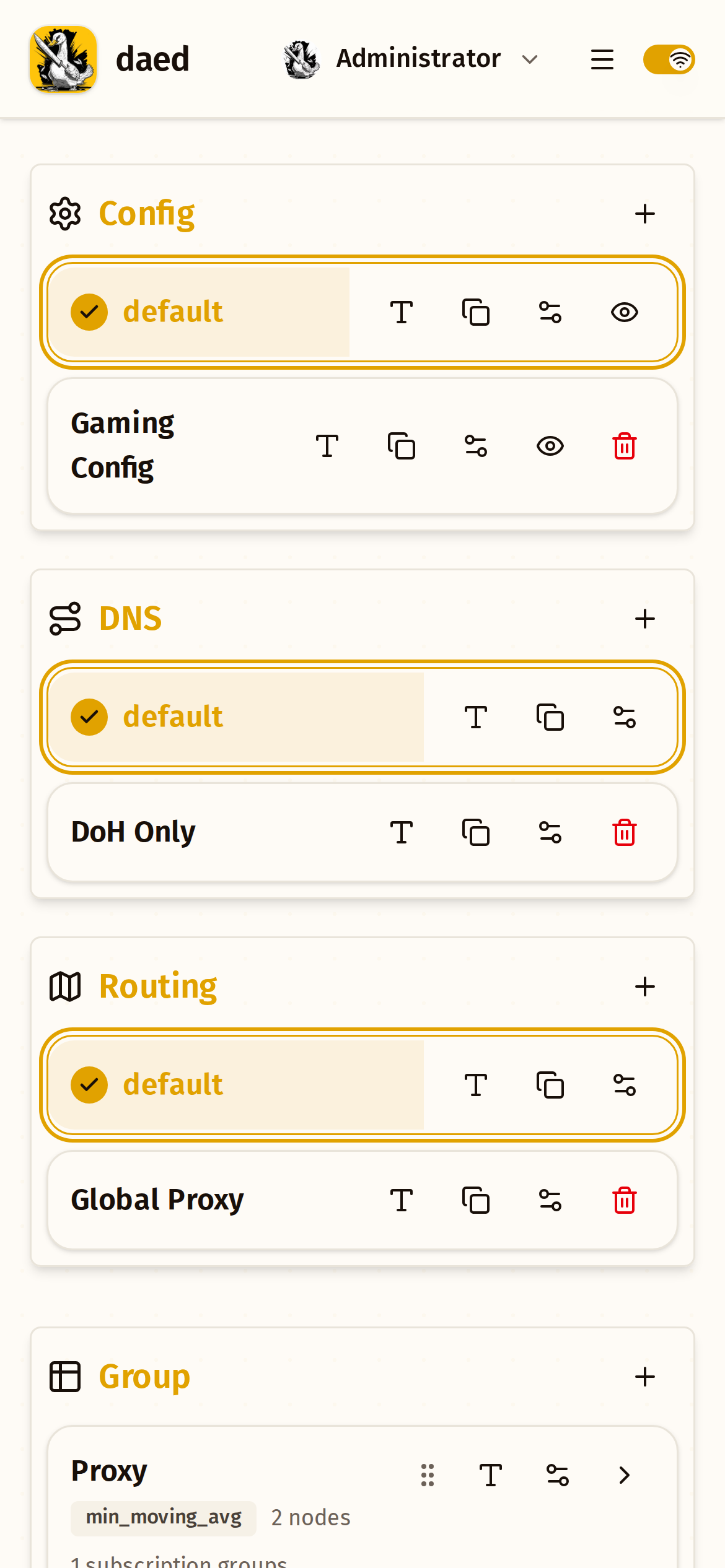
daed, A modern web dashboard for dae.
1.8k
Stars
195
Forks
45
Open issues
22
Contributors




AI Analysis
daed is a modern web dashboard for the dae project, providing a visual interface for configuration and orchestration. It is specifically designed for users of the dae ecosystem who need a responsive, keyboard-friendly web UI to manage their dae-wing backend, with particular applicability for power users and those requiring mobile access. This is not a general-purpose dashboard—it is tightly coupled to the dae networking/proxy platform.
Inferred from signals mentioned in the README (tests, CI, type safety) — not a review of the actual code.
AI's overall editorial judgment — not an average of the bars above, can weigh other factors too.
Web dashboard for dae proxy orchestration with modern UI and mobile support
daed is a TypeScript React frontend for managing dae, a Go-based proxy management system. It provides a graphical interface for configuring and monitoring network orchestration, featuring responsive design and keyboard shortcuts. The project is tightly coupled to the dae ecosystem and appears to serve users who prefer GUI-based proxy management over CLI. Real-world adoption remains difficult to quantify but appears concentrated within the dae community.
daed launched in March 2023 as a companion frontend to the dae proxy engine (which has ~6k stars). It emerged from the daeuniverse ecosystem, which appears focused on decentralized or open-source networking tools. The project represents an intentional decision to build a modern web interface rather than rely solely on CLI management.
daed gained ~60 stars in the 7 days before the evaluation date (2026-06-20), suggesting recent momentum, though the absolute growth rate remains modest. The parent project dae has significantly higher visibility (5,945 stars vs 1,685), indicating daed adoption is likely bounded by dae's own reach. Steady maintenance and regular releases suggest consistent (if niche) user engagement rather than viral adoption.
Adoption not verified. README includes online demo and Docker deployment instructions, suggesting production readiness. However, no case studies, user testimonials, or documented deployments at scale are visible. Docker Hub/registry presence (ghcr.io) indicates infrastructure for distribution, but actual uptake metrics are absent. The ecosystem appears self-contained (users of dae likely evaluate daed as the primary UI option), but market penetration is opaque.
Appears to be a React-based SPA built with TypeScript and pnpm tooling. README indicates GraphQL code generation and references a separate backend (dae-wing). Likely uses modern frontend patterns with light/dark mode and responsive CSS-in-JS or utility-first styling. Without access to source, implementation details are not verifiable.
Not documented in README. No mention of test frameworks, coverage targets, or CI test runs visible in the provided metadata.
Last push 2026-06-20 (11 days before evaluation date) indicates active maintenance. Release automation workflow shown in badges suggests regular versioning cadence. MIT license on frontend, dual-licensed with AGPL-3.0 backend component. Appears to be actively maintained rather than dormant, though update frequency relative to contributor count is not visible in provided data.
ADOPT IF: you are an active dae user who prefers graphical UI management, require mobile access to orchestration controls, or need keyboard-first workflow for power users. AVOID IF: your infrastructure is CLI-native, you need multi-backend proxy support, or you require extensive third-party integrations beyond dae ecosystem. MONITOR IF: you are evaluating dae itself and want to understand the complete management experience — daed's maturity directly affects dae's ease of use perception.
Independent dimensions
Mainstream potential
3/10
Technical importance
5/10
Adoption evidence
2/10
- Adoption ceiling likely tied to parent project (dae) market reach; growth cannot exceed dae's own expansion.
- Dual licensing (MIT frontend, AGPL-3.0 backend) may complicate commercial deployment or private modifications of backend integration.
- Dependency on dae-wing GraphQL API means breaking changes upstream flow directly to UI; API stability not documented.
- No visible ecosystem of third-party extensions or plugins; feature requests require upstream contributions.
- Adoption metrics opaque; difficult to assess whether 1,685 stars reflects active deployments or passive interest from dae repository visitors.
daed will likely remain a focused, well-maintained frontend for dae users without significant mainstream expansion. Growth will track dae adoption curves. Potential for niche consolidation if dae gains traction in specific network management segments (e.g., decentralized mesh, enterprise proxying), but unlikely to become a general-purpose proxy dashboard.
Newsletter
Get analyses like this every Monday
Free weekly digest of the most interesting open-source discoveries.
Languages
Information
- Language
- TypeScript
- License
- MIT
- Last updated
- 5d ago
- Created
- 41mo ago
- Analyzed with
- anthropic/claude-haiku-4-5
Stars over time
Contributors over time
Top 100 contributors only — repos with more will plateau at 100.
Open issues
No open issues — clean slate.
Open pull requests
No open pull requests.
Top contributors
Similar repos
| Repository | Stars | Week Δ | Language | Score | Updated |
|---|---|---|---|---|---|
|
daeuniverse/daed
this
|
1.8k | +151 | TypeScript | 7/10 | 5d ago |
|
daeuniverse/dae
|
6k | — | Go | 8/10 | 2d ago |
 MauriceNino/dashdot MauriceNino/dashdot
|
3.5k | — | TypeScript | 7/10 | 2d ago |
 DustinBrett/daedalOS DustinBrett/daedalOS
|
12.9k | — | JavaScript | 8/10 | 1mo ago |
 odota/web odota/web
|
1.2k | — | TypeScript | 7/10 | 5d ago |
 dwainscheeren/dwains-lovelace-dashboard dwainscheeren/dwains-lovelace-dashboard
|
2.1k | — | JavaScript | 7/10 | 2w ago |
daed offers GUI abstraction over dae's CLI. For users requiring automation or scriptability, CLI may remain preferable. daed trades flexibility for usability.
daed is purpose-built for dae only. General-purpose proxy dashboards may offer broader backend support but lack dae-specific optimizations.
daed consumes dae-wing GraphQL API. Advanced users can implement custom frontends or integrations directly against the API, making daed optional rather than required.