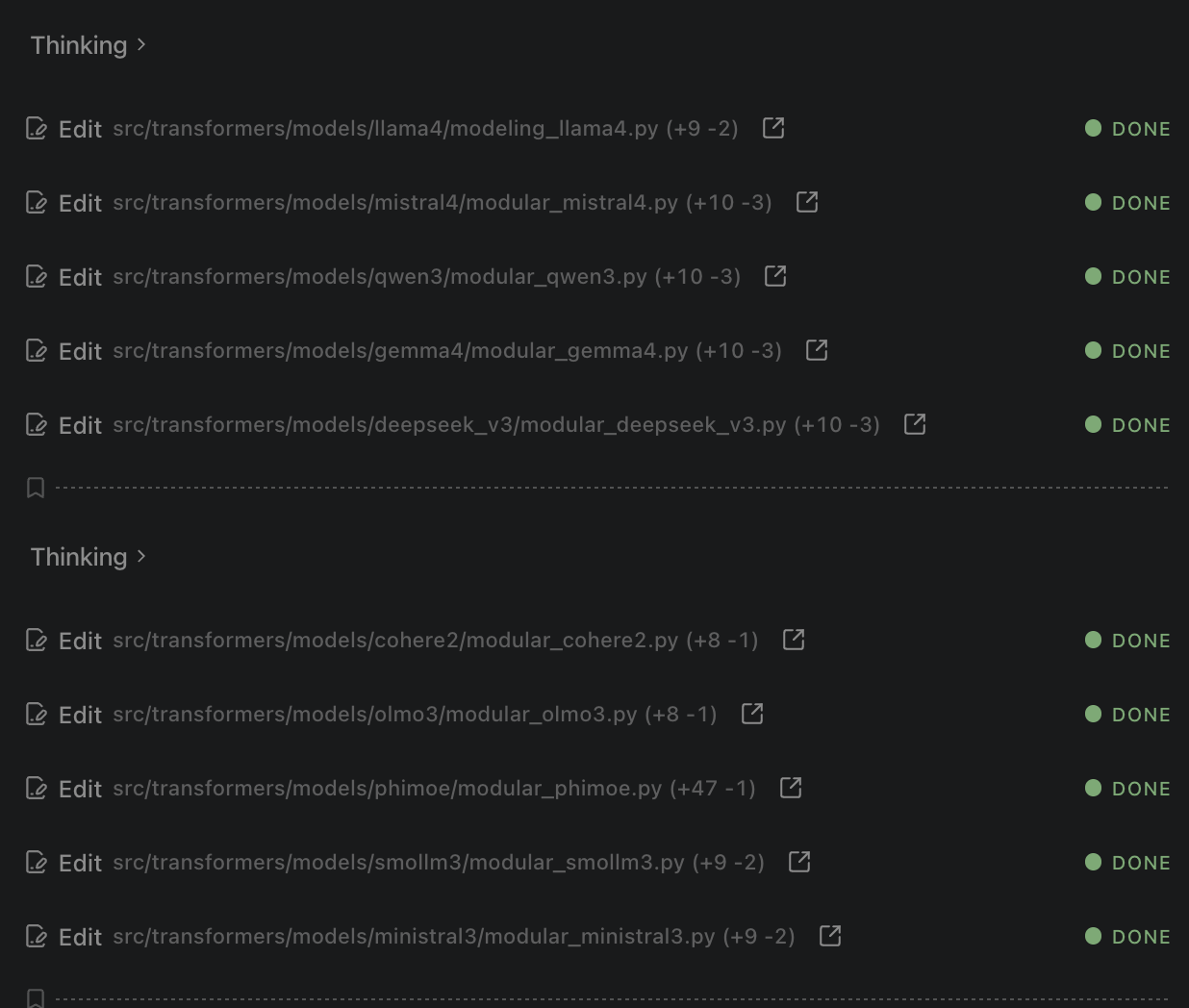
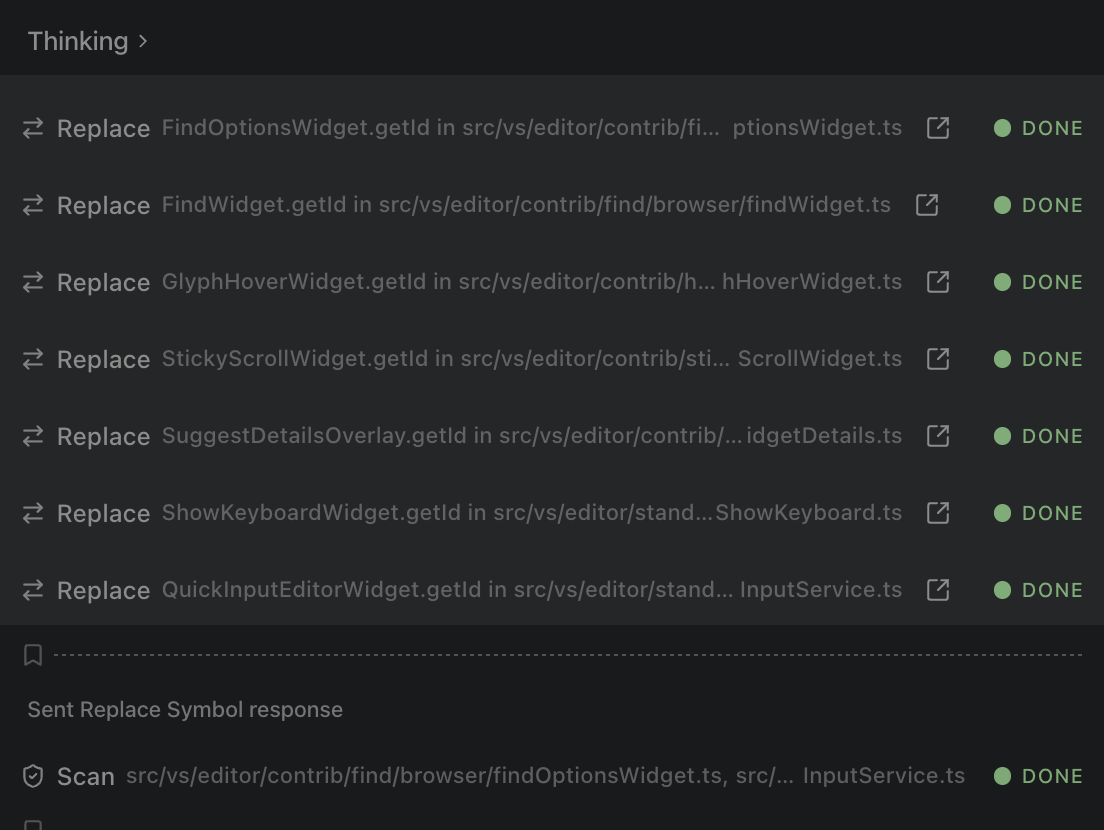
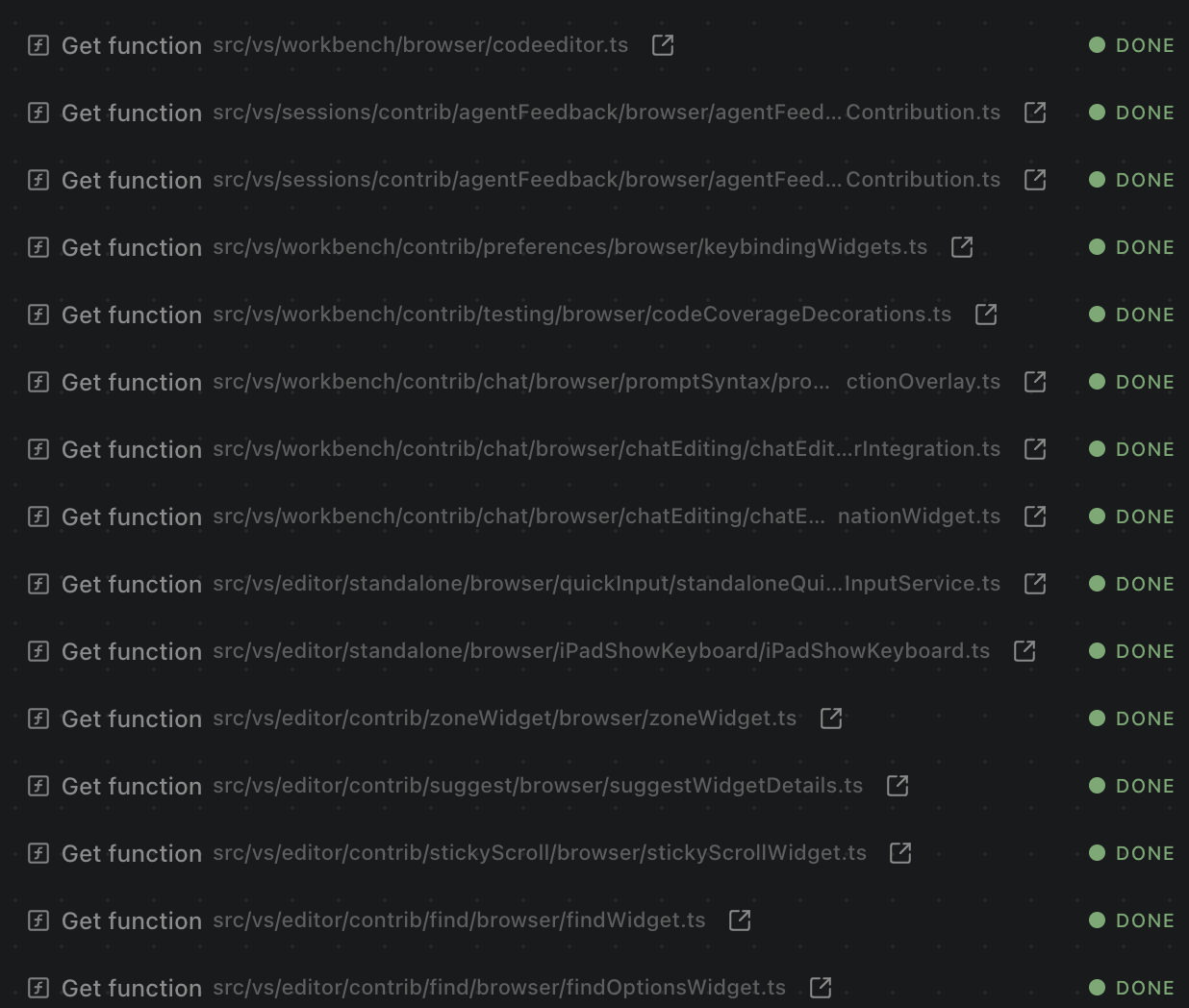
Coding Agent singularly focused efficiency and context curation. Reduces API costs by 50-80% vs other agent AND improves the code quality at the same time. Uses Hash Anchored edits, massively parallel operations, AST manipulation and many many other optimizations. https://dirac.run/
1.4k
Stars
80
Forks
15
Open issues
13
Contributors



AI Analysis
Dirac is an open-source AI coding agent designed to reduce API costs by 50-80% while improving code quality through context optimization, hash-anchored edits, and AST manipulation. It serves developers and teams who use AI agents for code refactoring and modification tasks and need to minimize LLM token consumption. Not intended for general-purpose software development without AI assistance, nor for teams requiring closed-source or highly abstracted agent solutions.
Inferred from signals mentioned in the README (tests, CI, type safety) — not a review of the actual code.
AI's overall editorial judgment — not an average of the bars above, can weigh other factors too.
TypeScript coding agent optimized for token efficiency and cost reduction in agentic code generation
Dirac is an open-source AI coding agent created in April 2026, designed to reduce API costs by 50–80% compared to competing agents while maintaining or improving code quality. It employs hash-anchored edits, AST manipulation, and context curation to minimize token usage. The project demonstrates strong benchmark performance on Terminal-Bench-2, though real-world production adoption remains unverified. Target audience appears to be organizations running AI-assisted code generation at scale where API costs are a material concern.
Dirac emerged in April 2026 as a focused fork or derivative of agent architecture, with emphasis on token efficiency rather than feature breadth. The project distinguishes itself by rejecting Model Context Protocol (MCP) in favor of optimized, minimal prompting. Growth has been rapid for a nascent project: 1,349 stars in ~2.8 months, with 27 stars in the final 7-day window, suggesting sustained interest but decelerating momentum.
Project gained ~480 stars in first ~2.5 months (April–mid-June 2026), then showed signs of leveling: 27 stars in last week represents a ~5% weekly growth rate. Early traction likely driven by benchmark claims (Terminal-Bench-2 leadership) and clear cost-reduction promise in a market focused on agentic AI economics. No indication of viral adoption; trajectory appears plateauing toward a stable but niche user base.
Adoption not verified. No case studies, user testimonials, or production deployment announcements in README. Benchmark leadership on Terminal-Bench-2 (65.2% vs 47.6% Google baseline) demonstrates technical capability but does not confirm enterprise or widespread adoption. Project is too new (2.8 months) to have established production track record.
Based on README, Dirac appears to implement hash-anchored parallel edits, AST-based code manipulation, and context-curation strategies to reduce token consumption. No MCP dependency suggests a more direct, tightly-integrated design. Implementation details are not visible from README alone; claims of 'advanced optimizations' are stated but not technically enumerated.
Not documented in README. Evals are benchmark-based (Terminal-Bench-2, comparison against Cline, Kilo, etc.) on public repositories, but unit/integration test coverage is not mentioned.
Last push 2026-06-29 (1 day before analysis date) indicates active development. Repository is 87 days old; consistent commits suggest ongoing work. No discussion of CI/CD pipeline, issue response times, or maintenance backlog is visible in README. Early-stage project maturity; 'actively maintained' but insufficient history to assess long-term sustainability.
ADOPT IF: You operate at scale with significant LLM API expenditure on code generation and can tolerate a young, TypeScript-only codebase with limited production track record. Cost reduction claims are benchmarked but not validated in your specific workflows. AVOID IF: You require maturity, stability, and community ecosystem (IDE integrations, language support breadth, MCP plugins); Dirac lacks these and may diverge from emerging agent standards. MONITOR IF: You are evaluating agentic code generation economics; Dirac's efficiency architecture is noteworthy, but adoption and long-term viability are unproven. Wait 12–18 months for production case studies and broader integration evidence.
Independent dimensions
Mainstream potential
3/10
Technical importance
7/10
Adoption evidence
2/10
- Adoption not verified—benchmark leadership does not guarantee real-world uptake or retention; risk of becoming a 'benchmark artifact.'
- Extreme youth (87 days old)—no track record for stability, breaking changes, or maintenance under operational stress.
- Narrow scope—focused on refactoring tasks; unclear how well it generalizes to feature development, testing, or other coding workflows.
- Benchmark dependency—Terminal-Bench-2 leadership is specific to Gemini models and 'high thinking' mode; performance on other models and settings is not documented.
- No evidence of enterprise backing or funding—risk of volunteer burnout or project abandonment common in 2–3 month old OSS projects.
Dirac will likely remain a specialized, efficiency-focused tool serving cost-conscious organizations running agentic refactoring at scale. Mainstream adoption (i.e., becoming the default agent like Cline) is improbable unless backed by significant marketing or enterprise validation. More probable outcome: consolidation into a broader agent framework, acquisition, or stable but modest niche (~5k–15k active users within 18 months).
Newsletter
Get analyses like this every Monday
Free weekly digest of the most interesting open-source discoveries.
Languages
Information
- Language
- TypeScript
- License
- Apache-2.0
- Last updated
- 16h ago
- Created
- 3mo ago
- Analyzed with
- anthropic/claude-haiku-4-5
Stars over time
Contributors over time
Top 100 contributors only — repos with more will plateau at 100.
Open issues
Add/How-to automatic tool use
sub agents are not working
Windows TUI ignores typing until Enter is pressed once
Command execution freezes or after editing confirmation.
Closing dirac keybinding seems dangerous
Open pull requests
No open pull requests.
Recent releases
No releases published yet.
Similar repos

Dicklesworthstone/pi_agent_rust
pi_agent_rust is a Rust-native CLI for AI-powered coding assistance, ported...

codeaholicguy/ai-devkit
AI DevKit is a control plane and orchestration layer for multiple AI coding...
| Repository | Stars | Week Δ | Language | Score | Updated |
|---|---|---|---|---|---|
|
dirac-run/dirac
this
|
1.4k | +17 | TypeScript | 8/10 | 16h ago |
|
Dicklesworthstone/pi_agent_rust
|
1.3k | — | Rust | 8/10 | 16h ago |
 rivet-dev/agentos rivet-dev/agentos
|
3.6k | — | Rust | 8/10 | 12h ago |
|
codeaholicguy/ai-devkit
|
1.6k | — | TypeScript | 7/10 | 3d ago |
 can1357/oh-my-pi can1357/oh-my-pi
|
17.1k | — | TypeScript | 8/10 | 33 min ago |
 2aronS/Duel-Agents 2aronS/Duel-Agents
|
975 | — | TypeScript | 7/10 | 2w ago |
Larger ecosystem, more features; Dirac claims lower cost (Task1: $0.13 vs $0.37) and faster execution on refactoring evals, but Cline has broader adoption and longer maturity.
Similar refactoring agent; Dirac achieves lower cost across benchmarked tasks (Task6: $0.34 vs $1.44) at reportedly similar or better accuracy.
Rust-based; similar focus on efficiency; Dirac outperforms on cost and reliability (fewer failures) in Terminal-Bench-2 tasks, though Kilo serves distinct language/runtime preference.
Also cost-optimized; Dirac shows lower token spend on most tasks ($0.13–$0.34 vs $0.20–$0.90) and 100% success rate vs OpenCode's partial failures.
Comparable cost profile in some tasks; Dirac achieves lower cost on majority of benchmarks and claims superior code quality, though both serve niche efficiency-focused market.