👾 Open Computer Use – Open-Source Alternative to Codex Computer Use
1.4k
Stars
135
Forks
8
Open issues
5
Contributors


AI Analysis
open-computer-use is an open-source MCP-wrapped computer automation service that enables AI agents to control macOS, Linux, and Windows systems through accessibility APIs. It provides a non-intrusive alternative to proprietary computer use solutions, designed specifically for developers building AI agent applications and those seeking cross-platform GUI automation capabilities.
Inferred from signals mentioned in the README (tests, CI, type safety) — not a review of the actual code.
AI's overall editorial judgment — not an average of the bars above, can weigh other factors too.
Open-source Computer Use service via MCP, enabling AI agents to control macOS/Linux/Windows through accessibility APIs
open-computer-use is an MIT-licensed, Swift-based implementation of computer automation (mouse, keyboard, app state inspection) exposed as an MCP (Model Context Protocol) server. Built to provide an open alternative to OpenAI's proprietary Codex Computer Use, it allows any MCP-compatible AI agent (Claude, Gemini, etc.) to interact with desktop environments. The project emerged in April 2026 and has accumulated 1,382 stars with 160 added in the last week, suggesting early momentum in a nascent category. Real-world adoption remains difficult to verify beyond demo videos and integrations with nascent AI agent ecosystems.
Launched April 2026 as a response to OpenAI's Codex Computer Use announcement. The author explicitly modeled it as an open-source alternative, using a personal 'harness template' workflow for AI-first rapid development. README credits inspiration from Codex's non-intrusive accessibility-based approach.
160 stars in 7 days (as of July 8, 2026) suggests discovery-phase adoption, likely driven by: (1) timing with increased interest in AI agent automation, (2) multi-platform support (macOS, Linux, Windows) vs. platform-specific competitors, (3) explicit integration pathways with emerging agent frameworks (Codex, Claude Code, Gemini CLI, OpenCode). However, total star count (1,382) remains modest relative to established competitors (Codex: 96k, oh-my-codex: 31k), and absolute adoption metrics are opaque.
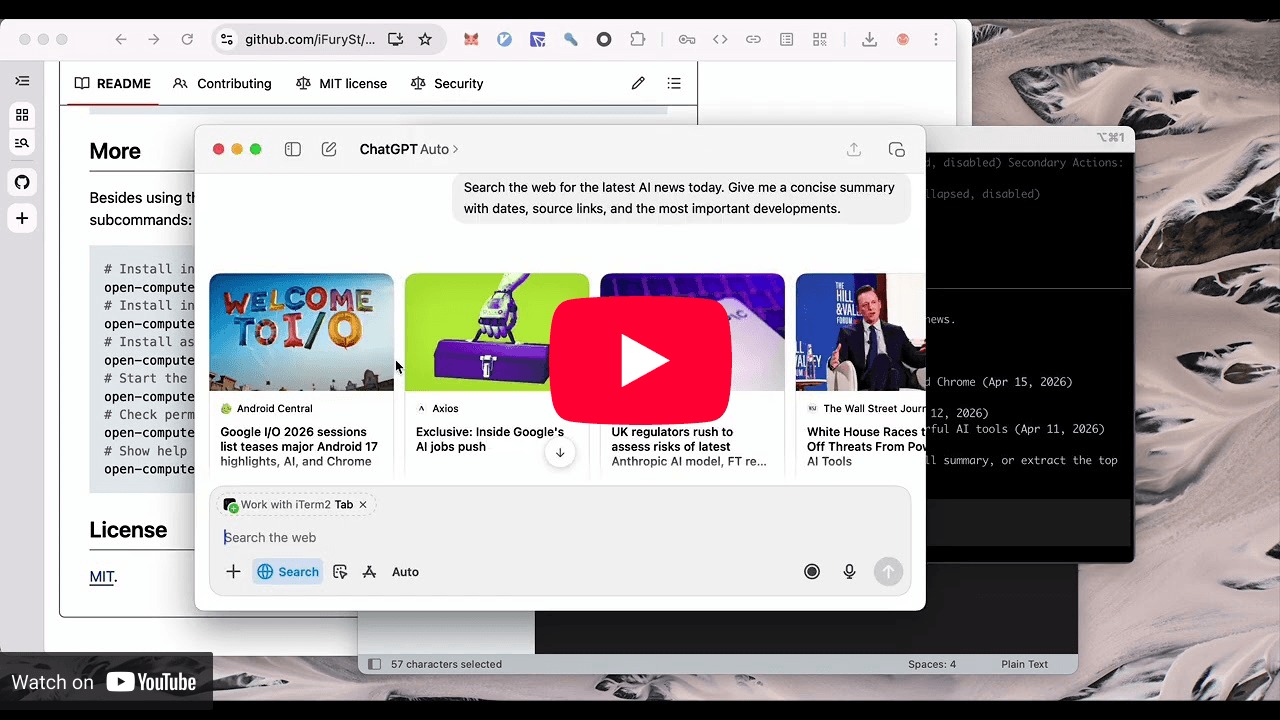
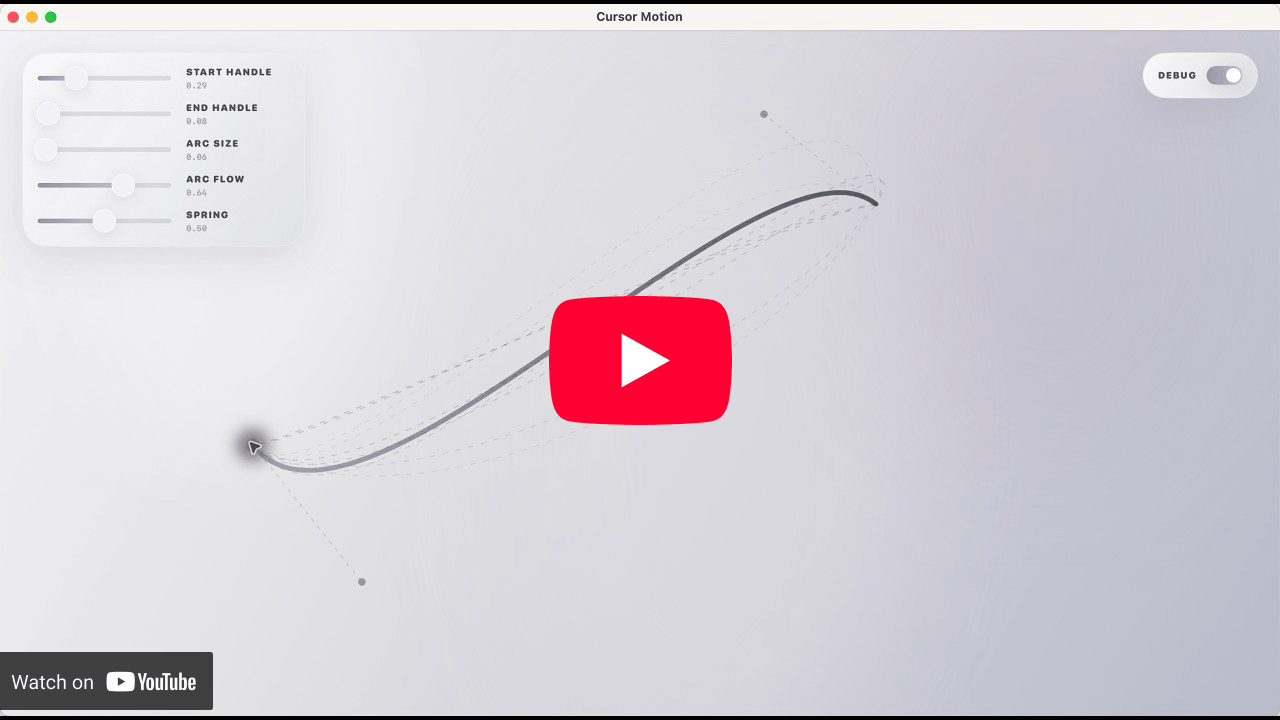
Adoption not verified. README includes demo videos (Codex App, Codex CLI, Gemini CLI, Linux) showing functional output, but these are author-created POCs rather than third-party production case studies. No documentation of: number of active users, deployment counts, error rates, or enterprise usage. Integration pathways (MCP config, Codex plugins, skills) are defined, but actual uptake unknown. References to 'DeepWiki', 'LLMAPIs', and 'skills' suggest emerging ecosystem integration, but these are not independently verifiable as adoption signals.
Likely implements accessibility APIs (macOS: Accessibility framework; Linux/Windows: inferred from README) to capture screen state and inject input events. Exposed as MCP server via Node.js CLI. README documents installation into multiple agent ecosystems (Codex, Claude Code, Gemini CLI, OpenCode) through both direct MCP config and 'skills' abstraction layer. Appears to include local validation tooling (smoke tests, stress tests, agent-specific test scenarios). Implementation language is described as Swift (GitHub metadata), but quick-start shows npm install, suggesting a polyglot codebase or transpilation.
README documents test harness: 'make smoke', 'make stress' (with STRESS_LOOPS parameter), agent-specific smoke tests with multiple agent/scenario combinations (fixture, fixture-full). Does not specify line coverage percentage or test count. Local validation is clearly a development priority, though production telemetry or real-world failure modes are not discussed.
Last push July 8, 2026 (1 day before analysis date). Repository is 2.8 months old. Commit frequency and issue closure rate are not visible in metadata. README is detailed and actively maintained (includes recent agent integrations like Claude Code, Gemini CLI). No evidence of extended periods without updates. Age is too brief to assess long-term stability patterns; cannot distinguish between 'actively scaling' and 'early phase enthusiasm' without issue/PR history.
ADOPT IF: you need an open-source, self-hosted computer automation layer for AI agents and are comfortable integrating an early-stage (2.8-month-old) project; you want multi-platform support (macOS/Linux/Windows) over proprietary APIs; or you value MCP standardization for agent interoperability. AVOID IF: you require production-grade reliability guarantees, mature ecosystem support, or verified large-scale deployment history; you are locked into proprietary agent platforms without MCP support; or you cannot tolerate active development churn and API surface instability. MONITOR IF: you are evaluating the AI-agent-automation category as a whole; adoption by Codex, Claude Code, or other major agent platforms will strongly signal viability; upstreaming into MCP project governance would indicate maturation.
Independent dimensions
Mainstream potential
4/10
Technical importance
6/10
Adoption evidence
2/10
- Accessibility API dependence: macOS and Linux rely on OS-level accessibility frameworks that may require elevated permissions, user consent, or break with OS updates; Windows approach undefined in README.
- Adoption concentration: growth trajectory and demo integrations suggest early adopters may be primarily within Codex/Claude ecosystems; if those ecosystems fragment or shift priorities, growth may stall.
- Maintenance burden: desktop automation across macOS, Linux, and Windows is notoriously fragile; small team/single-author projects in this space often accumulate technical debt rapidly.
- MCP standardization risk: MCP is itself nascent (2024–2026); if competing standards emerge or MCP adoption plateaus, this project's architectural bet may become suboptimal.
- Security surface: exposing computer automation via networked MCP server to AI agents introduces potential for unauthorized desktop control if authentication/isolation is weak; README does not document threat model or access controls.
Likely to remain in early-adoption phase through 2026–2027. If Codex and Claude agents become mainstream and maintain MCP support, adoption may accelerate modestly. Risk of plateau if: (a) OpenAI or Anthropic release proprietary computer-use agents with better reliability, (b) accessibility API maintenance becomes unsustainable, or (c) MCP standardization fails. Most probable outcome: niche success within open-source agent communities; unlikely to become mainstream outside AI-first developer circles.
Explore similar
Newsletter
Get analyses like this every Monday
Free weekly digest of the most interesting open-source discoveries.
Languages
Information
- Language
- Swift
- License
- MIT
- Last updated
- 1d ago
- Created
- 3mo ago
- Analyzed with
- anthropic/claude-haiku-4-5
Stars over time
Contributors over time
Top 100 contributors only — repos with more will plateau at 100.
Open issues
[FR] Introduce Auditing and Visual Feedback Capabilities for Computer Use
install-codex-mcp and install-codex-plugin are POSIX-only; no Windows install path
MCP stdio responses on Windows are not UTF-8; non-ASCII text becomes `???`
Significant context usage
User permission prompt before accessing apps
Top contributors
Similar repos

Yeachan-Heo/oh-my-codex
OMX (Oh My codeX) is a workflow enhancement layer for OpenAI's Codex CLI that...
| Repository | Stars | Week Δ | Language | Score | Updated |
|---|---|---|---|---|---|
|
iFurySt/open-codex-computer-use
this
|
1.4k | +160 | Swift | 8/10 | 1d ago |
|
Yeachan-Heo/oh-my-codex
|
31.9k | — | TypeScript | 7/10 | 7h ago |
 openai/codex openai/codex
|
96.9k | — | Rust | 8/10 | 1h ago |
 code-yeongyu/oh-my-openagent code-yeongyu/oh-my-openagent
|
65.5k | — | TypeScript | 6/10 | 3h ago |
Closed-source, API-only; open-computer-use is open-source and self-hosted. Codex has undefined adoption; open-computer-use adoption is unverified but targeting ecosystem compatibility.
Appears to be an earlier/broader Codex ecosystem wrapper; open-computer-use is specifically computer-use focused and MCP-first, with explicit multi-agent support beyond Codex.
Broader agent orchestration; open-computer-use is narrower (computer automation only) and younger, but with explicit MCP standardization.
Limited to web browsers; open-computer-use targets full desktop OS control (arbitrary apps, system-level actions). Different problem domain despite surface overlap.
open-computer-use abstracts and wraps these; not a competitor but a consumer and exposer of existing system capabilities.