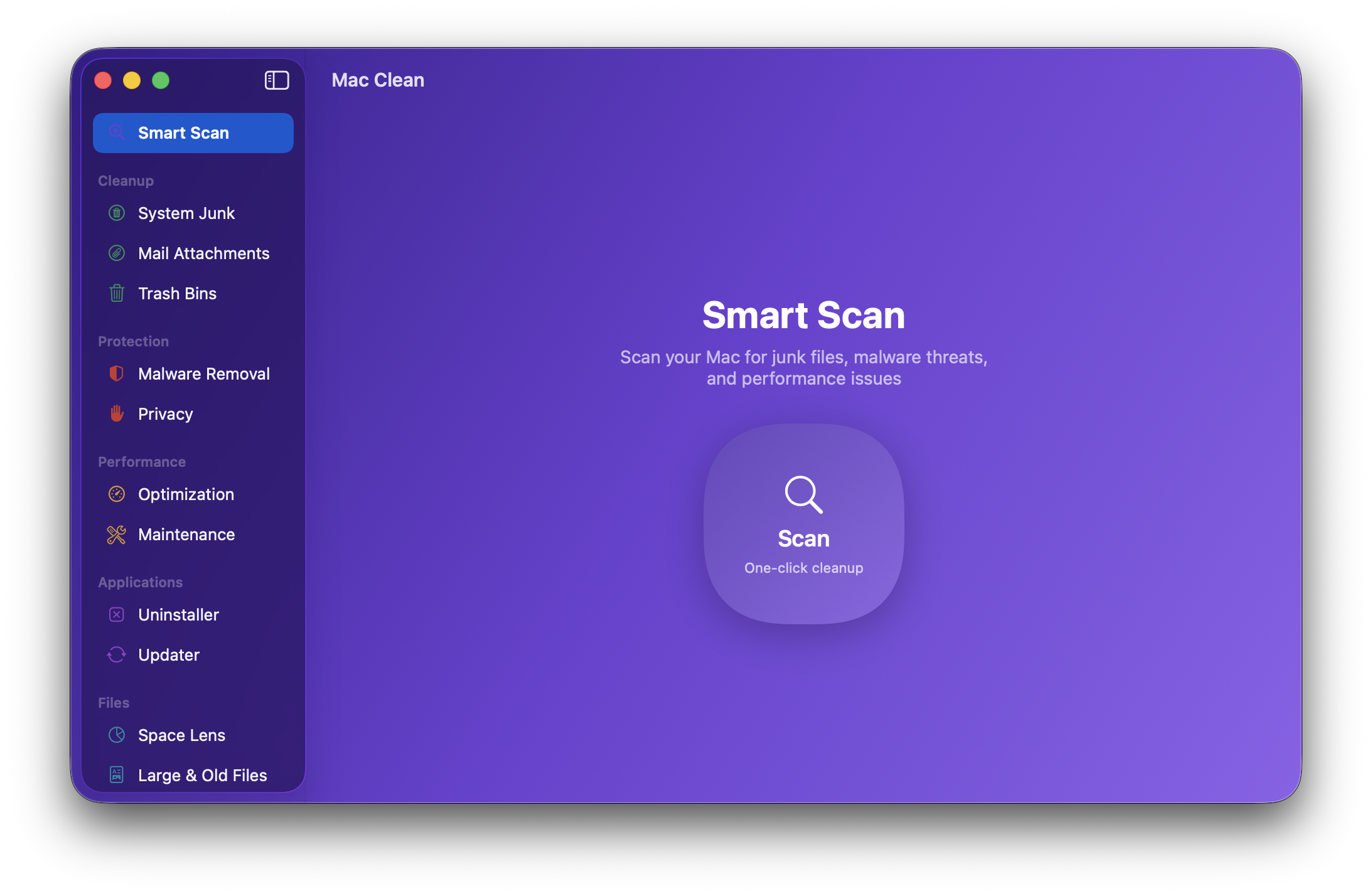
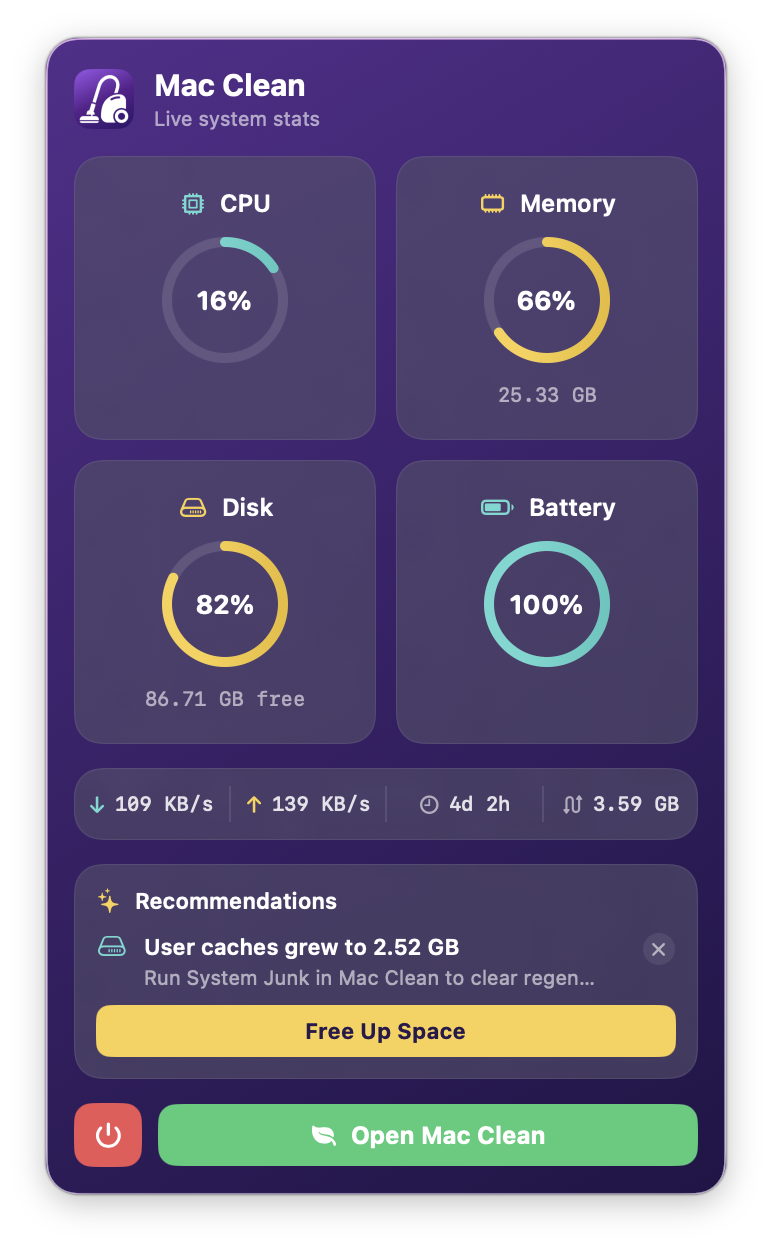
Mac Sai: the open-source Mac cleaner, optimizer, and malware scanner. A free, Apple-notarized alternative to CleanMyMac, built with Swift 6 and SwiftUI.
1k
Stars
62
Forks
20
Open issues
5
Contributors


AI Analysis
Mac Sai is a free, open-source macOS application that provides system cleaning, optimization, malware scanning, and disk visualization—positioned as a transparent, subscription-free alternative to CleanMyMac. It is best suited for macOS users seeking privacy-respecting system maintenance tools without recurring fees, benefiting those who distrust proprietary cleaners with telemetry or those on budget constraints.
Inferred from signals mentioned in the README (tests, CI, type safety) — not a review of the actual code.
AI's overall editorial judgment — not an average of the bars above, can weigh other factors too.
Open-source macOS cleaner and optimizer launched May 2026, repositioning paid competitor features as free with transparency focus
Mac Sai is a newly launched (May 2026) free, open-source macOS utility that replicates CleanMyMac's core feature set—system cleanup, malware scanning, performance optimization, app uninstallation, and disk visualization—without subscription, telemetry, or closed-source restrictions. Built in Swift 6 with native SwiftUI GUI, Apple-notarized, and available via Homebrew. Target audience is macOS users skeptical of proprietary tools and developers who value source transparency. Real-world adoption metrics remain unclear at 6 weeks old; GitHub presence shows 1,004 stars and active maintenance but no visible production usage at scale.
Project originated as 'Mac Clean' under the iliyami organization, renamed to 'Mac Sai' in July 2026 for trademark reasons. Represents a deliberate alternative positioning against CleanMyMac's $39.95/year subscription model. Launched publicly less than 2 months before evaluation date.
Project gained 1,004 GitHub stars in approximately 6 weeks post-launch (created 2026-05-27), suggesting initial viral interest in the open-source macOS tools community. Zero stars gained in the 7 days immediately before evaluation (2026-07-01 to 2026-07-08) indicates growth has plateaued after initial surge. Recent activity remains frequent (last push 2026-07-08), but adoption growth trajectory is decelerating rapidly.
Adoption not verified. No evidence in README of production deployment counts, enterprise usage, or user testimonials. Homebrew distribution channel exists, but download metrics not disclosed. GitHub stars and forks present, but do not translate to confirmed real-world active users. No mention of bug reports, support channels, or user feedback loops that would indicate deployed user base.
Appears to be a monolithic native Swift application using SwiftUI for UI layer. README indicates 486 passing tests and modular feature organization (Cleanup, Protection, Performance, Applications, Files subsystems). Likely implements system-level file I/O, process management, and signature-based malware detection. Use of Swift 6 and native binaries suggests modern, compiled implementation rather than web wrapper. Specific architectural patterns cannot be verified without source inspection.
README explicitly reports '486 passing' tests, suggesting automated test suite exists. Proportion of codebase covered not disclosed. Test count alone does not indicate coverage percentage or whether critical paths are validated.
Last push 2026-07-08 (1 day before evaluation) indicates active development. Repository is 6 weeks old; frequent commits and recent notarization suggest the team is responding to early-stage issues. No visible evidence of stagnation, but project is too new to establish long-term maintenance patterns. Early activity intensity does not yet predict sustainability.
ADOPT IF: you actively distrust closed-source system utilities, are willing to use immature pre-1.0 software, value source auditability over polish, and can tolerate potential stability issues in a 6-week-old project. AVOID IF: you require proven production stability, expect professional support, need long-term maintenance guarantees, or are uncomfortable with projects that may be abandoned after initial enthusiasm. MONITOR IF: you use macOS and are interested in open-source alternatives but want to see 6+ months of sustained development, real user reports, and issue resolution before migrating off paid tools.
Independent dimensions
Mainstream potential
4/10
Technical importance
5/10
Adoption evidence
2/10
- Project launched 6 weeks prior to evaluation; no long-term sustainability evidence or historical precedent for maintainer commitment beyond early phase.
- Zero growth in stars last 7 days suggests viral phase ending; cannot distinguish between 'stable niche adoption' and 'early peak with declining interest.'
- Malware signature database freshness and update frequency not documented; relying on static signatures risks missing evolving threats.
- No documented user feedback, issue resolution SLA, or support channel; early-stage projects often lack responsive maintenance after novelty wears off.
- Trademark rename (Mac Clean → Mac Sai) mid-lifecycle indicates possible branding/organizational instability; may signal compliance or funding issues.
Mac Sai likely stabilizes at low-to-moderate adoption (thousands of active users, not millions) if maintainers sustain effort past 6-month mark. Most probable outcome: remains niche tool for open-source-conscious macOS users and remains a valid secondary alternative to CleanMyMac and Pearcleaner without challenging their dominance. Risk of abandonment if early enthusiasm does not translate to ongoing contribution culture or funding.
Newsletter
Get analyses like this every Monday
Free weekly digest of the most interesting open-source discoveries.
Languages
Information
- Language
- Swift
- License
- BSD-3-Clause
- Last updated
- 2d ago
- Created
- 1mo ago
- Analyzed with
- anthropic/claude-haiku-4-5
Stars over time
Contributors over time
Top 100 contributors only — repos with more will plateau at 100.
Open issues
[Feature] Optimize Space Lens
[Feature] support for macos ventura
Duplicates: consolidation mode that reclaims space while keeping every copy (DiskDedupe-style)
📊 Vote: which feature should we build next?
Feature: Manage extensions, plug-ins & preference panes (Applications)
Top contributors
Similar repos

ddlmanus/MacOptimizer
MacOptimizer is a native macOS system optimization and maintenance application...

alienator88/Pearcleaner
Pearcleaner is a free Mac application designed to safely uninstall applications...
| Repository | Stars | Week Δ | Language | Score | Updated |
|---|---|---|---|---|---|
|
iliyami/MacSai
this
|
1k | +42 | Swift | 7/10 | 2d ago |
 momenbasel/PureMac momenbasel/PureMac
|
5.1k | — | Swift | 8/10 | 2w ago |
|
ddlmanus/MacOptimizer
|
1.5k | — | Swift | 6/10 | 2mo ago |
|
alienator88/Pearcleaner
|
13.6k | — | Swift | 6/10 | 2mo ago |
 tw93/Mole tw93/Mole
|
58.5k | — | Shell | 8/10 | -61 min ago |
 guhcostan/mac-cleaner-cli guhcostan/mac-cleaner-cli
|
1.8k | — | TypeScript | 8/10 | 1w ago |
Market leader with paid subscription ($39.95/year). Proprietary, polished UX, established user base. Mac Sai replicates feature parity (cleanup, malware scan, optimization) but targets users avoiding subscriptions and closed source. No direct technical advantage claimed; differentiation is licensing and transparency.
Open-source (Fair-code) alternative with GUI. Mac Sai adds malware scanning, browser privacy, universal binary thinning, and smart scan—features Pearcleaner lacks. Pearcleaner is older and likely has more established user base, but Mac Sai positions as more feature-complete.
Long-established free macOS utility with strong maintenance scripts focus. Mac Sai offers more polished GUI and broader feature set (malware, browser cleanup, duplicates). OnyX likely has larger installed base due to age; Mac Sai targets users preferring modern UX and broader scope.
Free, open-source (MIT). Mac Sai offers more features (smart scan, malware, duplicates, universal binary thinning). Both target free-software users; Mac Sai is more comprehensive but newer and unproven.
CLI-based (paid GUI available separately). Mac Sai offers free native GUI and broader feature set. Mole likely serves advanced users; Mac Sai targets mainstream macOS users seeking visual interface.