Everything I know about running LLMs locally
1.3k
Stars
80
Forks
2
Open issues
1
Contributors
AI Analysis
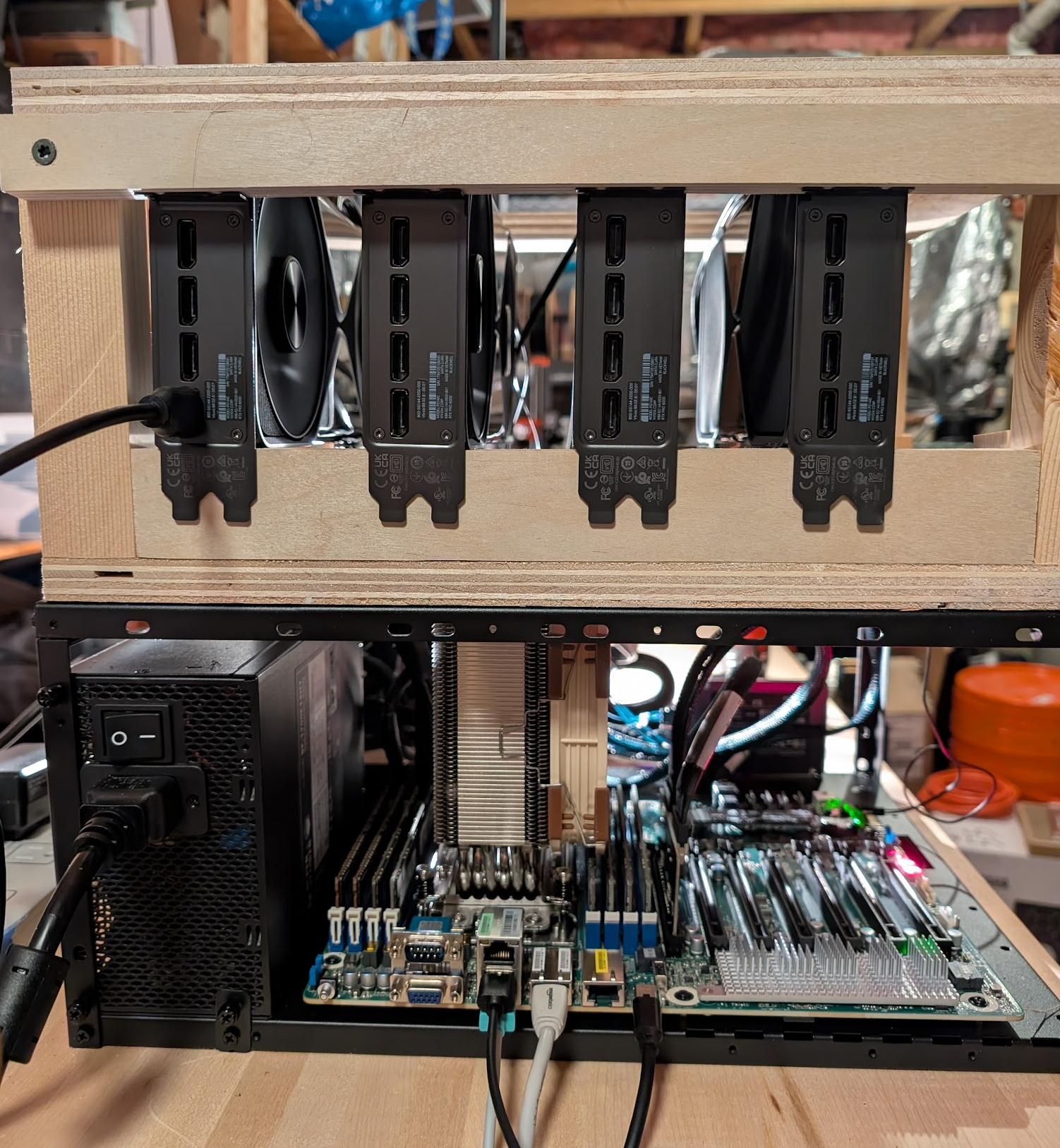
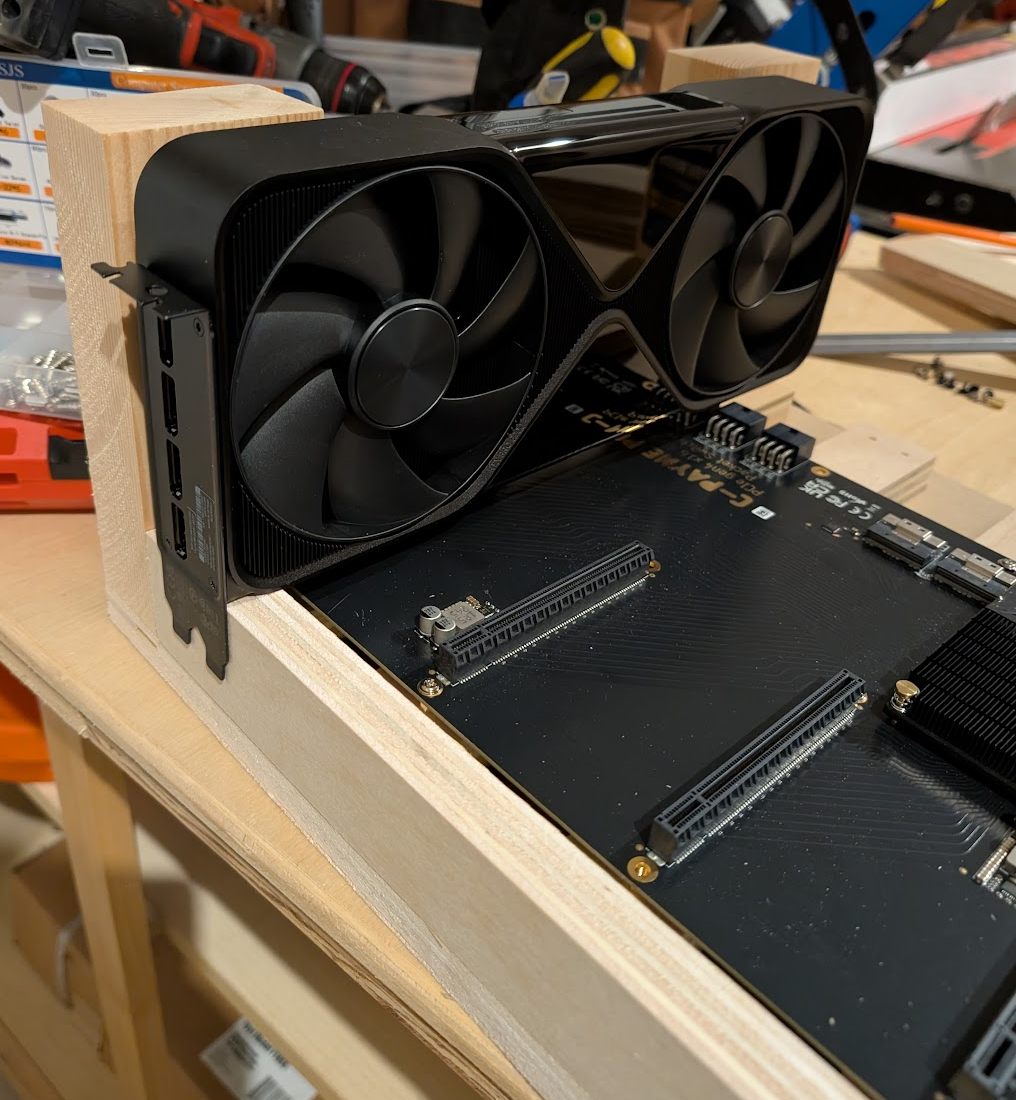
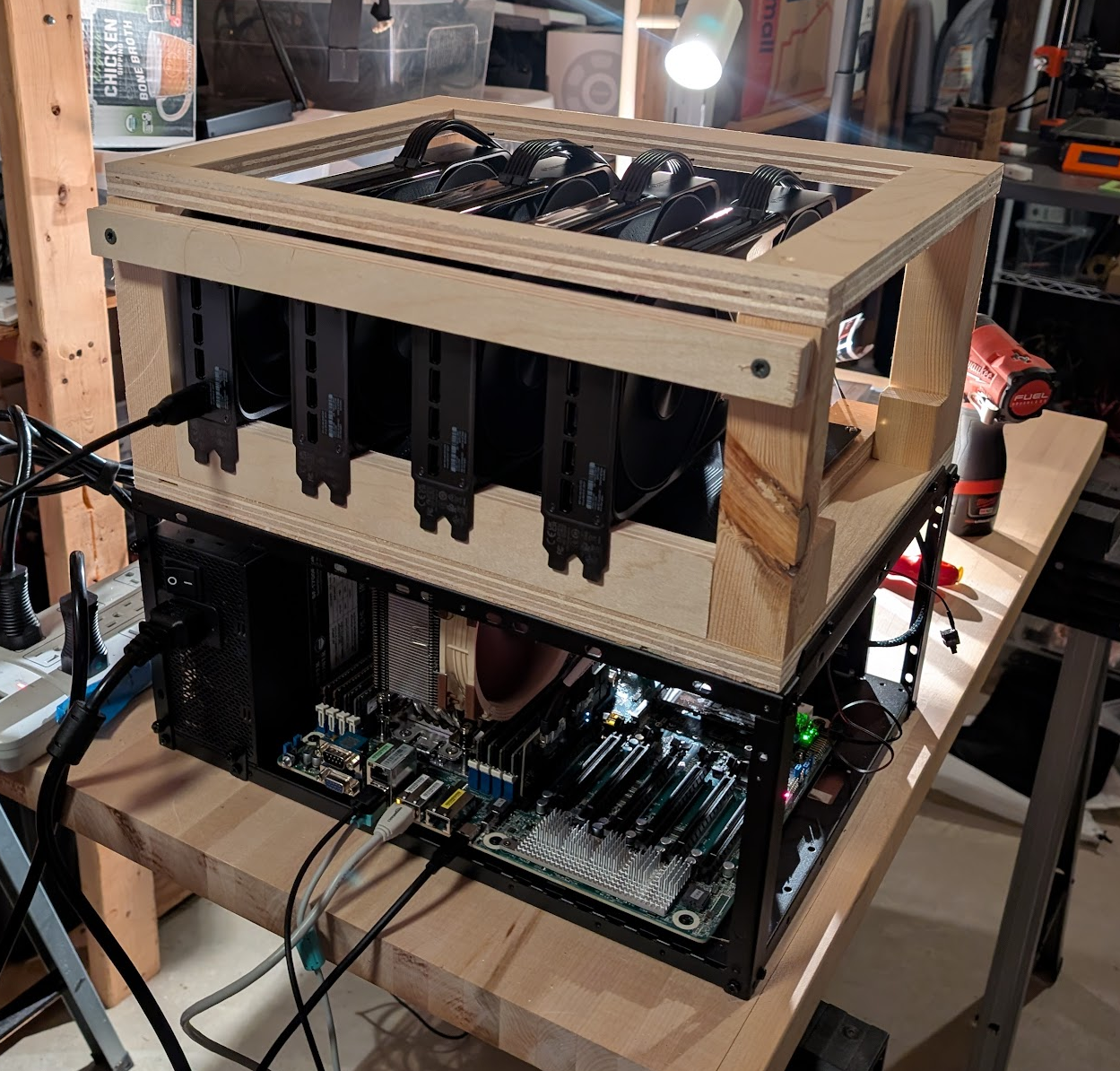
A specialized hardware and software guide for running state-of-the-art LLMs locally, authored by James Oberlander. It provides detailed bill-of-materials, configuration instructions, and ready-to-run Docker setups for high-end GPU clusters with PCIe4 switching and multi-GPU tensor parallelism. This repo is designed for technically sophisticated users with $2k–$40k budgets who want to self-host large language models; it is not for general users seeking simple LLM experimentation.
Inferred from signals mentioned in the README (tests, CI, type safety) — not a review of the actual code.
AI's overall editorial judgment — not an average of the bars above, can weigh other factors too.
Personal guide to running large language models on custom-built local hardware
jamesob/local-llm is a single-author documentation repository capturing hardware configuration, software setup, and operational know-how for running state-of-the-art LLMs locally on custom-built systems. Created July 3, 2026, it documents two cost tiers (~$2k and ~$40k) with specific Bill-of-Materials, Docker configs, and performance tuning for running models like Qwen and GLM-5.2 on multi-GPU setups. Audience: technically sophisticated individuals building private inference rigs. Not a library, framework, or tool—rather a detailed how-to guide with reproducible configurations.
Repository created July 3, 2026, by author jamesob. Appears motivated by rising concerns about closed-source LLM providers (mentioned: Dario and Altman) and desire to document an unconventional hardware setup (PCIe4 switches, last-gen EPYC, RTX Pro 6000s, peer-to-peer GPU communication). Reflects mid-2026 hardware economics: DDR4 eBay parts cheaper than DDR5, RTX 6000 Pro availability, and emergence of large quantized models (594B parameters) suitable for 384GB VRAM.
Starred 1,014 times in first 4 days (July 3–7, 2026); no additional stars recorded in final measurement window (last 7 days: 0 new stars, as of July 7). Initial spike likely driven by Hacker News or similar community sharing. Very recent creation (4 days old at evaluation date) makes growth trajectory impossible to assess; early rapid adoption may reflect novelty or genuine demand from niche audience seeking local-inference guidance during period of rapid model scaling.
Adoption not verified. No evidence in README or metadata of production deployments, user testimonials, or case studies. No information on GitHub Stars breakdown (by geography, follower type, etc.) or references in external projects. Repository is 4 days old; adoption claims cannot be substantiated. Author's personal use case is documented, but no indication of uptake beyond author.
Appears to be documentation-first repository rather than application code. Likely contains: shell scripts (measured against metadata; language: Shell), Docker Compose configs (referenced in README for vLLM runners), BIOS/kernel tuning notes, and GPU benchmarking scripts (measure-gpu-speed.sh mentioned). Likely organized into subdirectories: runners/ (vLLM configs), runners/stt/ (Whisper setup), tools/ (benchmarks). Not a software library—no indication of API, SDK, or packaging.
not documented in README. No mention of validation, CI/CD, or reproducibility testing. README states 'tables were written by AI' but README prose was not, suggesting manual curation but no formalized verification process.
Created and last updated July 3, 2026 (4 days before evaluation date). Single push event recorded. Too early to assess maintenance pattern. Author appears active (immediate push after creation), but single-author status and absence of issue/PR history make long-term maintenance trajectory uncertain. Will depend on whether author treats this as living documentation or snapshot.
ADOPT IF: you are building a custom local inference rig (4+ GPUs, $2k–$40k budget) and value detailed hardware procurement guidance, peer-to-peer PCIe tuning, and ready-to-run vLLM configs for specific large models; you have advanced Linux/systems knowledge and can troubleshoot BIOS bifurcation, kernel params, and PCIe topology. AVOID IF: you need a maintained library or tool (this is documentation); you expect community support or issue resolution; you lack willingness to source parts from eBay and tune BIOS/kernel parameters yourself; you seek guidance on mainstream single-GPU setups or small-scale inference. MONITOR IF: you are researching local inference hardware economics circa mid-2026; you want to see if author maintains this as living documentation or if community forks emerge; you are tracking adoption of quantized 594B models in consumer-grade setups.
Independent dimensions
Mainstream potential
2/10
Technical importance
6/10
Adoption evidence
1/10
- Single-author, snapshot-like repository with no indication of long-term maintenance commitment; likely to become outdated as hardware markets evolve.
- Early-stage documentation (4 days old) may contain undiscovered errors, missing context, or unvalidated hardware configs; no peer review evident.
- Highly specialized audience (advanced users with $2k–$40k hardware budgets); very limited mainstream applicability; may serve only author's immediate peers.
- No visible issue tracking, community contributions, or support mechanism; if users encounter problems (e.g., PCIe switch driver issues, model serving failures), unclear where to report or seek help.
- Hardware configurations may not generalize; eBay-sourced used parts (motherboard, CPU, RAM) have variable availability and reliability; tuning parameters (BIOS settings, kernel args) are system-specific and may not work on different hardware.
If maintained, this repo will remain a niche reference for advanced DIY local-inference builders; unlikely to become a mainstream tool or framework. Most probable outcome: remains a dated snapshot by end-2027 as hardware and model ecosystems shift, unless author actively updates BOMs, configs, and benchmarks quarterly. Secondary outcome: community forks or community-maintained wiki emerges; primary repo becomes historical artifact.
Newsletter
Get analyses like this every Monday
Free weekly digest of the most interesting open-source discoveries.
Languages
Information
- Language
- Shell
- Last updated
- 2d ago
- Created
- 7d ago
- Analyzed with
- anthropic/claude-haiku-4-5
Stars over time
Contributors over time
Top 100 contributors only — repos with more will plateau at 100.
Open issues
Open pull requests
No open pull requests.
Top contributors
Recent releases
No releases published yet.
Similar repos

sybil-solutions/local-studio
Local Studio is a desktop and web control panel for running self-hosted large...

Andyyyy64/whichllm
whichllm is a CLI tool that automatically detects your hardware (GPU, CPU, RAM)...

Troyanovsky/Local-LLM-Comparison-Colab-UI
This repository provides a collection of Google Colab notebooks for hands-on...

rafska/awesome-local-llm
Awesome-local-llm is a curated directory of platforms, tools, models, and...
| Repository | Stars | Week Δ | Language | Score | Updated |
|---|---|---|---|---|---|
|
jamesob/local-llm
this
|
1.3k | +286 | Shell | 8/10 | 2d ago |
|
sybil-solutions/local-studio
|
1.3k | — | TypeScript | 7/10 | 6h ago |
|
Andyyyy64/whichllm
|
5.7k | — | Python | 8/10 | 2d ago |
|
Troyanovsky/Local-LLM-Comparison-Colab-UI
|
1.1k | — | Jupyter Notebook | 6/10 | 6mo ago |
|
rafska/awesome-local-llm
|
2.4k | — | — | 7/10 | 6d ago |
 b4rtaz/distributed-llama b4rtaz/distributed-llama
|
3k | — | C++ | 7/10 | 5d ago |
llama.cpp and similar focus on efficient inference software (model optimization, quantization). jamesob/local-llm focuses on hardware procurement and system integration—complementary rather than competitive. This guide could be used *alongside* llama.cpp.
Ollama simplifies local LLM deployment with pre-built binaries and model management. jamesob/local-llm is hardware-centric and assumes advanced Linux knowledge; Ollama targets broader audience. Different use cases: Ollama for ease-of-use, this guide for cutting-edge performance and cost optimization at scale.
vLLM is the inference serving framework used in jamesob's runners configs. This repository wraps vLLM with specific hardware tuning. Not a replacement—a deployment guide that *depends* on vLLM.
Comparable to scattered community documentation (e.g., forums, Medium posts). This guide is more structured and recent (reflects July 2026 pricing and hardware), but lacks formal maintenance or community review mechanisms of established wikis or official docs.
Orthogonal: cloud APIs prioritize ease and managed compute; this guide is for privacy, control, and amortized cost at high scale. Not meant to replace cloud—meant for users rejecting cloud dependency.