jqssun/android-helium-browser
Shell GPL-2.0 Security experimental-stability-risk Single maintainer riskSecure open-source Android browser with support for extensions
1.4k
Stars
51
Forks
45
Open issues
2
Contributors
AI Analysis
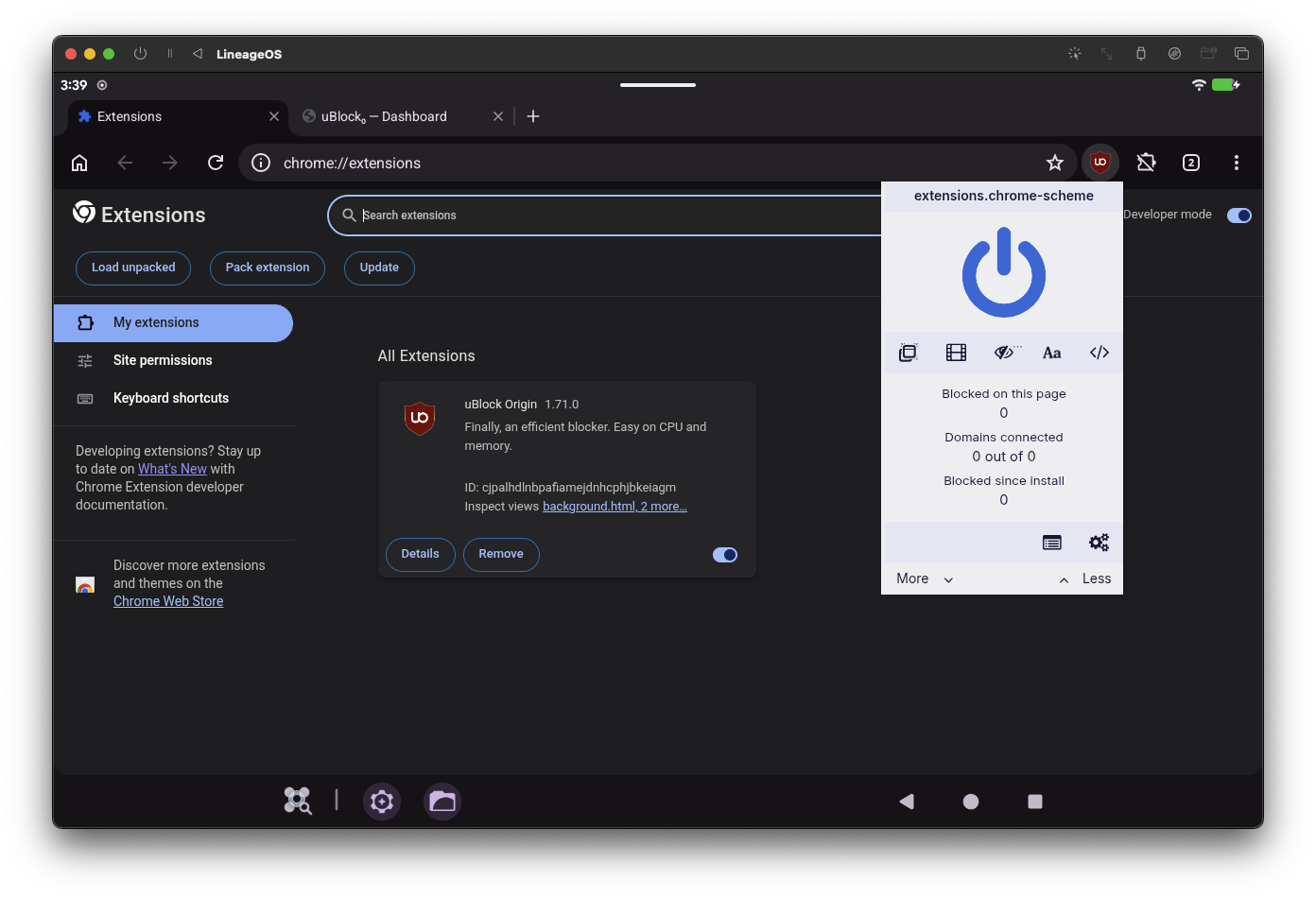
Helium Browser for Android is an open-source, Chromium-based mobile browser built on security-hardened foundations (Vanadium/GrapheneOS) with support for browser extensions including Manifest V2 extensions like uBlock Origin. It is purpose-built for Android users who prioritize security, privacy, and extensibility, and is not suitable for mainstream users seeking a feature-complete production browser—it is explicitly experimental with acknowledged stability risks.
Inferred from signals mentioned in the README (tests, CI, type safety) — not a review of the actual code.
AI's overall editorial judgment — not an average of the bars above, can weigh other factors too.
Chromium-based Android browser combining Vanadium security patches with extension support via Helium upstream
Helium Browser for Android is an open-source, GPL-2.0 Android browser built on Chromium, layering security patches from GrapheneOS's Vanadium with extension support (Manifest V2) derived from the Helium desktop project. It targets users seeking a privacy-conscious browser with ad-blocking capability via uBlock Origin. Adoption appears limited to open-source privacy advocates; real-world deployment metrics are not publicly documented.
Project created October 2025 as a port of Helium (desktop, 17,658 stars) and Vanadium (GrapheneOS hardened Chromium) to Android. Upstream Helium patches are currently paused due to GPLv2 licensing resolution pending with Helium maintainers. Repository is maintained by jqssun; related Windows port (imputnet/helium-windows, 1,154 stars) exists.
Repository gained 61 stars in last 7 days and 1,256 total since creation ~8 months ago. Recent push on 2026-06-20 indicates active maintenance. Growth trajectory appears steady but modest relative to established Android browsers (Lightning Browser 2,407 stars, Brave 22,910 stars). No evidence of rapid acceleration or network effects driving adoption.
Adoption not verified. No documentation of production deployments, organization usage, or user counts. GitHub releases exist but download statistics are not publicly exposed in provided metadata. README does not cite any known users or case studies.
Based on README, architecture layers Vanadium security patches (applied by default) with Helium generic patches (currently paused pending GPLv2 compliance). Build system uses Chromium's GN configuration. Extension support implements Manifest V2 standard via Chromium Web Store. Signed releases built via GitHub Actions with attestation support. Likely uses downstream build toolchain similar to Vanadium/Helium without full code inspection.
Not documented in README. CI workflow exists (GitHub Actions build status badge present) but test strategy is not described.
Last push 2026-06-20 (3 days before evaluation date) indicates active maintenance. Build workflow is operational (badge present). However, README notes all builds are 'experimental' and warns users that Vanadium + GrapheneOS is recommended for stronger protection. Licensing resolution with upstream Helium is pending, which may constrain future patch integration.
ADOPT IF: you are a privacy-focused developer or researcher requiring open-source Android browser with Chromium base, Vanadium security patches, and extension support (uBlock Origin), and you can tolerate experimental builds and pending licensing resolution. AVOID IF: you need a production-grade, mainstream-supported browser for non-technical users, or require guaranteed future compatibility with upstream Helium patches. MONITOR IF: you are tracking privacy-hardened Chromium derivatives or considering integration into GrapheneOS-adjacent ecosystems; watch for GPLv2 licensing resolution with Helium upstream.
Independent dimensions
Mainstream potential
2/10
Technical importance
6/10
Adoption evidence
2/10
- Licensing compliance with upstream Helium is unresolved; Helium patch integration is paused, potentially limiting security updates and future feature parity.
- Project is marked 'experimental' in README; stability and long-term maintenance commitment are not guaranteed beyond jqssun's volunteer effort.
- Adoption and real-world usage are not documented; difficulty assessing actual user base or incident response capacity.
- Extension support is limited to Manifest V2 (deprecated by Chromium/Chrome); MV3 migration timeline unclear, risking future incompatibility with Chrome Web Store.
- Single maintainer (jqssun) with no visible governance structure; bus factor and succession planning are unclear.
Likely remains a niche tool for open-source privacy advocates and GrapheneOS ecosystem participants over next 12–24 months. Mainstream adoption improbable unless: (1) GPLv2 licensing with Helium is resolved and patch integration accelerates, (2) significant marketing or distribution via F-Droid occurs, or (3) GrapheneOS endorses it as official out-of-band browser. Most probable trajectory: continued steady maintenance at current adoption level (~1,200–2,000 stars) unless maintainer effort shifts.
Newsletter
Get analyses like this every Monday
Free weekly digest of the most interesting open-source discoveries.
Languages
Information
- Language
- Shell
- License
- GPL-2.0
- Last updated
- 3d ago
- Created
- 9mo ago
- Analyzed with
- anthropic/claude-haiku-4-5
Stars over time
Contributors over time
Top 100 contributors only — repos with more will plateau at 100.
Open issues
After update (new version installed over old) app won't open
Problem: The translation toolbar cannot pop up in the bottom address bar mode.
Feature request: different search engine in private window than normal
toolbar
Scrolling using a trackpad not working.
Top contributors
Similar repos

imputnet/helium-windows
Helium Browser for Windows is a Chromium-based browser packaged specifically...

GrapheneOS/Vanadium
Vanadium is a privacy and security-hardened variant of Chromium that provides...
| Repository | Stars | Week Δ | Language | Score | Updated |
|---|---|---|---|---|---|
|
jqssun/android-helium-browser
this
|
1.4k | +97 | Shell | 6/10 | 3d ago |
|
imputnet/helium-windows
|
1.2k | — | C++ | 6/10 | 13h ago |
|
imputnet/helium
|
18.2k | — | C++ | 7/10 | 15h ago |
|
imputnet/helium-macos
|
1.1k | — | C++ | 7/10 | 15h ago |
|
GrapheneOS/Vanadium
|
1.9k | — | Python | 8/10 | 1d ago |
 anthonycr/Lightning-Browser anthonycr/Lightning-Browser
|
2.4k | — | Kotlin | 7/10 | 13h ago |
Brave (22,910 stars) is a mainstream, production-hardened browser with built-in ad/tracker blocking and Tor support. Helium targets privacy advocates seeking open-source + extension support; Brave targets broader adoption via brand and integrated features.
Lightning (2,407 stars, Kotlin) is a lightweight, privacy-focused Android browser. Helium differentiates via Chromium base, Vanadium hardening, and extension support; Lightning emphasizes minimalism and speed.
Vanadium is GrapheneOS's hardened Chromium browser; Helium for Android inherits Vanadium patches but targets non-GrapheneOS users. Trade-off: Helium adds extension support but lacks GrapheneOS kernel/OS-level hardening.
Firefox offers extensions, privacy controls, and cross-platform sync. Helium differentiates via Vanadium hardening and GrapheneOS lineage; Firefox offers broader feature parity and enterprise support.
Desktop Helium (17,658 stars) is the parent project. Android port depends on upstream patches; currently paused pending GPLv2 resolution, creating technical and licensing risk.