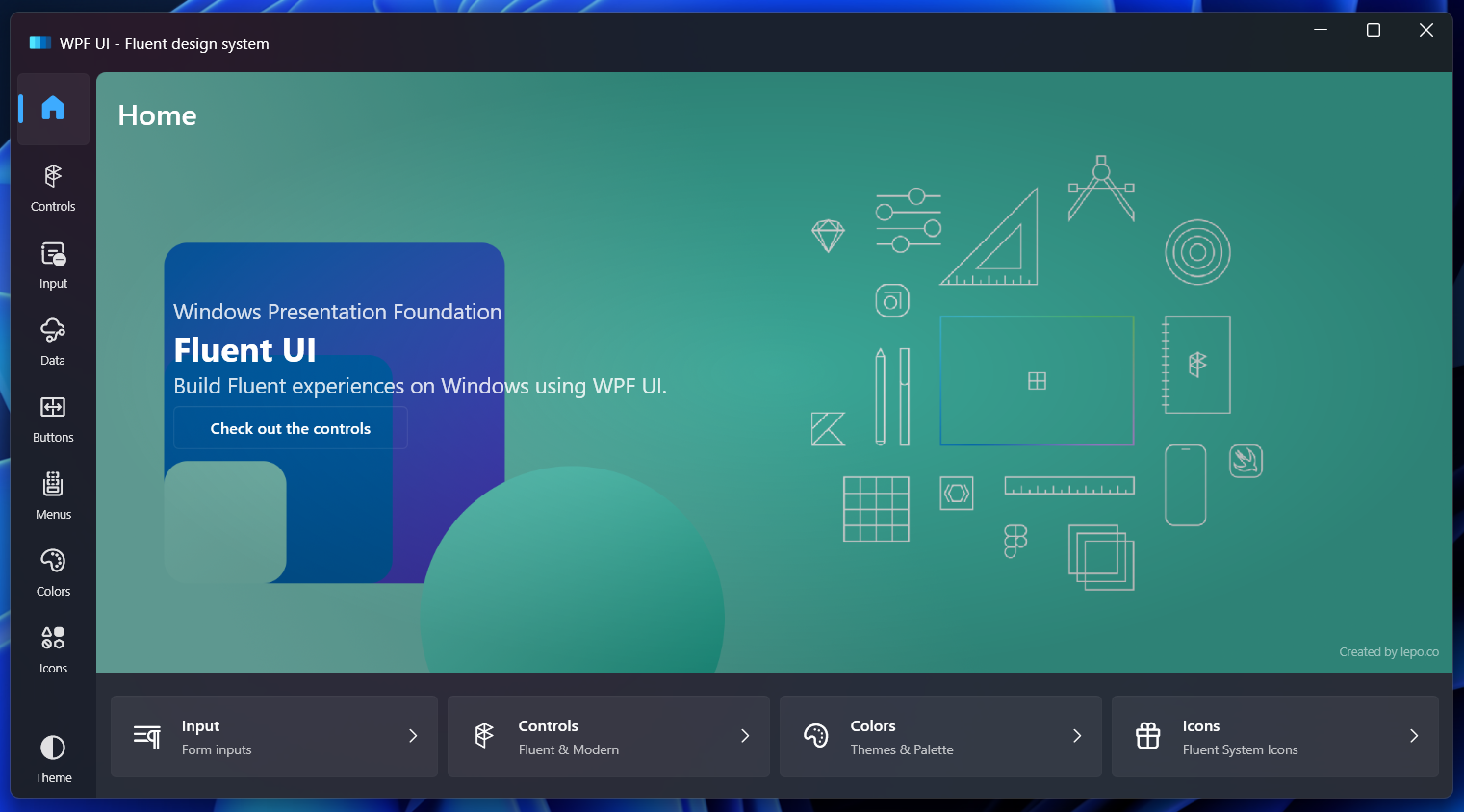
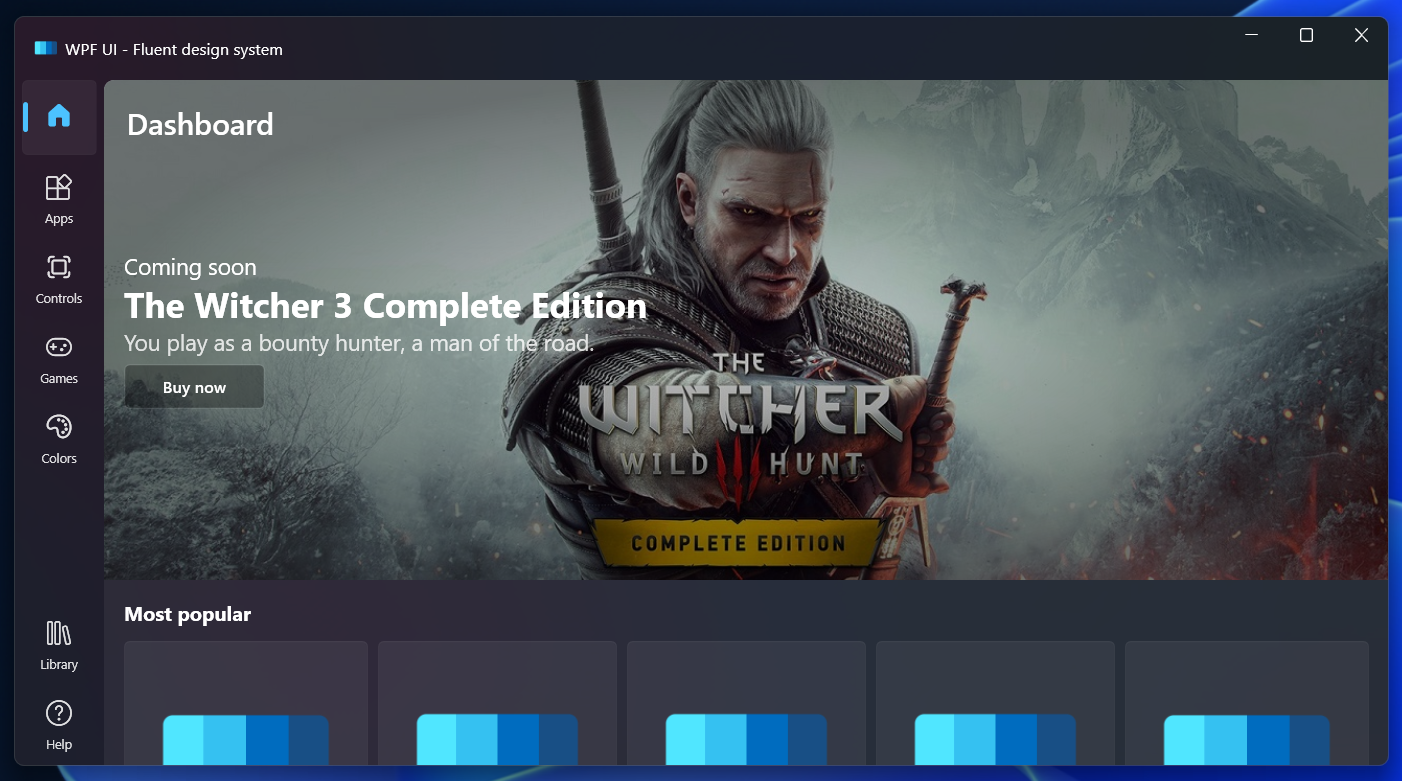
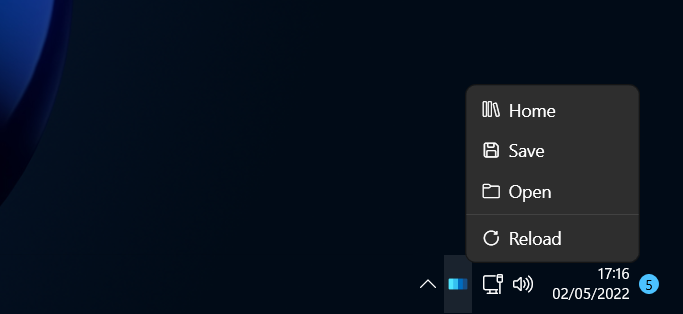
WPF UI provides the Fluent experience in your known and loved WPF framework. Intuitive design, themes, navigation and new immersive controls. All natively and effortlessly.
9.5k
Stars
987
Forks
441
Open issues
100+
Contributors


AI Analysis
WPF UI is a library that brings Microsoft's Fluent Design System to WPF applications on Windows, modernizing the native look and feel with controls, themes, and navigation patterns. It serves developers building Windows desktop applications who want contemporary UI without leaving the WPF ecosystem. Best suited for enterprise and consumer desktop apps targeting Windows 10/11; not for web, mobile, or cross-platform needs.
Inferred from signals mentioned in the README (tests, CI, type safety) — not a review of the actual code.
AI's overall editorial judgment — not an average of the bars above, can weigh other factors too.
WPF UI brings Windows 11 Fluent Design to legacy WPF apps without leaving the framework
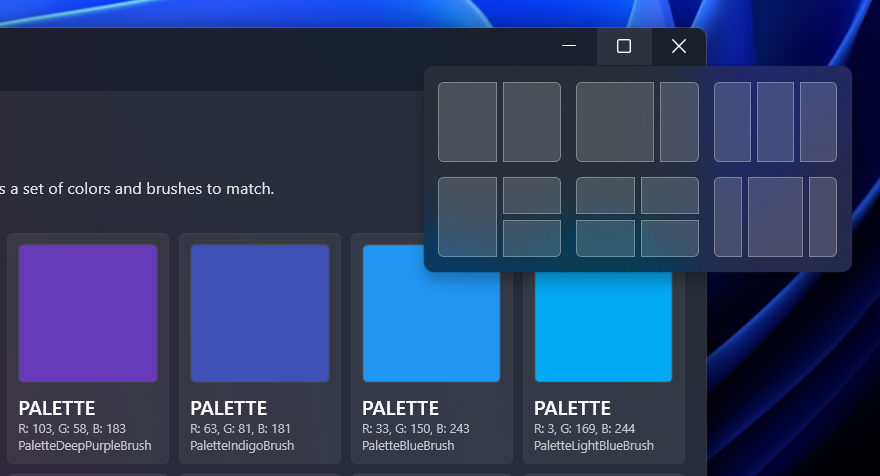
WPF UI is a C# library that applies Microsoft's Fluent Design language — including modern controls, theming, navigation patterns, and Windows 11 visual features like Snap Layout and Mica — to existing WPF applications. It targets .NET developers maintaining or building Windows desktop apps who want a contemporary look without migrating to WinUI 3 or MAUI. With ~9,500 GitHub stars, a NuGet package with substantial download counts, a Microsoft Store gallery app, and a Visual Studio 2022 plugin, it has meaningful real-world traction among the Windows desktop developer community.
Created in July 2021 by Polish developer Leszek Pomianowski, WPF UI emerged as Windows 11 introduced Fluent Design updates that WPF — a 2006-era framework still widely used in enterprise — could not natively replicate. The project grew from a personal effort into a community-maintained library.
Growth was driven by the release of Windows 11 and the enterprise WPF community's need to modernize UI without costly framework migrations. The availability of a free Microsoft Store demo app and a VS2022 project template reduced friction to adoption. Stars accumulated steadily rather than through viral spikes, suggesting organic word-of-mouth among desktop developers rather than social media bursts. Recent weekly star gain of 19 is modest but consistent with a mature, niche-focused library rather than stagnation.
NuGet package download counter is publicly visible and the README badge references it, implying meaningful download volume. The gallery app is available on the Microsoft Store and installable via winget, which requires a verified publisher submission. A Visual Studio Marketplace plugin exists. Commercial support plans are offered, suggesting paying customers exist. Adoption appears concentrated in enterprise WPF modernization projects and independent Windows app developers.
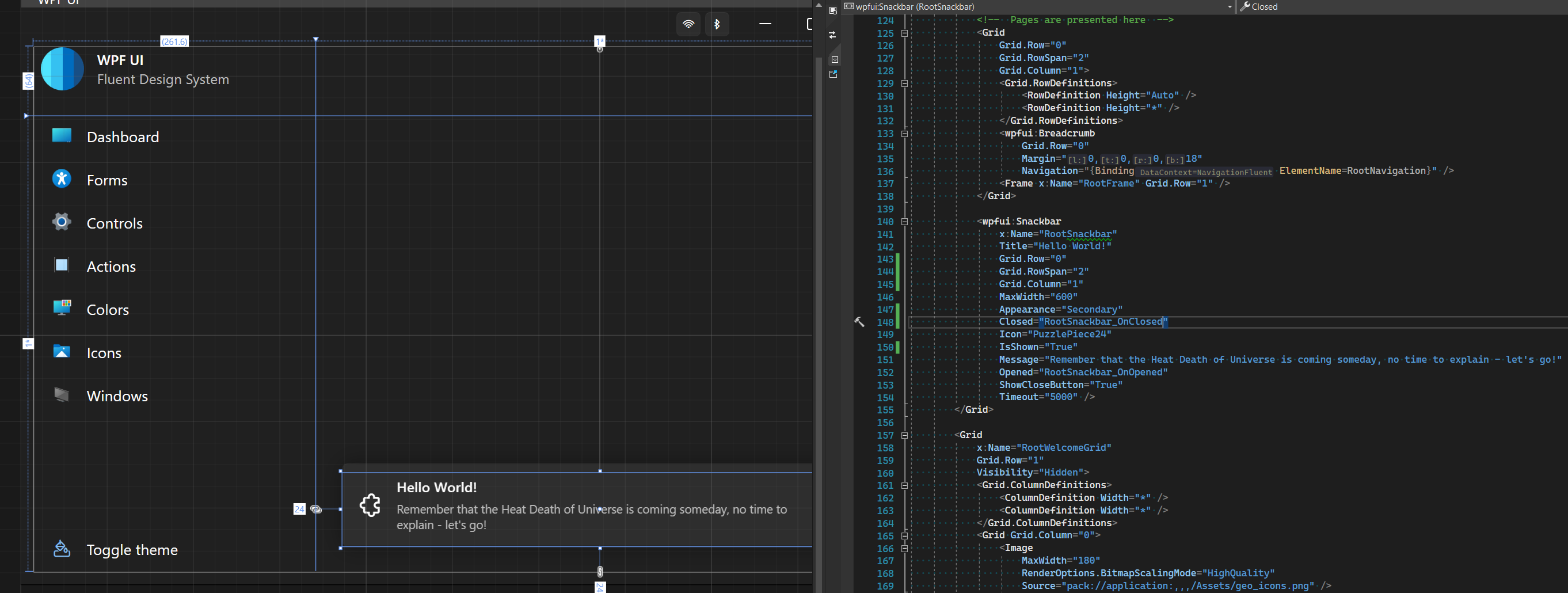
Likely implemented as a set of XAML resource dictionaries, custom control templates, and attached behaviors layered on top of standard WPF primitives. The README shows a namespace-based XAML integration pattern (xmlns:ui) and custom window types (FluentWindow, TitleBar), suggesting deep integration rather than a thin styling overlay. Appears to follow a theme-dictionary injection model compatible with MVVM frameworks.
Not documented in README
Last push was June 1, 2026 — approximately 18 days before the analysis date — indicating active, recent maintenance. The project has a Discord server, commercial support plans via lepo.co, and a GitHub Sponsors page, all of which are positive sustainability signals. The presence of a paid support tier suggests the maintainer has incentive to keep the project alive beyond hobby interest.
ADOPT IF: you are maintaining or building a WPF application targeting Windows 10/11 and want Fluent Design controls without migrating to WinUI 3 or MAUI, and are comfortable with a community-maintained dependency. AVOID IF: you are starting a greenfield Windows app and can afford to target WinUI 3 or MAUI natively, as Microsoft's own frameworks will always have better long-term OS integration guarantees. MONITOR IF: you are evaluating whether to modernize a large enterprise WPF codebase and need to assess long-term maintainability; watch for official Microsoft WPF Fluent support announcements that could reduce the need for this library.
Independent dimensions
Mainstream potential
4/10
Technical importance
7/10
Adoption evidence
6/10
- Single primary maintainer risk — despite community contributions, the core appears driven by one developer; long-term sustainability depends on continued engagement.
- Microsoft could invest in official Fluent Design support for WPF, reducing the differentiated value of this library.
- WPF itself is in maintenance mode at Microsoft; enterprise migration pressure to WinUI 3 or web-based stacks may shrink the target audience over time.
- Segoe Fluent Icons EULA restrictions create deployment friction on Windows 10, requiring manual font bundling by application developers.
- Deep integration with WPF internals (custom window chrome, Mica effects) may cause breakage with future Windows OS updates or .NET runtime changes.
Likely to remain the de facto Fluent Design solution for WPF for the next 2–3 years while enterprise WPF migration cycles remain slow. Long-term audience will shrink gradually as teams migrate to newer frameworks, but that transition will take a decade or more for many codebases.
Newsletter
Get analyses like this every Monday
Free weekly digest of the most interesting open-source discoveries.
Languages
Information
- Website
- https://wpfui.lepo.co
- Language
- C#
- License
- MIT
- Last updated
- 2w ago
- Created
- 60mo ago
- Analyzed with
- anthropic/claude-haiku-4-5
Stars over time
Contributors over time
Top 100 contributors only — repos with more will plateau at 100.
Open issues
Feature Request: Jalali (Solar Hijri) calendar support for date picker controls
AutoSuggestBox: show SuggestionsList on focus
SymbolIcon renders the wrong glyph for all SymbolRegular/SymbolFilled members above U+FFFF (supplementary plane)
[Bug] SystemThemeWatcher is not working properly
foreground is incorrect when the button is pressed
Top contributors
Recent releases
Similar repos

microsoft/microsoft-ui-xaml
WinUI is Microsoft's modern UI framework for building Windows applications,...

zhiyiYo/PyQt-Fluent-Widgets
PyQt-Fluent-Widgets is a Python library providing modern, fluent-design UI...
| Repository | Stars | Week Δ | Language | Score | Updated |
|---|---|---|---|---|---|
|
lepoco/wpfui
this
|
9.5k | +17 | C# | 8/10 | 2w ago |
|
microsoft/microsoft-ui-xaml
|
7.7k | — | C++ | 8/10 | 7h ago |
 dotnet/wpf dotnet/wpf
|
7.7k | — | C# | 8/10 | 6h ago |
|
microsoft/fluentui
|
20.1k | — | TypeScript | 8/10 | 21h ago |
|
zhiyiYo/PyQt-Fluent-Widgets
|
8k | — | Python | 8/10 | 2w ago |
 Liniyous/ElaWidgetTools Liniyous/ElaWidgetTools
|
2.4k | — | C++ | 7/10 | 4w ago |
The official WPF runtime — not a UI component library. WPF UI builds on top of it; they are complementary, not competing.
The long-established WPF theming library targeting Metro/Modern UI style. WPF UI focuses specifically on Windows 11 Fluent Design; MahApps.Metro has a larger install base but does not offer the same Windows 11 aesthetic depth.
Microsoft's official WPF samples repository — reference material, not a redistributable component library. No direct competition.
A MVVM framework for WPF and other XAML platforms. Focuses on application architecture rather than visual design. WPF UI can coexist with Prism; they solve different problems.
Targets .NET MAUI rather than WPF. Relevant only if a team is already migrating to MAUI; otherwise not a substitute for WPF-based projects.