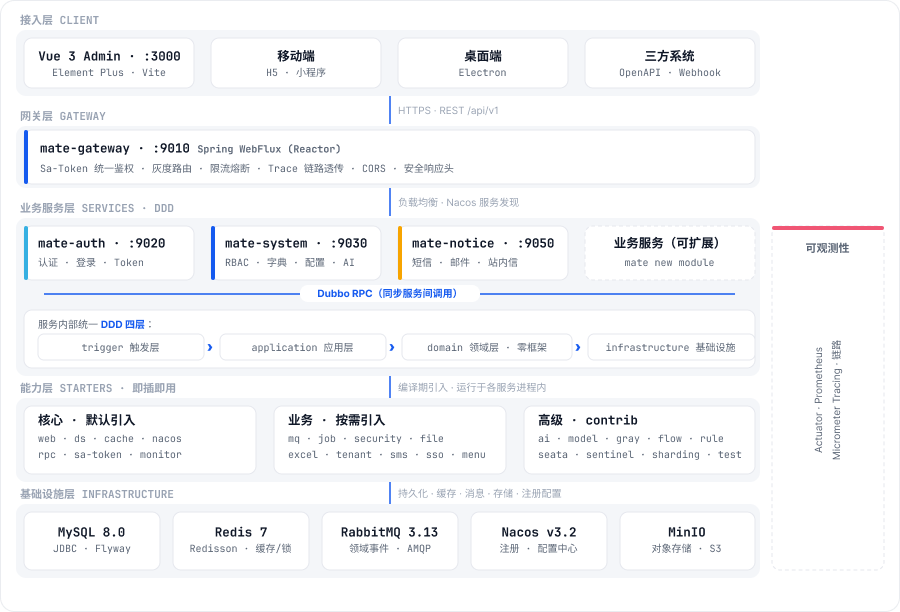
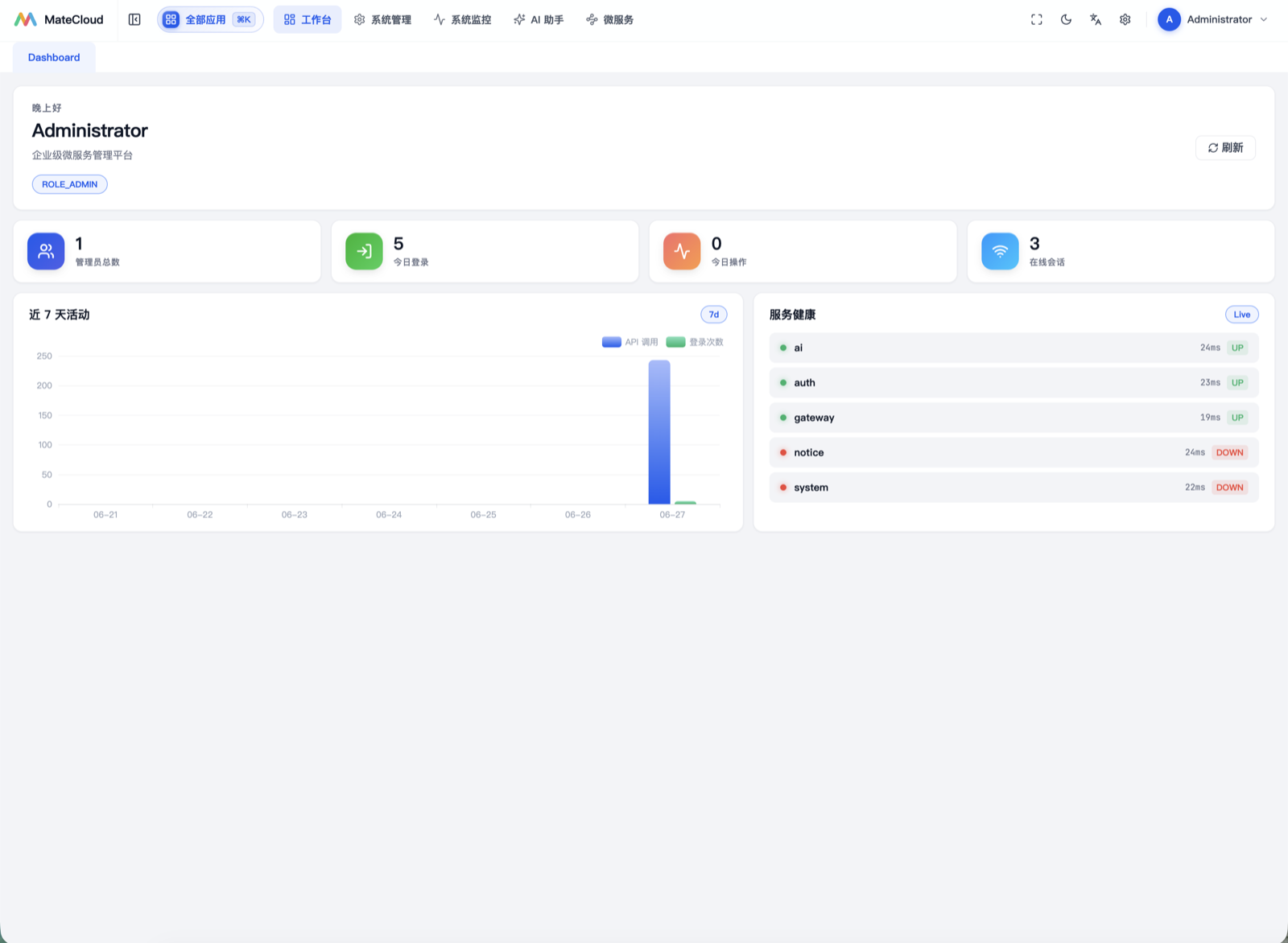
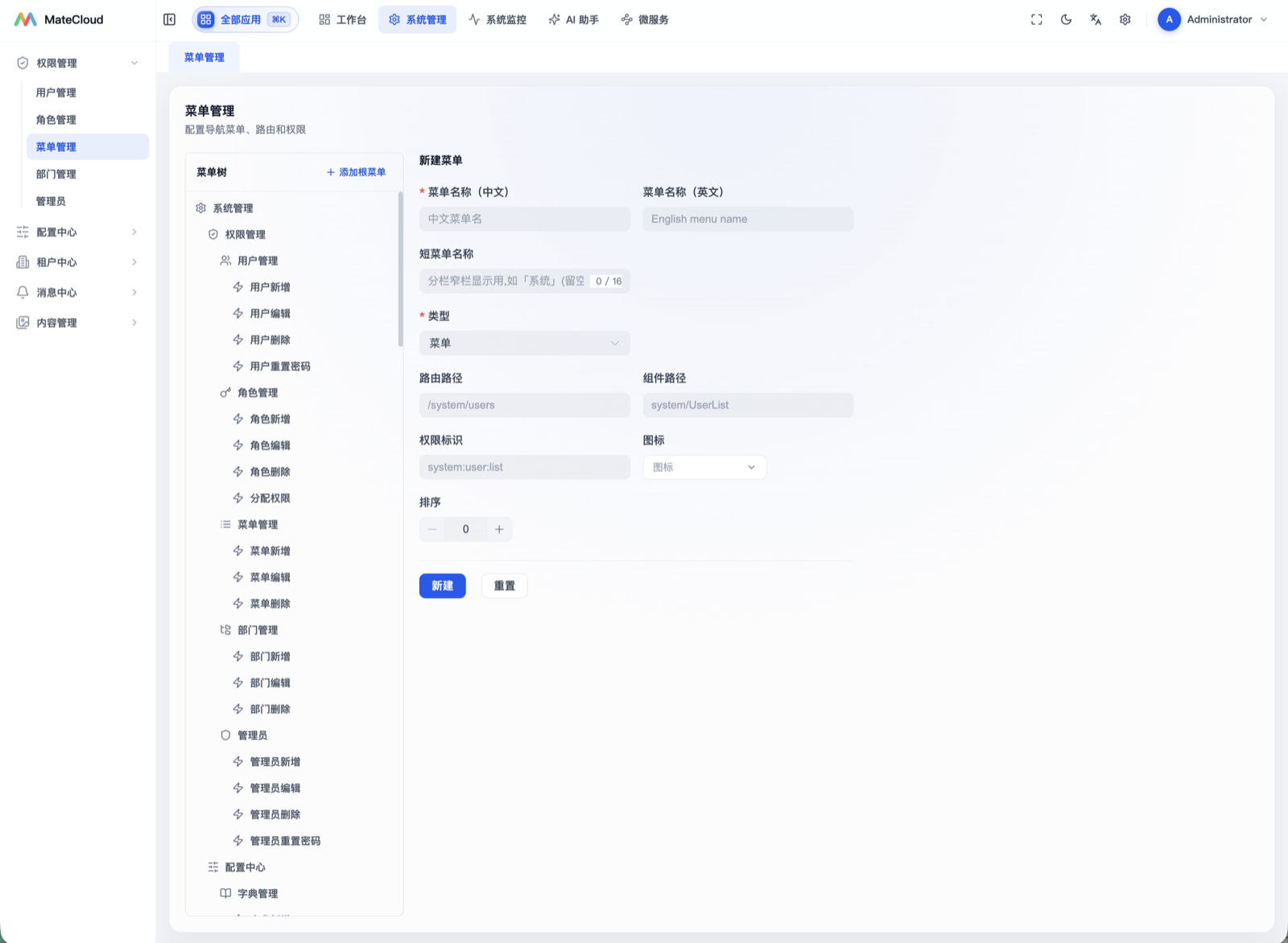
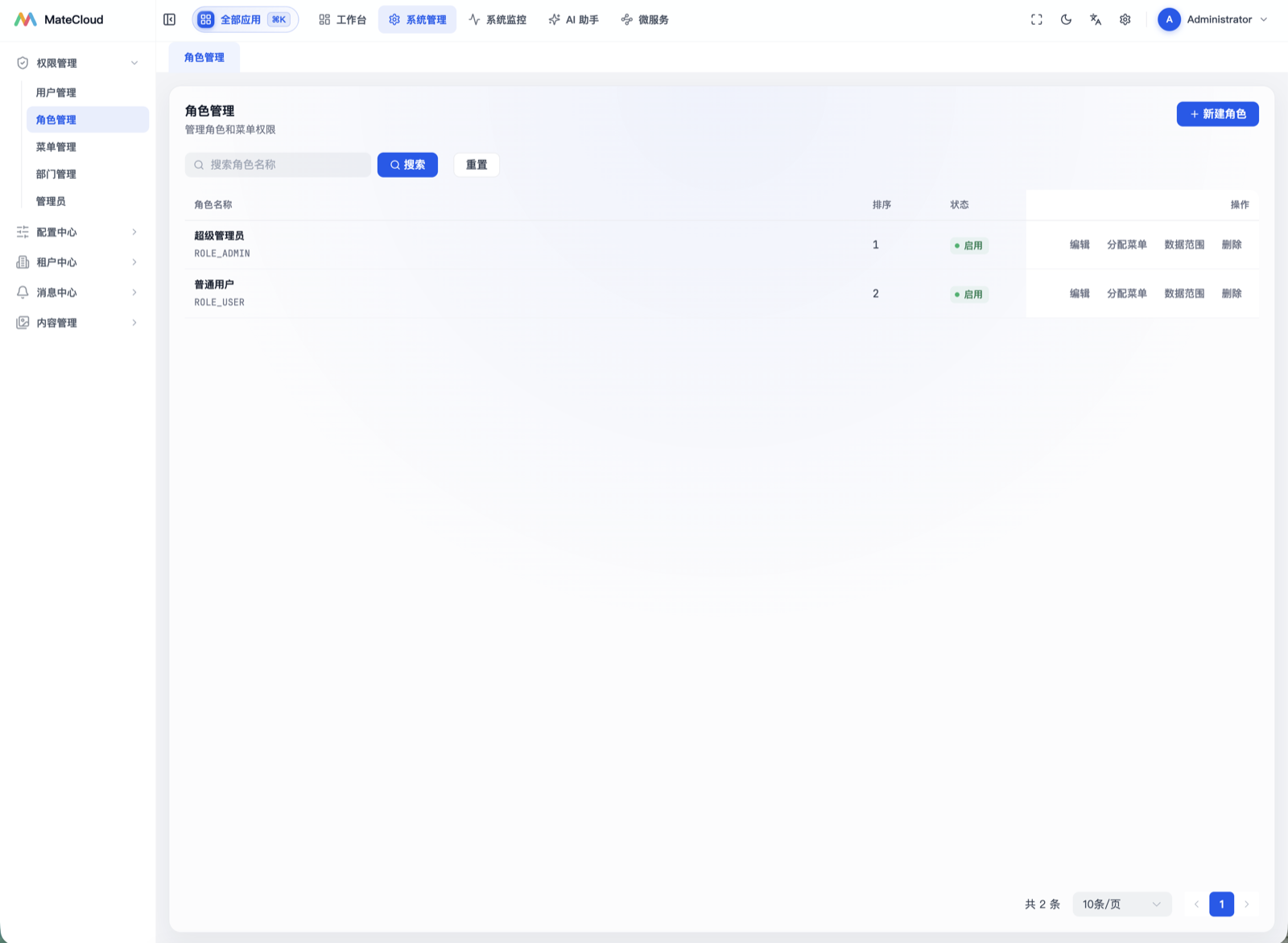
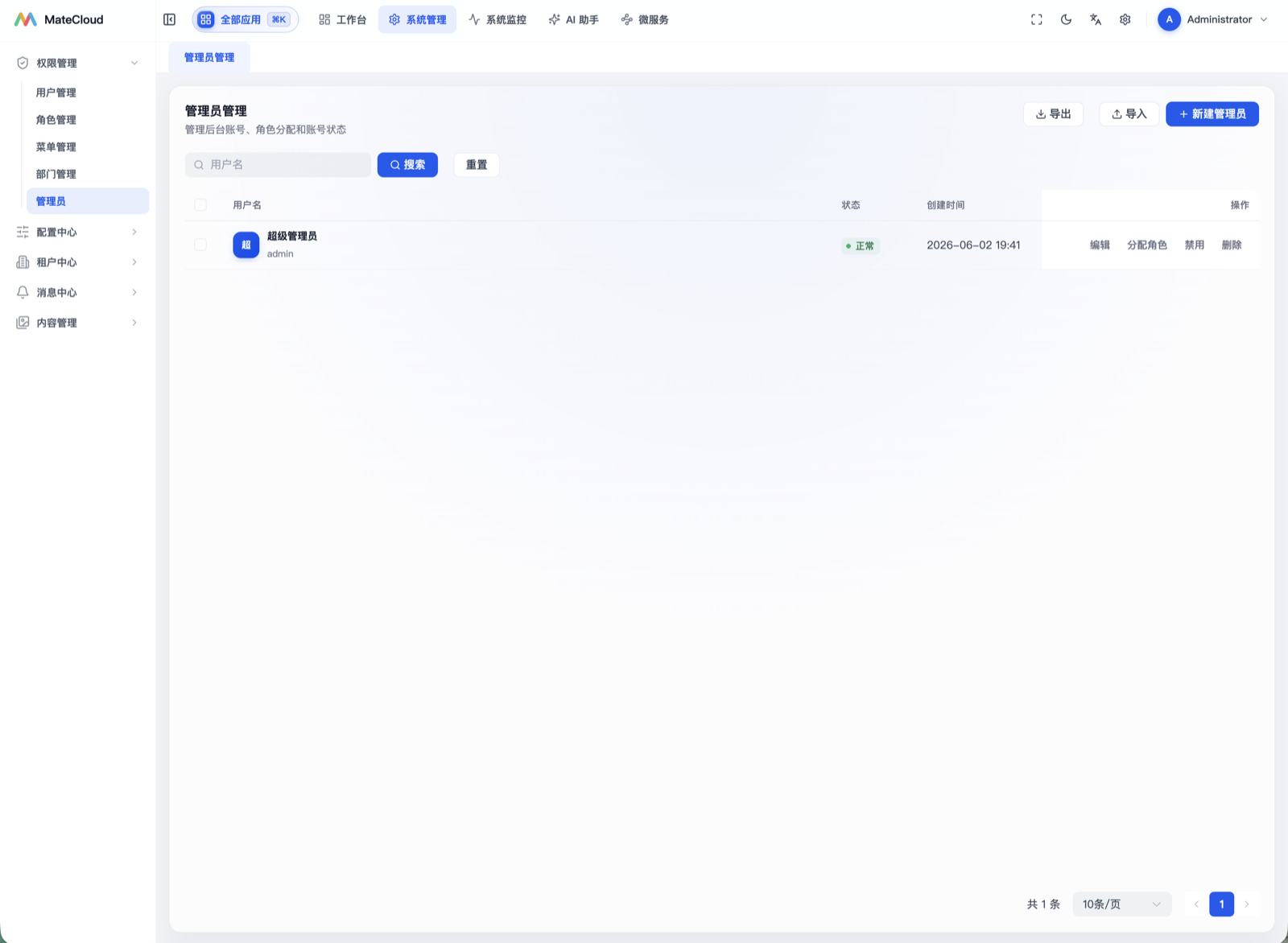
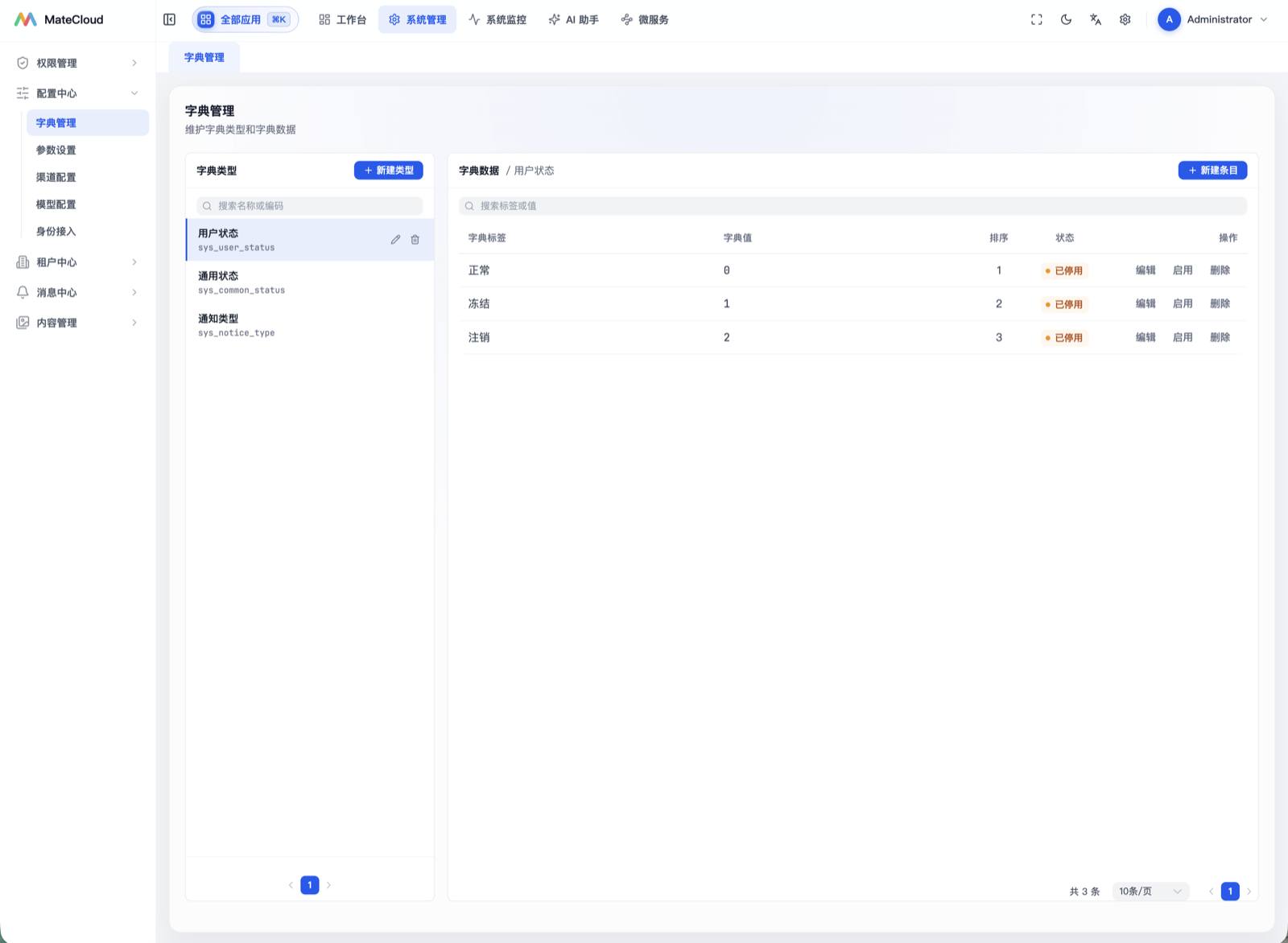
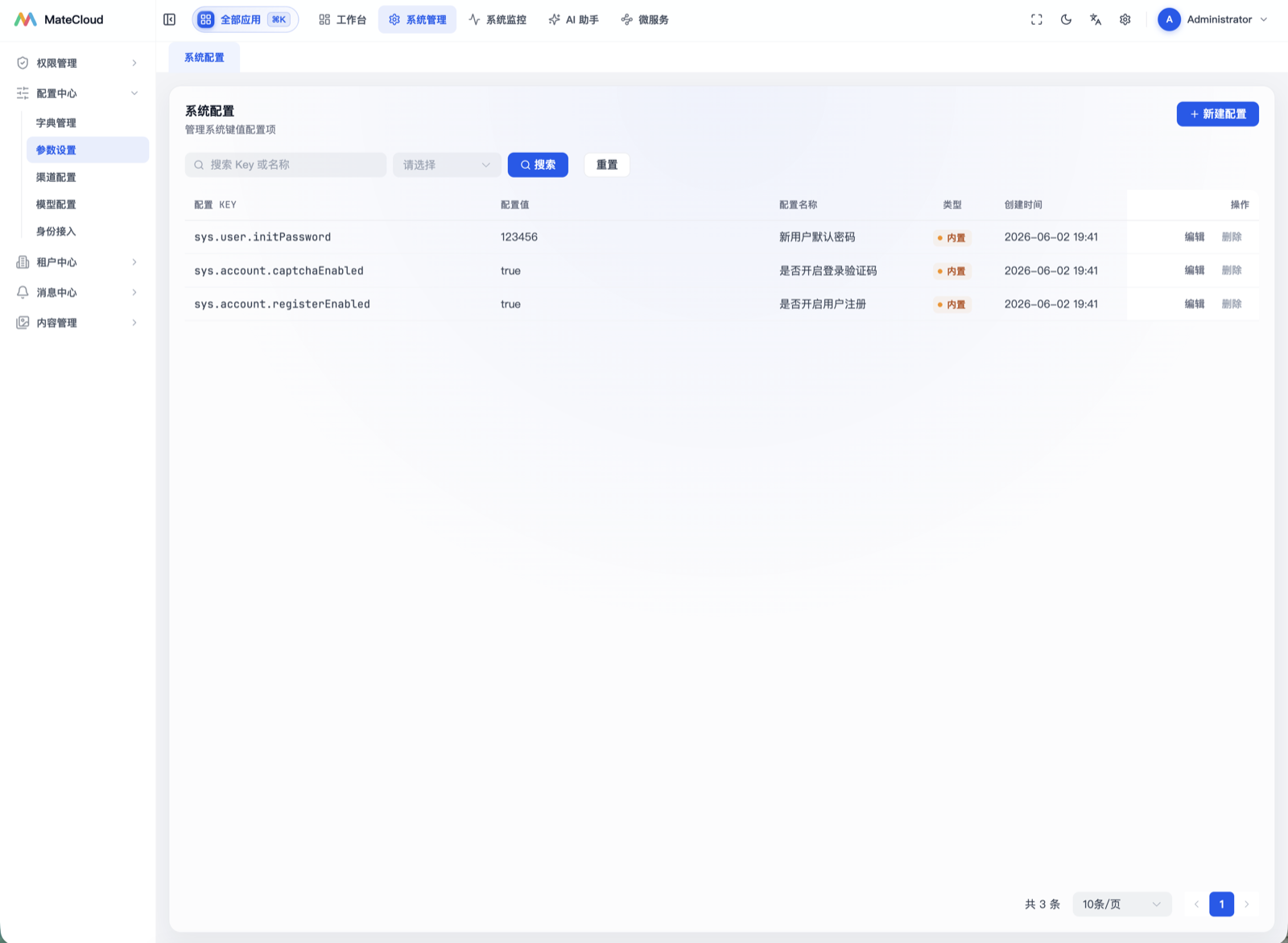
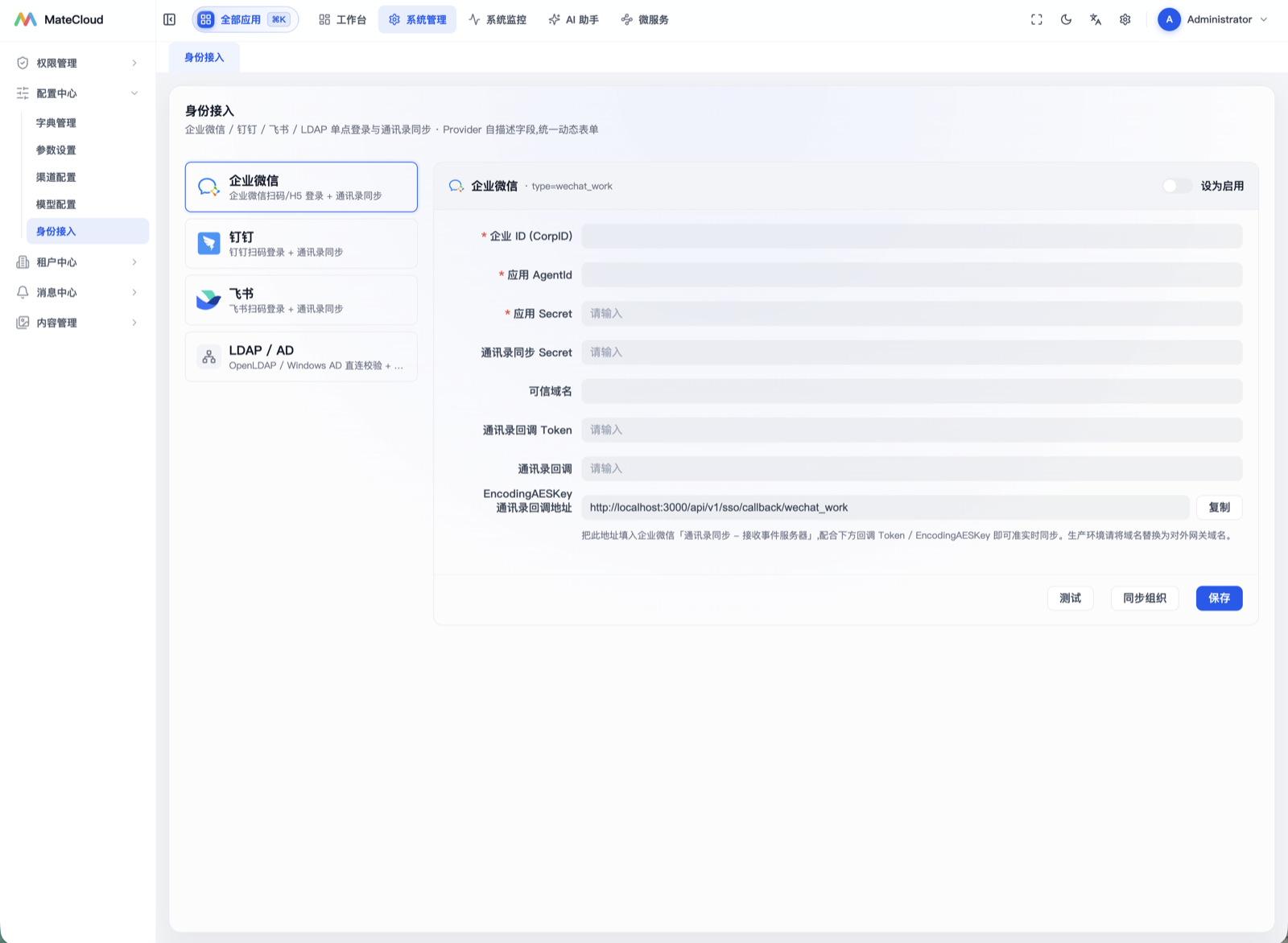
🔥MateCloud是一款基于Spring Cloud Alibaba的微服务架构。目前已经整合Spring Boot 4.0.7、 SpringCloud 2025、Spring Cloud Alibaba 2025、Spring Security Oauth2、Feign、Dubbo、JetCache、RocketMQ等,支持多租户的低代码平台,Saas平台开发套件
1.6k
Stars
428
Forks
11
Open issues
1
Contributors
AI Analysis
MateCloud is a comprehensive microservices development platform built on Spring Cloud Alibaba, combining Spring Boot 4, Spring Cloud 2025, Dubbo 3, and Spring AI 2.0 to provide both monolithic and microservice architectures with a single toggle. It serves organizations building enterprise SaaS platforms and multi-tenant applications requiring DDD architecture, AI-native capabilities, and production-grade infrastructure; best suited for Java teams needing a complete scaffold rather than a ligh...
Inferred from signals mentioned in the README (tests, CI, type safety) — not a review of the actual code.
AI's overall editorial judgment — not an average of the bars above, can weigh other factors too.
Full-stack Spring Cloud microservice scaffold with AI integration, targeting SaaS platform builders in China.
MateCloud is a Java-based microservice scaffolding framework built on Spring Boot 4, Spring Cloud 2025, Dubbo 3, and Spring AI 2.0. It provides dual deployment modes (monolith/microservices), 27 starter components, DDD architecture layers, CQRS patterns, multi-tenancy, and native LLM integration with MCP server support. Primary audience appears to be Chinese enterprise developers building SaaS platforms. Adoption remains concentrated in China; real-world production usage beyond demonstration projects is not publicly verified.
Created October 2019, MateCloud evolved from a Spring Cloud reference implementation into a comprehensive scaffolding suite. Recent versions (since 2024) added Spring AI 2.0, MCP native engineering loop, and aggressive version bumping (Spring Cloud 2025.1, Spring Boot 4.0.7), suggesting alignment with latest ecosystem releases.
Steady acquisition of 1,570 stars over 6.5 years indicates niche but sustained interest. Growth rate appears stable (~4 stars in last 7 days, 419 forks) rather than accelerating. Recent commits through July 2 2026 show active maintenance. The shift toward AI-native positioning (2024-2026) suggests repositioning to capture emerging LLM-driven development trends, though growth velocity has not visibly spiked.
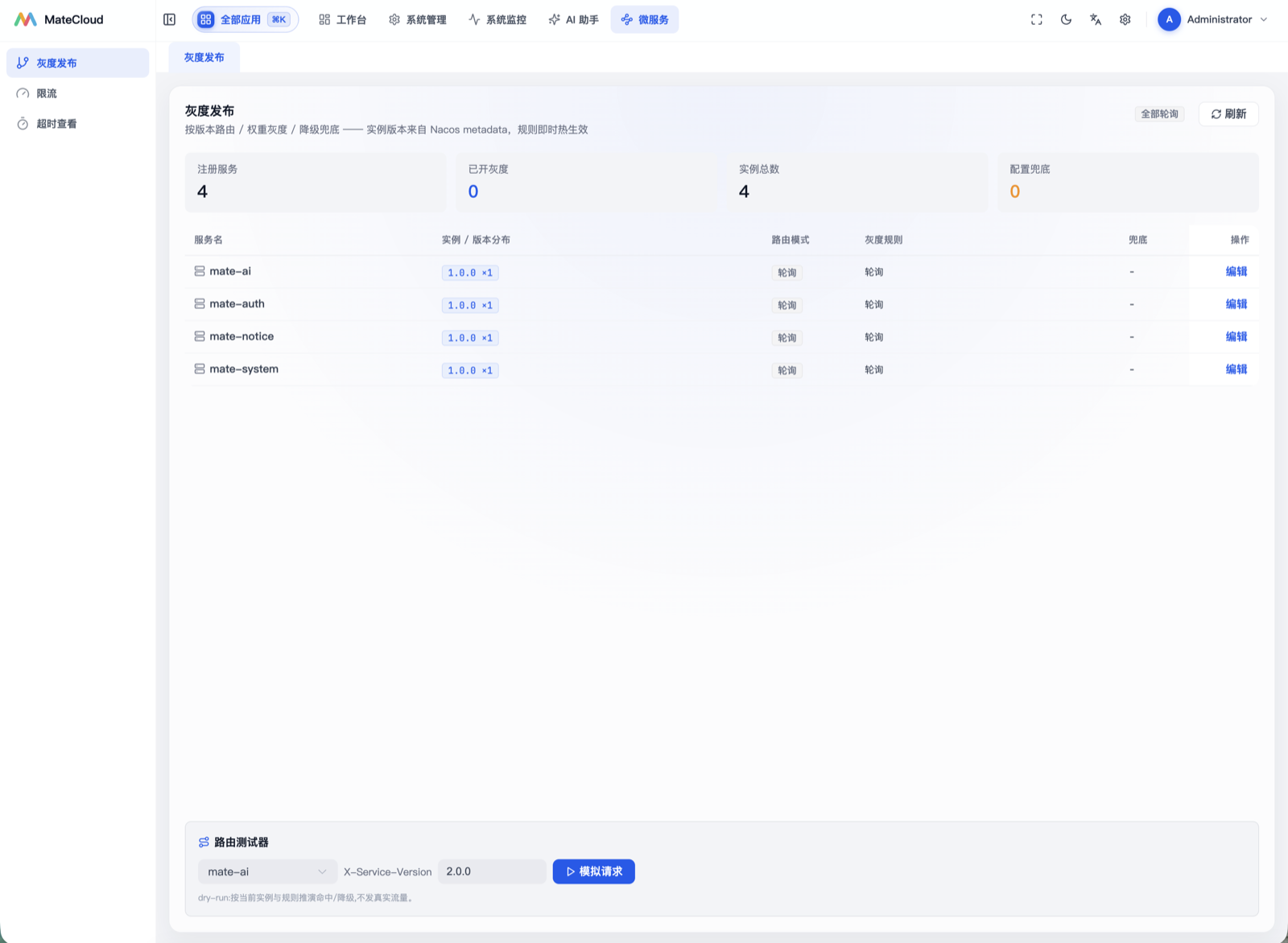
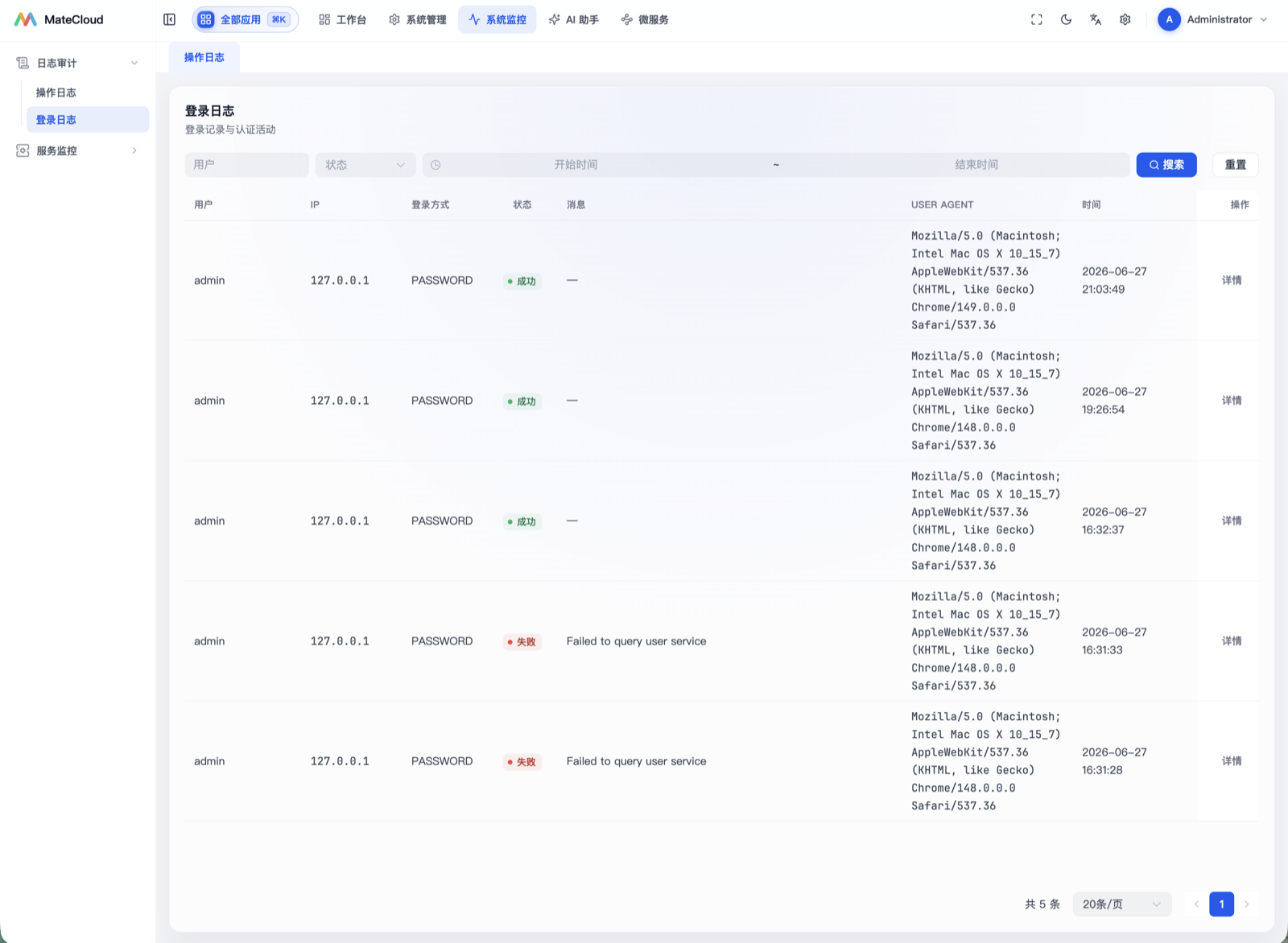
Adoption not verified. README shows comprehensive documentation, screenshots of admin UI, and quickstart instructions, but no published case studies, adopter testimonials, or production deployment metrics. Similar projects (yudao-cloud: 19,186 stars; lamp-cloud: 5,751 stars; dromara ecosystem) have higher visibility. MateCloud's lower relative star count and lack of publicly cited enterprise deployments suggest adoption may be concentrated in private/internal projects or smaller regional markets, particularly China-focused enterprises.
Based on README, MateCloud implements DDD four-layer architecture (trigger/application/domain/infrastructure) with zero-framework domain layer, CQRS read-write separation (CommandService/QueryService), and pluggable Starter pattern. Appears to support both Spring Cloud RPC + Nacos microservices and Dubbo 3 peer-to-peer RPC with single codebase switchable deployment. Infrastructure abstraction via 27 starters (18 core + 9 advanced) covering persistence, caching, locks, message queues, tasks, multi-tenancy, security, observability, and AI. Frontend uses Vue 3.5 + Element Plus. MCP (Model Context Protocol) integration exposes business @Tool methods to Claude/AI agents for loop engineering. Source code inspection not available — architecture description relies on README claims.
Not documented in README. No test framework, coverage metrics, or testing strategy mentioned.
Last push 2 July 2026 (current date context). Repository shows consistent activity: Maven-based Java project with recent dependency upgrades (Spring Boot 4.0.7, Spring Cloud 2025.1, Spring AI 2.0, Dubbo 3.3.6, Vue 3.5). Flyway database migrations documented. Docker Compose orchestration provided. Appears actively maintained with regular version bumps and dependency tracking, though 4 stars in last 7 days suggests modest engagement velocity.
ADOPT IF: You are building SaaS/multi-tenant microservices in Java, have Spring Boot/Cloud expertise, want pre-built DDD + CQRS + multi-tenancy patterns, and are willing to track China-centric release cycles and community. AVOID IF: You require extensive English documentation, need proven production case studies at scale, are building outside Java ecosystem, or require long-term vendor/enterprise support guarantees. MONITOR IF: You value native Spring AI/LLM integration and MCP tooling for AI-driven development workflows; MateCloud's positioning here is differentiated but unproven at scale.
Independent dimensions
Mainstream potential
4/10
Technical importance
6/10
Adoption evidence
2/10
- Adoption not verified beyond assumed Chinese market usage; real production deployment numbers unknown.
- Rapid upstream dependency chasing (Spring Cloud 2025, Spring Boot 4, Spring AI 2.0) may introduce stability risk if frameworks are cutting-edge; bleeding-edge versions often surface regressions.
- Documentation and community support appear China-focused (limited English content in README); non-Chinese developers may face language/support friction.
- AI/MCP integration (Loop Engineering) is recent and appears experimental; production reliability and maturity uncertain.
- Smaller community (1,570 stars vs. 19,186 for yudao-cloud) means fewer third-party extensions, smaller troubleshooting knowledge base, and higher bus factor risk.
MateCloud will likely remain a strong regional choice for Chinese SaaS platforms and may attract broader attention if Spring AI and MCP tooling mature and gain adoption. International penetration appears low and may require English documentation, enterprise support offerings, and visible production wins to accelerate. Trajectory suggests stability as a niche scaffold rather than category-wide dominance.
Newsletter
Get analyses like this every Monday
Free weekly digest of the most interesting open-source discoveries.
Languages
Information
- Website
- https://mate.vip
- Language
- Java
- License
- Apache-2.0
- Last updated
- 23h ago
- Created
- 82mo ago
- Analyzed with
- anthropic/claude-haiku-4-5
Stars over time
Contributors over time
Top 100 contributors only — repos with more will plateau at 100.
Open issues
No open issues — clean slate.
Open pull requests
build(deps): Bump net.logstash.logback:logstash-logback-encoder from 8.0 to 9.0
build(deps): Bump com.google.guava:guava from 33.4.0-jre to 33.6.0-jre
build(deps): Bump com.xingyuv:spring-boot-starter-captcha-plus from 2.0.2 to 2.0.3
Top contributors
Similar repos

alibaba/spring-cloud-alibaba
Spring Cloud Alibaba is a comprehensive framework that integrates Alibaba's...

1095071913/maozi-cloud-parent
A Spring Cloud Alibaba Dubbo-based scaffolding framework providing a...

zhoutaoo/SpringCloud
Opensabre is a SpringCloud 2023-based microservice development platform...
| Repository | Stars | Week Δ | Language | Score | Updated |
|---|---|---|---|---|---|
|
mateaix/matecloud
this
|
1.6k | +29 | Java | 8/10 | 23h ago |
|
alibaba/spring-cloud-alibaba
|
29.1k | — | Java | 8/10 | 5d ago |
|
1095071913/maozi-cloud-parent
|
1.4k | — | Java | 7/10 | 3w ago |
 YunaiV/yudao-cloud YunaiV/yudao-cloud
|
19.2k | — | Java | 8/10 | 3d ago |
|
zhoutaoo/SpringCloud
|
8.9k | — | — | 7/10 | 1mo ago |
 dromara/lamp-cloud dromara/lamp-cloud
|
5.8k | — | Java | 7/10 | 4w ago |
Larger, more widely adopted Spring Cloud microservices scaffold. MateCloud differentiates via native Spring AI 2.0 and MCP integration; yudao-cloud focuses on core microservices + low-code admin. Both target Chinese market; yudao-cloud has higher star velocity and documented production usage.
Community-driven microservices scaffold with strong ecosystem. MateCloud offers more explicit AI/LLM positioning; lamp-cloud emphasizes plugin architecture and broad feature coverage. Both roughly similar adoption scale; MateCloud recently emphasizes AI-native, lamp-cloud emphasizes extensibility.
Foundational framework that MateCloud builds upon. Spring Cloud Alibaba provides Nacos, Seata, Sentinel; MateCloud layers DDD, multi-tenancy, AI, and complete scaffolding. MateCloud is higher-level opinionated suite, not competitor but consumer of this base library.
Mature reference architecture for Spring Cloud microservices. MateCloud offers more modern stack (Spring Boot 4, Spring AI 2.0) and stronger AI focus; zhoutaoo appears more stable legacy choice. Similar target audience; MateCloud positions as next-generation evolution.
Comparable adoption scale to MateCloud (1,570 stars). Both serve Chinese enterprise SaaS development. Insufficient public information to deeply differentiate; both appear as niche regional scaffolds.