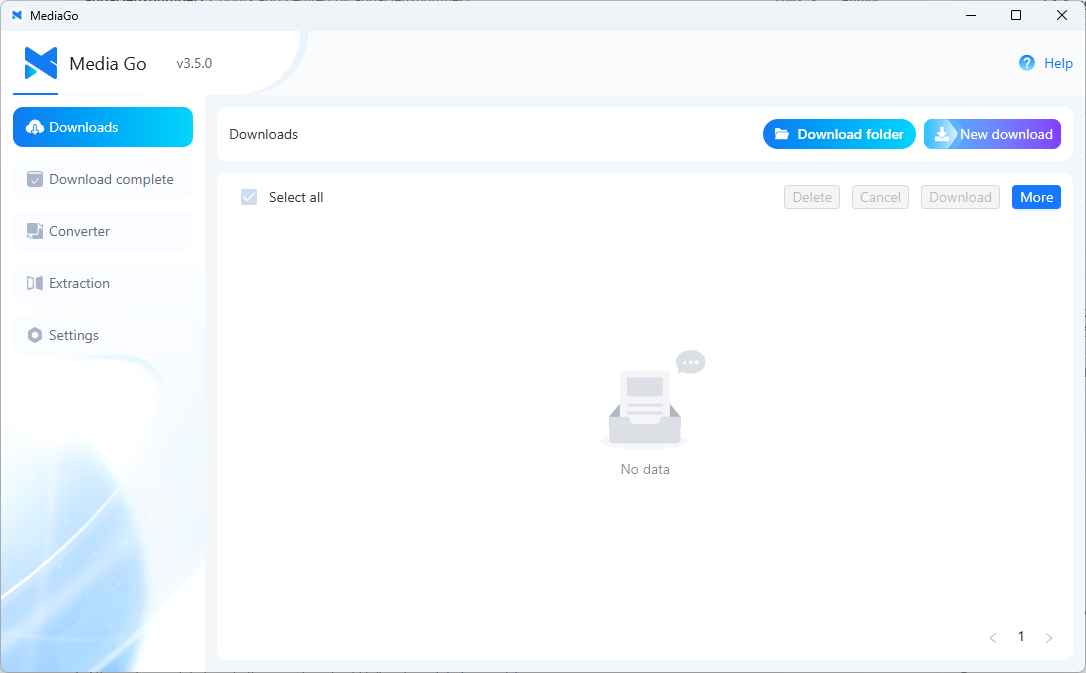
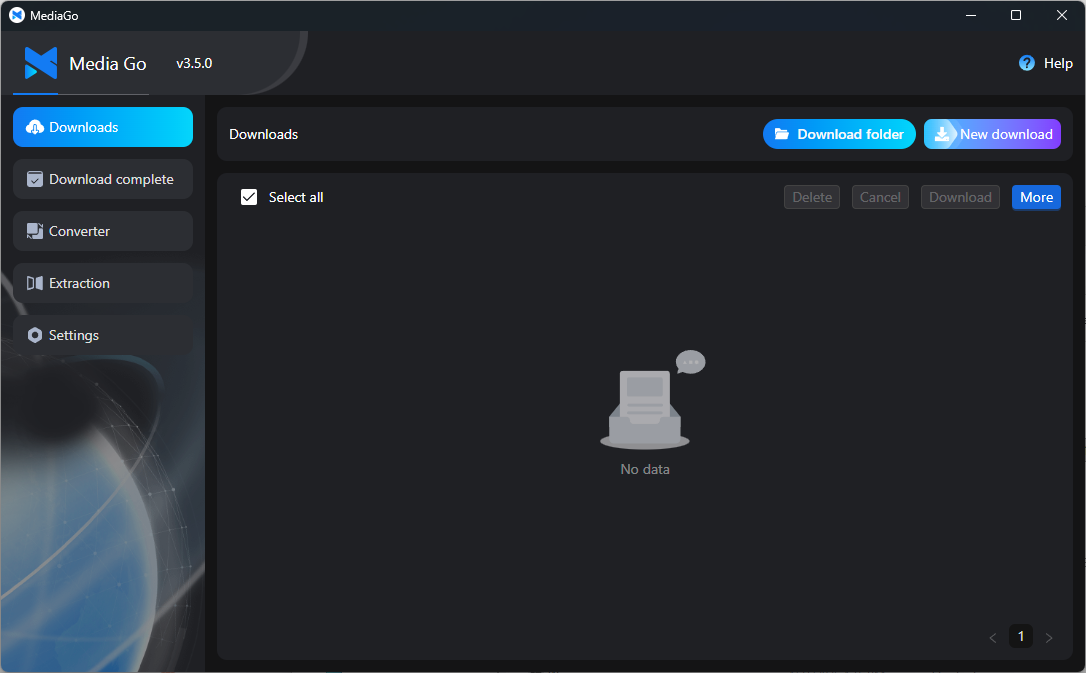
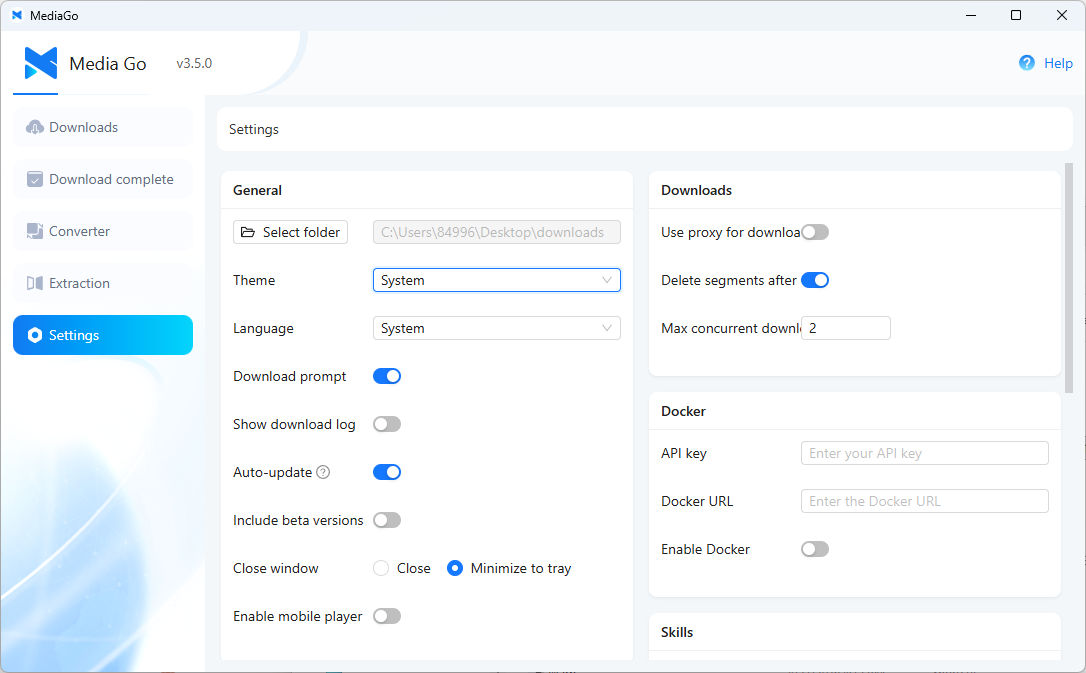
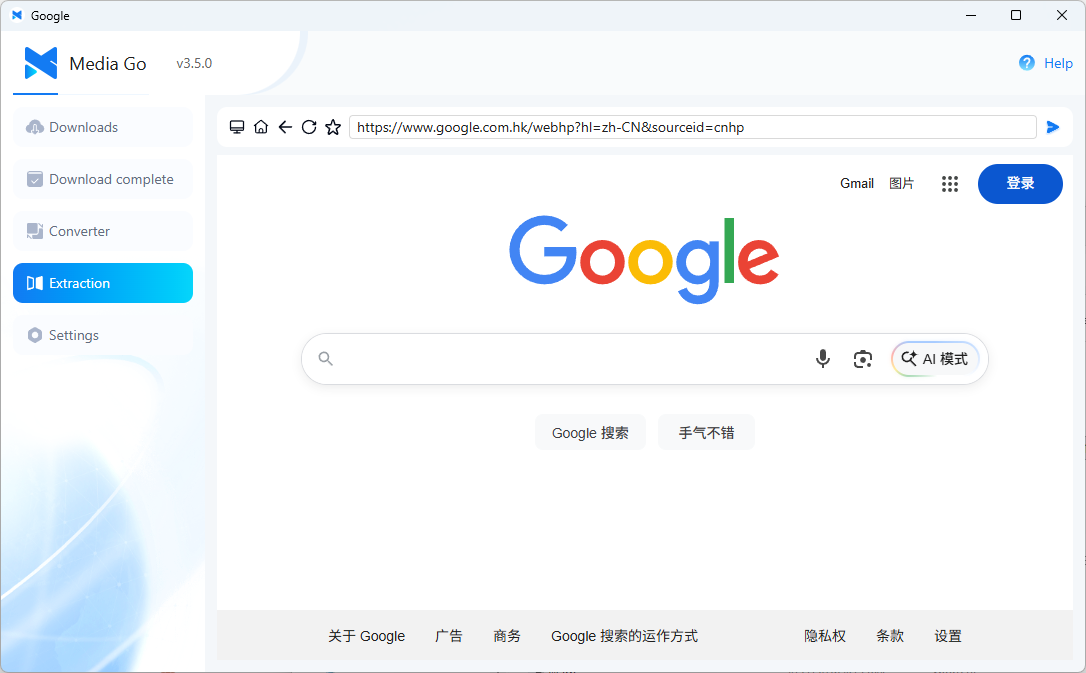
Cross-platform video downloader — sniff and grab m3u8/HLS streams, Bilibili, YouTube and more. Desktop + Docker + 🦞.
9.1k
Stars
802
Forks
98
Open issues
11
Contributors


AI Analysis
MediaGo is a cross-platform desktop video downloader that automatically detects and captures m3u8/HLS streams, YouTube videos, and content from 1000+ sites without requiring browser extensions or packet sniffing configuration. It serves content creators, media enthusiasts, and automation users who need a unified tool for video acquisition across multiple platforms, with browser integration, Docker deployment, and an HTTP API for scripting.
Inferred from signals mentioned in the README (tests, CI, type safety) — not a review of the actual code.
AI's overall editorial judgment — not an average of the bars above, can weigh other factors too.
MediaGo: GUI-first video downloader combining HLS sniffing, yt-dlp, and Docker in one package
MediaGo is a cross-platform desktop and server-deployable video downloader targeting non-technical users who want to capture streaming video — particularly HLS/m3u8 streams, Bilibili, YouTube, and 1000+ other sites — without touching a command line. It wraps yt-dlp with a polished Electron-based UI, adds a Chrome/Edge browser extension for in-page sniffing, exposes an HTTP API for automation, and ships a Docker image for headless/server deployments. Its primary audience appears to be Chinese-speaking users (evidenced by bilingual README, Bilibili support, and BT Panel integration) alongside a growing international audience.
Created in January 2021, likely as a GUI wrapper for m3u8 downloading tools. Has evolved significantly to v3.5.0 by mid-2026, adding yt-dlp integration, Docker support, a browser extension, and an AI assistant skill — indicating sustained development over five years.
Growth appears driven primarily by Chinese developer communities and video enthusiasts needing a zero-friction GUI for HLS/streaming capture. The yt-dlp integration broadened its appeal internationally. Star count of ~9K with 799 forks suggests solid community interest. Recent star velocity (13 in 7 days) is modest, indicating steady rather than viral growth. Trendshift badge suggests it had at least one notable trending period.
GitHub release download badges are displayed but specific download counts are not visible in the README excerpt. Docker Hub presence and BT Panel app store listing suggest real-world server deployments. Discord and Reddit communities exist, implying an active user base. GitHub Downloads badge is present, suggesting measurable but unquantified installs. Adoption scale is not independently verifiable from available data.
Likely an Electron desktop app (TypeScript/Node.js) with a React or similar frontend, wrapping yt-dlp and likely N_m3u8DL or ffmpeg as backend engines. Appears to follow a monorepo structure with separate packages for desktop, web UI, Docker image, and browser extension. The HTTP API layer is explicitly documented, suggesting a backend service process that the UI communicates with — this same service powers the Docker deployment mode.
not documented in README
Last push was June 21, 2026 — approximately 2 days before the evaluation date. This indicates very active, ongoing maintenance. Version 3.5.0 is a feature-rich release with multiple distinct subsystems, suggesting continued investment. Multi-language README (Chinese, Japanese, Italian, English) signals community-driven internationalization effort.
ADOPT IF: you want a polished, maintained GUI for downloading HLS streams or yt-dlp-supported sites without command-line setup, especially for self-hosting via Docker or use on Bilibili/Chinese platforms. AVOID IF: you are a power user comfortable with yt-dlp CLI, need advanced scripting/automation, or require guaranteed long-term vendor-neutral stability — the project is maintained by a single-person or small team with no known organizational backing. MONITOR IF: you're evaluating GUI video download tools for team or organizational use and want to see whether the international adoption and Docker deployment use case continues to grow.
Independent dimensions
Mainstream potential
4/10
Technical importance
6/10
Adoption evidence
4/10
- Appears to be maintained by a single developer or very small team — bus factor risk is real if the maintainer reduces activity.
- Dependency on yt-dlp means any yt-dlp breakage or policy changes by platforms (YouTube, Bilibili) directly affects MediaGo's reliability without MediaGo being able to fix it independently.
- Video downloading tools operate in a legally ambiguous space in many jurisdictions; platform terms-of-service changes or legal pressure could affect the project's future.
- Browser extension sniffing capability may break with Chrome/Edge updates to extension APIs (Manifest V3 restrictions), requiring ongoing maintenance effort.
- International growth signals are modest (13 stars/week); the project may remain primarily a Chinese-language niche tool, limiting its ability to attract broad contributor diversity or sustain long-term momentum.
MediaGo will likely remain a well-maintained niche tool with steady but modest growth, serving GUI-oriented video downloading users — particularly in East Asian markets. The Docker/self-hosting angle may attract more international users over time.
Newsletter
Get analyses like this every Monday
Free weekly digest of the most interesting open-source discoveries.
Languages
Information
- Language
- TypeScript
- License
- MIT
- Last updated
- 1w ago
- Created
- 66mo ago
- Analyzed with
- anthropic/claude-haiku-4-5
Stars over time
Contributors over time
Top 100 contributors only — repos with more will plateau at 100.
Open issues
Top contributors
Similar repos

mhogomchungu/media-downloader
Media Downloader is a Qt/C++ GUI frontend that wraps multiple CLI-based media...

franklioxygen/MyTube
MyTube is a self-hosted video downloader and media player supporting YouTube,...
| Repository | Stars | Week Δ | Language | Score | Updated |
|---|---|---|---|---|---|
|
mediago-dev/mediago
this
|
9.1k | +9 | TypeScript | 8/10 | 1w ago |
|
mhogomchungu/media-downloader
|
4.8k | — | C++ | 7/10 | 6d ago |
 nilaoda/N_m3u8DL-RE nilaoda/N_m3u8DL-RE
|
8.3k | — | C# | 7/10 | 7d ago |
|
franklioxygen/MyTube
|
1k | — | TypeScript | 7/10 | 9h ago |
 putyy/res-downloader putyy/res-downloader
|
18.5k | — | Go | 7/10 | 3w ago |
 tonhowtf/omniget tonhowtf/omniget
|
6.6k | — | Rust | 8/10 | 8h ago |
Pure CLI tool for HLS/m3u8 downloading in C#. More powerful for advanced users and batch scripting, but has no GUI. MediaGo is the GUI-friendly alternative for the same core HLS use case, and likely uses similar underlying techniques.
Also a self-hosted web UI wrapping yt-dlp, with 13.9K stars. metube is purely server/Docker focused with no desktop app. MediaGo competes directly here but also offers a desktop experience metube lacks. metube has broader adoption evidence.
Go-based resource downloader with 18.2K stars, appears to target a similar Chinese developer audience for media capture. Higher star count suggests stronger adoption, but the two tools have overlapping but not identical feature sets.
TypeScript-based, similar star count (~9.5K). Direct competitor in the GUI video downloader space. Differentiation between the two is not fully clear from available metadata alone.
The de facto standard for video downloading, which MediaGo wraps. Technical users who are comfortable with a terminal have little reason to add MediaGo's layer. MediaGo's value is entirely in the GUI and integrated sniffing for users who find yt-dlp's CLI intimidating.