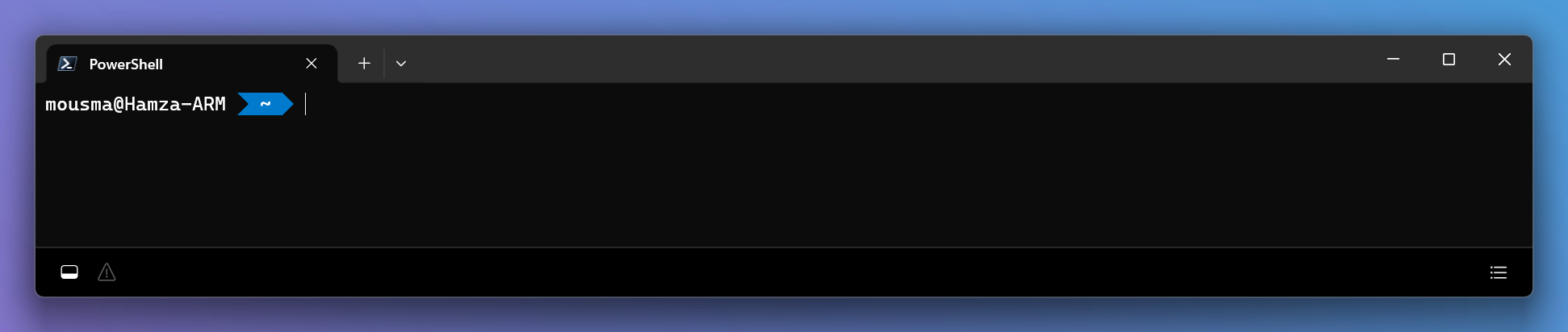
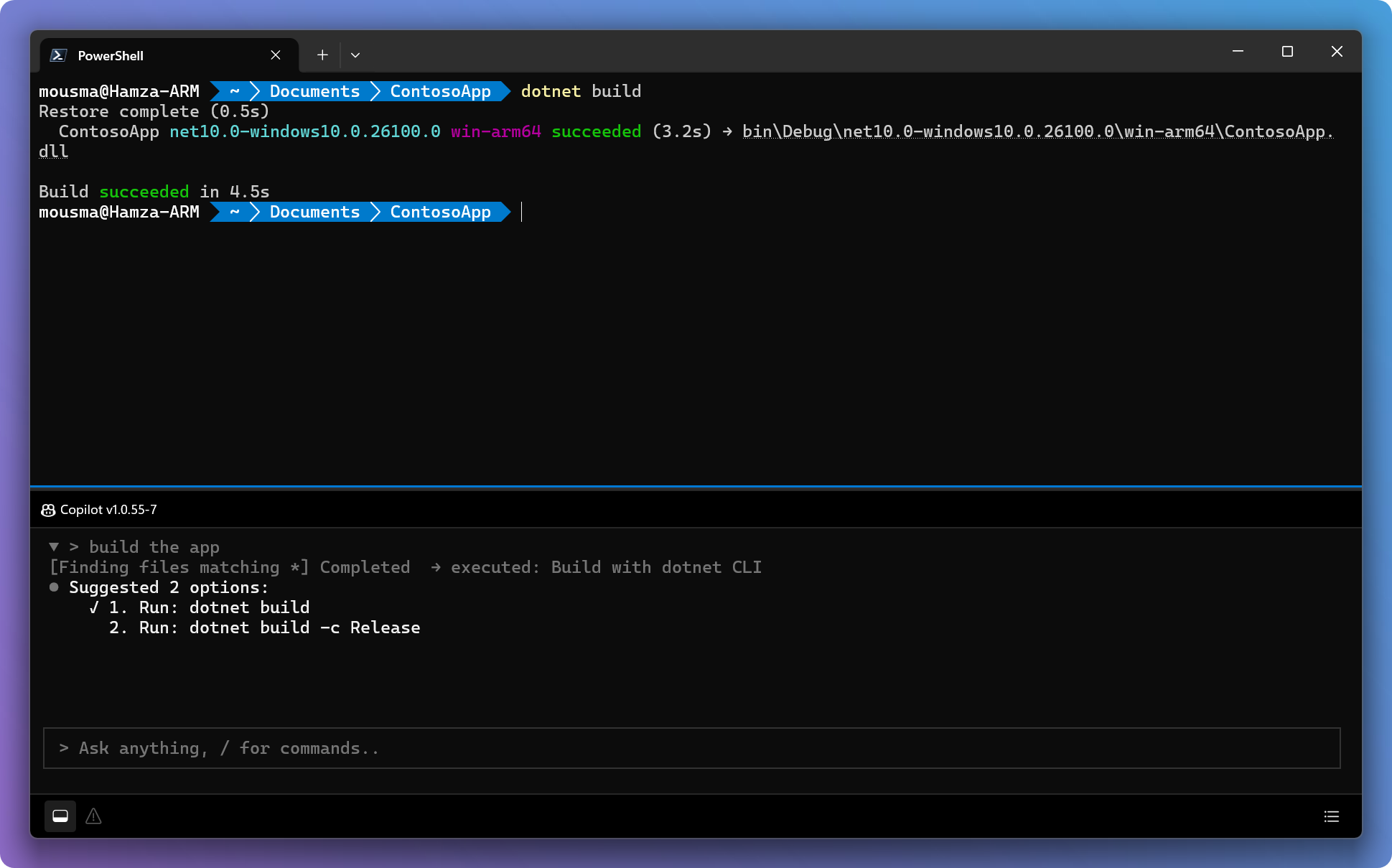
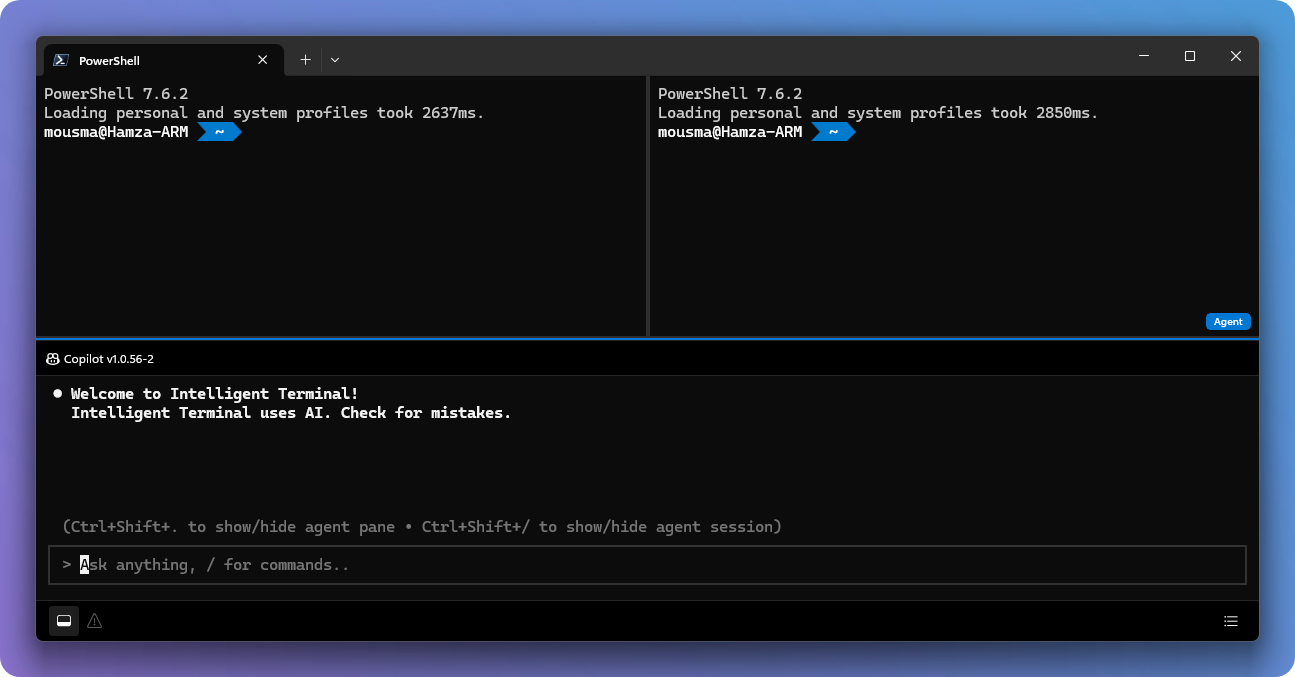
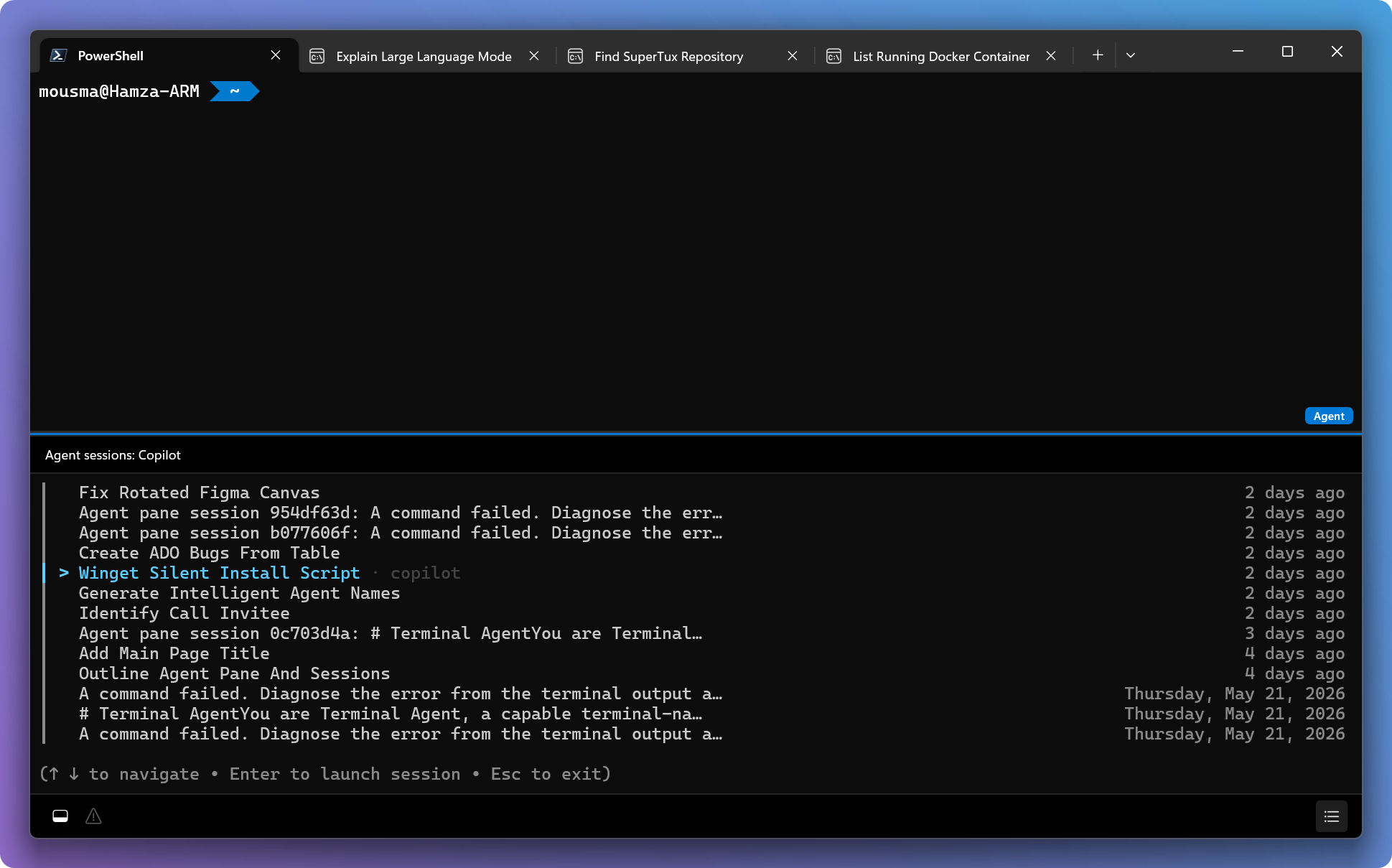
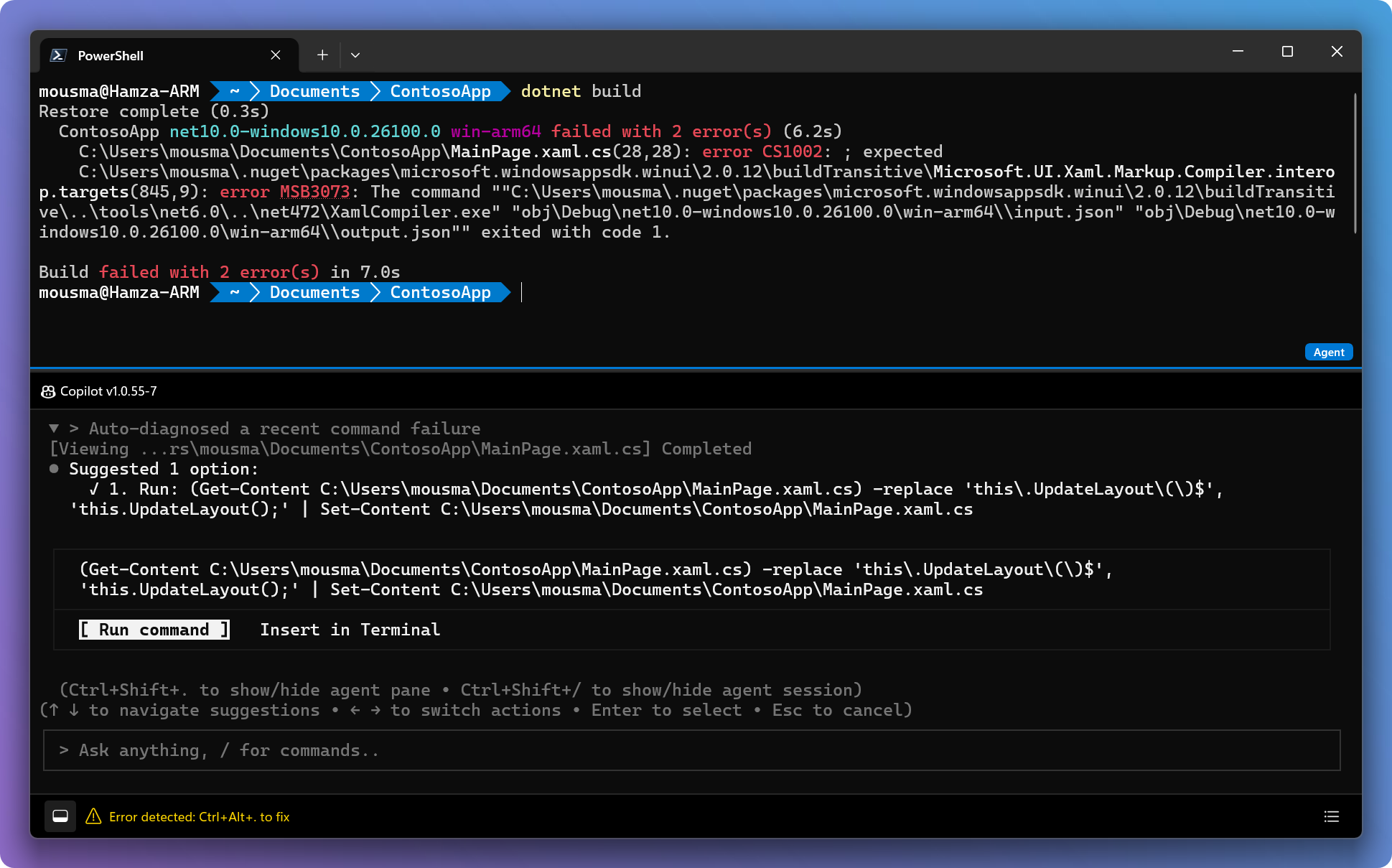
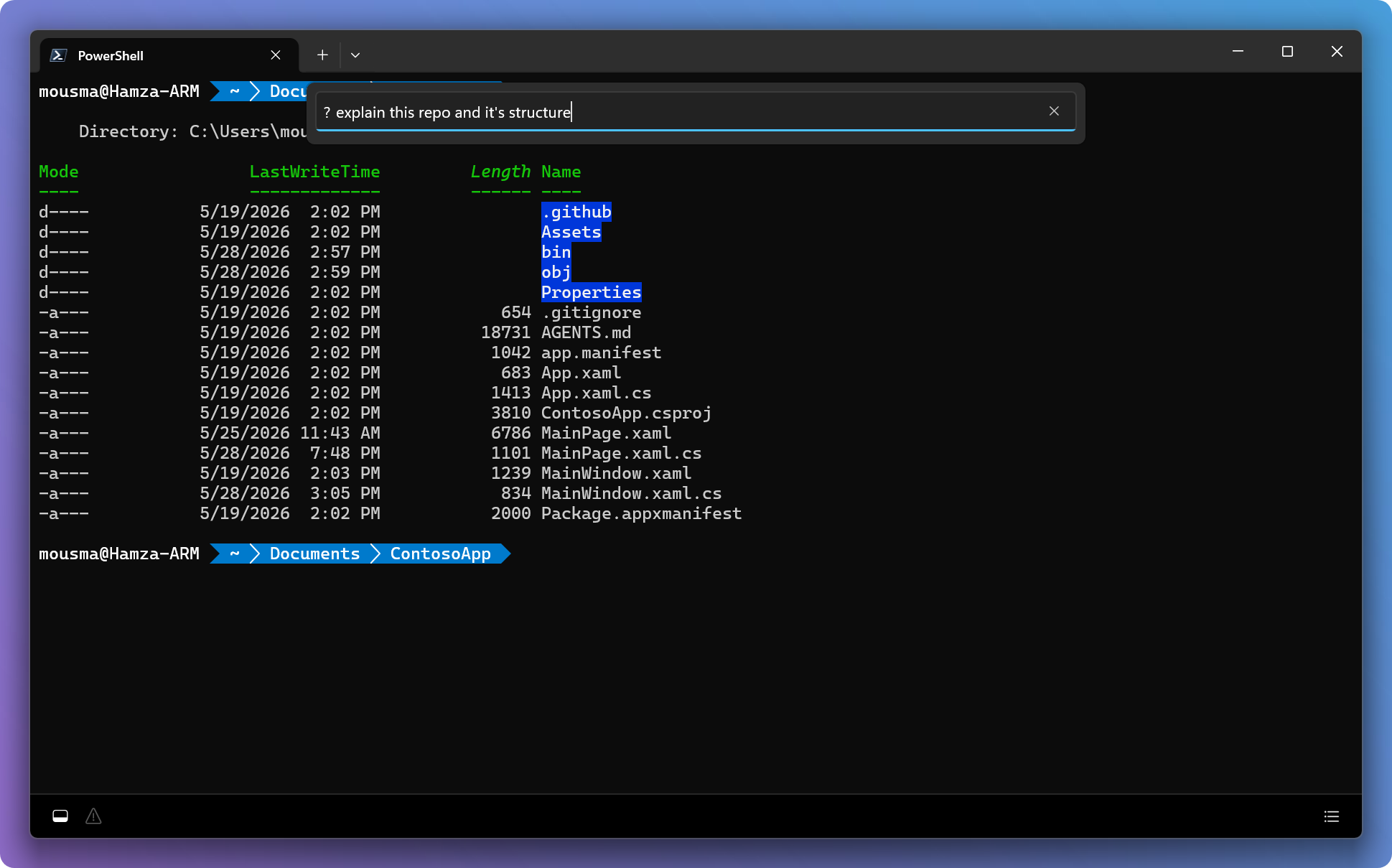
A fork of Windows Terminal with native agent integration, right in your command line.
1.5k
Stars
104
Forks
69
Open issues
30
Contributors



AI Analysis
Intelligent Terminal is a Windows Terminal fork that integrates Agent Client Protocol (ACP)-compatible AI agents natively into the command line, enabling direct interaction with tools like GitHub Copilot CLI within a terminal environment. It is purpose-built for Windows users who want AI assistance integrated into their terminal workflows, and is not suitable for non-Windows users or those requiring traditional terminal functionality without agent integration.
Inferred from signals mentioned in the README (tests, CI, type safety) — not a review of the actual code.
AI's overall editorial judgment — not an average of the bars above, can weigh other factors too.
Microsoft's Windows Terminal fork adds native AI agent integration for command-line assistance
Intelligent Terminal is a Windows-only fork of Windows Terminal that embeds Agent Client Protocol (ACP)-compatible AI agents (GitHub Copilot, Claude, Gemini) directly into the shell environment. Built for Windows developers who want contextual AI assistance without leaving the terminal, it launched in May 2026 and has accumulated ~1,250 stars with 110 gained in the last week. Real-world adoption metrics beyond GitHub activity are not documented; the project appears early-stage and experimental.
Released May 18, 2026 as an experimental fork of Windows Terminal, Intelligent Terminal represents Microsoft's effort to integrate AI agents into native Windows developer tooling. It leverages the emerging Agent Client Protocol standard and GitHub Copilot CLI as the default AI backend.
The project gained 110 stars in its first week and has accumulated 1,246 total stars within approximately 5 weeks. This trajectory suggests strong initial interest from the Microsoft/Windows developer community, likely driven by official Microsoft channels and the novelty of AI-in-terminal integration. However, the repo's newness makes it unclear whether adoption will sustain or whether growth reflects press coverage rather than production deployment.
Adoption not verified. The README mentions Microsoft Store distribution and WinGet packaging, which suggests infrastructure for scale, but contains no usage statistics, deployment counts, organization testimonials, or production incident reports. The 1,246 GitHub stars and rapid initial growth indicate developer interest but do not confirm deployment at scale.
Appears to be a fork of Windows Terminal (C++) with overlaid agent integration logic. Based on the README, the implementation includes: agent detection/auto-installation, context-aware pane rendering, error detection hooks, shell integration, session tracking, and multi-agent support via ACP. Likely uses Windows Terminal's existing tab/profile/theme infrastructure. Implementation details not verifiable from README alone.
Not documented in README. No mention of test suites, CI/CD validation strategy, or quality gates.
Last push 2026-06-24 (current date); active within hours of evaluation. However, project is only ~37 days old, so 'maintained' and 'recently launched' are equivalent. Too early to distinguish active maintenance from launch-phase activity. Issue/PR volume and response time not provided in metadata.
ADOPT IF: you are a Windows 10/11 developer, regularly use GitHub Copilot or another ACP agent, want frictionless access to AI assistance within the terminal, and accept experimental software. AVOID IF: you rely on Linux/macOS terminals, require production-grade stability and long-term support guarantees, prefer third-party shell plugins over built-in integration, or need extensive plugin ecosystems. MONITOR IF: you are a Windows developer evaluating agent-in-terminal workflows, want to see adoption and stability signals mature over the next 6–12 months, or depend on Windows Terminal and wish to understand the fork's trajectory before deciding to switch.
Independent dimensions
Mainstream potential
5/10
Technical importance
6/10
Adoption evidence
2/10
- Fork maintenance burden: Microsoft must now maintain divergence from Windows Terminal upstream, risking merge debt and split-community friction if the fork does not converge or get upstreamed.
- AI agent dependency: Feature set and user experience heavily dependent on third-party agent availability, pricing, and API stability (e.g., GitHub Copilot CLI, Anthropic Claude CLI, etc.); outages or API changes cascade into Intelligent Terminal.
- Windows-only scope limits addressable market to Windows developers; unlikely to appeal to Unix/macOS-centric teams or cross-platform shops.
- Experimental status and 37-day age mean no field evidence of production reliability, scaling behavior under heavy use, or long-term support commitment; May not warrant critical toolchain dependence yet.
- Privacy and data handling: Agent integration sends shell output context to external AI services; unclear data retention, logging, and compliance posture for regulated environments.
Likely to remain a Microsoft-backed experimental tool for 6–12 months. If adoption and stability signals strengthen, expect either upstream merge into Windows Terminal or long-term fork commitment. If adoption stalls, project may enter maintenance-only mode. Success depends heavily on GitHub Copilot CLI momentum and developer demand for in-terminal AI assistance. ACP standardization may enable broader agent ecosystem, increasing utility.
Newsletter
Get analyses like this every Monday
Free weekly digest of the most interesting open-source discoveries.
Languages
Information
- Language
- C++
- License
- MIT
- Last updated
- 8h ago
- Created
- 2mo ago
- Analyzed with
- anthropic/claude-haiku-4-5
Stars over time
Contributors over time
Top 100 contributors only — repos with more will plateau at 100.
Open issues
Top contributors
Similar repos

mediar-ai/terminator
Terminator is a Model Context Protocol (MCP) agent that enables AI assistants...
| Repository | Stars | Week Δ | Language | Score | Updated |
|---|---|---|---|---|---|
|
microsoft/intelligent-terminal
this
|
1.5k | +188 | C++ | 7/10 | 8h ago |
|
microsoft/terminal
|
103.9k | — | C++ | 9/10 | 12h ago |
|
mediar-ai/terminator
|
1.6k | — | Rust | 7/10 | 1mo ago |
 felixse/FluentTerminal felixse/FluentTerminal
|
9.6k | — | C# | 6/10 | 7mo ago |
 crynta/terax-ai crynta/terax-ai
|
8.4k | — | TypeScript | 8/10 | 12h ago |
 can1357/oh-my-pi can1357/oh-my-pi
|
17.1k | — | TypeScript | 8/10 | 13 min ago |
Intelligent Terminal is a fork of this 103K-star project; it inherits all core terminal functionality but adds agent integration. Terminal remains the no-agent baseline; Intelligent Terminal is the agent-augmented variant for the same user base.
Cross-platform tmux + AI agent integration (Go-based). Serves Unix/Linux-heavy workflows; Intelligent Terminal is Windows-only and tightly coupled to Windows Terminal. Different platforms and ecosystems.
TypeScript-based desktop command automation with agent integration. Broader scope than terminal-specific; Intelligent Terminal is narrower and more platform-native.
C#-based alternative Windows terminal with modern UI. Does not appear to feature AI agent integration; Intelligent Terminal adds that dimension to terminal design.
TypeScript terminal tooling; does not focus on agent integration. Different design goals and language ecosystem.