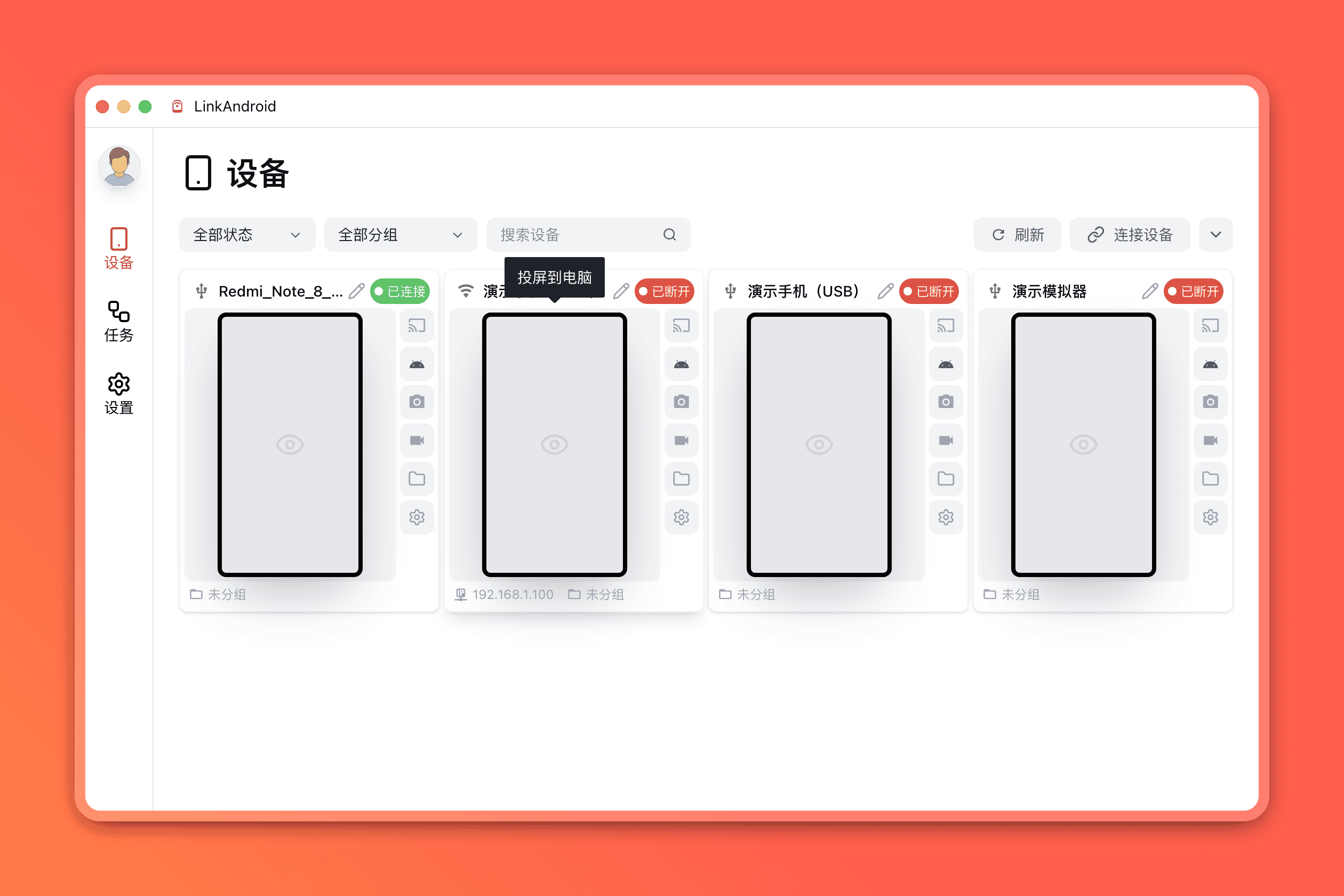
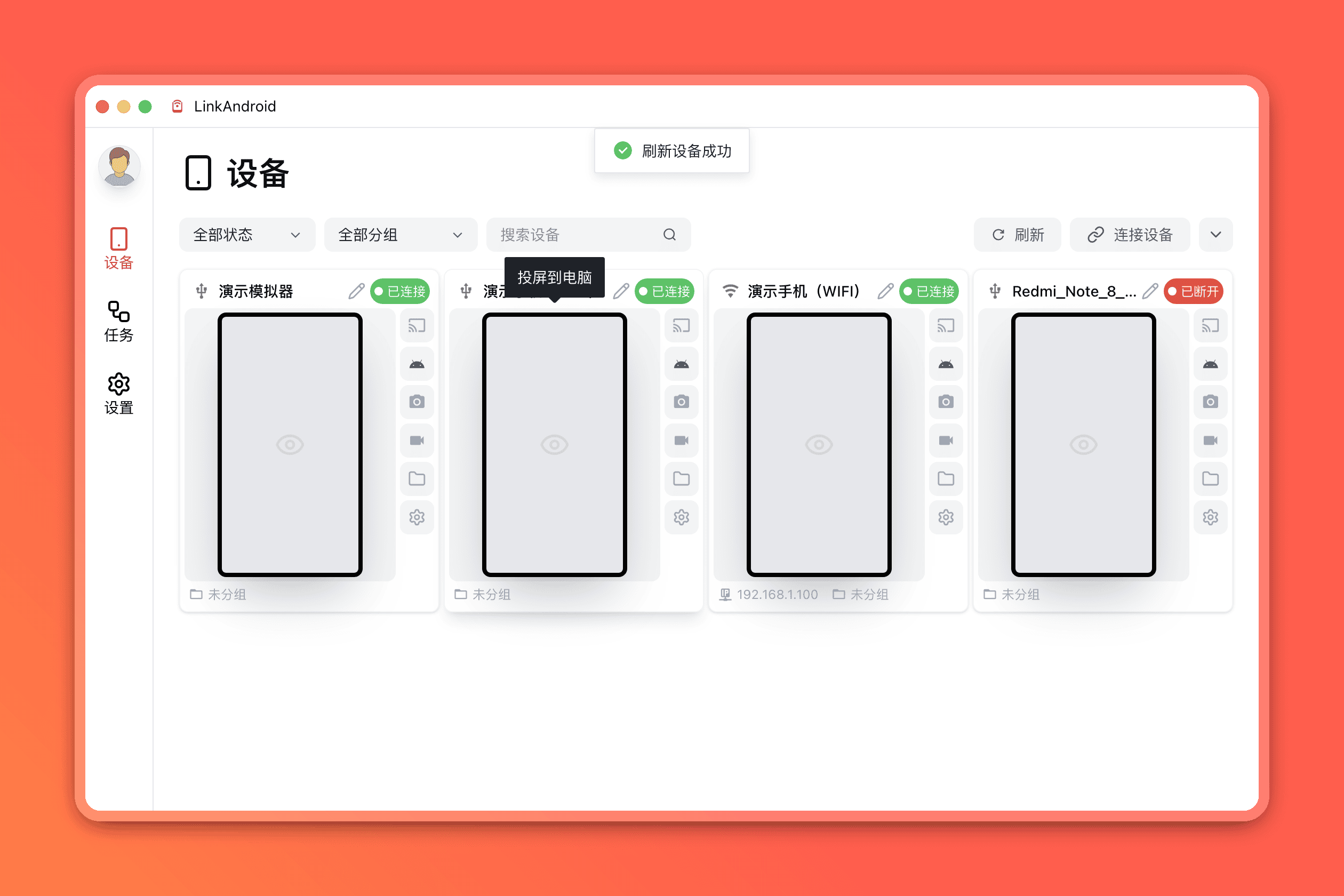
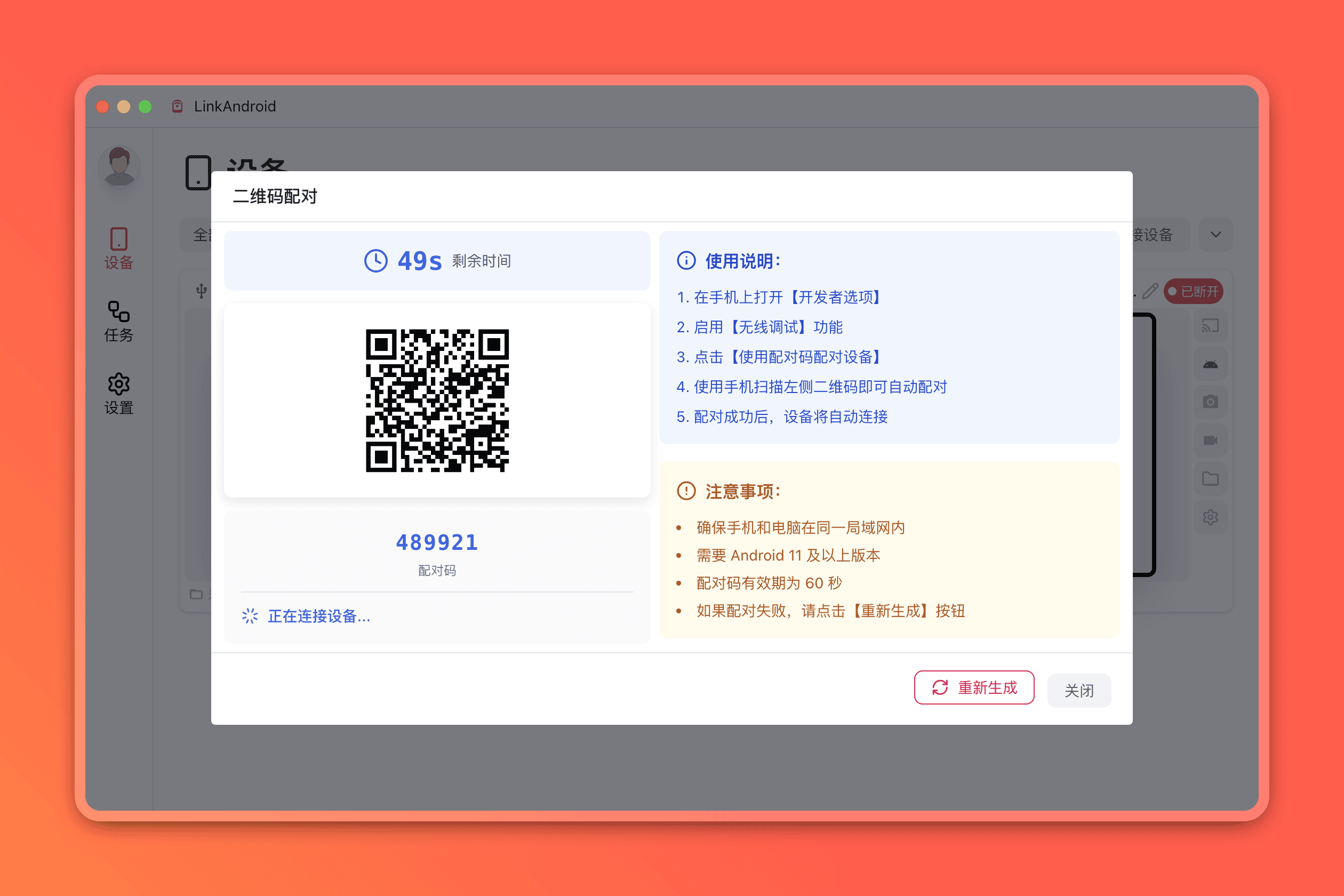
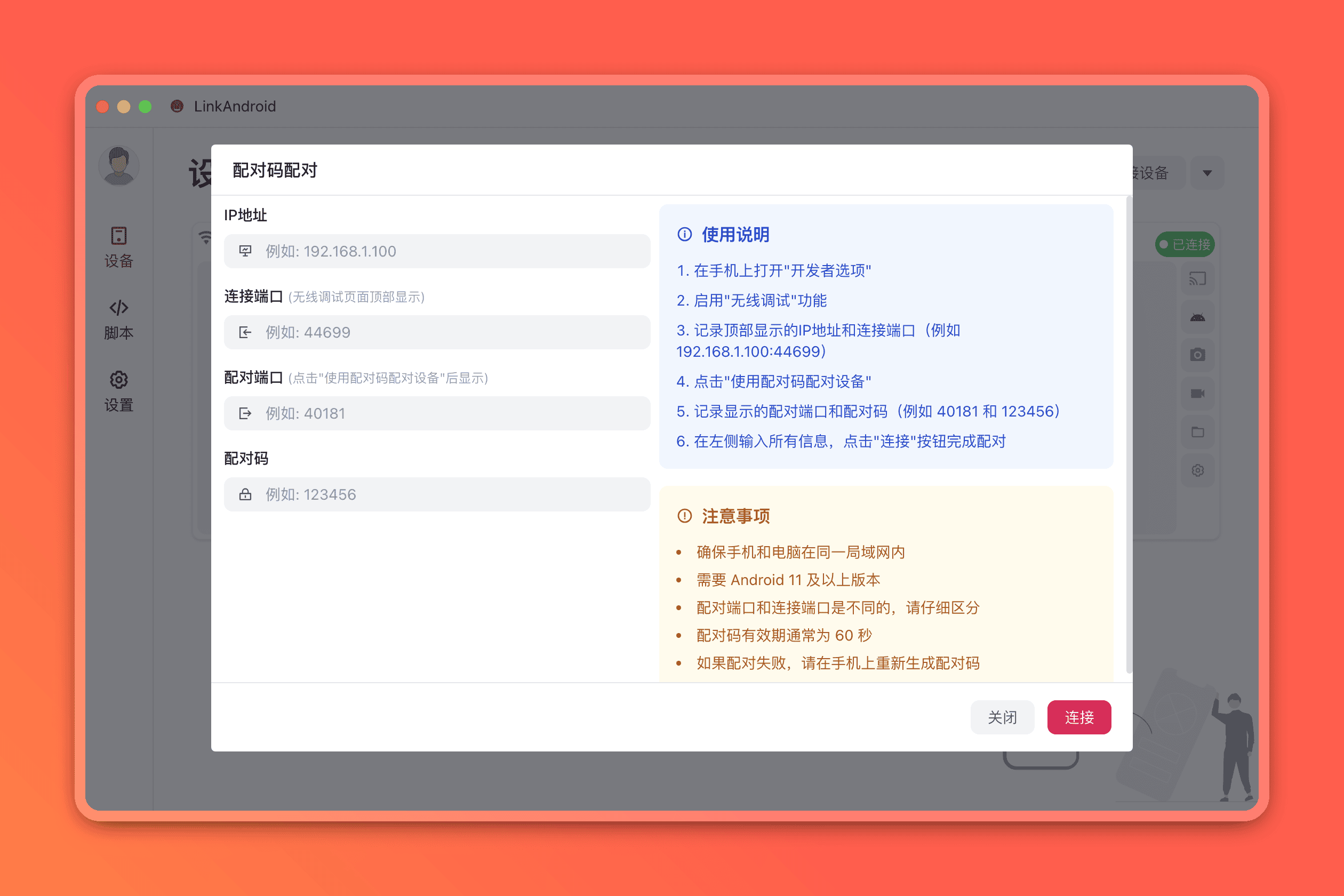
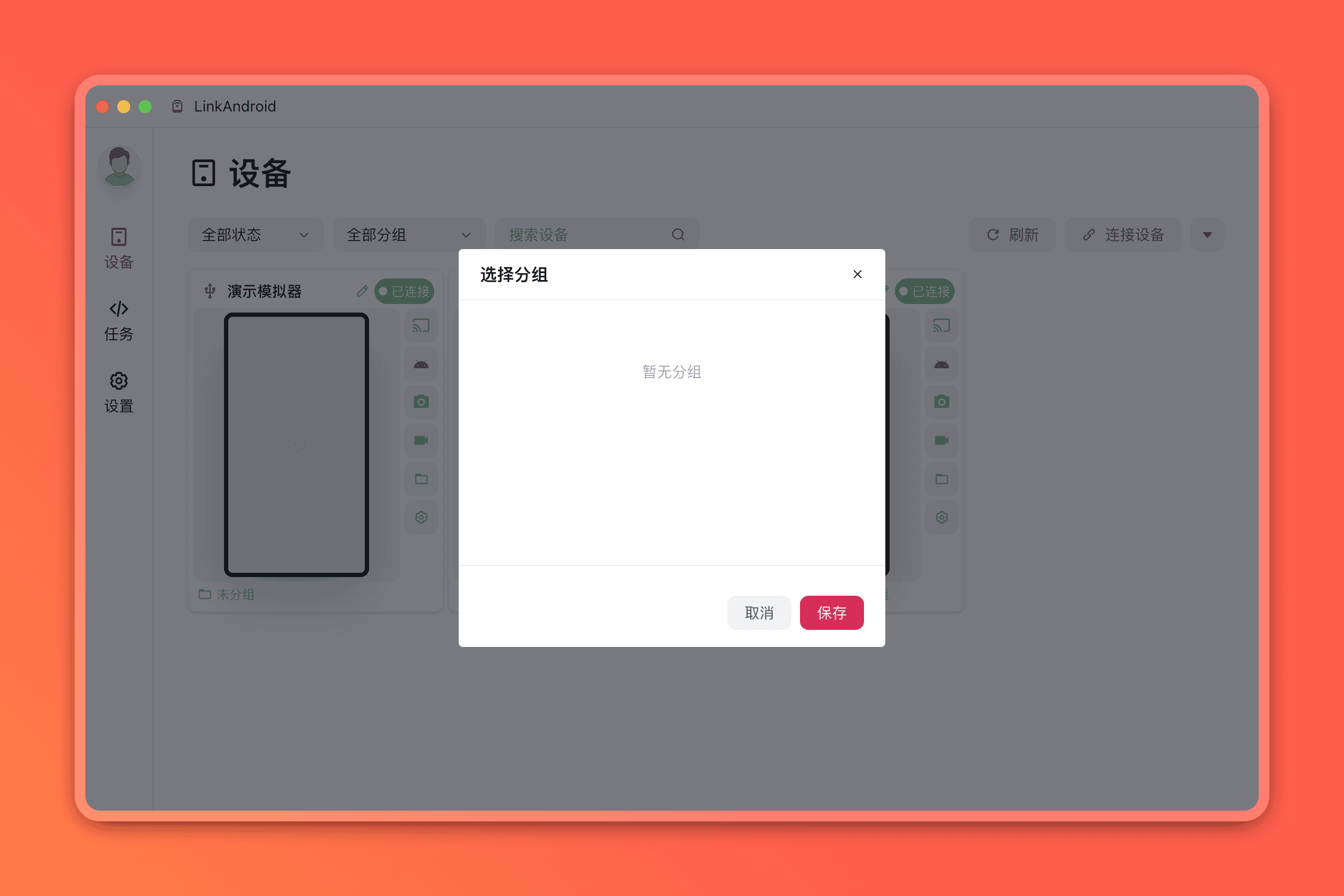
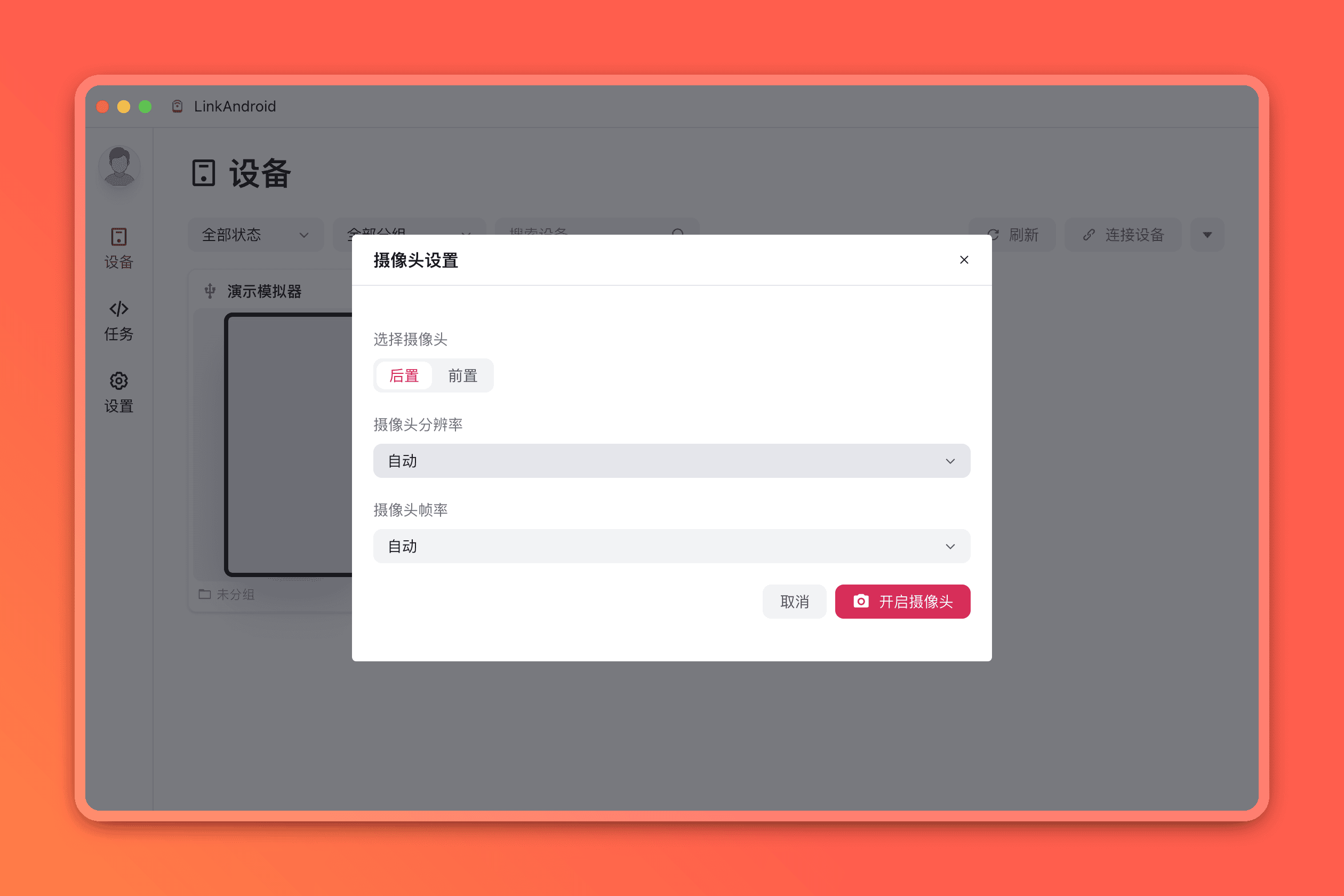
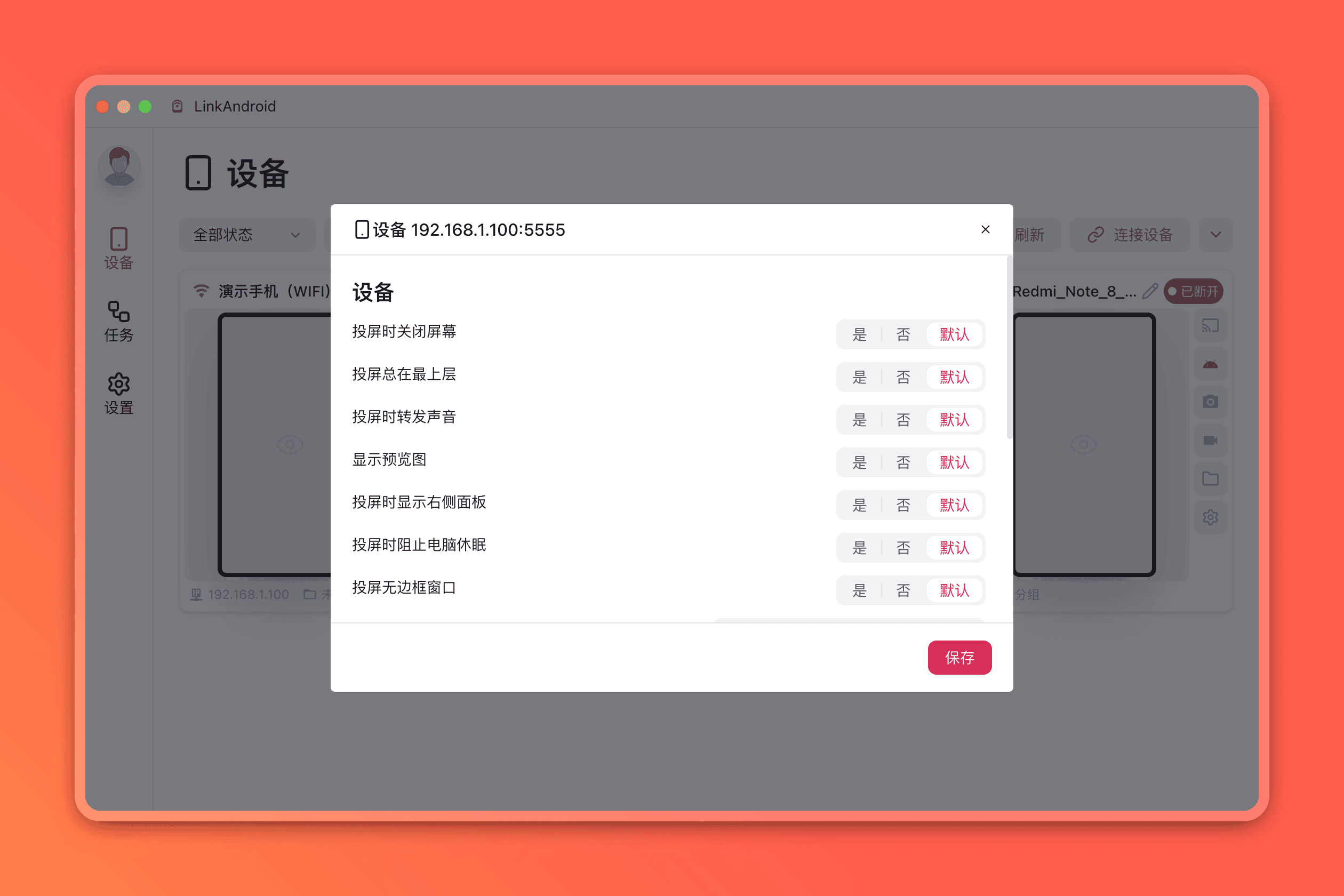
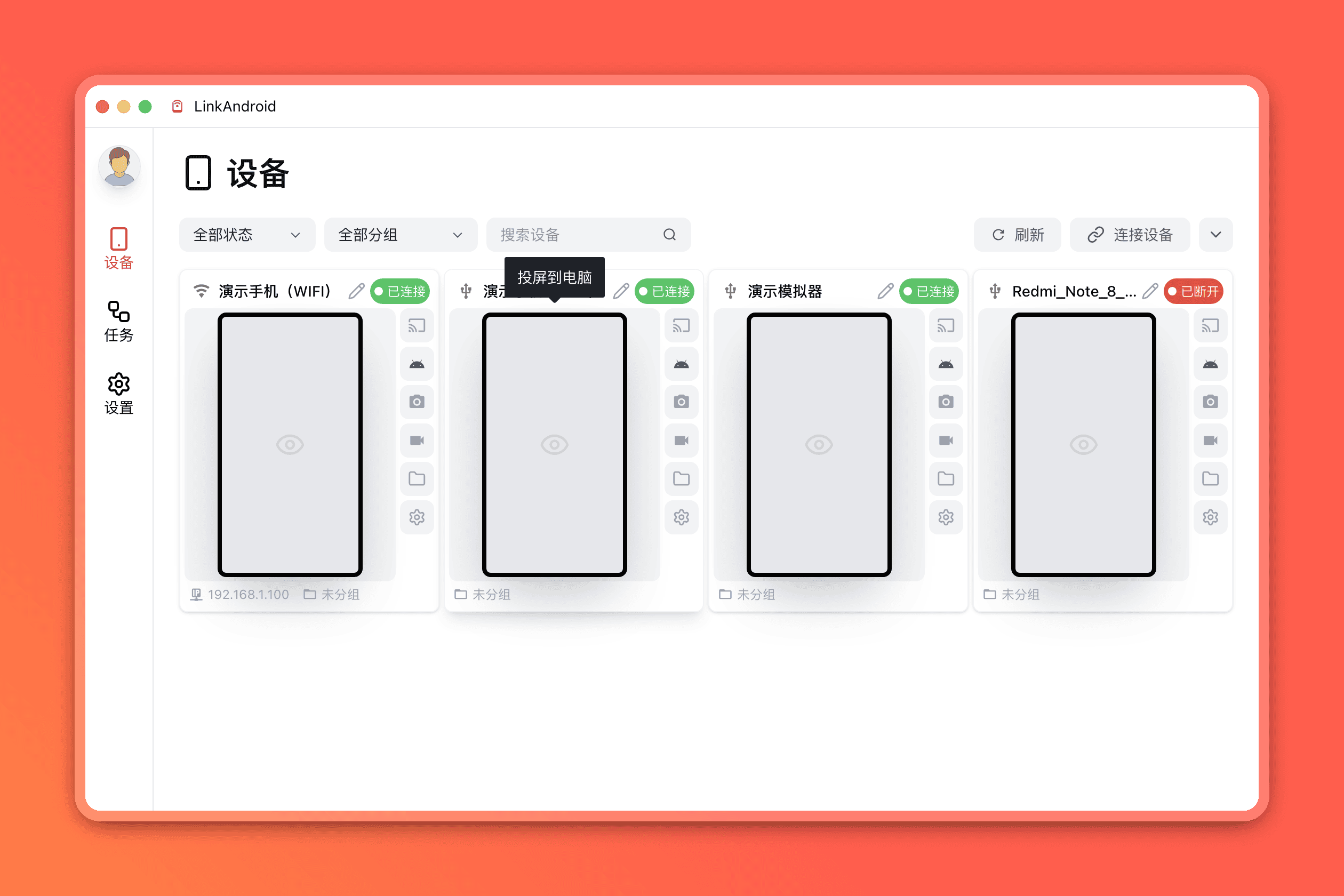
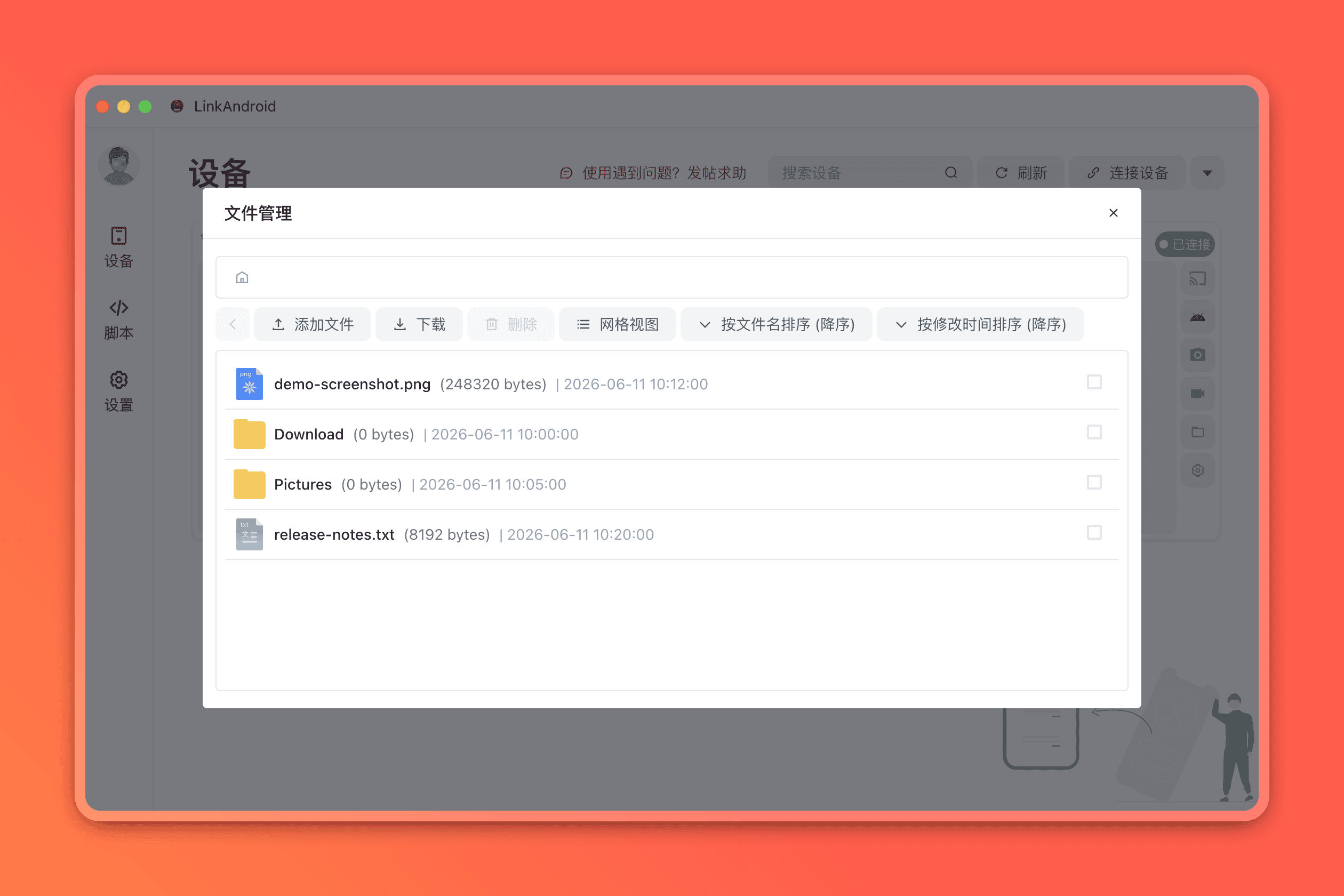
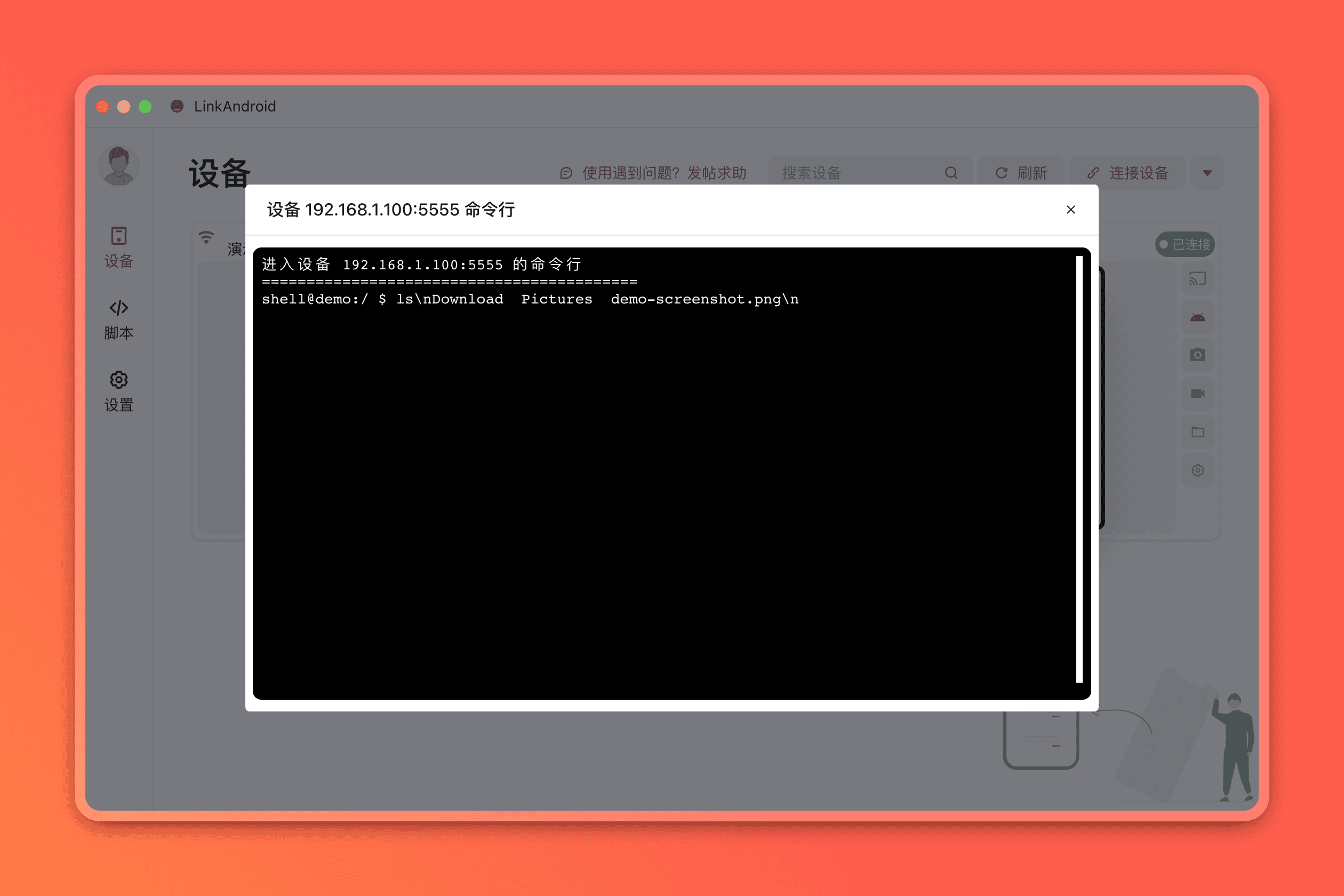
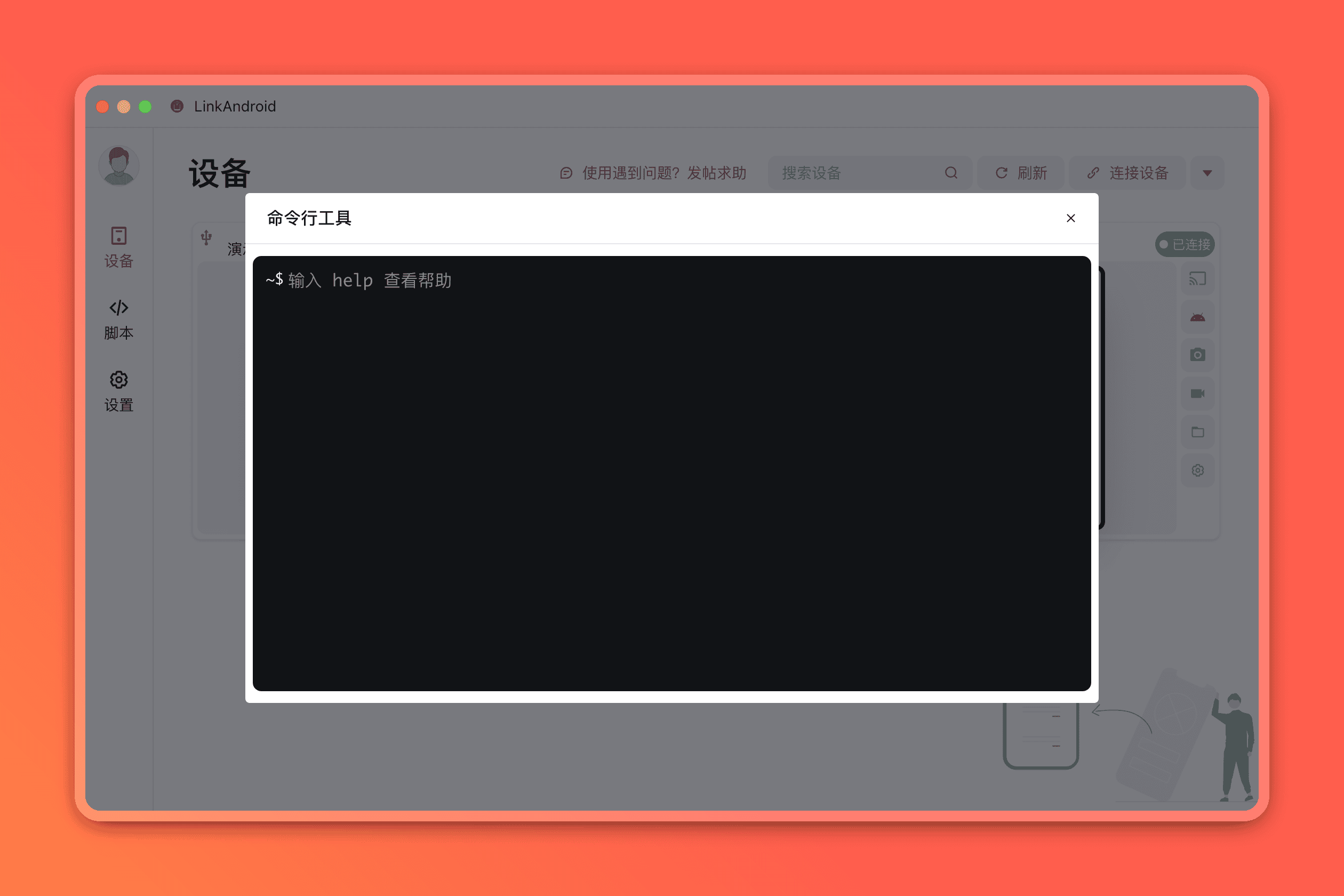
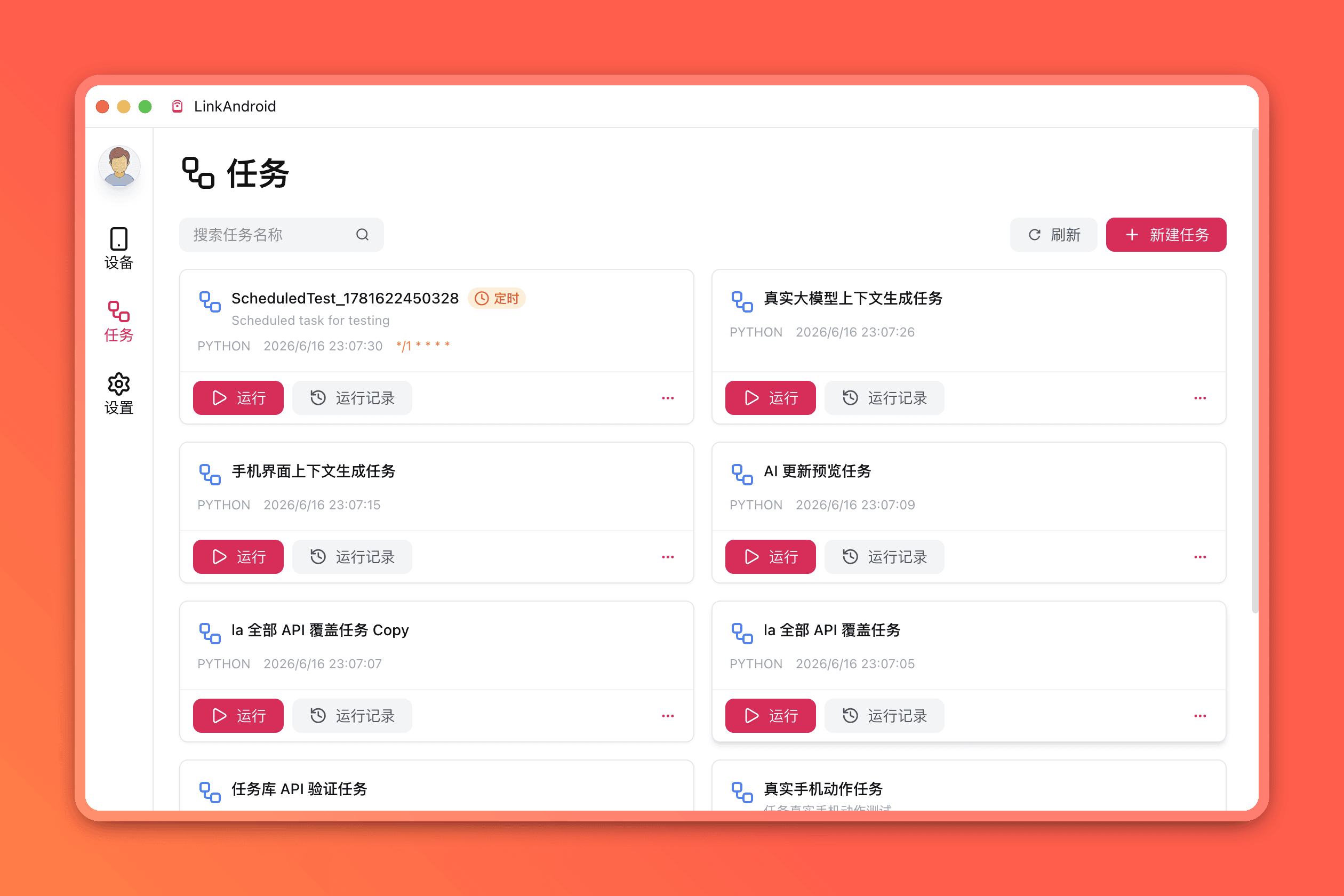
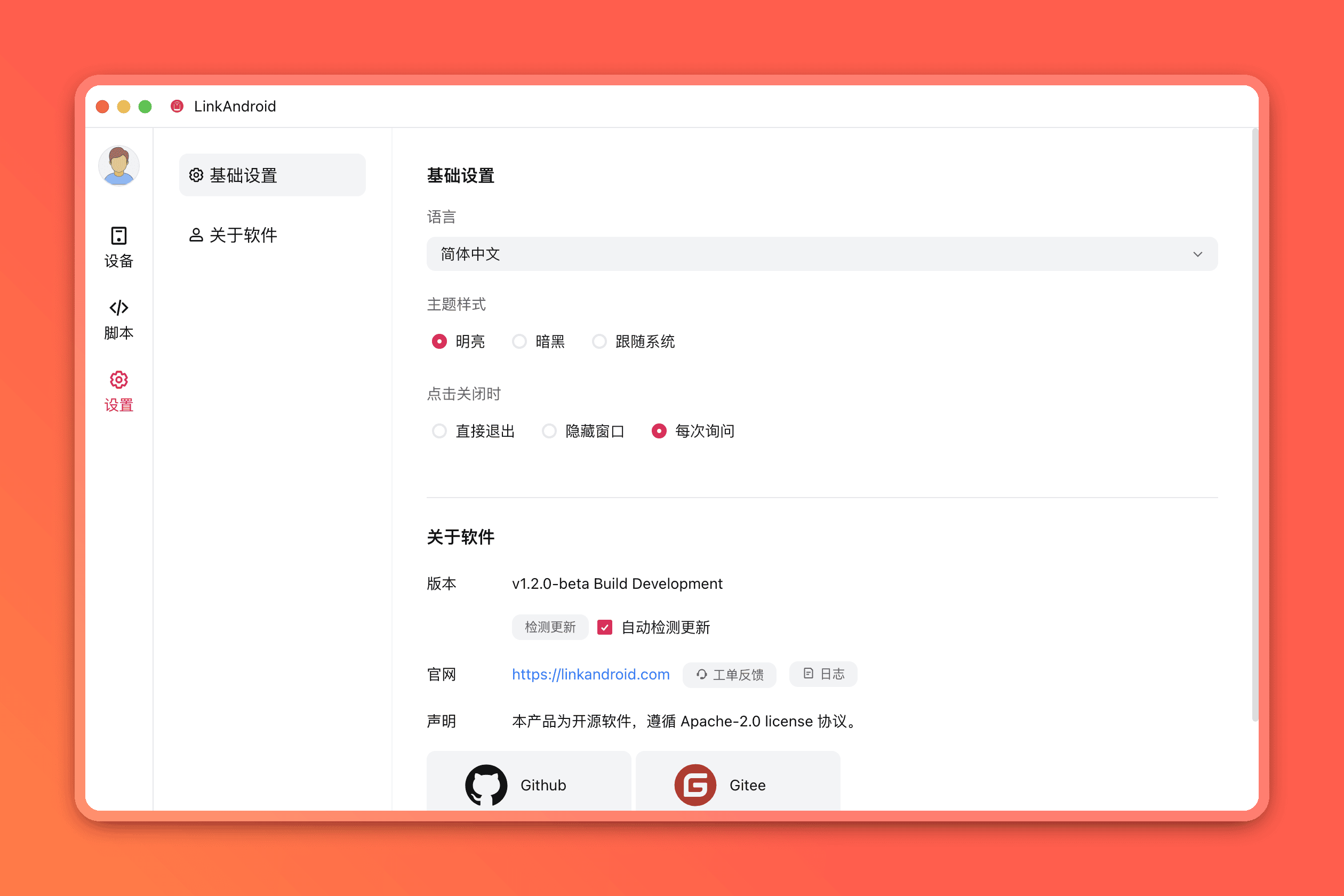
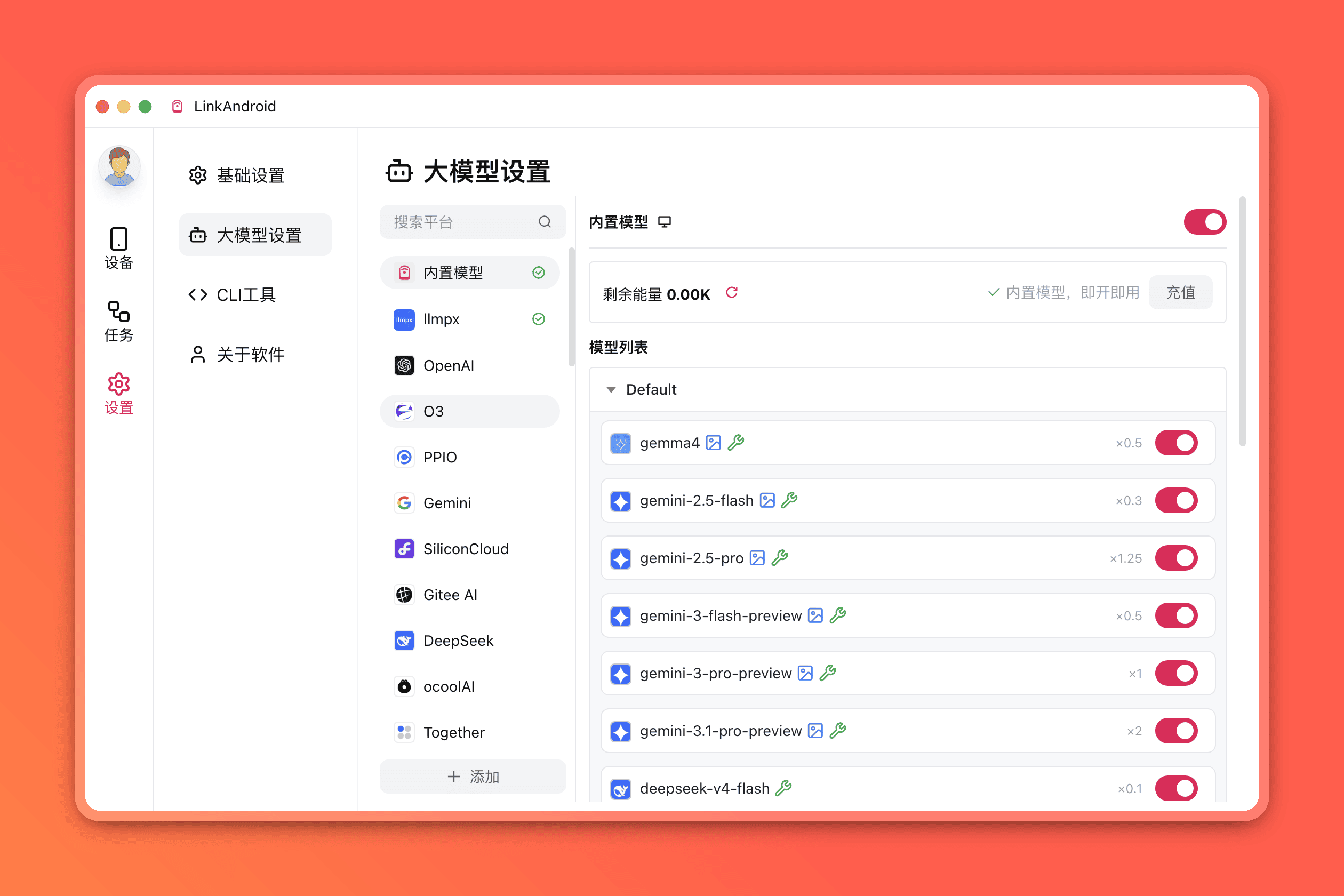
Link Android and PC easily! 全能手机连接助手!
2.1k
Stars
193
Forks
23
Open issues
3
Contributors



AI Analysis
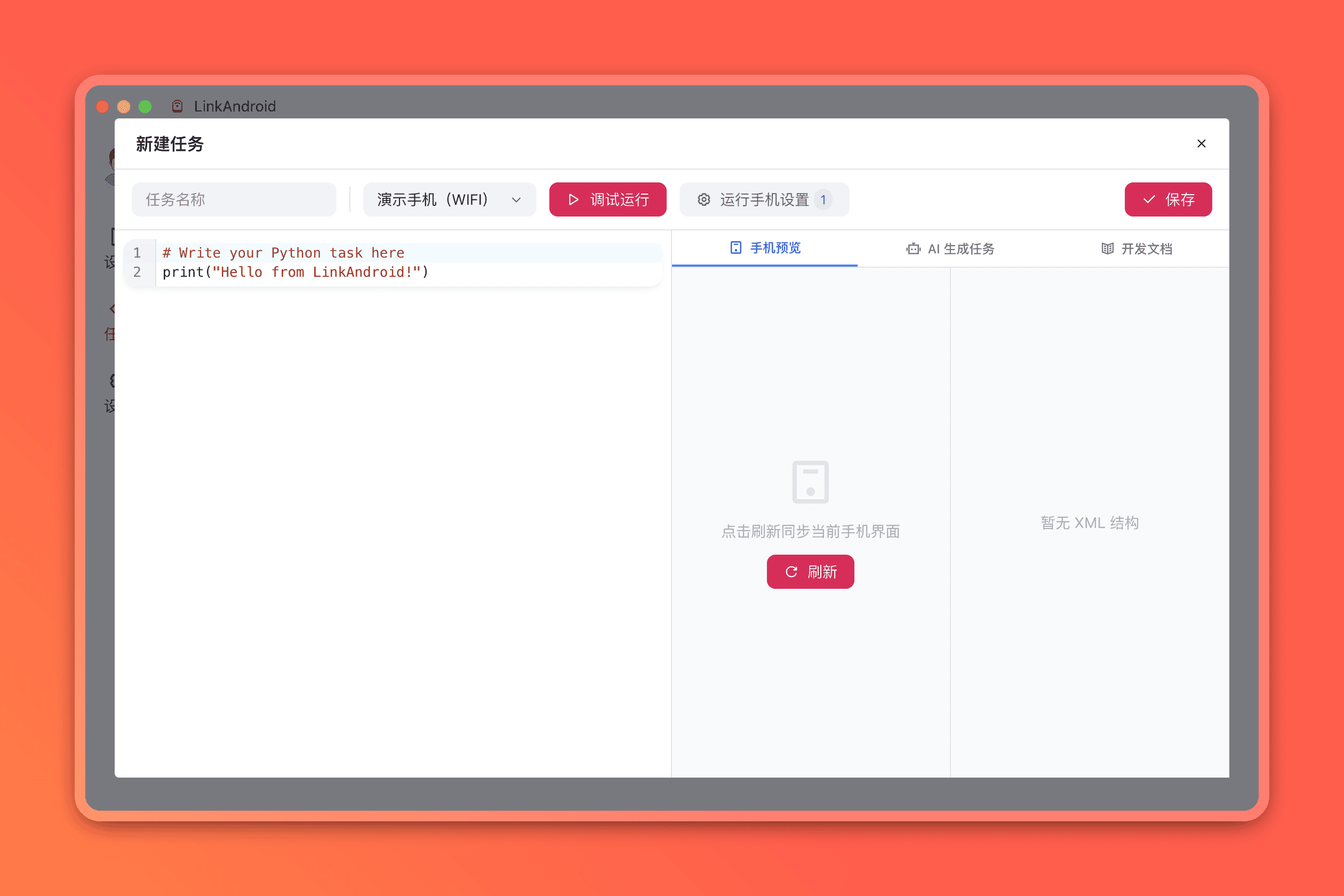
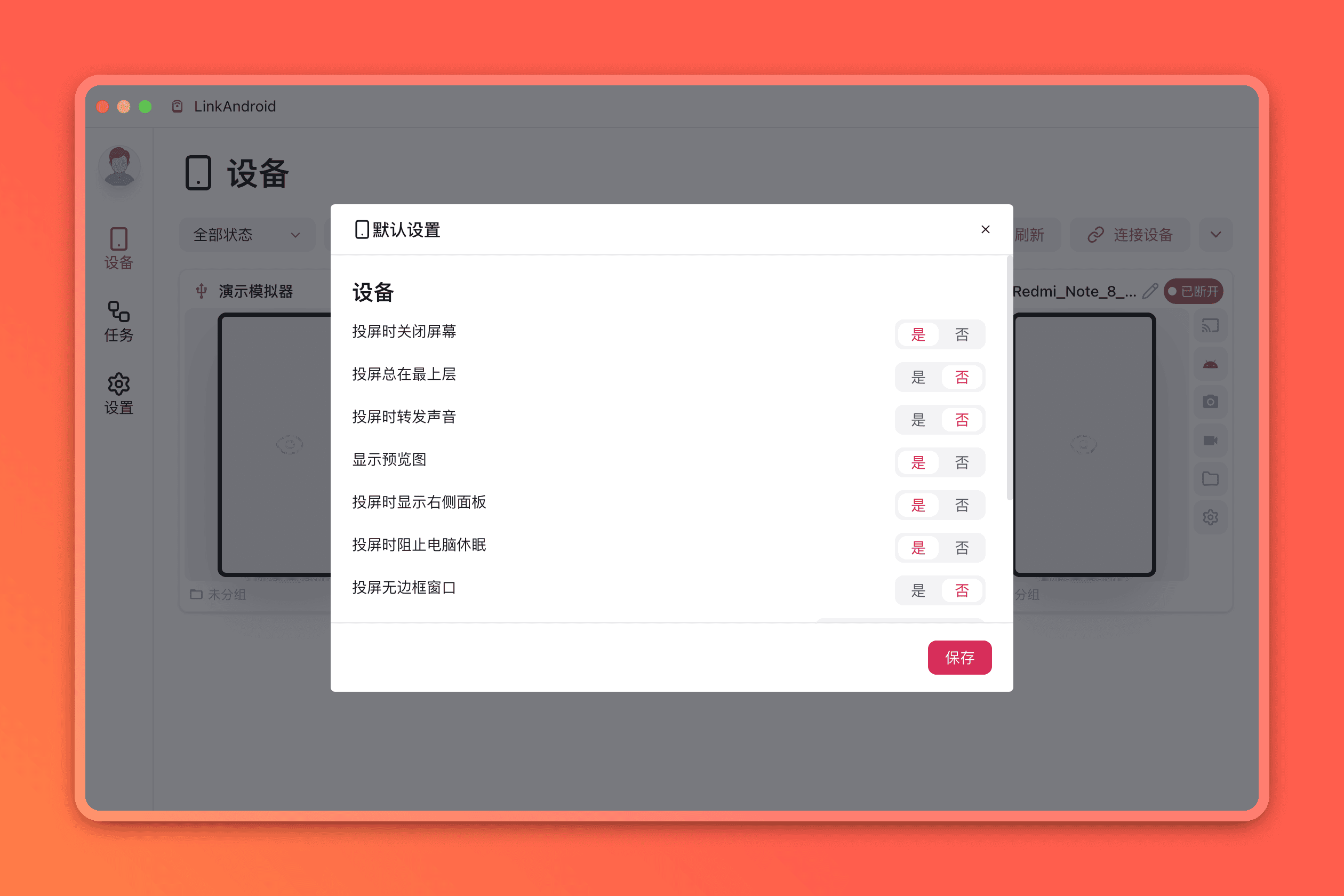
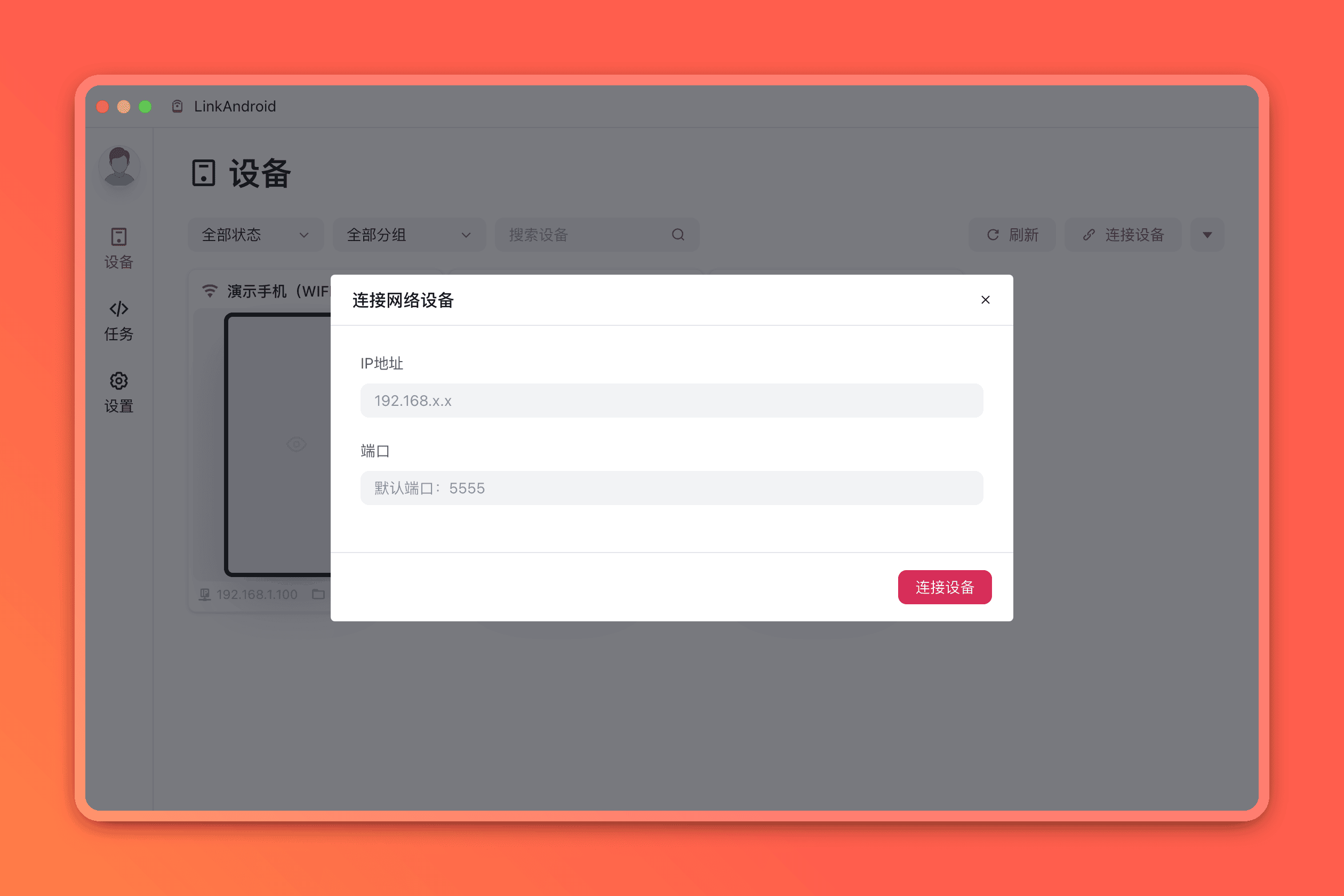
LinkAndroid is a desktop application built with Electron, TypeScript, and Vue3 that enables remote control and management of Android devices via USB or wireless connection. It specializes in screen mirroring (scrcpy-based), file/app management, ADB shell access, screen recording, and Python automation scripting—making it a comprehensive tool for developers, testers, and power users who need efficient Android device management from a PC. Not intended for casual smartphone users seeking basic f...
Inferred from signals mentioned in the README (tests, CI, type safety) — not a review of the actual code.
AI's overall editorial judgment — not an average of the bars above, can weigh other factors too.
Electron-based Android desktop control suite with scrcpy integration, Python automation, and AI scripting.
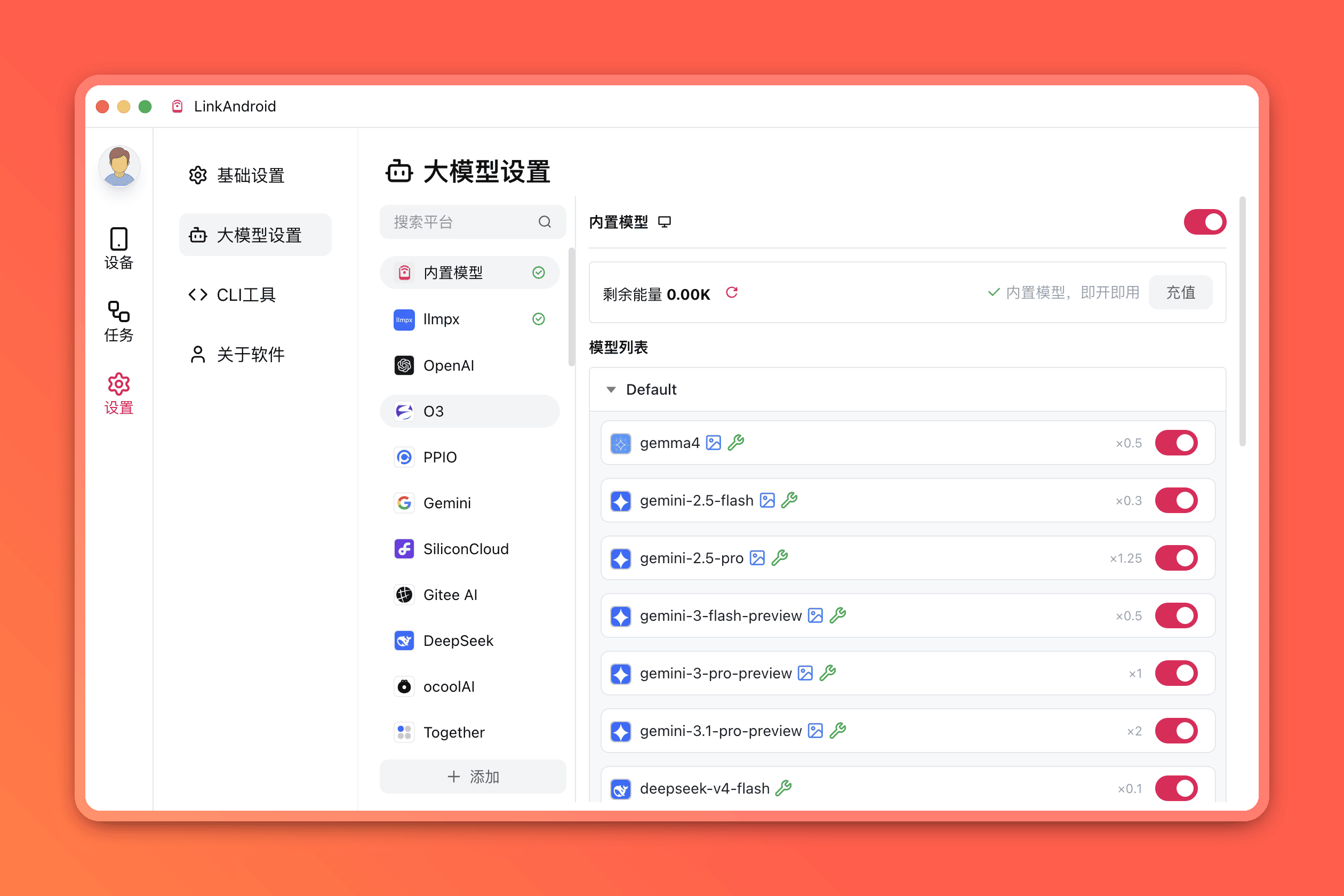
LinkAndroid is a TypeScript/Electron desktop application for managing Android devices via USB or Wi-Fi. It bundles screen mirroring (based on scrcpy), file management, app control, ADB shell access, Python script automation with Cron scheduling, and AI model integration (47+ providers). Primarily marketed to Chinese-speaking developers and power users seeking an all-in-one Android control interface. Real-world adoption numbers are opaque; the project gained traction after September 2024 launch and maintains steady commit activity as of June 2026.
LinkAndroid launched publicly on September 17, 2024. The project builds on scrcpy's established screen mirroring technology, wrapping it in an Electron UI alongside supplementary Android management tools. It targets the same user base as QtScrcpy and ya-webadb but differentiates via scripting, task scheduling, and bundled AI tooling.
The project reached 2,061 GitHub stars in approximately 21 months post-launch (12 stars in the last 7 days as of June 2026, indicating modest but sustained interest). Strong presence on Chinese platforms (Gitee, GitCode) suggests core audience concentration in Asia. The addition of AI model integration and REST API likely helped attract developers seeking workflow automation. Growth appears linear rather than explosive, consistent with a niche productivity tool.
Adoption not verified. README does not report user counts, enterprise deployments, or documented case studies. Project provides a website (linkandroid.com) and cross-platform installers, suggesting some distribution, but no public metrics on downloads or daily active users. Presence on three Git platforms (GitHub, Gitee, GitCode) indicates intentional geographic diversification but provides no usage confirmation. Community channels (WeChat, QQ groups) exist but membership not disclosed.
TypeScript + Vue 3 + Electron stack. Likely wraps scrcpy binary for screen mirroring, implements custom ADB device discovery (USB, mDNS, Wi-Fi), file sync via ADB, and embeds a Python runtime for task automation. README documents REST API endpoints (port 53030) for remote control and CI/CD integration. Appears modular enough to isolate device connection, UI, and scripting layers, though actual implementation cannot be verified from README alone.
Not documented in README. No mention of unit tests, integration tests, or CI testing pipeline.
Last push June 28, 2026 (9 days before evaluation date). Commits appear frequent and ongoing. Repository is actively maintained at 21 months post-launch. No public issues or blockers mentioned. Maintenance status is clearly active, though velocity may be moderate given the modest star-growth rate.
ADOPT IF: you need a batteries-included desktop Android control tool with Python scripting, task scheduling, and AI-assisted automation, and you accept that adoption metrics are unverified and the project targets a specialized (primarily Chinese-speaking) developer audience. AVOID IF: you require a lightweight, battle-tested tool with documented production usage and enterprise support, or if you depend on open-source sustainability signals (star growth is modest, adoption evidence is absent). MONITOR IF: you are building internal Android automation workflows and want to evaluate LinkAndroid after a 6–12 month stability period, or if you require detailed user telemetry and case studies before committing to a desktop tool.
Independent dimensions
Mainstream potential
4/10
Technical importance
6/10
Adoption evidence
2/10
- Adoption is undocumented; no public proof of production use at scale, making long-term maintenance predictability uncertain.
- Project is young (21 months old as of evaluation); breaking changes or abandonment remain possible, though current activity is positive.
- Heavy reliance on scrcpy binary and external AI provider APIs; vulnerabilities or licensing changes upstream could affect functionality.
- UI and features are Windows/macOS/Linux target, but real-world compatibility and polish on all three platforms is not independently verified.
- AI feature relies on external API keys (OpenAI, DeepSeek, etc.); cost, rate limits, and provider stability are user responsibility.
LinkAndroid will likely consolidate as a mature, feature-rich niche tool for developers and automation engineers seeking an integrated Android desktop environment. Star growth will remain modest unless viral adoption or high-profile endorsement occurs. The project appears sustainable at current velocity; expect incremental feature additions and bug fixes rather than architectural overhaul. Mainstream adoption outside Chinese-speaking regions is uncertain absent localization and marketing effort.
Newsletter
Get analyses like this every Monday
Free weekly digest of the most interesting open-source discoveries.
Languages
Information
- Website
- https://linkandroid.com
- Language
- TypeScript
- License
- Apache-2.0
- Last updated
- 2w ago
- Created
- 22mo ago
- Analyzed with
- anthropic/claude-haiku-4-5
Stars over time
Contributors over time
Top 100 contributors only — repos with more will plateau at 100.
Open issues
Open pull requests
No open pull requests.
Top contributors
Similar repos

viarotel-org/escrcpy
Escrcpy is a graphical GUI wrapper around the scrcpy Android mirroring tool,...
| Repository | Stars | Week Δ | Language | Score | Updated |
|---|---|---|---|---|---|
|
modstart-lib/linkandroid
this
|
2.1k | — | TypeScript | 7/10 | 2w ago |
 Genymobile/scrcpy Genymobile/scrcpy
|
145.4k | — | C | 10/10 | 18h ago |
|
viarotel-org/escrcpy
|
10.4k | — | JavaScript | 7/10 | 1mo ago |
 yume-chan/ya-webadb yume-chan/ya-webadb
|
3.1k | — | TypeScript | 8/10 | 6d ago |
 barry-ran/QtScrcpy barry-ran/QtScrcpy
|
30.4k | — | C++ | 7/10 | 3mo ago |
 liriliri/aya liriliri/aya
|
5.3k | — | TypeScript | 7/10 | 7mo ago |
LinkAndroid wraps scrcpy for screen mirroring; scrcpy is the mature, command-line core technology. LinkAndroid adds file management, app control, automation, and AI integration at the cost of higher complexity. scrcpy remains the bare-metal choice for developers; LinkAndroid targets users wanting a GUI and integrated workflows.
Similar scope (scrcpy GUI + file management). QtScrcpy uses Qt instead of Electron, potentially lighter-weight. LinkAndroid differentiates via Python scripting, Cron scheduling, AI model integration, and REST API—QtScrcpy's feature set not specified in comparable detail.
Browser-based ADB interface. LinkAndroid is desktop-first, bundled application. ya-webadb is lighter; LinkAndroid is more comprehensive (scrcpy, automation, AI). Different deployment models.
Electron + scrcpy wrapper. More closely aligned with LinkAndroid architecture. Likely focuses on screen mirroring; LinkAndroid layers automation and AI features on top. Direct architectural parallel suggests LinkAndroid targets power users seeking deeper integration.
TypeScript Android tooling ecosystem project. Exact scope not documented; likely lower-level ADB abstraction. LinkAndroid may use similar primitives but presents end-user GUI and workflows.