Analyze ELF binaries like a boss 😼🕵️♂️
4.3k
Stars
106
Forks
35
Open issues
18
Contributors



AI Analysis
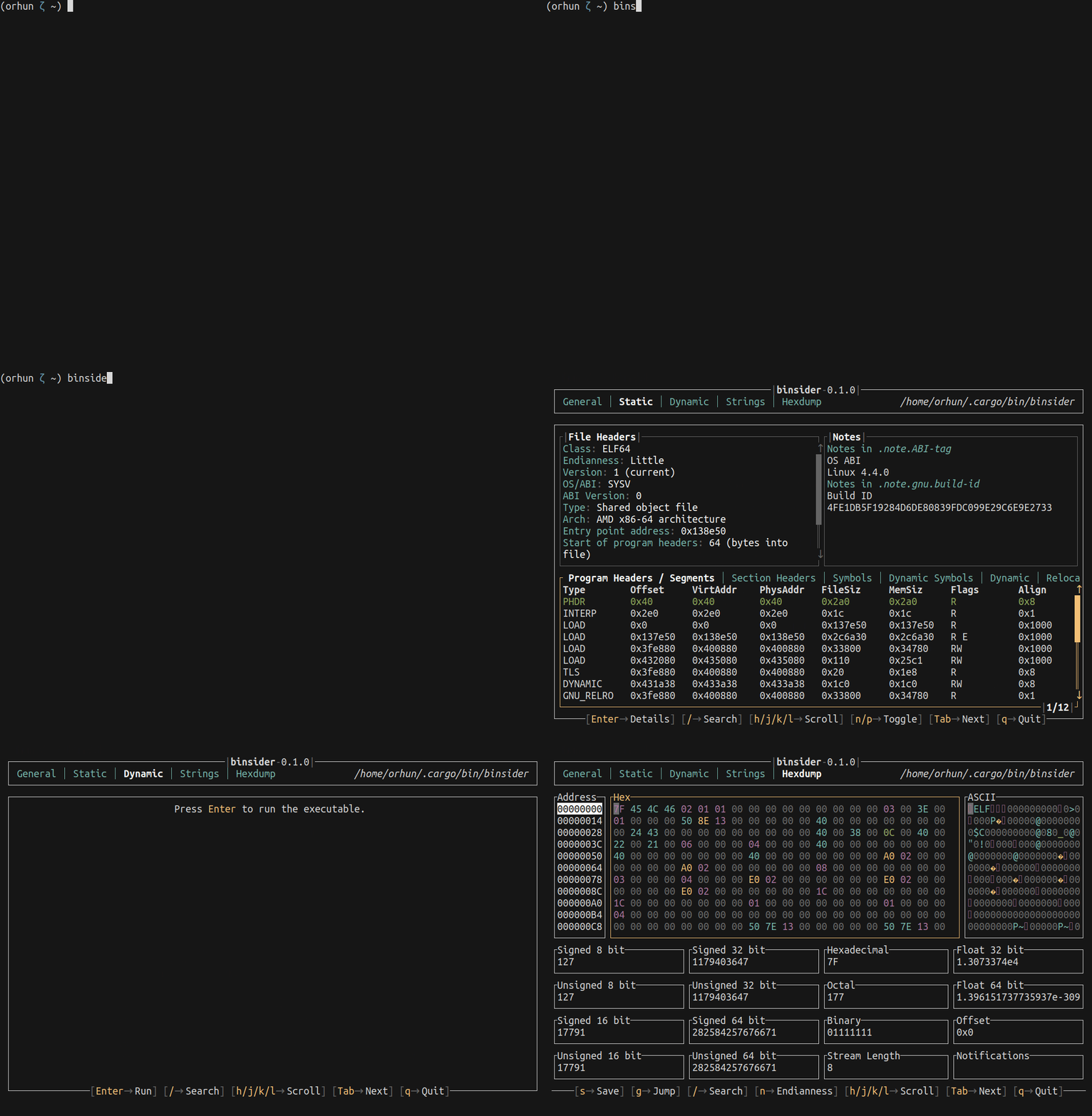
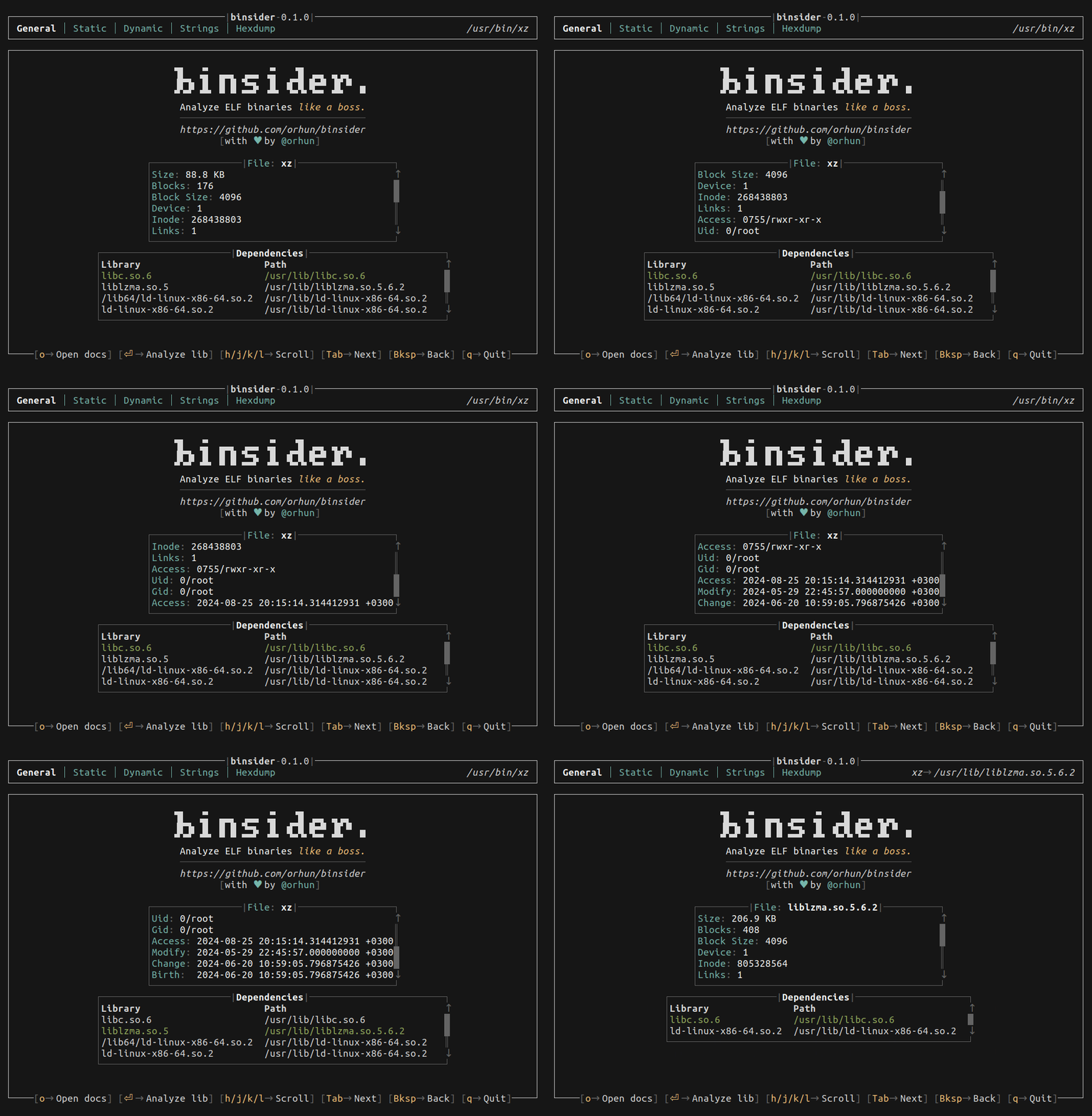
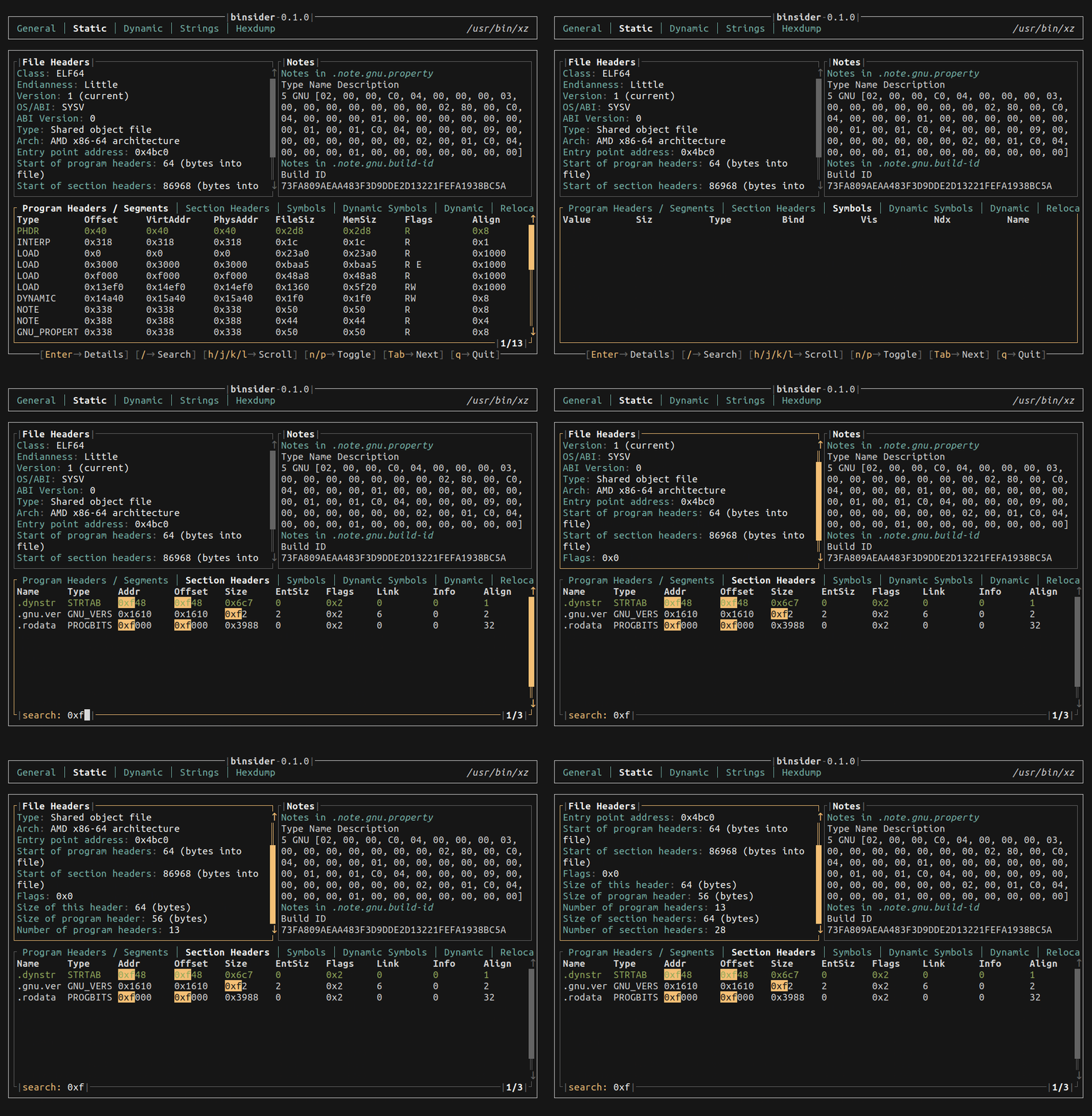
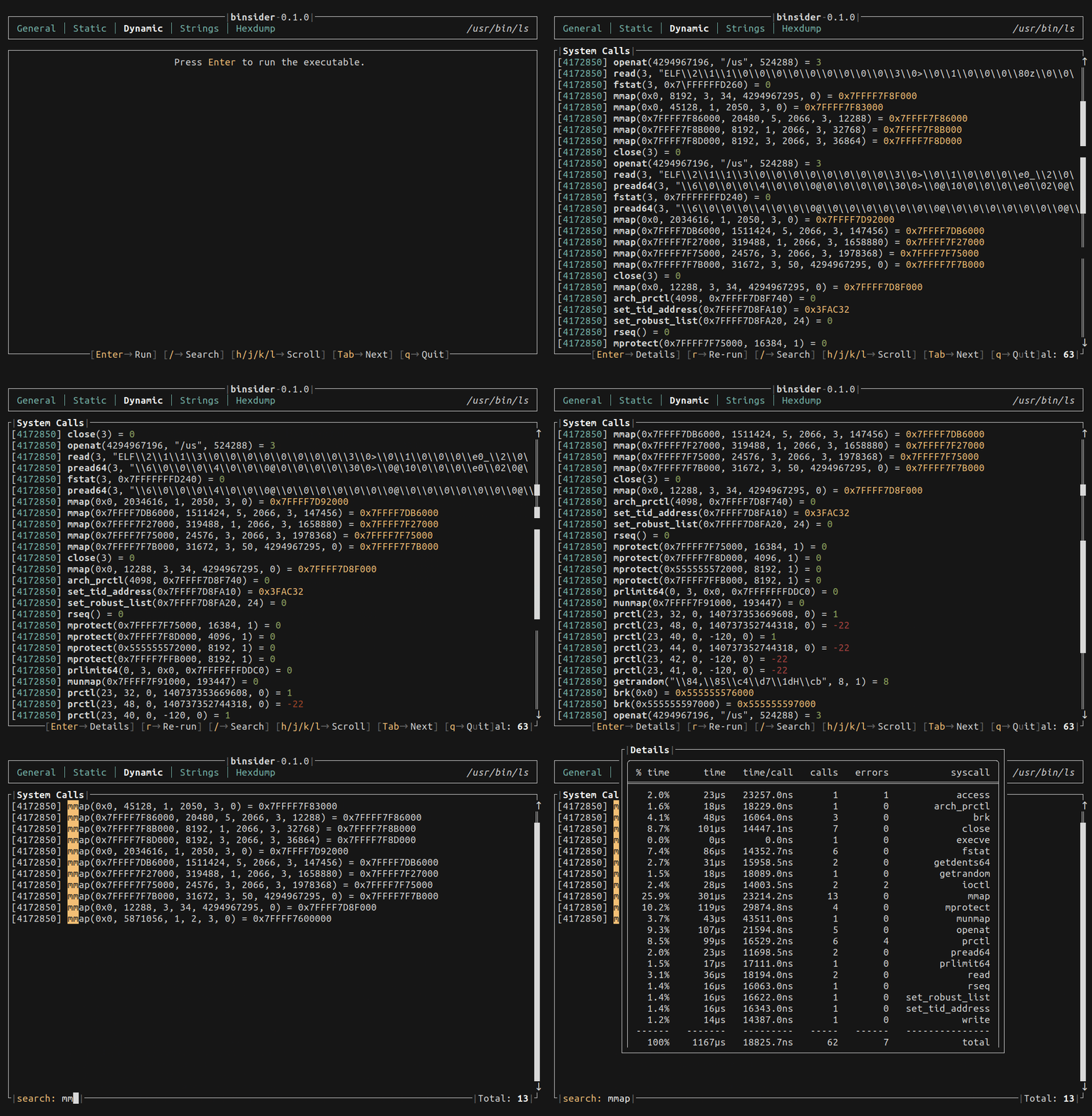
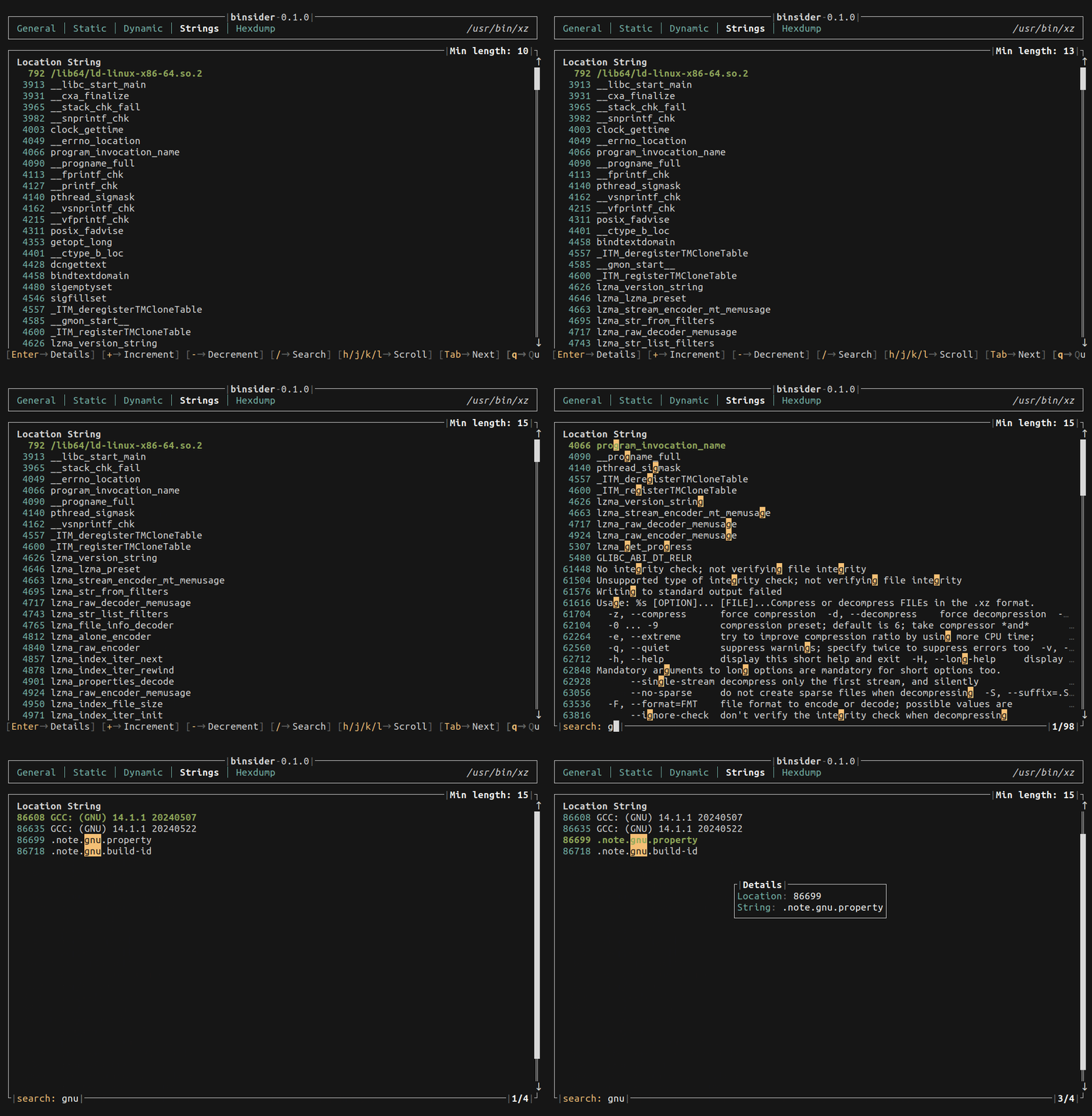
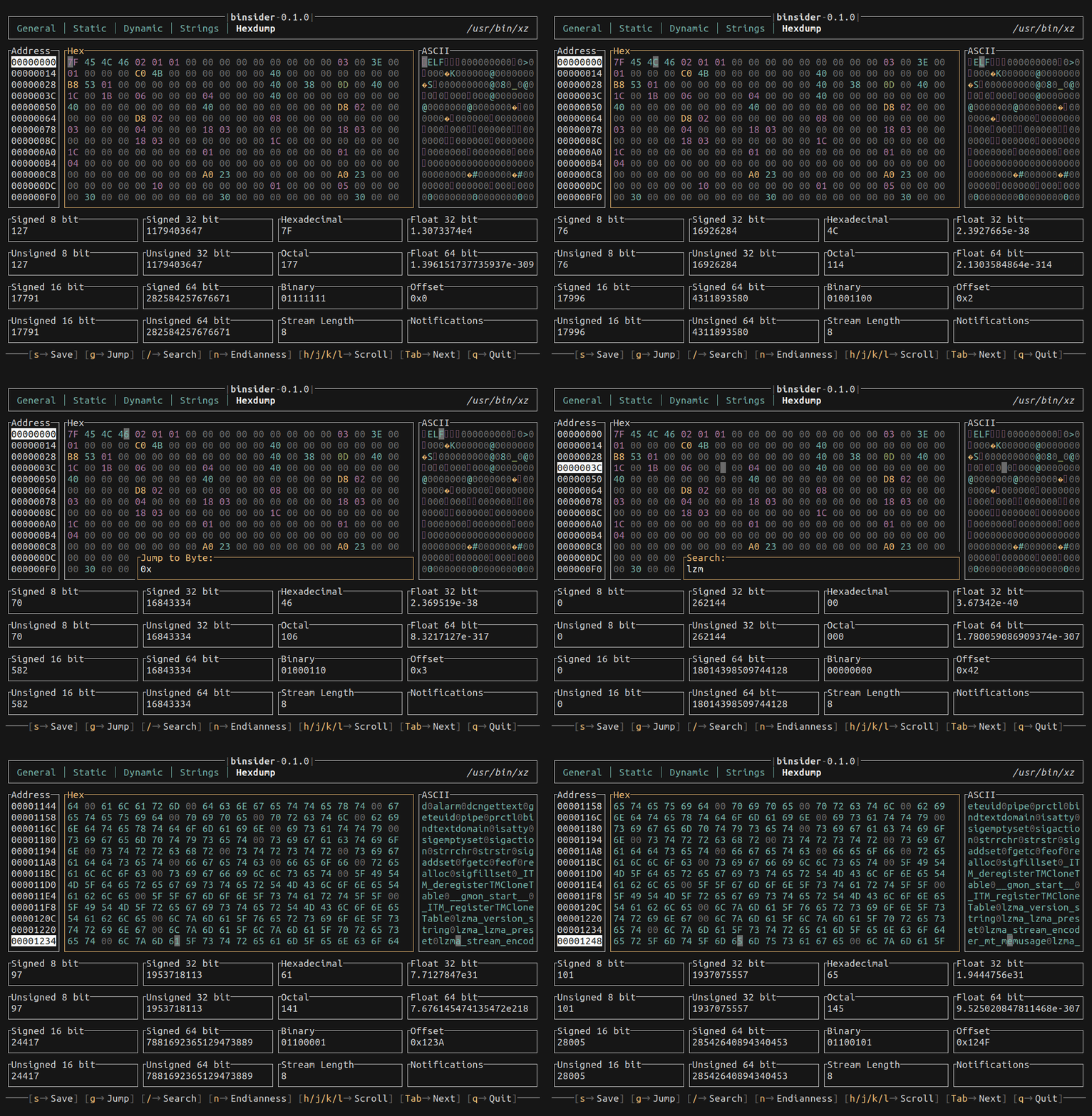
Binsider is a terminal user interface tool for analyzing ELF binaries on Linux, providing static and dynamic analysis, string inspection, library examination, and hexdumps in a unified interface. It is specialized for reverse engineers and binary analysis professionals rather than general-purpose development, offering capabilities similar to traditional command-line tools (ldd, strings, objdump) but within an interactive TUI.
Inferred from signals mentioned in the README (tests, CI, type safety) — not a review of the actual code.
AI's overall editorial judgment — not an average of the bars above, can weigh other factors too.
Rust-native ELF analysis tool with TUI, targeting reverse engineers and security researchers with integrated static/dynamic analysis
Binsider is a terminal-based ELF binary analyzer written in Rust that combines static analysis (sections, segments, symbols), dynamic tracing (strace/ltrace-like), string extraction, and hexdump viewing in a single interactive interface. Built by Orhun Parmaksız starting August 2023, it targets reverse engineers and security researchers who want a unified CLI tool rather than chaining separate utilities. Adoption appears concentrated in the reverse-engineering and security researcher communities, though no large-scale production deployment evidence is publicly visible.
Created August 2023, binsider emerged as a Rust rewrite/unification layer for traditional ELF inspection workflows. The project gained ~4.3k GitHub stars within ~3 years, indicating steady interest from the infosec community. Recent maintenance is active (last push June 2026), suggesting the author remains engaged despite modest incremental star growth.
Initial growth likely came from the Rust community and reverse-engineering audiences seeking a modern, performant alternative to shell pipelines of stat/ldd/strace/strings/hexdump. The project hit ~4.3k stars by mid-2026 but gains only ~14 stars/week, indicating plateau or maturation rather than explosive adoption. A YouTube quickstart video and dedicated documentation site suggest intentional community outreach, but mainstream adoption outside specialized security circles remains unclear.
Adoption not verified in README. No case studies, company endorsements, or documented enterprise deployments visible. Docker image availability and crates.io listing suggest infrastructure readiness, but end-user evidence is absent.
Appears to be a TUI-driven Rust application (based on README gif demos and Cargo.io presence). Likely integrates ELF parsing libraries and system call tracing via ptrace or similar syscall interfaces. Concrete architecture details not documented in README excerpt.
Not documented in README.
Last push 2026-06-21 (13 days before analysis date) indicates active maintenance. CI/CD pipelines present (GitHub Actions for CI, CD, Docker builds noted in badges). No evidence of abandonment; slow star growth suggests maturation or niche stability rather than stagnation.
ADOPT IF: you work primarily in terminal environments, regularly inspect ELF binaries, prefer a single integrated tool over shell pipelines, and are comfortable with Rust CLI tooling. AVOID IF: you need GUI-driven analysis, support for non-ELF formats, graphical call graphs, or production-grade support contracts. MONITOR IF: you're a security team evaluating whether binsider's feature set stabilizes and gains adoption within your tier of tooling maturity—current adoption signals are too weak to commit to organizational workflow dependency.
Independent dimensions
Mainstream potential
4/10
Technical importance
6/10
Adoption evidence
2/10
- Adoption not verified at scale; project may remain niche indefinitely despite technical quality.
- Single-author maintenance model (Orhun Parmaksız primary contributor based on copyright/Discord) creates sustainability risk if author loses interest or changes priorities.
- ELF-only scope limits addressable market compared to general-purpose binary analyzers; unlikely to replace ImHex or angr in broader contexts.
- No evidence of security auditing or formal testing; reverse-engineering tools may face trust/correctness demands that README does not address.
- TUI dependency may alienate users preferring GUI or scriptable JSON/structured output APIs (partially mitigated if scripting support exists, but not documented in README).
Binsider likely stabilizes as a trusted, moderately-adopted niche tool for terminal-native reverse engineers and security researchers over 18–36 months. Unlikely to achieve mainstream adoption outside this community. Sustainable if author remains engaged; risk of dormancy if community contribution base does not grow.
Newsletter
Get analyses like this every Monday
Free weekly digest of the most interesting open-source discoveries.
Languages
Information
- Website
- https://binsider.dev/
- Language
- Rust
- License
- Apache-2.0
- Last updated
- 5d ago
- Created
- 35mo ago
- Analyzed with
- anthropic/claude-haiku-4-5
Stars over time
Contributors over time
Top 100 contributors only — repos with more will plateau at 100.
Open issues
Top contributors
Similar repos

horsicq/DIE-engine
DIE-engine is the core detection and analysis engine for Detect It Easy (DiE),...
| Repository | Stars | Week Δ | Language | Score | Updated |
|---|---|---|---|---|---|
|
orhun/binsider
this
|
4.3k | +12 | Rust | 8/10 | 5d ago |
|
horsicq/XELFViewer
|
1.6k | — | C++ | 7/10 | 1d ago |
 WerWolv/ImHex WerWolv/ImHex
|
54.1k | — | C++ | 9/10 | 19h ago |
 solemnwarning/rehex solemnwarning/rehex
|
2.5k | — | C++ | 8/10 | 13h ago |
|
horsicq/DIE-engine
|
3.2k | — | C++ | 7/10 | 16h ago |
 ReFirmLabs/binwalk ReFirmLabs/binwalk
|
14.1k | — | Rust | 8/10 | 3w ago |
Broader hex editor and binary inspector with GUI focus; binsider is CLI/TUI-only and reverse-engineer focused. ImHex dominates general binary inspection; binsider targets ELF-specific, terminal-native workflows.
Specialized in firmware/embedded binary analysis and extraction. Binwalk is extraction-centric; binsider focuses on static/dynamic inspection. Different use cases with minimal feature overlap.
Binary analysis framework with symbolic execution and program synthesis. Binsider is lighter-weight inspection tool; angr serves academic/advanced reverse engineering. Binsider easier for quick analysis; angr for complex vulnerability research.
File type and compiler detector. Narrow use case; binsider is broader inspection suite. Complementary rather than competitive.
Hex editor with structured binary viewing. GUI-centric; binsider is TUI/CLI. Binsider better for headless/scripted workflows; rehex for interactive exploration.