ERP beyond your fridge, now on your phone – An awesome companion app for Grocy
1.2k
Stars
131
Forks
155
Open issues
30
Contributors


AI Analysis
Grocy Android is an open-source Android companion app for Grocy, a self-hosted grocery and household management system. It enables users to manage groceries, shopping lists, and household inventory on their phone with barcode scanning and batch processing capabilities. It is designed for Android users who run a self-hosted Grocy server instance and cannot function standalone.
Inferred from signals mentioned in the README (tests, CI, type safety) — not a review of the actual code.
AI's overall editorial judgment — not an average of the bars above, can weigh other factors too.
Android client for self-hosted Grocy household management, maintained by sole developer
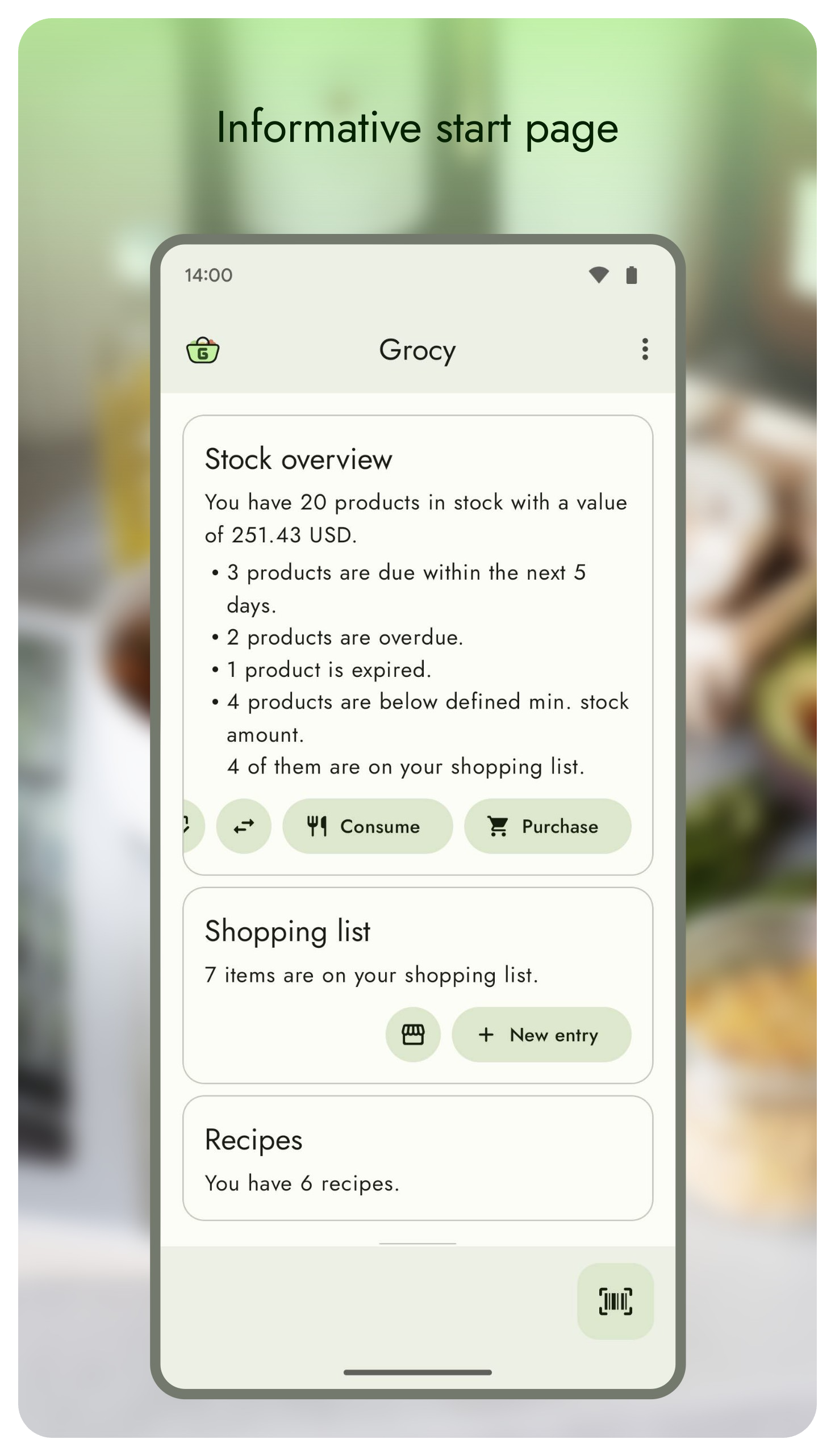
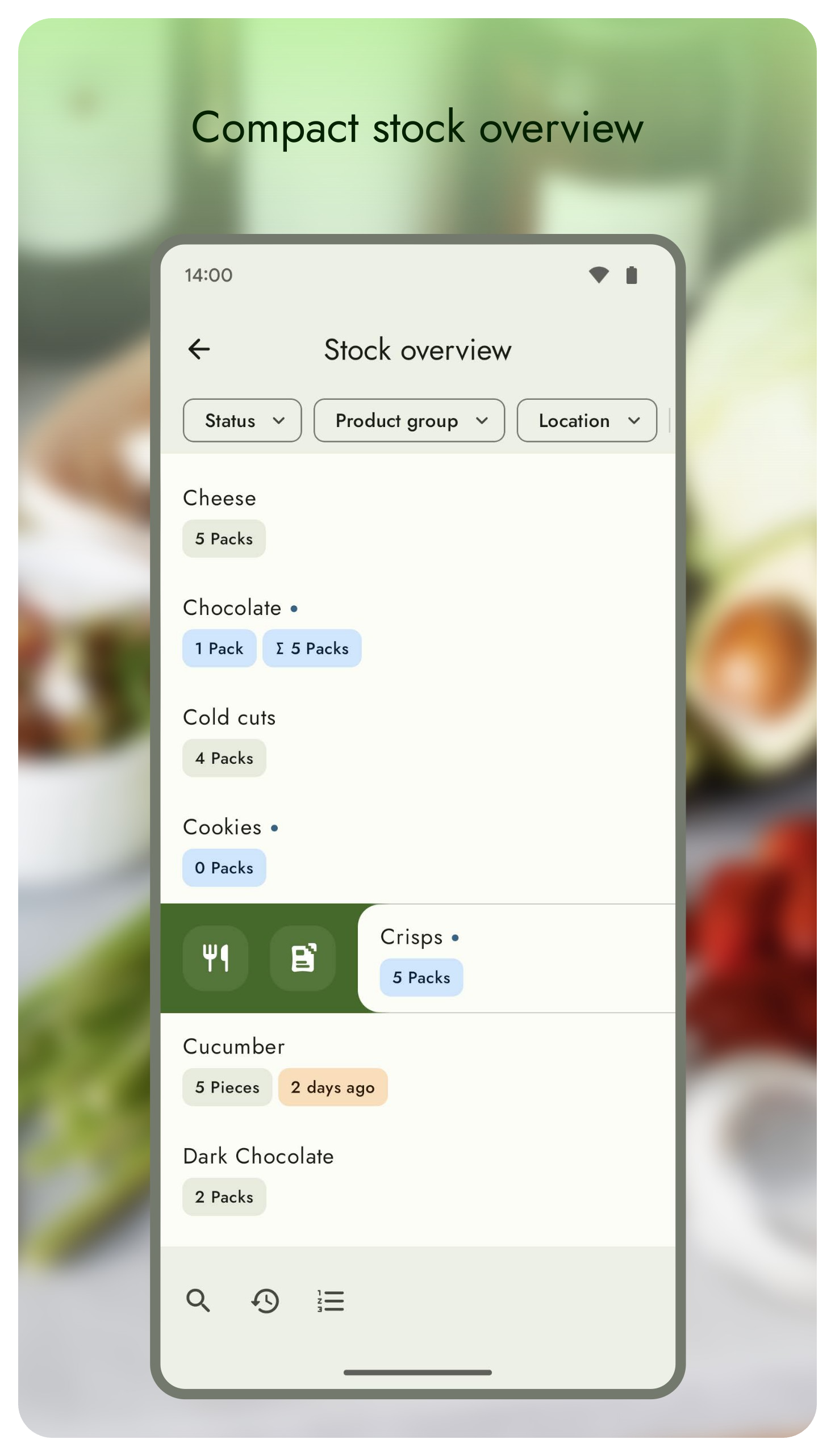
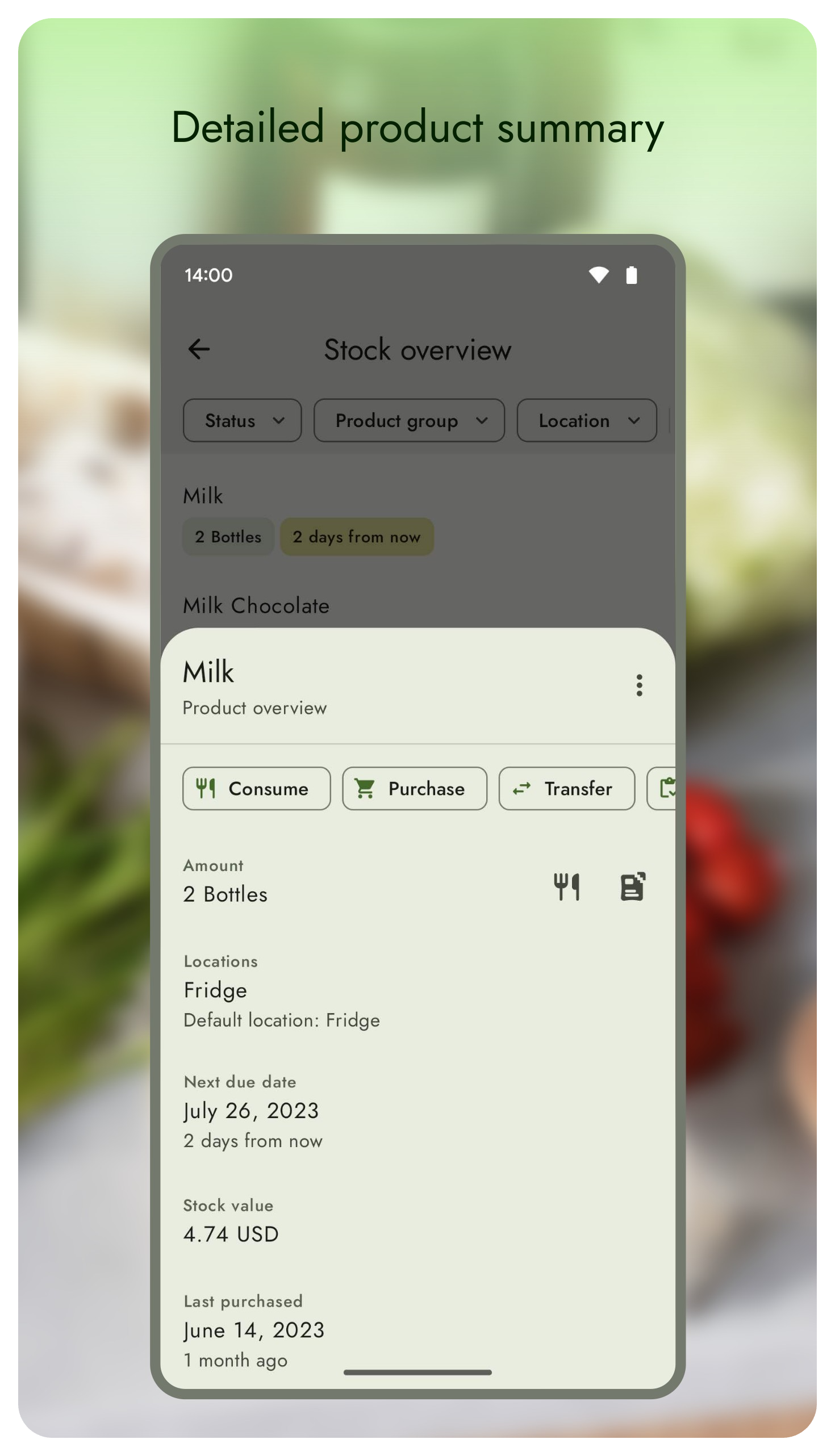
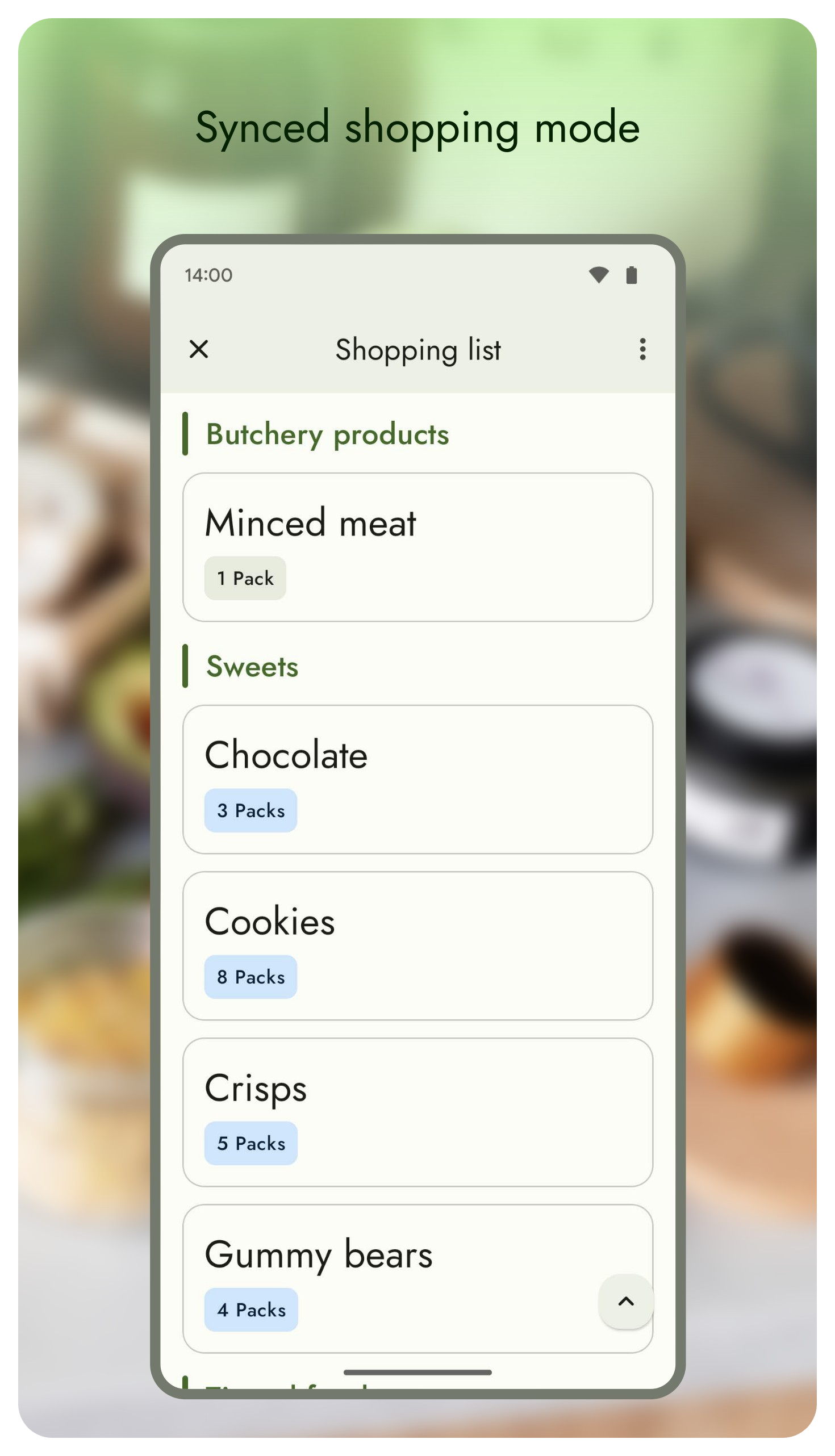
Grocy Android is an open-source mobile companion app for Grocy, a self-hosted grocery and household inventory system. It targets privacy-conscious users and home automation enthusiasts who operate their own Grocy server instances. The app provides barcode scanning, shopping lists, stock management, and offline functionality. Adoption appears concentrated within the Grocy community rather than mainstream Android users, as it requires server setup and self-hosting knowledge.
Launched in April 2020 by Patrick Zedler and Dominic Zedler during pandemic lockdowns in Germany, initially as a university side project. Dominic exited in 2024 to focus on Apple devices, leaving Patrick as sole maintainer. The app evolved from a companion tool into the primary Android interface for Grocy users.
Growth appears modest and plateaued: 1,168 stars over 6 years suggests niche positioning rather than viral expansion. README explicitly states developer has limited time due to studies, work, and other projects. Recent activity (3 stars in last 7 days, last push April 2026) indicates sustained but slow-paced maintenance. Growth likely driven by Grocy ecosystem adoption rather than independent app momentum.
Adoption not verified with concrete user counts or enterprise deployments. Available distribution via Google Play Store and F-Droid suggests established user base, but specific download/install metrics not provided. Demo mode availability on login screen indicates attempt to lower barrier to trial. Nightly APK builds suggest active development community, but scale is unclear. Likely adoption is concentrated among home automation (Home Assistant) and self-hosting communities.
Appears to be a native Android Java application built around Grocy's official API. Based on README, implements barcode scanning (likely via camera/ZXing or similar), offline shopping list support, dark mode, and dynamic color support. Architecture details not disclosed in README; likely follows standard Android MVP or MVVM patterns but this is inferred rather than documented.
Not documented in README. No mention of testing strategy, CI/CD pipeline, or code quality tools. This is common for smaller open-source projects but represents a documentation gap.
Actively maintained as of April 2026 (last push ~2 months before analysis date). However, maintainer's own warning in README ('I don't have much time') signals capacity constraints. Appears to rely on community pull requests for feature implementation and bug fixes. Single maintainer dependency creates bus factor risk. No indication of inactive periods, but update frequency appears irregular rather than scheduled.
ADOPT IF: you already run a self-hosted Grocy instance and want a privacy-respecting Android interface without cloud dependencies, and you are comfortable relying on a single-maintainer open-source project. AVOID IF: you need guaranteed SLAs, frequent releases, comprehensive documentation, or active community support channels. You should also avoid if you lack server administration skills or prefer turnkey grocery management without infrastructure investment. MONITOR IF: you use Grocy and need Android support but are concerned about maintenance sustainability—track whether additional maintainers emerge or if Patrick's capacity constraints trigger long maintenance gaps.
Independent dimensions
Mainstream potential
2/10
Technical importance
5/10
Adoption evidence
4/10
- Single maintainer (Patrick Zedler) acknowledged as time-constrained; no documented succession plan if he steps back. Bus factor = 1.
- Dependency on Grocy server—any breaking changes to Grocy's API could render the app non-functional until patched. No version compatibility matrix documented.
- Test coverage not documented; implies potential for regressions with API changes or Android OS updates. Maintenance burden may increase as Android versions evolve (API deprecations, permission model changes).
- Adoption metrics are opaque (no download counts, user testimonials, or case studies provided). Difficult to assess real-world production use or community health.
- Limited discoverability relative to commercial alternatives; relies on Grocy ecosystem awareness rather than organic app discovery. Growth appears capped by Grocy's own adoption ceiling.
Likely to remain a stable, niche companion app within the Grocy ecosystem rather than expanding mainstream. May experience slower update cadence as maintainer's personal capacity fluctuates. Community contributions will probably remain the primary driver of feature additions. If Grocy's self-hosting community grows, adoption may rise proportionally, but not independently.
Newsletter
Get analyses like this every Monday
Free weekly digest of the most interesting open-source discoveries.
Languages
Information
- Website
- https://patrickzedler.com/grocy/
- Language
- Java
- License
- GPL-3.0
- Last updated
- 3mo ago
- Created
- 76mo ago
- Analyzed with
- anthropic/claude-haiku-4-5
Stars over time
Contributors over time
Top 100 contributors only — repos with more will plateau at 100.
Open issues
Help page scroll position resets after changing system language
Help page scroll position resets after enabling dark mode
Help dialog scroll position resets after rotating the screen
Network error
Filtered input suggestion list is overwritten shortly after app startup
Open pull requests
Top contributors
Similar repos

bagisto/opensource-ecommerce-mobile-app
An open-source Flutter-based mobile ecommerce app that integrates with Bagisto...

markusfisch/BinaryEye
Binary Eye is a free, open-source barcode scanner and generator for Android...
| Repository | Stars | Week Δ | Language | Score | Updated |
|---|---|---|---|---|---|
|
patzly/grocy-android
this
|
1.2k | +2 | Java | 7/10 | 3mo ago |
 grocy/grocy grocy/grocy
|
9.2k | — | JavaScript | 7/10 | 2w ago |
|
bagisto/opensource-ecommerce-mobile-app
|
15.7k | — | Dart | 7/10 | 4d ago |
|
markusfisch/BinaryEye
|
2.3k | — | Kotlin | 7/10 | 1d ago |
 mtotschnig/MyExpenses mtotschnig/MyExpenses
|
1.2k | — | Kotlin | 7/10 | 6d ago |
 cgeo/cgeo cgeo/cgeo
|
1.5k | — | Java | 7/10 | 1d ago |
Not a competitor but a dependency—Grocy Android requires the server. Grocy has 9× more stars (9190 vs 1168), indicating stronger awareness of the backend solution than the Android client.
Similar self-hosted ecosystem philosophy but serves file/calendar/contact management rather than household inventory. Larger community (5420 stars) and broader applicability, but different problem domain.
Another Android loyalty/card management app built in Java. Similar scale (~1616 stars), but Cativa is standalone while Grocy Android requires server dependency. Cativa likely has easier adoption curve.
Barcode scanner for Android. Grocy Android includes barcode scanning as a feature; BinaryEye is specialized single-purpose. Larger community (2250 stars) but narrower scope.
Mainstream alternatives (Bring!, Out of Milk, AnyList) dominate consumer market. Grocy Android targets privacy/self-hosting niche explicitly, not direct replacement for cloud-based solutions.