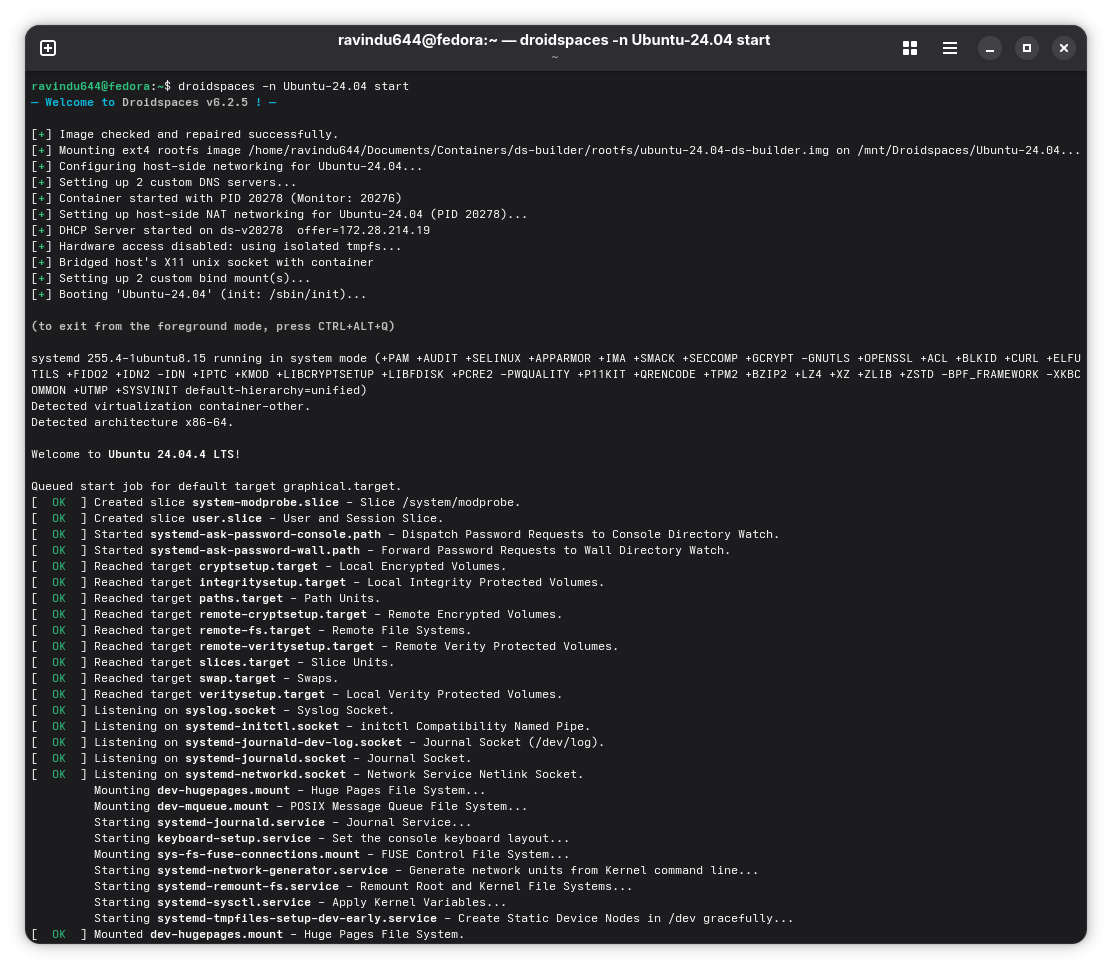
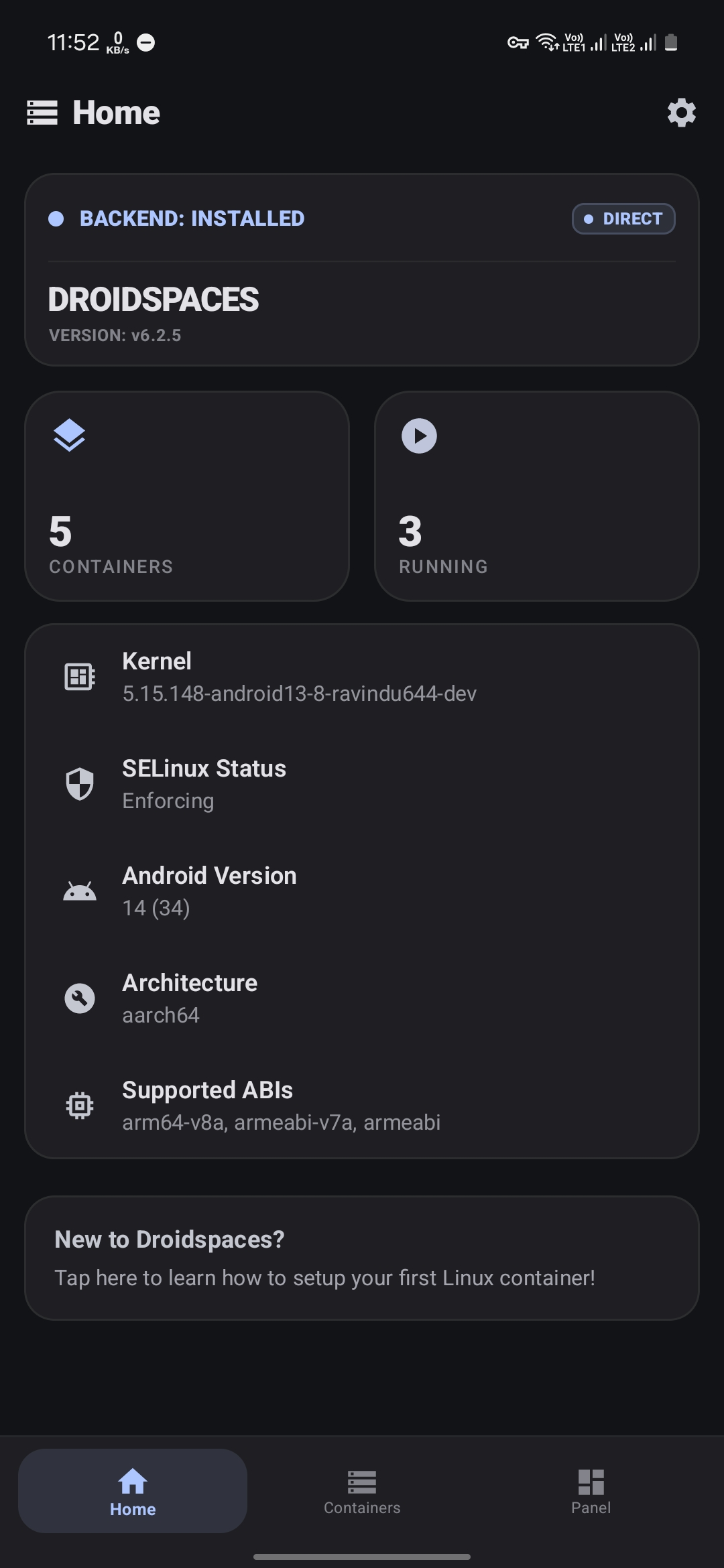
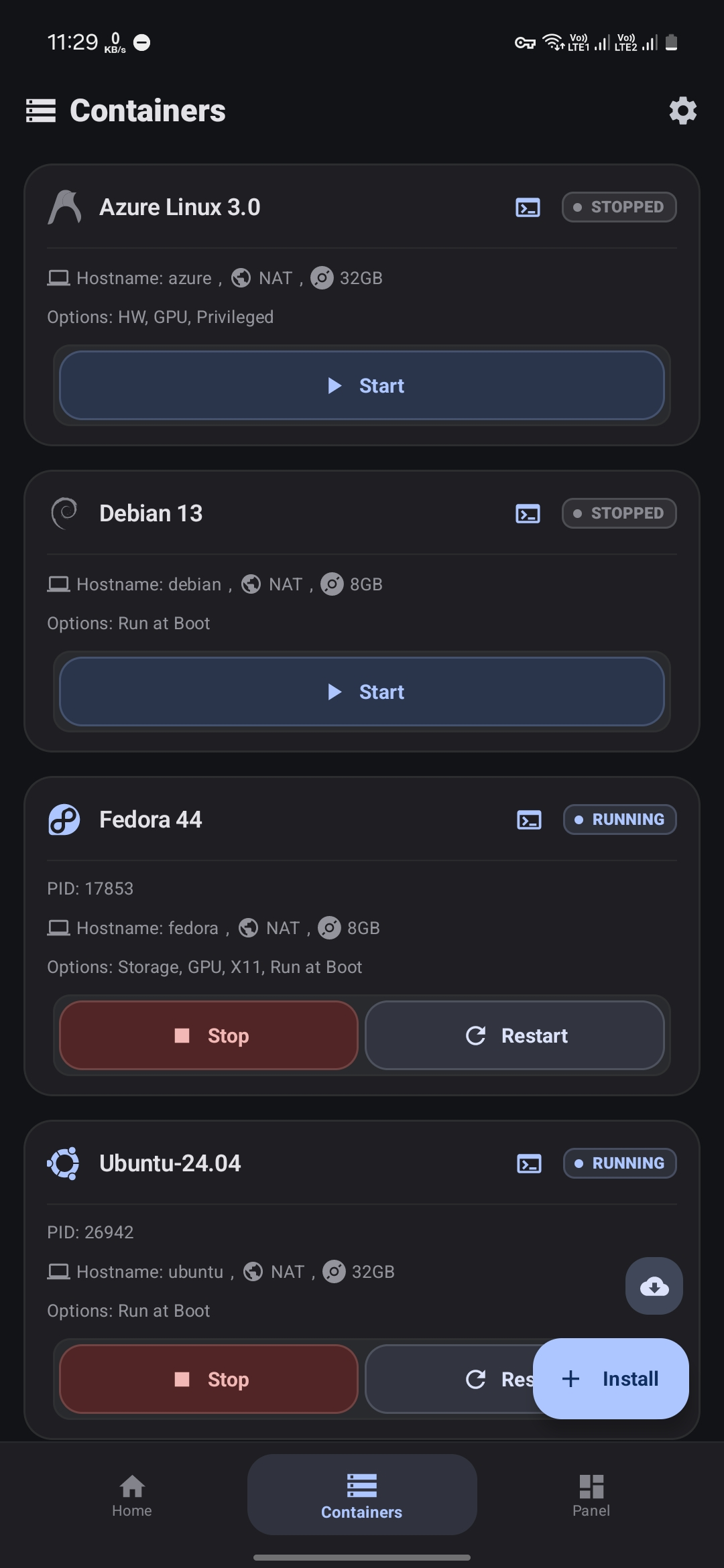
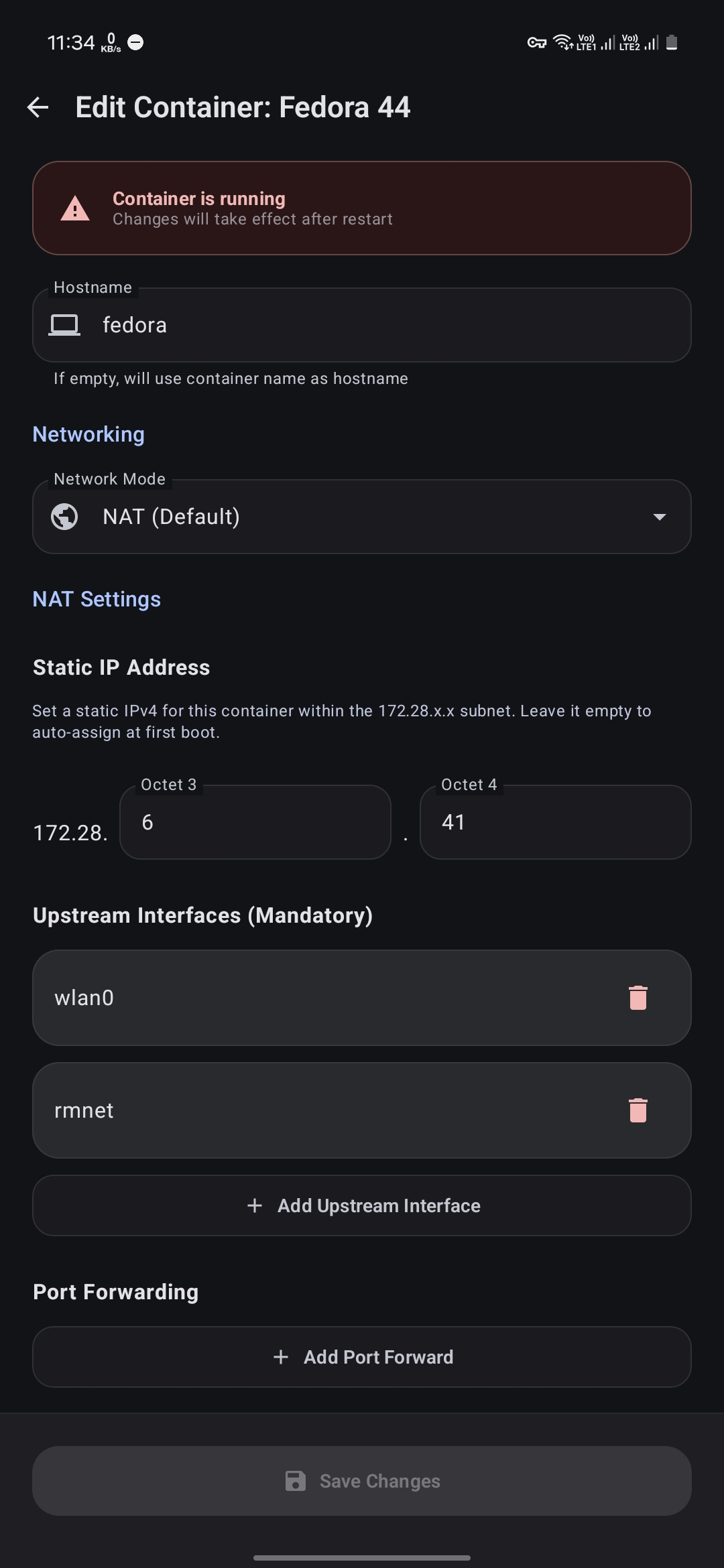
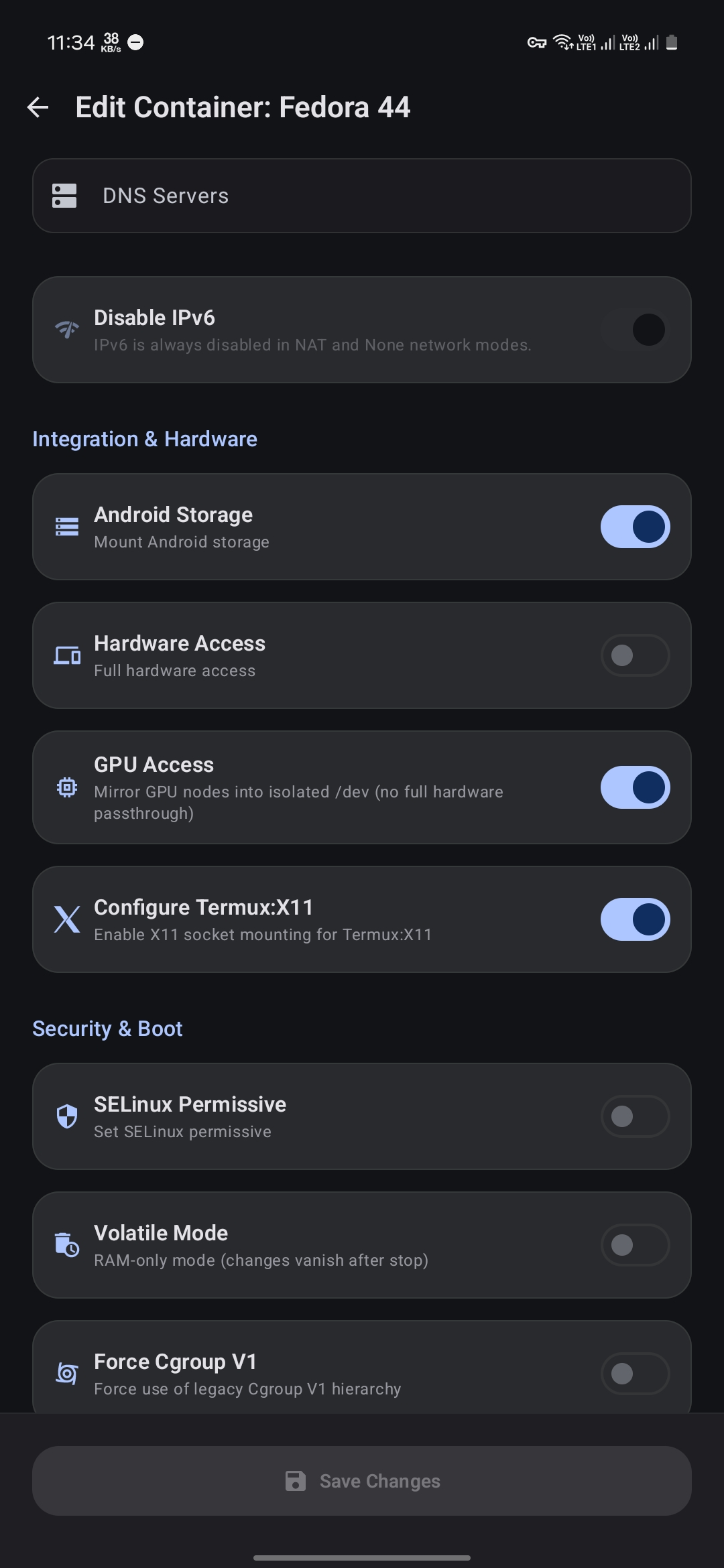
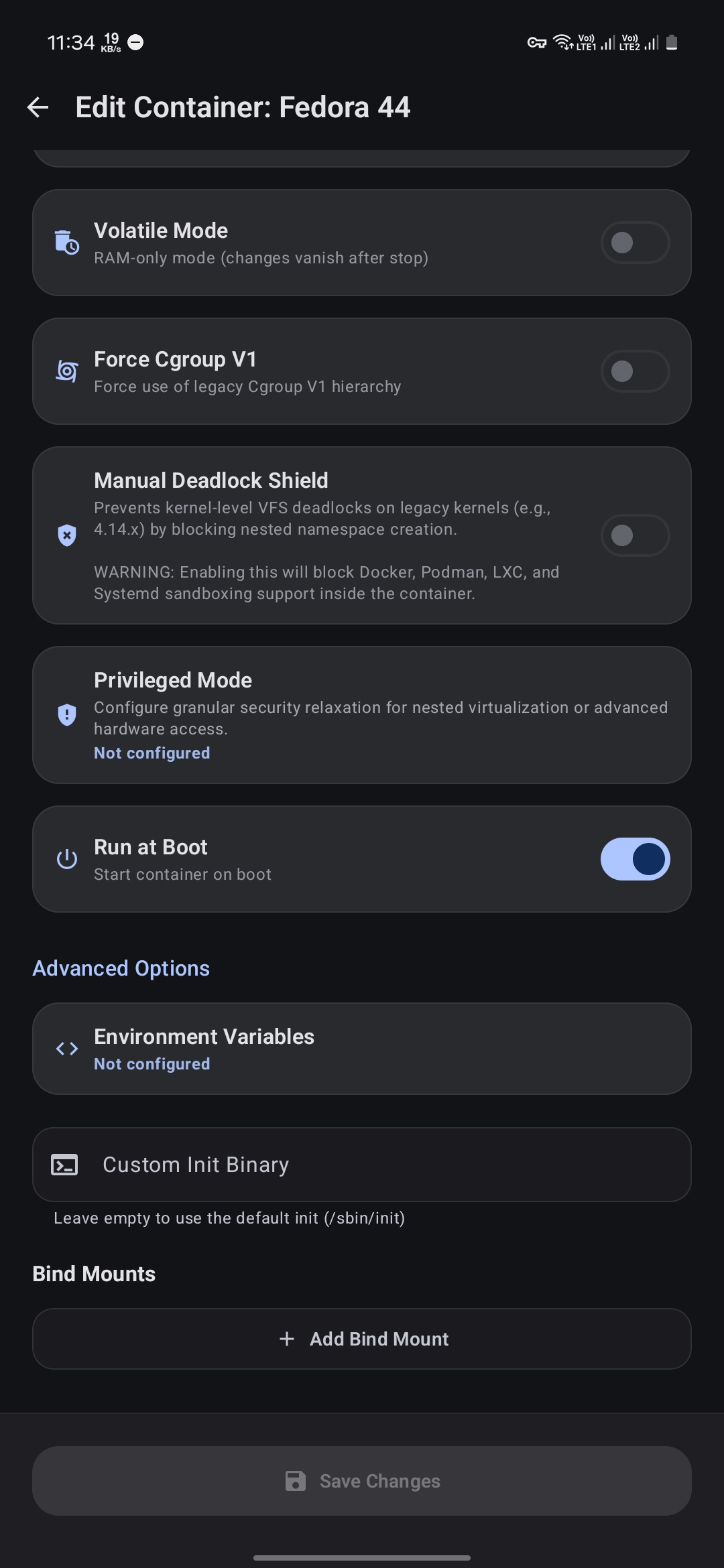
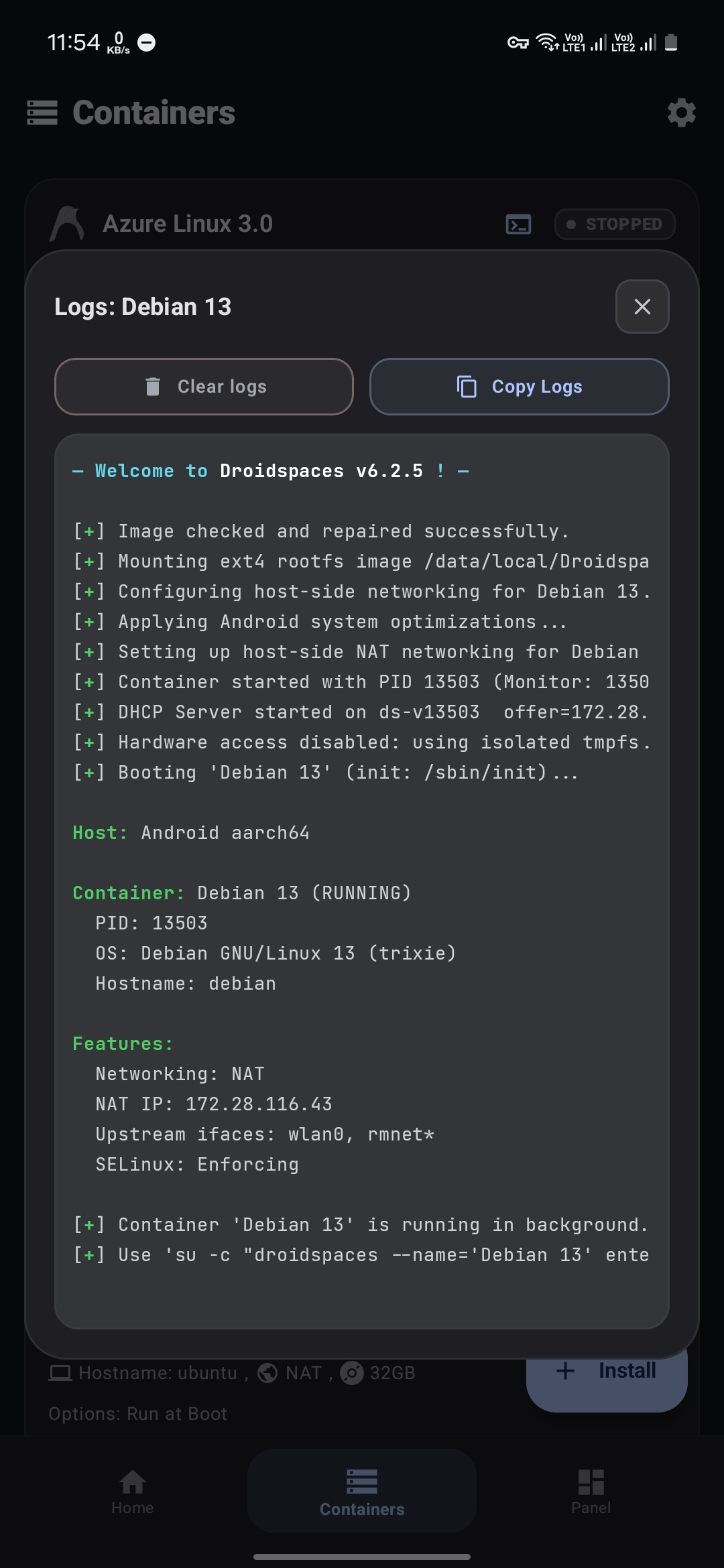
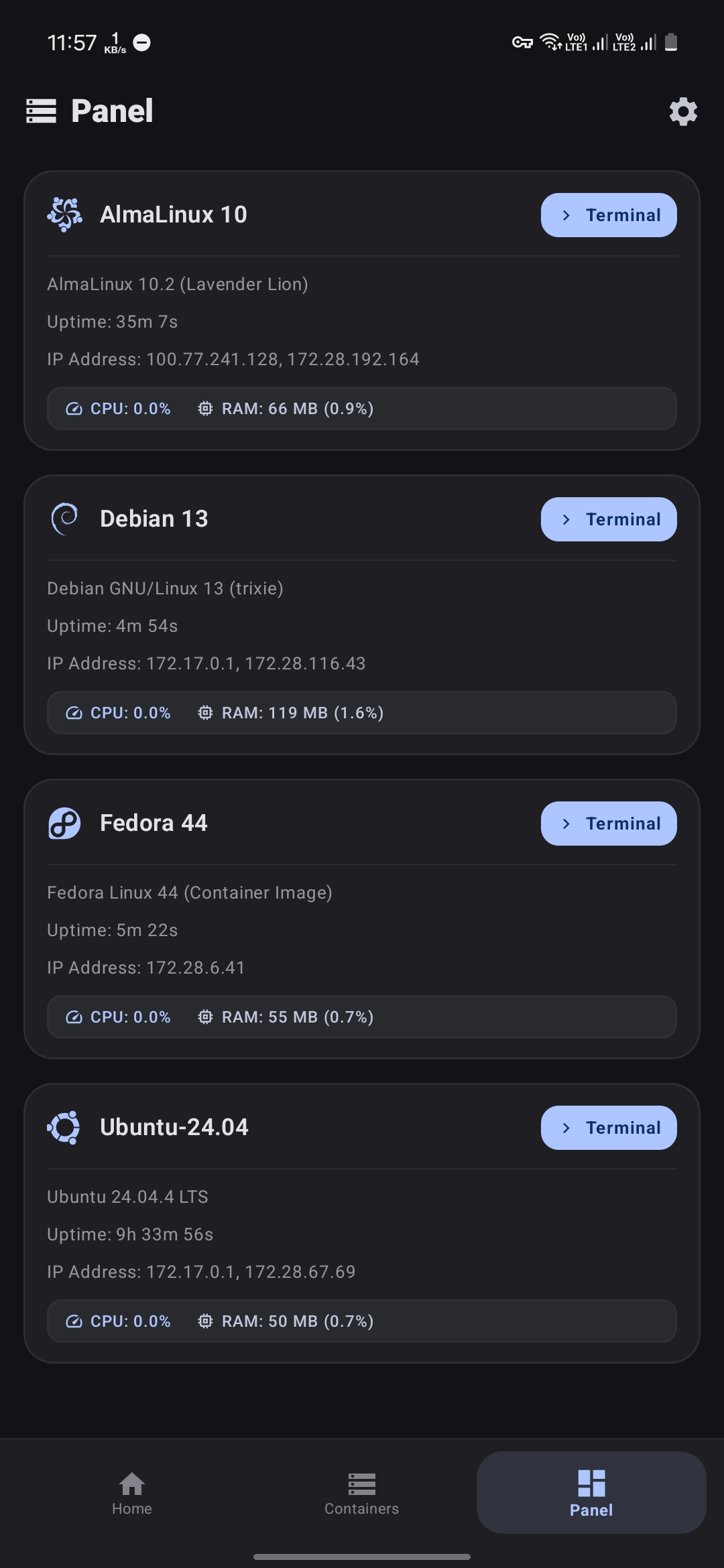
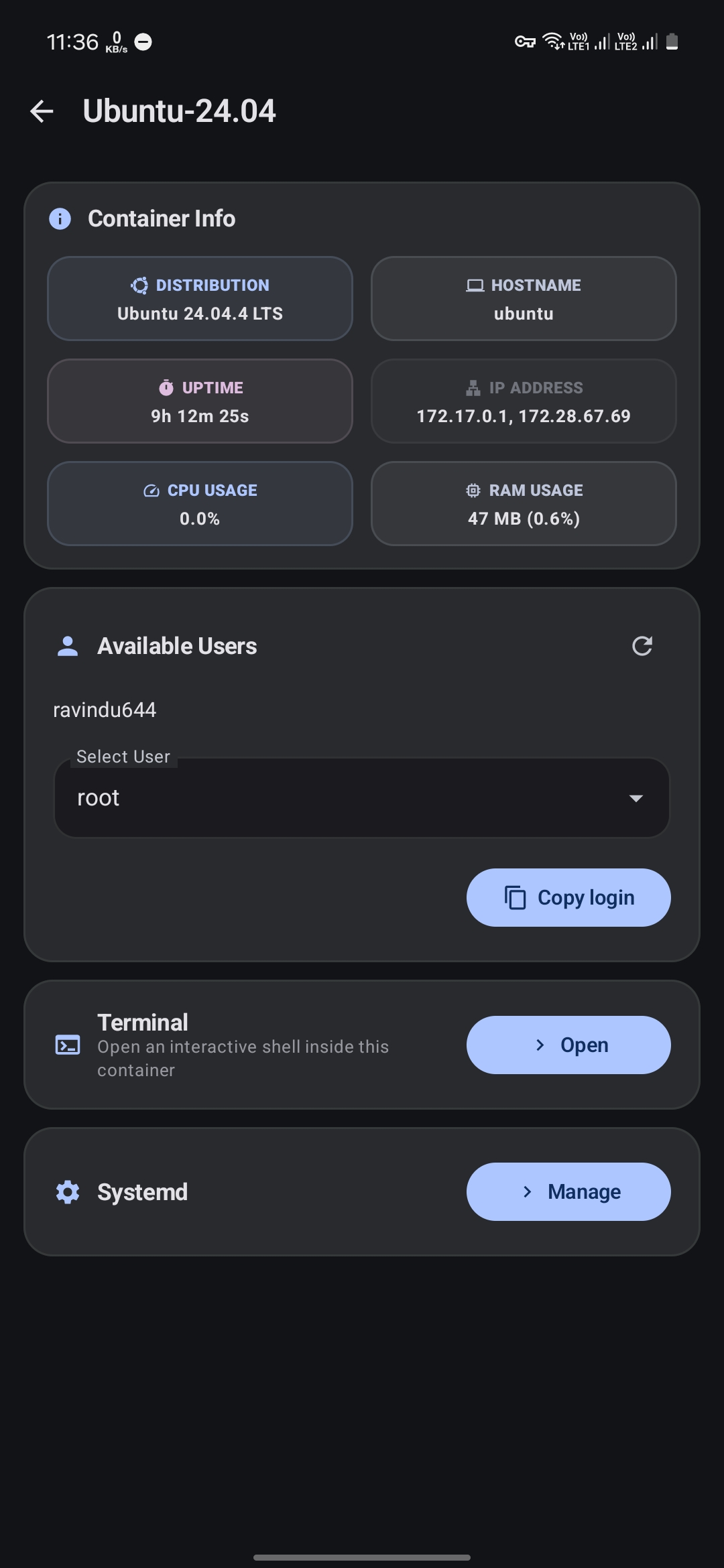
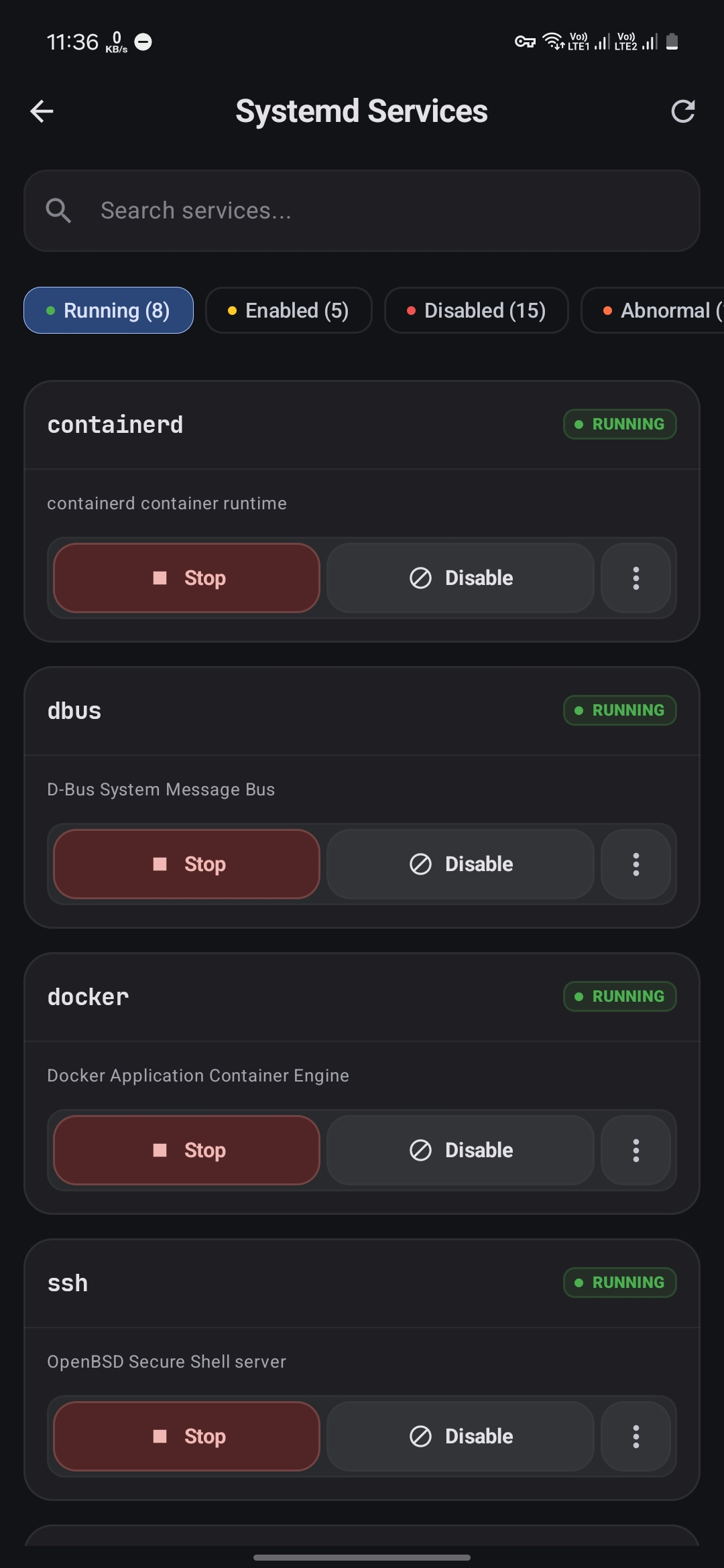
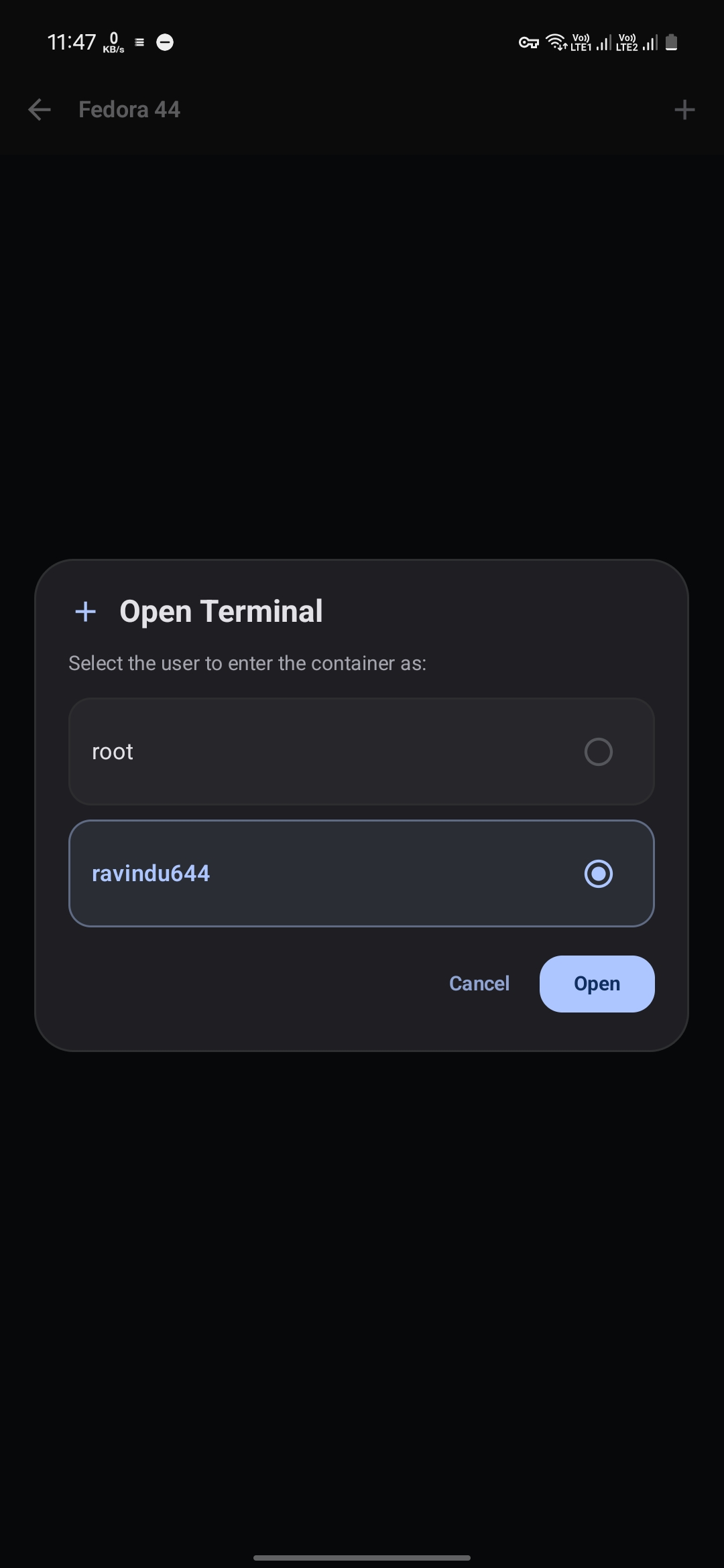
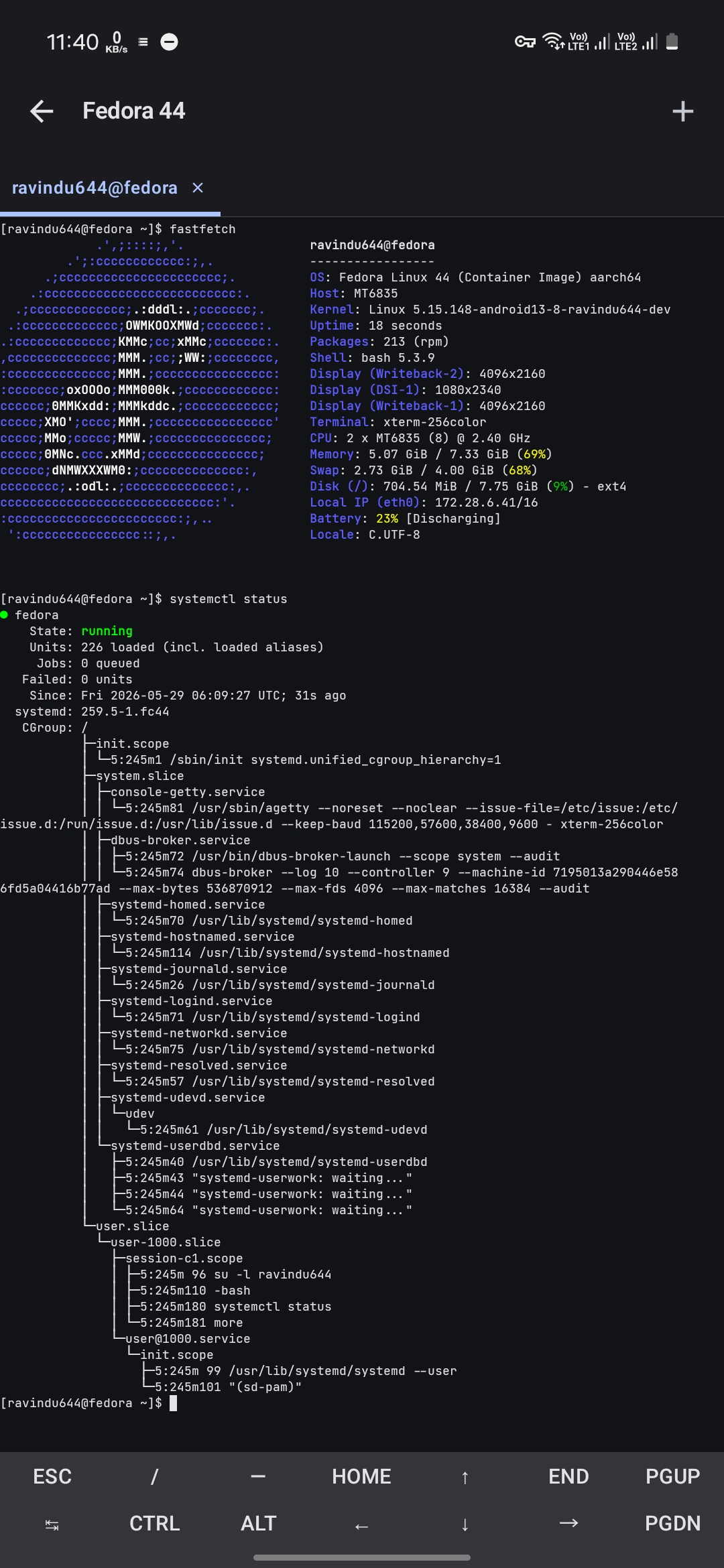
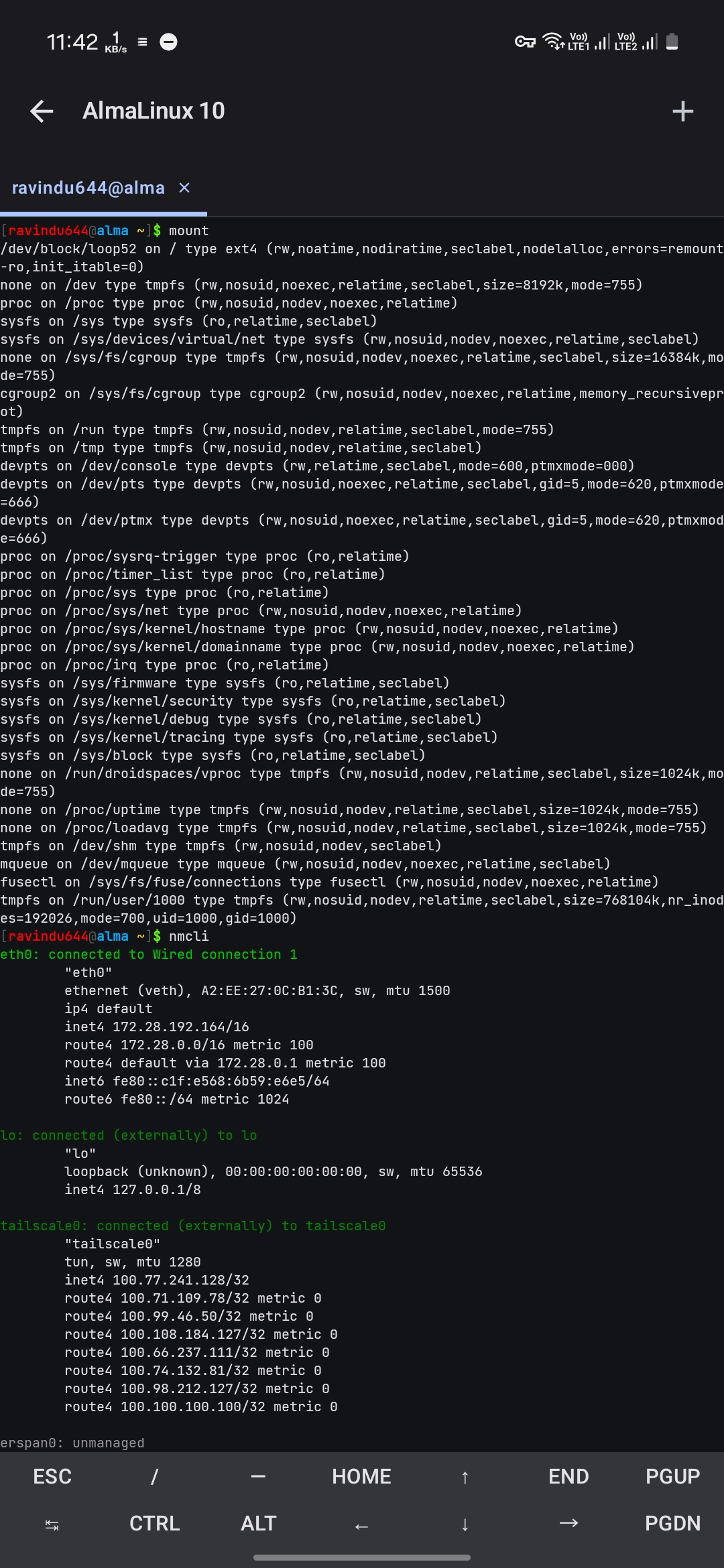
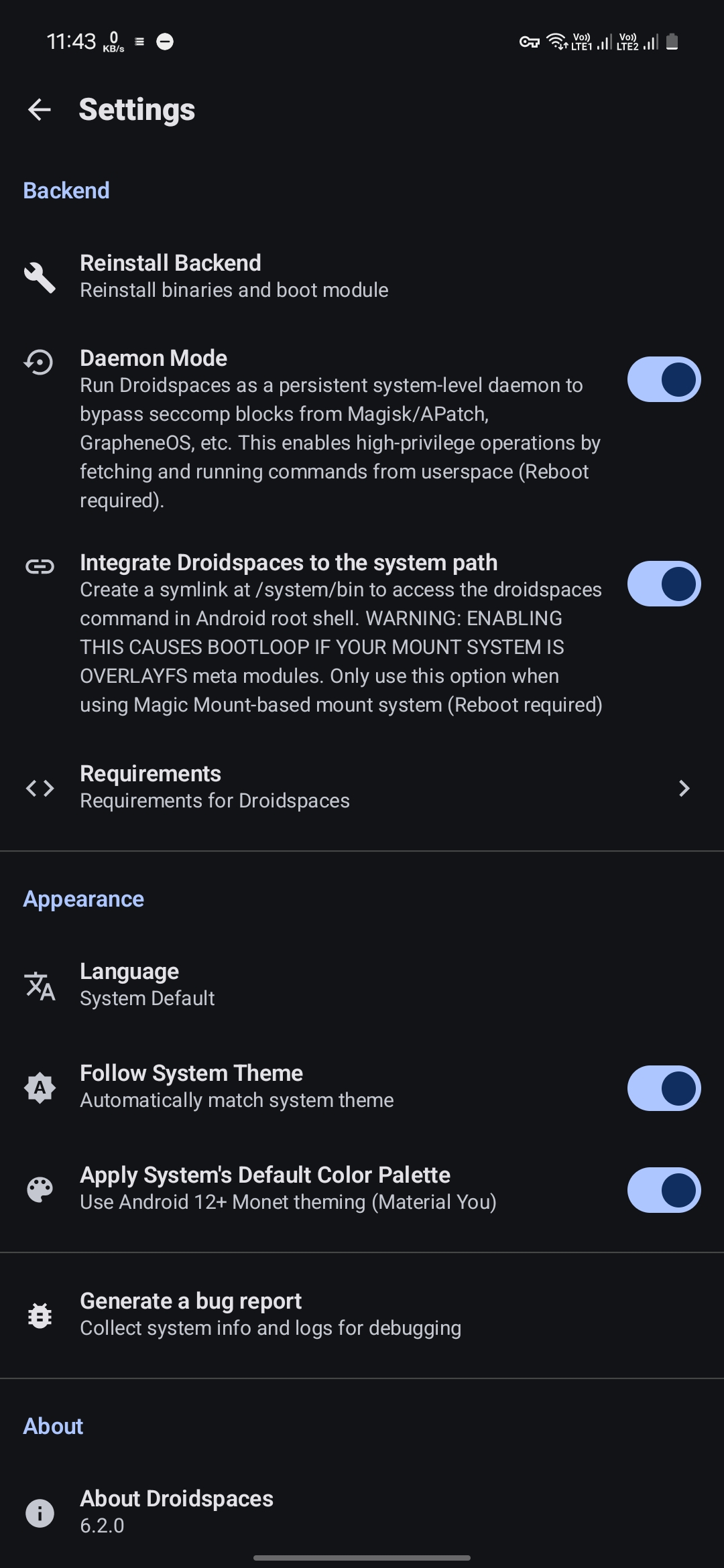
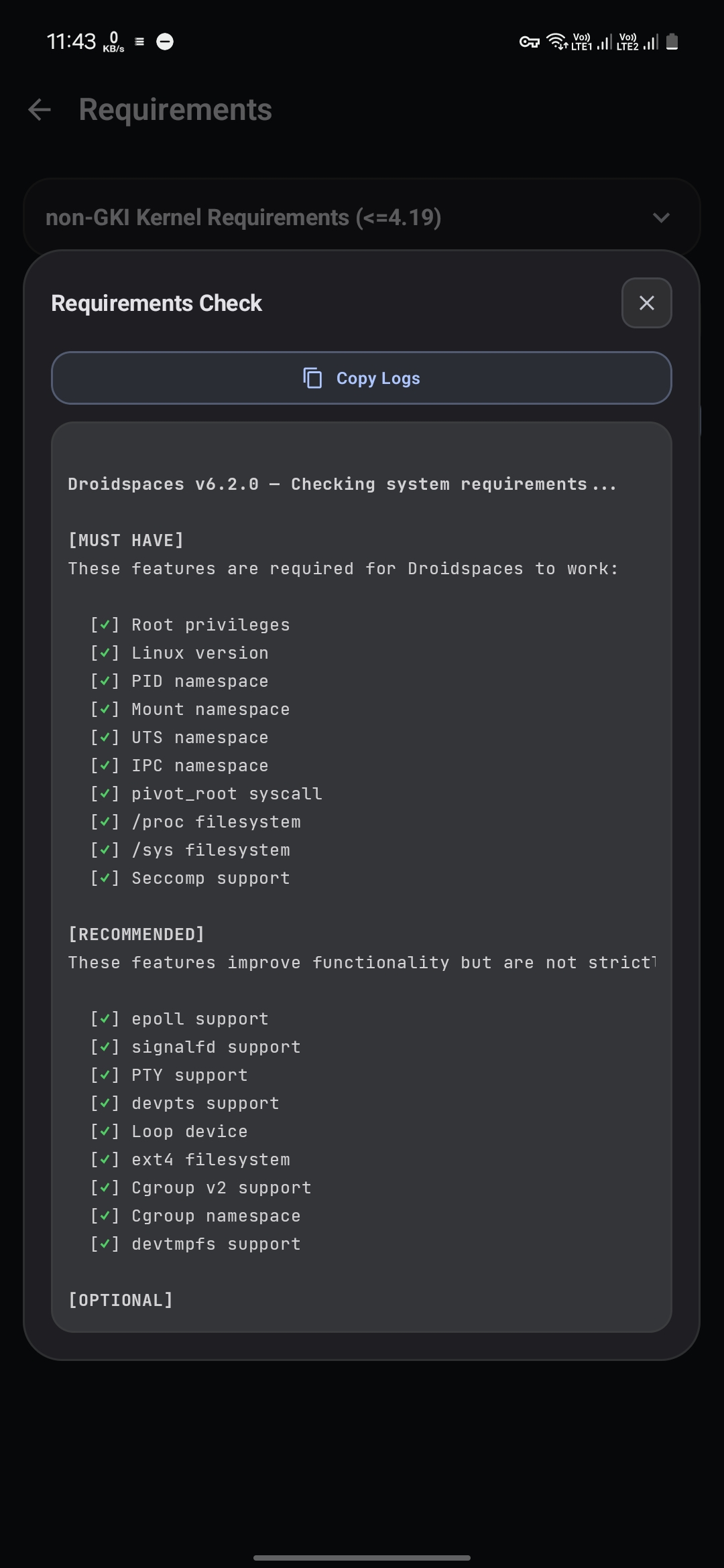
A lightweight, LXC-like container runtime for Android and Linux. Run full Linux distributions natively with zero performance penalty
1.4k
Stars
133
Forks
0
Open issues
30
Contributors


AI Analysis
Droidspaces is a lightweight Linux containerization runtime for Android and Linux that enables running full Linux distributions with init systems (systemd, OpenRC, etc.) natively on devices with a Linux kernel, requiring zero dependencies and weighing under 400KB. It is specialized for advanced users and system administrators who need container environments on rooted Android devices or Linux desktops, and is not intended for casual end-users or those seeking Docker-like orchestration.
Inferred from signals mentioned in the README (tests, CI, type safety) — not a review of the actual code.
AI's overall editorial judgment — not an average of the bars above, can weigh other factors too.
Lightweight Linux container runtime for Android with native execution, built for zero-dependency portability across platforms
Droidspaces is a statically-compiled Linux containerization tool targeting Android and Linux desktops. It enables running full Linux distributions (with init systems like systemd) on Android devices without intermediaries like Termux. The project launched in February 2026 and has accumulated 1,341 stars with sustained weekly growth (~57 stars/week). Real-world adoption appears concentrated in enthusiast and tinkerer communities; enterprise or mainstream adoption is not documented. The Android app provides GUI management alongside CLI tools.
Droidspaces emerged in February 2026 as a response to the friction of existing Android Linux environments. It positions itself against UserLAnd (Termux-based approach) and waydroid (Android container on Linux), emphasizing direct kernel access and zero-dependency static compilation. The project benefits from a growing ecosystem interest in portable containerization but represents a new entrant rather than a continuation of prior work.
The project gained 1,341 stars in ~4.5 months (Feb–Jun 2026), averaging ~50–60 stars/week. Recent velocity (57 stars in 7 days) suggests sustained interest from Linux/Android enthusiast communities. Growth appears driven by: (1) technical simplicity compared to alternatives, (2) active Telegram community engagement, (3) multi-language localization (Weblate integration), (4) both Android app and CLI interfaces. No viral inflection point observed; growth pattern is consistent rather than explosive.
Adoption not verified. README references 'community-supported Android devices' document (growing list), suggesting real users testing on hardware. Telegram channel presence indicates some user engagement, but no quantified production deployments, enterprise users, or large-scale adoption mentioned. GitHub forks (123) are modest. Cannot distinguish between hobbyist experimentation and actual production reliance.
Based on README: implemented in Kotlin (Android app) with statically-compiled native binaries (musl libc). Described as under 400KB footprint per platform. Supports aarch64, armhf, x86_64, x86, and riscv64 from single binary. Appears to leverage Linux namespaces and cgroups for container isolation. Full architecture details not verifiable from README alone; likely uses standard containerization kernel features adapted for Android. Init system support includes systemd, OpenRC, runit, s6.
Not documented in README. No mention of automated test suites, CI/CD pipelines, or test coverage metrics.
Last push 2026-06-29 (1 day before analysis date), indicating active development as of late June 2026. Created 2026-02-18, so project is ~4.5 months old. Frequent commits suggested by consistent growth trajectory. Telegram channel active. No public issue tracker metrics provided in README. Project is young but not dormant; rapid iteration pace expected for new projects.
ADOPT IF: you are an Android enthusiast or developer seeking a lightweight, zero-dependency way to run full Linux environments on mobile hardware for tinkering, testing, or educational purposes, and you accept the risks of early-stage tooling. AVOID IF: you require production stability guarantees, extensive documentation, proven large-scale deployment track records, or commercial support. MONITOR IF: you work on embedded Linux or mobile infrastructure and want to track emerging container runtime options; Droidspaces may mature into a relevant tool for specialized deployments as the ecosystem solidifies.
Independent dimensions
Mainstream potential
3/10
Technical importance
6/10
Adoption evidence
2/10
- Project is only 4.5 months old; long-term maintenance and API stability unproven. Risk of abandonment or architectural changes.
- Adoption confined to enthusiast communities; no quantified real-world production use cases documented. Unclear how well it performs under diverse Android hardware configurations.
- Testing and CI/CD practices not documented; code quality assurance approach unknown. No public issue tracking visible in README.
- Single developer or small team implied; bus factor risk if key maintainer becomes unavailable.
- Android ecosystem fragmentation (OEM kernels, SELinux policies, kernel module availability) may limit reproducibility and reliability across devices.
Droidspaces will likely remain a specialized tool for Linux/Android enthusiasts and developers over the next 12–24 months. If maintained consistently, it may accumulate 3,000–5,000 stars by end of 2027. Mainstream adoption appears unlikely unless enterprise or educational institutions begin standardized testing/deployment. Project success depends on: (1) maintaining multi-platform stability, (2) building a self-sufficient community, (3) documenting production deployments. Most probable trajectory: steady niche tool with loyal but limited user base.
Newsletter
Get analyses like this every Monday
Free weekly digest of the most interesting open-source discoveries.
Languages
Information
- Website
- https://t.me/Droidspaces
- Language
- Kotlin
- License
- GPL-3.0
- Last updated
- 22h ago
- Created
- 5mo ago
- Analyzed with
- anthropic/claude-haiku-4-5
Stars over time
Contributors over time
Top 100 contributors only — repos with more will plateau at 100.
Open issues
No open issues — clean slate.
Open pull requests
No open pull requests.
Top contributors
Similar repos

CypherpunkArmory/UserLAnd
UserLAnd enables running full Linux distributions or specific applications on...

Cateners/tiny_container
Tiny Container is an Android app that packages a Debian 13 Linux environment...
| Repository | Stars | Week Δ | Language | Score | Updated |
|---|---|---|---|---|---|
|
ravindu644/Droidspaces-OSS
this
|
1.4k | +49 | Kotlin | 7/10 | 22h ago |
 ExTV/Podroid ExTV/Podroid
|
1.7k | — | Kotlin | 7/10 | 1w ago |
|
CypherpunkArmory/UserLAnd
|
4.2k | — | Kotlin | 7/10 | 9h ago |
|
Cateners/tiny_container
|
3.6k | — | Kotlin | 7/10 | 2w ago |
 orailnoor/DroidDesk orailnoor/DroidDesk
|
2.2k | — | Shell | 7/10 | 3mo ago |
 nestybox/sysbox nestybox/sysbox
|
3.8k | — | Shell | 7/10 | 2mo ago |
Runs Android containers on Linux desktops. Inverse use case from Droidspaces. Mature project; Droidspaces is newer but targets the opposite direction (Linux on Android).
Runs Linux on Android via proot (Termux-based). Droidspaces claims native LXC-like approach without Termux dependency. UserLAnd has 3x adoption but relies on middleman abstraction.
Container runtime for secure unprivileged containers. Desktop/server-focused; Droidspaces targets mobile-first scenarios. Different use cases, though both containerization-adjacent.
Kotlin-based, likely Android containerization tool. Star count and adoption comparable to Droidspaces; slightly more established but similar niche positioning.
Shell-based approach to running Ubuntu on Android. Similar goal to Droidspaces but older codebase. Droidspaces may offer lower overhead and better portability.