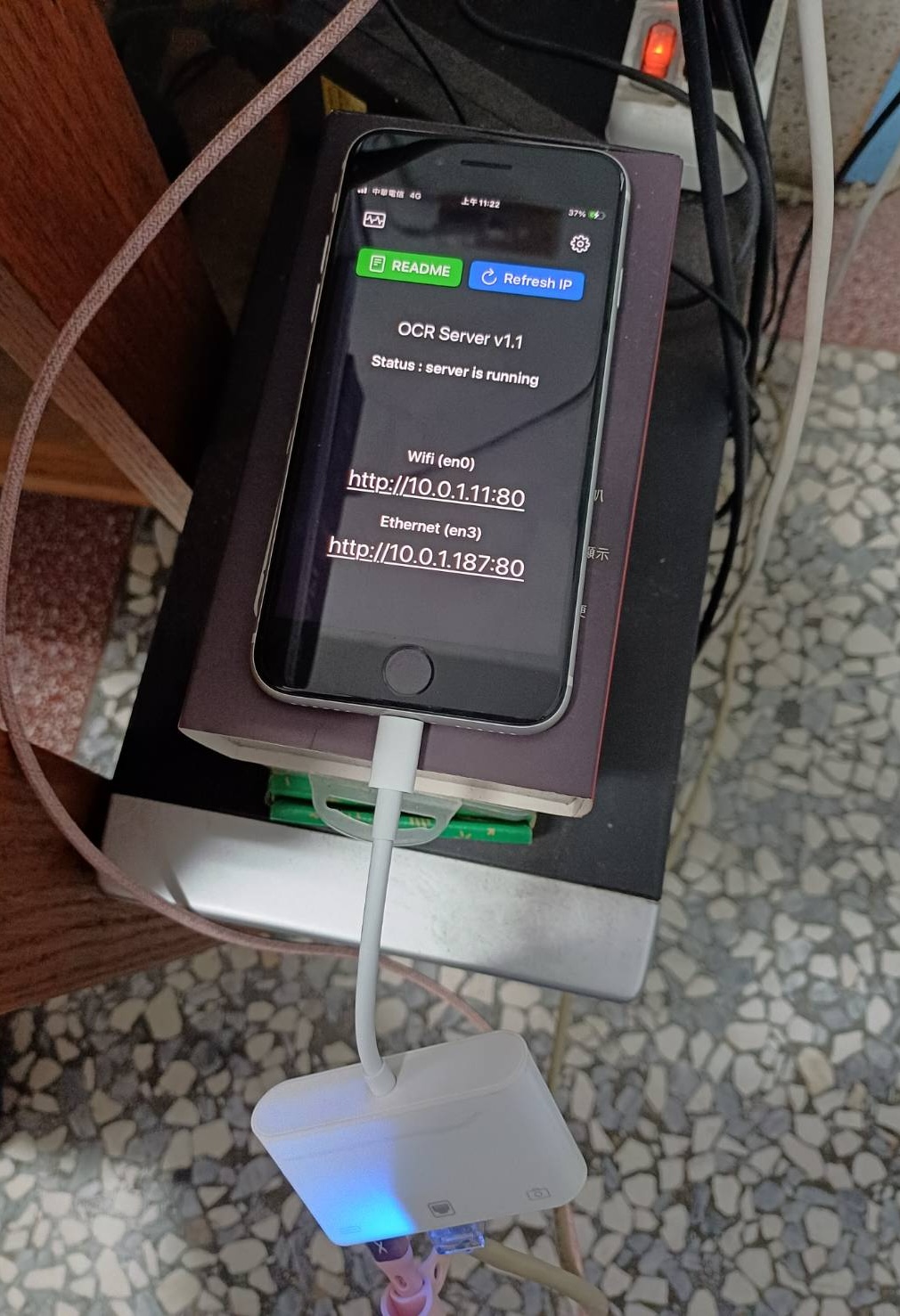
An iOS OCR Server Using Apple’s Vision Framework
1.8k
Stars
149
Forks
0
Open issues
2
Contributors

AI Analysis
iOS OCR Server turns an iPhone into a local OCR endpoint using Apple's Vision Framework, eliminating cloud dependencies and privacy concerns. It serves developers and teams needing on-device text recognition via HTTP API, ideal for organizations with air-gapped networks or strict data residency requirements. Not suitable for users seeking cloud-scale multi-language support or those without network infrastructure expertise.
Inferred from signals mentioned in the README (tests, CI, type safety) — not a review of the actual code.
AI's overall editorial judgment — not an average of the bars above, can weigh other factors too.
iOS app wrapping Apple Vision OCR as local network service for privacy-focused text recognition
iOS-OCR-Server is a lightweight app that exposes Apple's Vision Framework OCR capabilities via HTTP API over local network. Built for users who want text extraction without cloud dependencies or API costs. The project gained 1,381 stars since August 2025, saw 89 stars in the last 7 days (June 2026), and appears to appeal to developers seeking on-device OCR for local integration. Adoption remains difficult to verify beyond GitHub signals and an App Store presence.
Created August 2025, the project emerged during a period of growing privacy concerns around cloud-based OCR. It leverages native Apple Vision APIs rather than building novel recognition logic, positioning itself as a privacy-first wrapper that converts a consumer phone into a network-accessible OCR endpoint.
89 stars gained in the last 7 days suggests recent momentum. The project is 10 months old with 1,381 total stars and 101 forks, indicating steady interest among Swift developers and those exploring local OCR alternatives. Recent localization into 5 non-English languages (Japanese, Traditional Chinese, Simplified Chinese, Korean, French) suggests international adoption effort. Growth appears organic rather than driven by a major event or viral moment; last push on 2026-06-04 shows active maintenance within the reporting window.
Adoption not verified. App Store presence (app ID 6749533041) is documented but no reviews, download counts, or user testimonials are visible in README. GitHub stars and forks indicate developer interest but do not confirm production deployment at scale. No case studies, company endorsements, or documented integrations mentioned. The emphasis on local privacy suggests potential appeal for security-conscious organizations, but evidence of such adoption is absent.
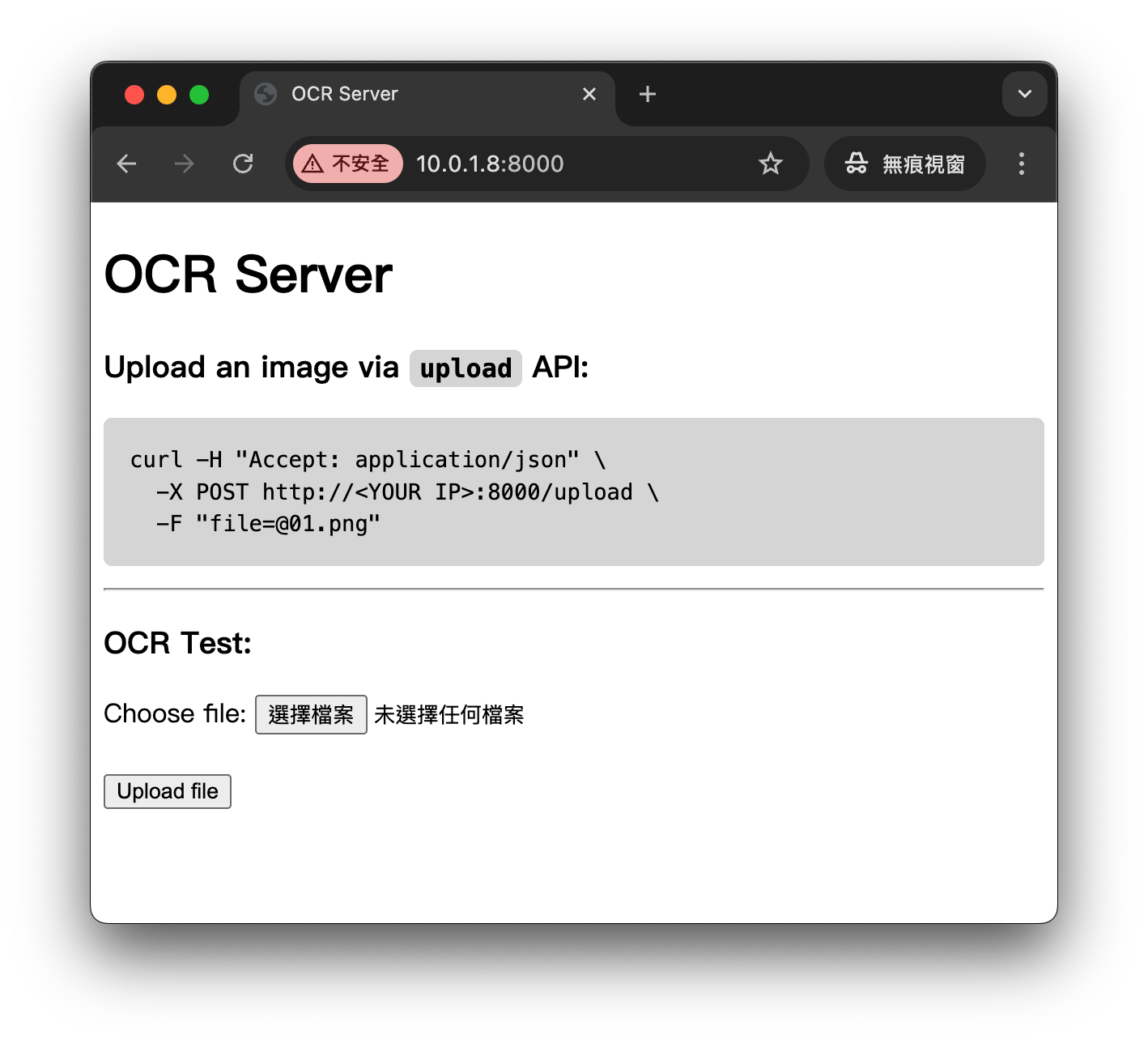
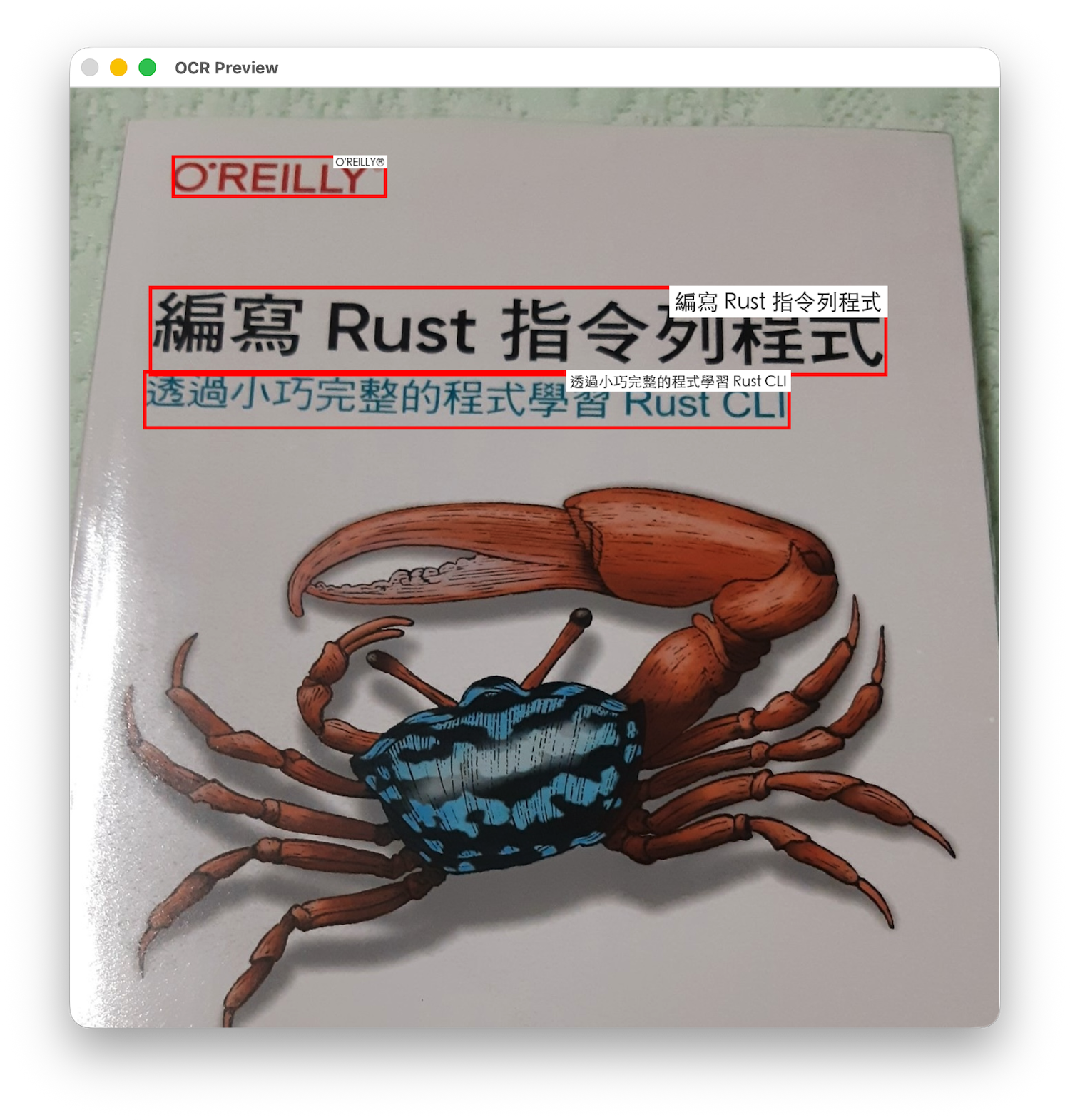
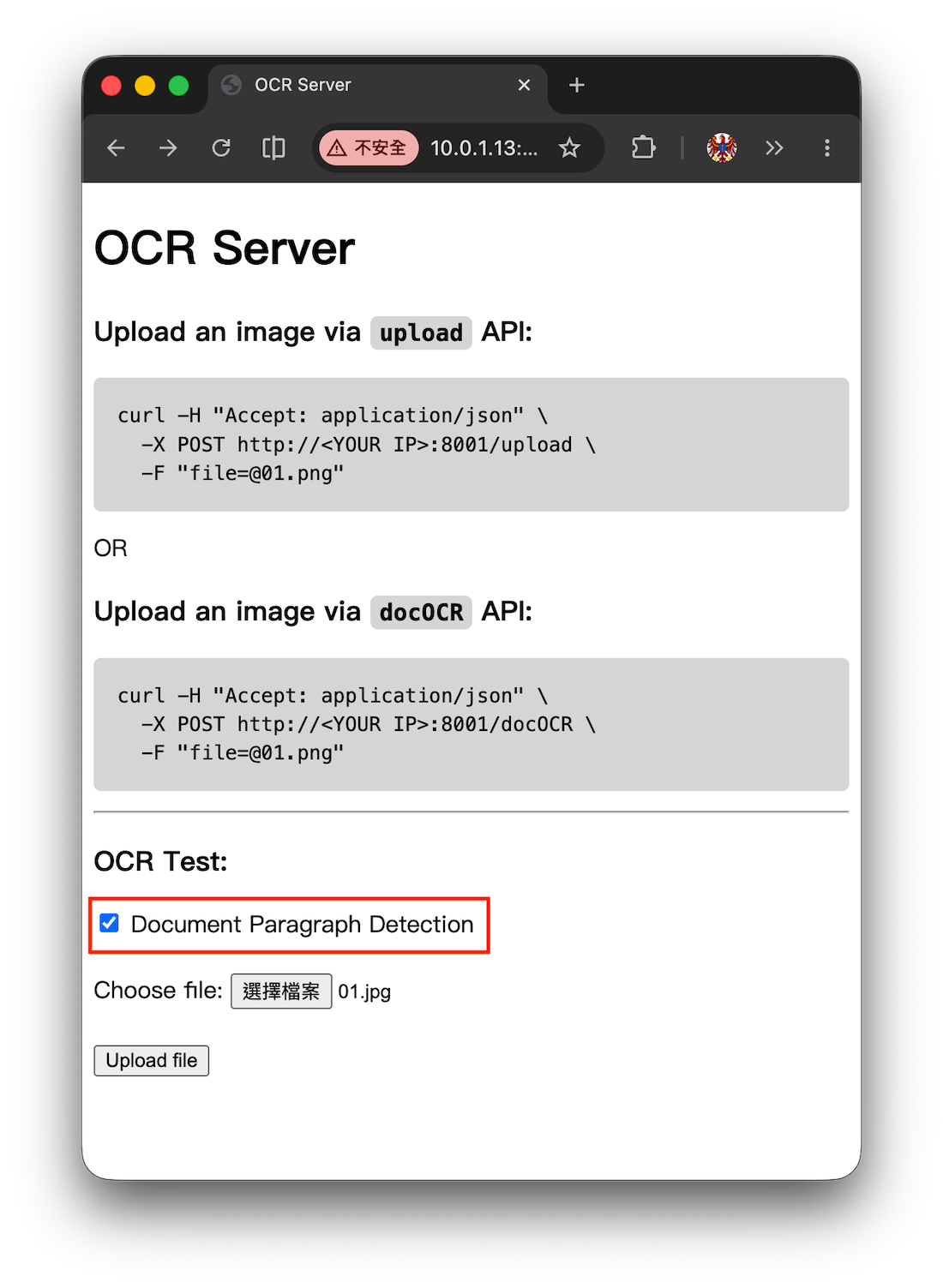
Appears to be a straightforward HTTP server (listening on port 8000) that wraps Apple's Vision Framework text recognition. Based on README, the server runs on iOS with a web UI for testing and accepts file uploads via multipart/form-data POST. Response format includes bounding box coordinates with per-character positioning. No mention of advanced architectures (queuing, distributed processing, model management). Likely suitable for single-device deployment rather than high-throughput scenarios.
Not documented in README. No mention of unit tests, integration tests, or CI/CD pipeline.
Last push 2026-06-04 (24 days ago relative to evaluation date 2026-06-28) indicates active development. MIT license suggests open maintenance posture. However, frequency of commits and issue resolution rate are not visible from metadata alone. Project is relatively new (10 months old), so 'actively maintained' rather than 'long-term mature' is the accurate frame.
ADOPT IF: you need OCR on iOS without cloud dependencies, your workload fits Apple Vision's language/accuracy profile, you control the network (LAN-only, not internet-facing), and you can manage an iOS device as a dedicated service endpoint (with Guided Access enabled, screen on). AVOID IF: you require high OCR accuracy for complex documents, multilingual support beyond Apple Vision's scope, distributed processing, production SLA guarantees, or if your team lacks Swift expertise to troubleshoot. MONITOR IF: you are exploring privacy-first OCR for a prototype and want to validate Apple Vision's accuracy on your workload before committing; adoption signals remain modest, so betting entire workflows on this may be premature.
Independent dimensions
Mainstream potential
3/10
Technical importance
5/10
Adoption evidence
2/10
- Adoption unverified: despite App Store presence and GitHub stars, real production usage is not documented. Unclear if this is a toy project or genuinely deployed in workflows.
- Operational friction: requires keeping an iOS device running with screen on and Guided Access enabled, which is atypical for server deployments. Power consumption, heat, and device lockdown for this purpose may be impractical at scale.
- Limited language support: constrained by Apple Vision Framework capabilities. No mechanism documented for custom models or language expansion; will not match cloud or Tesseract coverage.
- Single-device bottleneck: no built-in clustering, failover, or load balancing. High throughput will likely saturate a single iPhone's CPU/GPU.
- Maintenance risk: young project (10 months old) with no multi-year operational history. iOS API changes or Vision Framework updates could break compatibility; no roadmap published.
Project likely remains a niche tool for privacy-conscious developers and personal workflows rather than expanding to mainstream enterprise adoption. If Apple Vision's accuracy improves and the developer experience is maintained, it may see modest growth in local-first, privacy-focused use cases (e.g., document scanning apps, accessibility tools, local data processing pipelines). However, operational constraints (device-as-server) and lack of documented production deployments suggest limited mainstream potential.
Newsletter
Get analyses like this every Monday
Free weekly digest of the most interesting open-source discoveries.
Languages
Information
- Language
- Swift
- License
- MIT
- Last updated
- 1mo ago
- Created
- 11mo ago
- Analyzed with
- anthropic/claude-haiku-4-5
Stars over time
Contributors over time
Top 100 contributors only — repos with more will plateau at 100.
Open issues
No open issues — clean slate.
Open pull requests
No open pull requests.
Top contributors
Recent releases
Similar repos

RevenueCat/purchases-ios
RevenueCat is a client SDK for managing in-app purchases and subscriptions...
| Repository | Stars | Week Δ | Language | Score | Updated |
|---|---|---|---|---|---|
|
riddleling/iOS-OCR-Server
this
|
1.8k | +51 | Swift | 7/10 | 1mo ago |
 mazzzystar/Queryable mazzzystar/Queryable
|
3k | — | Swift | 7/10 | 3mo ago |
 kellyvv/PhoneClaw kellyvv/PhoneClaw
|
1.1k | — | Swift | 8/10 | 2d ago |
 nextcloud/ios nextcloud/ios
|
2.5k | — | Swift | 7/10 | 6h ago |
|
RevenueCat/purchases-ios
|
3k | — | Swift | 8/10 | 6h ago |
 schappim/macOCR schappim/macOCR
|
2.4k | — | Swift | 7/10 | 3mo ago |
Tesseract is a standalone, offline OCR library with broader language support but requires model downloads and integration effort. iOS-OCR-Server trades flexibility for ease: leverages native iOS APIs (no models to manage) but locked to Apple Vision's language coverage and on-device processing.
Cloud services offer superior accuracy, language coverage, and handwriting support but require internet, incur per-request costs, and raise privacy concerns. iOS-OCR-Server targets users explicitly rejecting those tradeoffs, accepting potentially lower accuracy in exchange for local processing and zero recurring cost.
Both wrap Apple Vision for OCR but differ in scope: macOCR targets macOS desktop with a native UI, while iOS-OCR-Server exposes iOS OCR as a network service. iOS-OCR-Server's HTTP API enables cross-device access (e.g., laptop → iPhone for processing), whereas macOCR is device-local.
Queryable indexes and searches local images on iOS. Both are privacy-first iOS services, but solve different problems: Queryable is about discovery, iOS-OCR-Server is about text extraction. Different user bases despite similar privacy positioning.
Both are lightweight, offline OCR libraries popular in Python workflows. iOS-OCR-Server does not compete for that audience; it serves Swift/iOS developers and networked iOS deployments. Language coverage and accuracy tradeoffs differ.