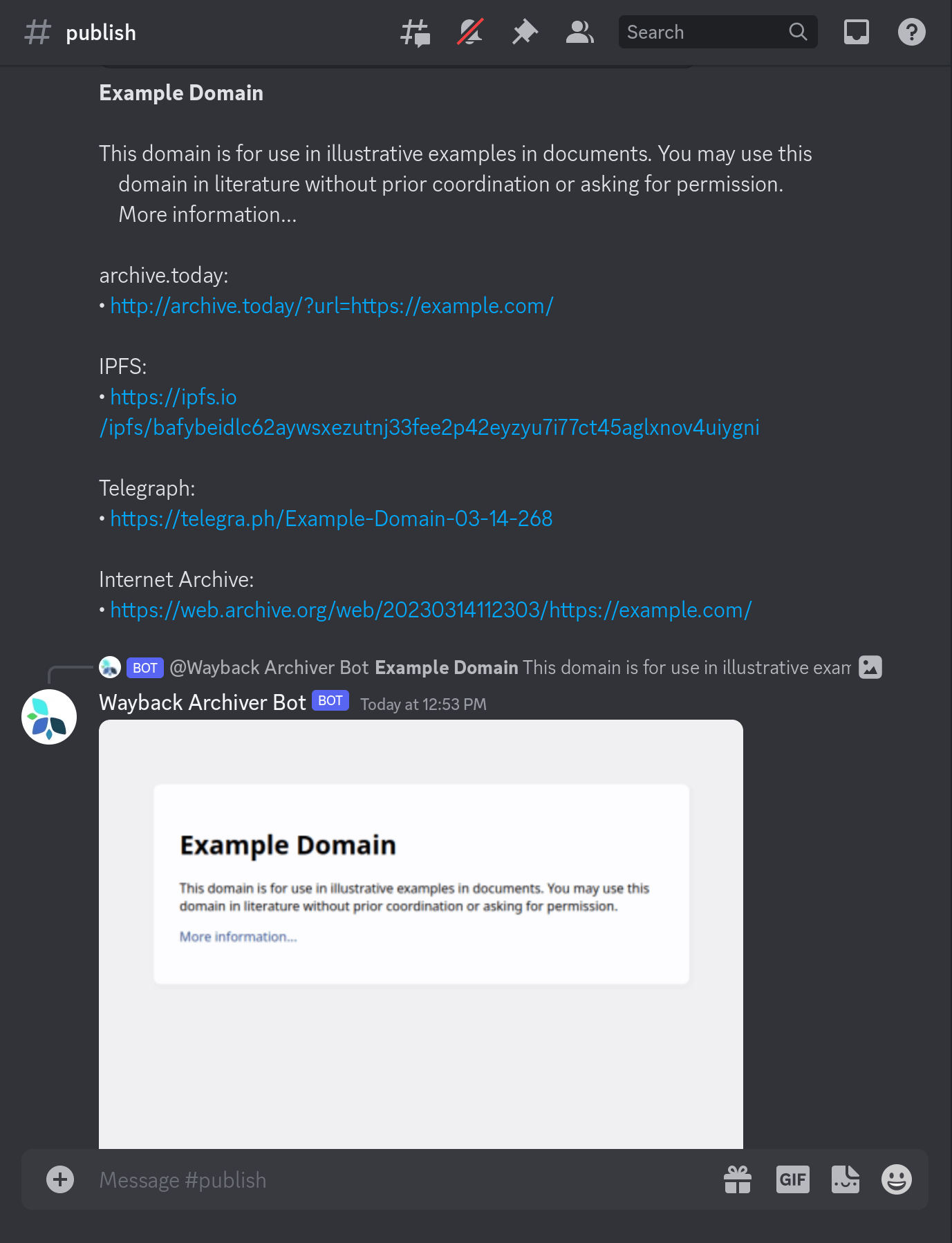
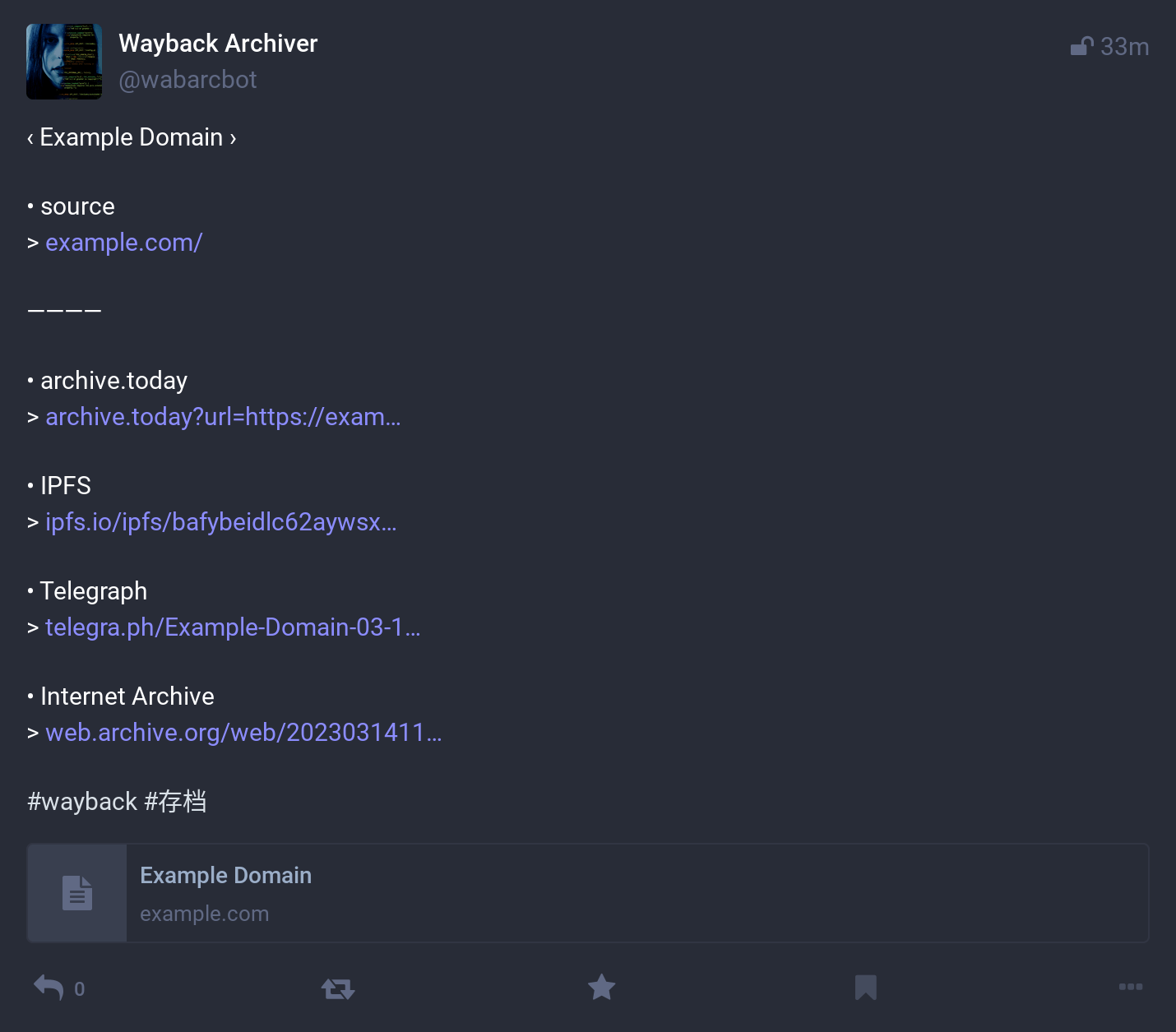
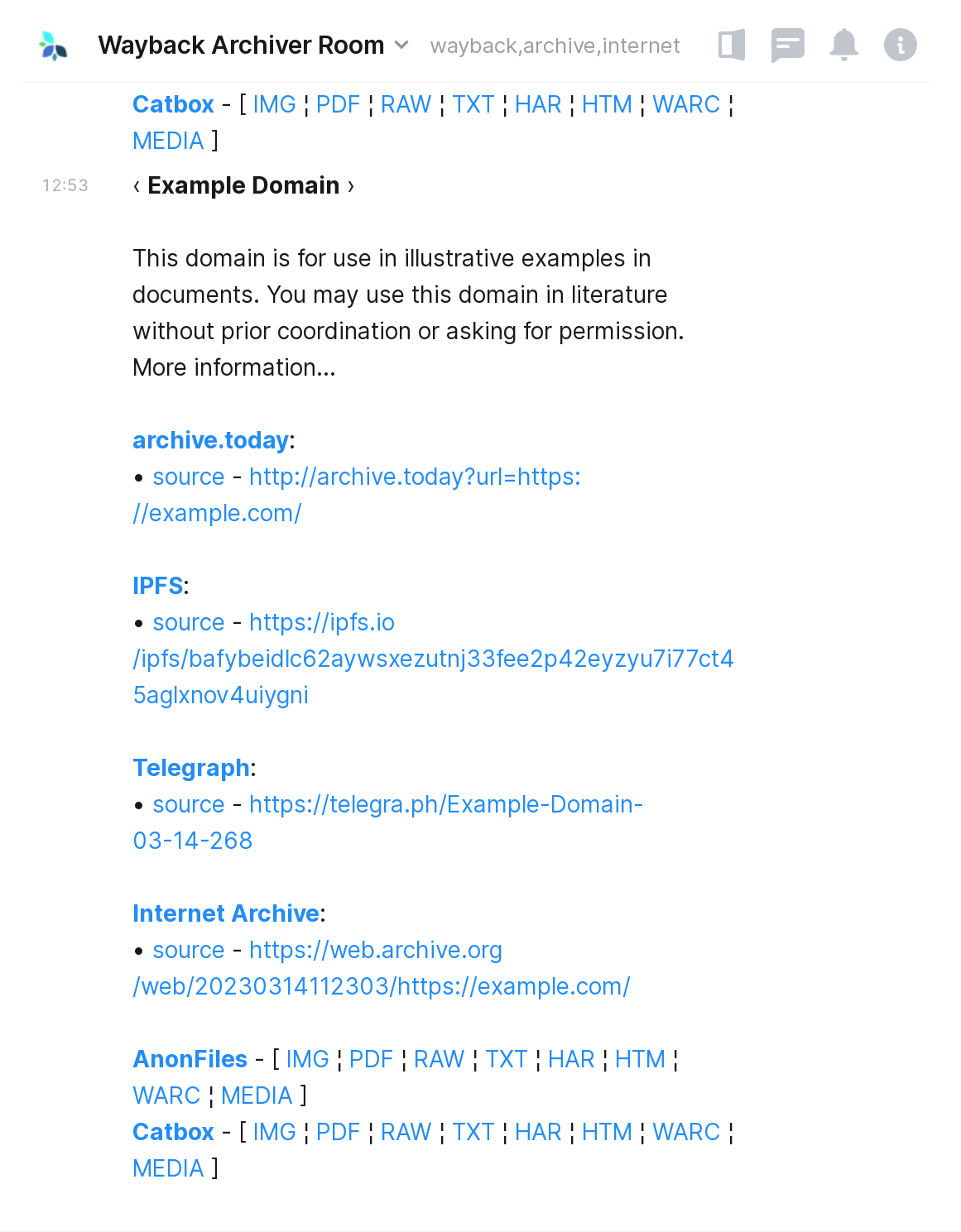
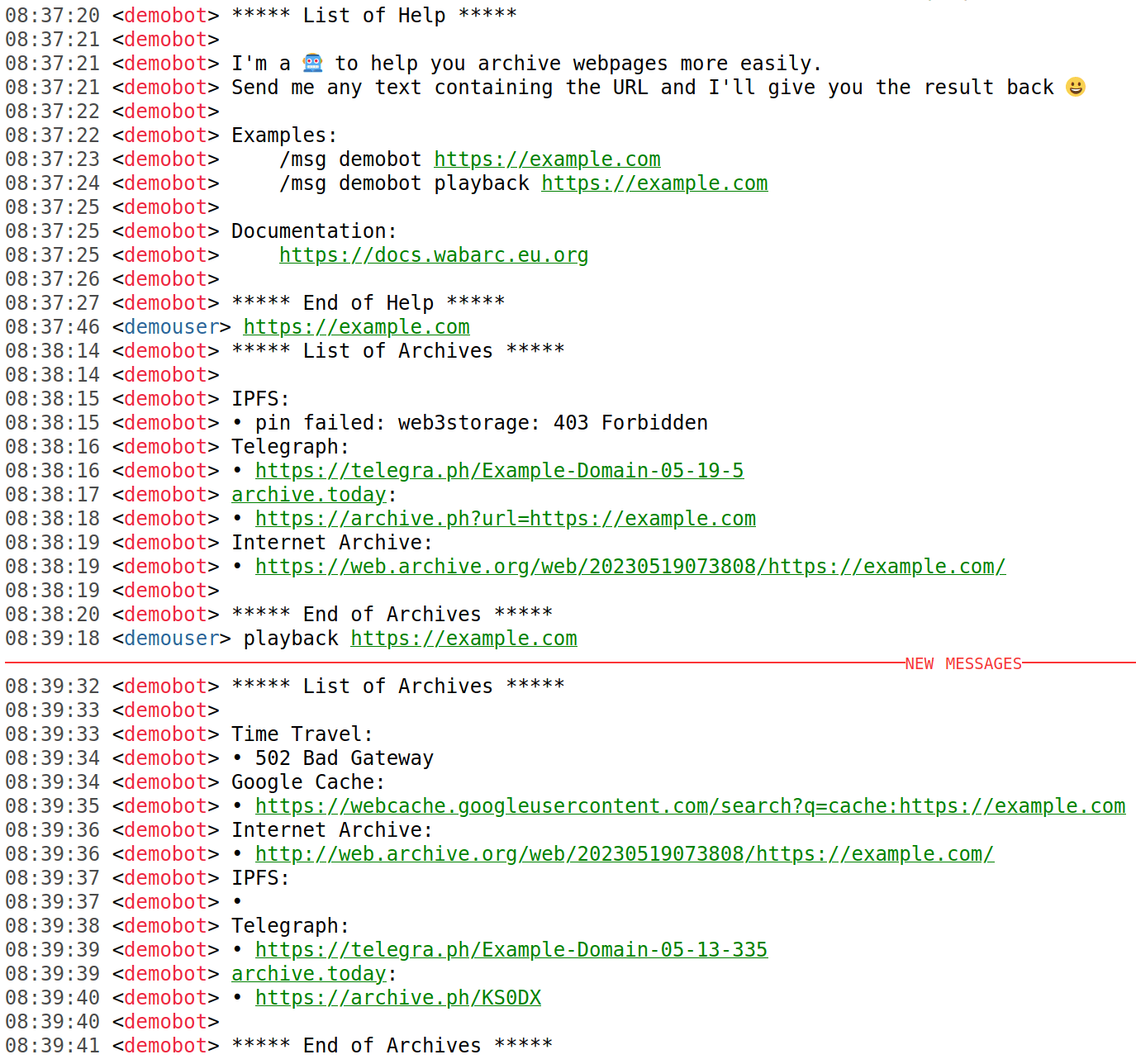
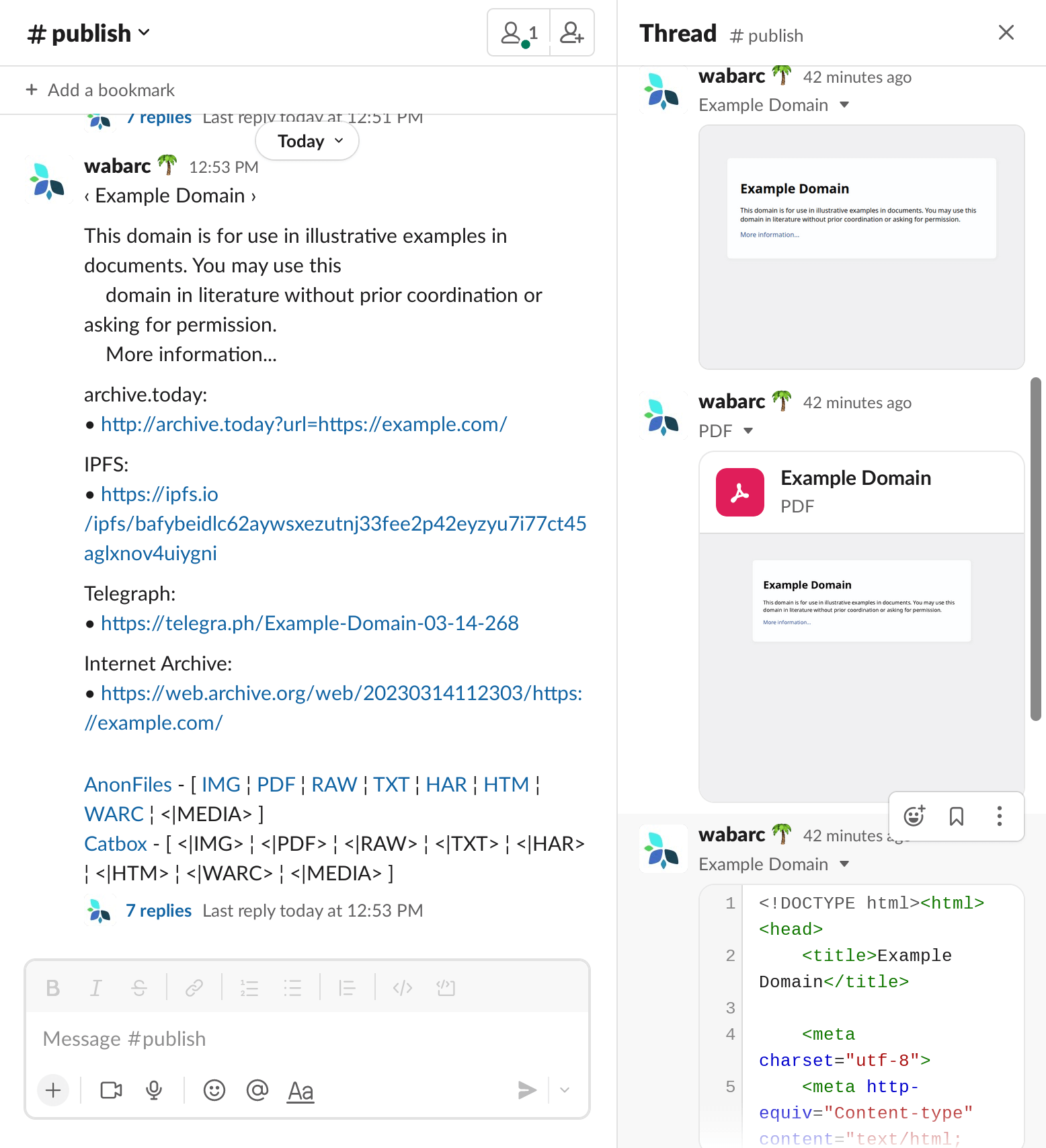
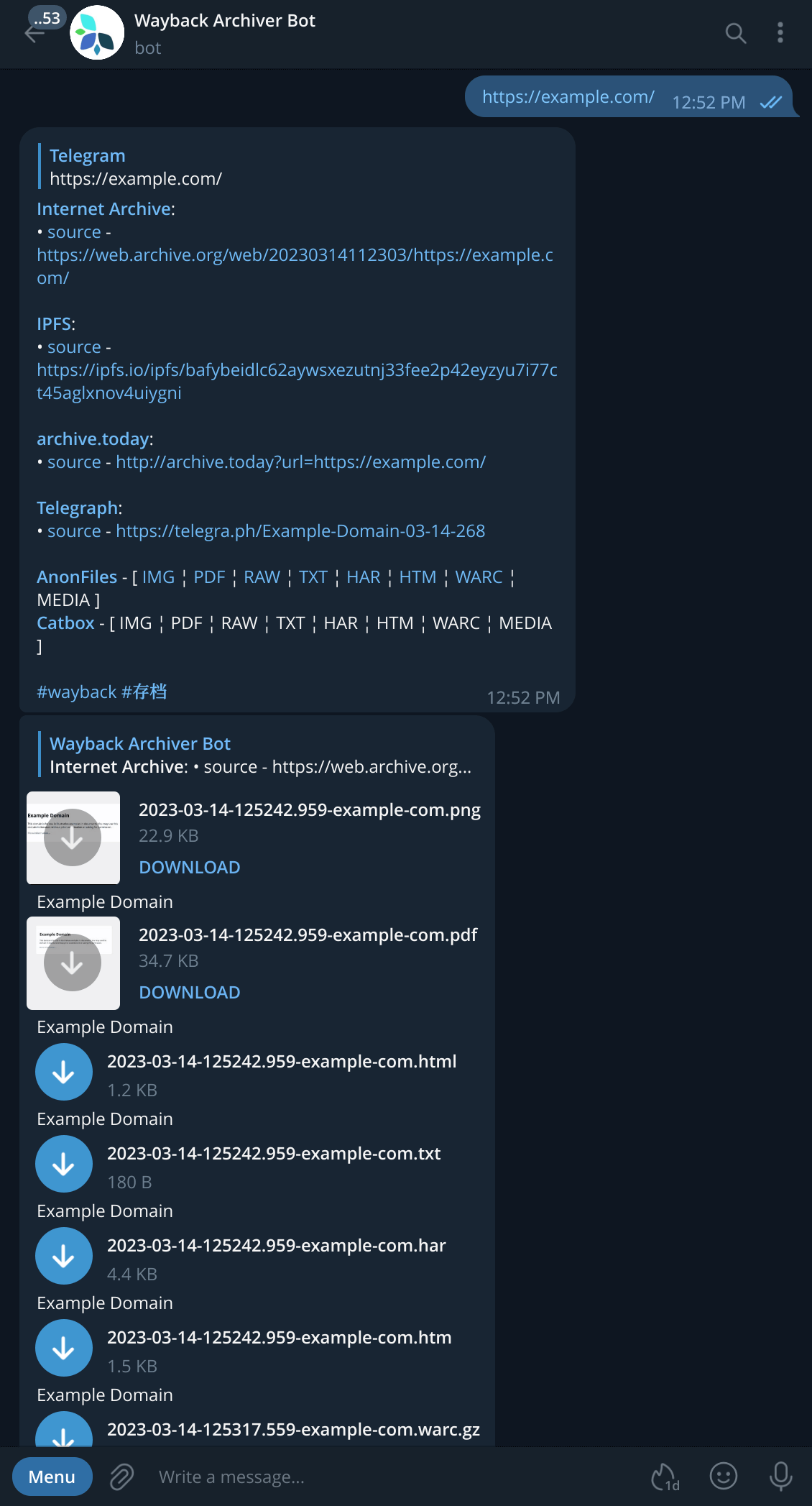
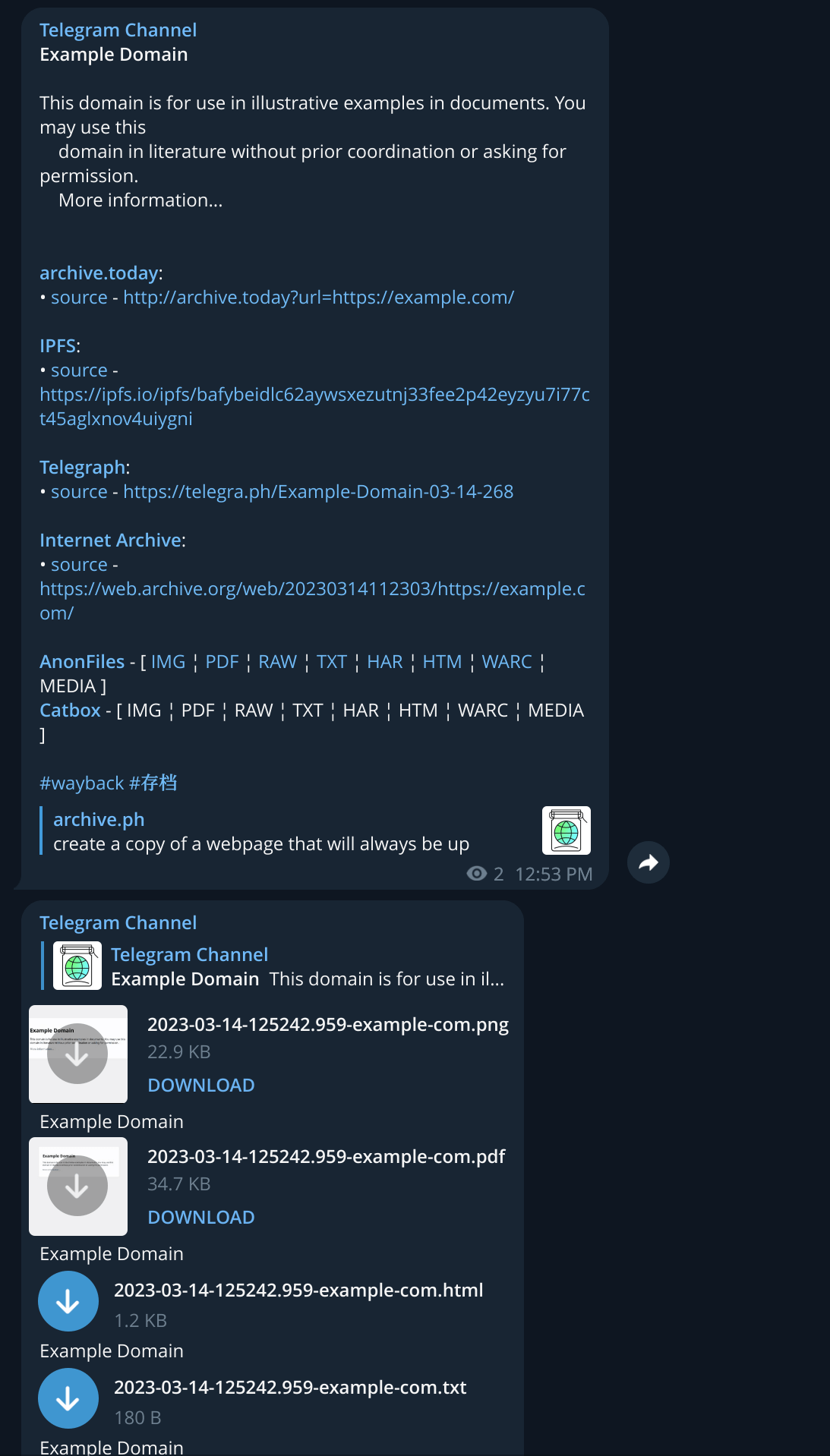
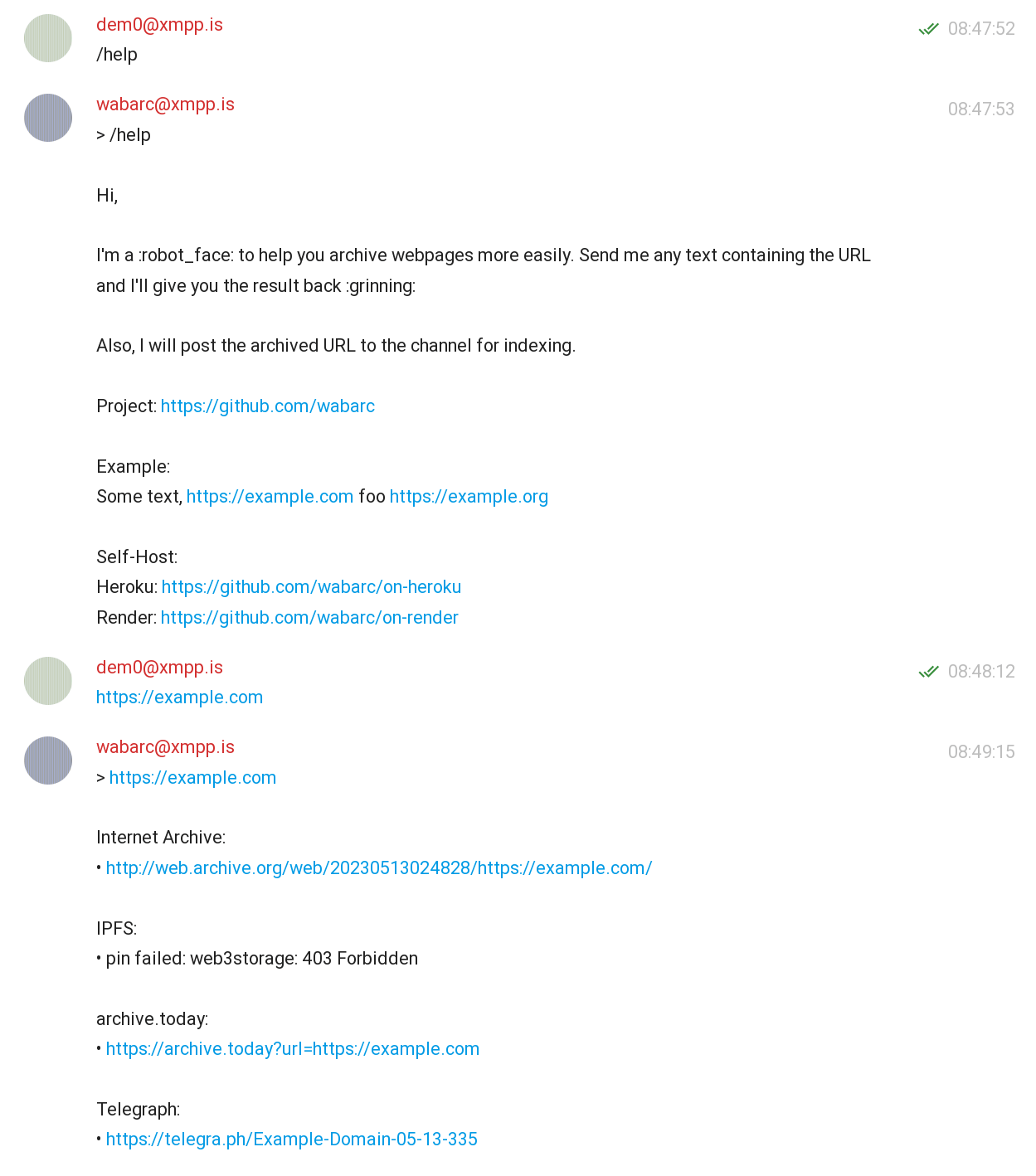
An archiving tool with an IM-style interface that prioritizes privacy and accessibility, integrated with various archival services including Internet Archive, archive.today, Ghostarchive, IPFS, Telegraph, and file systems.
2.2k
Stars
86
Forks
60
Open issues
12
Contributors


AI Analysis
Wayback is a web archiving and playback tool that captures and preserves web content with an IM-style interface, integrating with multiple archival services (Internet Archive, archive.today, IPFS, Telegraph, etc.). It serves researchers, web archivists, and privacy-conscious users who want to self-host archival infrastructure with multi-platform bot integrations (Telegram, Matrix, Discord, IRC, Mastodon).
Inferred from signals mentioned in the README (tests, CI, type safety) — not a review of the actual code.
AI's overall editorial judgment — not an average of the bars above, can weigh other factors too.
Go-based web archiver with multi-protocol IM integration and privacy focus, serving researchers and activists with federated bot access.
Wayback is a Go-based web archiving tool designed for privacy-conscious users, researchers, and activists. It captures and preserves web content via multiple backends (Internet Archive, archive.today, IPFS, Telegraph) and exposes results through IM platforms (Telegram, Discord, Matrix, IRC, XMPP) rather than a traditional web interface. The project targets scenarios where privacy, offline resilience, and decentralized access matter more than ease of use.
Created June 2020, Wayback emerged as a privacy-focused alternative to mainstream archiving tools. It was built to serve activists and researchers in regions with restricted internet access by providing Tor hidden service endpoints and federated bot interfaces rather than centralized web UIs.
Steady but modest growth: 2,209 stars over 6 years, ~3 stars/week recently. Growth appears driven by niche adoption in privacy/activism communities rather than mainstream visibility. Multi-platform bot availability (Telegram bot publicly listed, Discord/Matrix bots available) suggests real but concentrated user base. Last commit 2026-06-28 indicates active maintenance.
Adoption not verified in concrete terms, but several signals suggest real usage: (1) Public Telegram bot endpoint listed; (2) Tor hidden service configured and documented; (3) Multiple package repositories maintained (Snap, APT, RPM, Homebrew); (4) Matrix room and community spaces active. These suggest sustained user base, though scale is unknown. No public case studies or enterprise deployment evidence found in README.
Likely modular Go architecture with pluggable backends and bot adapters. README lists support for 6+ archival services and 6+ IM protocols, suggesting abstracted service integrations. Appears designed for daemon deployment via configuration files. Prometheus metrics exposure indicates production monitoring capability.
Codecov badge present in README but specific coverage percentage not stated. Go Reference badge suggests documented public APIs.
Last push 2026-06-28 (6 days prior to analysis date) signals active maintenance. Multiple releases available on GitHub. Installation methods span 6+ channels (Snapcraft, APT, RPM, Homebrew, direct download), indicating ongoing deployment support. No evidence of dormancy.
ADOPT IF: You operate in privacy-critical environments (activists, journalists in restricted regions), need command-line batch archiving with multiple backend support, or want decentralized IM access to archive results without managing a web interface. AVOID IF: You require high-volume commercial support, expect intuitive GUI, need primary storage in a single local database, or operate in regions where Tor/privacy tools are restricted. MONITOR IF: You use ArchiveBox but want federated bot access, or need privacy-first defaults with flexible backend switching.
Independent dimensions
Mainstream potential
3/10
Technical importance
6/10
Adoption evidence
4/10
- Adoption appears concentrated in privacy communities; unclear whether project has sustained funding or organizational backing for long-term maintenance beyond volunteer effort.
- Dependency on external archival services (Internet Archive, archive.today, etc.) creates fragility: if those services fail or restrict access, Wayback's utility diminishes.
- IM-first interface, while privacy-focused, may feel unintuitive for users accustomed to traditional web UIs; steeper adoption curve than mainstream tools.
- Go binaries require explicit download/installation vs. browser-based alternatives; higher friction for casual users.
- Real-world adoption metrics opaque; success claimed via multiple distribution channels and bot availability, but no public metrics on active users or archiving volume.
Wayback will likely remain a specialized, well-maintained tool for privacy-conscious researchers and activists rather than challenge mainstream archiving platforms. Active maintenance suggests stability; slow growth reflects permanent niche positioning rather than decline.
Newsletter
Get analyses like this every Monday
Free weekly digest of the most interesting open-source discoveries.
Languages
Information
- Website
- https://docs.wabarc.eu.org
- Language
- Go
- License
- GPL-3.0
- Last updated
- 5d ago
- Created
- 74mo ago
- Analyzed with
- anthropic/claude-haiku-4-5
Stars over time
Contributors over time
Top 100 contributors only — repos with more will plateau at 100.
Open issues
No open issues — clean slate.
Top contributors
Similar repos

dessant/web-archives
Web Archives is a browser extension that finds archived and cached versions of...
| Repository | Stars | Week Δ | Language | Score | Updated |
|---|---|---|---|---|---|
|
wabarc/wayback
this
|
2.2k | +4 | Go | 7/10 | 5d ago |
 webrecorder/archiveweb.page webrecorder/archiveweb.page
|
1.5k | — | TypeScript | 7/10 | 3w ago |
 ArchiveBox/ArchiveBox ArchiveBox/ArchiveBox
|
27.9k | — | Python | 8/10 | 1w ago |
|
dessant/web-archives
|
1.6k | — | JavaScript | 7/10 | 2w ago |
 wallabag/wallabag wallabag/wallabag
|
12.8k | — | PHP | 7/10 | 1w ago |
 bellingcat/auto-archiver bellingcat/auto-archiver
|
1.1k | — | Python | 7/10 | 1w ago |
ArchiveBox (27.8k stars, Python) is the dominant all-in-one self-hosted archiver. Wayback differs by prioritizing IM-first access and multi-backend flexibility over monolithic local storage; serves different use cases (activists vs. personal archivists).
Browser extension (1.57k stars, JavaScript) for direct archiving from browsers. Wayback targets command-line/daemon workflows with bot interfaces; appeals to automation and non-desktop scenarios.
Browser-based archiving (1.51k stars, TypeScript). Wayback emphasizes CLI, privacy, and decentralized distribution; targets different workflows (scripted archiving vs. interactive capture).
Read-it-later service (12.8k stars, PHP). Wallabag prioritizes personal document management; Wayback focuses on preservation and external backend integration, not read-later functionality.
Investigation-focused tool (1.09k stars, Python) for batch archiving URLs. Wayback offers broader bot integration and multi-backend support; auto-archiver specializes in investigative workflows.