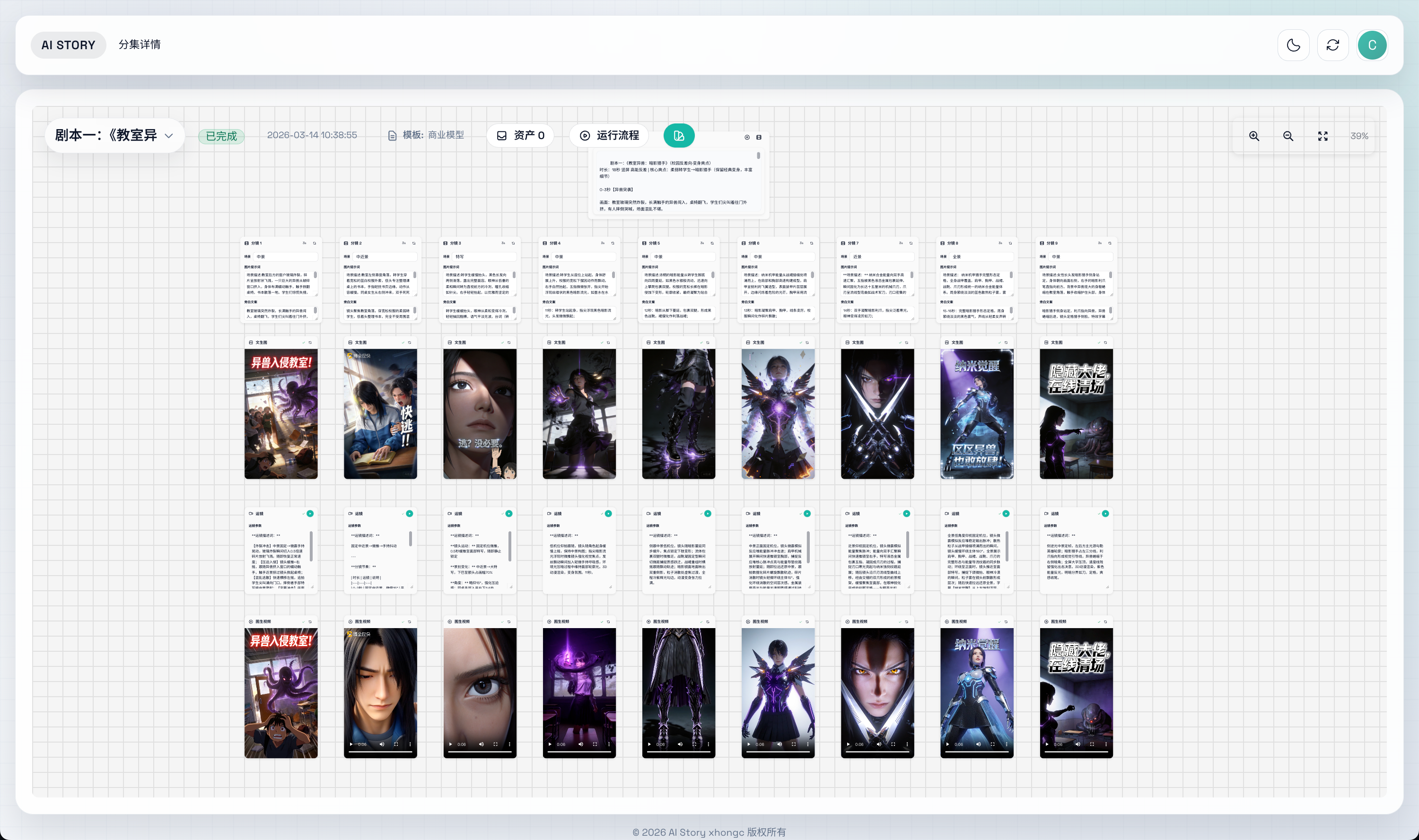
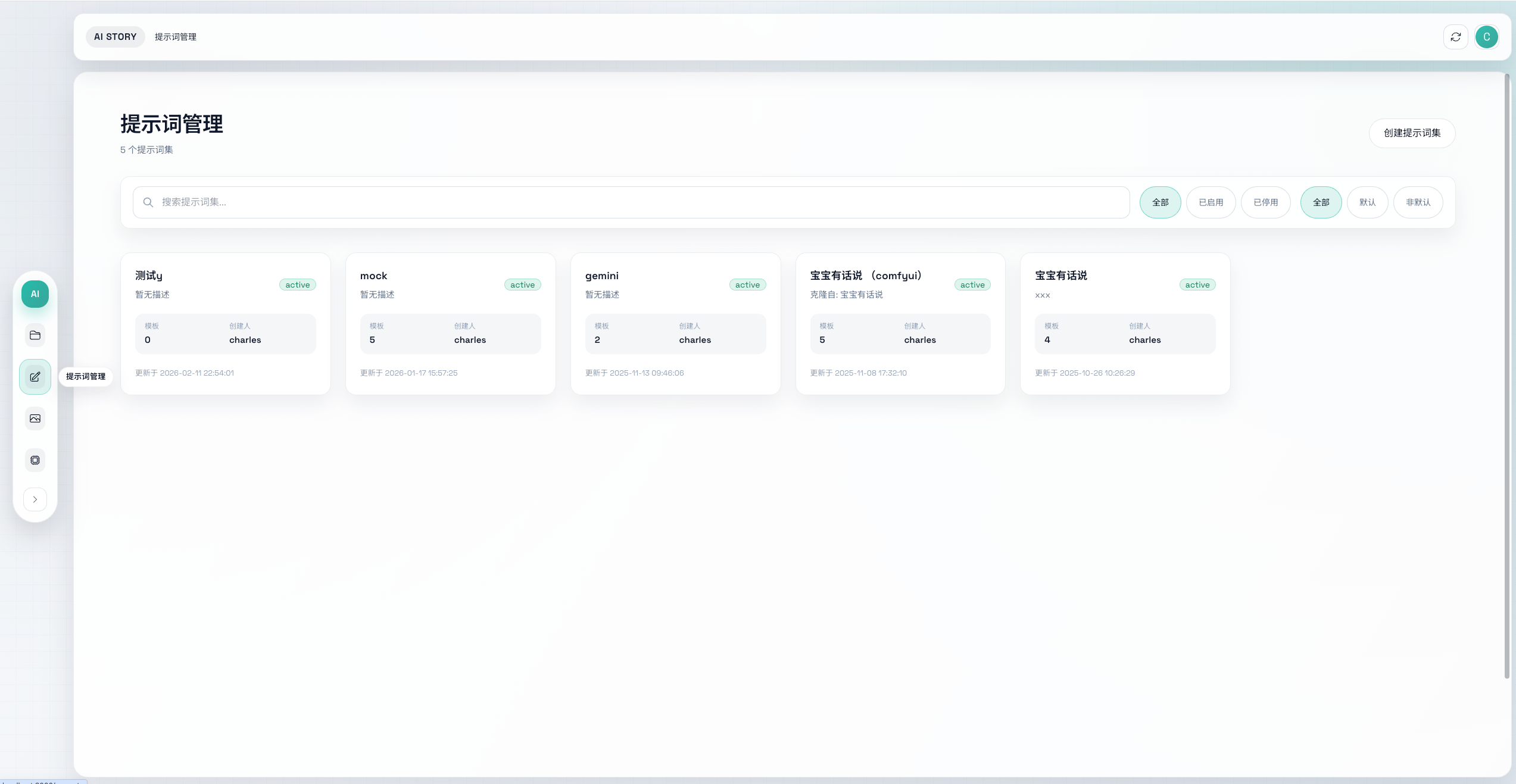
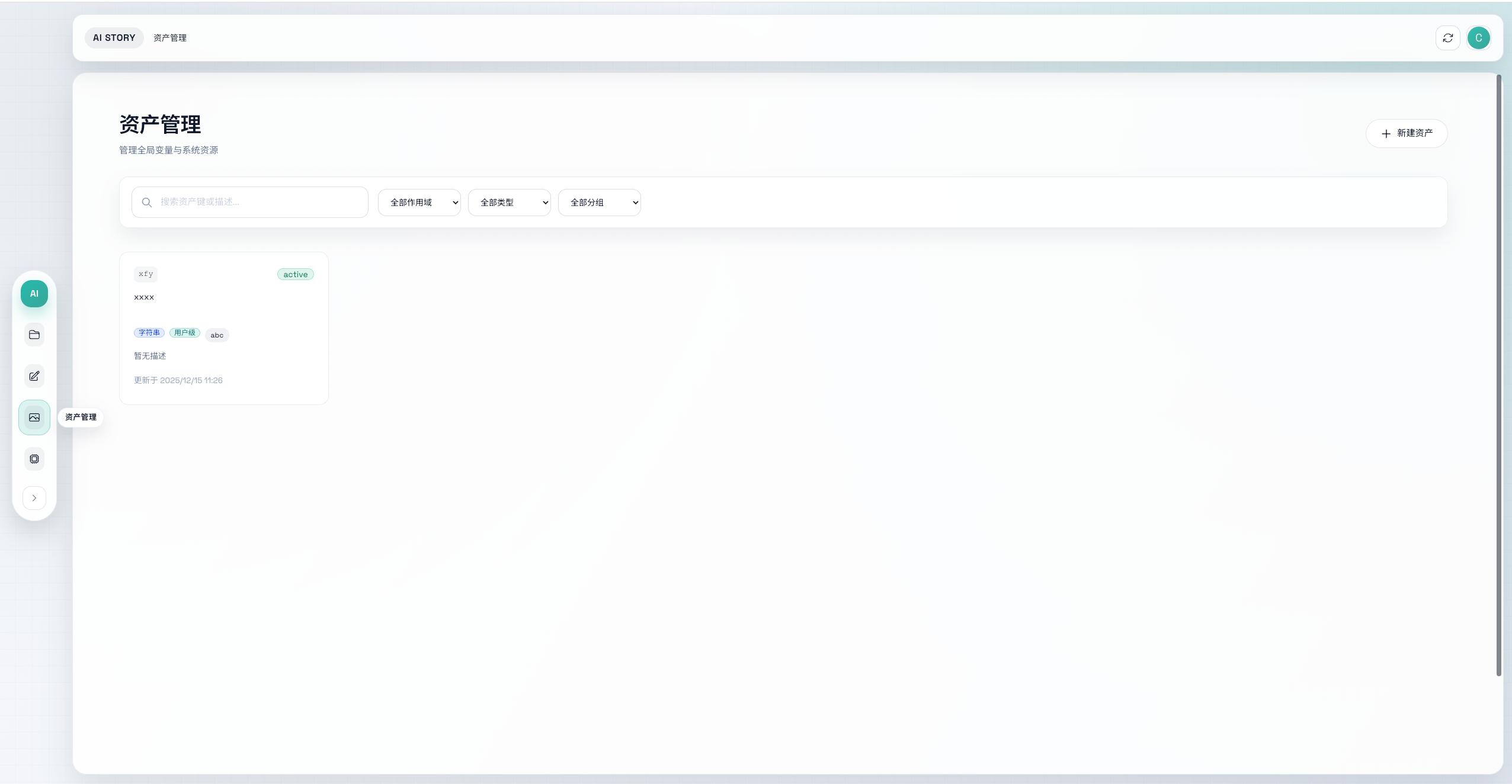
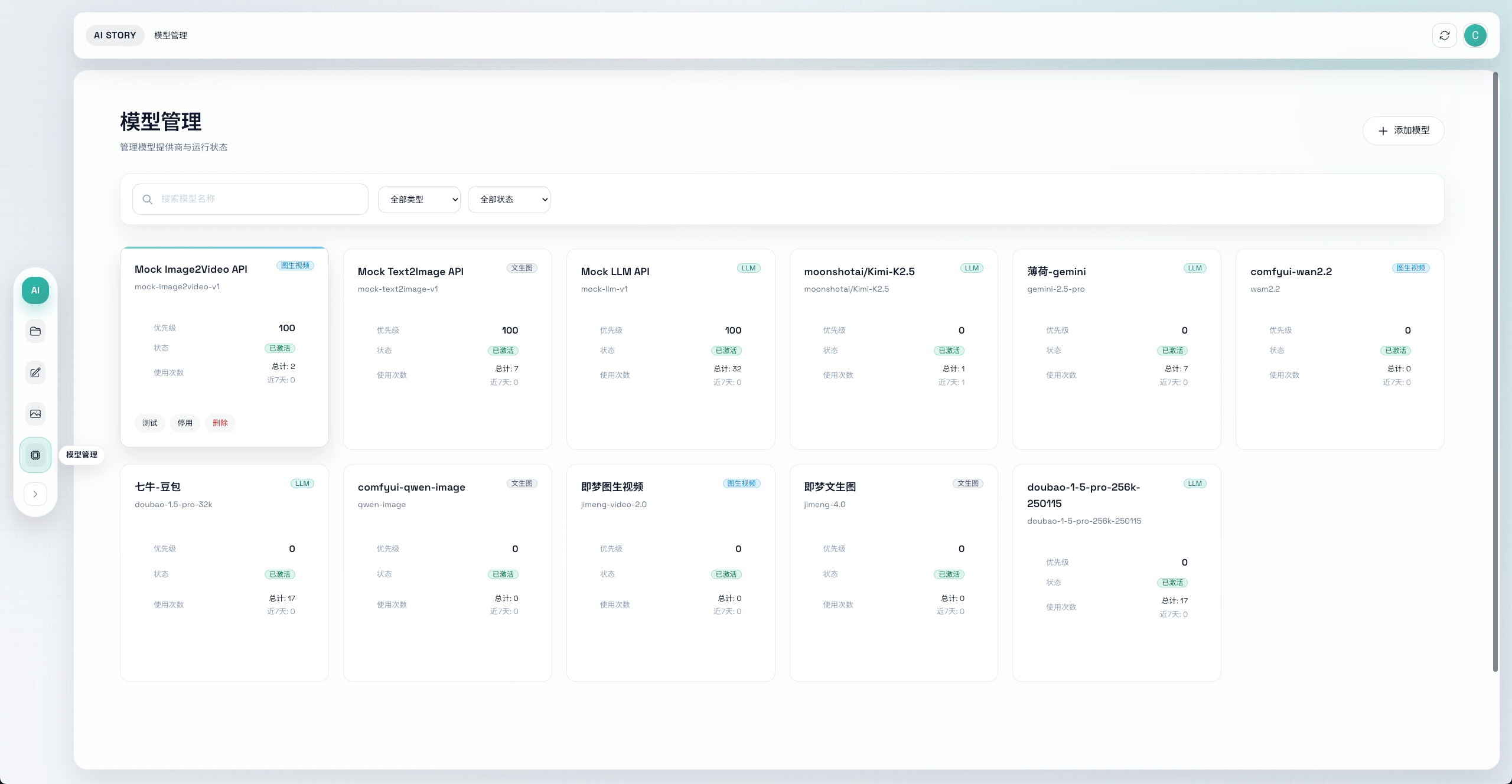
AI视频, AI动漫,AI 短剧,AI漫剧自动化生成工具
1.1k
Stars
253
Forks
2
Open issues
2
Contributors
AI Analysis
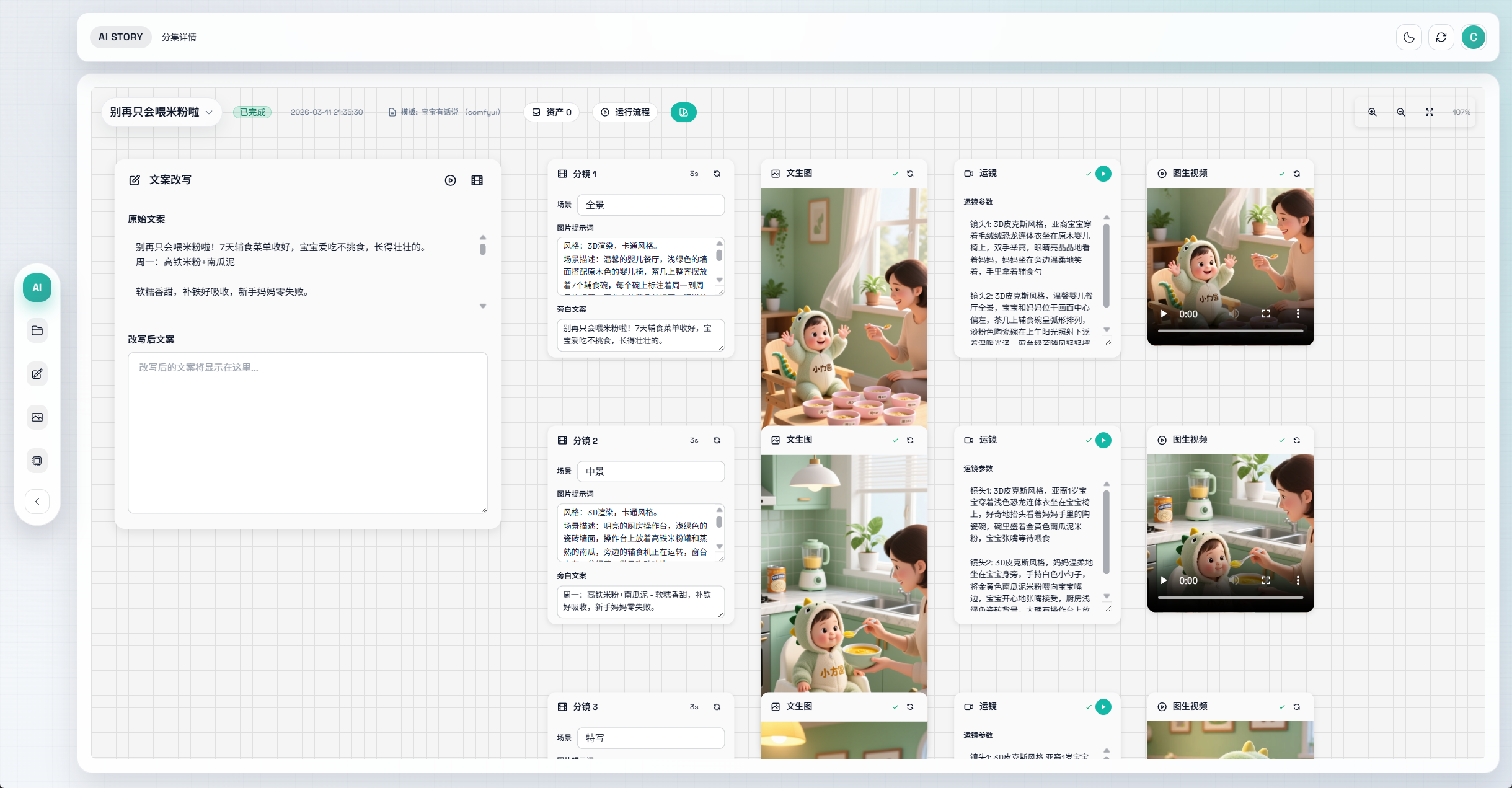
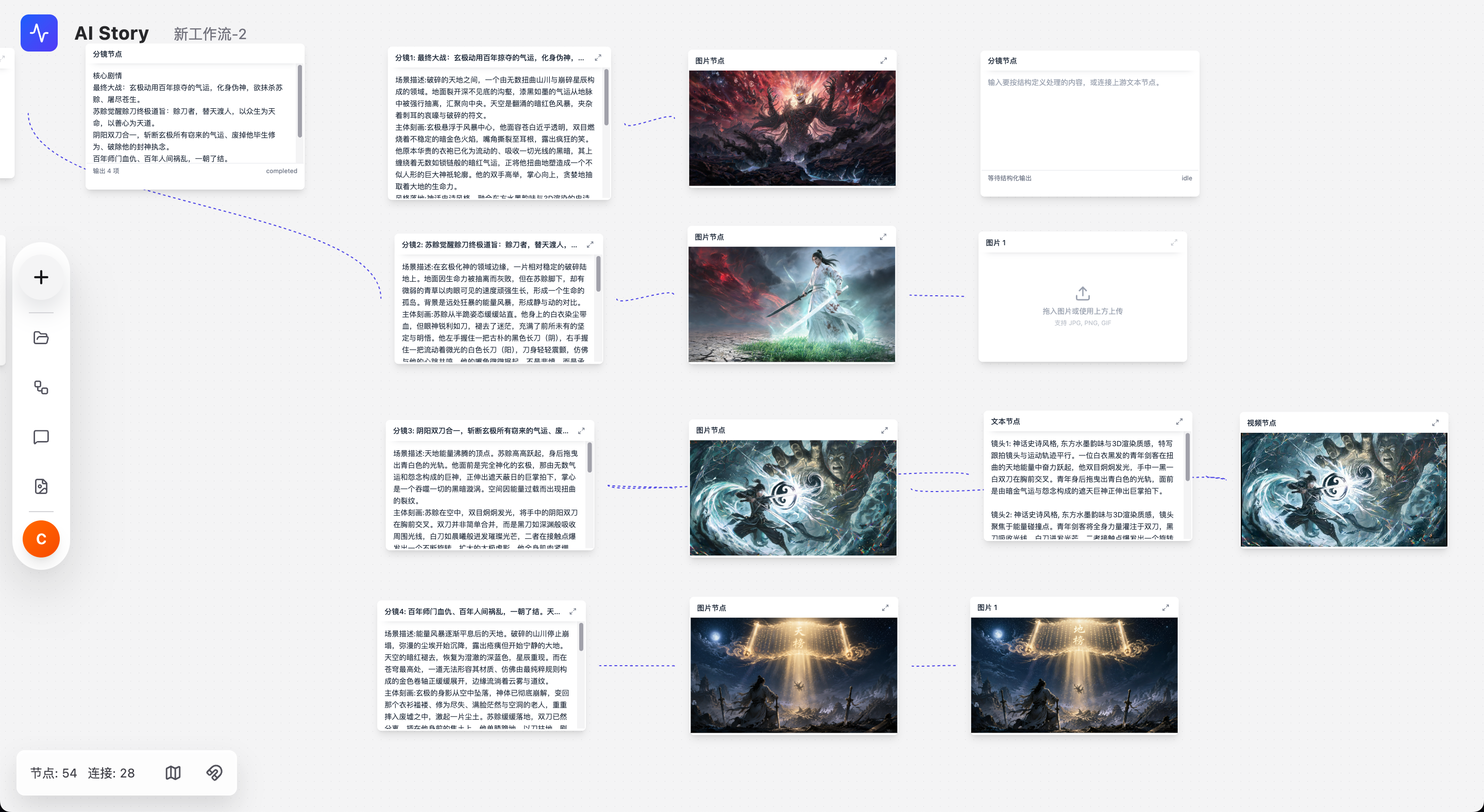
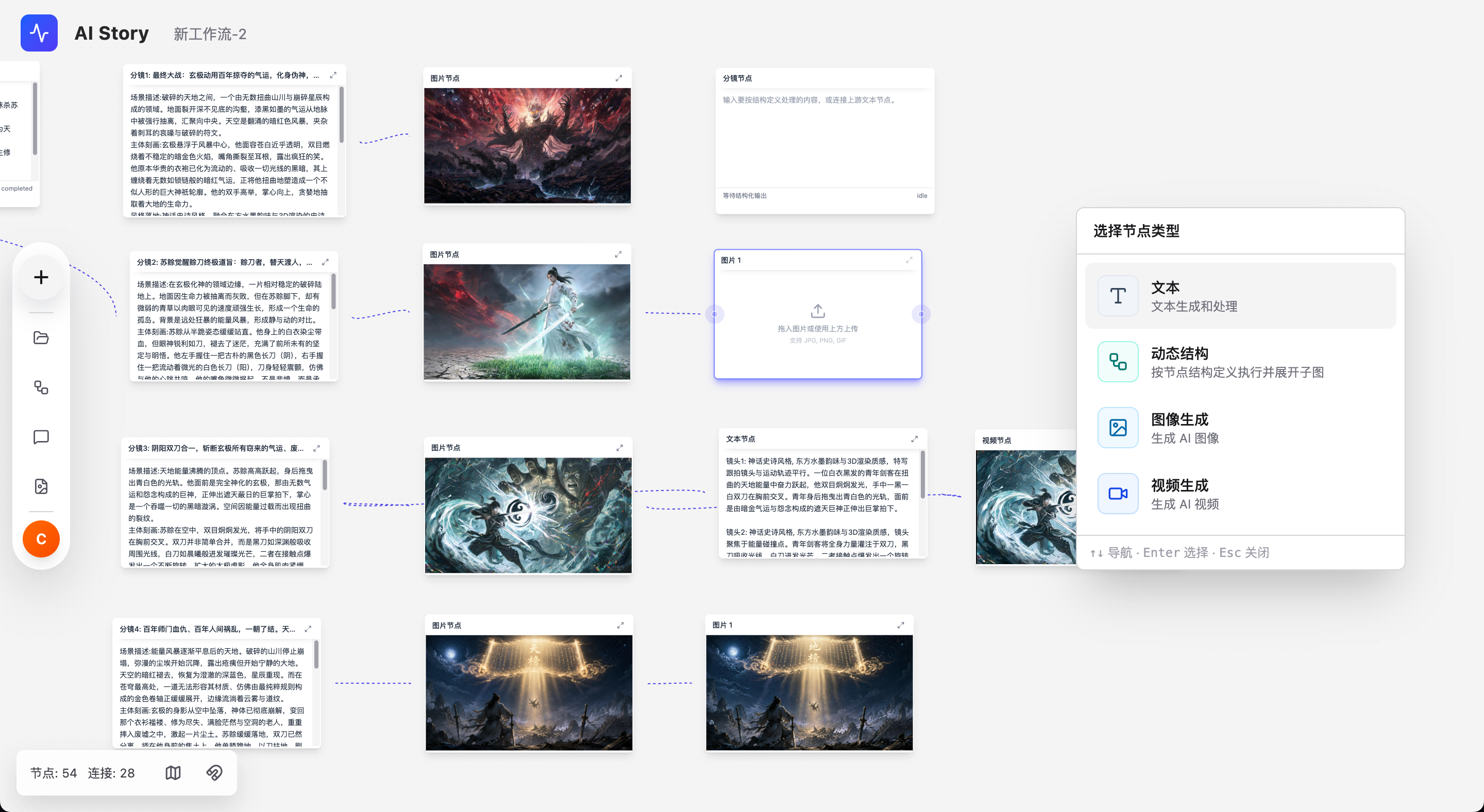
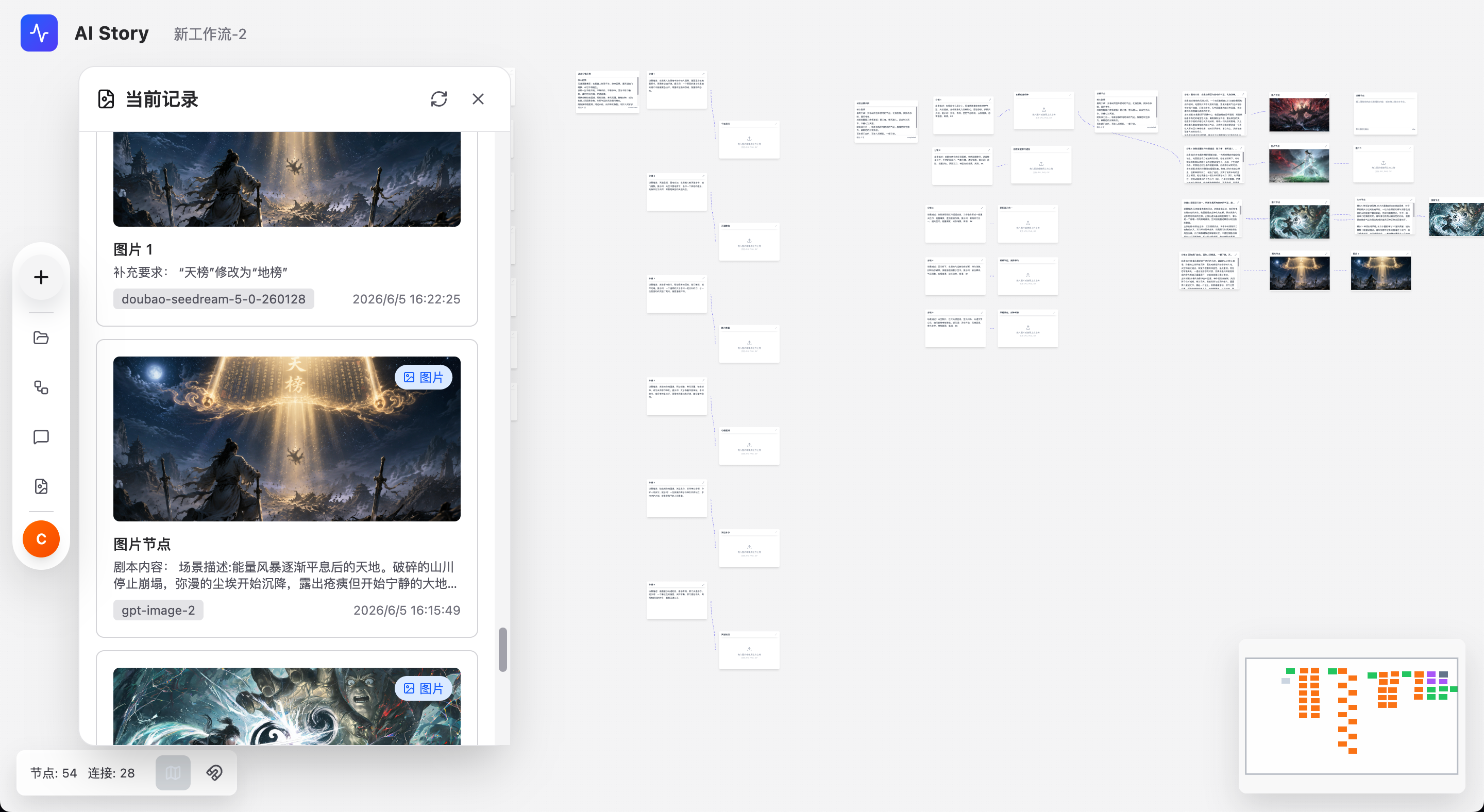
AI Story is an end-to-end video generation platform that automates the creation of AI-driven short drama, anime, and animated videos from story prompts through script generation, storyboarding, image synthesis, motion planning, and video assembly. It serves content creators and video producers who want to rapidly prototype video content using generative AI, though it requires integration with third-party LLM and image/video generation APIs (OpenAI, Claude, Stable Diffusion, Runway, Pika, etc.).
Inferred from signals mentioned in the README (tests, CI, type safety) — not a review of the actual code.
AI's overall editorial judgment — not an average of the bars above, can weigh other factors too.
Python tool for automated AI-driven video generation from story concepts to finished shorts
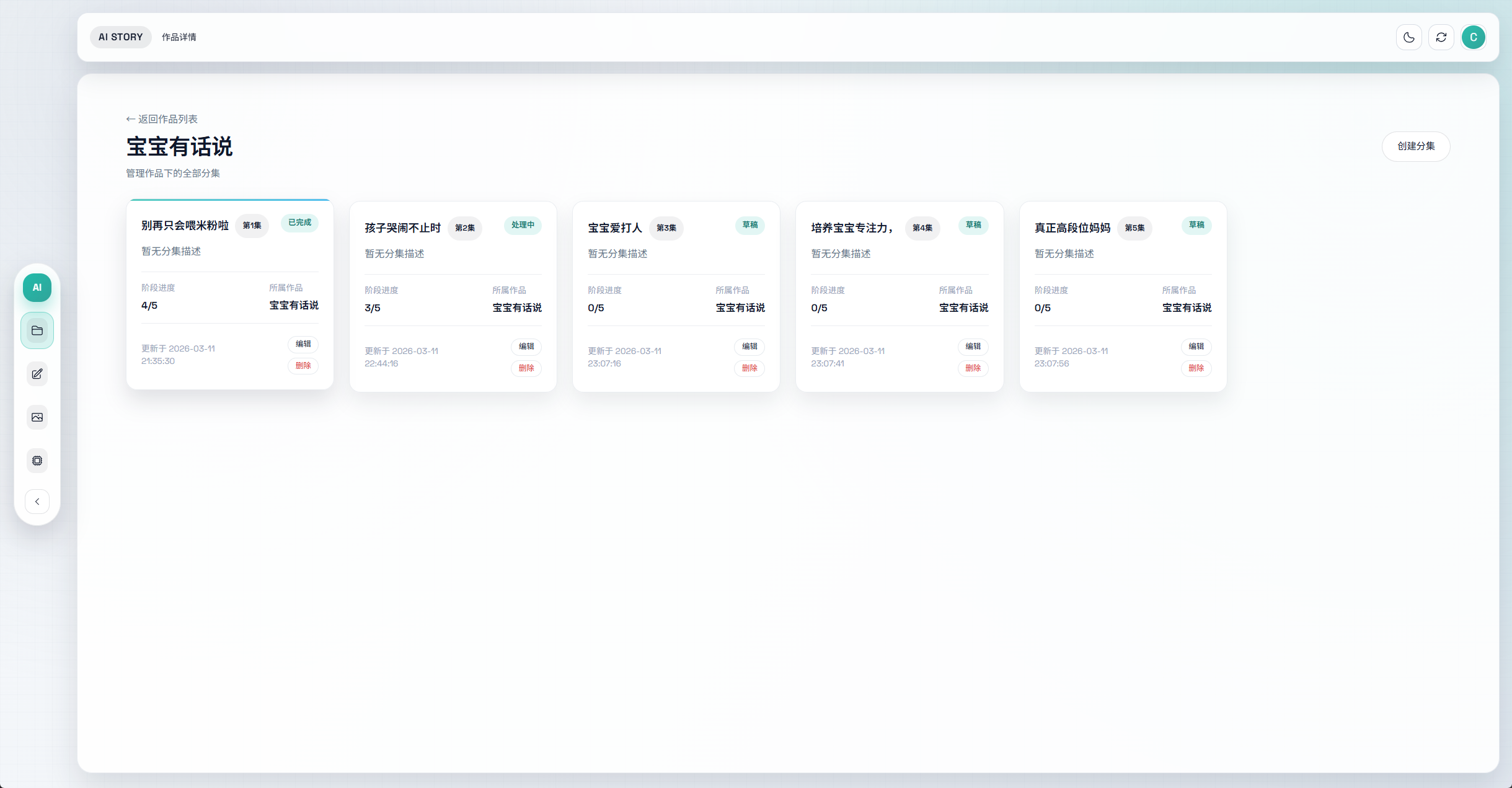
AI Story is a Python-based platform that automates the complete pipeline from story input to finished video: script generation, storyboarding, image synthesis, camera motion planning, and video composition. Built for content creators targeting short-form video platforms (TikTok, Douyin, Kuaishou), it integrates multiple LLM and image generation APIs via a web UI and orchestrates tasks through Celery workers. Adoption appears concentrated in Chinese-language communities; English-language adoption not verified.
Created November 2025, the project emerged during the rapid proliferation of end-to-end AI video generation tools. It enters a crowded space including Runway, Pika, and specialized storyboarding tools, positioning itself as a full-stack orchestration layer rather than a foundational model.
Started at 986 stars as of June 2026 with 40 stars gained in the prior week. Moderate growth rate relative to similar projects (comparison repos range 2.5k–23k stars). Docker containerization and web UI accessibility likely drove adoption among non-technical creators. Marketing appears centered on Chinese social platforms (WeChat, Telegram, Douyin video account '小小方圆669'). Growth trajectory suggests modest but consistent interest rather than viral adoption.
Adoption not verified via public metrics. README references a Douyin account ('小小方圆669') for finished video examples, suggesting some creator use, but no quantified user base, case studies, or deployment statistics provided. Telegram community links suggest an engaged but small user cohort. Commercial licensing inquiry email hints at business interest, but scale unknown.
Appears to follow a modular pipeline architecture based on README: task orchestration via Celery workers, Django backend, Vue frontend, Redis for caching/messaging. Likely uses responsibility-chain pattern for extensibility across stages (script → storyboard → image → motion → video). Docker Compose setup suggests production-oriented deployment. Implementation details not inspectable from README alone.
not documented in README
Last push June 12, 2026 (16 days before analysis date) indicates active recent maintenance. Project is ~7 months old, early in lifecycle. No issue counts or PR activity visible in provided metadata, so ongoing engagement levels are unclear. Docker image availability suggests commitment to usable distribution.
ADOPT IF: you are a non-technical short-form video creator willing to integrate multiple third-party AI APIs (LLM, image gen, video gen) and want an end-to-end orchestration layer; you accept the CC BY-NC-SA license restrictions (no commercial use without separate license); you operate primarily on Chinese platforms or have multilingual content needs. AVOID IF: you need production-grade SLA guarantees, extensive English documentation, or a single integrated proprietary model (this is orchestration glue, not a foundational model). MONITOR IF: you are evaluating whether this tool matures into a standard reference implementation for story-to-video pipelines; currently it is a capable but narrow-adoption proof-of-concept.
Independent dimensions
Mainstream potential
3/10
Technical importance
5/10
Adoption evidence
2/10
- Adoption concentrated in Chinese-language communities; English-language viability uncertain.
- Dependency on external APIs (OpenAI, Claude, Midjourney, Runway, Pika) for core functionality; any API deprecation or pricing change breaks pipeline.
- CC BY-NC-SA license prohibits commercial deployment without separate agreement; limits enterprise adoption.
- Early-stage project (7 months old); API stability, backward compatibility, and long-term maintenance unknown.
- Quality of final video output depends entirely on third-party model capabilities, not the orchestration layer itself; tool cannot overcome weak image or video generation models.
Likely to remain a specialized tool for non-English short-form creators with modest but stable adoption. May influence future video orchestration architectures. Mainstream enterprise adoption unlikely due to licensing and API dependency constraints.
Newsletter
Get analyses like this every Monday
Free weekly digest of the most interesting open-source discoveries.
Languages
No language breakdown available.
Information
- Language
- Python
- Last updated
- 4w ago
- Created
- 8mo ago
- Analyzed with
- anthropic/claude-haiku-4-5
Stars over time
No commit data available.
Contributors over time
Top 100 contributors only — repos with more will plateau at 100.
Open issues
No open issues — clean slate.
Open pull requests
No open pull requests.
Top contributors
Contributor data not available yet.
Recent releases
No releases published yet.
Similar repos

chatfire-AI/huobao-drama
Huobao Drama is an end-to-end AI-powered platform for automated short-form...

HBAI-Ltd/Toonflow-app
Toonflow is an open-source desktop application that converts novels and scripts...

ATH-MaaS/Pixelle-Video
Pixelle-Video is an end-to-end AI video generation platform that automates...
| Repository | Stars | Week Δ | Language | Score | Updated |
|---|---|---|---|---|---|
|
xhongc/ai_story
this
|
1.1k | +41 | Python | 7/10 | 4w ago |
|
chatfire-AI/huobao-drama
|
13.4k | — | TypeScript | 7/10 | 2d ago |
 linyqh/NarratoAI linyqh/NarratoAI
|
10.2k | — | Python | 7/10 | 6d ago |
|
HBAI-Ltd/Toonflow-app
|
11.3k | — | TypeScript | 7/10 | 1d ago |
|
ATH-MaaS/Pixelle-Video
|
24.9k | — | Python | 7/10 | 4w ago |
 yuanzhongqiao/printfilm yuanzhongqiao/printfilm
|
2.8k | — | TypeScript | 6/10 | 1mo ago |
Larger ecosystem and adoption; AI Story offers integrated storyboarding workflow where Pixelle may focus narrower on video generation alone. Pixelle's star count suggests broader recognition.
Comparable scale; NarratoAI likely focuses on narration/audio pipeline. AI Story's differentiator is end-to-end story→video orchestration vs. specialized sub-task tools.
Deployed in TypeScript, likely web-native; AI Story is Python backend + Vue. Similar domain (animated/story content). TypeScript choice may indicate different tech audience.
Higher adoption; both target short-form drama content. AI Story positions as generic story-to-video; Huobao appears drama-specialized.
Lower adoption tier but similar niche positioning. AI Story's full Docker deployment and UI may confer UX advantage over printfilm.