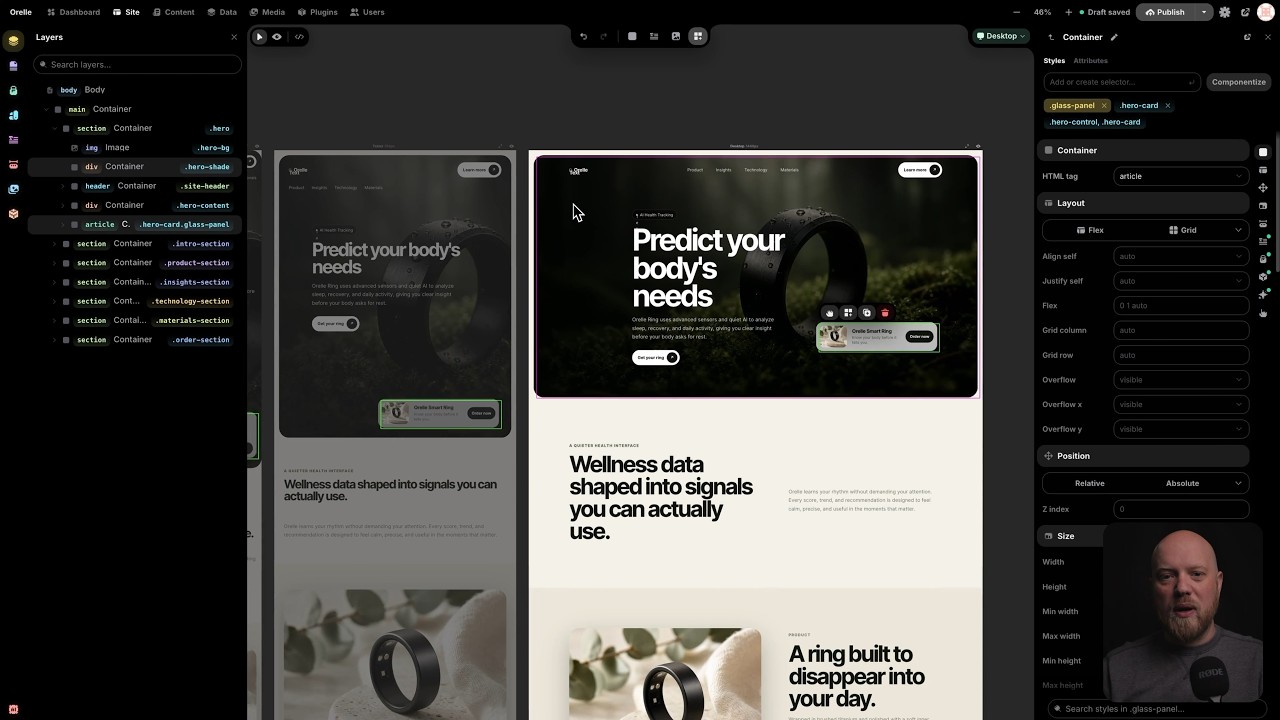
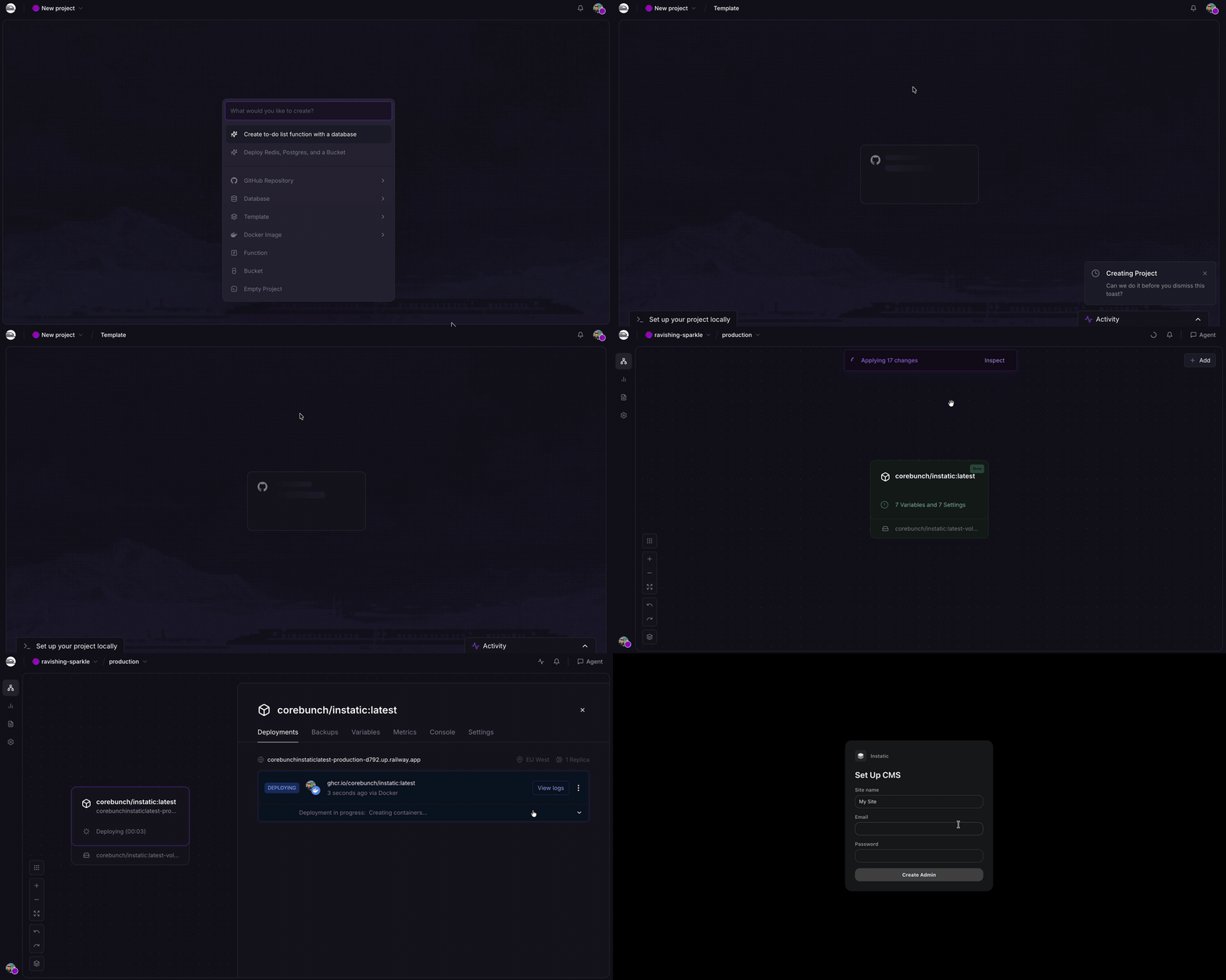
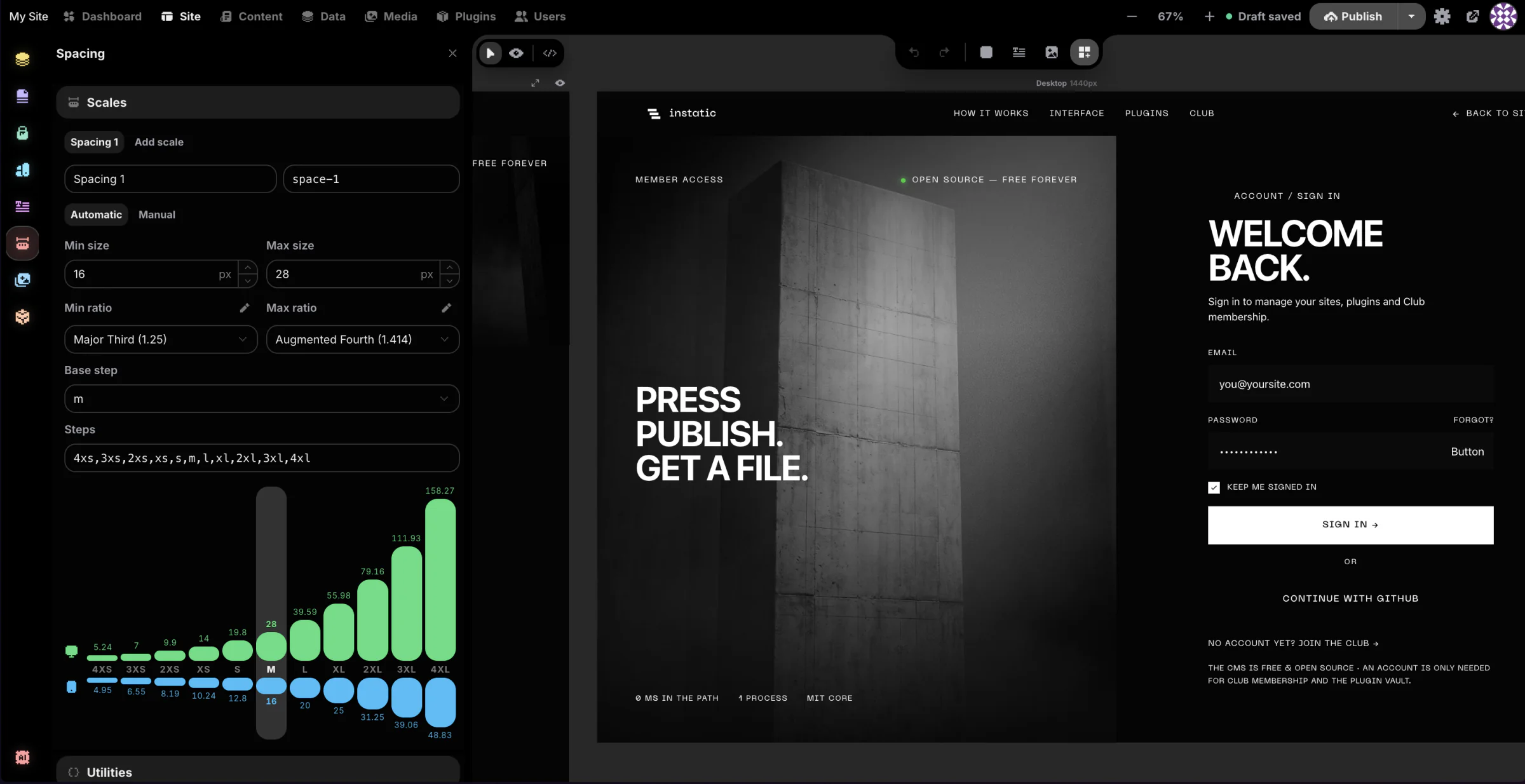
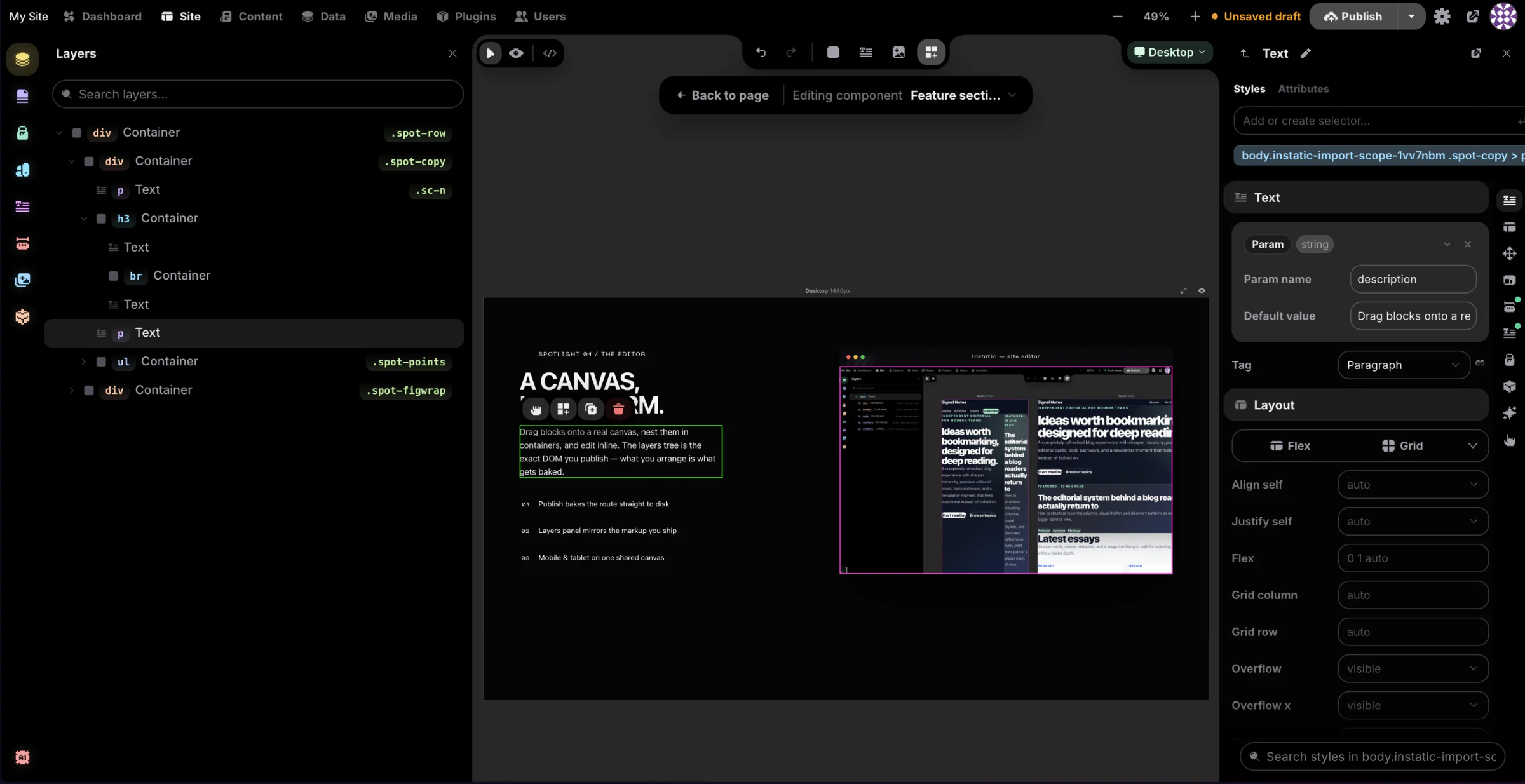
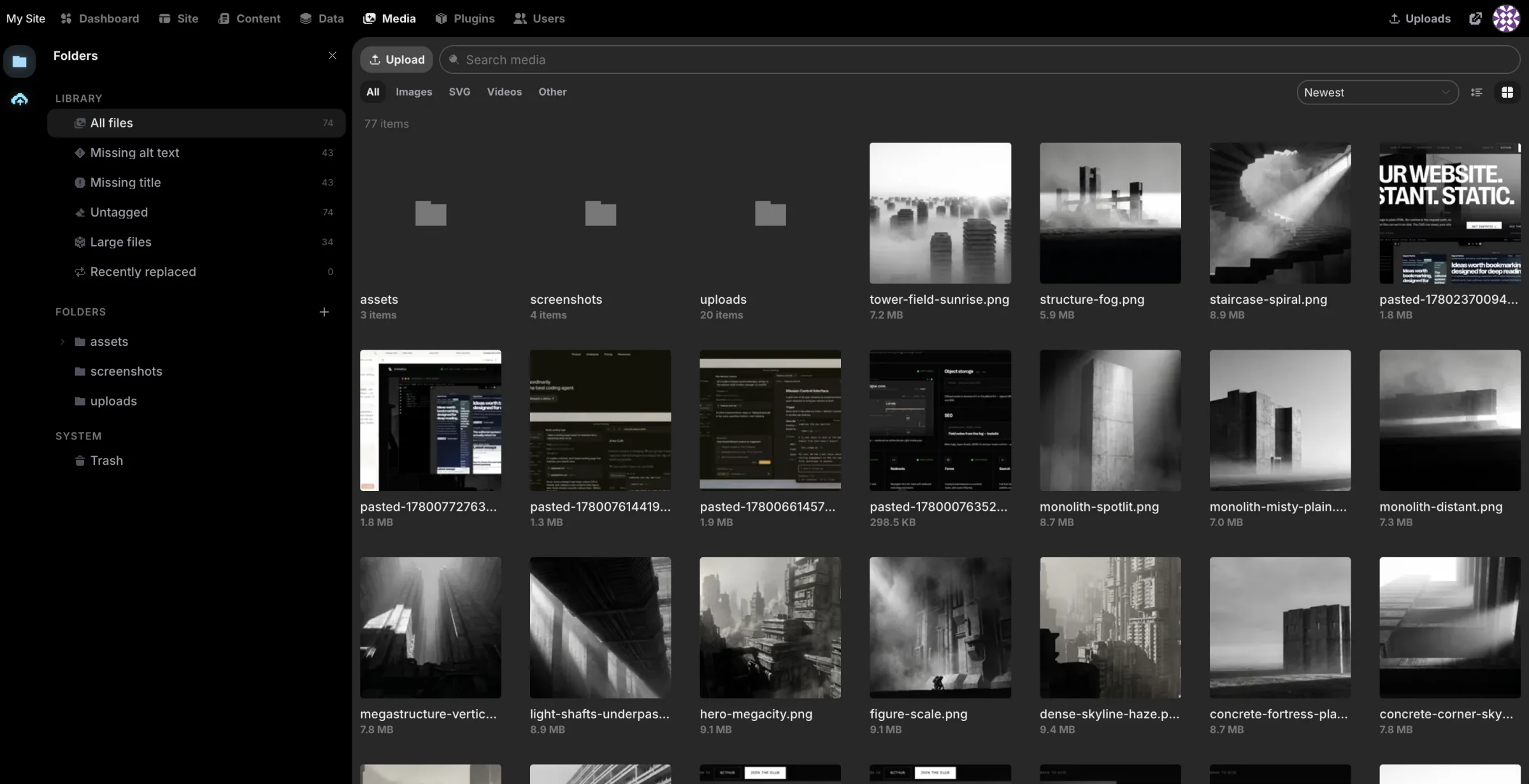
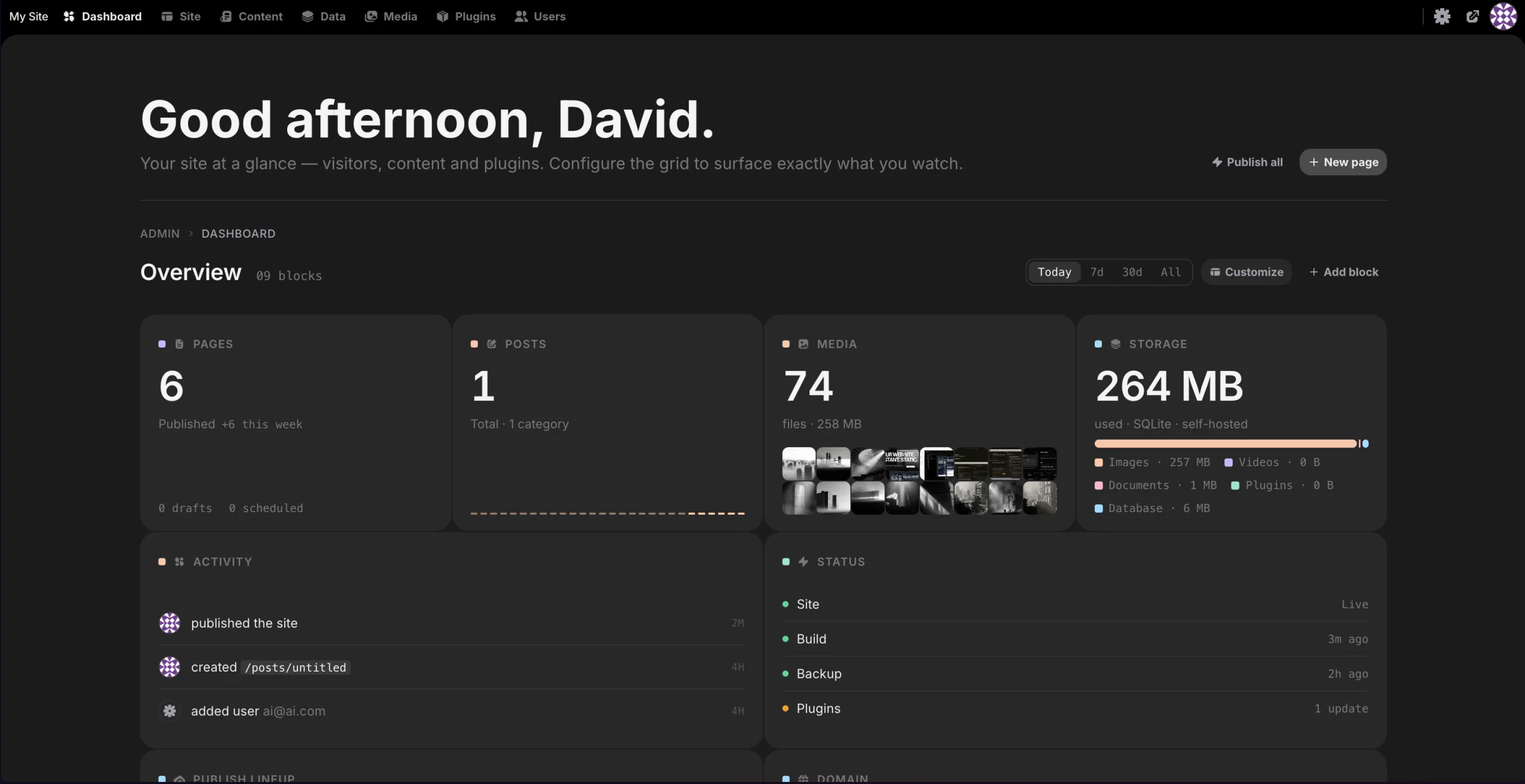
Instatic is a modern self-hosted visual CMS - get it running in 1 minute
3.1k
Stars
263
Forks
25
Open issues
6
Contributors


AI Analysis
Instatic is a self-hosted visual CMS built on Bun that consolidates the editor, content engine, media management, and publisher into a single server, eliminating the need for external services. It outputs clean semantic HTML and static files rather than framework-dependent markup. Best suited for individuals and small teams building blogs, portfolios, and small business sites who want full ownership and simplicity over a traditional headless CMS stack.
Inferred from signals mentioned in the README (tests, CI, type safety) — not a review of the actual code.
AI's overall editorial judgment — not an average of the bars above, can weigh other factors too.
Self-hosted visual CMS shipping plain HTML, built in Bun. Two months old, gaining rapid early traction.
Instatic is a self-hosted, single-server CMS combining visual editor, content engine, and publisher into one Bun runtime. It emphasizes semantic HTML output and design tokens (via integrated Core Framework). Built for small-to-medium sites, blogs, and portfolios where teams want ownership, simplicity, and clean output. Adoption not verified beyond early GitHub interest; project is 2 months old and shows strong weekly star velocity (273 in last 7 days) but lacks documented production deployments or user testimonials.
Created April 2026 as a response to perceived complexity in modern site-building stacks. Positions itself against fragmented workflows (headless CMS + framework + host + services). Incorporates existing Core Framework design-token system; appears to be a deliberate design philosophy rather than an accidental outcome.
Rapid early adoption signal: 1,591 stars in ~9 weeks, with 273 stars in the last 7 days alone suggests viral or community-driven discovery. No public announcement or press identified in README. Growth may reflect discontent with existing CMS complexity or successful social media / developer community exposure, but is too new to distinguish signal from hype-cycle noise.
Adoption not verified. README lists one-click deploy to Railway with templates; no documented production deployments, case studies, or user counts provided. YouTube demo available but no comments/engagement metrics visible to this analysis. Early-stage projects often show high star velocity before real adoption emerges; this appears to be pre-adoption hype rather than post-adoption traction.
Based on README: single Bun server handles visual editor, content engine, media, auth, forms, plugins, and static generation. Supports SQLite or Postgres backends. Appears to use component-based UI model with typed parameters. Output is semantic HTML + compact CSS. Likely uses React or similar for editor interface (inferred from TypeScript + visual component system, not stated). No architectural documentation linked in README excerpt.
Not documented in README.
Last push 2026-07-01 03:17:14 (current date). Active development ongoing. Project is 2 months old; 'Early on purpose' noted in roadmap, suggesting intentional pre-1.0 status. No evidence of issue response time, PR review velocity, or community support infrastructure documented. Too new to assess long-term maintenance pattern.
ADOPT IF: you want a self-hosted, all-in-one site builder, are comfortable being an early adopter, need semantic HTML output, and value design-token integration and simplified operations. AVOID IF: you require documented production stability, need third-party integrations, demand a large ecosystem of community themes/plugins, or are building a mission-critical site without appetite for potential rough edges. MONITOR IF: you are evaluating CMS options now and want to check back in 6–12 months after the project matures, real-world usage is documented, and 1.0 is shipped.
Independent dimensions
Mainstream potential
3/10
Technical importance
6/10
Adoption evidence
1/10
- Adoption not verified — high star count may not reflect real usage; early viral interest often diverges from sustained adoption.
- Pre-1.0 status and 'early on purpose' suggests breaking changes, feature incompleteness, and potential data migration pain across versions.
- Single maintainer risk cannot be assessed without team structure documentation; project metadata does not reveal governance or team size.
- Plugin ecosystem and third-party integrations appear underdeveloped; README emphasizes built-in features but does not document extensibility maturity.
- No documented performance benchmarks, scalability limits, or guidance on max-site size, author count, or content volume before choosing SQLite vs. Postgres.
Project likely to remain a viable but niche alternative for small-to-medium self-hosted sites over 12 months. Growth rate may slow after initial discovery wave. Success hinges on shipping 1.0 stably, building a small but loyal user base, and avoiding feature bloat. Unlikely to capture mainstream CMS market share but plausible as a preferred tool for developers who value simplicity and ownership.
Newsletter
Get analyses like this every Monday
Free weekly digest of the most interesting open-source discoveries.
Languages
Information
- Website
- https://instatic.com
- Language
- TypeScript
- License
- MIT
- Last updated
- 12h ago
- Created
- 2mo ago
- Analyzed with
- anthropic/claude-haiku-4-5
Stars over time
Contributors over time
Top 100 contributors only — repos with more will plateau at 100.
Open issues
Top contributors
Similar repos

avitorio/outstatic
Outstatic is a static site CMS for Markdown and MDX content stored directly in...

decaporg/decap-cms
Decap CMS is a Git-backed headless CMS designed for static site generators and...
| Repository | Stars | Week Δ | Language | Score | Updated |
|---|---|---|---|---|---|
|
CoreBunch/Instatic
this
|
3.1k | +763 | TypeScript | 8/10 | 12h ago |
|
avitorio/outstatic
|
3.1k | — | TypeScript | 8/10 | 3d ago |
 hunvreus/pagescms hunvreus/pagescms
|
3.8k | — | TypeScript | 7/10 | 2w ago |
|
decaporg/decap-cms
|
19.2k | — | JavaScript | 8/10 | 2d ago |
 BuilderIO/builder BuilderIO/builder
|
8.8k | — | TypeScript | 8/10 | 3d ago |
 sveltia/sveltia-cms sveltia/sveltia-cms
|
2.6k | — | JavaScript | 8/10 | 9h ago |
Decap is Git-backed, headless, browser-hosted editor. Instatic is self-hosted, all-in-one, with emphasis on clean output and design tokens. Decap has 100x more stars and documented enterprise use; Instatic is newer, simpler deployment model, targets different workflow.
Outstatic is Git-backed, TypeScript, with visual editor. Both are relatively young and GitHub-native. Instatic adds design tokens and unified hosting; Outstatic integrates tighter with Next.js / Vercel ecosystem.
Sveltia is also Git-backed, Decap fork. Instatic diverges by being self-hosted database-backed (not Git-centric), includes design system, all-in-one deployment. Different architectural philosophy.
Pagescms is TypeScript, visual, Git-backed. Instatic differentiates on self-hosted, unified stack, and design-token integration. Similar target (small sites, blogs) but Instatic's bundled approach vs. Pagescms's modular approach.
Ink is a blogging engine in Go. Narrower scope than Instatic; not a visual CMS. Serves blog-only use case vs. Instatic's general-purpose site builder.