










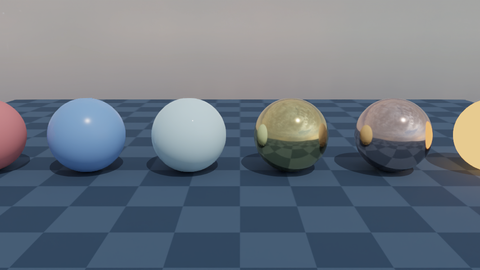
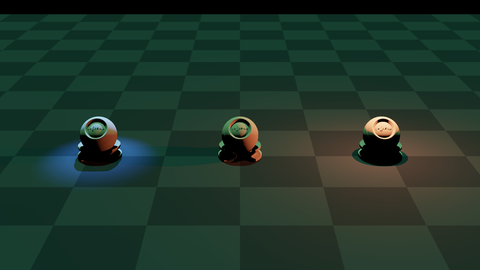
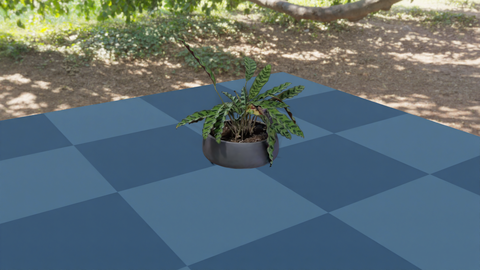
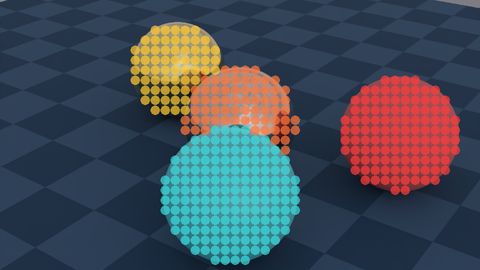
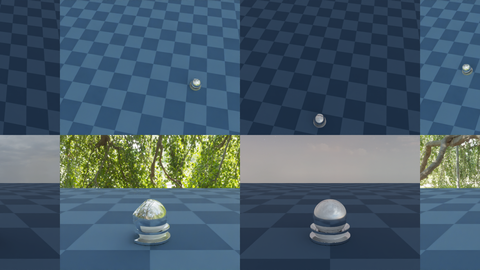
















Simulation platform for general-purpose robotics & embodied AI learning.
29.5k
Stars
2.8k
Forks
140
Open issues
30
Contributors





AI Analysis
Genesis World is a simulation platform for robotics and embodied AI research that integrates multiple physics engines (rigid, FEM, MPM, particle), a photo-realistic renderer (Nyx), and a cross-platform compiler (Quadrants) behind a Python API. It serves researchers and engineers developing robotic systems and AI learning environments who need scalable, multi-physics simulation from laptops to datacenter GPUs. It is not a general-purpose game engine or physics library—it is purpose-built for r...
Inferred from signals mentioned in the README (tests, CI, type safety) — not a review of the actual code.
AI's overall editorial judgment — not an average of the bars above, can weigh other factors too.
Genesis World: A unified multi-physics simulation platform for robotics and embodied AI research
Genesis World is a Python-based simulation platform that integrates multiple physics solvers (rigid body, FEM, MPM, SPH, PBD, fluid), a photo-realistic renderer, and a cross-platform GPU compiler into a single interface. It targets robotics researchers, embodied AI practitioners, and ML engineers who need scalable, physically diverse simulation environments. With 29K+ stars accumulated since its December 2024 public launch and backing from Genesis AI, it has attracted significant research community attention, though independent production-scale adoption evidence remains limited.
Started as an academic project in October 2023 (repo created) and publicly launched in December 2024 under the name 'Genesis'. It was subsequently rebranded to 'Genesis World' and now receives official backing from Genesis AI as a commercial entity.
The project experienced a sharp viral spike at its December 2024 launch, accumulating most of its 29K stars rapidly. Current 7-day star gain of 19 indicates the viral phase has passed and the project has settled into organic, slower-paced growth. Ongoing commercial backing from Genesis AI may sustain development momentum beyond typical academic project lifecycles.
PyPI package exists with a download badge, and ReadTheDocs documentation is live. A Discord community exists. However, no specific case studies, production deployments, or named institutional users are cited in the README. Real-world production adoption at scale is not verified; community adoption in research settings appears plausible given star count and academic origins.
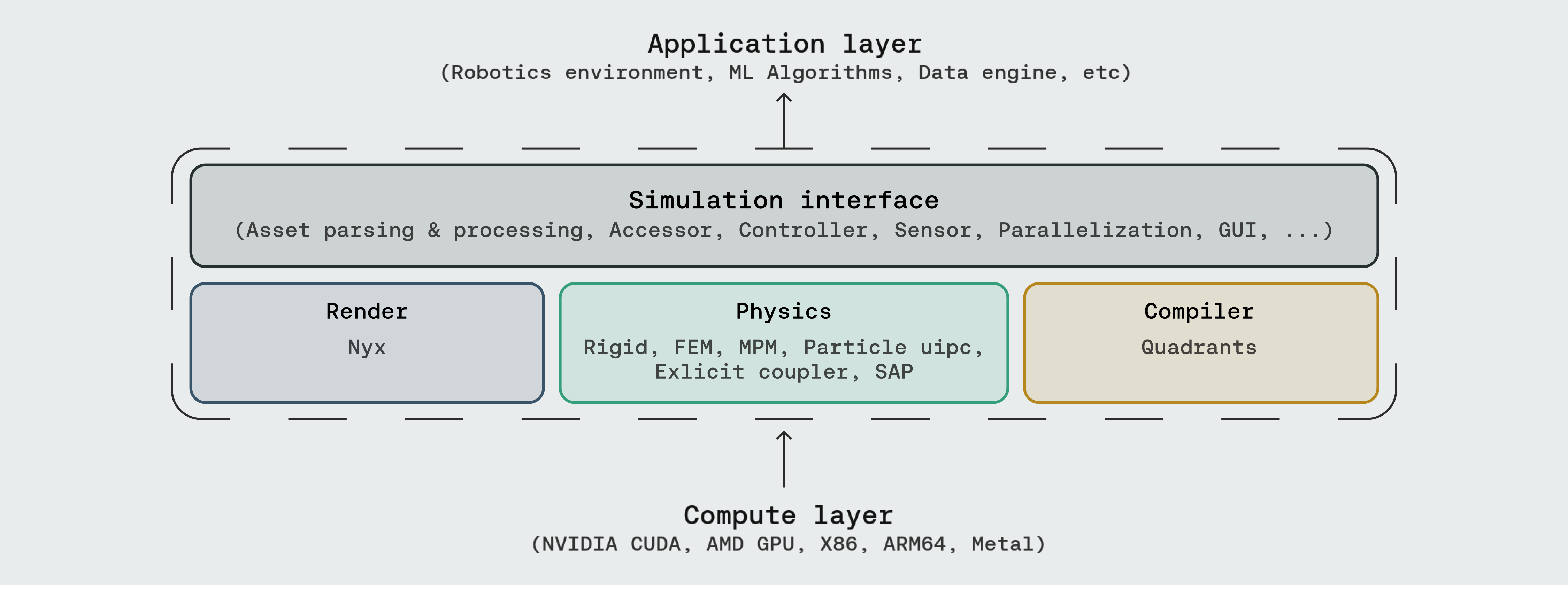
Appears to follow a four-layer architecture: a Pythonic simulation interface, a unified multi-physics engine coupling multiple solvers (Rigid, FEM, MPM, PBD/SPH, IPC), a pluggable rendering layer (Nyx, Luisa, Pyrender), and a cross-platform compiler (Quadrants) that lowers Python kernels to CUDA, ROCm, Metal, Vulkan, x86, and ARM64. The design likely emphasizes modularity and backend abstraction. Autodiff and GPU graph support are mentioned, suggesting differentiable simulation capabilities.
Not documented in README. The README mentions runnable demo scripts and optional extras but does not reference a test suite, CI coverage metrics, or testing infrastructure.
Last push was June 17, 2026 — four days before the evaluation date — indicating active ongoing development. The project has open GitHub Issues and Discussions, a Discord server, and published documentation on ReadTheDocs. Commercial backing from Genesis AI suggests sustained maintenance is more likely than for typical academic repositories.
ADOPT IF: you are a robotics or embodied AI researcher needing a single platform that handles diverse physics (rigid, soft, fluid) with GPU parallelism and Python ergonomics, especially in non-NVIDIA environments. AVOID IF: you need proven production reliability, stable APIs with long deprecation windows, or compatibility with established RL benchmark suites that assume MuJoCo or Isaac. MONITOR IF: you are evaluating simulation infrastructure for a research group or startup — Genesis World's trajectory over the next 12 months, particularly API stability and community ecosystem growth, will clarify whether it matures into a durable standard.
Independent dimensions
Mainstream potential
5/10
Technical importance
8/10
Adoption evidence
3/10
- API instability is likely during this phase: the project transitioned from 'Genesis' to 'Genesis World' and is still in active architectural evolution, which may break user code across versions.
- Commercial transition risk: Genesis AI's backing could accelerate development but may also shift priorities toward proprietary features or licensing changes, as has occurred with other academic-to-commercial open source projects.
- Ecosystem fragmentation: the multi-physics and multi-backend ambition is technically impressive but increases the surface area for bugs and platform-specific behavior, which may undermine reproducibility in research.
- Limited benchmark integration: most robotics RL research pipelines are built around MuJoCo or Isaac environments; Genesis World's adoption in peer-reviewed benchmarks remains unclear, which could limit researcher uptake.
- Post-viral stagnation risk: the 29K stars were accumulated largely via a viral launch event; current organic growth appears modest, and sustained community contribution beyond the core team is not yet demonstrated.
Genesis World will likely consolidate into a respected research-grade simulation platform over 2026-2027, particularly for multi-physics robotics research, but mainstream displacement of MuJoCo or Isaac in RL workflows appears unlikely without deeper benchmark ecosystem integration.
Newsletter
Get analyses like this every Monday
Free weekly digest of the most interesting open-source discoveries.
Languages
Information
- Language
- Python
- License
- Apache-2.0
- Last updated
- 8h ago
- Created
- 33mo ago
- Analyzed with
- anthropic/claude-haiku-4-5
Stars over time
Contributors over time
Top 100 contributors only — repos with more will plateau at 100.
Open issues
[Bug]: MJCF include crashes when included file contains default <mesh>
[Bug]: USD parser fails on some assets compatible with Isaac Sim
[Feature]: ArduPilot/PX4 SITL bridge for the `Drone` entity
[Feature]: Support PolyFEM solver
[Bug]: LuisaRender RayTracer aborts on shutdown with fmt::format_error (“string pointer is null”)
Top contributors
Recent releases
Similar repos

AgibotTech/genie_sim
Genie Sim is a robotics simulation platform from AgiBot designed for embodied...

isaac-sim/IsaacLab
Isaac Lab is a GPU-accelerated, open-source framework built on NVIDIA Isaac Sim...
| Repository | Stars | Week Δ | Language | Score | Updated |
|---|---|---|---|---|---|
|
Genesis-Embodied-AI/genesis-world
this
|
29.5k | +49 | Python | 8/10 | 8h ago |
|
AgibotTech/genie_sim
|
1.1k | — | Python | 8/10 | 1w ago |
|
isaac-sim/IsaacSim
|
3.6k | — | Python | 8/10 | 1w ago |
|
isaac-sim/IsaacLab
|
7.6k | — | Python | 8/10 | 15h ago |
 NVIDIA/cosmos NVIDIA/cosmos
|
11k | — | Jupyter Notebook | 8/10 | 9h ago |
 facebookresearch/habitat-sim facebookresearch/habitat-sim
|
3.7k | — | C++ | 6/10 | 2mo ago |
IsaacLab is tightly integrated with NVIDIA hardware and Isaac Sim, offering strong RL tooling and industry backing. Genesis World aims to be hardware-agnostic (AMD, Apple Metal, ARM64 supported) and covers more physics modalities (fluids, soft body), making it potentially more flexible for non-NVIDIA research environments.
MuJoCo is the dominant standard for contact-rich rigid body simulation in robotics RL, with a mature ecosystem and wide benchmark adoption. Genesis World attempts broader physics coverage but faces a steep integration deficit — most existing RL benchmarks and papers assume MuJoCo compatibility.
AirSim focuses on aerial and autonomous vehicle simulation with Unreal Engine rendering. It is largely unmaintained as of 2023. Genesis World's active development and broader physics scope make it a plausible alternative for researchers who previously used AirSim.
CARLA is specialized for autonomous driving scenarios with high-fidelity urban environments. Genesis World is more general-purpose and targets manipulator/legged robot use cases more directly, making them complementary rather than direct competitors.
PyBullet is widely used due to simplicity and Python accessibility but lacks GPU parallelism and multi-physics support. Genesis World offers a more capable alternative for researchers who have outgrown PyBullet's performance limits, though it carries higher setup complexity.