A project to improve skills of large language models
1k
Stars
192
Forks
101
Open issues
30
Contributors


AI Analysis
Nemo Skills is a framework for improving large language model capabilities through synthetic data generation, model training, and comprehensive evaluation across specialized domains (math, code, scientific knowledge, long-context understanding). It enables seamless scaling from local workstations to large Slurm clusters and supports multiple inference backends. This is a specialized tool for LLM researchers and ML practitioners focusing on skill development, not a general-purpose library.
Inferred from signals mentioned in the README (tests, CI, type safety) — not a review of the actual code.
AI's overall editorial judgment — not an average of the bars above, can weigh other factors too.
NVIDIA's toolkit for systematically improving LLM capabilities across math, code, and reasoning domains
Nemo-Skills is an NVIDIA-maintained framework designed to streamline the full LLM development lifecycle: synthetic data generation, model training, and multi-benchmark evaluation. It abstracts infrastructure complexity—allowing seamless scaling from local GPUs to massive Slurm clusters—and bundles integrations with TensorRT-LLM, vLLM, and other inference engines. Built for ML researchers and engineers training specialized LLMs, particularly in math, code, and formal reasoning. Real-world adoption evidence emerges from NVIDIA's own model releases (Nemotron series) that used Nemo-Skills in their development pipeline.
Created February 2024 as part of NVIDIA's broader NeMo ecosystem. Emerged alongside increased industry focus on LLM specialization and reasoning capabilities. Positioned to support NVIDIA's internal model development while offering the toolchain as open infrastructure for external researchers.
Modest but steady activity. Repository gained 1,002 stars over ~2.5 years with 192 forks, averaging ~400 stars/year—typical for specialized infrastructure tools. Growth accelerated through concrete use cases: December 2025 dataset releases, August 2025 model reproduction guides, and documented recipes tied to released NVIDIA models. Latest push is current (2026-07-10), indicating active maintenance. No explosive growth pattern, consistent with a toolchain serving a narrower audience rather than mass adoption.
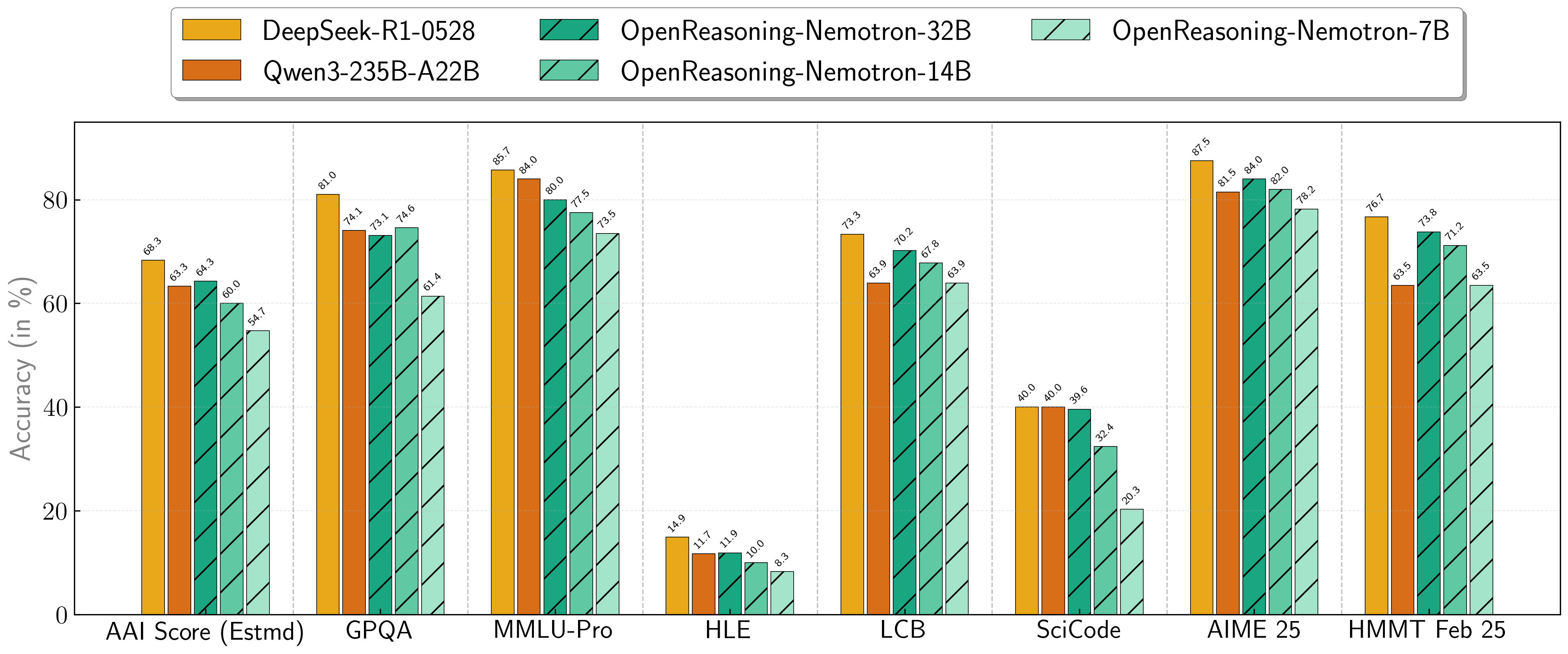
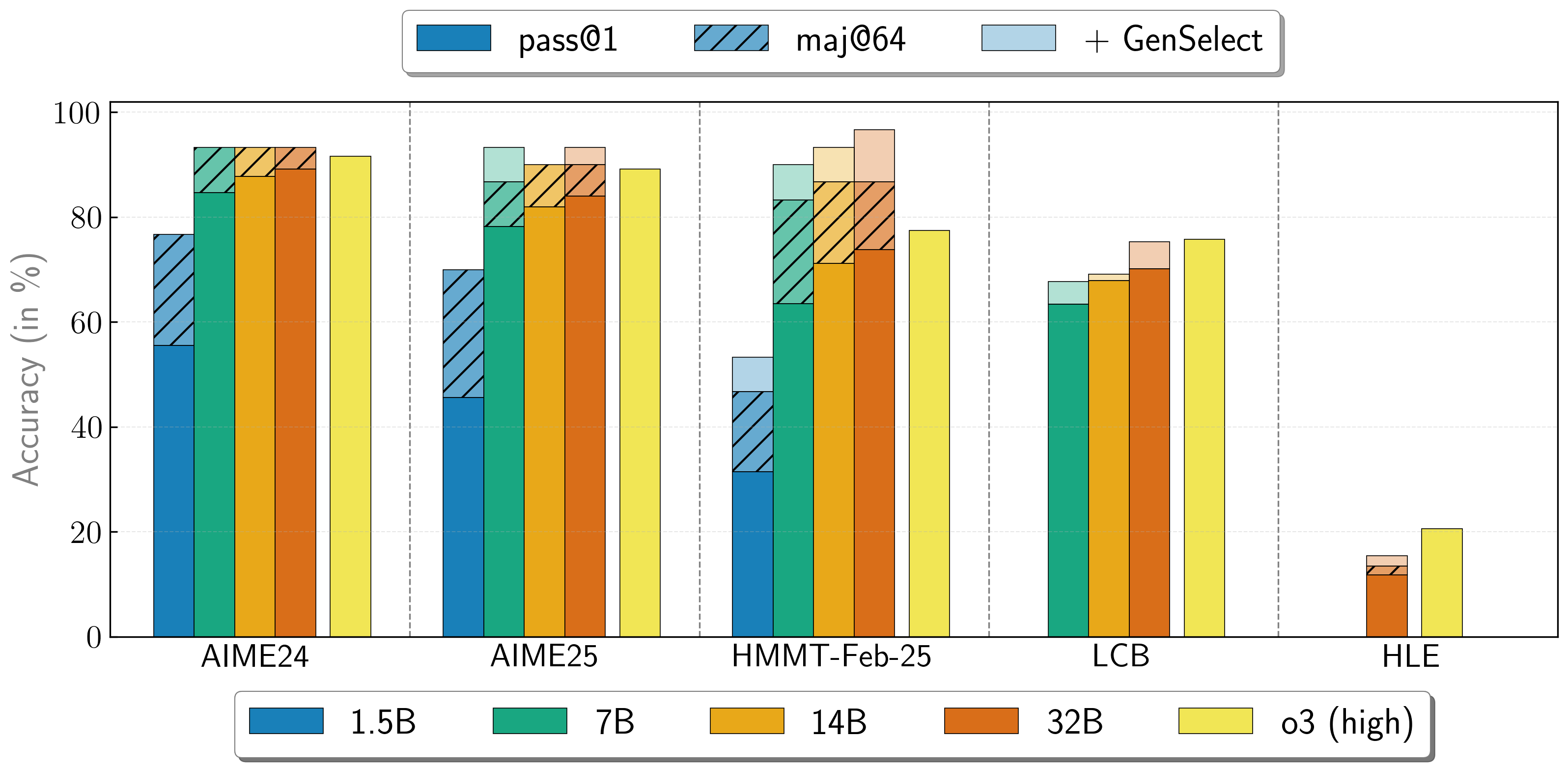
Adoption partially verifiable through NVIDIA's own model releases: (1) Nemotron-Math-v2 dataset and training reproduction guides (Dec 2025), (2) Nemotron-Nano-9B-v2 eval reproduction (Aug 2025), (3) Llama-Nemotron-Super-49B eval reproduction (Aug 2025). These indicate Nemo-Skills is used in NVIDIA's production LLM development. External adoption not explicitly documented. No GitHub discussions, community examples, or third-party case studies mentioned in README. Adoption likely concentrated among: large labs with Slurm infrastructure, NVIDIA partners, and research groups pursuing specialized reasoning tasks.
Appears to be a modular pipeline system comprising: (1) inference abstraction layer supporting multiple backends (TensorRT-LLM, vLLM, sglang, Megatron, API providers), (2) evaluation harness integrating 20+ benchmarks across math, code, science, multilingual, and VLM domains, (3) training integration with NeMo-RL and veRL frameworks. Likely built on top of existing NeMo framework. README emphasizes horizontal scaling and local-to-cluster portability, suggesting stateless pipeline design and Slurm-native orchestration.
Not documented in README. No mention of test suites, CI/CD practices, or coverage metrics.
Strong current maintenance: last push is exactly at evaluation date (2026-07-10 00:30:26), indicating active development. Recent news entries span December 2025 to July 2025, showing regular feature and documentation updates. No stagnation indicators. Frequency suggests roughly quarterly release cadence with continuous iteration.
ADOPT IF: you are training specialized LLMs (math, code, reasoning) at scale on Slurm clusters and need standardized evaluation across 20+ benchmarks, integrated training with NeMo-RL or veRL, and reproducible recipes. Particularly valuable if reproducing NVIDIA Nemotron models or requiring unified inference abstraction (local→cluster scaling). AVOID IF: you work primarily with API-based models, need lightweight CPU-only tooling, lack Slurm infrastructure, or require broad vendor neutrality (framework is NVIDIA-centric). Also avoid if your evaluation benchmarks are highly custom or niche. MONITOR IF: you are building LLM systems that may eventually require Slurm-scale evaluation but currently develop locally—Nemo-Skills' local-to-cluster abstraction could become valuable as you grow; watch for community plugins and third-party benchmark integrations to signal broader adoption.
Independent dimensions
Mainstream potential
3/10
Technical importance
7/10
Adoption evidence
5/10
- Vendor lock-in: Deep integration with NVIDIA ecosystem (TensorRT-LLM, Megatron, NeMo) may constrain portability to non-NVIDIA hardware or other training frameworks.
- Narrow adoption base: Adoption appears concentrated within NVIDIA and partner labs; limited evidence of independent researcher uptake. Tools serving large labs can suffer if NVIDIA deprioritizes them.
- Slurm assumption: Pipelines designed around Slurm orchestration; may require significant adaptation for Kubernetes, cloud schedulers, or single-node research environments.
- Evaluation benchmark churn: 20+ benchmarks means maintenance burden; outdated benchmark implementations or deprecated dataset links could break reproducibility.
- Documentation-dependent: README-centric model means external contributors may struggle without extensive internal docs. Sparse test coverage (not documented) could complicate debugging at scale.
Nemo-Skills will likely remain a specialized, well-maintained tool used primarily within NVIDIA's LLM development and by research labs pursuing reasoning/math capabilities at Slurm scale. Slow but steady growth as evaluation benchmarking becomes standard practice. Unlikely to achieve mainstream adoption outside GPU-rich environments but may become de facto standard within NVIDIA ecosystem and influence similar tools at other labs.
Explore similar
Newsletter
Get analyses like this every Monday
Free weekly digest of the most interesting open-source discoveries.
Languages
Information
- Language
- Python
- License
- Apache-2.0
- Last updated
- 15h ago
- Created
- 29mo ago
- Analyzed with
- anthropic/claude-haiku-4-5
Stars over time
Contributors over time
Top 100 contributors only — repos with more will plateau at 100.
Top contributors
Recent releases
No releases published yet.
Similar repos
| Repository | Stars | Week Δ | Language | Score | Updated |
|---|---|---|---|---|---|
|
NVIDIA-NeMo/Skills
this
|
1k | — | Python | 8/10 | 15h ago |
|
NVIDIA-NeMo/RL
|
1.8k | — | Python | 8/10 | 11h ago |
|
NVIDIA-NeMo/Speech
|
17.7k | — | Python | 8/10 | 9h ago |
|
NVIDIA-NeMo/Gym
|
1k | — | Python | 8/10 | 9h ago |
|
NVIDIA-NeMo/Curator
|
1.7k | — | Python | 8/10 | 16h ago |
Broader ecosystem, simpler onboarding. Nemo-Skills provides integrated evaluation suite (20+ benchmarks, VLM support) and infrastructure abstraction (Slurm scaling). Transformers is data-agnostic; Nemo-Skills bundles synthetic data generation pipelines and training integration. Best when evaluation standardization and scaling matter.
Lightweight, cloud-native. Nemo-Skills targets on-premise Slurm clusters and local scaling; targets researchers with GPU access. OpenAI Evals focuses on API-based evaluation; Nemo-Skills includes inference hosting and training orchestration.
General-purpose distributed ML. Ray provides broader orchestration; Nemo-Skills is LLM-specific with deep Slurm integration and evaluation domain knowledge. Complementary rather than competitive—Nemo-Skills likely uses Ray internally for some parallelization.
DeepSpeed focuses on training optimization; Nemo-Skills wraps multiple training backends (NeMo-RL, veRL) and emphasizes end-to-end pipelines. Nemo-Skills is orchestration-layer; DeepSpeed is engine-layer.
Both support LLM training and evaluation. Nemo-Skills has broader benchmark coverage (speech, VLM, multilingual) and more aggressive Slurm scaling. TRL and LMFlow are more modular and easier to integrate piecemeal; Nemo-Skills is more comprehensive but NVIDIA-centric.