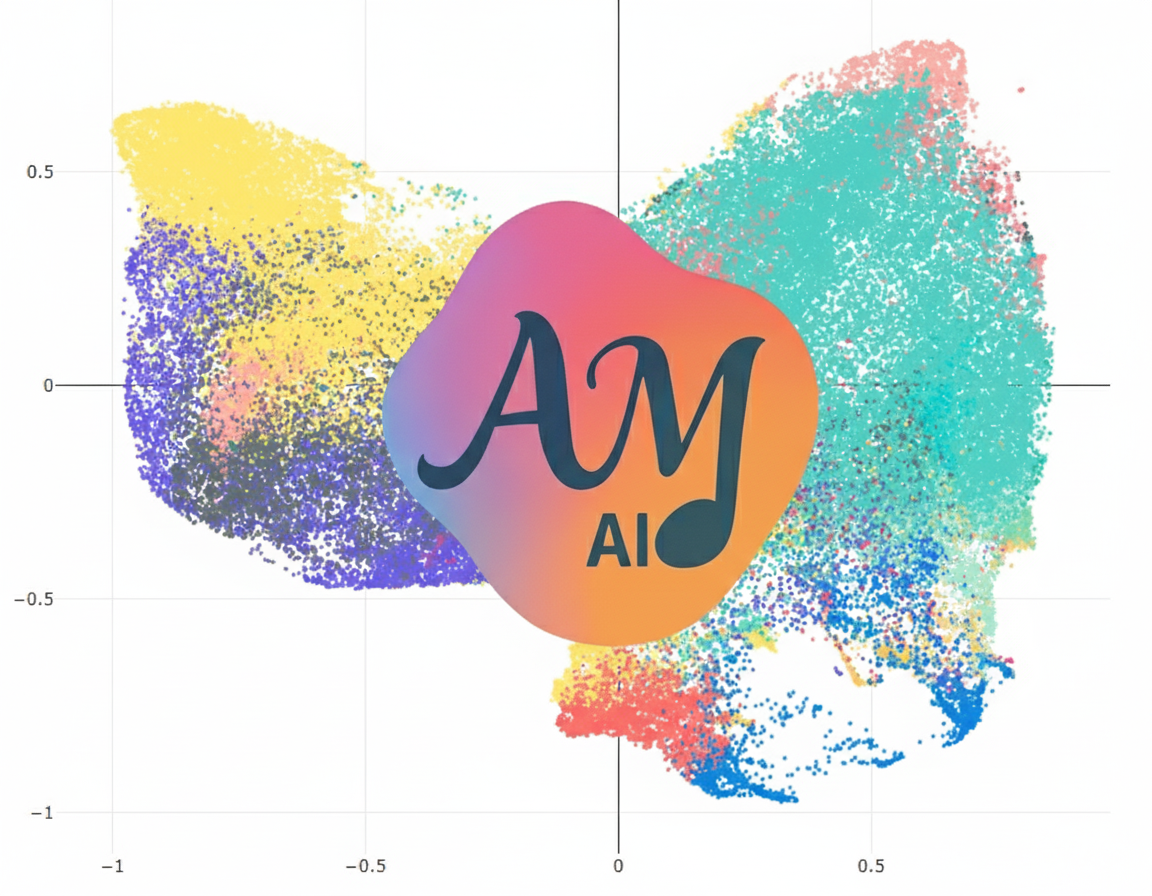
AudioMuse-AI uses sonic analysis to rediscover forgotten songs, uncover hidden connections in your music library, and generate intelligent playlists for Navidrome, Jellyfin, LMS, Lyrion, Emby and Plex: no metadata or external services required.
2.2k
Stars
129
Forks
15
Open issues
30
Contributors


AI Analysis
AudioMuse-AI is a self-hosted tool that analyzes music audio characteristics to generate intelligent playlists, discover similar songs, and create visual music library maps for popular media servers (Navidrome, Jellyfin, Plex, Emby, and others) without relying on metadata or external APIs. It serves music enthusiasts and self-hosted infrastructure operators who want AI-driven music discovery grounded in sonic analysis rather than metadata. Not intended for casual streaming users or those requ...
Inferred from signals mentioned in the README (tests, CI, type safety) — not a review of the actual code.
AI's overall editorial judgment — not an average of the bars above, can weigh other factors too.
Self-hosted music analysis tool with sonic clustering and AI playlists for indie media servers
AudioMuse-AI is a Python-based, self-hosted application that analyzes audio files locally to generate playlists and discover music patterns without relying on external metadata services or APIs. It integrates with five self-hosted music servers (Jellyfin, Navidrome, LMS, Lyrion, Emby) and supports Docker, Podman, and Kubernetes deployment. The project targets users who run personal media servers and want AI-driven music discovery without cloud dependency. Adoption appears concentrated in the self-hosted media server community; real-world production usage is not extensively documented.
Created 2025-05-24, AudioMuse-AI emerged approximately one year before evaluation date. It was positioned explicitly as a privacy-preserving alternative to cloud-based music discovery. The project quickly attracted managed hosting partnerships (Elestio, Atlas Cloud) and community plugin contributions, suggesting early market recognition within the self-hosted ecosystem.
The project gained 2,013 stars and 119 forks in roughly 13 months, with 60 stars in the final 7 days. Growth appears steady rather than volatile. The README emphasizes privacy-first design and multi-server support, likely resonating with the self-hosted media server demographic. Managed hosting availability may have accelerated visibility. Similarity to related projects (SoulSync at 1,988 stars, SuggestArr at 1,198 stars) suggests the niche is recognizable but not saturated.
Adoption not verified. README mentions Elestio managed hosting and Atlas Cloud LLM partnership, indicating some commercial interest, but does not provide case studies, deployment counts, or user testimonials. GitHub metrics alone (2K stars) do not confirm production usage scale. Community plugins exist (Jellyfin, Navidrome official; Lyrion unofficial by external contributor), suggesting developer uptake but not end-user volume.
Likely implements Flask web service with background Worker containers for audio analysis, based on README architecture references. Appears to support both local deployment (Docker Compose, Podman) and cluster-scale deployment (Kubernetes with ARM64/AMD64 support). README references clustering, fingerprinting, and LLM-compatible API integration but does not expose algorithmic details in the truncated excerpt; full algorithm documentation is cited but not included here.
Not documented in README.
Last push 2026-06-29 (within 24 hours of evaluation date 2026-06-30) indicates active development. Repository includes comprehensive documentation (ARCHITECTURE.md, ALGORITHM.md, DEPLOYMENT.md, GPU.md, PARAMETERS.md, AUTH.md, FAQ.md), suggesting mature project practices. Version tags and CI badges present. No evidence of stagnation; maintenance appears regular and recent.
ADOPT IF: you run a self-hosted media server (Jellyfin, Navidrome, LMS, Lyrion, or Emby), value privacy and offline-first operation, and want AI-driven playlist generation without cloud APIs. AVOID IF: you need production-scale multi-tenant deployment, require SLA guarantees, or need deep integration with streaming platforms (Spotify, Apple Music). MONITOR IF: you are exploring long-term viability—adoption metrics are unclear, and project maturity (13 months old) is still early; test for stability in your specific media server version before production use.
Independent dimensions
Mainstream potential
3/10
Technical importance
6/10
Adoption evidence
3/10
- Adoption scale unclear: no public metrics on active installations or user base; GitHub stars alone do not establish production footprint.
- Early project lifecycle: 13 months old; unknown exposure to edge cases, performance at scale, or long-term maintenance commitment.
- Dependency on self-hosted ecosystem: addressable market limited to users running their own media servers; mainstream adoption unlikely unless self-hosted media becomes dominant.
- Audio analysis accuracy not independently verified: README does not cite benchmarks, accuracy rates, or third-party validation of clustering or fingerprinting algorithms.
- Multi-server integration complexity: supporting five different media server APIs introduces maintenance burden; breaking changes in any server could cascade.
AudioMuse-AI likely remains a niche-focused project serving the self-hosted media enthusiast segment. Growth may plateau unless mainstream adoption of self-hosted media servers accelerates or the project is acquired by a larger platform. Maintenance is likely to continue at current pace given recent activity and active plugin ecosystem.
Explore similar
Newsletter
Get analyses like this every Monday
Free weekly digest of the most interesting open-source discoveries.
Languages
Information
- Language
- Python
- License
- AGPL-3.0
- Last updated
- 14h ago
- Created
- 14mo ago
- Analyzed with
- anthropic/claude-haiku-4-5
Stars over time
Contributors over time
Top 100 contributors only — repos with more will plateau at 100.
Open issues
[BUG] Gemini Ai integration doesn't work
[FEATURE] Artist Similarity options - minimum threshold and dissimilarity
[FEATURE] Scheduled tasks: backups?
[FEATURE] Sign macOS Application
[FEATURE] Make web browser opening on startup optional
Top contributors
Similar repos

navilg/media-stack
A self-hosted Docker-based media ecosystem combining management tools (Sonarr,...
| Repository | Stars | Week Δ | Language | Score | Updated |
|---|---|---|---|---|---|
|
NeptuneHub/AudioMuse-AI
this
|
2.2k | +127 | Python | 7/10 | 14h ago |
 lklynet/aurral lklynet/aurral
|
1.2k | — | JavaScript | 8/10 | 14h ago |
 Nezreka/SoulSync Nezreka/SoulSync
|
2k | — | Python | 8/10 | 9h ago |
 LumePart/Explo LumePart/Explo
|
1.7k | — | Go | 7/10 | 15h ago |
 martpie/museeks martpie/museeks
|
2.1k | — | TypeScript | 7/10 | 1w ago |
|
navilg/media-stack
|
1.2k | — | — | 7/10 | 2w ago |
Similar Python project (1,988 stars) in music discovery space. Likely serves overlapping audience; direct functional comparison not possible from README alone.
Python-based playlist/recommendation tool (1,198 stars). Appears focused on intelligent curation; AudioMuse-AI emphasizes sonic analysis and offline operation as differentiators.
JavaScript alternative in music analysis niche. Different tech stack; likely distinct developer community but overlapping user problems.
Broader media server orchestration; AudioMuse-AI is more specialized to music discovery and audio analysis.
Go-based project in related ecosystem; language and implementation likely differ significantly despite similar star count.