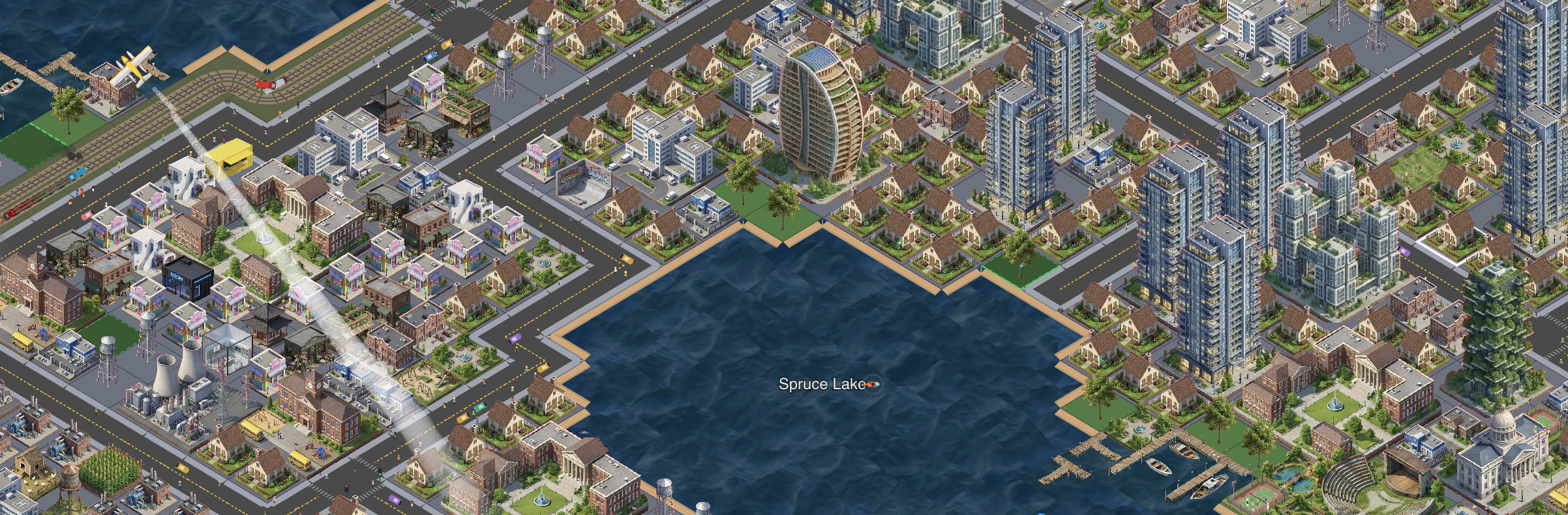
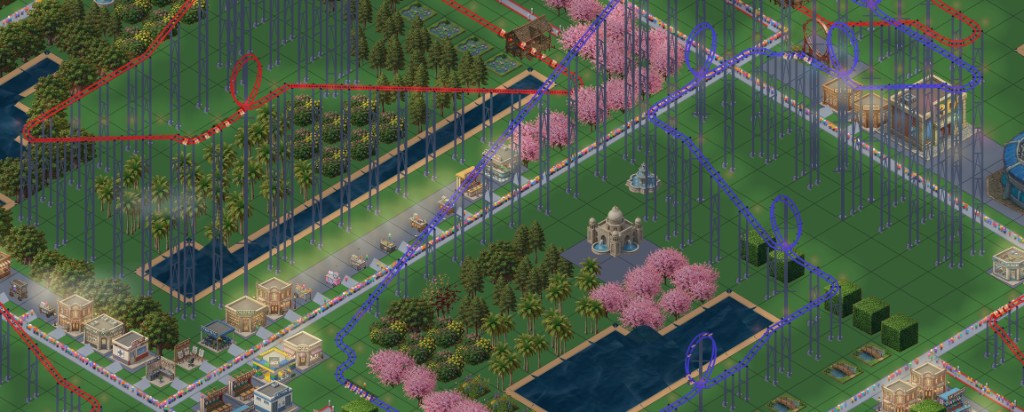
IsoCity: City building simulation game.
2.2k
Stars
238
Forks
66
Open issues
12
Contributors


AI Analysis
IsoCity is an open-source isometric city and theme park builder written in TypeScript and Next.js with HTML5 Canvas rendering. It serves simulation and creative game enthusiasts who want to build, simulate, and manage virtual cities and theme parks with traffic systems, pedestrian pathfinding, and economy mechanics. This project is specialized for fans of city-building and simulation games rather than general-purpose software.
Inferred from signals mentioned in the README (tests, CI, type safety) — not a review of the actual code.
AI's overall editorial judgment — not an average of the bars above, can weigh other factors too.
TypeScript isometric city builder with simulation; early-stage hobby project gaining modest traction
IsoCity is an open-source browser-based city and theme park builder written in TypeScript and Next.js, featuring isometric rendering, traffic simulation, pathfinding, and resource management. Built for web players and developers interested in simulation games or isometric graphics. The project demonstrates solid technical foundation but shows early adoption patterns typical of niche hobby games rather than established production use.
Created November 2025, IsoCity emerged as a personal project built with Cursor (an AI-assisted IDE). It appears to be a fresh entry in the browser-based city-building space, positioning itself as an open-source alternative to established commercial games like SimCity or Tropico.
The project gained 2,163 stars in approximately 7.5 months, averaging roughly 18 stars per week. Recent velocity (11 stars in 7 days as of July 2026) suggests interest has plateaued from initial launch attention but remains positive. The presence of playable live deployments at iso-city.com and iso-coaster.com likely drives some awareness, though growth rate does not indicate viral adoption.
Adoption not verified. Project hosts live playable instances (iso-city.com, iso-coaster.com) suggesting self-deployment, but no public evidence of community deployments, user testimonials, or production usage beyond author. No mention of user base, downloads, or adoption metrics. README describes features but not real-world usage patterns.
Likely uses Next.js 16 as a web application framework with TypeScript for type safety. Based on README, implements custom HTML5 Canvas-based isometric rendering (`CanvasIsometricGrid`) rather than external game engine dependencies, handling depth sorting and sprite management natively. Appears to include autonomous traffic systems, pathfinding algorithms, resource management, and save/load state persistence. Technical decisions suggest deliberate emphasis on web-native implementation over heavy frameworks.
Not documented in README. No mention of testing infrastructure, CI/CD pipelines, or test suites. Absence does not confirm lack of tests, but indicates testing practices are not a highlighted project concern.
Last push 2026-07-02, only 2 days before analysis date. Repository shows active recent work. Created roughly 7.5 months ago and still receiving updates suggests early-stage active development rather than maintenance mode. Frequency of pushes not verifiable from metadata alone, so cannot distinguish between frequent iteration and sparse updates.
ADOPT IF: you are prototyping isometric web rendering techniques, want a working example of canvas-based simulation in Next.js, or wish to build on an open-source city-builder foundation. AVOID IF: you need production-grade stability, large active community, extensive documentation, or proven adoption. MONITOR IF: you are interested in browser-based game development and want to track whether this matures into a sustainable hobby-game or game-engine project.
Independent dimensions
Mainstream potential
3/10
Technical importance
6/10
Adoption evidence
2/10
- No documented test coverage or CI/CD infrastructure increases risk of regressions as codebase grows.
- Single-author project structure (built with Cursor; appears to be one developer) creates bus-factor risk and may limit sustained momentum.
- Adoption not verified; unclear whether player retention or community contribution will materialize beyond initial launch interest.
- HTML5 Canvas implementation without external game engine may become a bottleneck for performance or feature expansion as simulation complexity grows.
- No evidence of roadmap, governance, or contribution guidelines; may struggle to onboard collaborators beyond maintainer.
Likely remains a niche hobby project and educational resource for isometric rendering and simulation techniques. Small probability of maturing into a stable, community-maintained game platform; higher probability of becoming a reference implementation used by developers learning browser-based simulation.
Newsletter
Get analyses like this every Monday
Free weekly digest of the most interesting open-source discoveries.
Languages
Information
- Website
- https://iso-city.com
- Language
- TypeScript
- License
- MIT
- Last updated
- 1w ago
- Created
- 8mo ago
- Analyzed with
- anthropic/claude-haiku-4-5
Stars over time
Contributors over time
Top 100 contributors only — repos with more will plateau at 100.
Open issues
Top contributors
Recent releases
No releases published yet.
Similar repos

a16z-infra/ai-town
AI Town is a deployable starter kit for building virtual environments where AI...
| Repository | Stars | Week Δ | Language | Score | Updated |
|---|---|---|---|---|---|
|
amilich/isometric-city
this
|
2.2k | +4 | TypeScript | 7/10 | 1w ago |
 srizzon/git-city srizzon/git-city
|
5.7k | — | TypeScript | 8/10 | 1w ago |
 boardgameio/boardgame.io boardgameio/boardgame.io
|
12.4k | — | TypeScript | 8/10 | 2d ago |
 iTowns/itowns iTowns/itowns
|
1.3k | — | JavaScript | 7/10 | 2d ago |
|
a16z-infra/ai-town
|
10.1k | — | TypeScript | 7/10 | 4w ago |
 jasonlong/isometric-contributions jasonlong/isometric-contributions
|
3.7k | — | JavaScript | 7/10 | 4d ago |
Larger stars and longer history. git-city visualizes Git contributions as isometric cities; serves data-visualization niche. IsoCity targets interactive gameplay. Different use cases but share isometric rendering theme.
Smaller niche: GitHub contribution visualization. IsoCity is broader (full city simulation). Both use isometric aesthetics but serve different audiences.
Framework for building turn-based games. IsoCity is a complete game, not a reusable framework. Different scope: boardgame.io targets developers; IsoCity targets players.
Established commercial city builders with years of polish, content, and player bases. IsoCity is open-source and free but lacks feature depth and ecosystem maturity. Positioning as 'alternative' is aspirational rather than claimed in README.