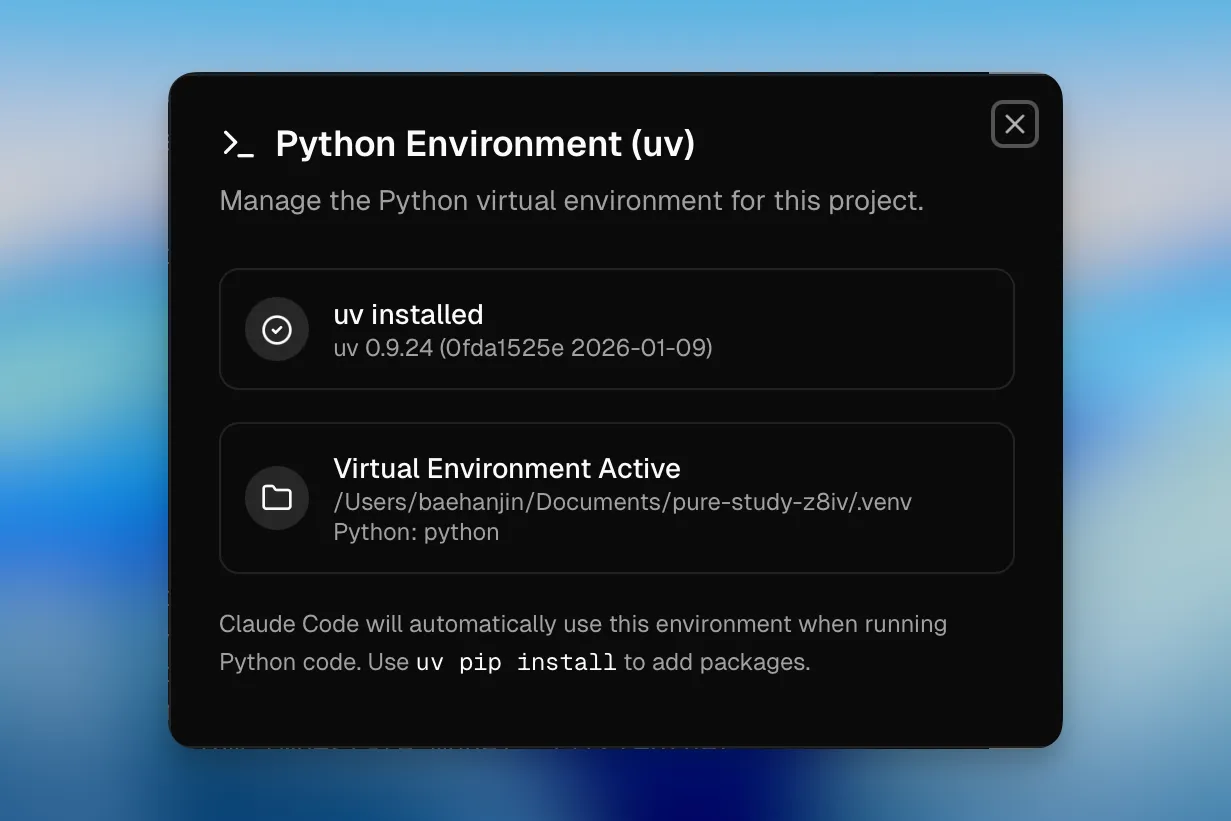
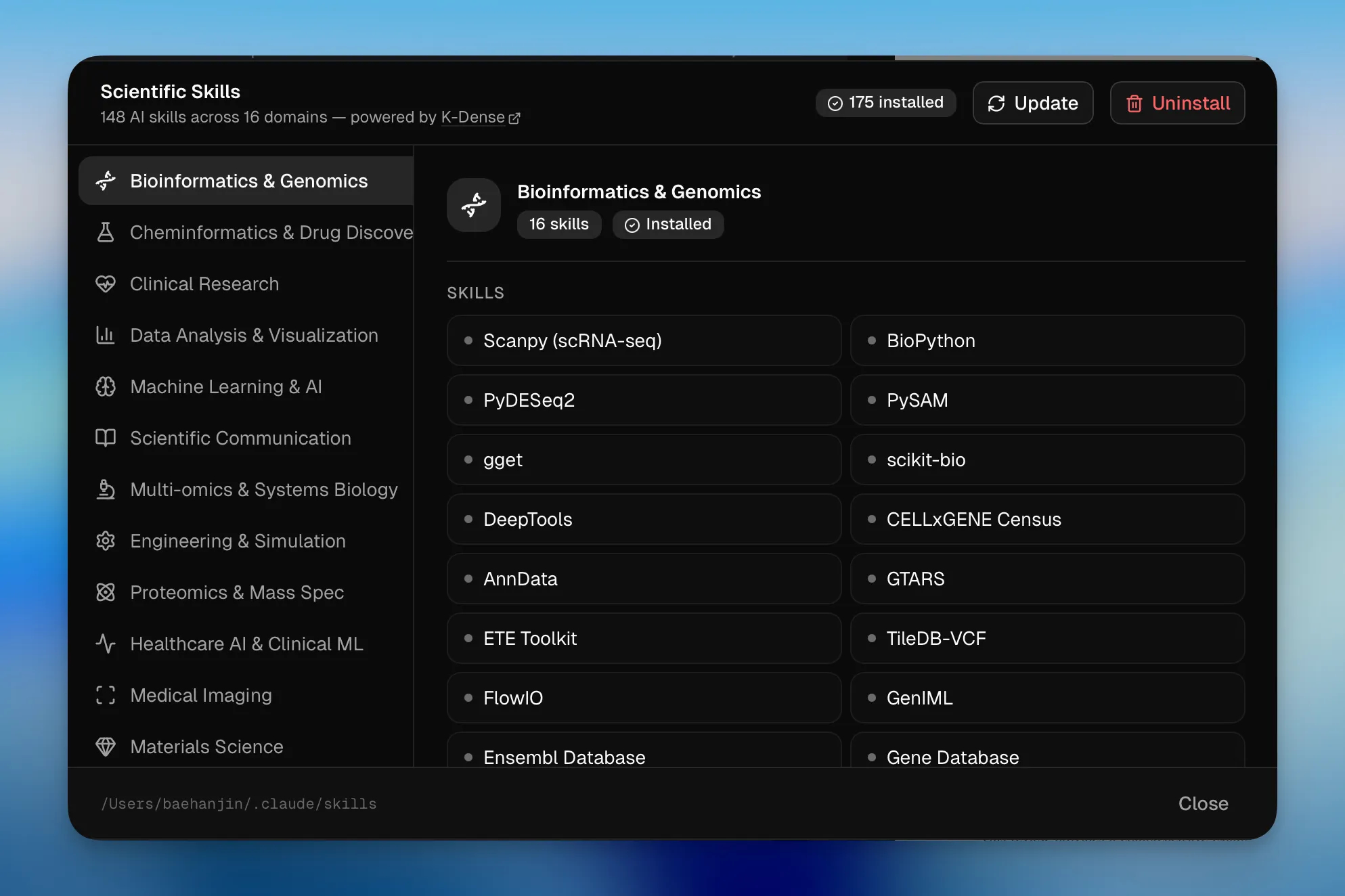
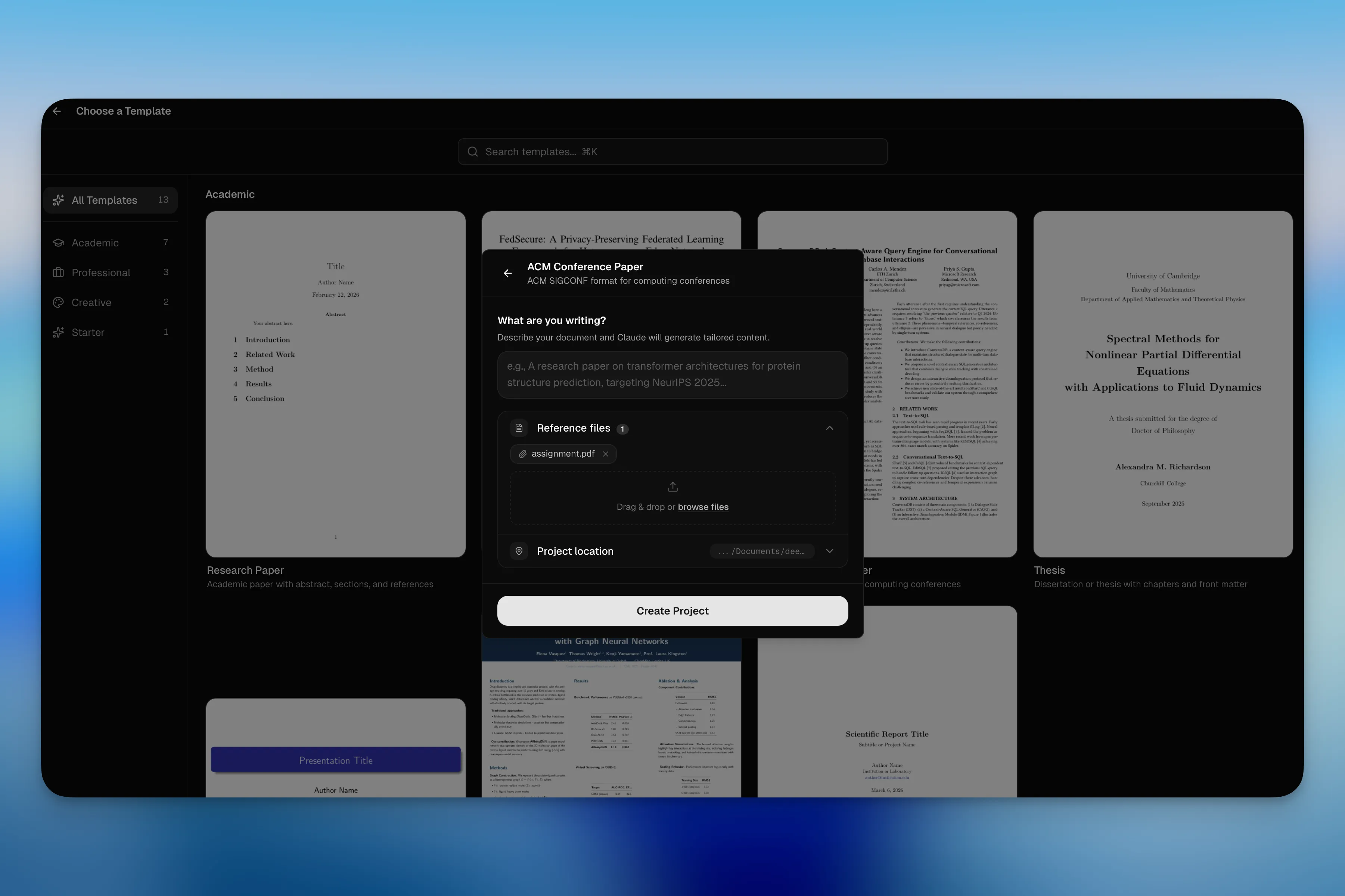
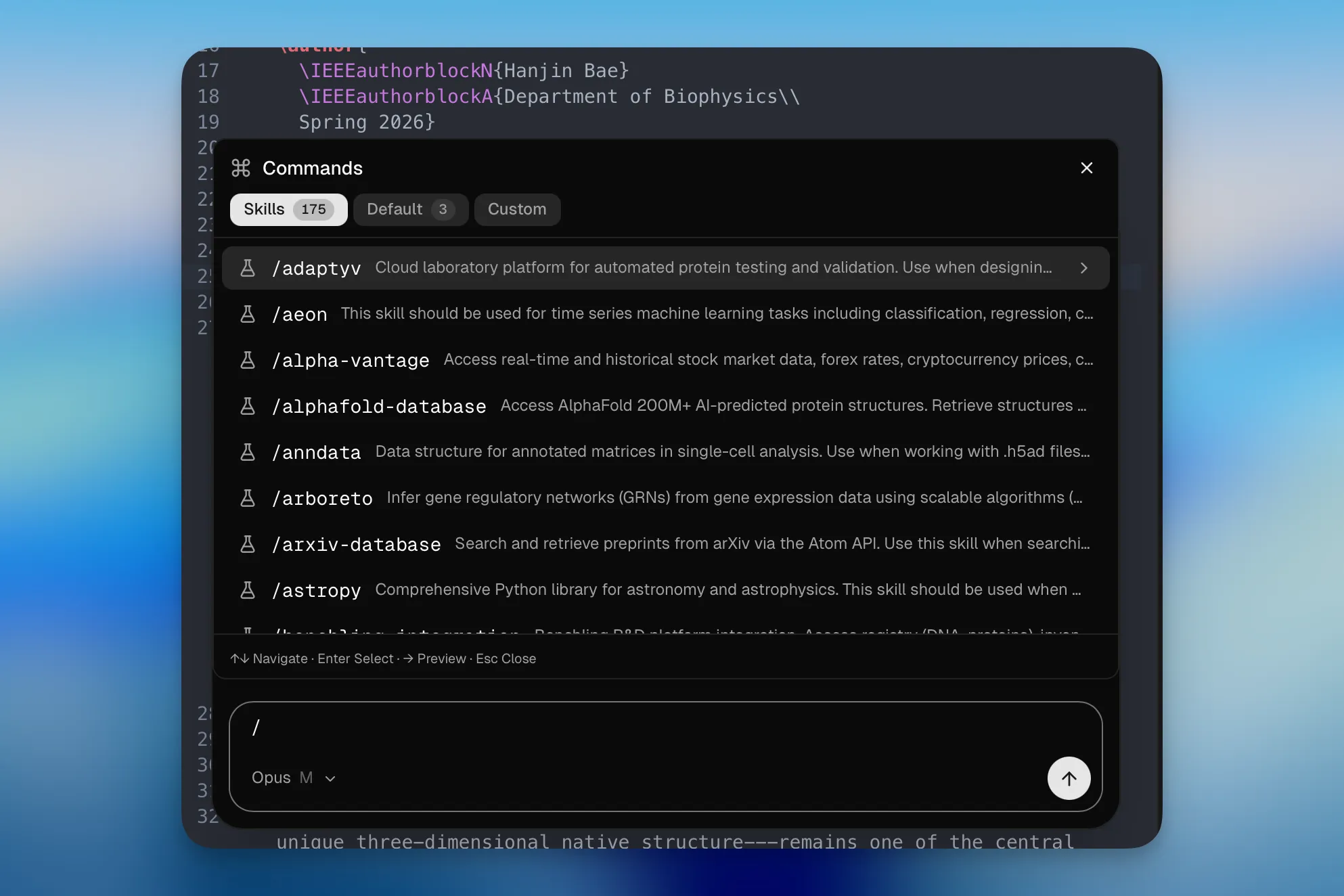
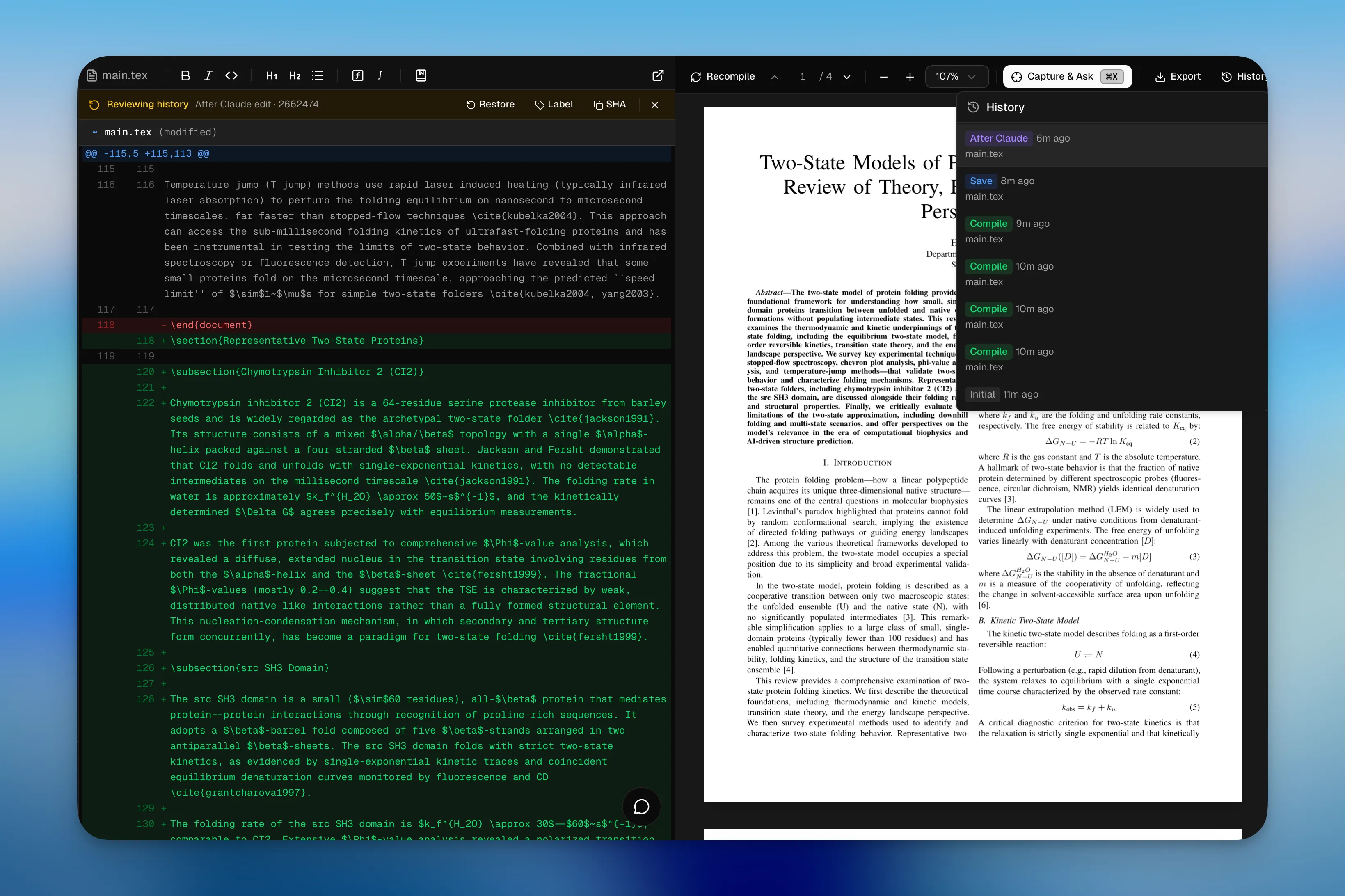
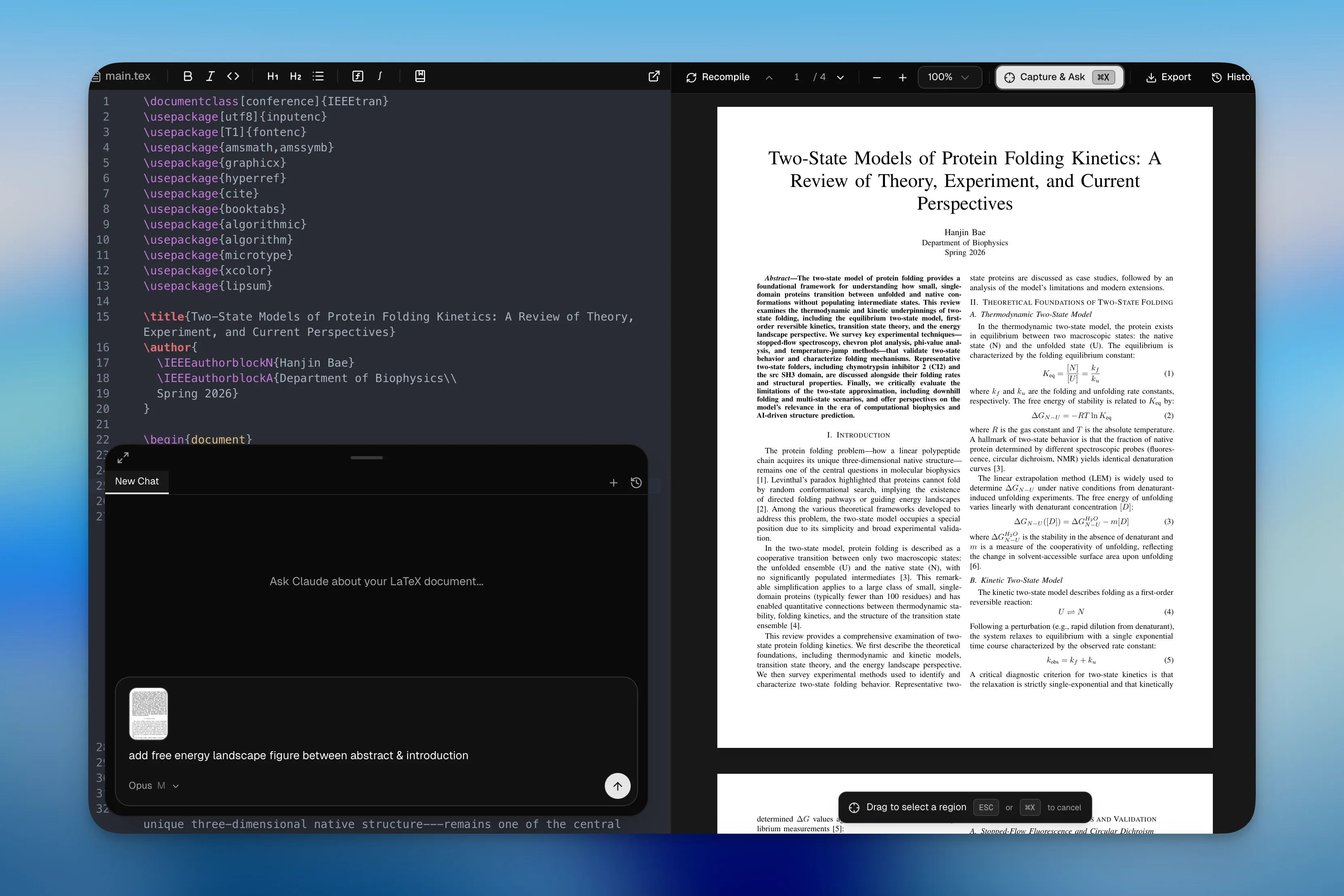
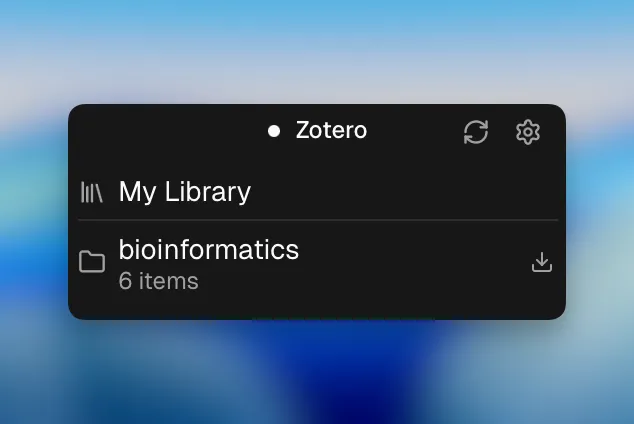
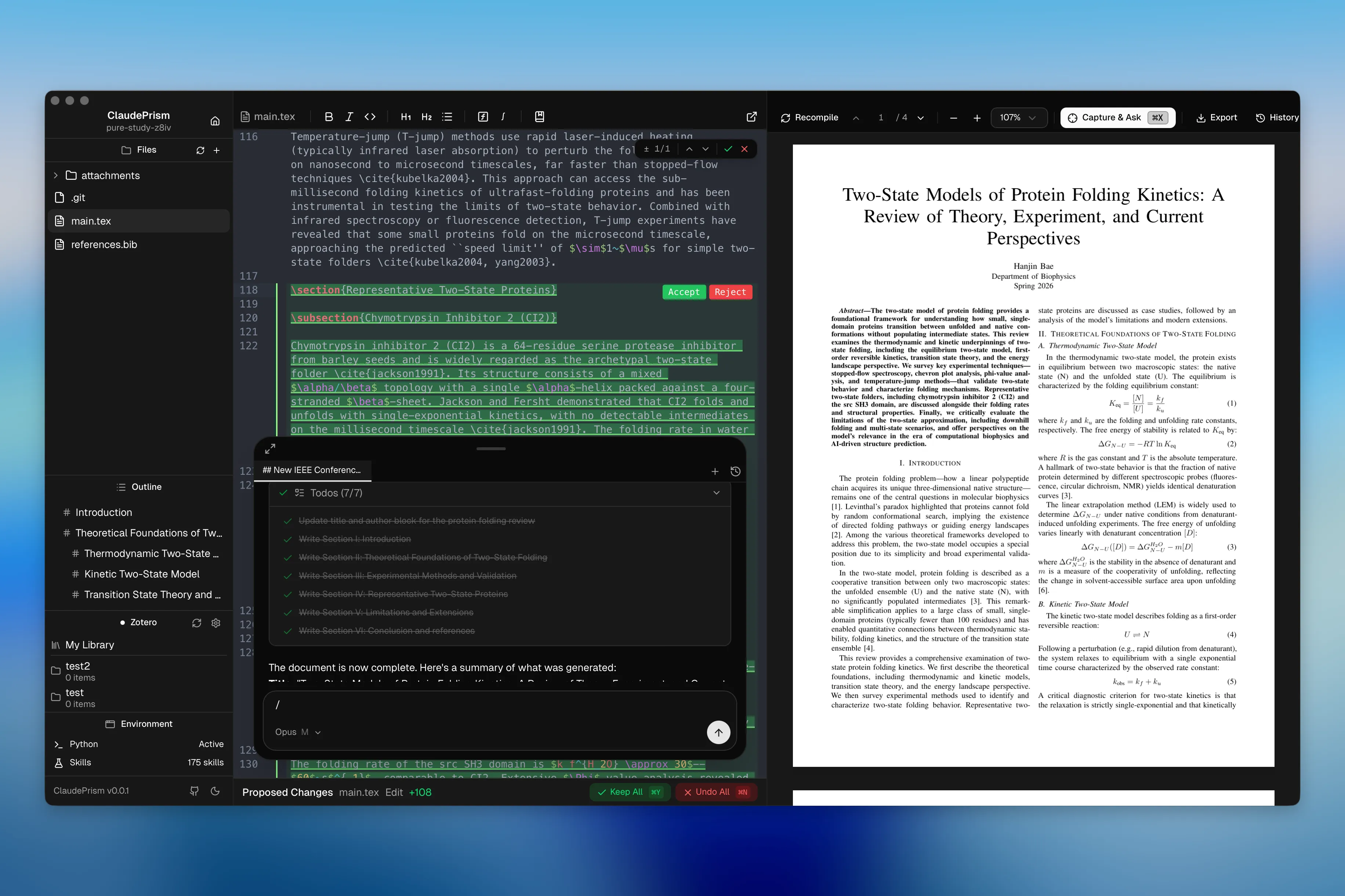
An offline-first scientific writing workspace powered by Claude. LaTeX + Python + 100+ scientific skills all running locally.
1.7k
Stars
154
Forks
31
Open issues
11
Contributors


AI Analysis
ClaudePrism is a desktop application for scientific writing that combines LaTeX, Python, and Claude AI in an offline-first workspace. It serves researchers and academics who need local document compilation, embedded computational environments, and AI-assisted writing without uploading files to cloud servers. This is a specialized tool for the research/academic community, not a general-purpose editor.
Inferred from signals mentioned in the README (tests, CI, type safety) — not a review of the actual code.
AI's overall editorial judgment — not an average of the bars above, can weigh other factors too.
Offline LaTeX workspace with Claude AI, Python env, and 100+ scientific skills — early-stage macOS/Windows/Linux desktop app
ClaudePrism is a desktop application (built with Tauri + TypeScript) that combines LaTeX editing, embedded Python execution via uv, and Claude AI assistance for scientific writing. It positions itself as a privacy-preserving alternative to OpenAI Prism, storing documents locally while optionally leveraging Claude's API for content generation. Target users are researchers, academics, and technical writers who want integrated scientific workflow without cloud-first architecture. Real-world adoption remains unverified; the project launched in February 2026 and has accumulated ~1,600 stars.
Created February 2026 by delibae as a direct response to OpenAI Prism's cloud-centric model. The README explicitly frames ClaudePrism as a local-first alternative, emphasizing data residency and offline compilation. Builds on existing scientific skill libraries (K-Dense Scientific Skills) and integrates established tools (Tectonic for LaTeX, uv for Python).
Project gained 1,623 stars over ~4.5 months (Feb–Jun 2026), with 21 stars in the 7 days prior to analysis date. Growth pattern suggests early interest from niche audiences (academics, privacy-conscious researchers) but no viral or sustained acceleration. Comparable projects in the Claude ecosystem (HolyClaude, siteboon/claudecodeui) show higher star counts, suggesting ClaudePrism occupies a smaller segment. No public evidence of press coverage, enterprise adoption, or community contributions at scale.
Adoption not verified. No case studies, testimonials, institutional deployments, or community reports documented. Star/fork ratios and release artifacts indicate some user interest, but no concrete evidence of active production use, research projects shipped with ClaudePrism, or scientific communities adopting it. The 'scientific skills' library is curated but sourced from external K-Dense project; unclear how many users actually install and use domain-specific skill packs.
Likely a Tauri 2 + Rust desktop shell wrapping TypeScript/React frontend. README indicates embedded Tectonic LaTeX compiler and uv Python package manager integration. Appears to use Git for version control and diff visualization. Full implementation details not accessible from README or metadata; source code inspection required to verify actual execution model, IPC patterns, or sandboxing.
Not documented in README. No CI/CD configuration or test suite references visible in provided metadata.
Last push 2026-06-09, 20 days before analysis date — recent and active. Repository created 2026-02-20, so project is ~4.5 months old. Presence of multilingual README (English, Korean, Japanese, Simplified Chinese) and downloadable installers for macOS (Apple Silicon + Intel), Windows, and Linux suggests resource investment in distribution. No data on issue response time, PR review cycles, or contributor activity — cannot assess maintainer responsiveness without additional evidence.
ADOPT IF: you are an academic or researcher writing LaTeX-heavy papers, need offline document storage, use Python for data analysis, and are comfortable with Claude API for AI features. You value privacy-first workflows and open-source tools. AVOID IF: you collaborate on documents (no built-in team features), require cloud backup/sync, work in organizations with strict API data policies, or need mature tooling with large user communities and extensive documentation. MONITOR IF: adoption patterns emerge in academic communities, the project gains maintainers, or scientific skills library grows significantly — these would indicate transition from niche to sustainable project.
Independent dimensions
Mainstream potential
3/10
Technical importance
6/10
Adoption evidence
1/10
- Adoption not verified — no public evidence of meaningful use outside early adopters; may struggle to reach critical mass in competitive LaTeX ecosystem.
- Dependency on Anthropic API — despite offline-first framing, AI features require sending document content to Claude; data residency claim is partial, not absolute.
- Single maintainer (inferred from GitHub activity) — lack of contributor diversity raises sustainability concerns if primary author loses interest or availability.
- Narrow niche (scientific writing + Python) — may permanently limit addressable market compared to general-purpose editors or cloud LaTeX platforms.
- Toolchain complexity (Tauri + Tectonic + uv + Python) — increased surface area for bugs, dependency conflicts, and cross-platform issues; testing coverage unknown.
Likely to remain a small but stable tool for a specific audience (researchers using Claude + offline workflows). Growth will be constrained by limited marketing, narrow use case, and mature competition (Overleaf, VS Code ecosystem). Success depends on building community, improving scientific skills adoption rate, and demonstrating real research output; without these, may plateau at ~3–5k stars and low-active-user count.
Newsletter
Get analyses like this every Monday
Free weekly digest of the most interesting open-source discoveries.
Languages
Information
- Website
- https://claudeprism.delibae.dev
- Language
- TypeScript
- License
- MIT
- Last updated
- 6d ago
- Created
- 5mo ago
- Analyzed with
- anthropic/claude-haiku-4-5
Stars over time
Contributors over time
Top 100 contributors only — repos with more will plateau at 100.
Open issues
.deb package problems in LinuxMint 22
Feature: Support Chatgpt LLM as input instead of Claude
windows 11 Authentication Failed.
Skills installation issue and Review for research paper
Request for PPTX Presentation generation with visuals
Open pull requests
Top contributors
Similar repos

CoderLuii/HolyClaude
HolyClaude is a containerized AI development workstation that bundles Claude...

pchalasani/claude-code-tools
Claude Code Tools is a collection of CLI utilities and plugins designed to...

peterkrueck/Claude-Code-Development-Kit
Claude Code Development Kit is a maintenance and context-management system...
| Repository | Stars | Week Δ | Language | Score | Updated |
|---|---|---|---|---|---|
|
delibae/claude-prism
this
|
1.7k | +27 | TypeScript | 8/10 | 6d ago |
|
CoderLuii/HolyClaude
|
2.4k | — | JavaScript | 8/10 | 1d ago |
|
pchalasani/claude-code-tools
|
1.9k | — | Python | 8/10 | 22h ago |
 siteboon/claudecodeui siteboon/claudecodeui
|
12.5k | — | TypeScript | 7/10 | 17h ago |
|
peterkrueck/Claude-Code-Development-Kit
|
1.4k | — | Shell | 7/10 | 3w ago |
 jhlee0409/claude-code-history-viewer jhlee0409/claude-code-history-viewer
|
1.7k | — | TypeScript | 8/10 | 1w ago |
Direct stated competitor. OpenAI Prism is cloud-hosted, uses GPT-5.2, requires account setup. ClaudePrism is offline-first, uses Claude models, desktop-native. Trade-off: ClaudePrism offers data residency and open source, but depends on Anthropic API for AI features (not fully offline) and lacks established user base.
Cloud-based collaborative LaTeX editor (dominant in academia). Overleaf offers real-time collaboration, version history, and integrated compilation. ClaudePrism adds AI assistance and Python environment but loses collaboration. Targets different use cases: Overleaf for team workflows, ClaudePrism for individual offline-first research.
Open-source alternative: text editor + LaTeX plugin + Claude API integration. Lower barrier to entry, highly customizable, but requires manual setup. ClaudePrism bundles these with scientific skills and one-click Python environment — easier onboarding but less flexible.
For Python-centric scientific workflows. Offers notebook UI, rich plotting, reproducibility. ClaudePrism integrates LaTeX writing more tightly but lacks JupyterLab's mature ecosystem and extension system.
Higher-adoption Claude desktop interface. Broader scope (code + chat), simpler use case. ClaudePrism is narrower (scientific writing + LaTeX) but more feature-complete for that niche.

-black?style=for-the-badge&logo=apple&logoColor=white)
-555555?style=for-the-badge&logo=apple&logoColor=white)

-FCC624?style=for-the-badge&logo=linux&logoColor=black)