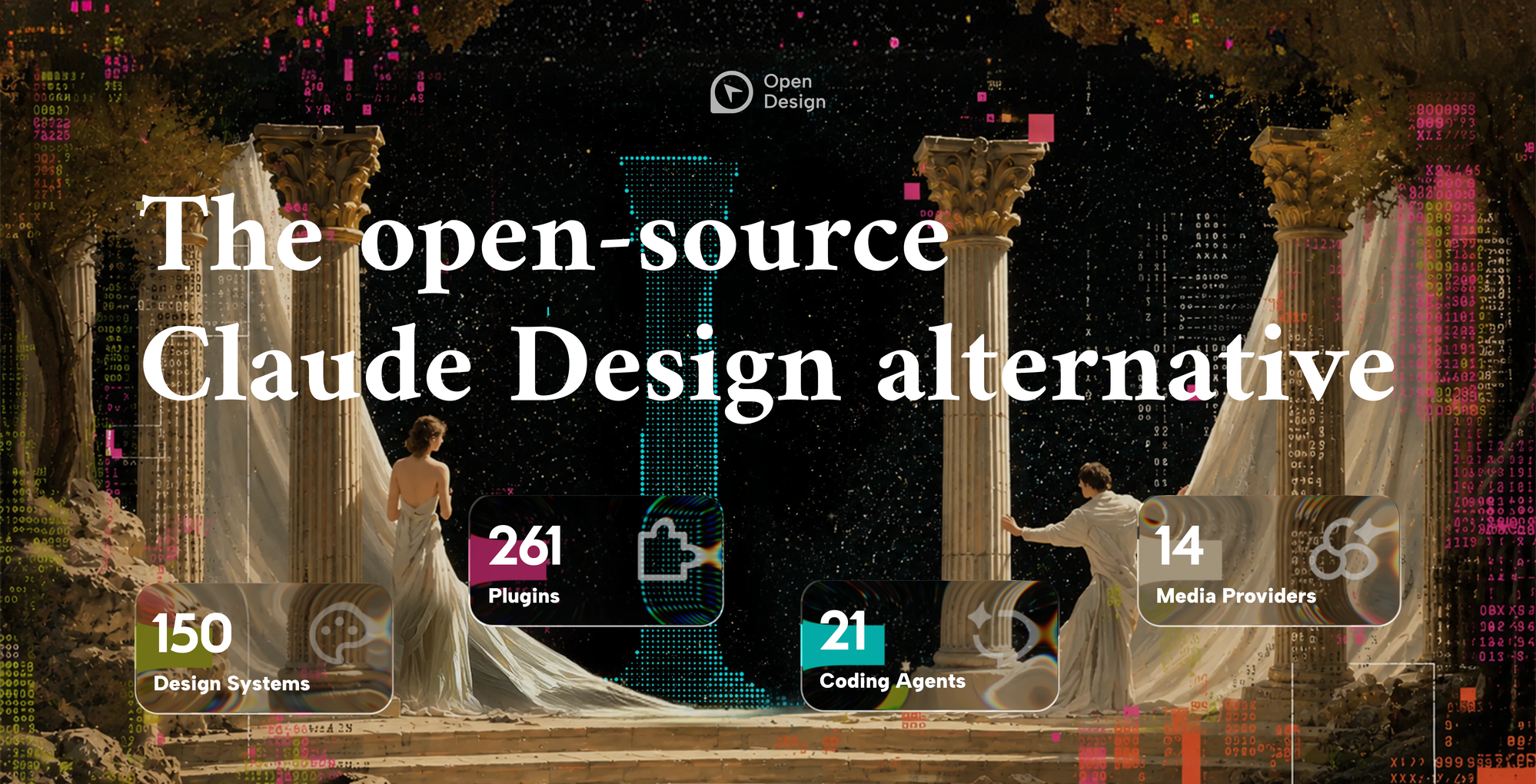
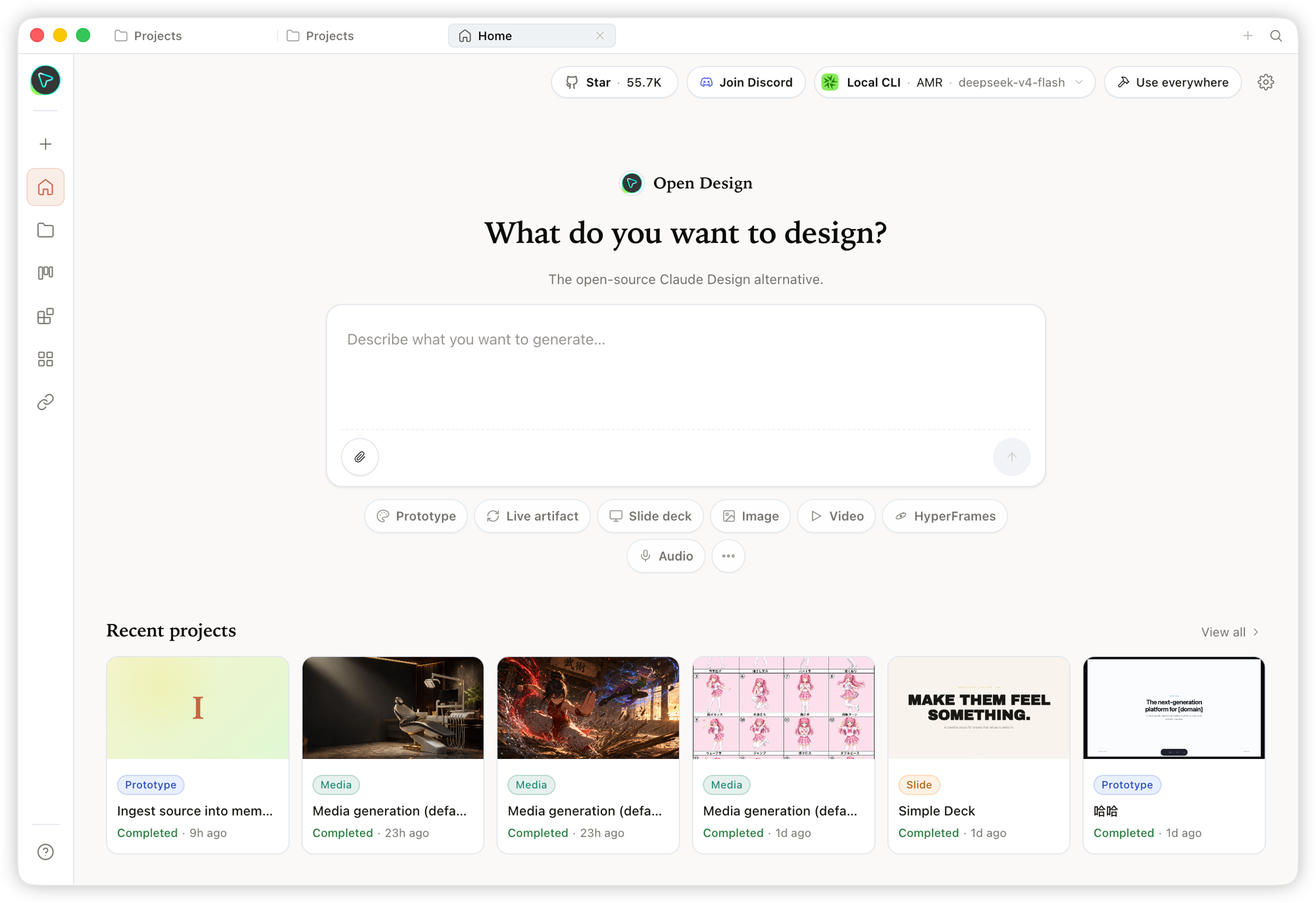
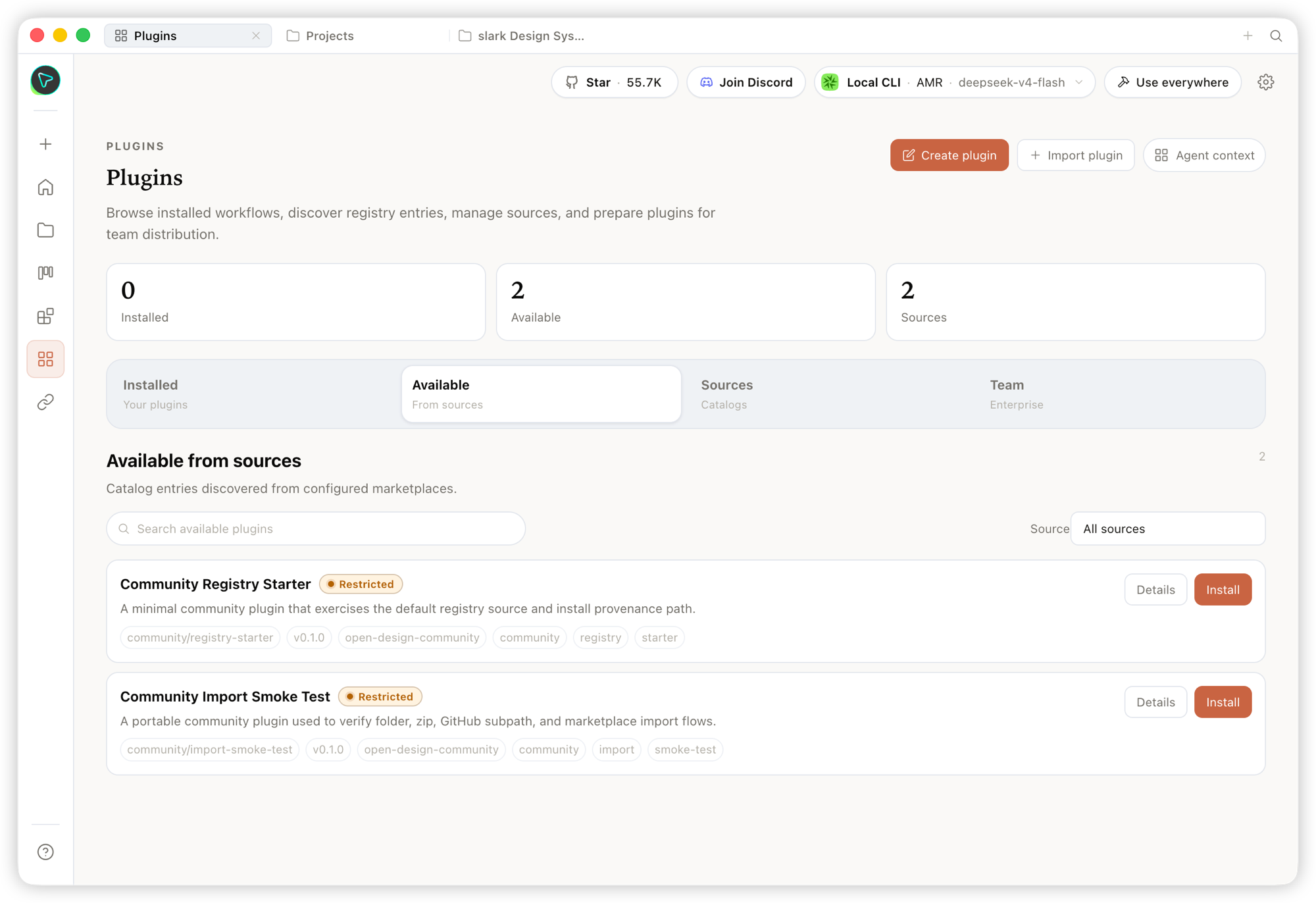
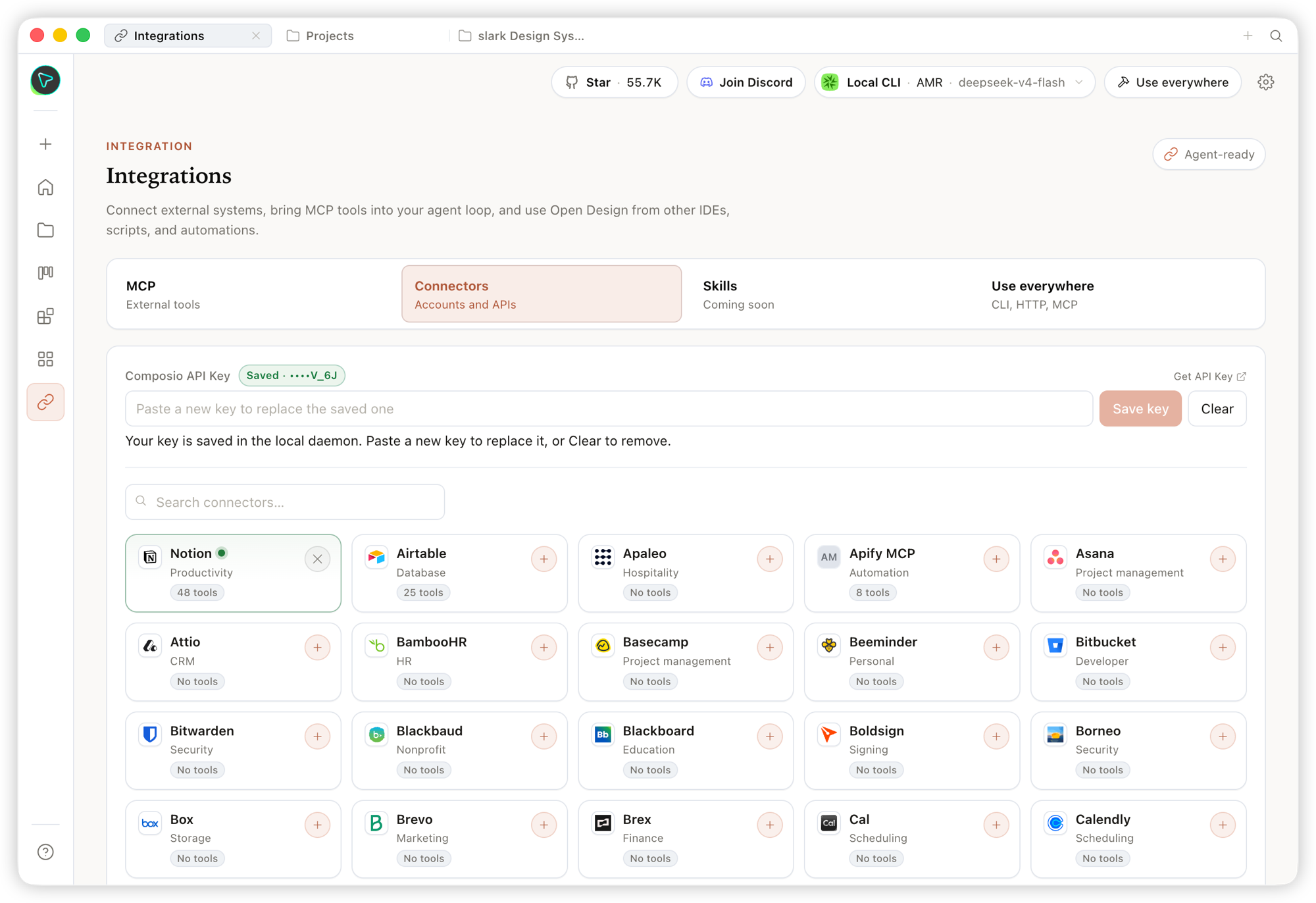
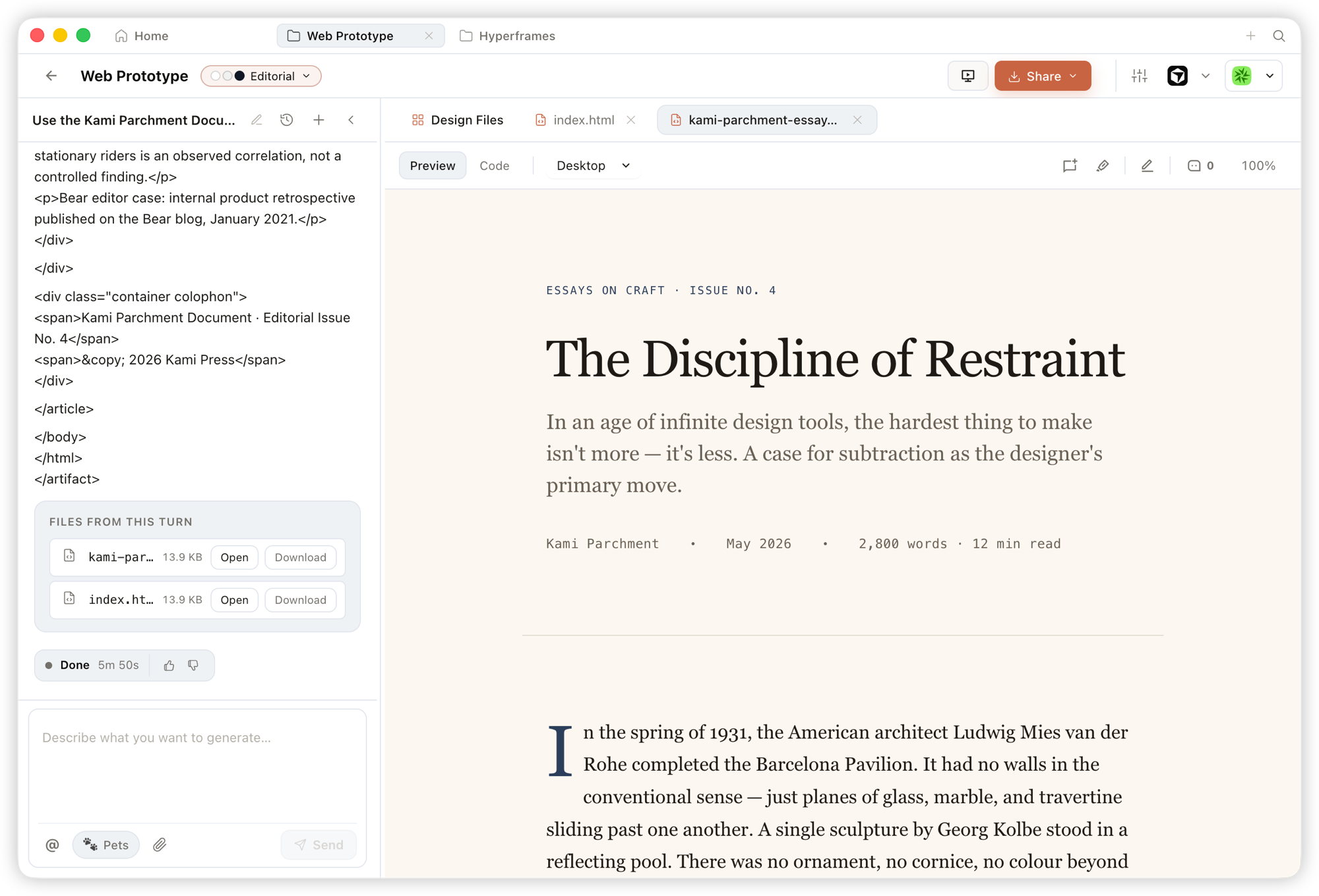
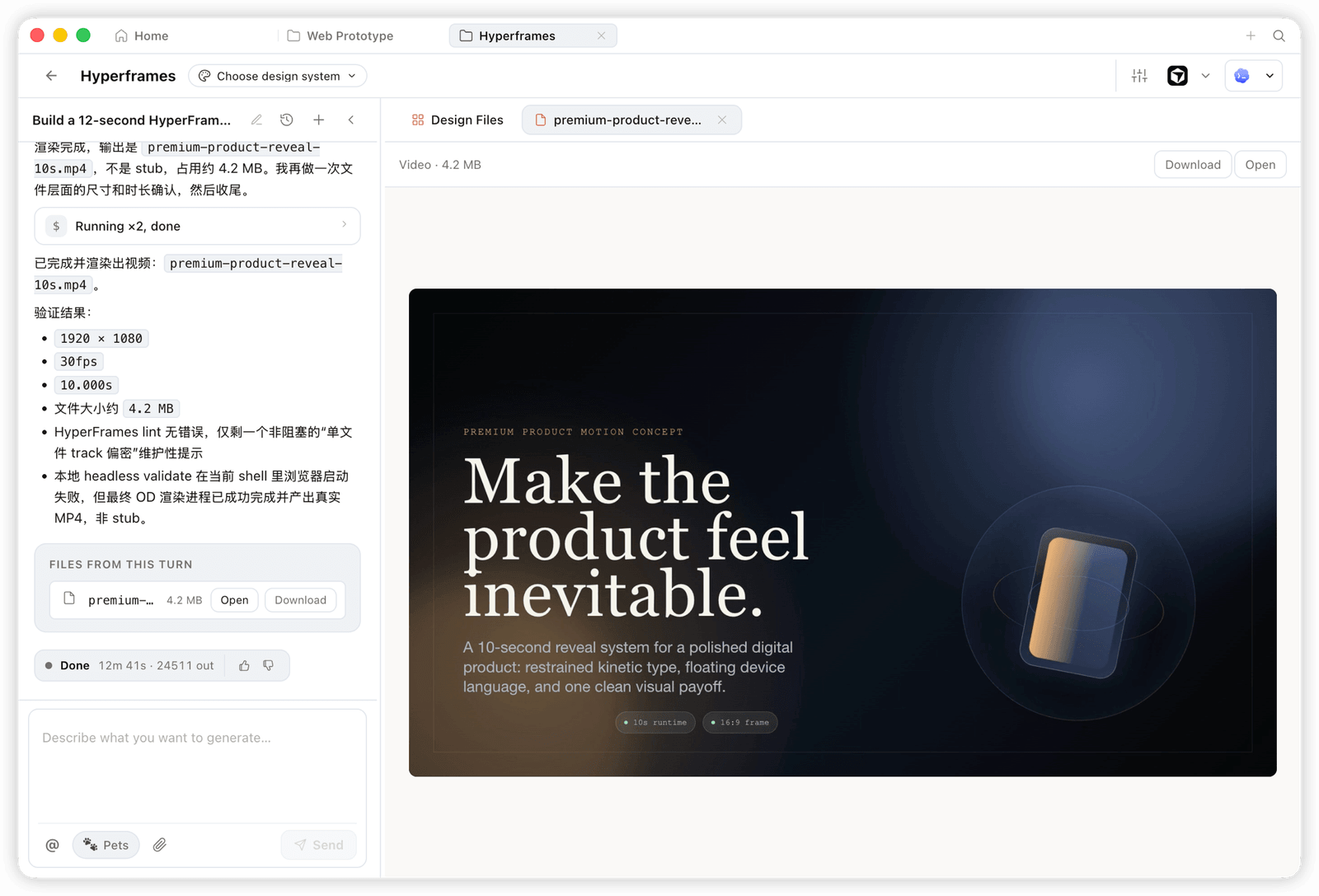
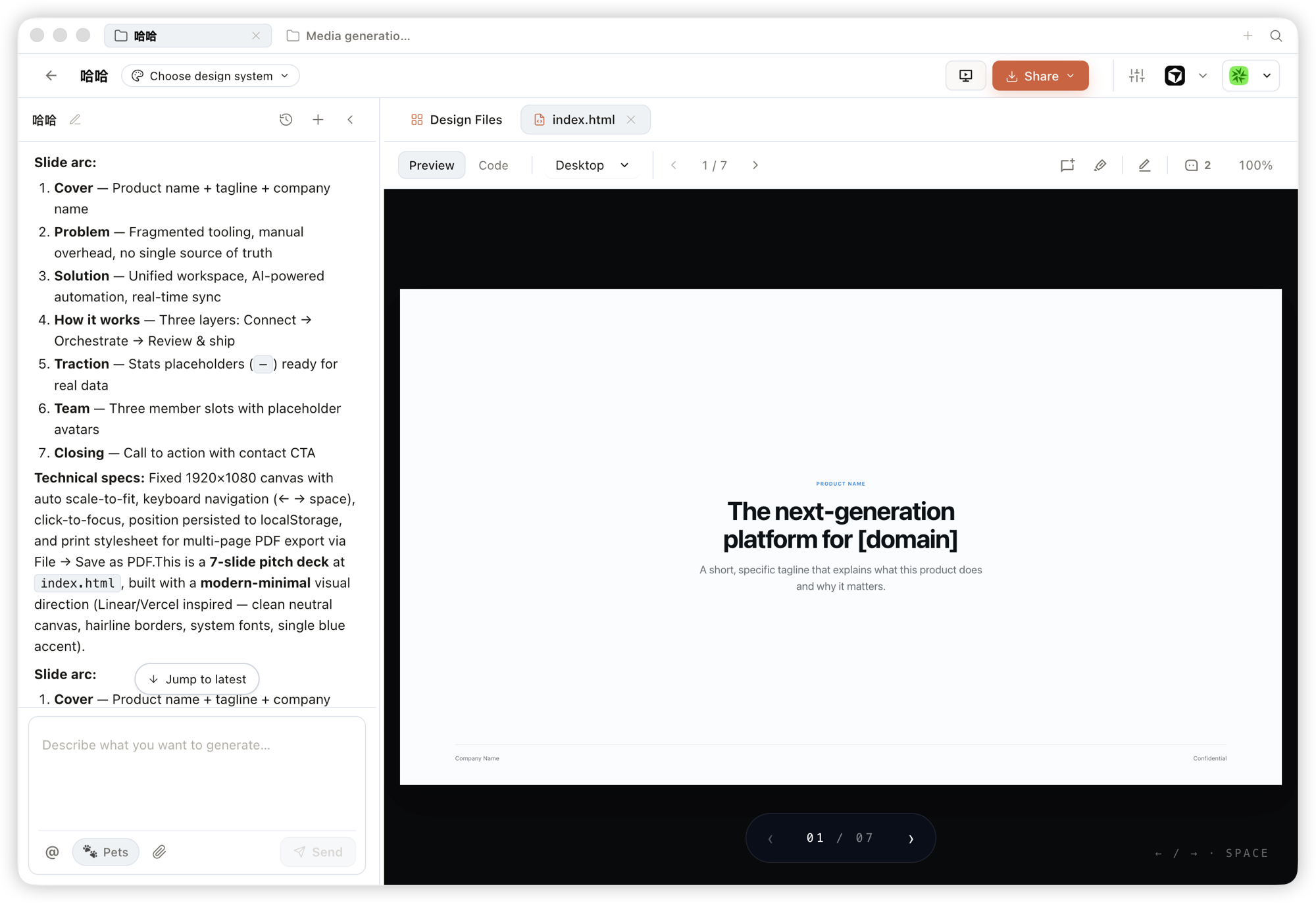
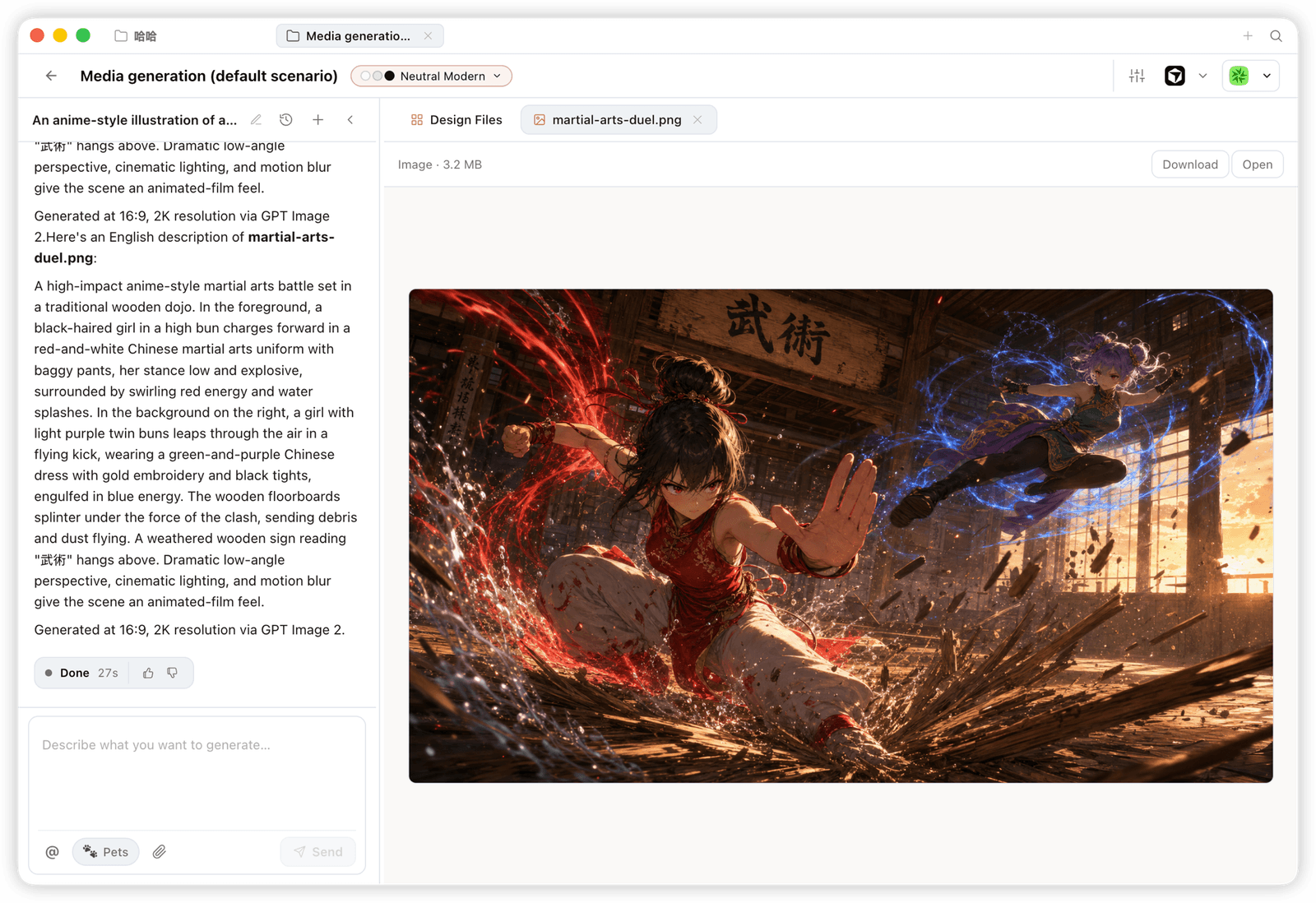
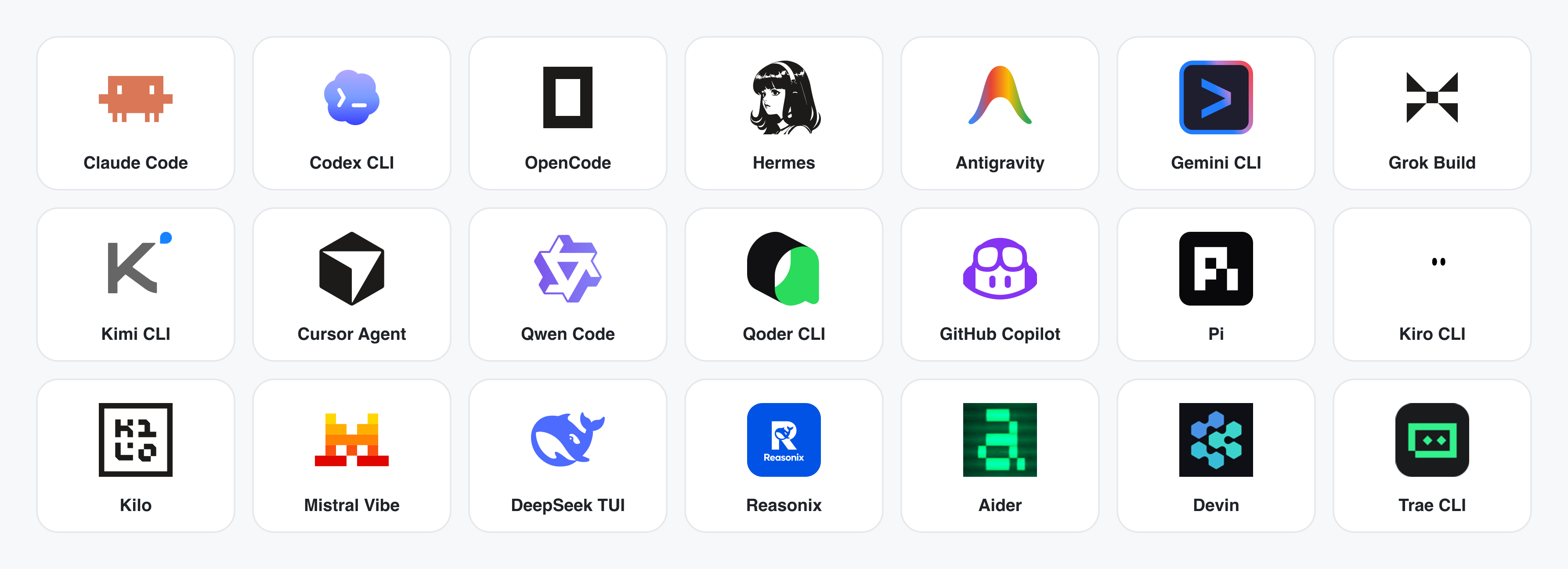
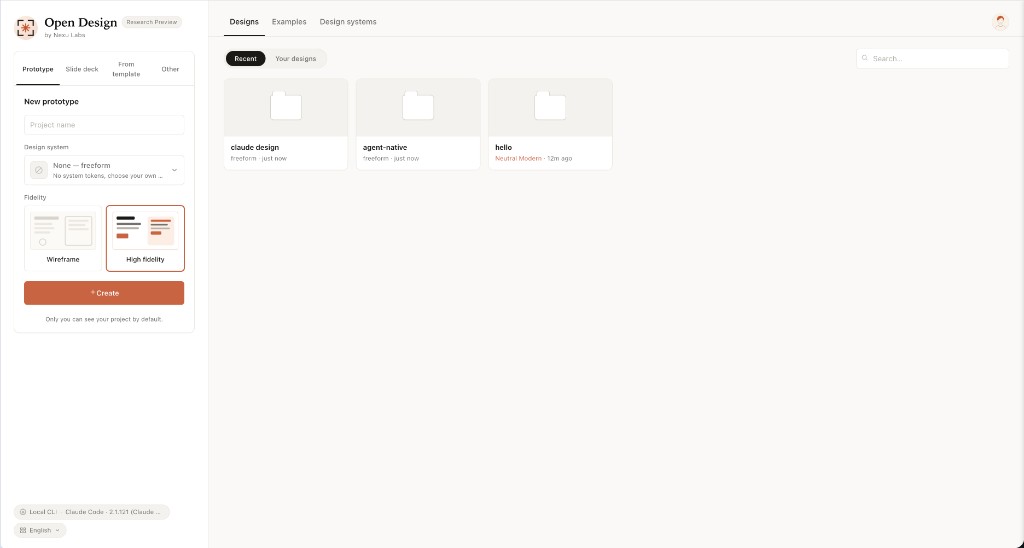
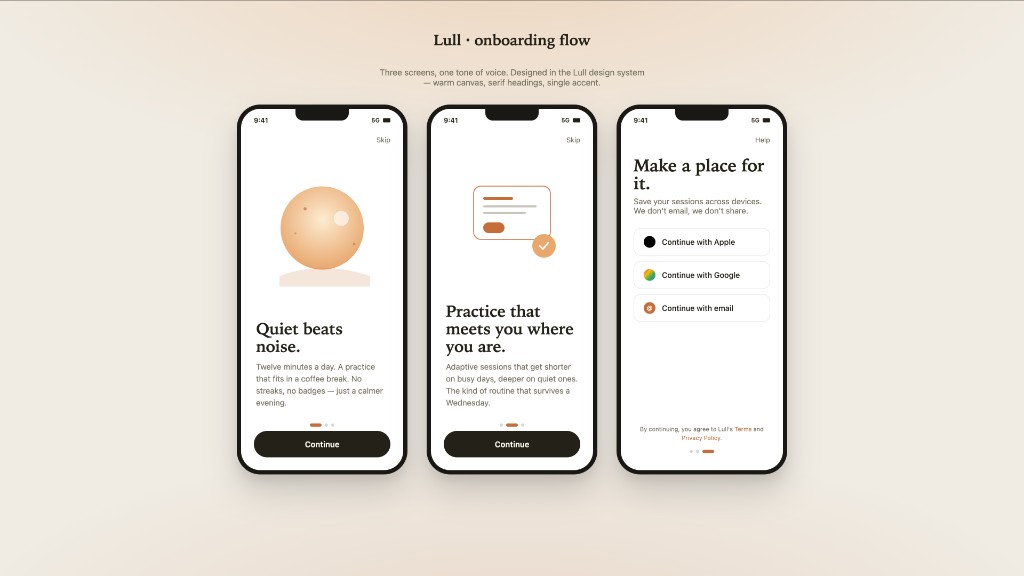
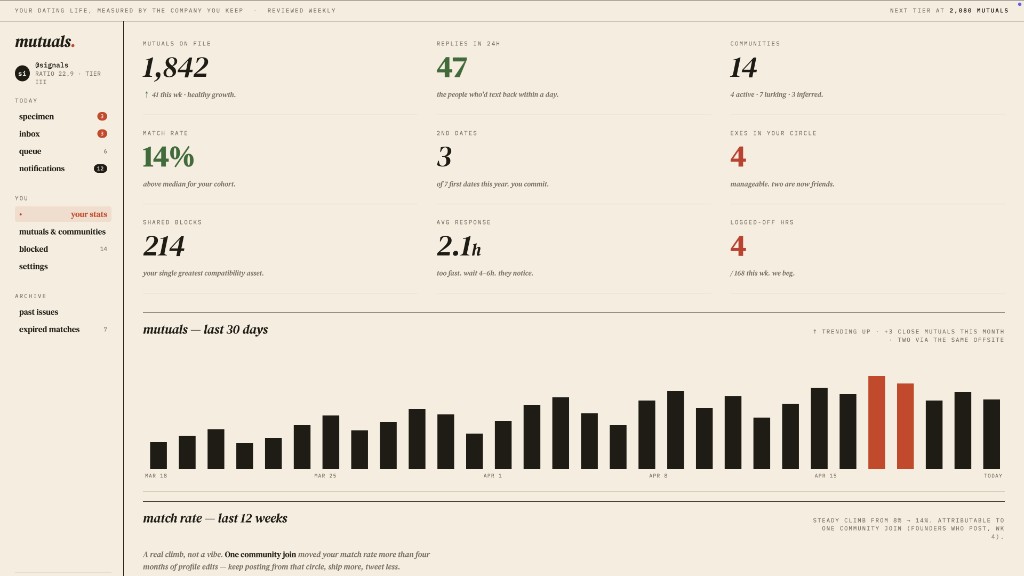
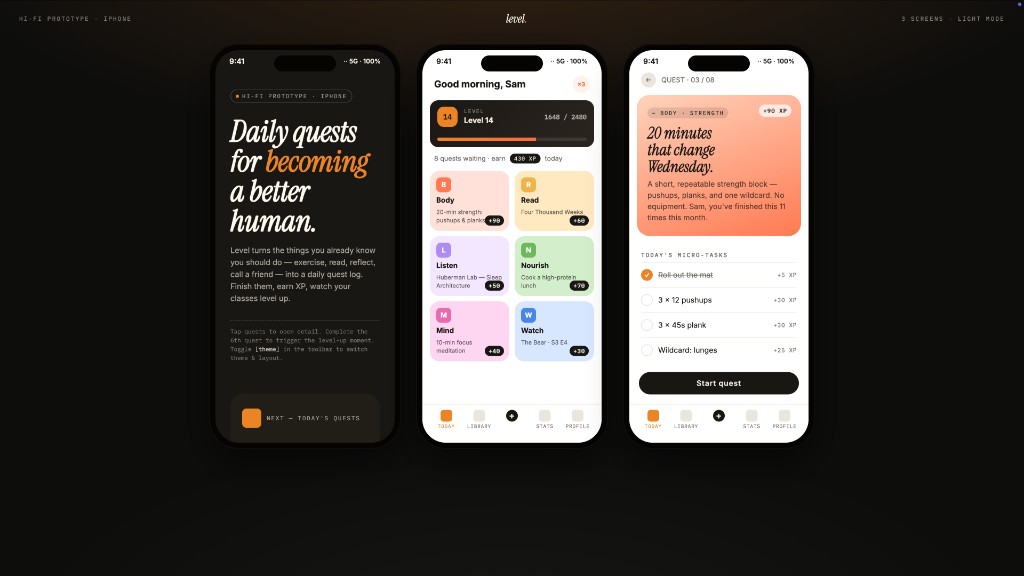
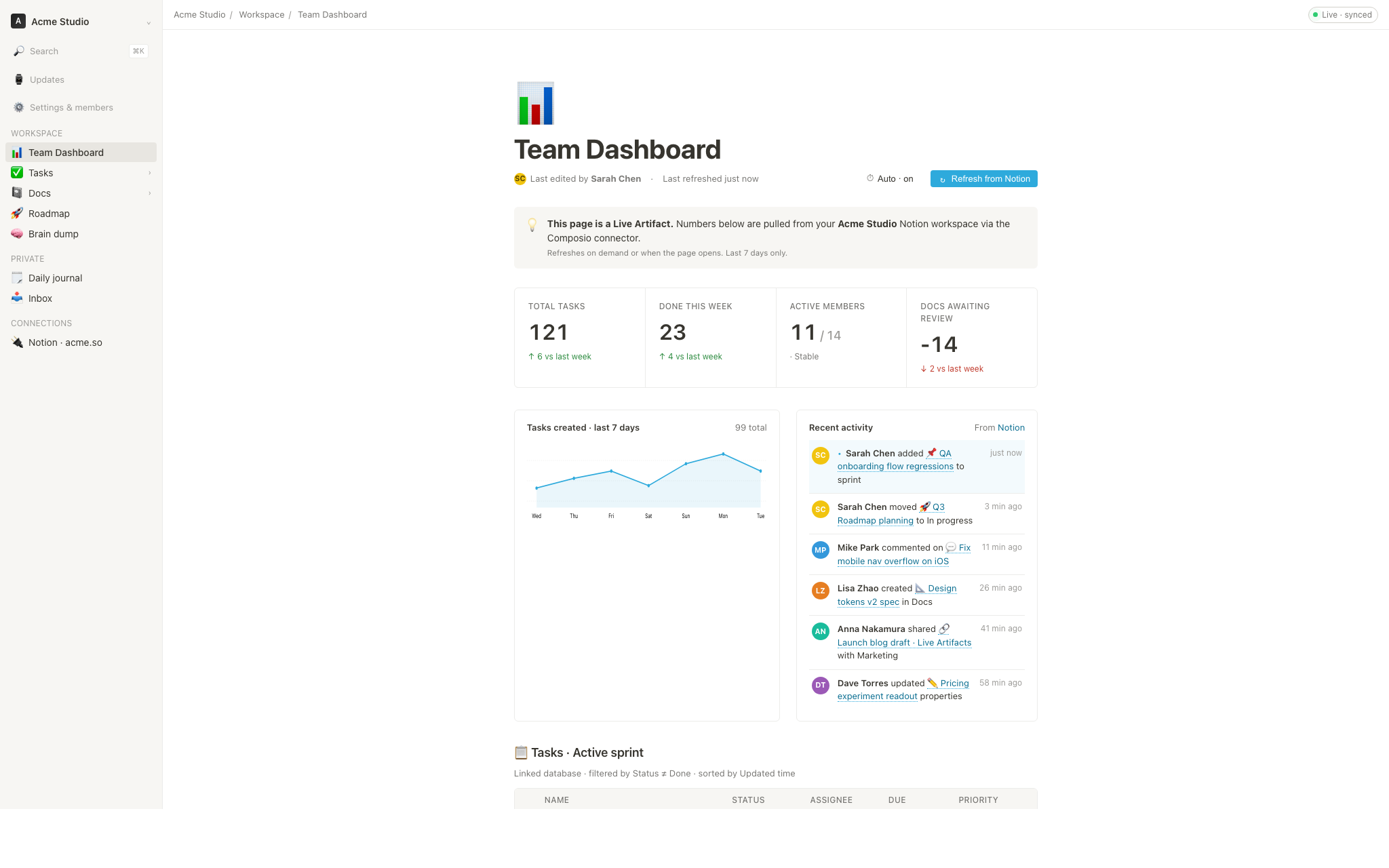
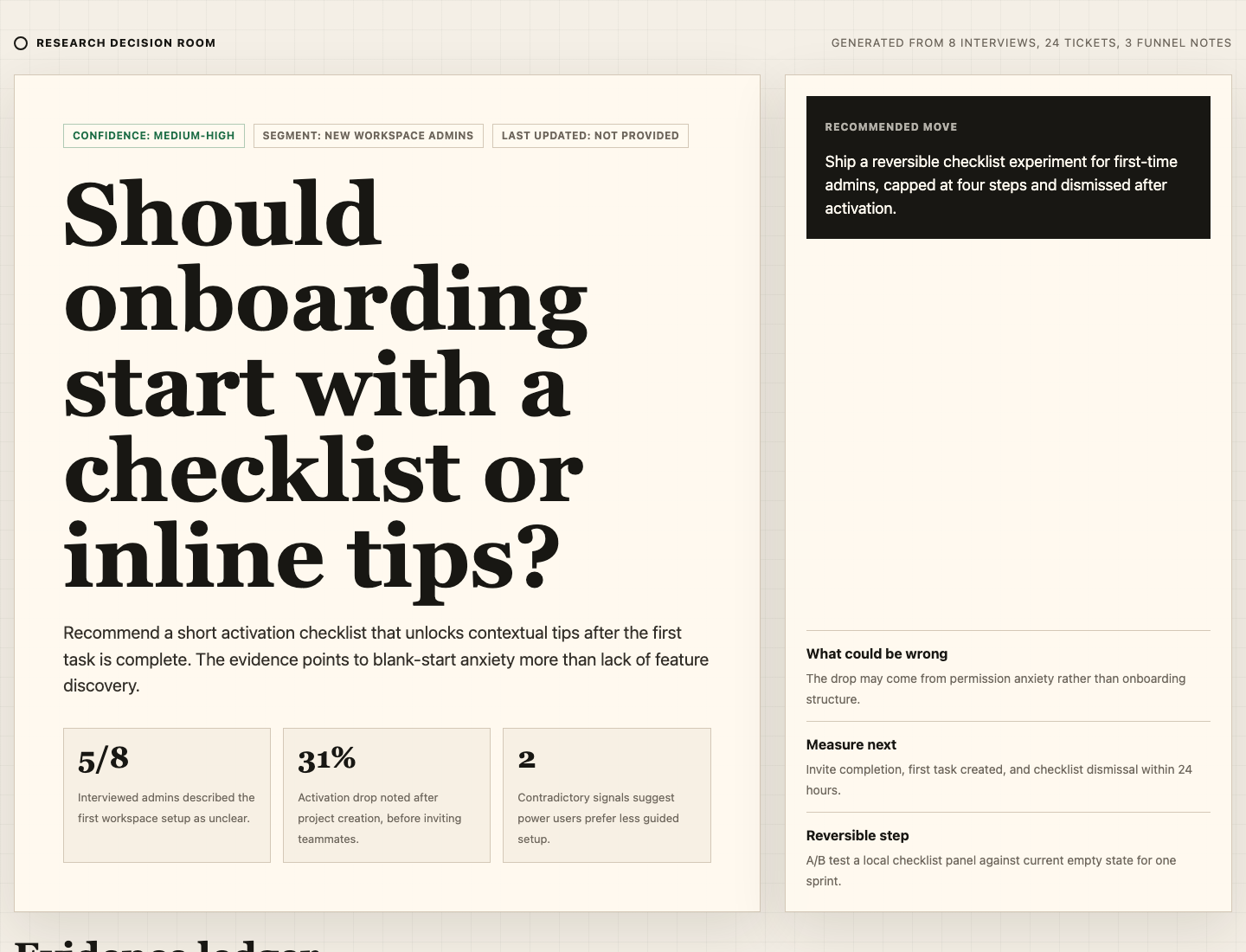
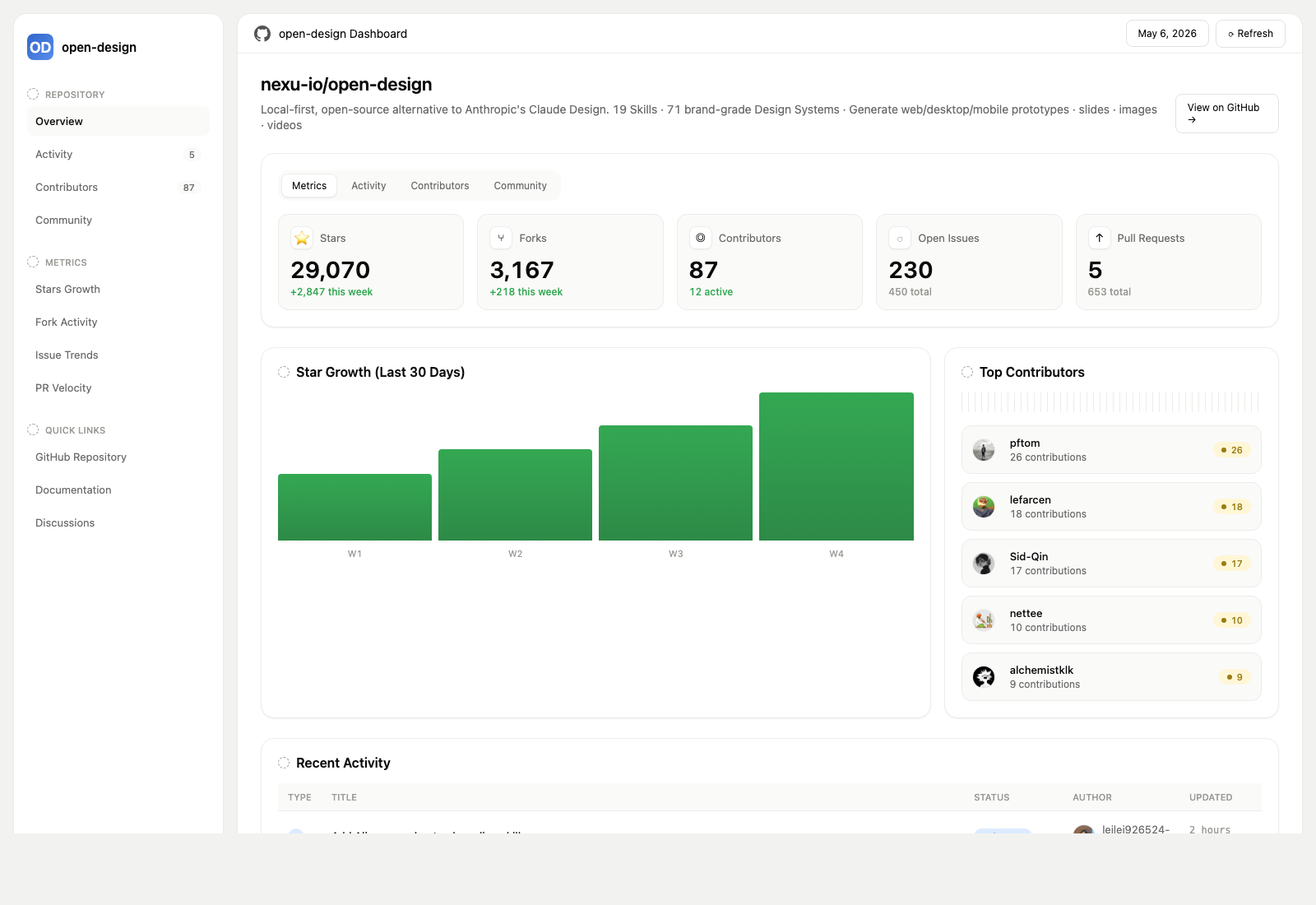
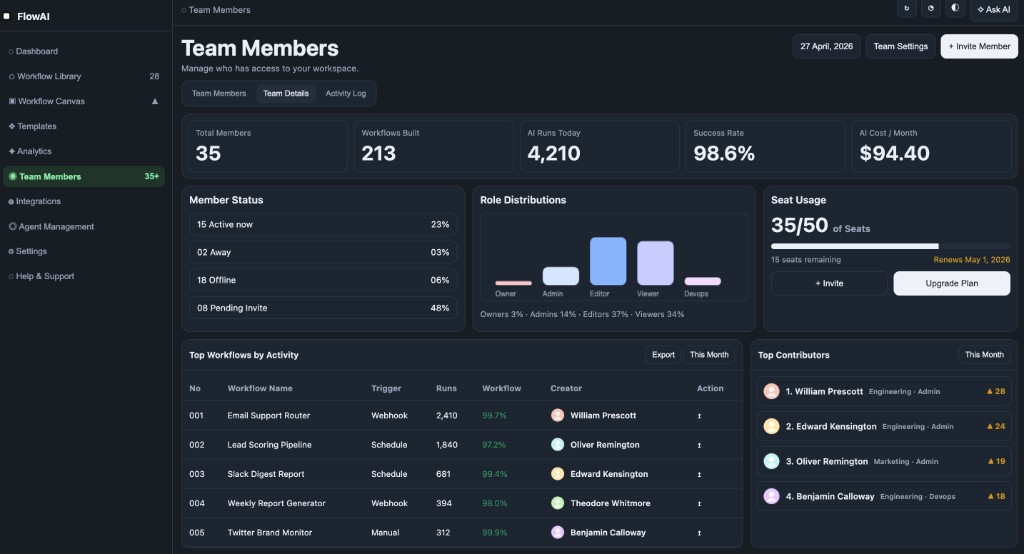
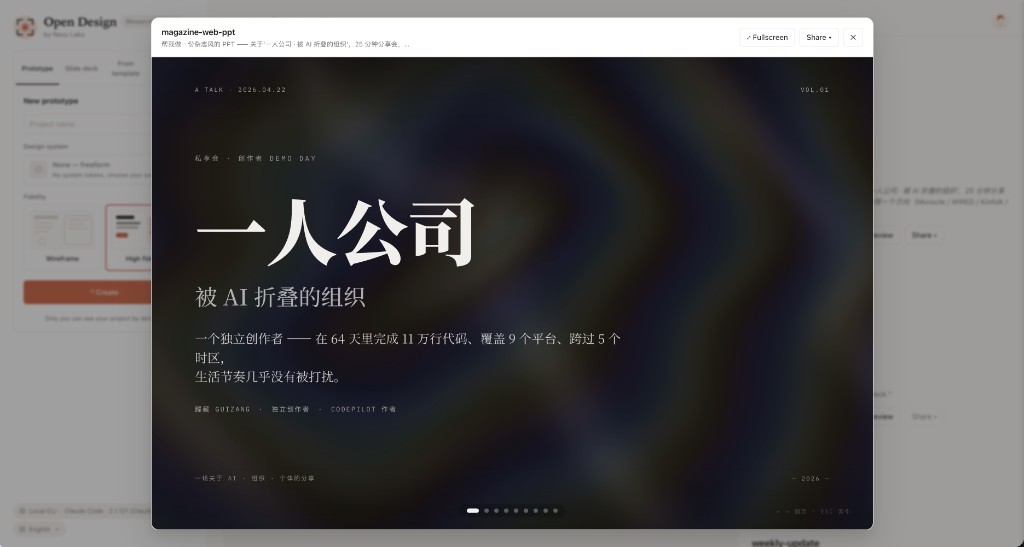
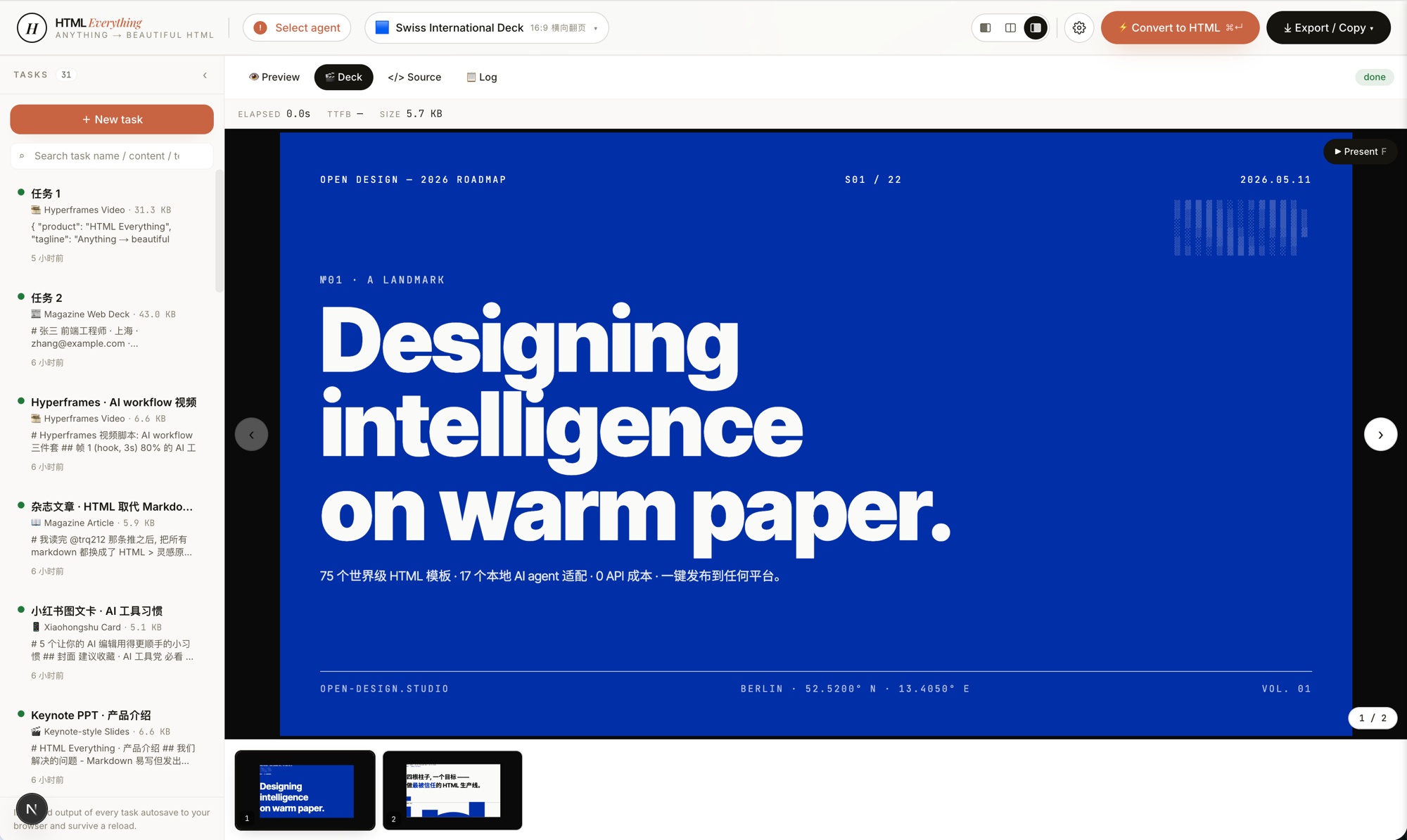
🎨 The open-source Claude Design alternative. 🖥️ Local-first desktop app. 🖼️ Your coding agent becomes the design engine: prototypes, landing pages, dashboards, slides, images & video — real files, HTML/PDF/PPTX/MP4 export. 🤖 Claude Code / Codex / Cursor / Gemini / OpenCode / Qwen & 20+ CLIs via BYOK.
77k
Stars
8.8k
Forks
524
Open issues
100+
Contributors


AI Analysis
Open Design is a local-first desktop application that uses AI coding agents (Claude, Codex, Cursor, Gemini, and 20+ others via BYOK) as a design engine to generate prototypes, landing pages, dashboards, slides, images, and video, with export to HTML, PDF, PPTX, and MP4. It positions itself as an open-source alternative to Claude Design and Figma for AI-assisted design workflows. It is best suited for developers, designers, and 'vibe coders' who want to generate and iterate on visual assets th...
Inferred from signals mentioned in the README (tests, CI, type safety) — not a review of the actual code.
AI's overall editorial judgment — not an average of the bars above, can weigh other factors too.
Open Design brings AI-native agentic design workflows to a local-first, open-source desktop app
Open Design is a local-first native desktop application (macOS/Windows) that combines AI coding agents with a structured design system layer to generate web, mobile, and desktop prototypes, slides, images, and motion graphics — all exported to real HTML/PDF/PPTX/MP4. It targets designers, developers, and product teams who want Figma-style output quality but prefer agent-driven workflows over manual canvas editing. With 68K stars in roughly 7-8 weeks since creation, it has attracted substantial attention, likely from users seeking open alternatives to Anthropic's Claude Design and similar closed AI design tools. The Apache-2.0 license and BYOK model lower barriers to adoption.
Created April 28, 2026 — roughly coinciding with Anthropic's Claude Design launch — explicitly positioning itself as an open-source alternative to that closed product. Still under 2 months old as of evaluation date, currently at version 0.10.0.
The repository accumulated ~68K stars in under 8 weeks, gaining ~3,800 stars in the last 7 days alone. This pace is likely driven by: strong timing against Claude Design's closed launch, broad multi-model support (17+ CLIs), and viral sharing in AI/design communities. The 7,634 forks suggest meaningful hands-on exploration beyond passive starring.
No externally verifiable production deployments documented in the README. The star and fork counts imply widespread interest, and the Discord community is active. The Fellow program and discussion thread numbering suggest organic community engagement. However, at under 8 weeks old, verifiable production usage at organizational scale has not been confirmed in public sources available here. Adoption appears to be in early-adopter and enthusiast phase.
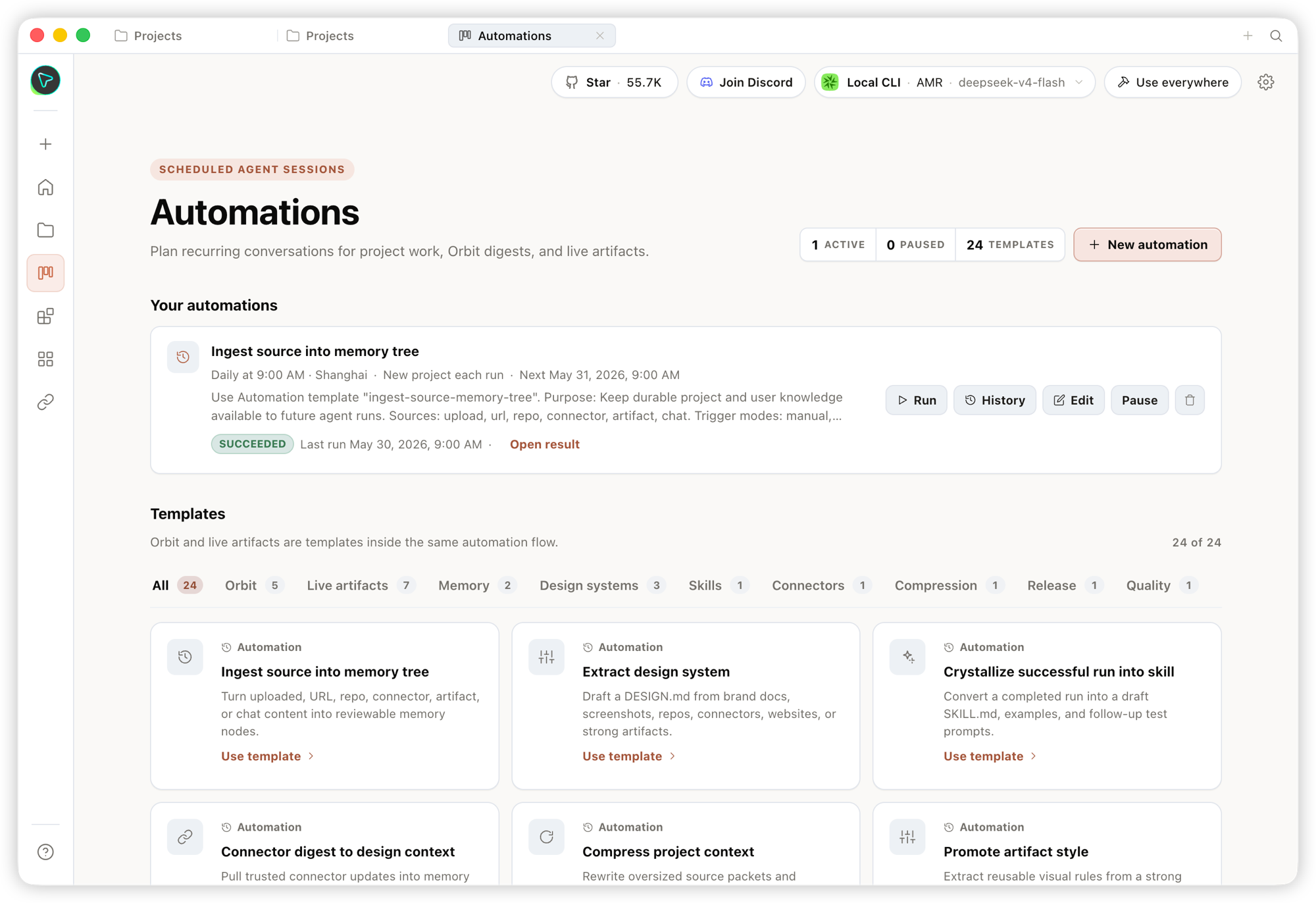
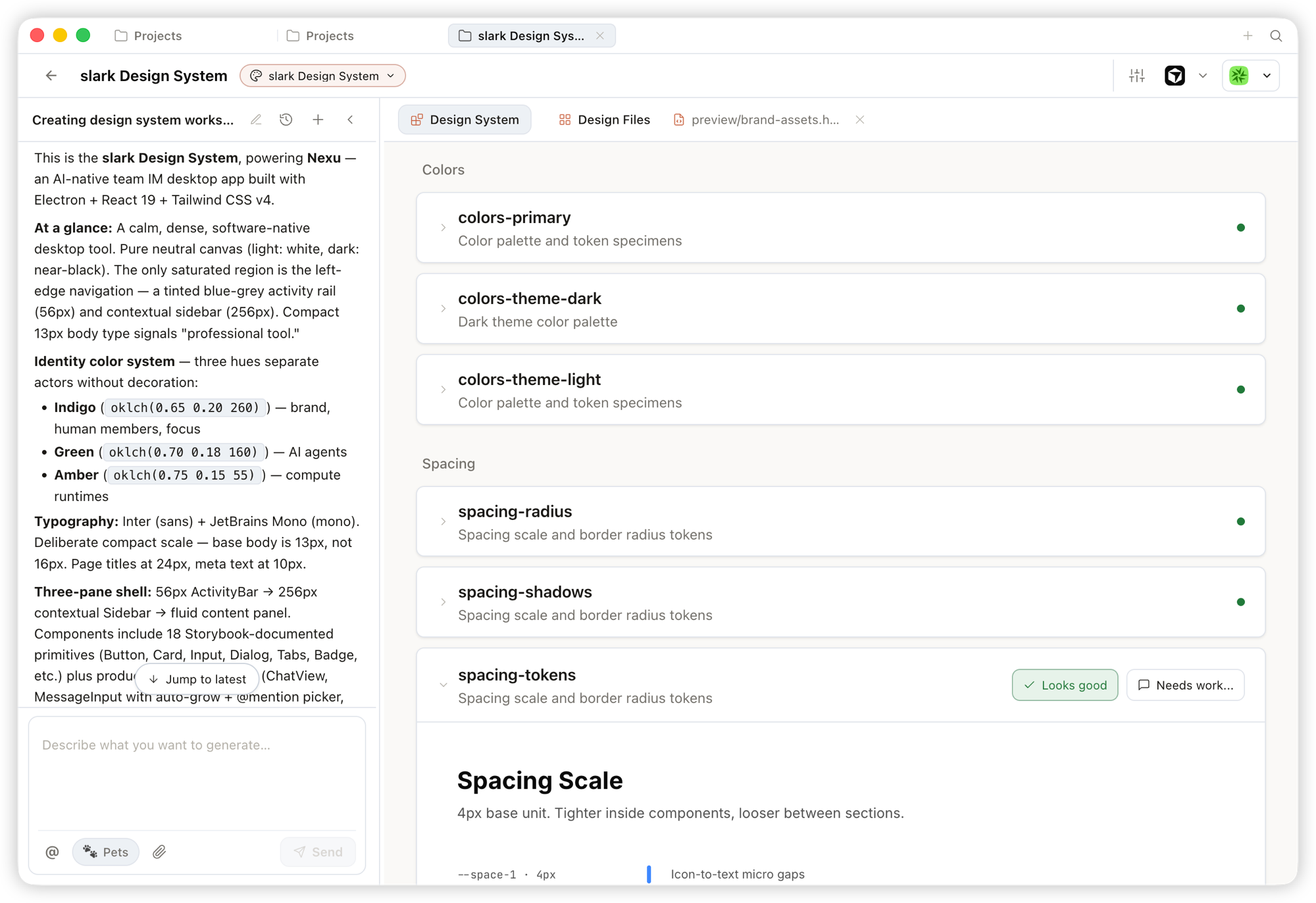
Likely an Electron or Tauri-based native desktop shell (inferred from 'native desktop app for macOS and Windows' + TypeScript primary language) wrapping a sandboxed iframe preview engine. Appears to use a skills/plugins/design-systems filesystem model where agents read and write structured DESIGN.md contracts. The README describes a multi-page product (Home, Studio, Automation, Design System, Plugins), suggesting a substantial frontend SPA architecture. The AMR (Agentic Model Router) service appears to be a separate hosted backend for model access.
Not documented in README.
Last push was June 20, 2026 — the same day as the evaluation date — indicating active, near-daily development. Version 0.10.0 was recently announced as a major milestone. The presence of a MAINTAINERS.md, Fellow program, multilingual docs (13 languages), and a Discord with discussions thread #4153 all suggest an organized, growing contributor community rather than a solo project.
ADOPT IF: you want an open, local-first alternative to closed AI design tools, use multiple AI coding agents (Claude Code, Codex, Cursor, etc.) in your workflow, need HTML/PPTX/MP4 artifact export, or require data sovereignty that cloud-only tools can't provide. AVOID IF: you need battle-tested production stability, enterprise SSO/compliance guarantees, or a mature plugin ecosystem — at under 2 months old, the project is still maturing rapidly and APIs may shift. MONITOR IF: you're evaluating AI-native design tooling for team adoption within the next 6–12 months — the growth trajectory and active development pace suggest it may reach meaningful stability by late 2026.
Independent dimensions
Mainstream potential
7/10
Technical importance
7/10
Adoption evidence
4/10
- Extremely young project (under 8 weeks old): APIs, skill formats, and DESIGN.md schema are likely to break compatibility frequently before a stable 1.0 release.
- Rapid star accumulation may reflect hype more than sustained usage — retention and active user counts are unverified.
- The AMR hosted model router introduces a cloud dependency and potential monetization chokepoint despite the local-first positioning.
- Competing with or reacting to Anthropic's product roadmap means the differentiation thesis could erode if Claude Design becomes more open or accessible.
- TypeScript codebase at this scope and velocity may accumulate technical debt; test coverage is undocumented, making regression risk hard to assess.
Likely to consolidate into a stable, widely-used open-source design agent workspace by Q1 2027 if development pace holds — may face a churn inflection point around 6 months as early adopters stress-test the architecture.
Newsletter
Get analyses like this every Monday
Free weekly digest of the most interesting open-source discoveries.
Languages
Information
- Website
- https://open-design.ai
- Language
- TypeScript
- License
- Apache-2.0
- Last updated
- -49 min ago
- Created
- 2mo ago
- Analyzed with
- anthropic/claude-sonnet-4-6
Stars over time
Contributors over time
Top 100 contributors only — repos with more will plateau at 100.
Top contributors
Similar repos

OpenCoworkAI/open-codesign
Open CoDesign is an open-source, local-first design-to-code tool that converts...

ZSeven-W/openpencil
OpenPencil is an open-source AI-native vector design tool that converts natural...

VoltAgent/awesome-claude-design
A curated collection of 68 ready-to-use DESIGN.md files that Claude Design can...
| Repository | Stars | Week Δ | Language | Score | Updated |
|---|---|---|---|---|---|
|
nexu-io/open-design
this
|
77k | +2.3k | TypeScript | 8/10 | -49 min ago |
|
OpenCoworkAI/open-codesign
|
7.2k | — | TypeScript | 8/10 | 2w ago |
 JimLiu/baoyu-design JimLiu/baoyu-design
|
2.5k | — | JavaScript | 8/10 | 1d ago |
|
ZSeven-W/openpencil
|
4k | — | TypeScript | 7/10 | 20h ago |
|
VoltAgent/awesome-claude-design
|
3.1k | — | — | 7/10 | 3w ago |
|
OpenCoworkAI/open-cowork
|
1.8k | — | TypeScript | 7/10 | 4d ago |
The direct reference point. Claude Design is closed, cloud-only, and Anthropic-controlled. Open Design offers local-first execution, BYOK, multi-model support, and open source extensibility — meaningful differentiators for privacy-conscious teams and power users.
The closest comparable open-source AI workspace by star count. OpenWork appears more general-purpose; Open Design is more specifically focused on design artifact generation with a structured design system layer.
Overlapping category but significantly lower adoption signal. Open Design's broader feature set (video, HyperFrames, 142+ design systems, 17+ CLI integrations) likely explains the star gap.
TypeScript-based, similar category overlap. Open Design appears to have meaningfully outpaced it in adoption signal, though functional comparison is not possible from metadata alone.
Not a direct competitor in workflow — Figma is collaborative canvas-first, pixel-manipulation-focused. Open Design targets agent-native artifact generation and code output, not manual design. They likely serve overlapping but distinct workflow moments.