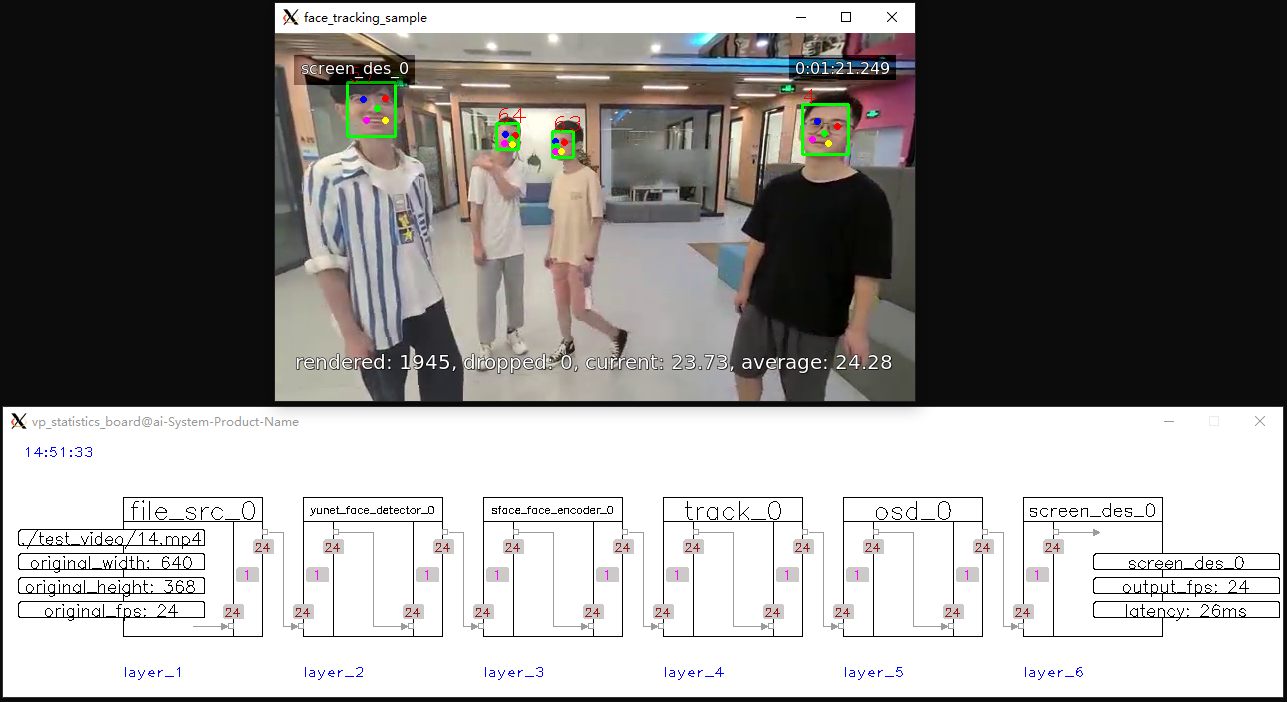
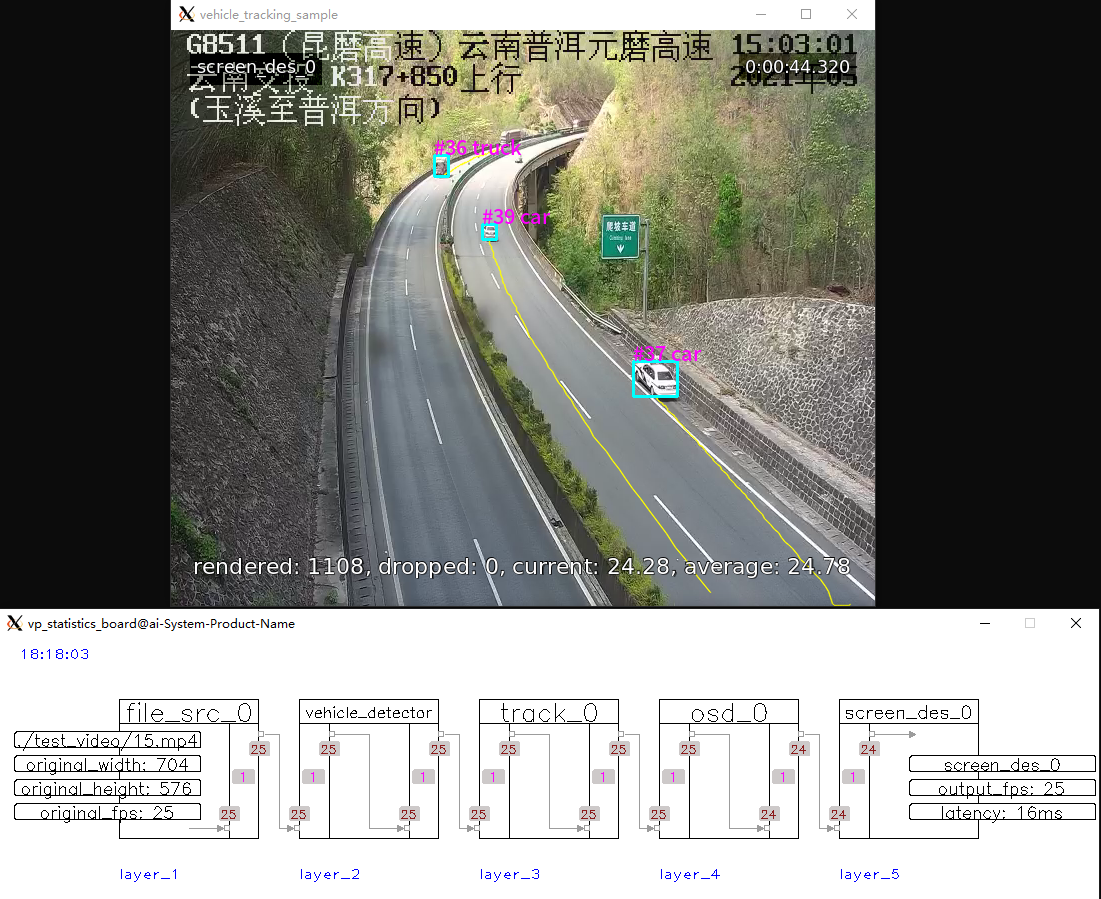
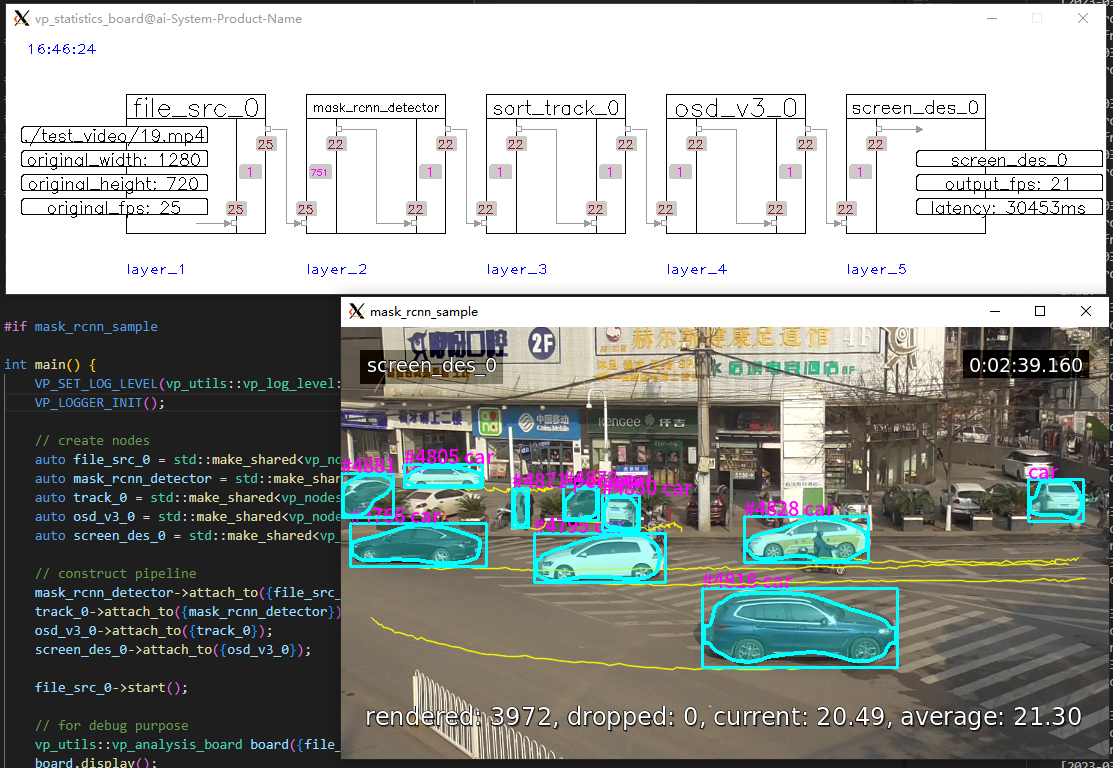
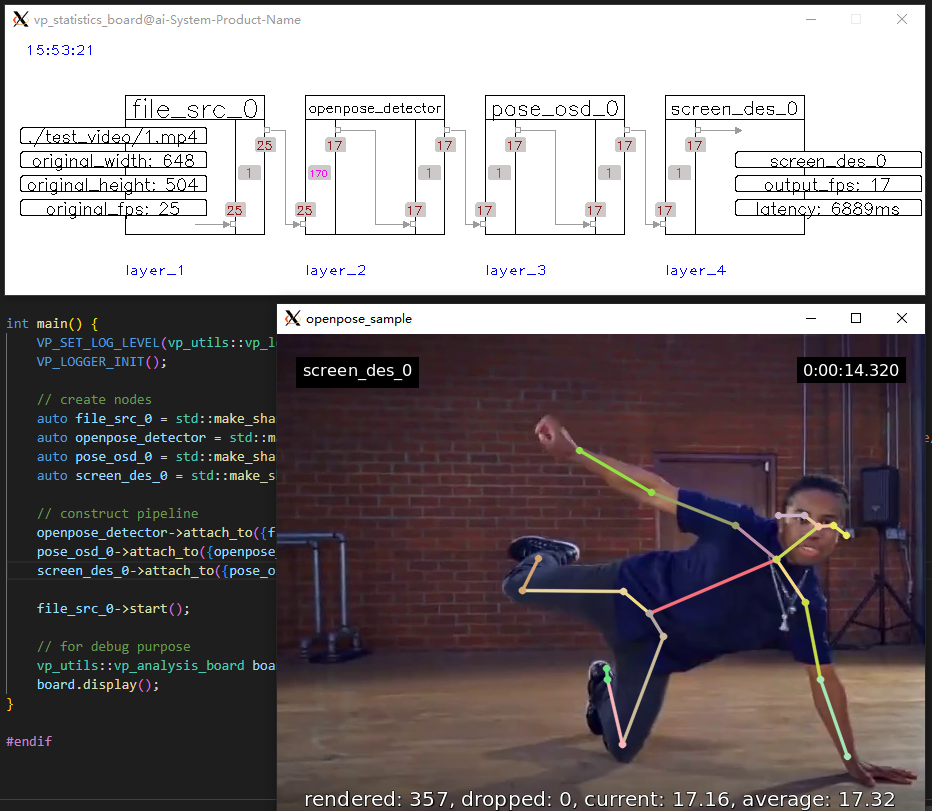
A cross-platform video structuring (video analysis) framework. If you find it helpful, please give it a star: ) 跨平台的视频结构化(视频分析)框架,觉得有帮助的请给个星星 : )
2.9k
Stars
449
Forks
4
Open issues
5
Contributors


AI Analysis
VideoPipe is a cross-platform C++ framework for video analysis and structuring that simplifies integration of computer vision models through a plugin-based pipeline architecture. It serves video-centric applications in security, traffic monitoring, face recognition, and behavior analysis — particularly suited for teams needing faster iteration than NVIDIA DeepStream or platform-locked alternatives, but not for general-purpose video playback or non-inference use cases.
Inferred from signals mentioned in the README (tests, CI, type safety) — not a review of the actual code.
AI's overall editorial judgment — not an average of the bars above, can weigh other factors too.
C++ video analysis framework targeting cross-platform structuring; appears active but adoption remains narrower than comparable tools
VideoPipe is a C++-based video analysis framework designed for video structuring, object detection, tracking, and behavior analysis across diverse hardware platforms (CPUs, NVIDIA GPUs, Jetson, Ascend, RK35xx). The README positions it as easier to use than NVIDIA DeepStream or Huawei mxVision, with lower learning curve and broader platform support. Real-world adoption evidence is limited; no major public deployments documented. Project maintains steady activity (last push Feb 2026) and modest growth (2,853 stars, ~450 forks), indicating a narrow but possibly engaged user base. Targeted at security, traffic, and video structuring applications rather than general computer vision.
Created August 2022, VideoPipe emerged as an open-source alternative to proprietary video analysis frameworks. The README explicitly benchmarks against DeepStream and mxVision, suggesting intent to fill a gap for developers needing cross-platform, lower-dependency video pipelines. Project has maintained steady updates over ~3.5 years without major architectural shifts.
Growth has been modest and steady: 2,853 stars accumulated over ~3.5 years (roughly 2.2 stars/day historically; 6 stars in last 7 days suggests recent activity is slower). The project has not experienced viral adoption or high-profile publicity. Growth trajectory suggests niche adoption among developers needing cross-platform video analysis, particularly those on non-NVIDIA hardware or constrained environments. Chinese-language README and bilingual documentation may indicate stronger adoption in Asian markets, but this is not confirmed.
Adoption not verified. No case studies, published deployments, or known large-scale users documented in README or accessible metadata. Project includes sample code and demo videos, suggesting internal testing. Bilingual documentation (Chinese/English) and platform breadth (x86_64, aarch64, Jetson, Ascend, RK35xx) imply intent for production use, but real-world adoption is not publicly demonstrated.
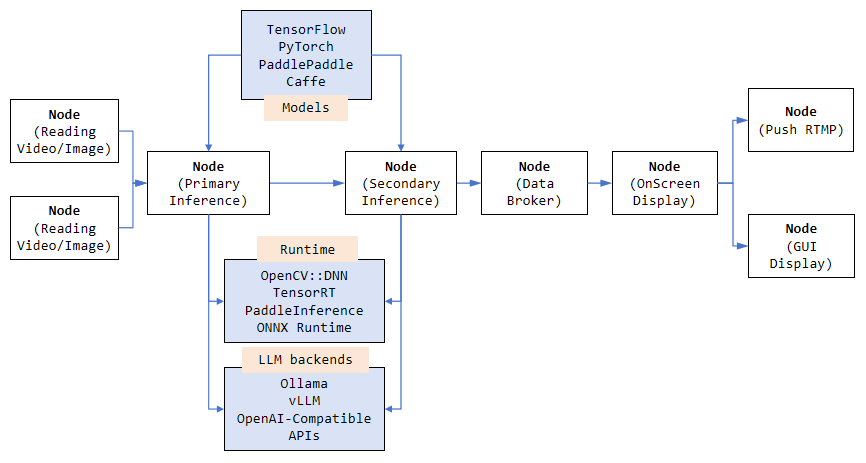
Based on README: plugin/node-oriented architecture where independent inference backends (OpenCV::DNN, TensorRT, PaddleInference, ONNXRuntime, mLLM) plug into a configurable pipeline. Supports stream reading (UDP, RTSP, RTMP), decoding, inference, tracking (IOU, SORT), behavior analysis, OSD, recording, and output proxying. Appears to be a middleware layer abstracting hardware and backend complexity. Cannot verify implementation quality from metadata alone.
Not documented in README. No mention of test suites, CI/CD pipelines, or testing methodology. Absence of test documentation is a concern for production use.
Last push 2026-02-25 (4+ months ago as of 2026-07-02). No recent activity visible in last 7 days (6 stars, negligible). Steady but infrequent commits suggest maintenance mode rather than active development. No evident response to issues or PRs in recent period based on metadata. Project appears maintained (not abandoned) but not actively evolving.
ADOPT IF: you need cross-platform video analysis with configurable backends (especially non-NVIDIA hardware like Ascend, RK35xx, or constrained CPUs), prefer open-source over proprietary, and are willing to tolerate lower adoption/community size and unverified production maturity. AVOID IF: you require battle-tested, production-hardened frameworks with strong ecosystem support, extensive community resources, or guaranteed SLA; or if you are locked into NVIDIA hardware (use DeepStream instead) or need Python-first workflows. MONITOR IF: you are evaluating for a novel platform (Ascend, RK35xx, edge ARM) where VideoPipe's claims of easier portability may be a genuine advantage; assess internal testing and case studies before committing to production.
Independent dimensions
Mainstream potential
3/10
Technical importance
6/10
Adoption evidence
2/10
- Adoption not publicly verified; production use at scale is undocumented, creating uncertainty about real-world reliability and edge cases.
- Test coverage not documented; no visible CI/CD or automated testing regime evident, raising reliability concerns for mission-critical applications.
- Maintenance activity is slow (last push 4+ months ago); project may lag in security updates, dependency maintenance, or response to breaking changes in underlying libraries (OpenCV, GStreamer, backends).
- Dependency on optional third-party backends (TensorRT, Paddle, ONNX, mLLM) with no guarantees about version compatibility or long-term support; users may face integration friction.
- Community and ecosystem significantly smaller than MediaPipe or DeepStream; limited available tutorials, troubleshooting resources, or third-party plugins outside core repo.
VideoPipe will likely remain a specialized tool for cross-platform video structuring in niche markets (security, traffic, edge hardware) rather than achieving mainstream adoption. Slow growth and limited public visibility suggest it will either stabilize as a mature but narrow-use-case framework or gradually lose relevance as competitor projects (MediaPipe, DeepStream ecosystem tools) improve cross-platform support. Maintenance-level activity may persist indefinitely if it meets needs of existing user base.
Newsletter
Get analyses like this every Monday
Free weekly digest of the most interesting open-source discoveries.
Languages
Information
- Website
- http://www.videopipe.cool
- Language
- C++
- License
- Apache-2.0
- Last updated
- 5mo ago
- Created
- 47mo ago
- Analyzed with
- anthropic/claude-haiku-4-5
Stars over time
Contributors over time
Top 100 contributors only — repos with more will plateau at 100.
Open issues
No open issues — clean slate.
Top contributors
Recent releases
Similar repos

google-ai-edge/mediapipe
MediaPipe is a cross-platform ML framework for deploying on-device machine...

CharlesPikachu/videodl
VideoDL is a lightweight Python-based video downloader supporting 30+ platforms...

bradautomates/claude-video
A Claude plugin that enables Claude to analyze video content by downloading,...

pixop/video-compare
video-compare is a split-screen video comparison tool built with C++14, FFmpeg,...
| Repository | Stars | Week Δ | Language | Score | Updated |
|---|---|---|---|---|---|
|
sherlockchou86/VideoPipe
this
|
2.9k | +9 | C++ | 7/10 | 5mo ago |
|
google-ai-edge/mediapipe
|
36k | — | C++ | 8/10 | 17h ago |
|
CharlesPikachu/videodl
|
2.4k | — | Python | 7/10 | 15h ago |
|
bradautomates/claude-video
|
6.8k | — | Python | 8/10 | 1w ago |
|
pixop/video-compare
|
1.7k | — | C++ | 7/10 | 2d ago |
 modelscope/FunClip modelscope/FunClip
|
5.9k | — | Python | 7/10 | 3d ago |
MediaPipe (35,922 stars) is more widely adopted and officially supported; VideoPipe claims easier learning curve and broader platform support but lacks MediaPipe's ecosystem scale and official backing.
DeepStream is proprietary, GPU-only, higher learning curve, but more mature and battle-tested; VideoPipe is open-source, cross-platform, simpler but less proven in production.
FunClip (5,872 stars, Python) focuses on video cutting/clipping; VideoPipe targets broader video analysis (detection, tracking, behavior). Different scope; not direct competitors.
video2x (20,285 stars) is focused on video upscaling; VideoPipe is for structural analysis. Different use cases.
mxVision is proprietary, Huawei-hardware-only, high learning curve; VideoPipe is open-source, cross-platform, claims lower barrier to entry but lacks mxVision's optimization and support.