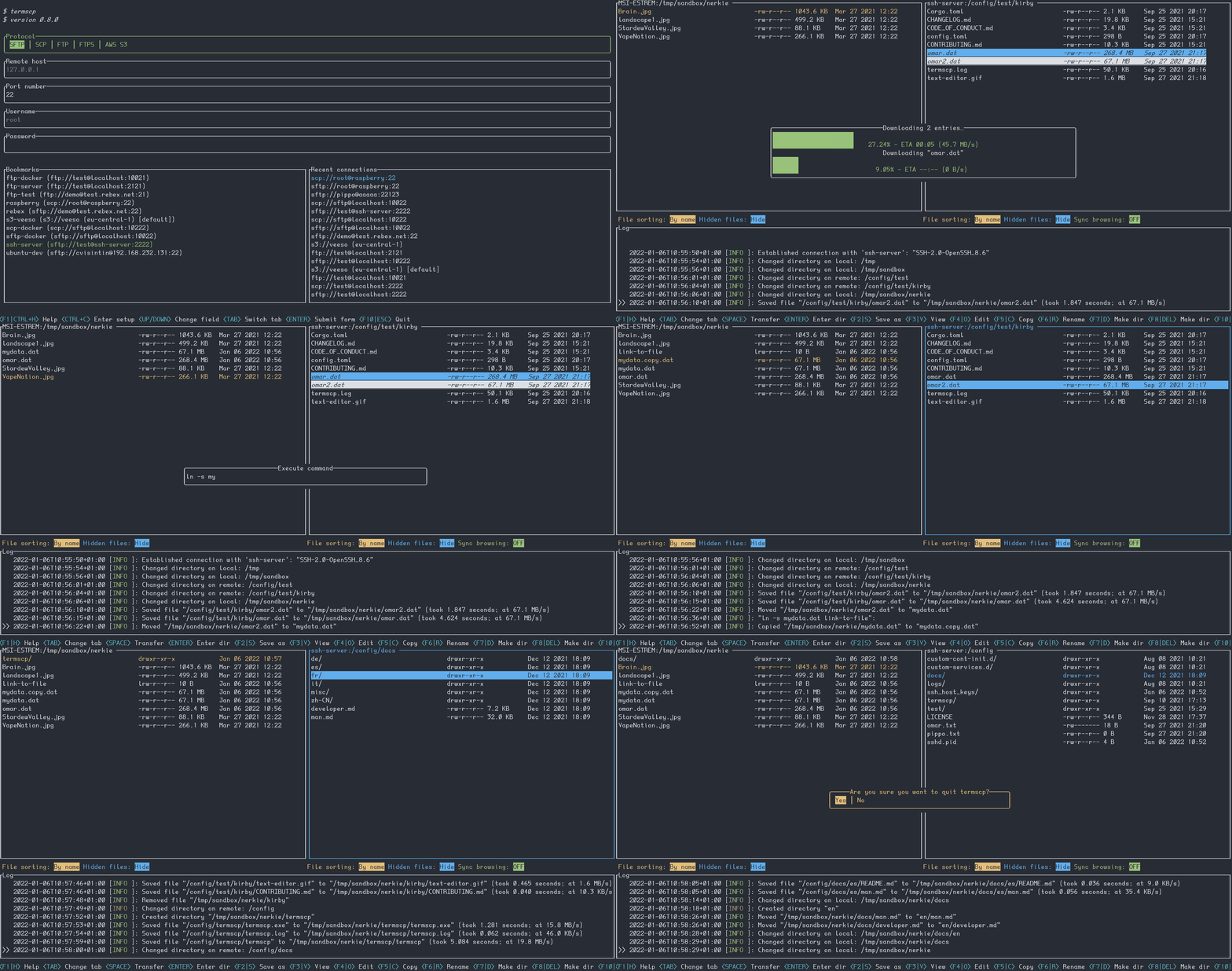
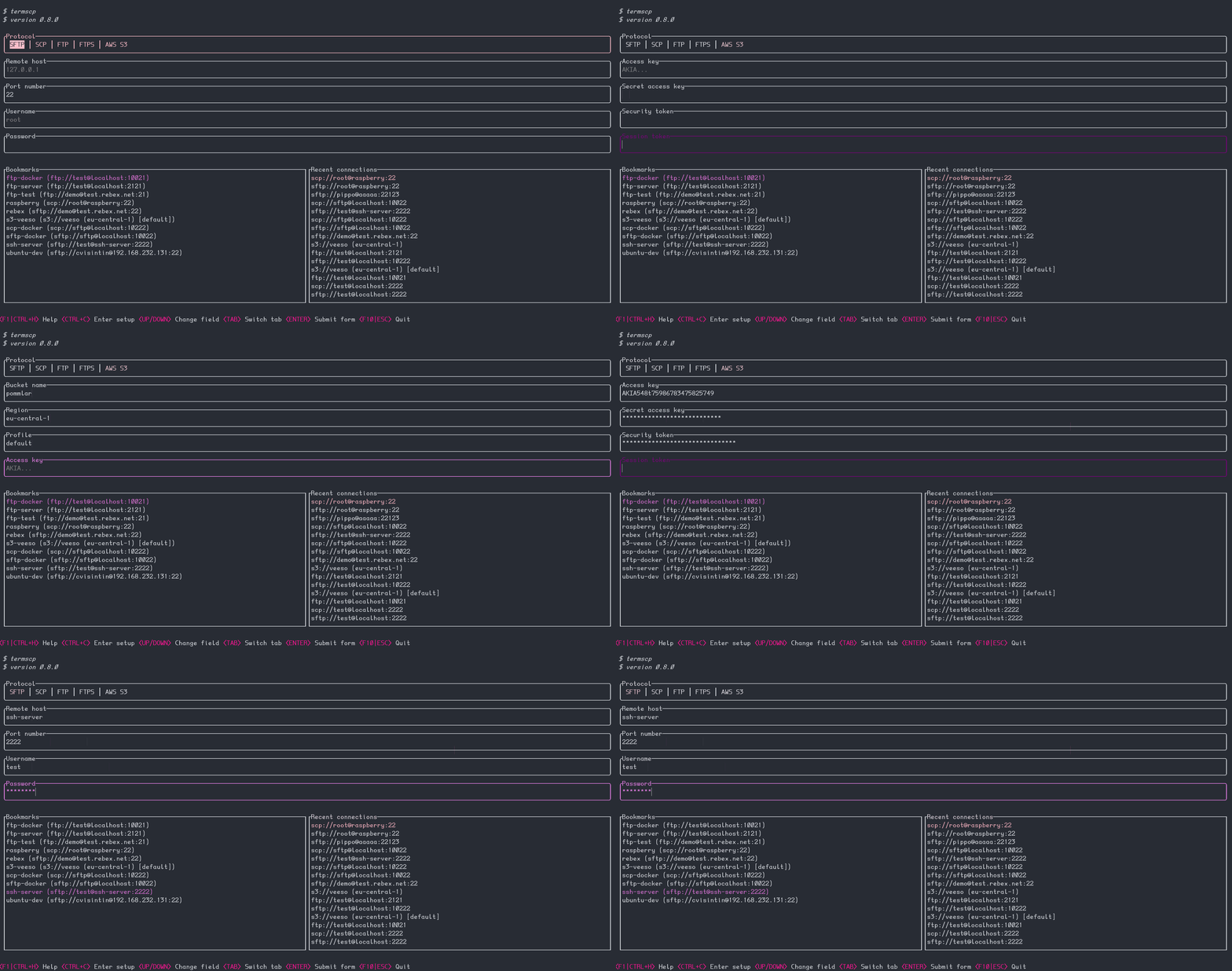
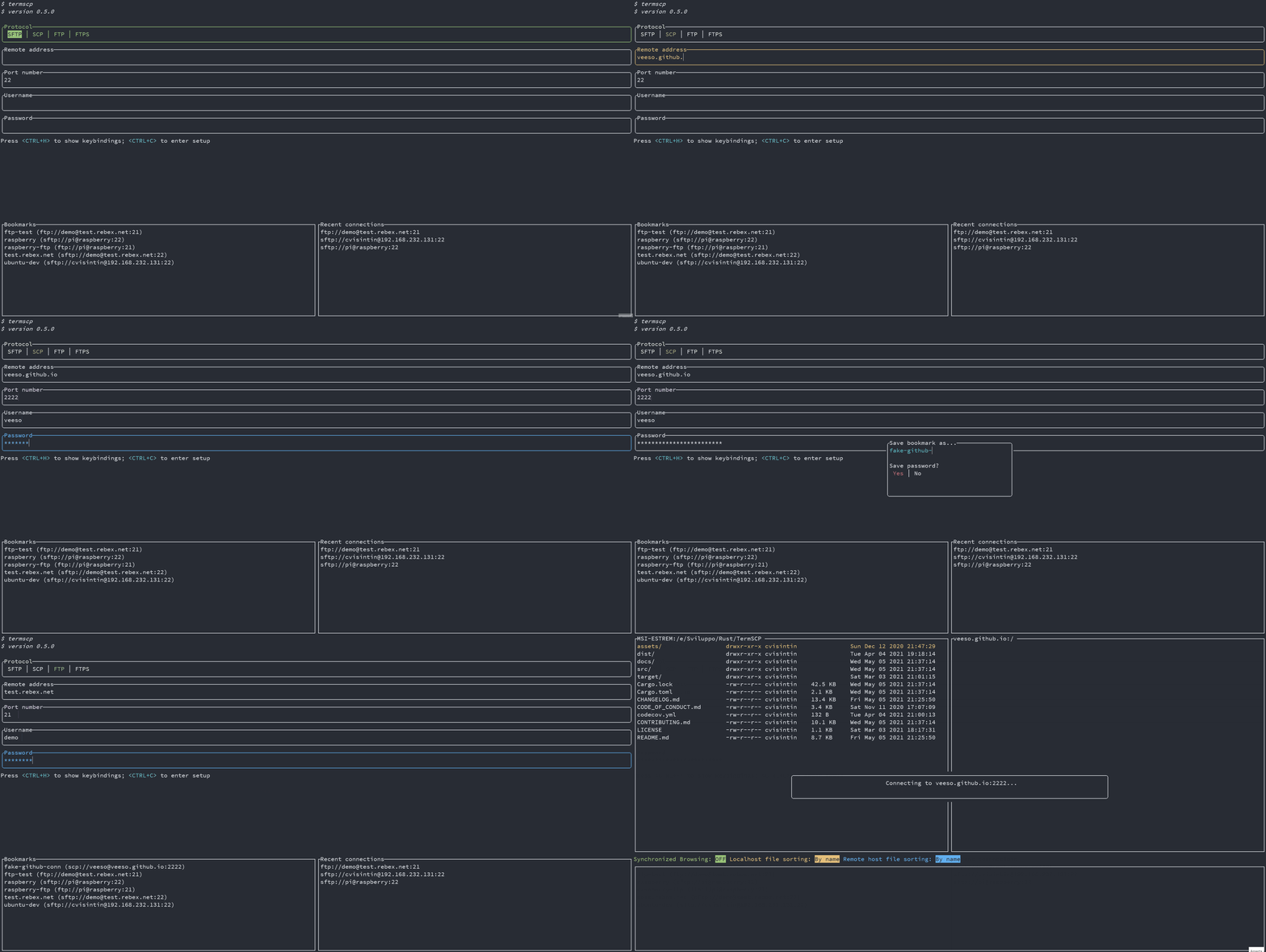
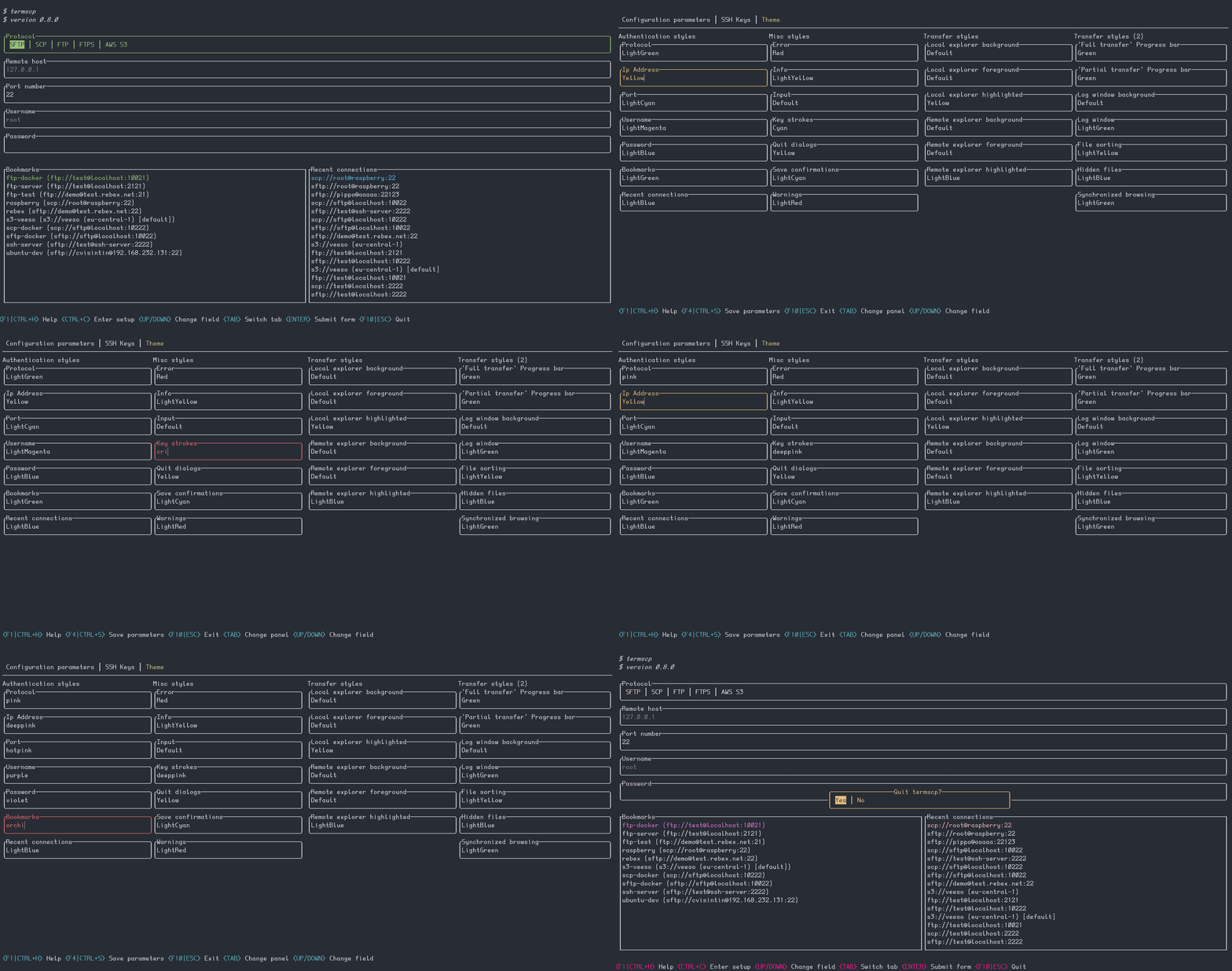
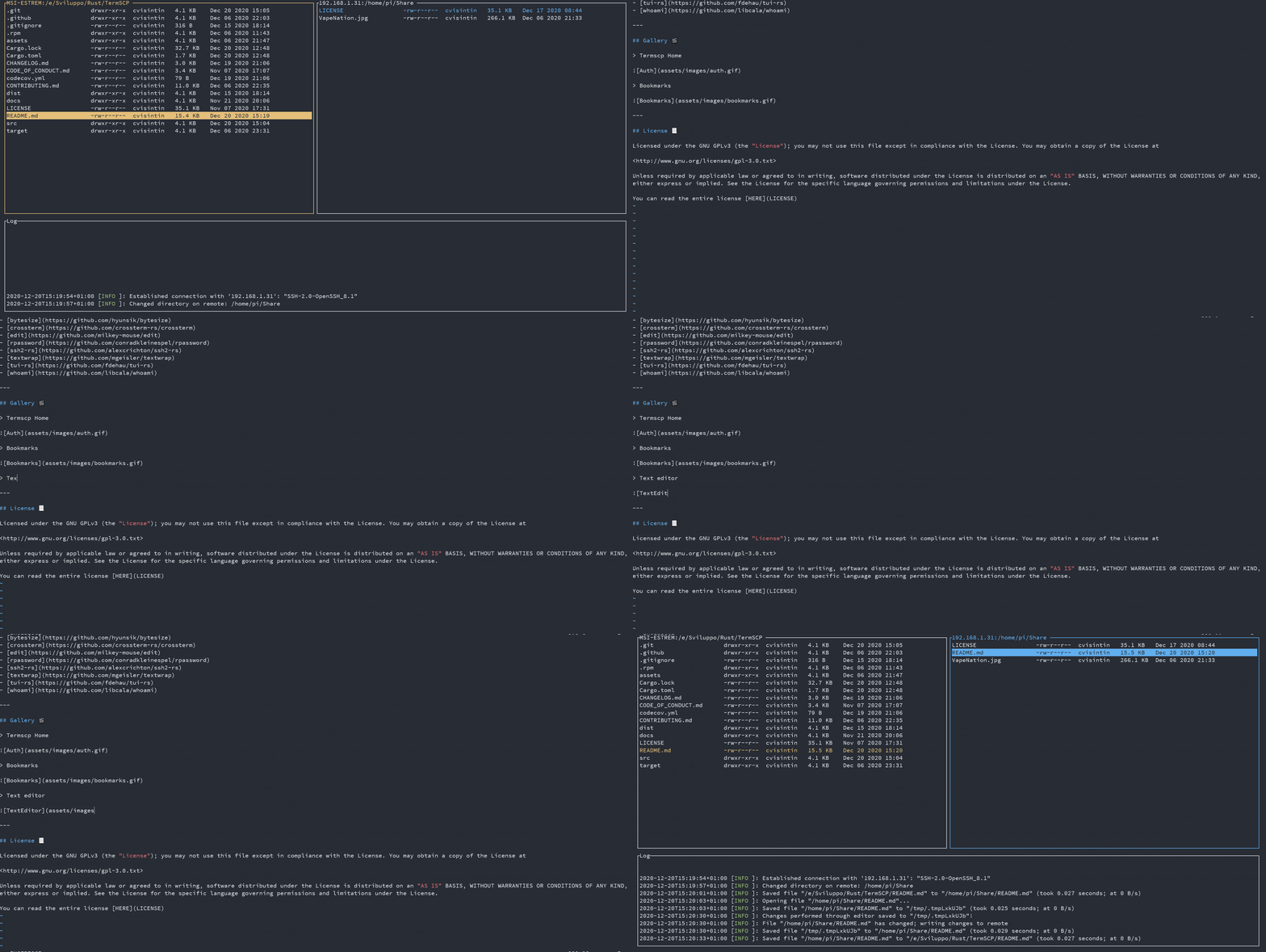
🖥 A feature rich terminal UI file transfer and explorer with support for SCP/SFTP/FTP/S3/SMB/WebDAV
3k
Stars
79
Forks
3
Open issues
21
Contributors




AI Analysis
Termscp is a terminal UI file transfer and remote file explorer supporting multiple protocols (SFTP, SCP, FTP, S3, SMB, WebDAV, Kube) with local and remote filesystem navigation. It serves users who need a lightweight, keyboard-driven alternative to WinSCP or GUI file managers for server administration and file operations. Best suited for Linux/Mac/BSD sysadmins and developers; less relevant for users already comfortable with command-line tools like rsync or scp.
Inferred from signals mentioned in the README (tests, CI, type safety) — not a review of the actual code.
AI's overall editorial judgment — not an average of the bars above, can weigh other factors too.
Terminal file transfer UI across 7+ protocols; mature niche tool with steady adoption among systems engineers
termscp is a TUI-based file transfer and remote filesystem explorer supporting SCP, SFTP, FTP, S3, SMB, WebDAV, and Kubernetes. Built by @veeso in Rust, it targets users who operate file transfers from terminal environments and seek a unified interface to multiple protocols. Adoption appears concentrated among infrastructure professionals, Linux/Unix operators, and users already comfortable with terminal workflows. The project is actively maintained with frequent updates, cross-platform support, and a documented feature roadmap.
Launched November 2020 as a personal project to unify terminal-based file transfer across multiple protocols. Evolved from a simple SCP/SFTP tool into a feature-complete TUI application with support for cloud storage (S3), network shares (SMB), and container orchestration (Kubernetes). Maintained continuously by the original author with growing community contributions.
Steady growth trajectory with 3,005 stars accumulated over ~5.5 years; 15 stars in the last 7 days suggests ongoing but gradual adoption. Presence in official Linux package repositories (Arch, NetBSD) and availability via multiple installers (shell, PowerShell, Chocolatey, Homebrew) indicates ecosystem integration. Growth appears driven by word-of-mouth among terminal-native users rather than viral adoption. No evidence of sudden spikes or corporate backing.
Adoption not verified through explicit case studies or corporate endorsements in README. However, presence in official OS repositories (Arch Linux, NetBSD) and multiple package managers indicates real deployment. crates.io download statistics available but not quoted in README. Estimated user base in hundreds to low thousands based on GitHub stars and package manager presence, not verified at scale.
Likely built on crossterm for terminal rendering (acknowledged as dependency) and ratatui for TUI framework. Modular protocol support through 'remotefs' abstraction (maintained by same author). Appears to follow Unix philosophy: single-purpose tool that composes well. Based on README, implements cross-platform support through conditional compilation for Windows/Linux/BSD/macOS.
Not documented in README. CI badge present, suggesting automated testing pipeline exists, but scope and coverage metrics not disclosed.
Last push 2026-06-19 (15 days before analysis date) indicates active maintenance. Frequent updates mentioned in README ('Frequent awesome updates'). Milestones page references upcoming features. No signs of abandonment; regular cadence suggests part-time to full-time sustainable development.
ADOPT IF: you operate frequently from terminal environments, need unified access to multiple file transfer protocols (SCP, SFTP, S3, SMB, WebDAV), and prefer TUI over command-line flags or GUI tools. AVOID IF: your primary requirement is scriptability (use native tools or rclone instead), you need advanced sync/automation features (rclone superior), or you require production vendor support. MONITOR IF: you're evaluating for large-scale infrastructure deployment; adoption signals exist but remain concentrated in niche segments.
Independent dimensions
Mainstream potential
3/10
Technical importance
6/10
Adoption evidence
5/10
- Maintenance depends on single primary maintainer (@veeso); bus factor vulnerability if project lacks documented succession plan.
- Adoption metrics not independently verified; star count and repository presence do not confirm production scale or satisfaction.
- Protocol support breadth may create surface area for security bugs across heterogeneous backends; each protocol (S3, SMB, Kube) introduces distinct dependencies and potential vulnerabilities.
- TUI interaction patterns may have steep learning curve for users accustomed to GUI file managers; adoption ceiling may be self-imposed by target audience narrowness.
- Keyboard-driven workflow incompatible with accessibility requirements that demand mouse support or voice control.
Likely to remain a stable, well-maintained niche tool. Gradual expansion into adjacent Unix ecosystem packaging and potential growth in DevOps/infrastructure communities as Kubernetes and S3 support matures. Unlikely to achieve mainstream file transfer dominance but probable to solidify position as specialist alternative for terminal-native operators.
Newsletter
Get analyses like this every Monday
Free weekly digest of the most interesting open-source discoveries.
Languages
Information
- Website
- https://termscp.rs
- Language
- Rust
- License
- MIT
- Last updated
- 3w ago
- Created
- 69mo ago
- Analyzed with
- anthropic/claude-haiku-4-5
Stars over time
Contributors over time
Top 100 contributors only — repos with more will plateau at 100.
Open issues
Open pull requests
No open pull requests.
Similar repos

crossterm-rs/crossterm
Crossterm is a pure-Rust cross-platform terminal manipulation library enabling...

webstonehq/tuxedo
Tuxedo is a fast, keyboard-driven terminal UI for the todo.txt format, offering...
| Repository | Stars | Week Δ | Language | Score | Updated |
|---|---|---|---|---|---|
|
veeso/termscp
this
|
3k | +7 | Rust | 8/10 | 3w ago |
|
crossterm-rs/crossterm
|
4.1k | — | Rust | 8/10 | 2d ago |
 winscp/winscp winscp/winscp
|
3.7k | — | C | 8/10 | 2w ago |
|
webstonehq/tuxedo
|
1.3k | — | Rust | 8/10 | 1w ago |
 binaricat/Netcatty binaricat/Netcatty
|
3.4k | — | TypeScript | 8/10 | 10h ago |
 TermoraDev/termora TermoraDev/termora
|
3.7k | — | Kotlin | 7/10 | 3d ago |
Both are GUI file transfer tools; termscp differentiates through terminal-native UI and unified protocol support. WinSCP/FileZilla target broader audiences; termscp targets terminal-native operators.
Native Unix tools; termscp adds interactive TUI with bookmarks, search, dual-pane exploration, and protocol diversity. Trade-off: termscp easier for complex workflows, native tools lighter and scriptable.
Cloud-centric, command-line oriented, stronger on sync/automation. termscp stronger on interactive remote file browsing and multiple network protocols in unified TUI.
Premium GUI alternative; termscp is free, open-source, terminal-native, and cross-platform but with less visual polish.
Similar dual-pane TUI; Midnight Commander older, more established, broader scope. termscp more modern, Rust-based, protocol diversity stronger.