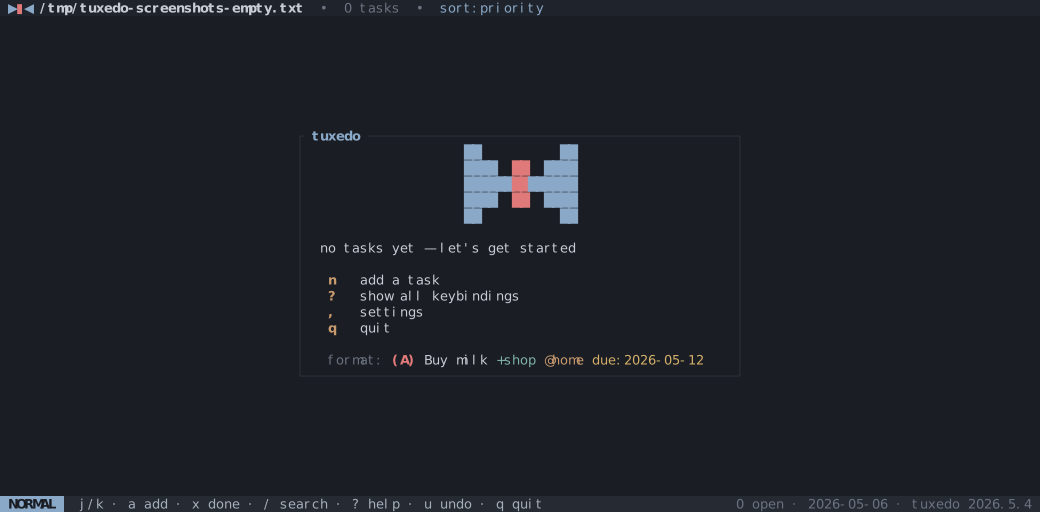
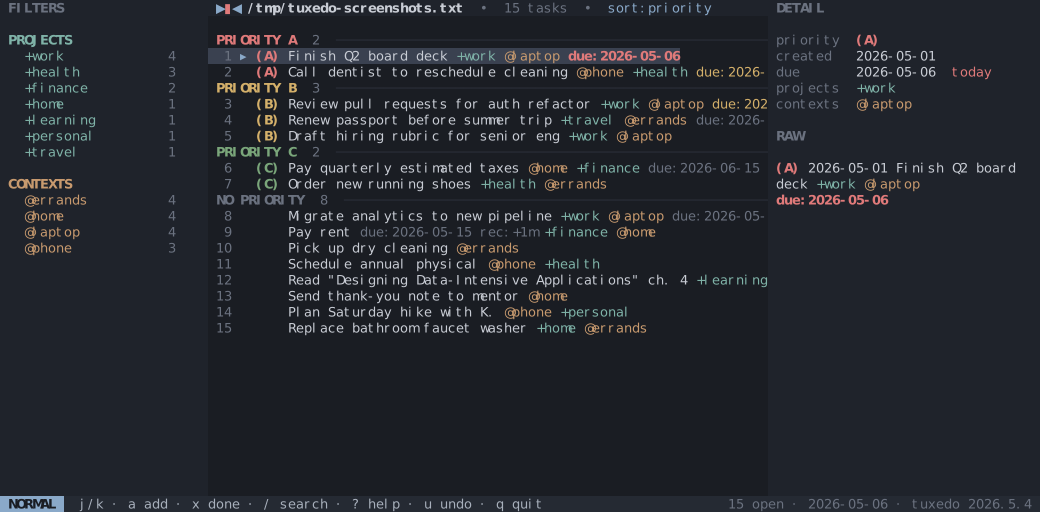
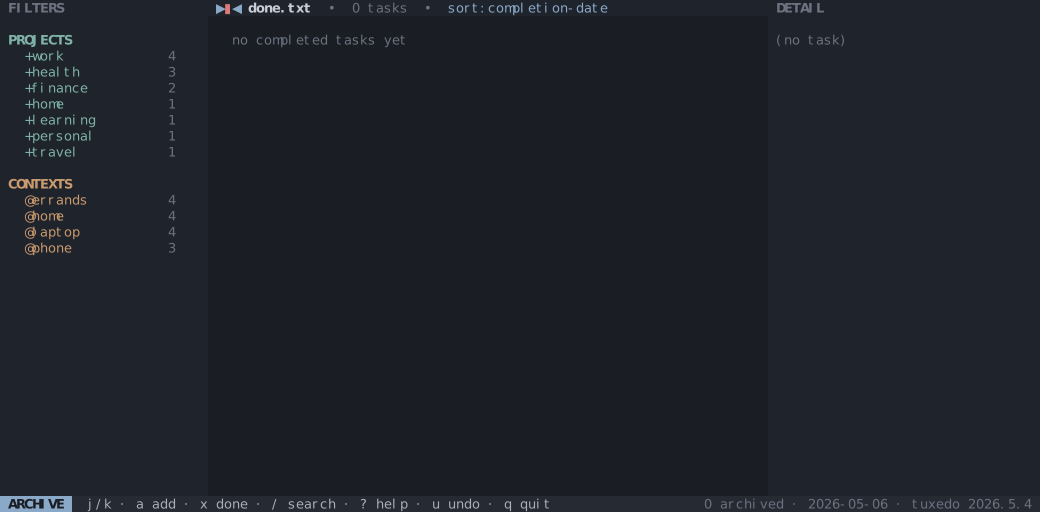
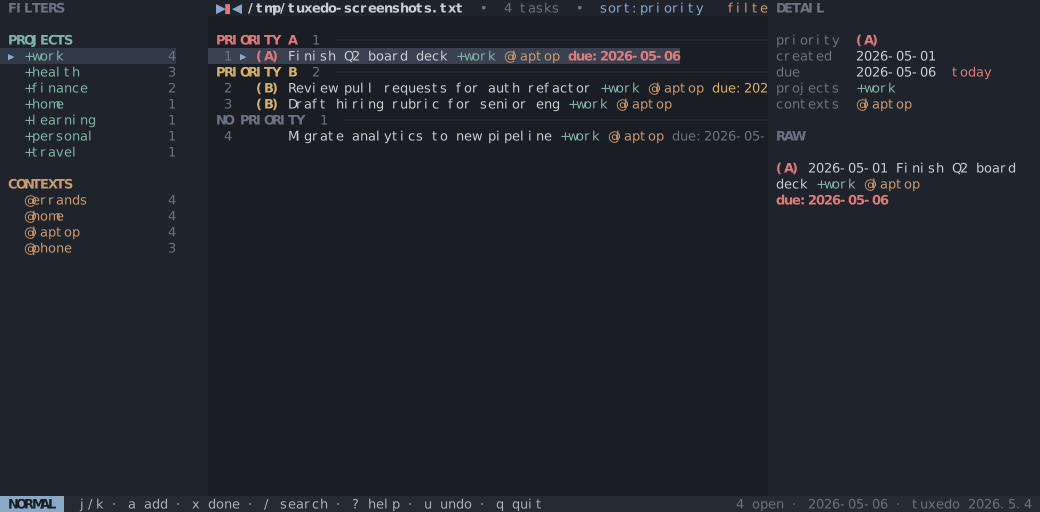
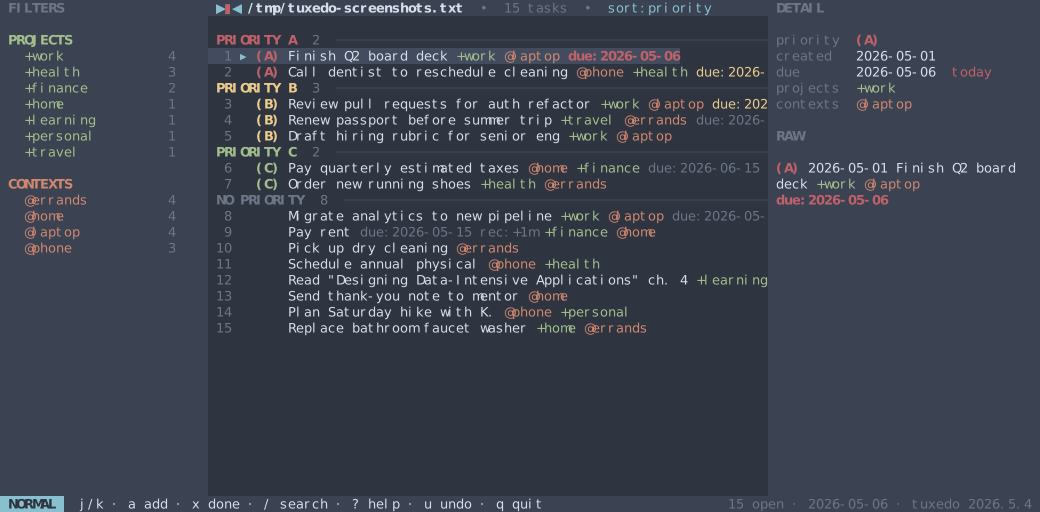
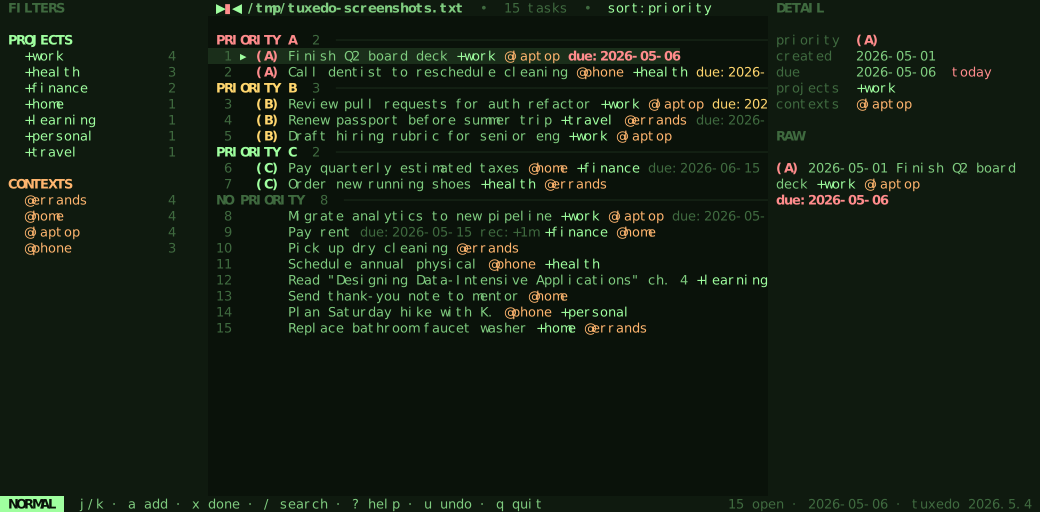
A fast, keyboard-driven terminal UI for todo.txt.
1.3k
Stars
62
Forks
36
Open issues
15
Contributors


AI Analysis
Tuxedo is a fast, keyboard-driven terminal UI for the todo.txt format, offering vim-style bindings, atomic writes, and natural-language task parsing. It serves best as a todo manager for developers and terminal power users who want plain-text task management without cloud dependencies. It is not suitable for teams needing shared task management or non-technical users.
Inferred from signals mentioned in the README (tests, CI, type safety) — not a review of the actual code.
AI's overall editorial judgment — not an average of the bars above, can weigh other factors too.
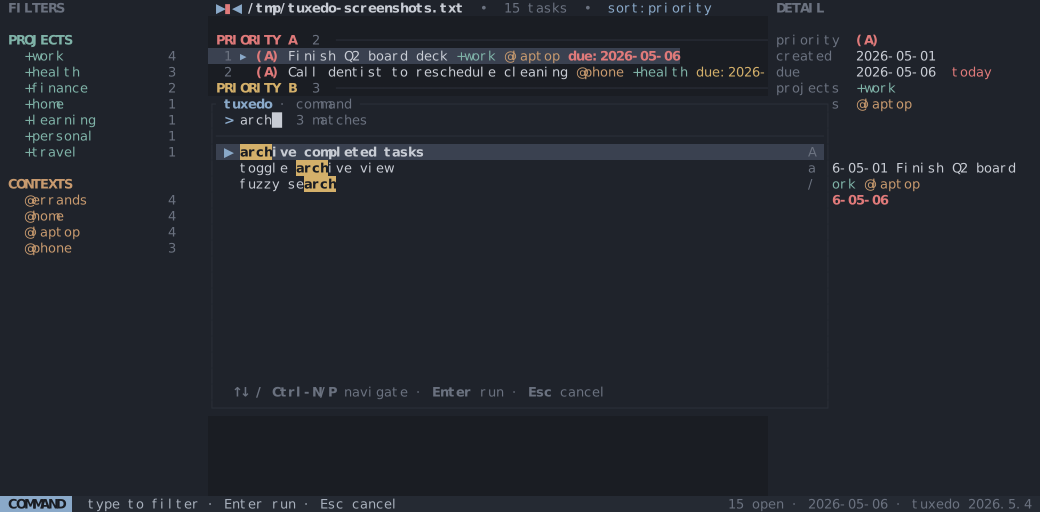
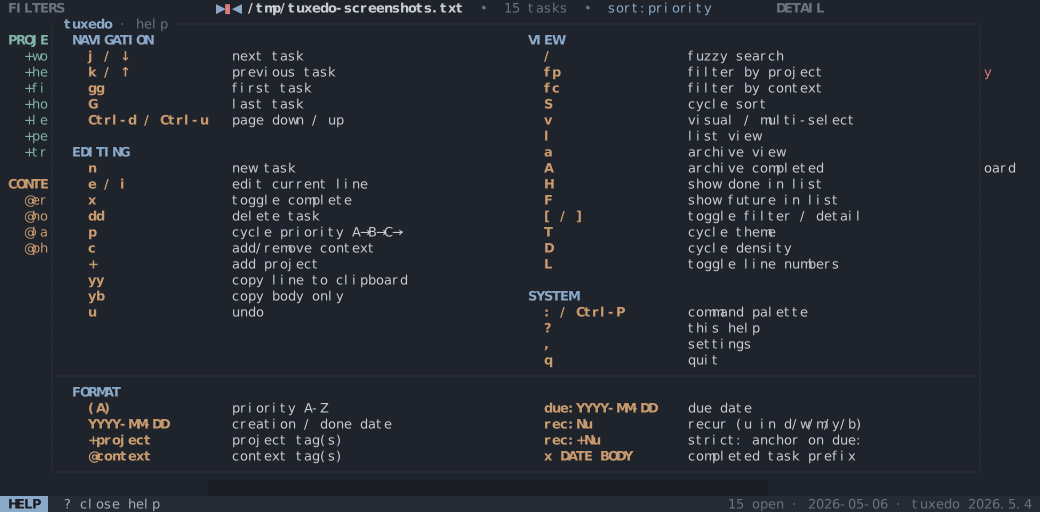
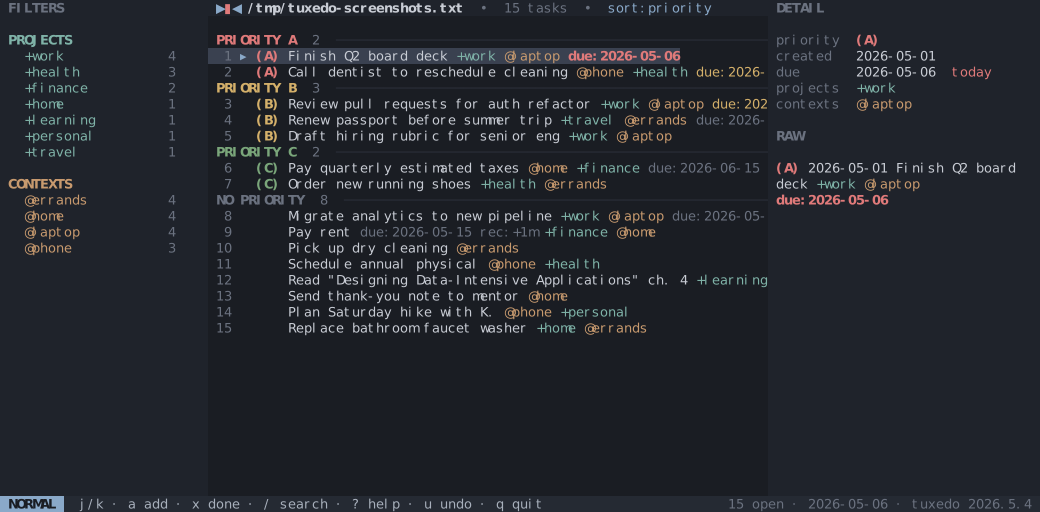
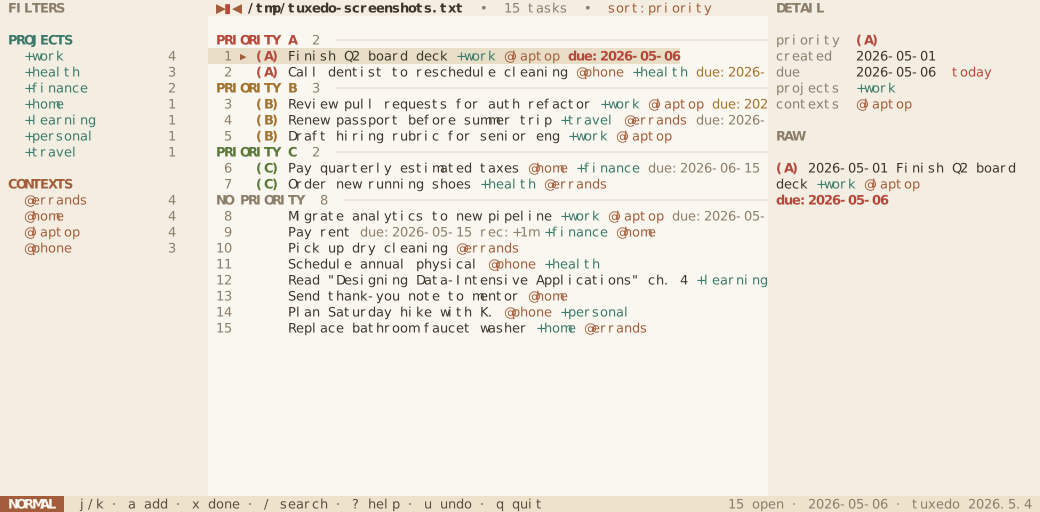
Fast Rust terminal UI for todo.txt with vim keybindings, real-time sync detection, and natural-language task entry.
Tuxedo is a keyboard-driven terminal client for the plain-text todo.txt format, written in Rust. It targets power users and CLI enthusiasts who want a lightweight, offline-first task manager with vim-style navigation, atomic file writes (sync-aware), and a command palette. Adoption appears limited to early adopters in the terminal-UI community; real-world production usage is not yet verified. The project launched in May 2026 and has gained ~82 stars in its first seven weeks, suggesting early organic interest but not mainstream traction.
Tuxedo emerged in May 2026 as a Rust implementation of a terminal UI for the decades-old todo.txt standard. It competes indirectly with the original shell-based todo.txt-cli and newer web/electron clients like Sleek. The choice of Rust and a full TUI (using ratatui) positions it in the modern terminal-tooling space, alongside projects like gitui.
The project gained 82 stars in its first week (May 2026) and reached 1,112 by late June 2026, indicating strong initial attention within niche terminal-UI and productivity communities. The README is comprehensive and features a demo video by a known Rust/terminal personality (@IogaMaster), which likely drove early visibility. Growth rate is decelerating as would be expected post-launch; no evidence of sustained viral adoption or major enterprise interest.
Adoption not verified. No mention of companies, teams, or public case studies using tuxedo in production. Homebrew presence (`brew install tuxedo`) suggests distribution infrastructure, but installation counts are not disclosed. The video walkthrough and comprehensive documentation suggest intent to reach beyond developers, but no user testimonials, open issues from production usage, or community Slack/forum references provided.
Based on README: single static Rust binary providing both a TUI (via ratatui) and CLI subcommands. Appears to use atomic write-then-rename for sync safety. Implements natural-language parsing (offline, no AI service) for task capture. Phone capture via QR-to-LAN PWA suggests embedded HTTP server. Undo history (~50 levels) and fuzzy command palette indicate in-memory state management. Likely uses todo.txt standard format without custom extensions.
Not documented in README. CI badge present but no breakdown of test strategy, coverage percentage, or test examples provided.
Last push 2026-06-27 (one day before analysis date), indicating active development. CI workflow present and passing. Project is ~7 weeks old, so 'maintenance' is still indistinguishable from 'initial development.' No evidence of response times to issues or PR review cycles. Early-stage vitality is clear, but longer-term maintenance pattern unknown.
ADOPT IF: you actively use todo.txt, prefer terminal UIs, value vim keybindings, and want faster interactive workflows than editing plaintext directly or using the original todo.txt-cli. You must be comfortable with early-stage software (launched May 2026) and tolerate potential bugs. AVOID IF: you need production-hardened stability, collaboration features, cross-device sync, or support at scale. Avoid if your team uses a different task format or if you depend on integrations beyond the standard todo.txt ecosystem. MONITOR IF: you are building terminal tooling or considering todo.txt as your task format — tuxedo's atomic-write approach and natural-language parser are technically interesting; watch for adoption signals and community-driven themes/plugins over the next 6–12 months.
Independent dimensions
Mainstream potential
3/10
Technical importance
6/10
Adoption evidence
2/10
- Project is 7 weeks old; long-term maintenance and stability unknown. Early adopters may encounter breaking changes or abandonment if maintainer priorities shift.
- Adoption not verified — user base and real-world production usage are unclear. Viral GitHub growth does not guarantee staying power or utility in practice.
- Dependency on Rust ecosystem; any critical vulnerability in ratatui or other libraries could impact security or require urgent maintainer response.
- Phone capture via QR and LAN PWA adds complexity and potential security surface (LAN exposure, QR injection); no security audit or permissions model documented.
- Limited to single-file todo.txt format; scaling to thousands of tasks or complex organizational schemes may expose performance or UX limits not yet tested in production.
Tuxedo will likely remain a niche, high-quality tool favored by terminal-focused productivity enthusiasts and vim users. Mainstream adoption (>10k active users) is unlikely unless a major productivity personality or company endorses it or unless it solves a pain point for a larger community. More probable trajectory: slow, steady adoption within the todo.txt community (reaching 3k–5k stars over 12 months), potential feature plateau after core functionality is complete, and fork/community-theme ecosystem growth if maintainer remains active.
Newsletter
Get analyses like this every Monday
Free weekly digest of the most interesting open-source discoveries.
Languages
Information
- Language
- Rust
- License
- MIT
- Last updated
- 1w ago
- Created
- 2mo ago
- Analyzed with
- anthropic/claude-haiku-4-5
Stars over time
Contributors over time
Top 100 contributors only — repos with more will plateau at 100.
Open issues
Preserve priority for done todos. `todo.rs`
[Feature request] - sync the todo list with Apple reminder
[Bug] Off by 1 error in the calendar view and misalignment
Editing and Rescheduling will not work
Feature-request: add keybind to open file in $EDITOR
Top contributors
Similar repos
| Repository | Stars | Week Δ | Language | Score | Updated |
|---|---|---|---|---|---|
|
webstonehq/tuxedo
this
|
1.3k | +119 | Rust | 8/10 | 1w ago |
 todotxt/todo.txt-cli todotxt/todo.txt-cli
|
6.1k | — | Shell | 7/10 | 2w ago |
 erikjuhani/basalt erikjuhani/basalt
|
1.3k | — | Rust | 7/10 | 4d ago |
 kdheepak/taskwarrior-tui kdheepak/taskwarrior-tui
|
2.1k | — | Rust | 7/10 | 5d ago |
 ransome1/sleek ransome1/sleek
|
2k | — | TypeScript | 7/10 | 19h ago |
 gitui-org/gitui gitui-org/gitui
|
22.2k | — | Rust | 8/10 | 22h ago |
Tuxedo is a modern TUI alternative to the venerable CLI tool. While todo.txt-cli is scriptable and minimalist, tuxedo prioritizes interactive speed and visual usability with vim keys and themes. Tuxedo also adds phone capture and natural-language parsing — features absent from the original.
Sleek is a web UI for todo.txt with broader platform reach (browser, Electron). Tuxedo is terminal-only and offline-first, targeting power users; Sleek targets users comfortable with graphical interfaces. Tuxedo's vim keybindings and keyboard-driven workflow will appeal to a narrower, more technical audience.
Tuxedo adds structure and command palette over plain text. Most todo.txt users may continue editing in their existing editor (vim, nano, VS Code) if they are already comfortable with that workflow and do not need the TUI niceties.
Tuxedo is offline, local-file-based, and plaintext-transparent. It appeals to users who reject cloud lock-in and prefer data ownership. However, it lacks collaboration, recurring-task UI, and cross-device sync that modern managers provide — a deliberate trade-off.
Taskwarrior is mature, feature-rich, and has a large installed base. Tuxedo is simpler, format-compatible with todo.txt (not Taskwarrior's own format), and more recently built. Tuxedo may appeal to users who value simplicity and plaintext over Taskwarrior's complexity.