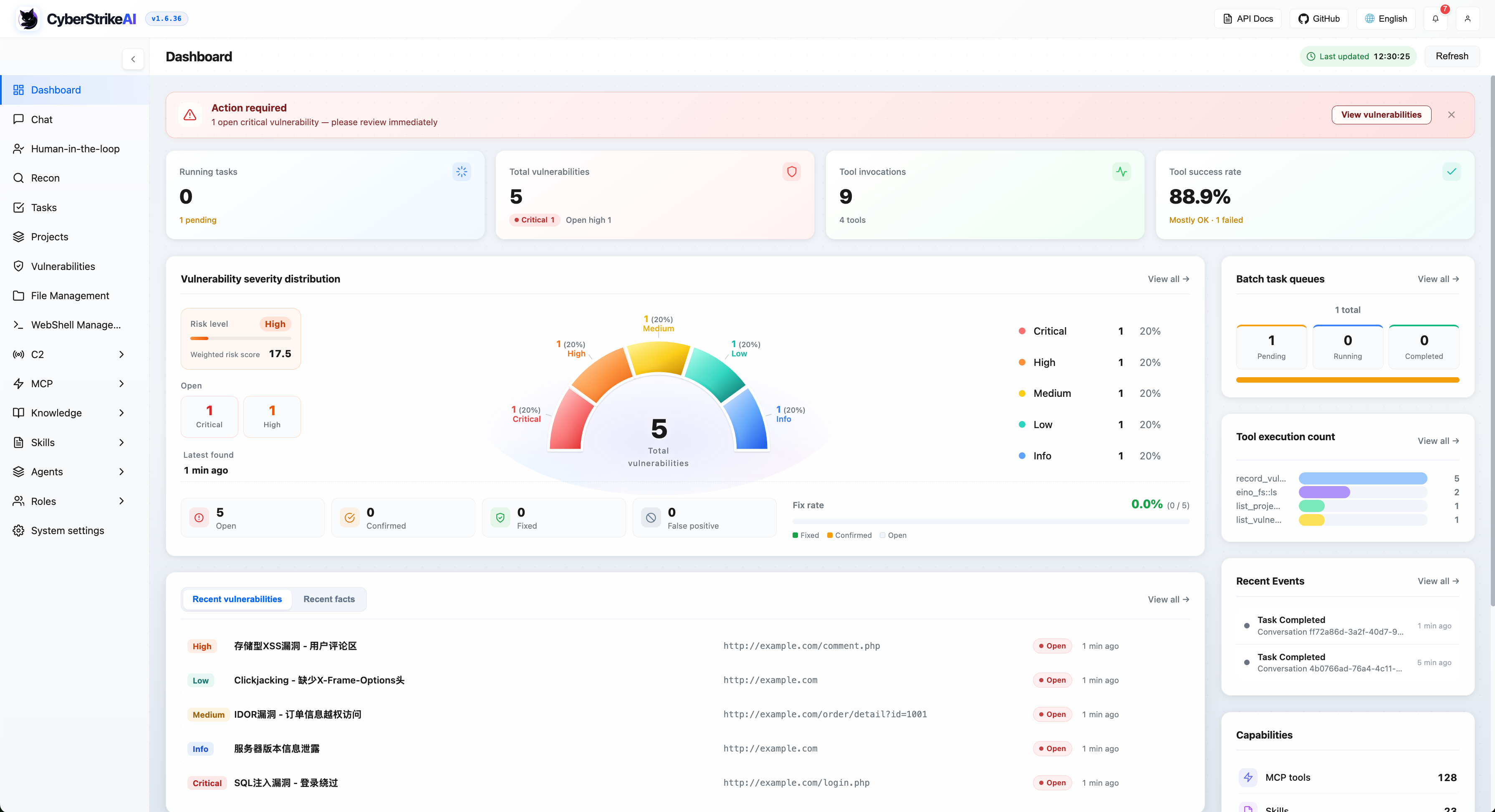
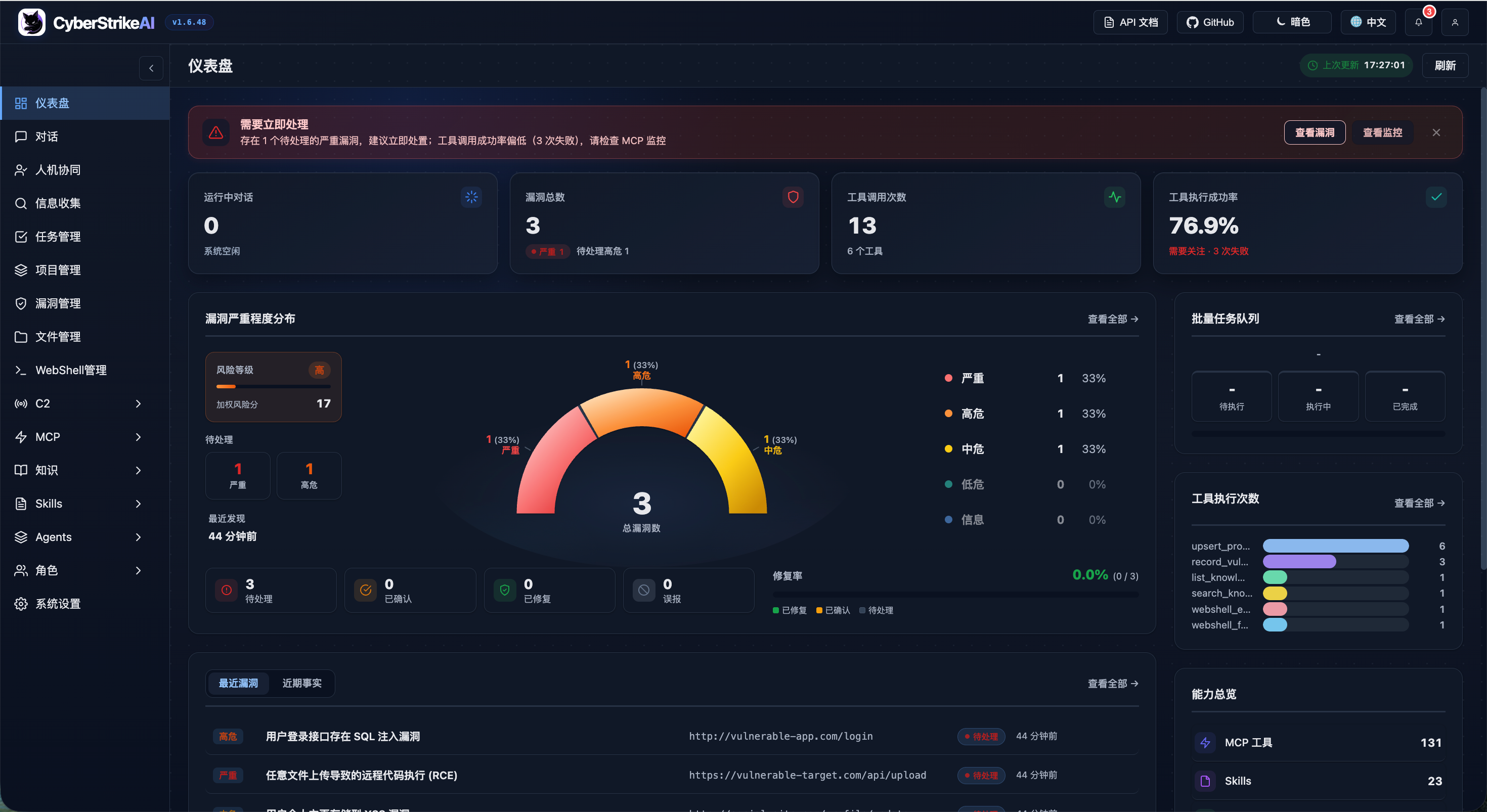
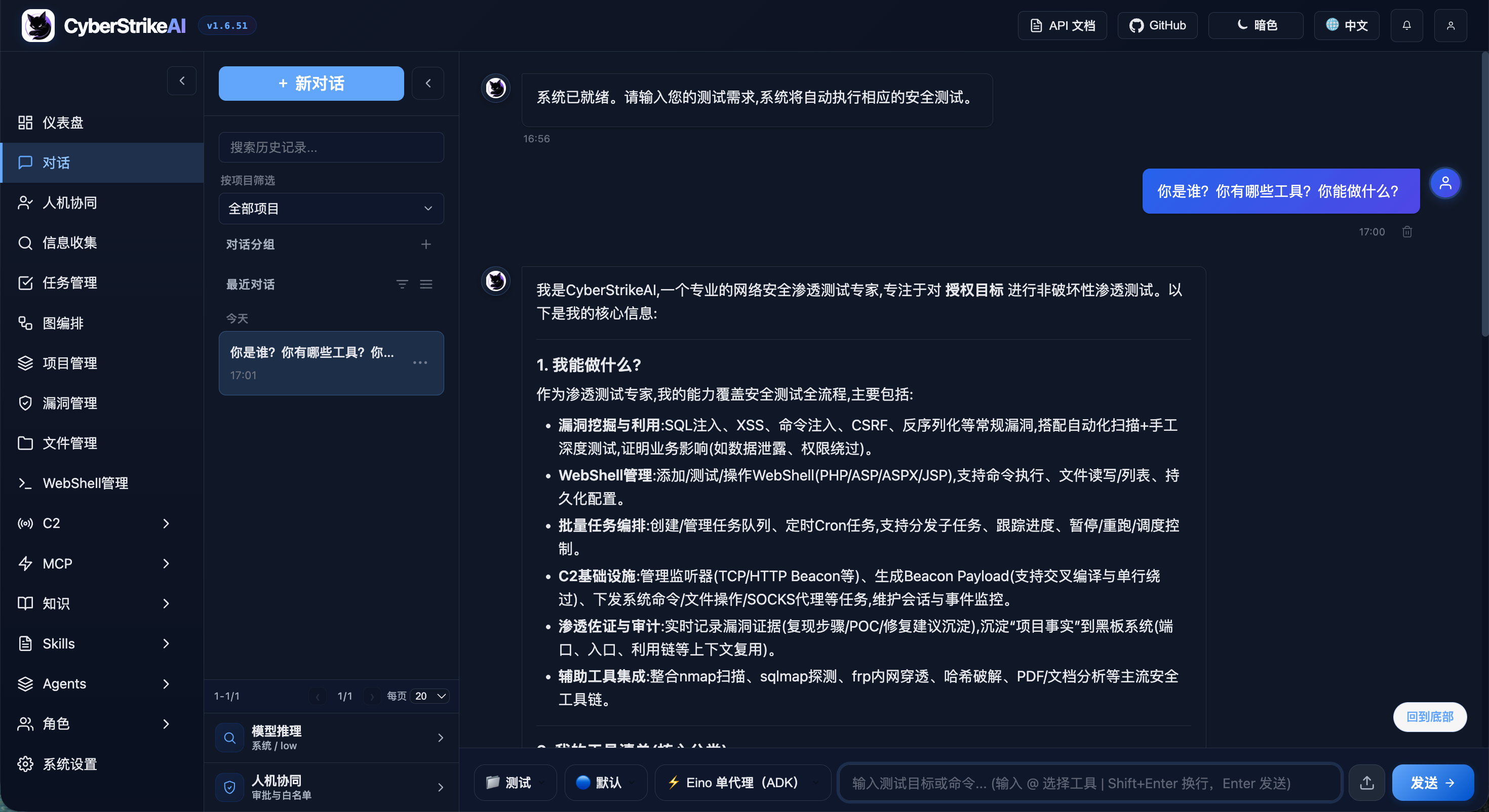
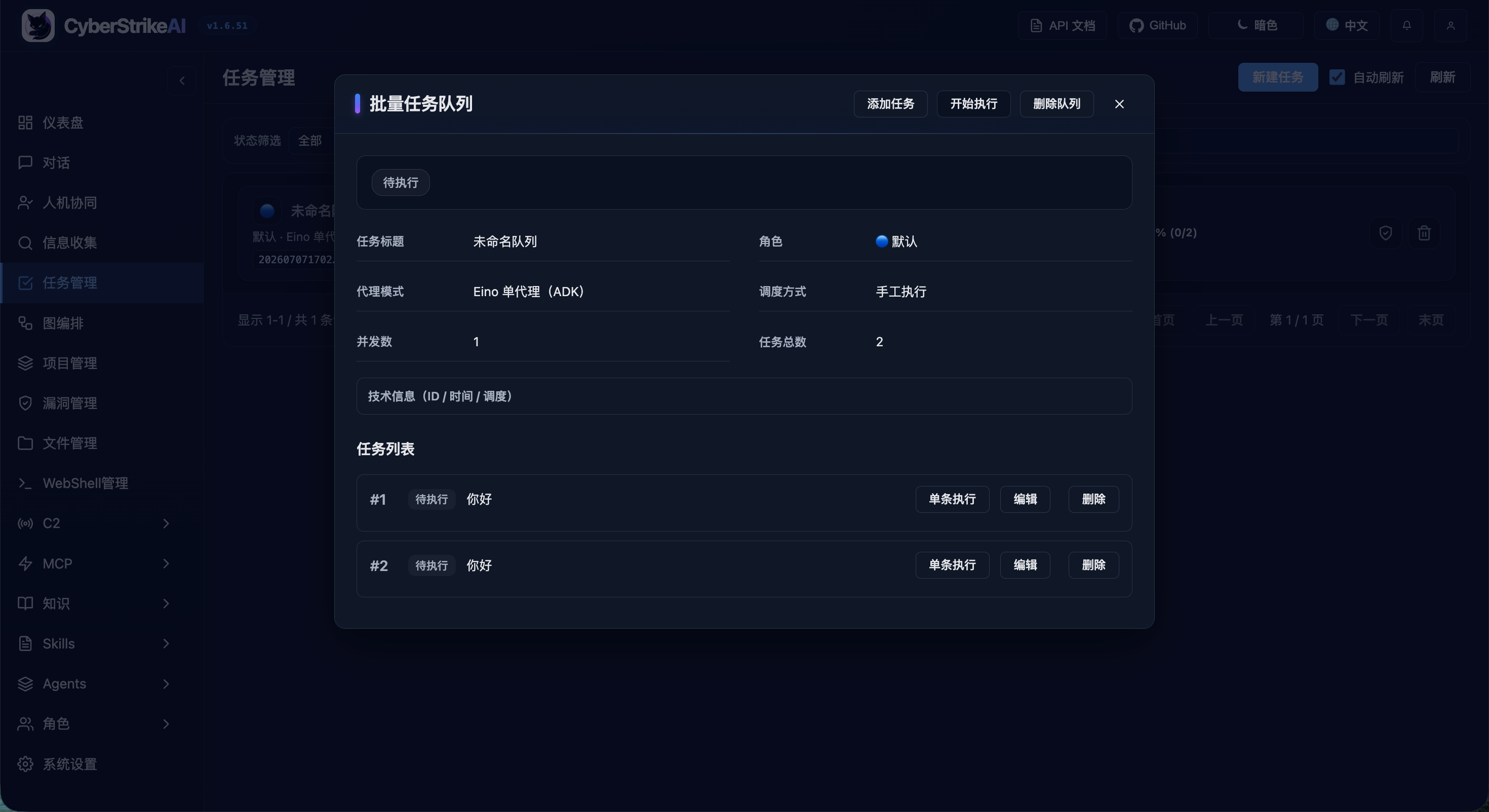
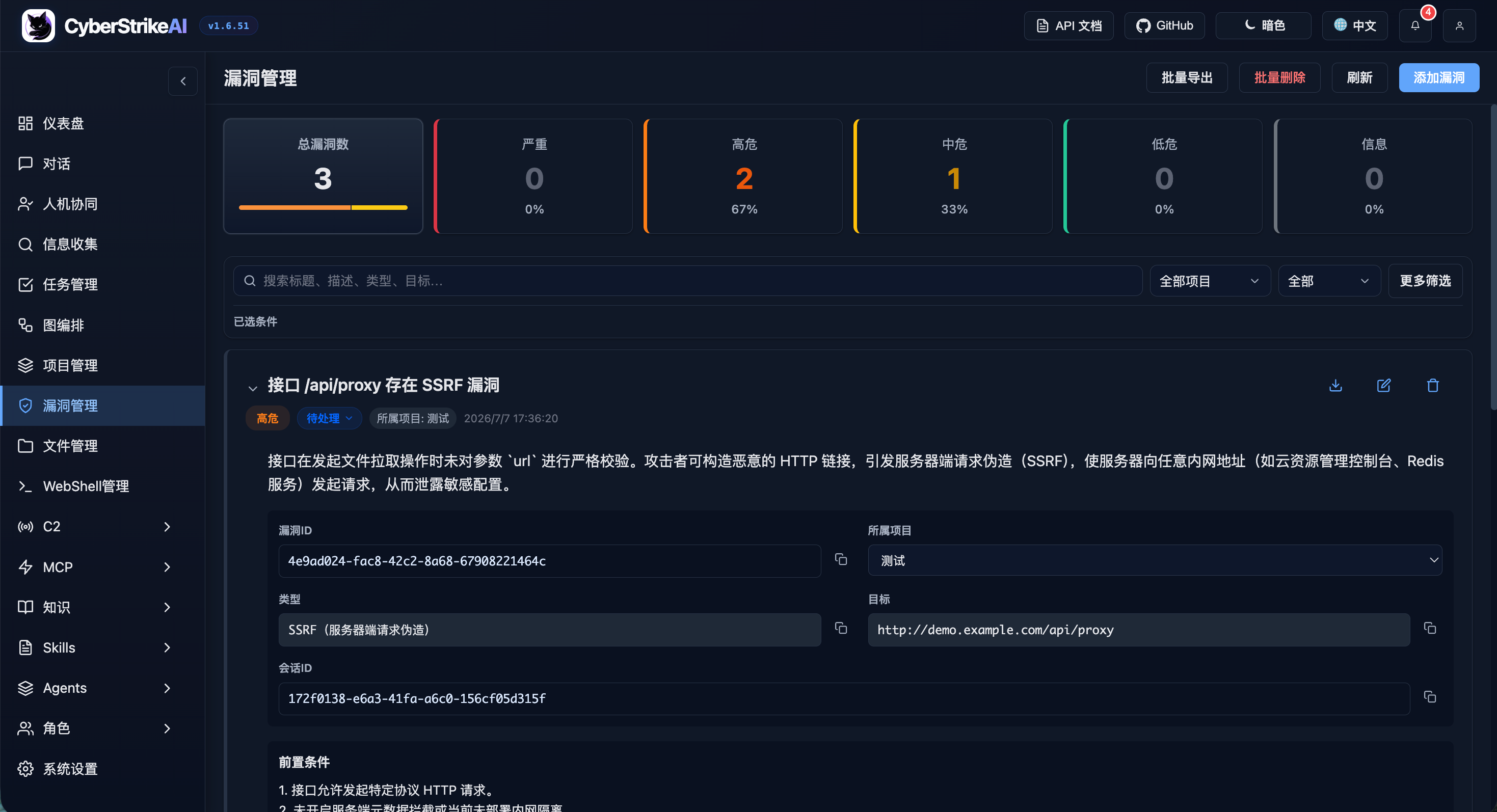
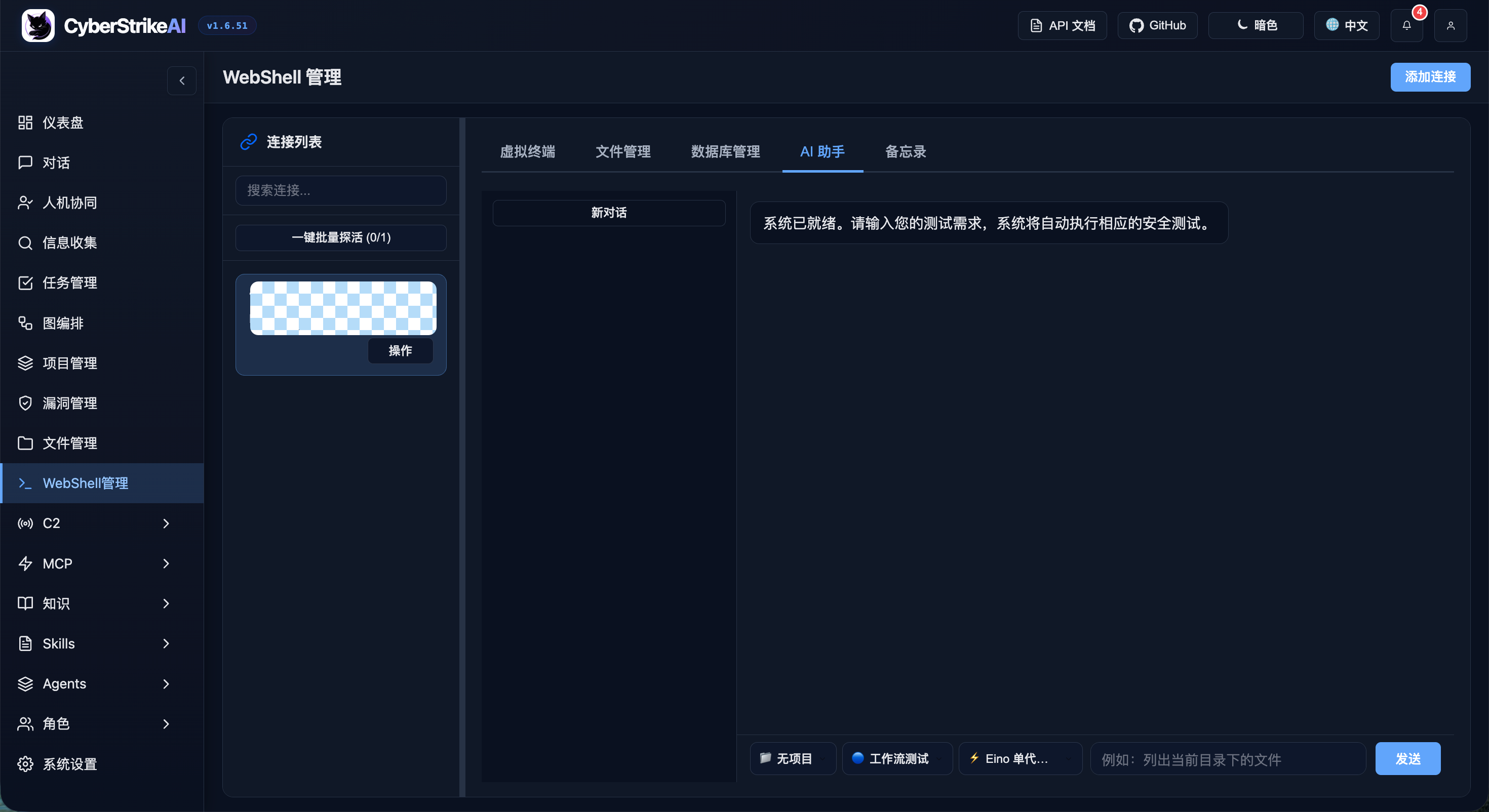
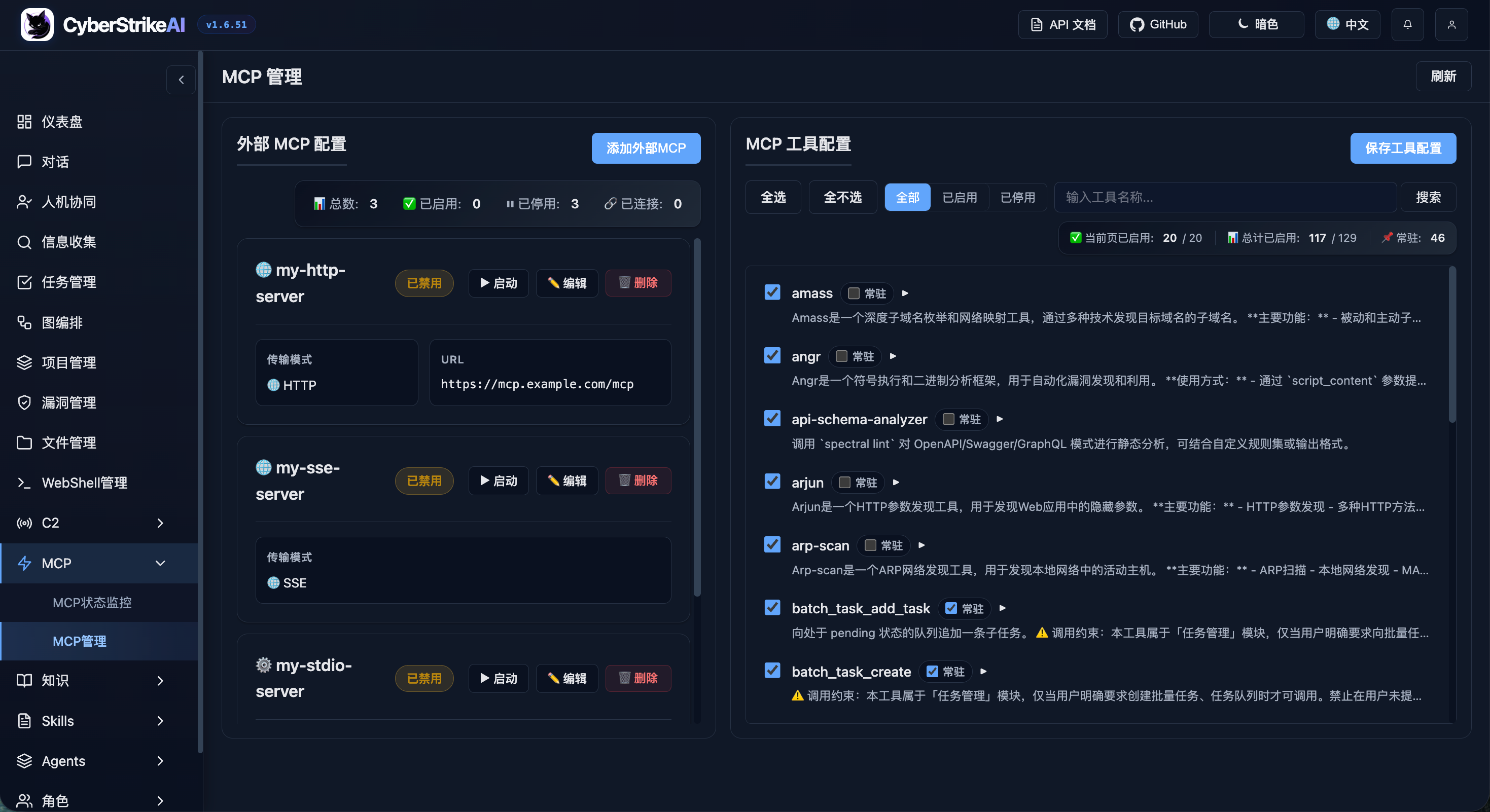
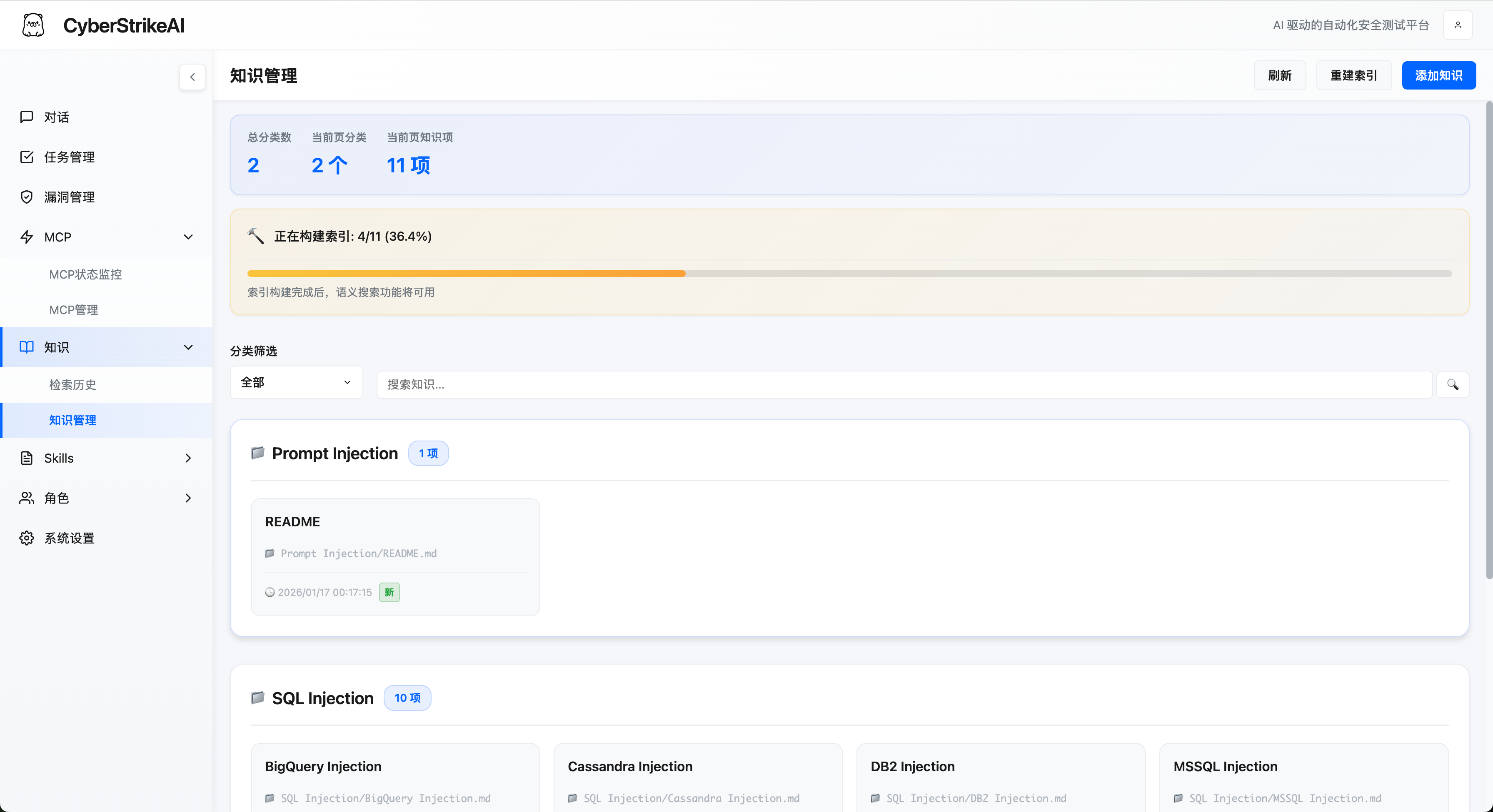
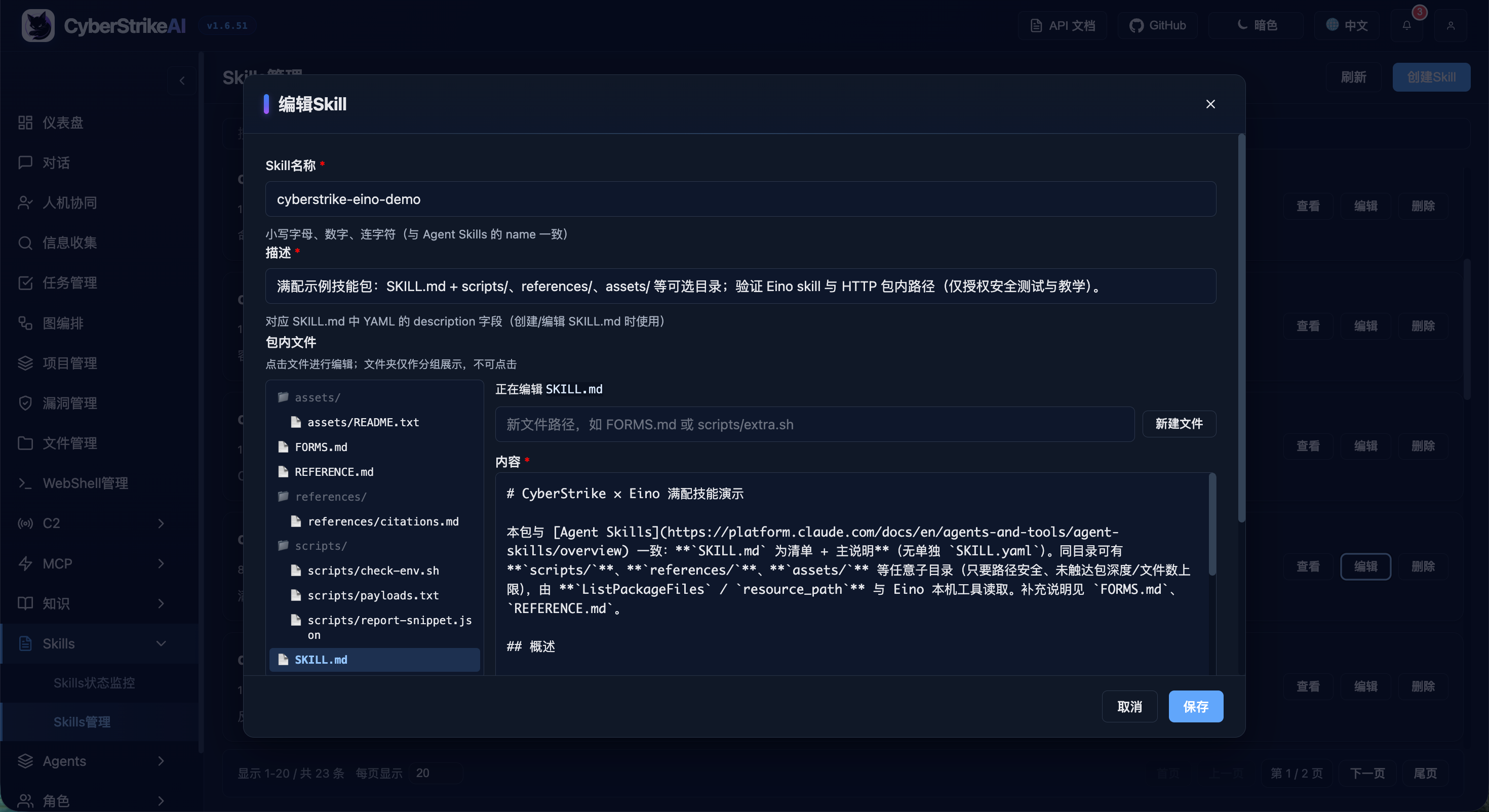
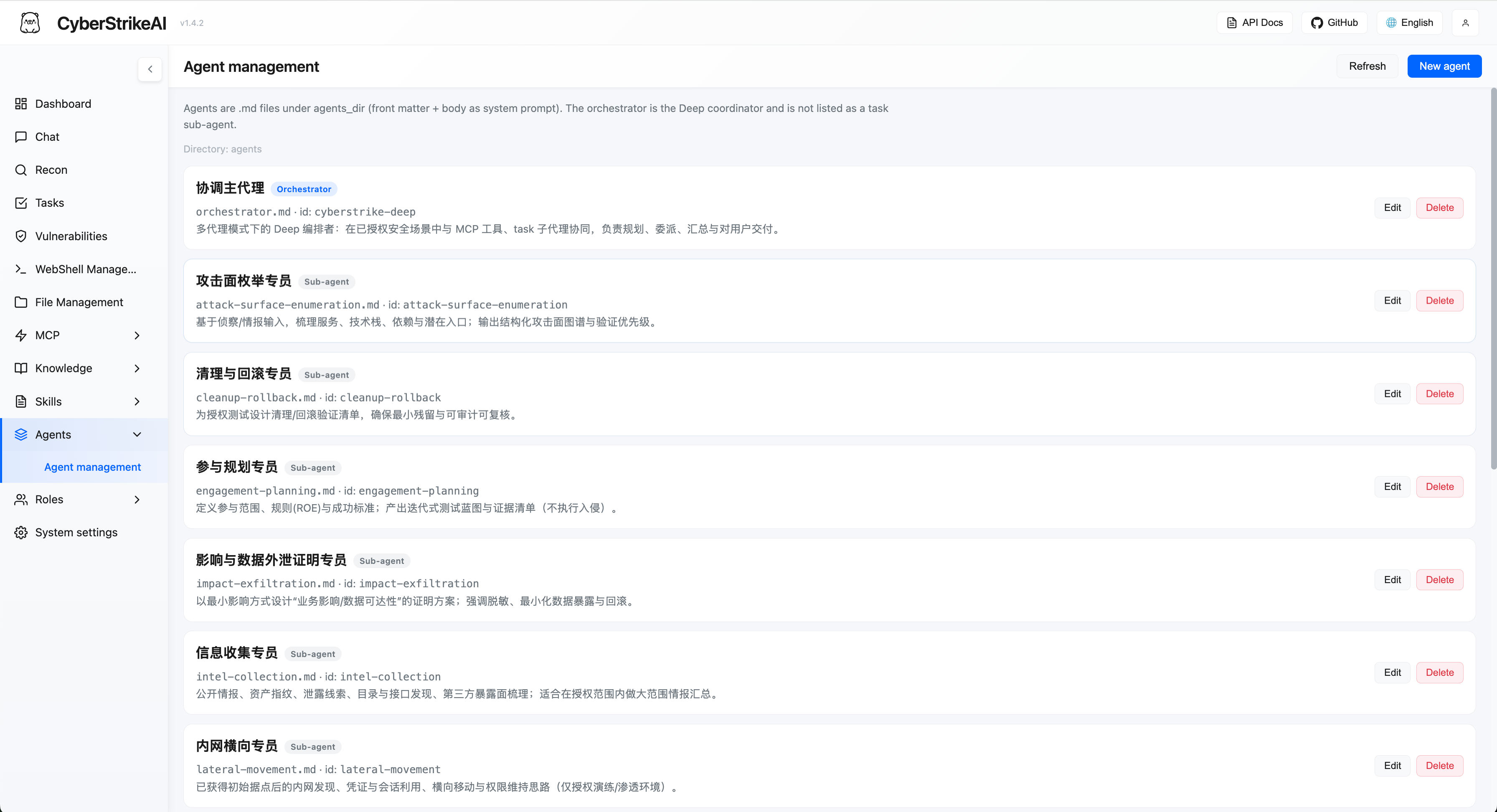
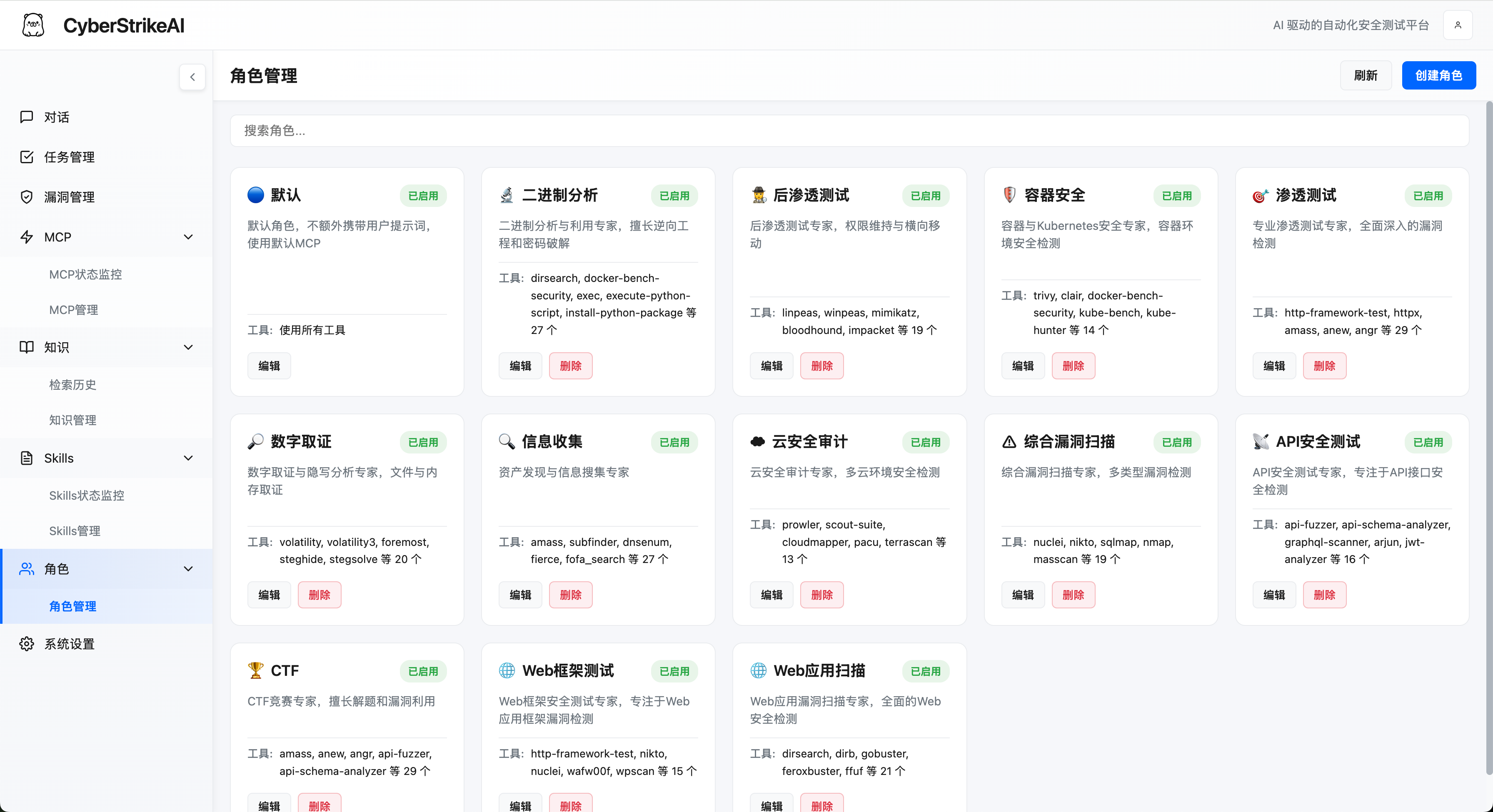
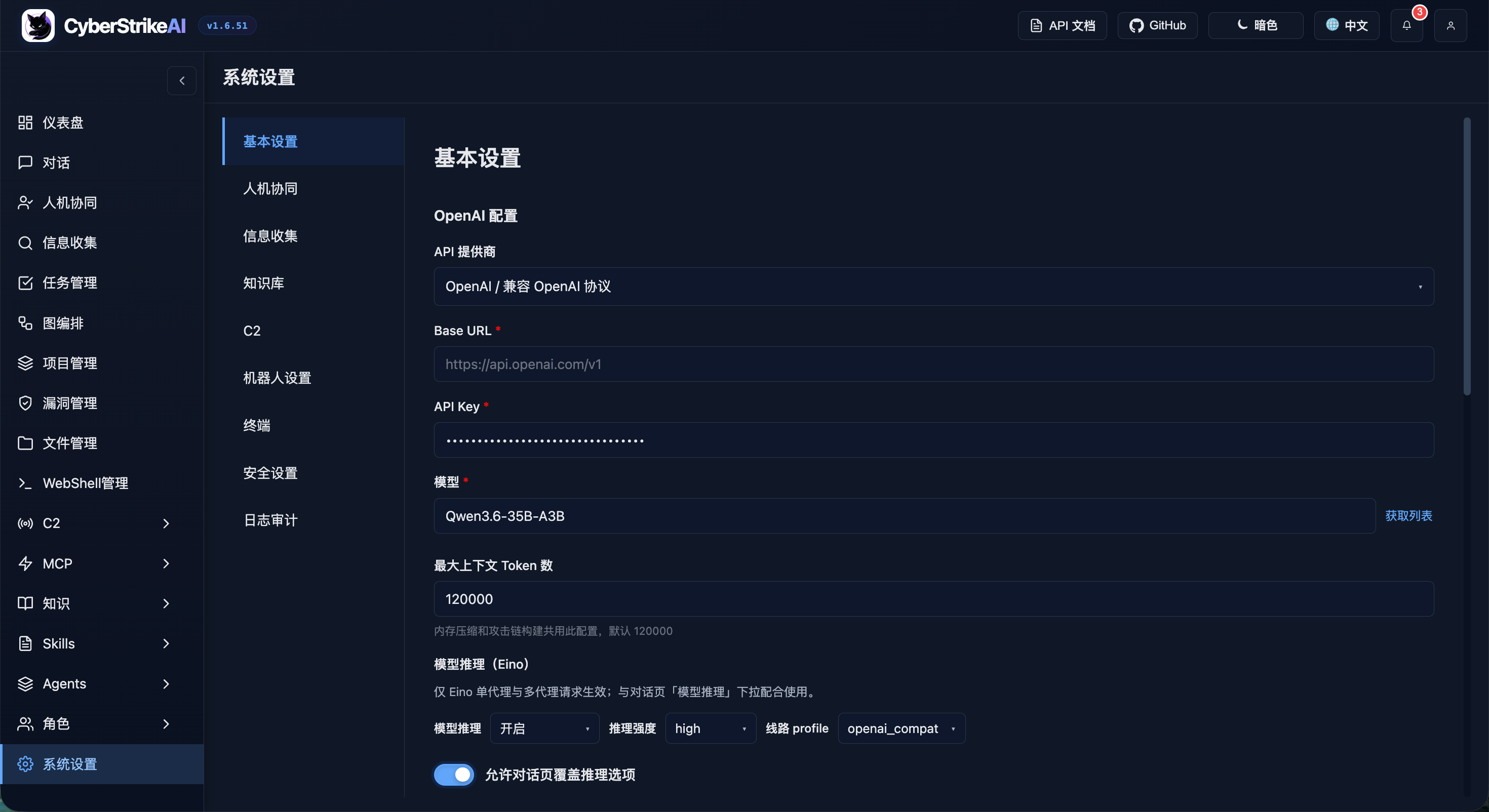
Agentic execution layer for modern cyber security, turning security intent into precise, governed, auditable action through AI agents, MCP-native tools, knowledge, approvals, and attack-chain context.
5k
Stars
815
Forks
32
Open issues
8
Contributors


AI Analysis
CyberStrikeAI is an agentic execution layer for authorized cybersecurity operations that integrates AI agents, security tools, MCP protocols, RAG-powered knowledge systems, and multi-agent orchestration to turn security intent into auditable workflows. It is purpose-built for penetration testing teams, red-team operators, and security researchers who need coordinated, governed AI-assisted attack planning and execution within authorized engagements; it is not a general-purpose AI platform or a...
Inferred from signals mentioned in the README (tests, CI, type safety) — not a review of the actual code.
AI's overall editorial judgment — not an average of the bars above, can weigh other factors too.
AI-native security testing platform with orchestrated tool integration and multi-agent capabilities
CyberStrikeAI is a Go-based security testing orchestration platform launched late 2025 that combines 100+ integrated security tools, AI agents (OpenAI-compatible), role-based testing frameworks, and a lightweight C2 for authorized engagements. It targets security teams seeking automated, AI-driven penetration testing workflows. The project gained ~4,900 stars in ~7 months and shows active development (last push June 2026), but real-world adoption remains largely undocumented; community appears primarily Chinese-language (WeChat, Discord).
CyberStrikeAI emerged November 2025 as a Go rewrite in the competitive AI security-testing category, following waves of Python and TypeScript-based penetration testing automation tools. The project positions itself as an orchestration layer integrating existing tools via MCP protocol and LLM agents, rather than reimplementing core security functionality.
The project gained 181 stars in the 7 days prior to evaluation (2026-06-23 to 2026-06-30), representing ~3.7% weekly growth off a 4,857-star base. This suggests moderate sustained interest rather than viral adoption. Growth trajectory appears stable since launch (~7 months old); no evidence of sharp acceleration or decline. Community engagement visible via Discord and WeChat suggest non-English-speaking adoption, which may be underrepresented in Western metrics.
adoption not verified. README includes dashboard/UI screenshots and multi-component feature descriptions, but contains no case studies, deployment counts, or documented production users. Community presence (Discord, WeChat sponsorship requests) suggests adoption among contributors, but scale and enterprise usage are not documented. Chinese-language community presence hints at Asia-Pacific adoption but remains anecdotal.
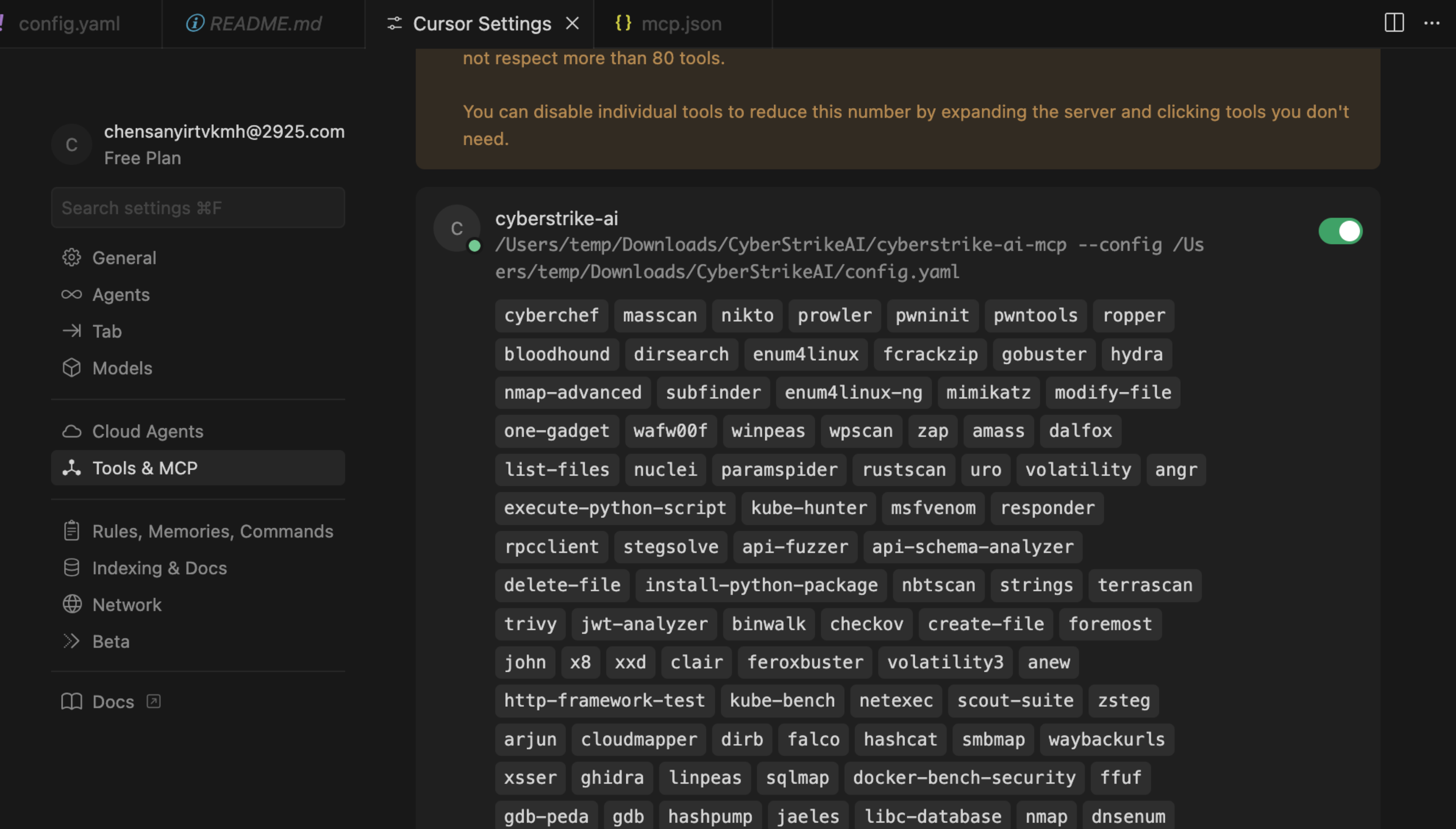
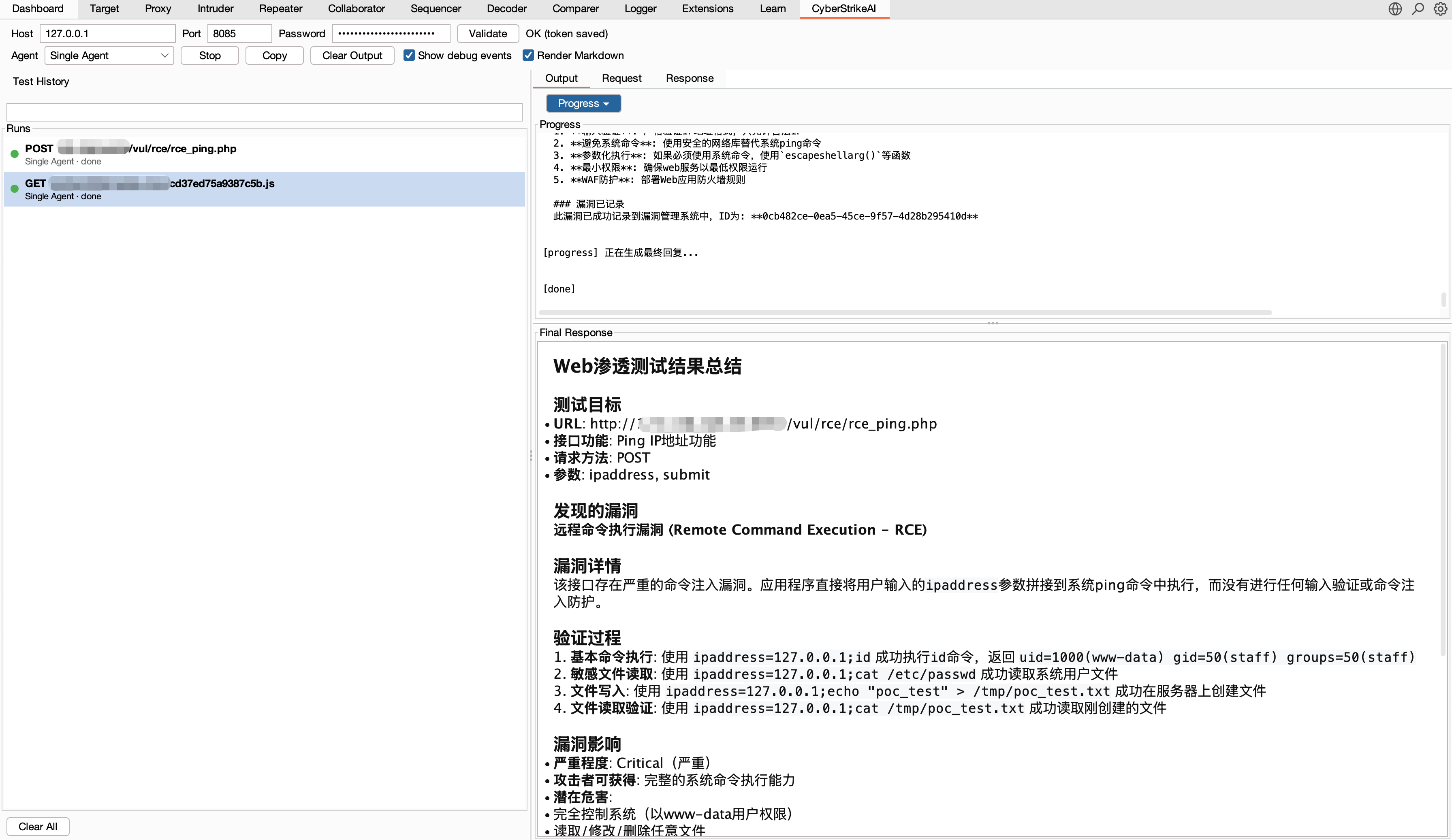
Based on README, appears to use a modular agent orchestration design via CloudWeGo Eino ADK, supporting single-agent (`/api/eino-agent/stream`) and multi-agent modes (`/api/multi-agent/stream` with coordinator, task sub-agents, plan-execute, or supervisor patterns). Tool integration via YAML recipes and native MCP protocol (HTTP/stdio/SSE). Knowledge base uses RAG with embedding-based retrieval and optional Eino indexing pipelines. SQLite for persistence. C2 framework includes encrypted implants and real-time event streaming. Vision analysis via separate VL model. README indicates Burp Suite plugin integration. Likely uses standard Go http libraries and LLM API clients; implementation details not inspectable.
not documented in README
Last push 2026-06-30 (same day as evaluation baseline), indicating active development. Project is ~7 months old; no evidence of abandoned issues or delayed releases. Fork count (792) and star velocity suggest community engagement. However, repository age is too short to assess long-term maintenance discipline or breaking-change management.
ADOPT IF: your team requires Go-native, LLM-orchestrated security testing automation with multi-agent coordination and you can accept early-project immaturity (7 months old, undocumented production deployments). AVOID IF: you need proven enterprise production track record, comprehensive test coverage documentation, or established community plugins beyond the 100 prebuilt tools. MONITOR IF: you operate in Asia-Pacific markets where Chinese-language adoption signals suggest regional traction, or if you are evaluating multi-agent LLM orchestration patterns and want to learn from recent implementations.
Independent dimensions
Mainstream potential
4/10
Technical importance
6/10
Adoption evidence
2/10
- Adoption not verified: no documented production users, case studies, or deployment scale metrics. Star count may reflect interest rather than sustained usage.
- Project immaturity: ~7 months old; long-term maintenance, API stability, and breaking-change policy not yet established.
- Test coverage undocumented: README does not mention unit, integration, or security testing coverage; reliability for production engagements unclear.
- Dependence on LLM providers: platform design couples to OpenAI-compatible APIs and their availability/cost; offline or on-premise deployment appears unsupported.
- Complexity risk: multi-component orchestration (agents, MCP, C2, knowledge base, role system) may increase operational and debugging burden relative to simpler single-tool wrappers.
CyberStrikeAI likely stabilizes as a niche orchestration platform for AI-driven penetration testing, particularly in Asia-Pacific regions. Mainstream adoption depends on documented production case studies, enterprise SLAs, and ecosystem maturity (plugin ecosystem, certified integrations). If LLM-based security testing becomes commoditized, Go performance and multi-agent coordination may drive adoption; if enthusiasm wanes, the project may stabilize at 5,000–10,000 stars as a specialist tool.
Newsletter
Get analyses like this every Monday
Free weekly digest of the most interesting open-source discoveries.
Languages
Information
- Language
- Go
- License
- Apache-2.0
- Last updated
- 1d ago
- Created
- 8mo ago
- Analyzed with
- anthropic/claude-haiku-4-5
Stars over time
Contributors over time
Top 100 contributors only — repos with more will plateau at 100.
Open issues
Top contributors
Similar repos

mukul975/Anthropic-Cybersecurity-Skills
This is a curated library of 817 structured cybersecurity skills mapped to six...
| Repository | Stars | Week Δ | Language | Score | Updated |
|---|---|---|---|---|---|
|
Ed1s0nZ/CyberStrikeAI
this
|
5k | +110 | Go | 7/10 | 1d ago |
 CyberStrikeus/CyberStrike CyberStrikeus/CyberStrike
|
1.2k | — | TypeScript | 7/10 | 14h ago |
 0x4m4/hexstrike-ai 0x4m4/hexstrike-ai
|
10.2k | — | Python | 7/10 | 2mo ago |
 Armur-Ai/Pentest-Swarm-AI Armur-Ai/Pentest-Swarm-AI
|
2k | — | Go | 7/10 | 3w ago |
|
mukul975/Anthropic-Cybersecurity-Skills
|
25.2k | — | Python | 8/10 | 2w ago |
 vxcontrol/pentagi vxcontrol/pentagi
|
19.4k | — | Go | 7/10 | 7d ago |
Larger established community; CyberStrikeAI differentiates via Go performance, native MCP protocol, and Eino multi-agent orchestration. hexstrike-ai likely has more mature ecosystem plugins.
Significantly larger adoption. CyberStrikeAI emphasizes AI-native design and agent orchestration; pentagi may focus on traditional pentesting workflows. Both Go-based; direct feature comparison not possible from README alone.
Similar scale to CyberStrikeAI; both Go-based. CyberStrikeAI highlights role-based testing and comprehensive lifecycle management; differentiation unclear without source inspection.
Smaller, different language. CyberStrikeAI (Go) targets performance and system-level integration; CyberStrike (TypeScript) may prioritize web-based accessibility and Node.js ecosystem.
Largest by stars; appears skills-focused rather than platform-focused. CyberStrikeAI is a full orchestration platform; this repo may be a component or example collection.

 Sponsorship (click to expand)